
TECHNOLOGY ASSESSMENT STS Theory in education KIT workshop
- Slides: 11
TECHNOLOGY ASSESSMENT & STS Theory in education KIT workshop TA in der Lehre, Karlsruhe 1 -2 July 2010 Ellen van Oost, University of Twente, The Netherlands
Technology Assessment in Education at University of Twente Textbook: The Mutual Shaping of Technology and Society. A Technology Assessment approach Wim A. Smit & Ellen van Oost In three programmes at UT > Computer science (Bachelor) > Health science, (Bachelor) > Philosophy of Science, Technology and Society (Master) + Various other educational programmes in the Netherlands (Eindhoven, Delft + higher vocational education)
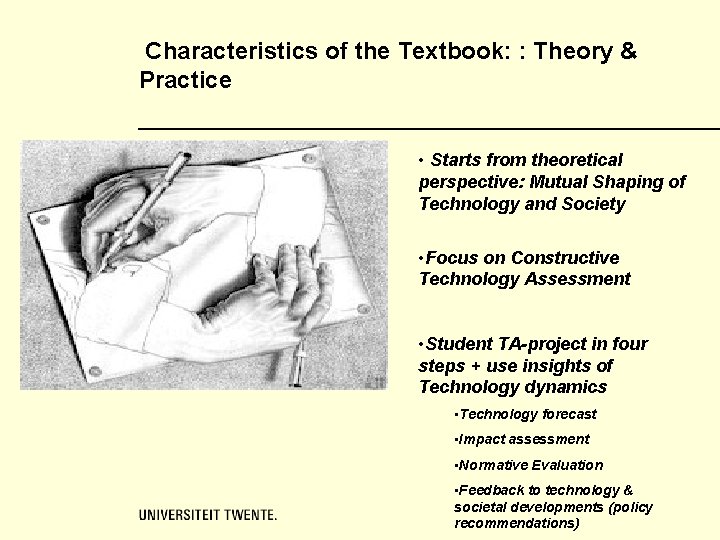
Characteristics of the Textbook: : Theory & Practice • Starts from theoretical perspective: Mutual Shaping of Technology and Society • Focus on Constructive Technology Assessment • Student TA-project in four steps + use insights of Technology dynamics • Technology forecast • Impact assessment • Normative Evaluation • Feedback to technology & societal developments (policy recommendations)
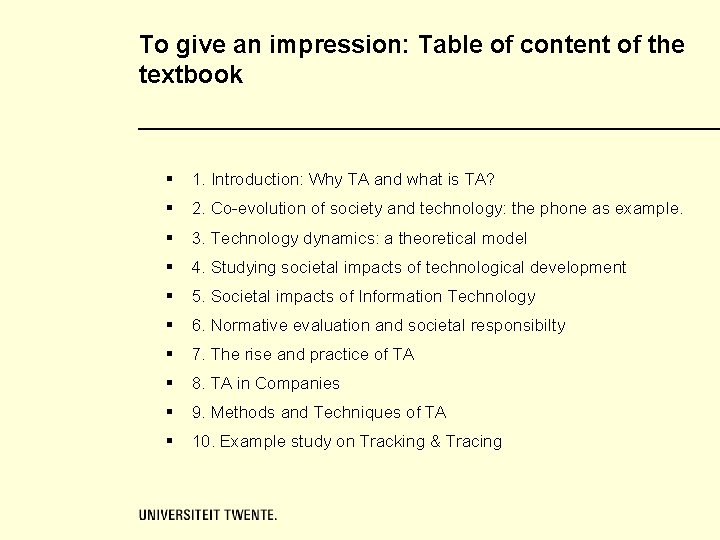
To give an impression: Table of content of the textbook § 1. Introduction: Why TA and what is TA? § 2. Co-evolution of society and technology: the phone as example. § 3. Technology dynamics: a theoretical model § 4. Studying societal impacts of technological development § 5. Societal impacts of Information Technology § 6. Normative evaluation and societal responsibilty § 7. The rise and practice of TA § 8. TA in Companies § 9. Methods and Techniques of TA § 10. Example study on Tracking & Tracing
Theory on Technology Dynamics Ø Social constructivist perspective Ø Technology is social: embodies social values & structures & power relations > prospective character > embodies societal impacts Ø Why TA? Why based in a mutual perspective theory? Ø Message: engineers not only make technology, but also shape society Ø Engineers have a responsibility to be reflexive on that point Ø Many positive impacts, but often too …. . (unforeseen impacts, non-acceptance, failures, social resistance)
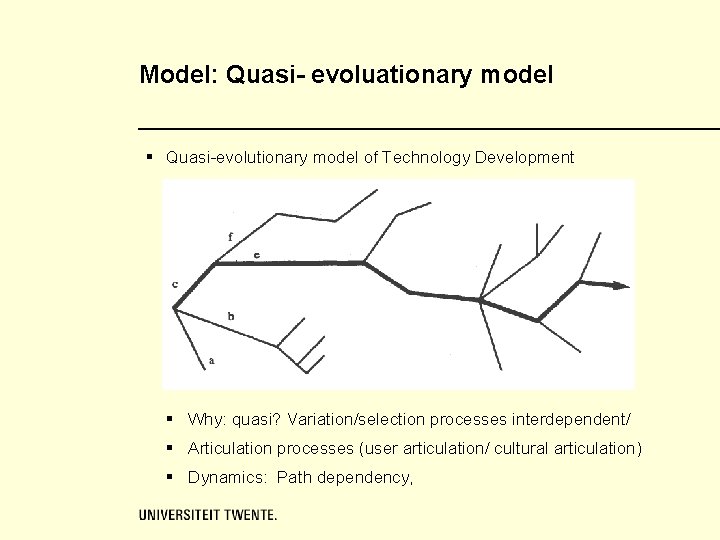
Model: Quasi- evoluationary model § Quasi-evolutionary model of Technology Development § Why: quasi? Variation/selection processes interdependent/ § Articulation processes (user articulation/ cultural articulation) § Dynamics: Path dependency,
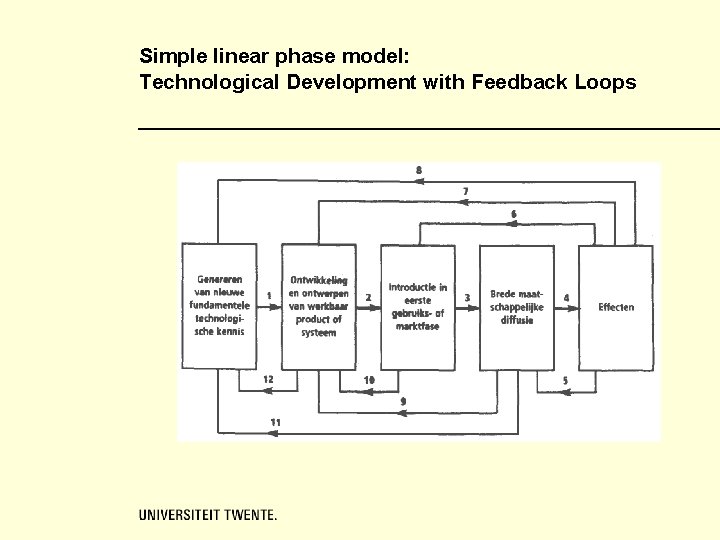
Simple linear phase model: Technological Development with Feedback Loops
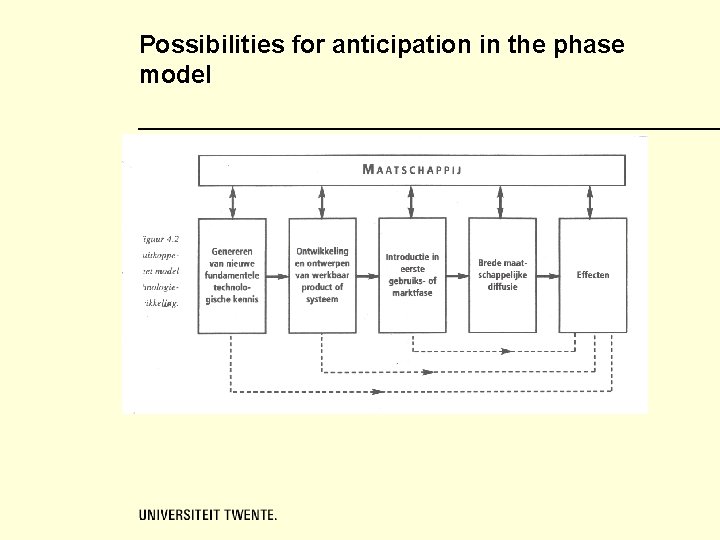
Possibilities for anticipation in the phase model
What can we say about possible social impact of new technology? § Impacts are partly embodied in the technology § Script: inviting & inhibiting Technology is political § Impacts are partly shaped in technology use § rebound / new unanticipaties uses § TA contributes to democratising process of shaping technology: § More perspectives on the table , clearer picture of interests and perspective of involved actors
Student TA-project in 4 steps + use insights of Technology dynamics 1. Technology forecast: - Traditional methods (trend extrapolation) but too technology dynamics (path dependency) 2. Impact assessment: - mapping actor perspectives + script analysis 3. Normative evaluation: - Interviews/ data search & analysis - learn to distinct: actor perspective – analyst perspective – personal perspective 4. Feedback to technology & societal developments (policy recommendations)
Points for discussion § Does STS theory on Technology Dynamics of provide an added value in teaching TA, in addition to common TA methods? § The “Future problem: ”Does STS theory has prospective potentials?