
Technology and pedagogy for distance learning podcasting Dr
![Findings … [contd. ] • Tutors able to convey important and detailed information in](https://slidetodoc.com/presentation_image/1fc3167e9fc56f0001d4296621e74c87/image-11.jpg "Findings … [contd. ] • Tutors able to convey important and detailed information in")
![Student feedback - IMPALA project [in podcasts] professor talks about the course, examples, topic](https://slidetodoc.com/presentation_image/1fc3167e9fc56f0001d4296621e74c87/image-13.jpg "Student feedback - IMPALA project [in podcasts] professor talks about the course, examples, topic")
![Student feedback - DUCKLING project [podcasting] makes the course less impersonal. For example, listening](https://slidetodoc.com/presentation_image/1fc3167e9fc56f0001d4296621e74c87/image-16.jpg "Student feedback - DUCKLING project [podcasting] makes the course less impersonal. For example, listening")
![Activity 2 [10 minutes] A taste of podcasts Listen to podcasts](https://slidetodoc.com/presentation_image/1fc3167e9fc56f0001d4296621e74c87/image-21.jpg "Activity 2 [10 minutes] A taste of podcasts Listen to podcasts")
![Sustaining the momentum, plans for institutional scaling up, OERs. [10 minutes] A discussion around:](https://slidetodoc.com/presentation_image/1fc3167e9fc56f0001d4296621e74c87/image-66.jpg "Sustaining the momentum, plans for institutional scaling up, OERs. [10 minutes] A discussion around:")
- Slides: 68
Technology and pedagogy for distance learning – podcasting Dr Palitha Edirisingha Institute of Learning Innovation University of Leicester, UK pe 27@le. ac. uk Innovations in Learning Design and Technology for Distance Education Workshop for the delegates from the Open University of China 3 rd – 7 th of June, 2013
Learning objectives You will be able to: • appreciate the impact of podcasting on learning • gain insights into approaches to using podcasts in various discipline and institutional contexts and their transferability • be aware of the IMPALA 10 -factor framework to develop podcasts to address specific teaching and learning challenges • consider how to develop a storyboard to include podcasting to support learning • be aware of technologies and tools used for creating and editing podcats
What knowledge and experience do we have on podcasting?
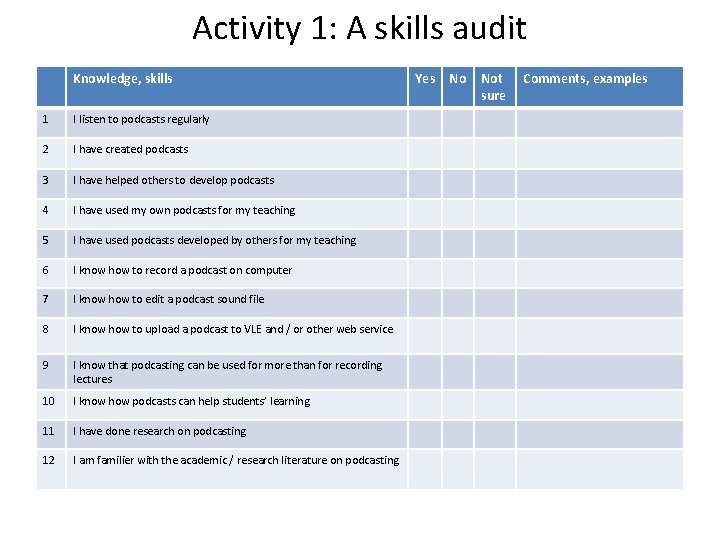
Activity 1: A skills audit Knowledge, skills 1 I listen to podcasts regularly 2 I have created podcasts 3 I have helped others to develop podcasts 4 I have used my own podcasts for my teaching 5 I have used podcasts developed by others for my teaching 6 I know how to record a podcast on computer 7 I know how to edit a podcast sound file 8 I know how to upload a podcast to VLE and / or other web service 9 I know that podcasting can be used for more than for recording lectures 10 I know how podcasts can help students’ learning 11 I have done research on podcasting 12 I am familier with the academic / research literature on podcasting Yes No Not sure Comments, examples
Results … later!
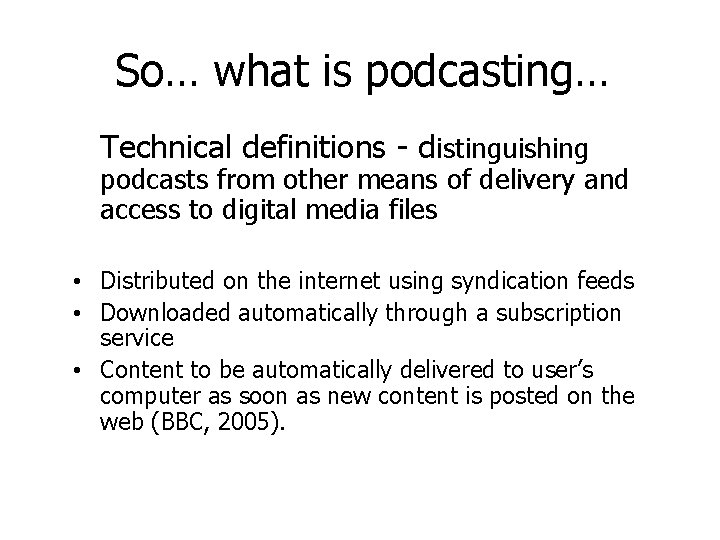
So… what is podcasting… Technical definitions - distinguishing podcasts from other means of delivery and access to digital media files • Distributed on the internet using syndication feeds • Downloaded automatically through a subscription service • Content to be automatically delivered to user’s computer as soon as new content is posted on the web (BBC, 2005).
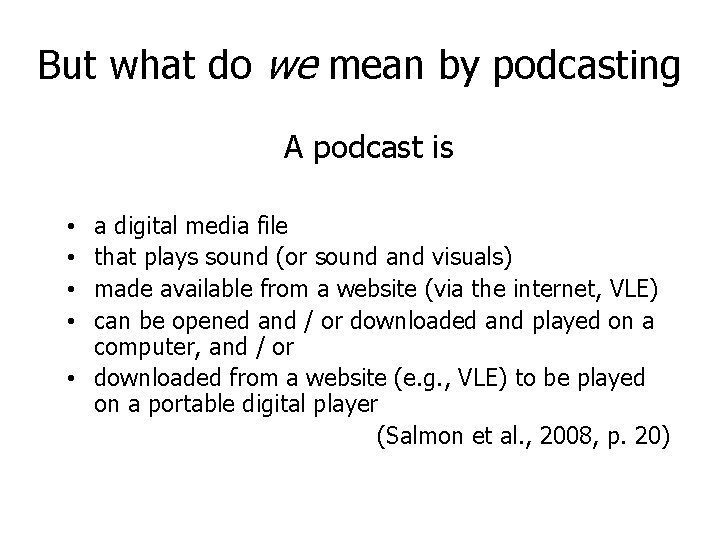
But what do we mean by podcasting A podcast is a digital media file that plays sound (or sound and visuals) made available from a website (via the internet, VLE) can be opened and / or downloaded and played on a computer, and / or • downloaded from a website (e. g. , VLE) to be played on a portable digital player (Salmon et al. , 2008, p. 20) • •
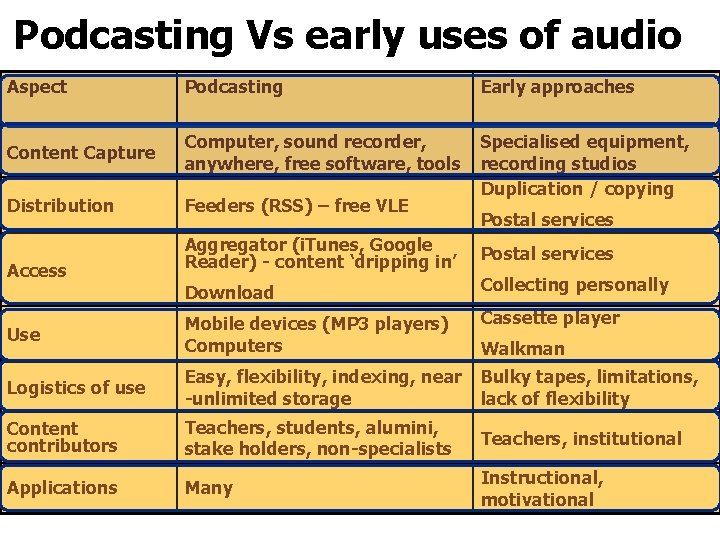
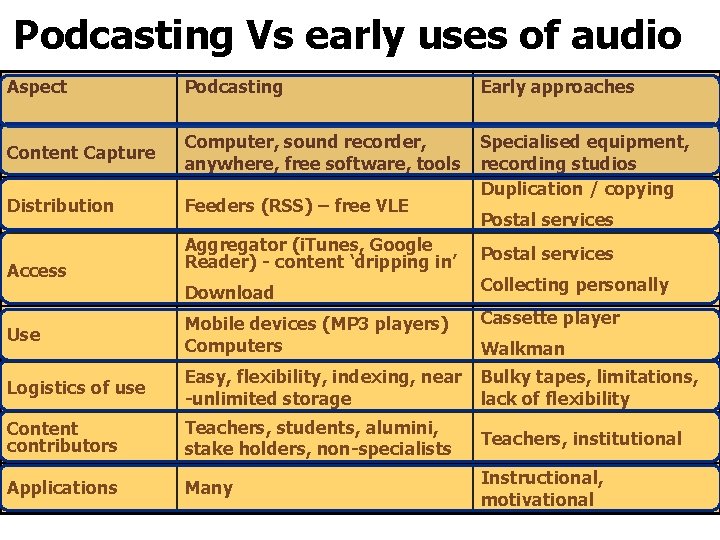
Podcasting Vs early uses of audio Aspect Podcasting Early approaches Content Capture Computer, sound recorder, anywhere, free software, tools Distribution Feeders (RSS) – free VLE Specialised equipment, recording studios Duplication / copying Access Aggregator (i. Tunes, Google Reader) - content ‘dripping in’ Postal services Download Collecting personally Use Mobile devices (MP 3 players) Computers Cassette player Logistics of use Easy, flexibility, indexing, near -unlimited storage Bulky tapes, limitations, lack of flexibility Content contributors Teachers, students, alumini, stake holders, non-specialists Teachers, institutional Applications Many Instructional, motivational Postal services Walkman
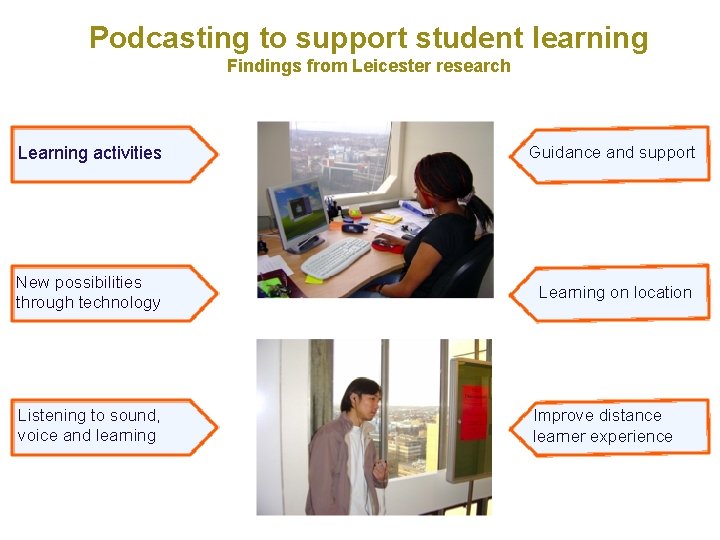
Podcasting to support student learning Findings from Leicester research Learning activities Guidance and support New possibilities through technology Learning on location Listening to sound, voice and learning Improve distance learner experience
Findings from the DUCKLING project • Curriculum became more personalised • Human dimension to the learning experience • Listening to the tutors voice added a personal touch and livened up the learning experience • Podcasts resembled a direct communication with the tutor • Feeling like having a conversation with the tutor • Feeling that less distant and isolated, more connected with the tutor.
Findings … [contd. ] • Tutors able to convey important and detailed information in an effective and convincing manner • A quick and effective mechanism to provide guidance, explanations, and feedback • Tutors offered and students received feedback in a way not possible with text. • Valuable form of interaction between students and tutors • Listening to podcasts was consolidating and reassuring
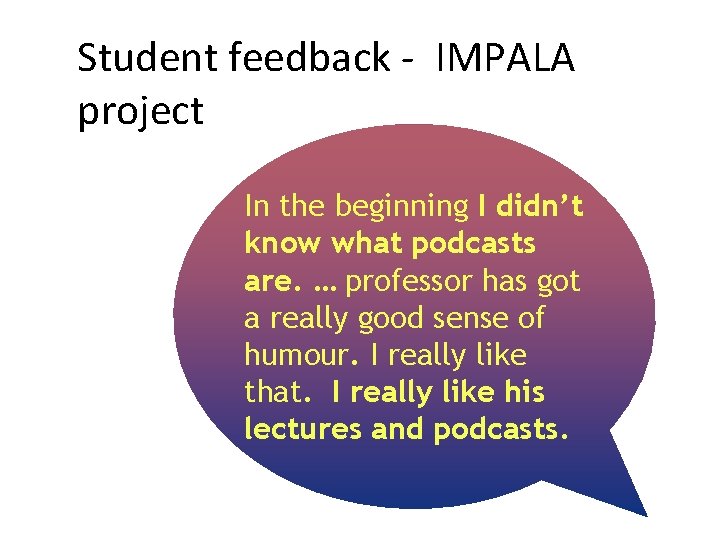
Student feedback - IMPALA project In the beginning I didn’t know what podcasts are. … professor has got a really good sense of humour. I really like that. I really like his lectures and podcasts.
Student feedback - IMPALA project [in podcasts] professor talks about the course, examples, topic for the week and explanations relating to the topic studied. I learn other things which sometimes aren’t related to the course. It is quite useful, it is just general feedback. He points out where students make mistakes.
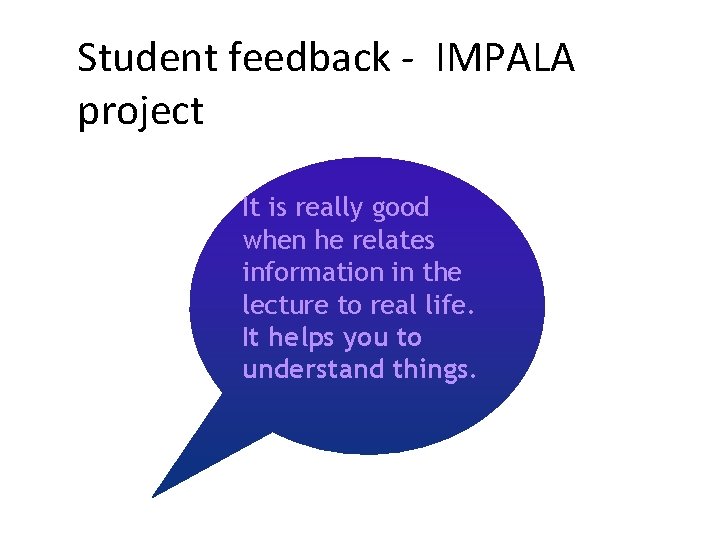
Student feedback - IMPALA project It is really good when he relates information in the lecture to real life. It helps you to understand things.
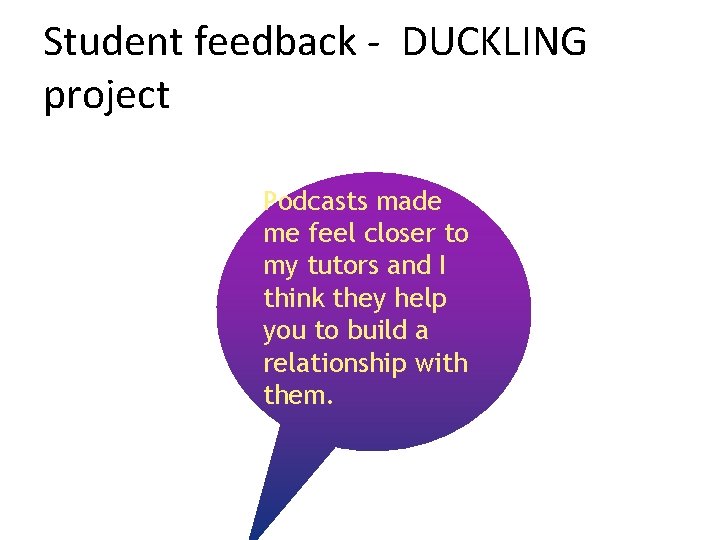
Student feedback - DUCKLING project Podcasts made me feel closer to my tutors and I think they help you to build a relationship with them.
Student feedback - DUCKLING project [podcasting] makes the course less impersonal. For example, listening to the lecturer’s voice on podcasts is a big improvement than reading notes.
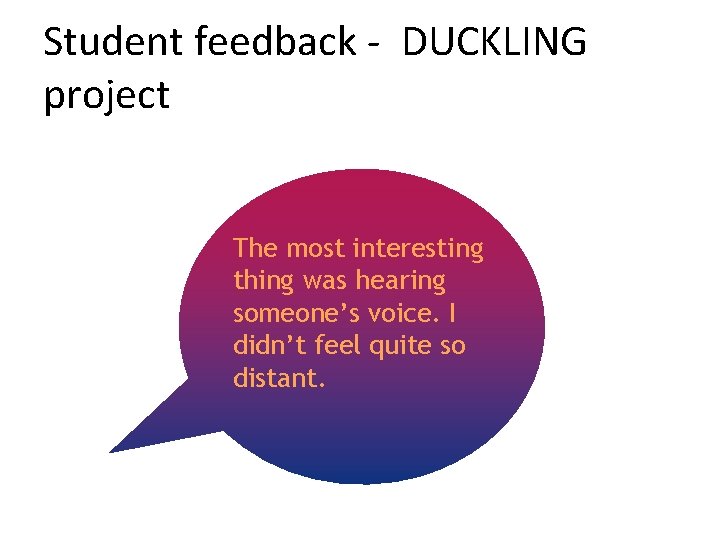
Student feedback - DUCKLING project The most interesting thing was hearing someone’s voice. I didn’t feel quite so distant.
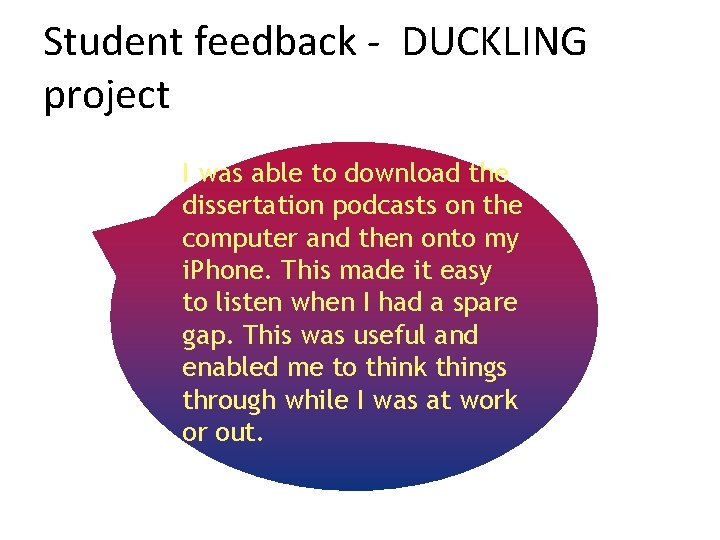
Student feedback - DUCKLING project I was able to download the dissertation podcasts on the computer and then onto my i. Phone. This made it easy to listen when I had a spare gap. This was useful and enabled me to think things through while I was at work or out.
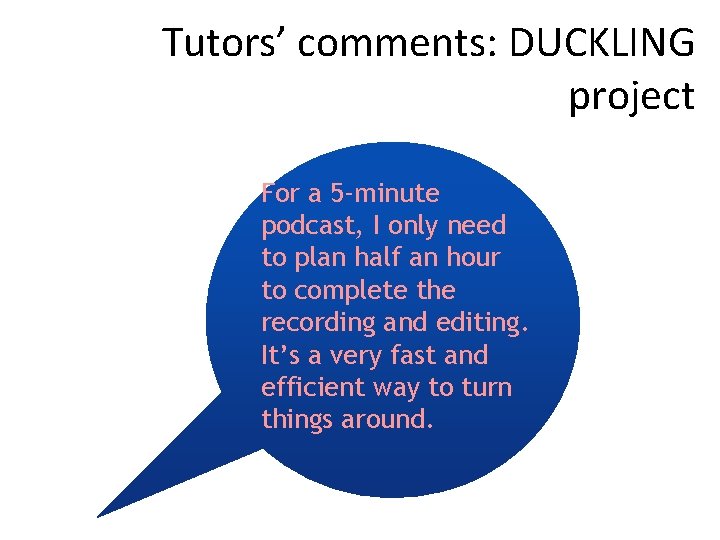
Tutors’ comments: DUCKLING project For a 5 -minute podcast, I only need to plan half an hour to complete the recording and editing. It’s a very fast and efficient way to turn things around.
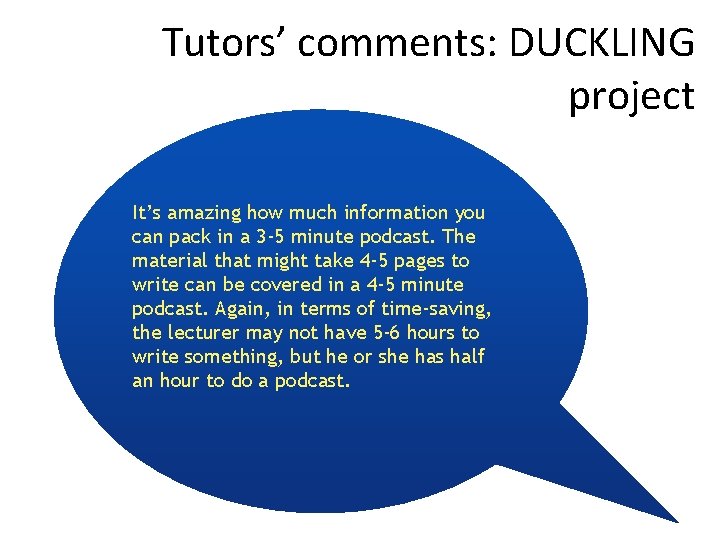
Tutors’ comments: DUCKLING project It’s amazing how much information you can pack in a 3 -5 minute podcast. The material that might take 4 -5 pages to write can be covered in a 4 -5 minute podcast. Again, in terms of time-saving, the lecturer may not have 5 -6 hours to write something, but he or she has half an hour to do a podcast.
Activity 2 [10 minutes] A taste of podcasts Listen to podcasts
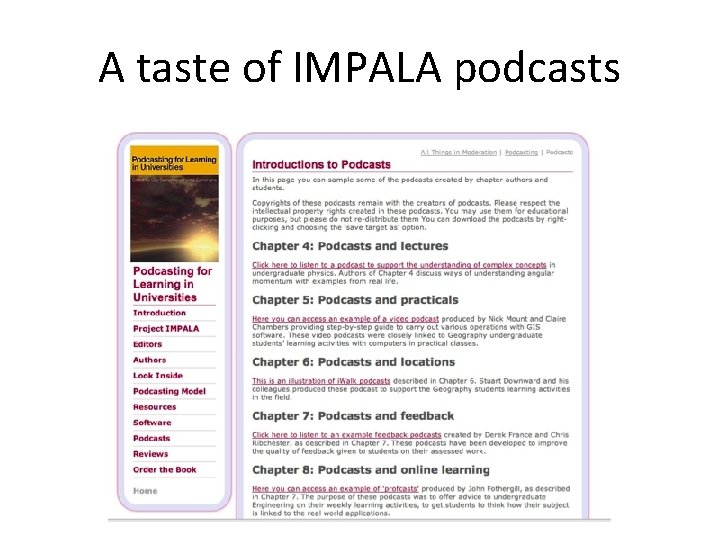
A taste of IMPALA podcasts
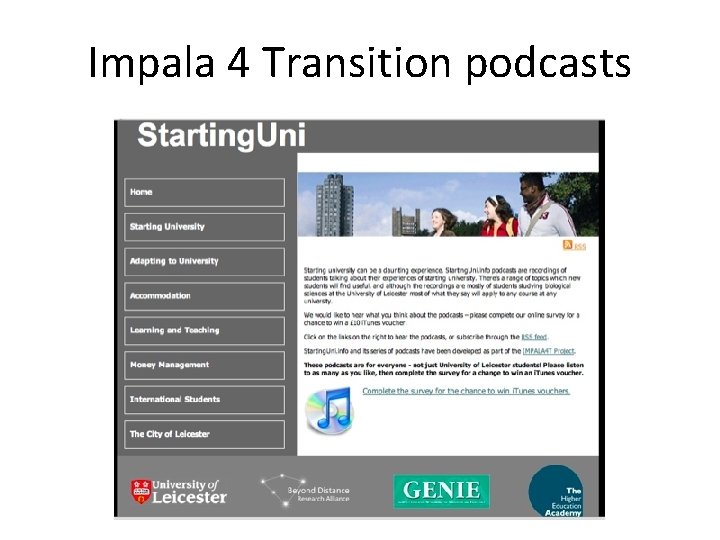
Impala 4 Transition podcasts
Pedagogical models and podcasting approaches
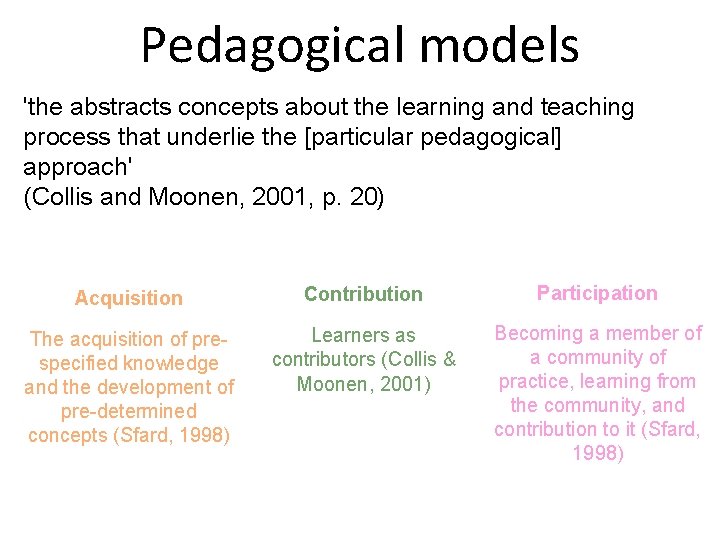
Pedagogical models 'the abstracts concepts about the learning and teaching process that underlie the [particular pedagogical] approach' (Collis and Moonen, 2001, p. 20) Acquisition Contribution Participation The acquisition of prespecified knowledge and the development of pre-determined concepts (Sfard, 1998) Learners as contributors (Collis & Moonen, 2001) Becoming a member of a community of practice, learning from the community, and contribution to it (Sfard, 1998)
Podcasting approaches
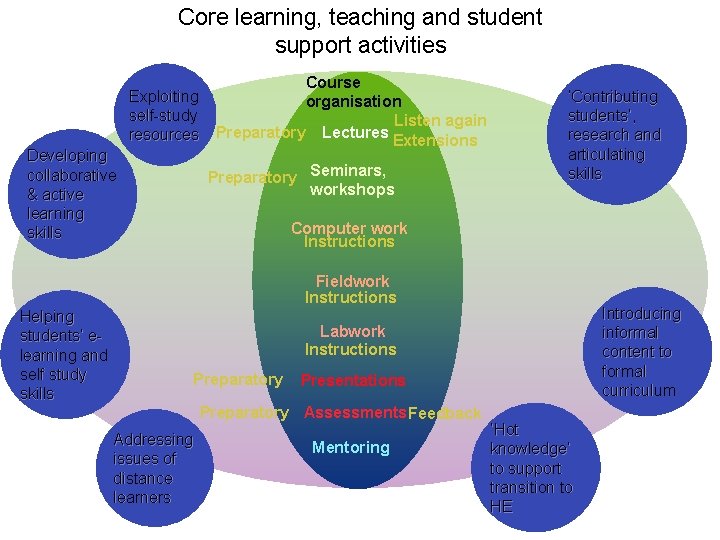
Core learning, teaching and student support activities Developing collaborative & active learning skills Course Exploiting organisation self-study Listen again resources Preparatory Lectures Extensions Preparatory Seminars, workshops ‘Contributing students’, research and articulating skills Computer work Instructions Fieldwork Instructions Helping students’ e- learning and self study skills Introducing informal content to formal curriculum Labwork Instructions Preparatory Presentations Preparatory Assessments Feedback Addressing issues of distance learners Mentoring ‘Hot knowledge’ to support transition to HE
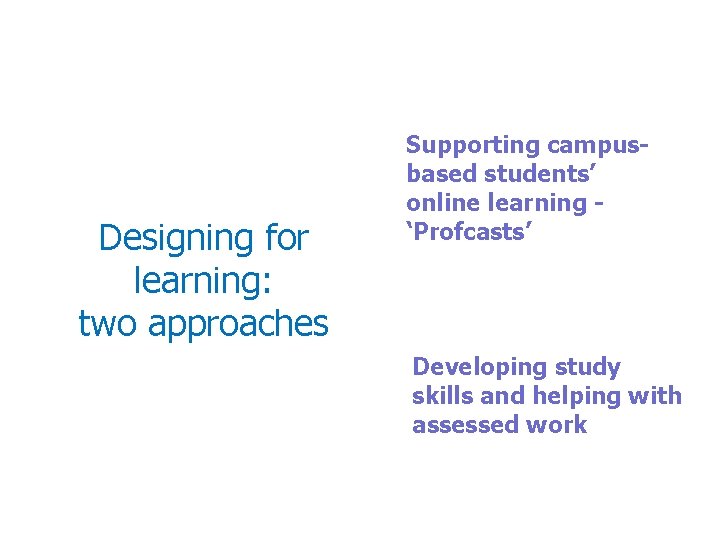
Designing for learning: two approaches Supporting campusbased students’ online learning ‘Profcasts’ Developing study skills and helping with assessed work
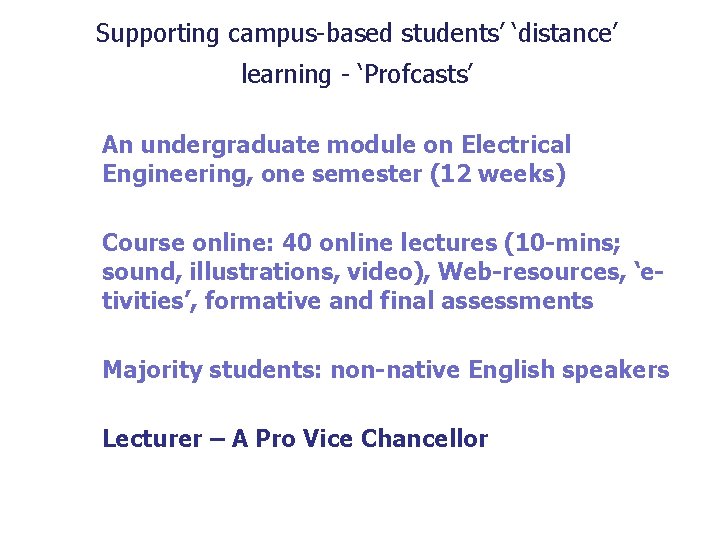
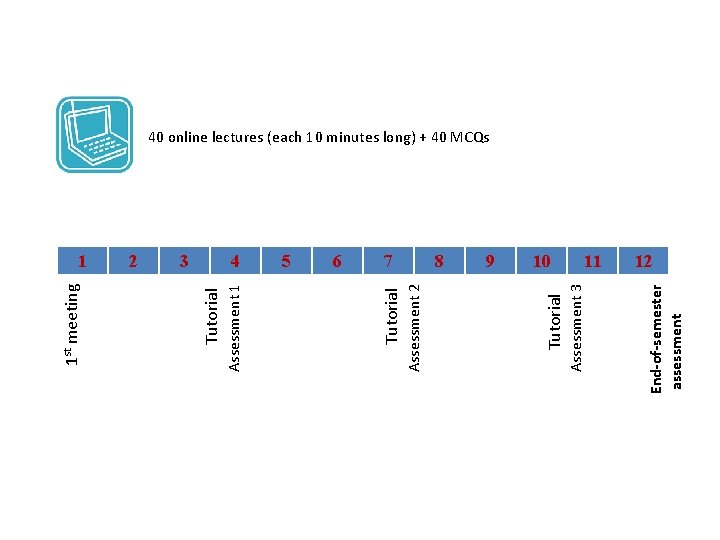
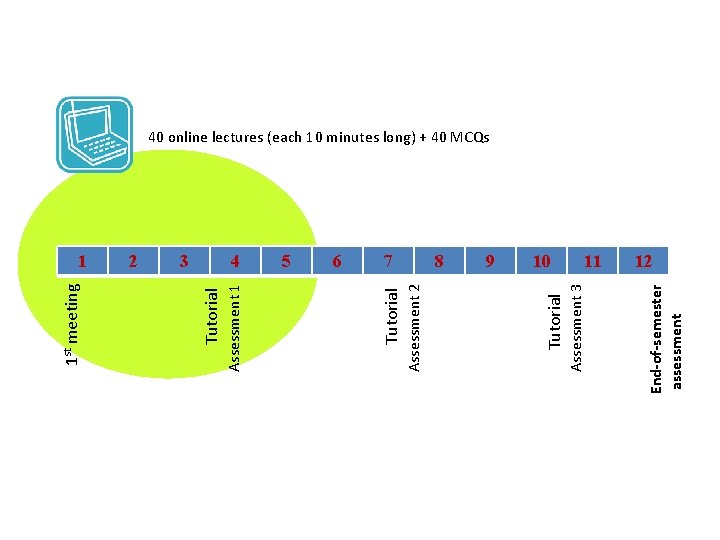
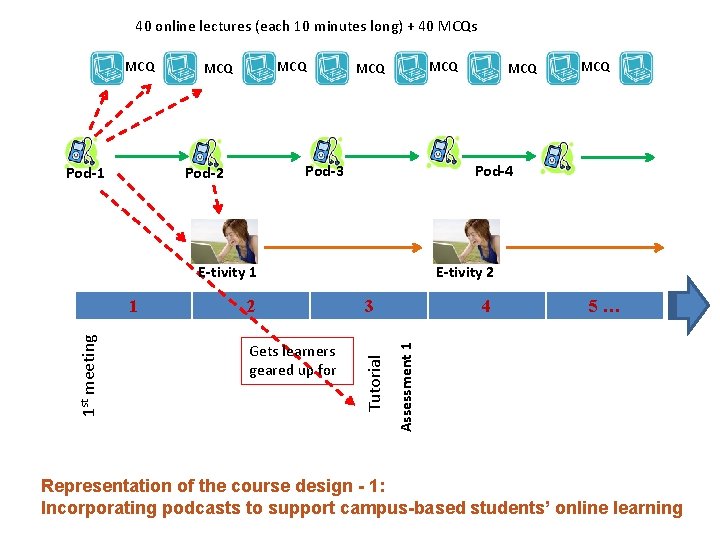
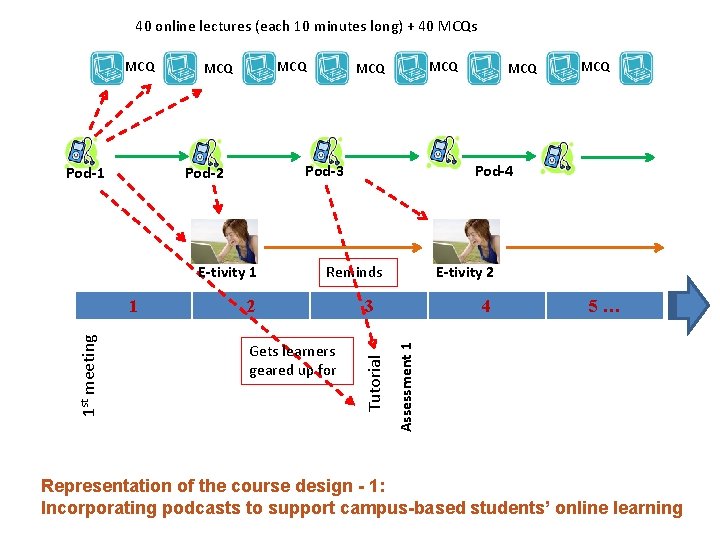
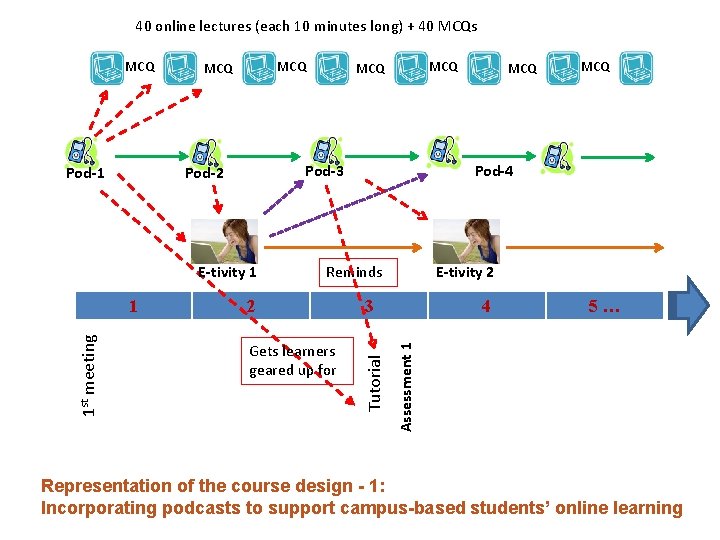
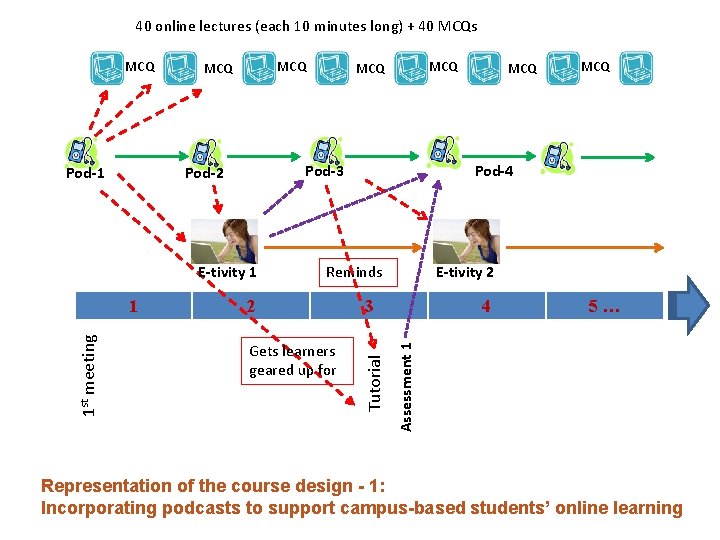
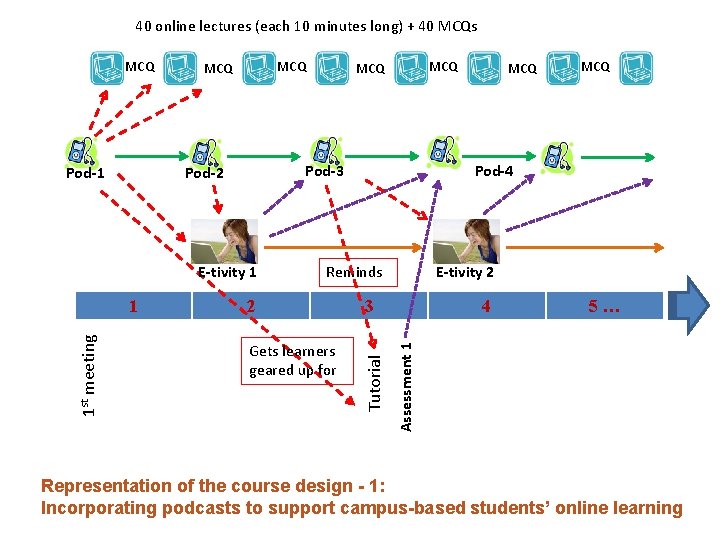
Supporting campus-based students’ ‘distance’ learning - ‘Profcasts’ An undergraduate module on Electrical Engineering, one semester (12 weeks) Course online: 40 online lectures (10 -mins; sound, illustrations, video), Web-resources, ‘etivities’, formative and final assessments Majority students: non-native English speakers Lecturer – A Pro Vice Chancellor
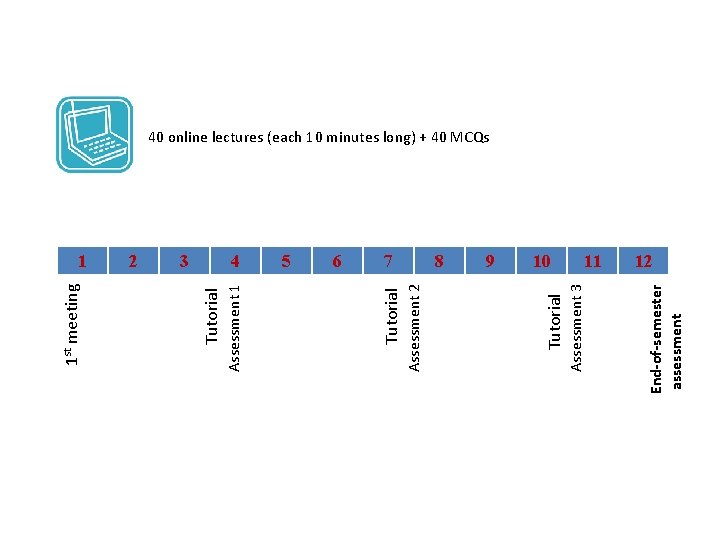
7 8 9 10 11 End-of-semester assessment 6 Assessment 3 5 Tutorial 4 Assessment 2 3 Tutorial 2 Assessment 1 1 Tutorial 1 st meeting 40 online lectures (each 10 minutes long) + 40 MCQs 12
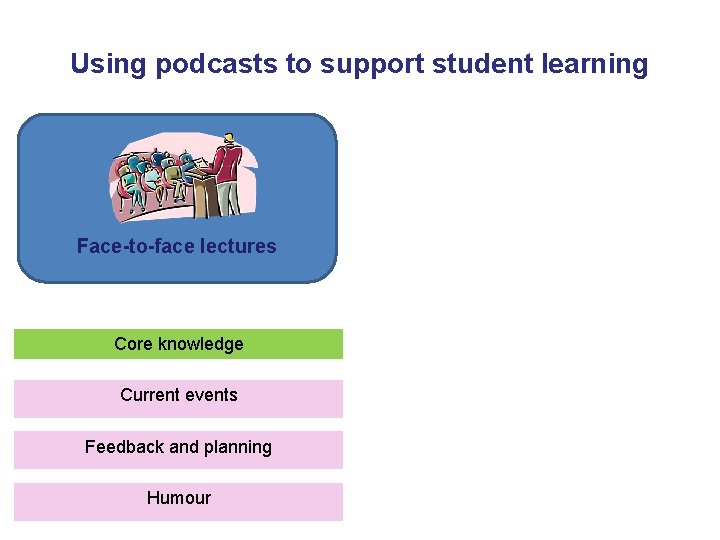
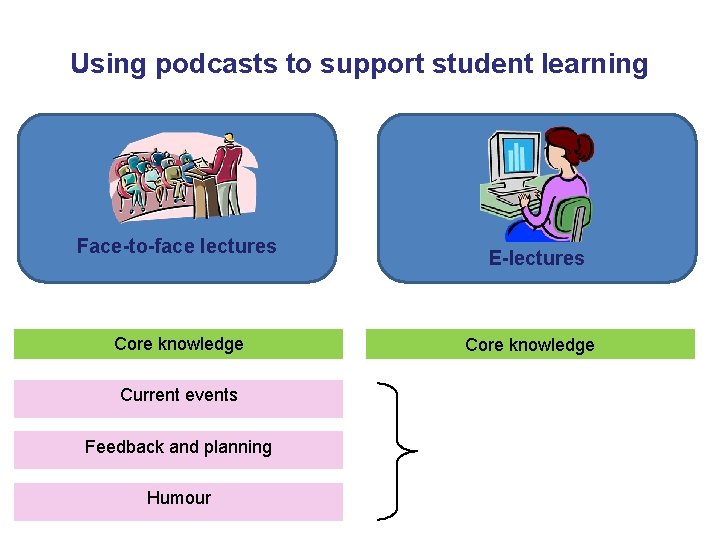
Using podcasts to support student learning Face-to-face lectures Core knowledge Current events Feedback and planning Humour
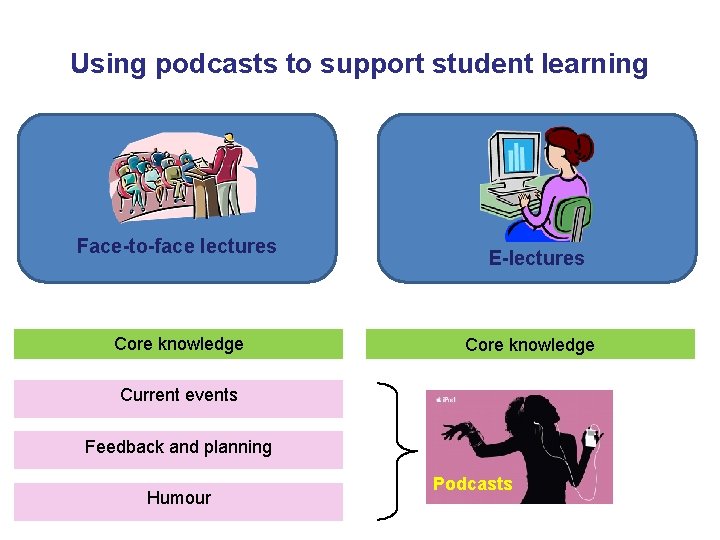
Using podcasts to support student learning Face-to-face lectures Core knowledge Current events Feedback and planning Humour E-lectures Core knowledge
Using podcasts to support student learning Face-to-face lectures Core knowledge E-lectures Core knowledge Current events Feedback and planning Humour Podcasts
7 8 9 10 11 End-of-semester assessment 6 Assessment 3 5 Tutorial 4 Assessment 2 3 Tutorial 2 Assessment 1 1 Tutorial 1 st meeting 40 online lectures (each 10 minutes long) + 40 MCQs 12
7 8 9 10 11 End-of-semester assessment 6 Assessment 3 5 Tutorial 4 Assessment 2 3 Tutorial 2 Assessment 1 1 Tutorial 1 st meeting 40 online lectures (each 10 minutes long) + 40 MCQs 12
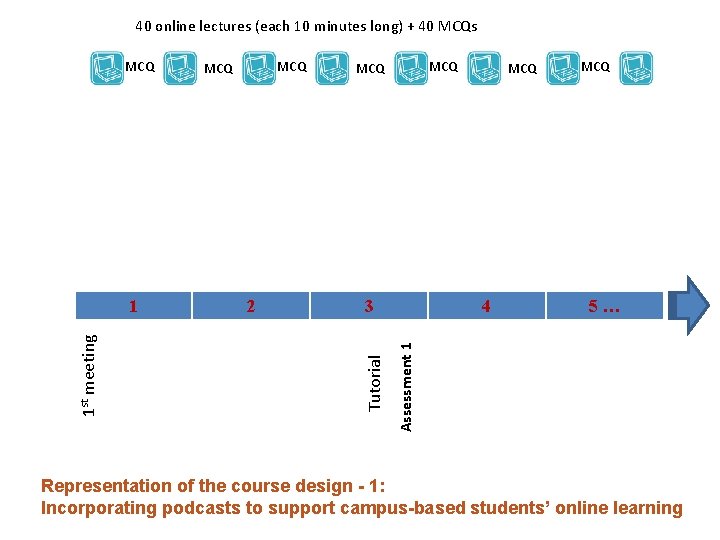
40 online lectures (each 10 minutes long) + 40 MCQs 2 MCQ 3 MCQ 4 MCQ 5… Assessment 1 1 st meeting 1 MCQ Tutorial MCQ Representation of the course design - 1: Incorporating podcasts to support campus-based students’ online learning
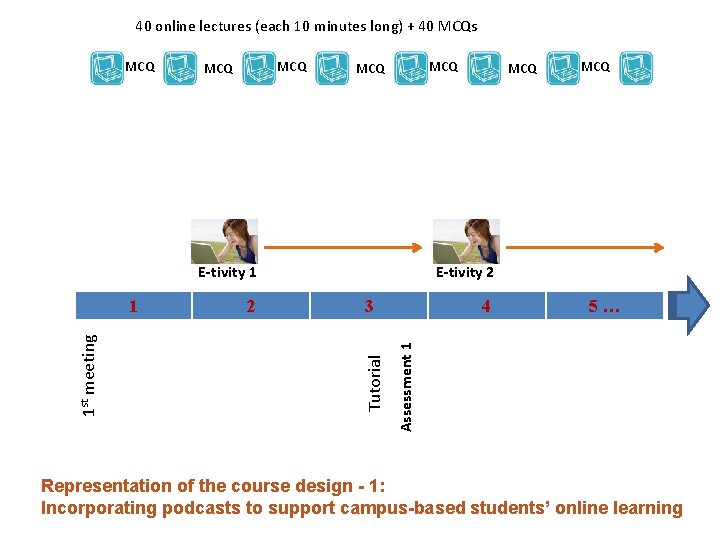
40 online lectures (each 10 minutes long) + 40 MCQs MCQ MCQ MCQ E-tivity 1 3 4 5… Assessment 1 2 MCQ E-tivity 2 Tutorial 1 st meeting 1 MCQ Representation of the course design - 1: Incorporating podcasts to support campus-based students’ online learning
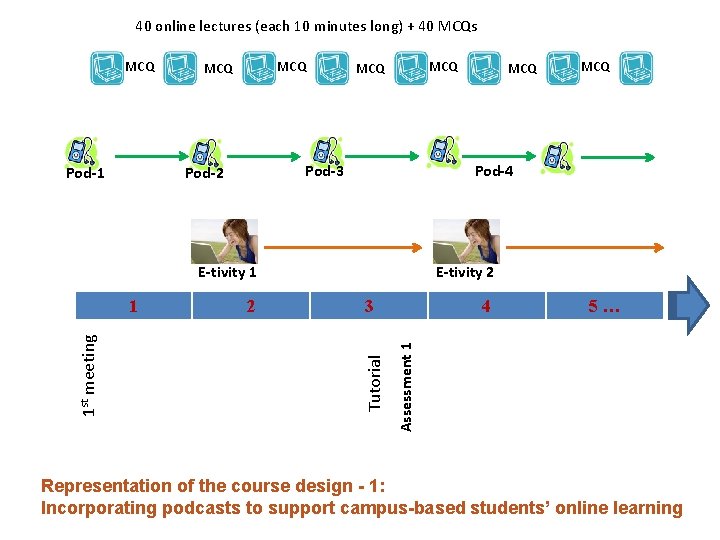
40 online lectures (each 10 minutes long) + 40 MCQs MCQ Pod-1 MCQ MCQ Pod-3 Pod-2 E-tivity 2 4 5… Assessment 1 3 Tutorial 1 st meeting 2 MCQ Pod-4 E-tivity 1 1 MCQ Representation of the course design - 1: Incorporating podcasts to support campus-based students’ online learning
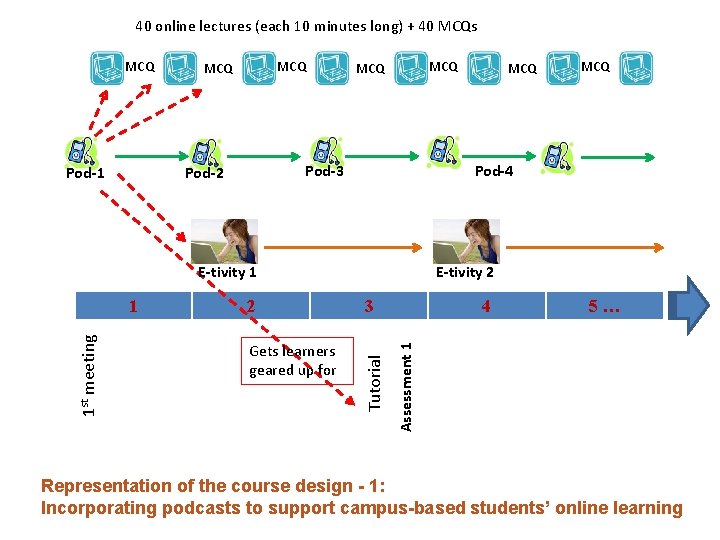
40 online lectures (each 10 minutes long) + 40 MCQs MCQ Pod-1 MCQ MCQ Pod-3 Pod-2 3 4 5… Assessment 1 Gets learners geared up for E-tivity 2 Tutorial 1 st meeting 2 MCQ Pod-4 E-tivity 1 1 MCQ Representation of the course design - 1: Incorporating podcasts to support campus-based students’ online learning
40 online lectures (each 10 minutes long) + 40 MCQs MCQ Pod-1 MCQ MCQ Pod-3 Pod-2 3 4 5… Assessment 1 Gets learners geared up for E-tivity 2 Tutorial 1 st meeting 2 MCQ Pod-4 E-tivity 1 1 MCQ Representation of the course design - 1: Incorporating podcasts to support campus-based students’ online learning
40 online lectures (each 10 minutes long) + 40 MCQs Pod-3 Pod-2 E-tivity 1 1 st meeting 1 MCQ Gets learners geared up for MCQ Pod-4 Reminds 2 MCQ E-tivity 2 3 4 5… Assessment 1 Pod-1 MCQ Tutorial MCQ Representation of the course design - 1: Incorporating podcasts to support campus-based students’ online learning
40 online lectures (each 10 minutes long) + 40 MCQs Pod-3 Pod-2 E-tivity 1 1 st meeting 1 MCQ Gets learners geared up for MCQ Pod-4 Reminds 2 MCQ E-tivity 2 3 4 5… Assessment 1 Pod-1 MCQ Tutorial MCQ Representation of the course design - 1: Incorporating podcasts to support campus-based students’ online learning
40 online lectures (each 10 minutes long) + 40 MCQs Pod-3 Pod-2 E-tivity 1 1 st meeting 1 MCQ Gets learners geared up for MCQ Pod-4 Reminds 2 MCQ E-tivity 2 3 4 5… Assessment 1 Pod-1 MCQ Tutorial MCQ Representation of the course design - 1: Incorporating podcasts to support campus-based students’ online learning
40 online lectures (each 10 minutes long) + 40 MCQs Pod-3 Pod-2 E-tivity 1 1 st meeting 1 MCQ Gets learners geared up for MCQ Pod-4 Reminds 2 MCQ E-tivity 2 3 4 5… Assessment 1 Pod-1 MCQ Tutorial MCQ Representation of the course design - 1: Incorporating podcasts to support campus-based students’ online learning
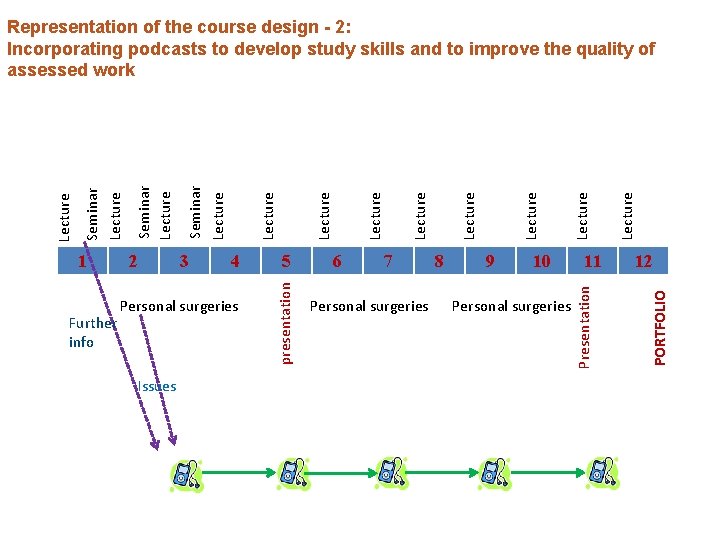
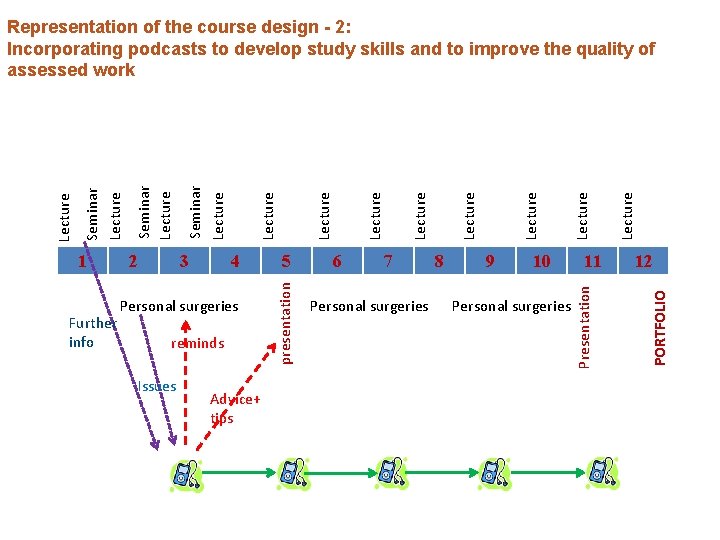
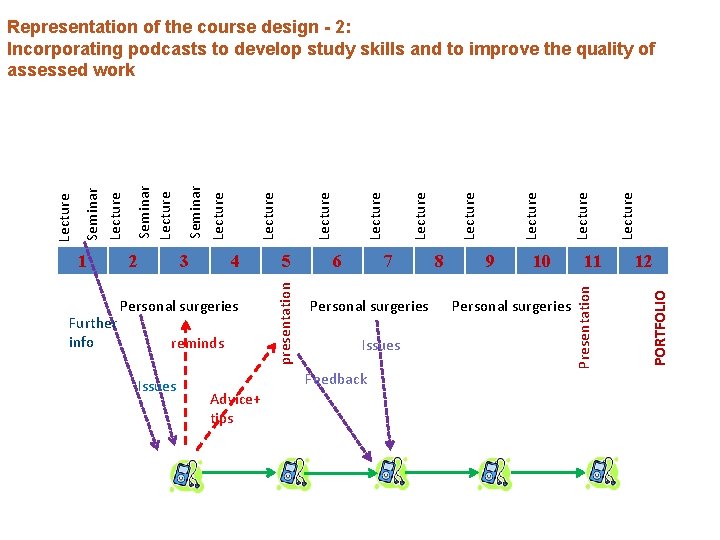
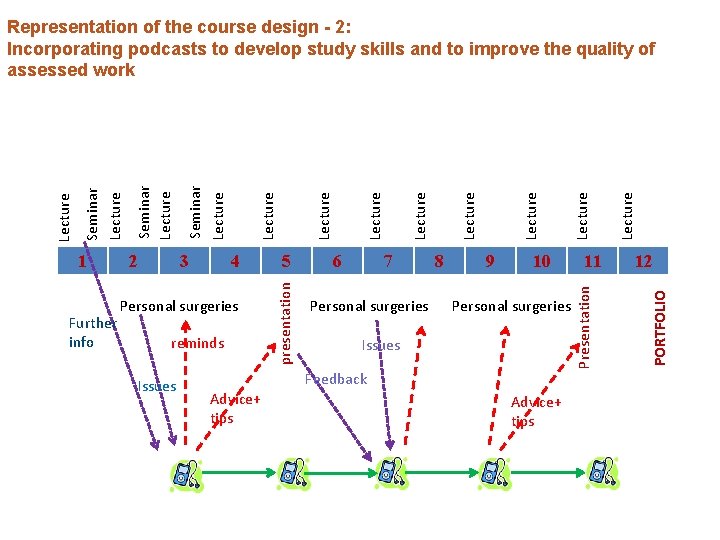
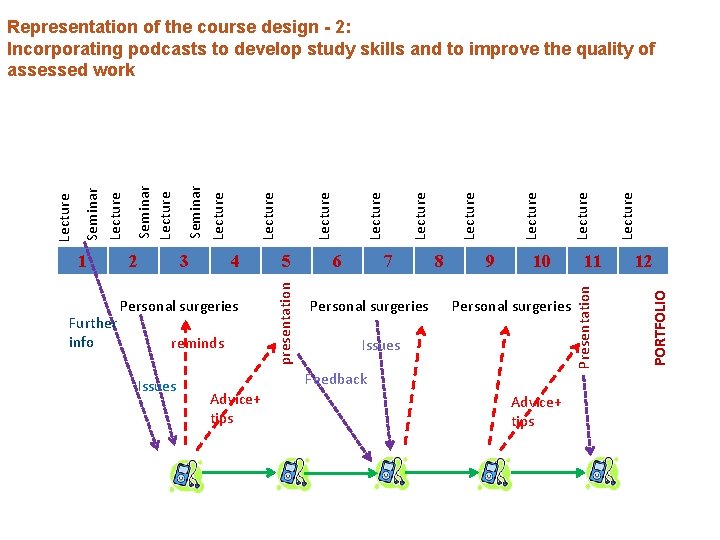
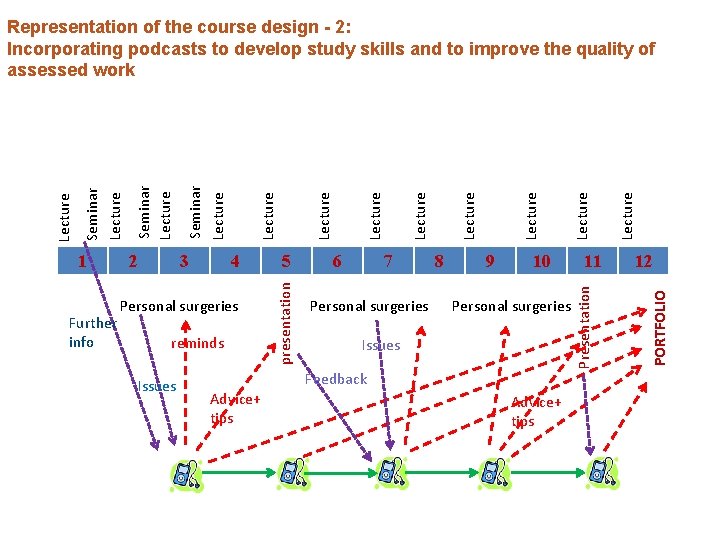
Designing for learning Approach 2: Developing study skills and helping with assessed work
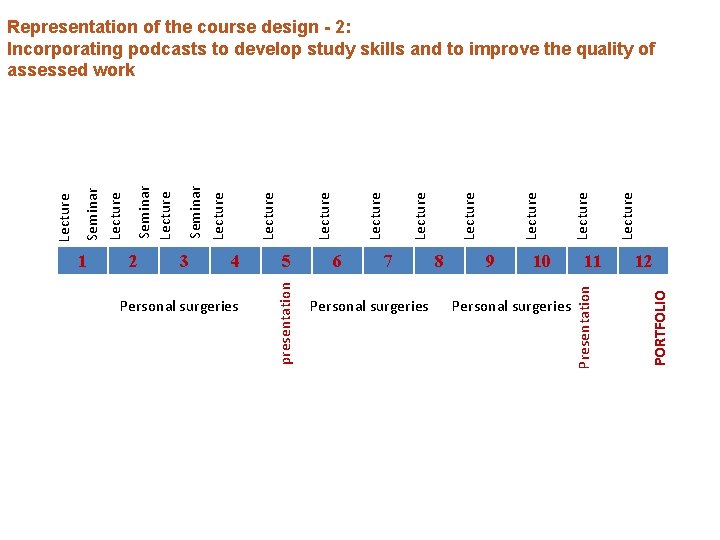
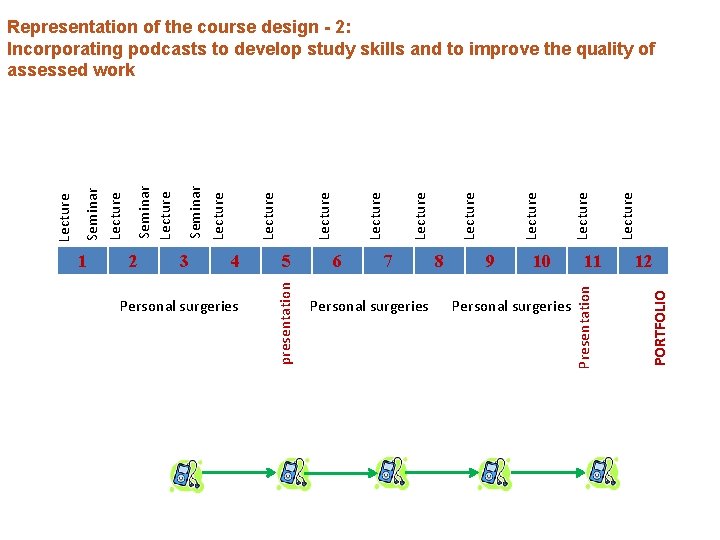
Personal surgeries 6 7 Personal surgeries 8 9 10 Personal surgeries 11 Lecture Lecture 5 12 PORTFOLIO 4 Presentation 3 presentation 2 Lecture Seminar Lecture 1 Seminar Lecture Representation of the course design - 2: Incorporating podcasts to develop study skills and to improve the quality of assessed work
Personal surgeries 6 7 Personal surgeries 8 9 10 Personal surgeries 11 Lecture Lecture 5 12 PORTFOLIO 4 Presentation 3 presentation 2 Lecture Seminar Lecture 1 Seminar Lecture Representation of the course design - 2: Incorporating podcasts to develop study skills and to improve the quality of assessed work
Personal surgeries Issues 6 7 Personal surgeries 8 9 10 Personal surgeries 11 Lecture Lecture 5 12 PORTFOLIO 4 Presentation Further info 3 presentation 2 Lecture Seminar Lecture 1 Seminar Lecture Representation of the course design - 2: Incorporating podcasts to develop study skills and to improve the quality of assessed work
Personal surgeries reminds Issues Advice+ tips 6 7 Personal surgeries 8 9 10 Personal surgeries 11 Lecture Lecture 5 12 PORTFOLIO 4 Presentation Further info 3 presentation 2 Lecture Seminar Lecture 1 Seminar Lecture Representation of the course design - 2: Incorporating podcasts to develop study skills and to improve the quality of assessed work
Personal surgeries reminds Issues 6 7 Personal surgeries Issues Feedback Advice+ tips 8 9 10 Personal surgeries 11 Lecture Lecture 5 12 PORTFOLIO 4 Presentation Further info 3 presentation 2 Lecture Seminar Lecture 1 Seminar Lecture Representation of the course design - 2: Incorporating podcasts to develop study skills and to improve the quality of assessed work
Personal surgeries reminds Issues 6 7 Personal surgeries 8 9 10 Personal surgeries Issues Feedback Advice+ tips 11 Lecture Lecture 5 12 PORTFOLIO 4 Presentation Further info 3 presentation 2 Lecture Seminar Lecture 1 Seminar Lecture Representation of the course design - 2: Incorporating podcasts to develop study skills and to improve the quality of assessed work
Personal surgeries reminds Issues 6 7 Personal surgeries 8 9 10 Personal surgeries Issues Feedback Advice+ tips 11 Lecture Lecture 5 12 PORTFOLIO 4 Presentation Further info 3 presentation 2 Lecture Seminar Lecture 1 Seminar Lecture Representation of the course design - 2: Incorporating podcasts to develop study skills and to improve the quality of assessed work
Personal surgeries reminds Issues 6 7 Personal surgeries 8 9 10 Personal surgeries Issues Feedback Advice+ tips 11 Lecture Lecture 5 12 PORTFOLIO 4 Presentation Further info 3 presentation 2 Lecture Seminar Lecture 1 Seminar Lecture Representation of the course design - 2: Incorporating podcasts to develop study skills and to improve the quality of assessed work
Designing podcasts
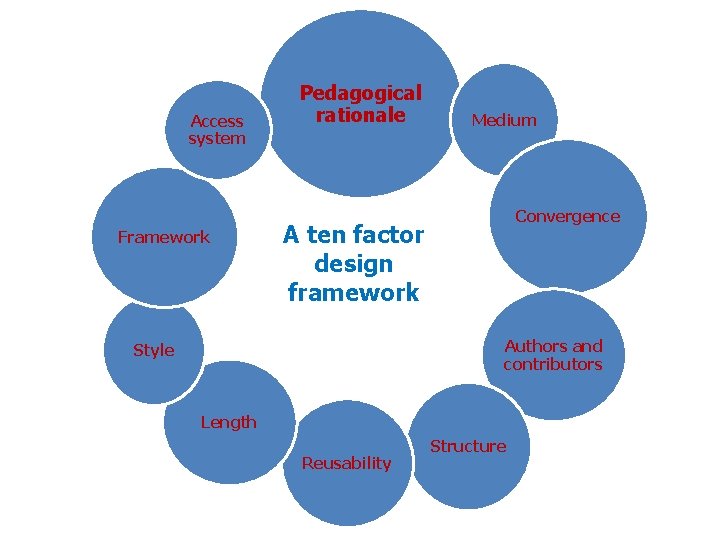
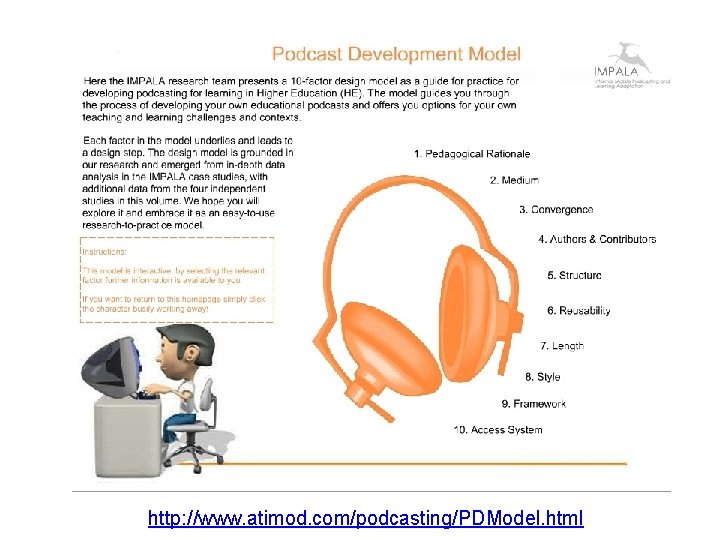
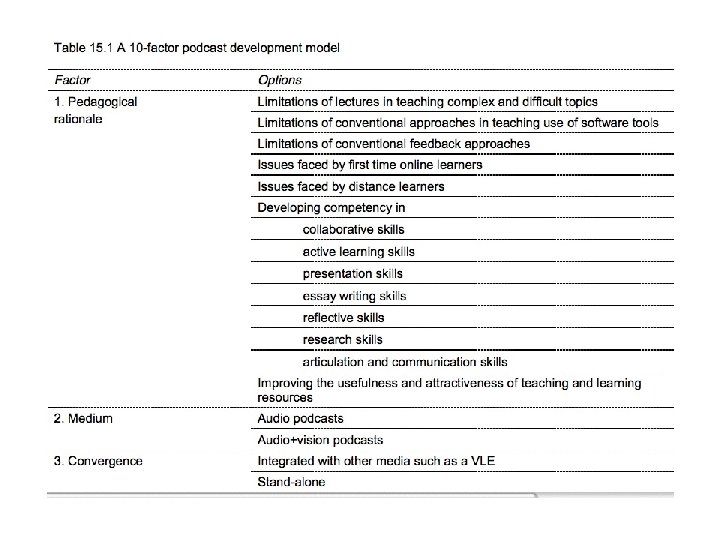
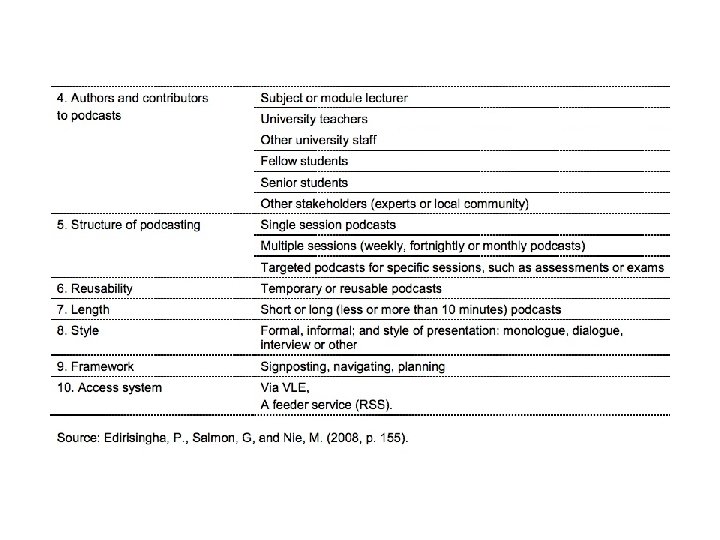
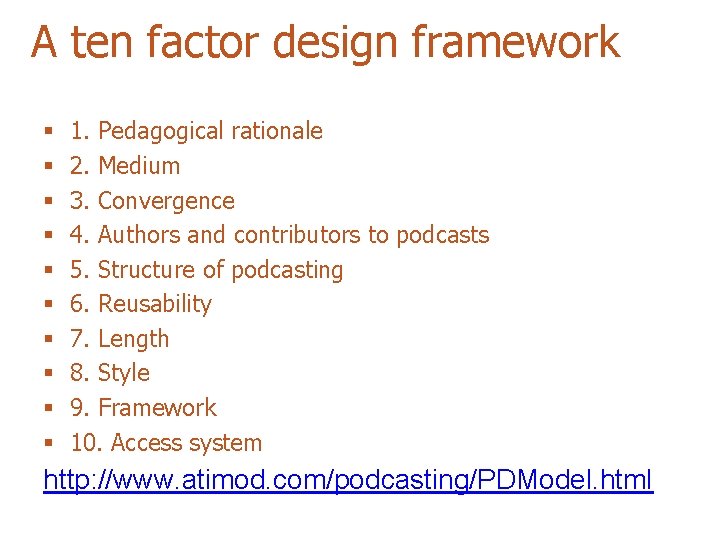
Access system Framework Pedagogical rationale Medium Convergence A ten factor design framework Authors and contributors Style Length Reusability Structure
http: //www. atimod. com/podcasting/PDModel. html
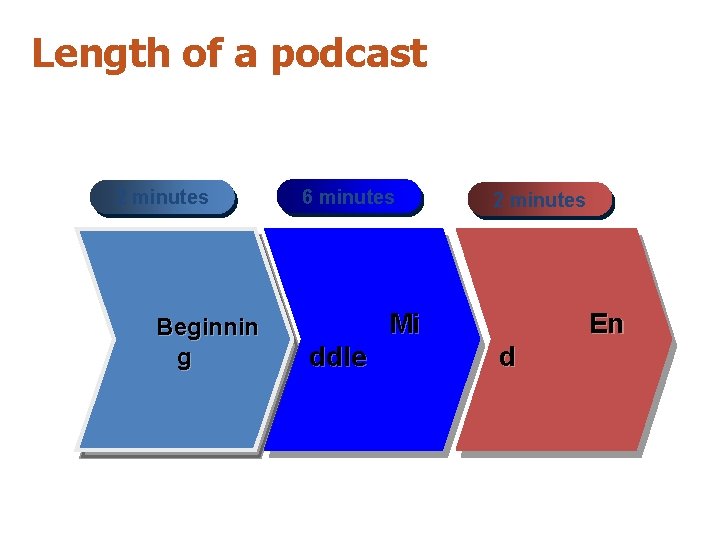
Length of a podcast 2 minutes Beginnin g 6 minutes 2 minutes Mi En ddle d
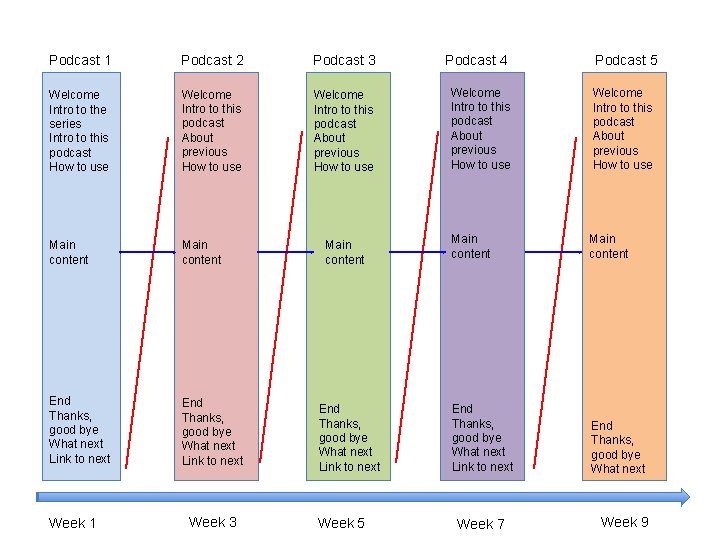
Podcast 1 Podcast 2 Podcast 3 Welcome Intro to the series Intro to this podcast How to use Welcome Intro to this podcast About previous How to use Main content End Thanks, good bye What next Link to next Week 1 Week 3 Main content End Thanks, good bye What next Link to next Week 5 Podcast 4 Podcast 5 Welcome Intro to this podcast About previous How to use Main content End Thanks, good bye What next Link to next End Thanks, good bye What next Week 7 Week 9
Introduction to podcast recording and editing software
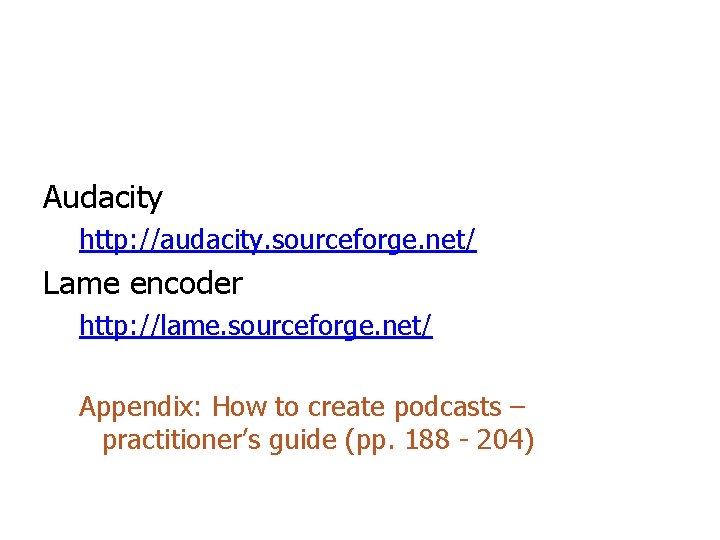
Audacity http: //audacity. sourceforge. net/ Lame encoder http: //lame. sourceforge. net/ Appendix: How to create podcasts – practitioner’s guide (pp. 188 - 204)
A ten factor design framework § § § § § 1. Pedagogical rationale 2. Medium 3. Convergence 4. Authors and contributors to podcasts 5. Structure of podcasting 6. Reusability 7. Length 8. Style 9. Framework 10. Access system http: //www. atimod. com/podcasting/PDModel. html
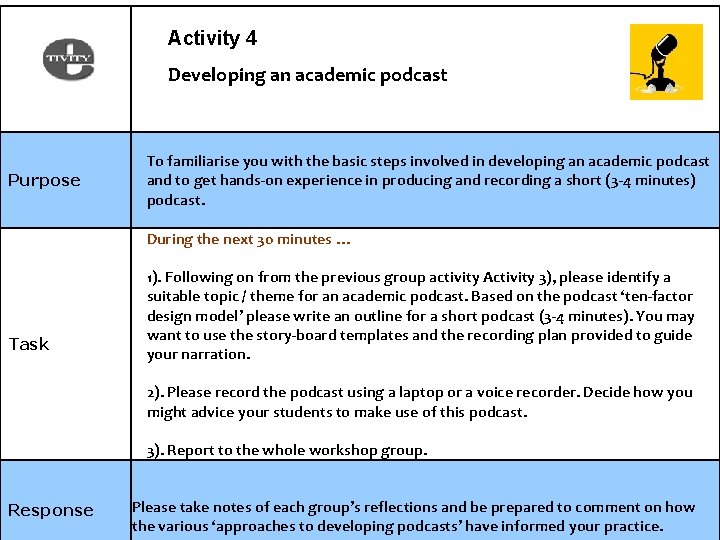
Activity 4 Developing an academic podcast Purpose To familiarise you with the basic steps involved in developing an academic podcast and to get hands-on experience in producing and recording a short (3 -4 minutes) podcast. During the next 30 minutes … Task 1). Following on from the previous group activity Activity 3), please identify a suitable topic / theme for an academic podcast. Based on the podcast ‘ten-factor design model’ please write an outline for a short podcast (3 -4 minutes). You may want to use the story-board templates and the recording plan provided to guide your narration. 2). Please record the podcast using a laptop or a voice recorder. Decide how you might advice your students to make use of this podcast. 3). Report to the whole workshop group. Response Please take notes of each group’s reflections and be prepared to comment on how the various ‘approaches to developing podcasts’ have informed your practice.
Sustaining the momentum, plans for institutional scaling up, OERs. [10 minutes] A discussion around: What is your / our experience of scaling up? what are the resource implications? Reusability? What types would be reusable? OERs? Let’s develop a check-list of issues and consider how to address them
Podcasting Vs early uses of audio Aspect Podcasting Early approaches Content Capture Computer, sound recorder, anywhere, free software, tools Distribution Feeders (RSS) – free VLE Specialised equipment, recording studios Duplication / copying Access Aggregator (i. Tunes, Google Reader) - content ‘dripping in’ Postal services Download Collecting personally Use Mobile devices (MP 3 players) Computers Cassette player Logistics of use Easy, flexibility, indexing, near -unlimited storage Bulky tapes, limitations, lack of flexibility Content contributors Teachers, students, alumini, stake holders, non-specialists Teachers, institutional Applications Many Instructional, motivational Postal services Walkman
Thank you for participating pe 27@le. ac. uk