
Technology An Introduction to GA 310 Instrument and







- Slides: 36
Technology: An Introduction to GA 310 Instrument and troubleshooting
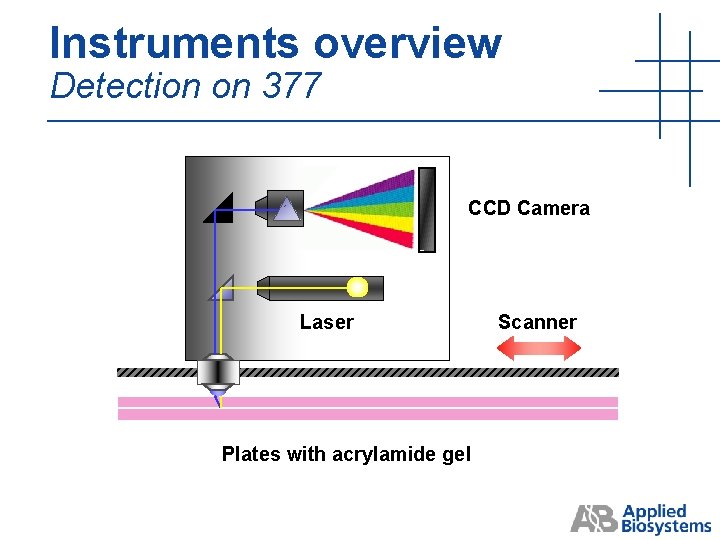
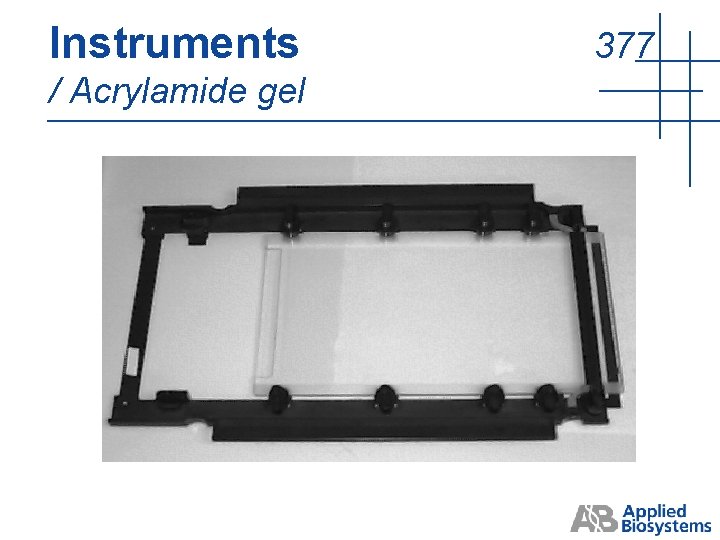
Instruments overview Detection on 377 CCD Camera Laser Plates with acrylamide gel Scanner
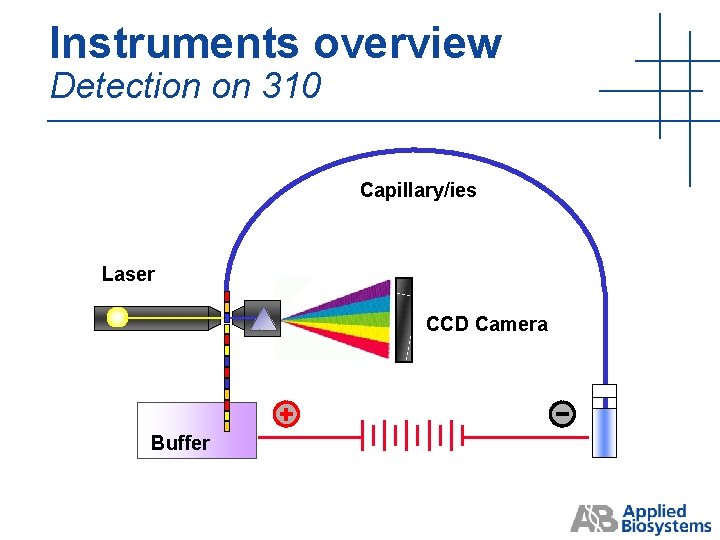
Instruments overview Detection on 310 Capillary/ies Laser CCD Camera Buffer
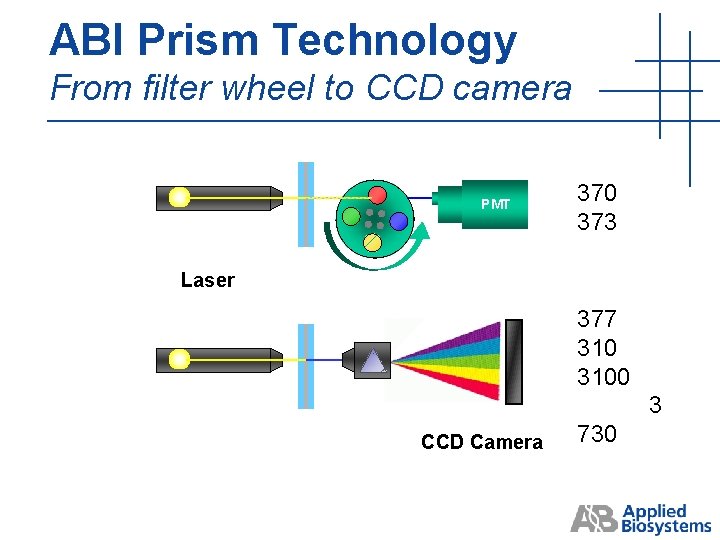
ABI Prism Technology From filter wheel to CCD camera PMT 370 373 Laser 377 3100 3 CCD Camera 730
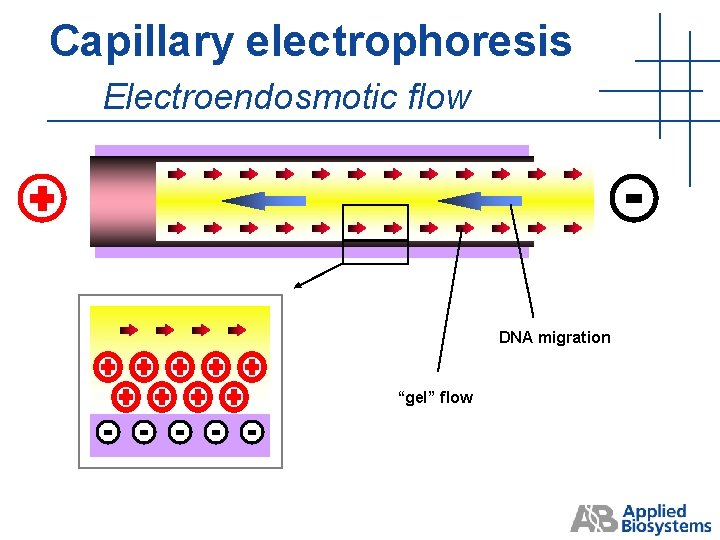
Capillary electrophoresis Electroendosmotic flow DNA migration “gel” flow
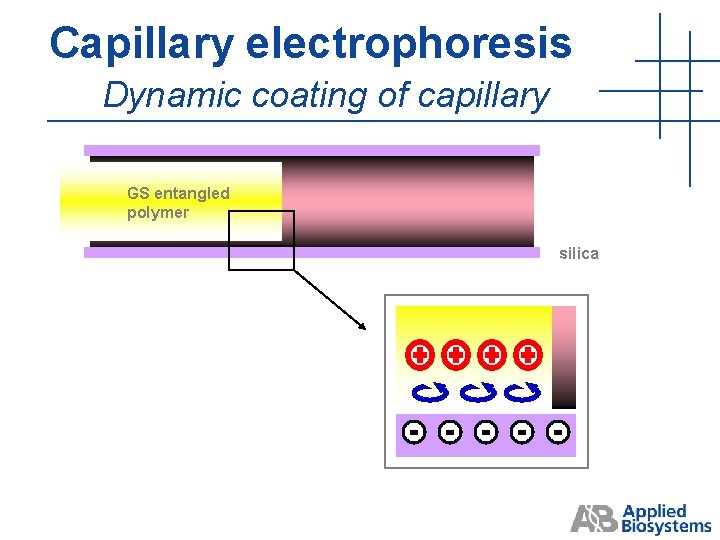
Capillary electrophoresis Dynamic coating of capillary GS entangled polymer silica
Instruments / Acrylamide gel 377
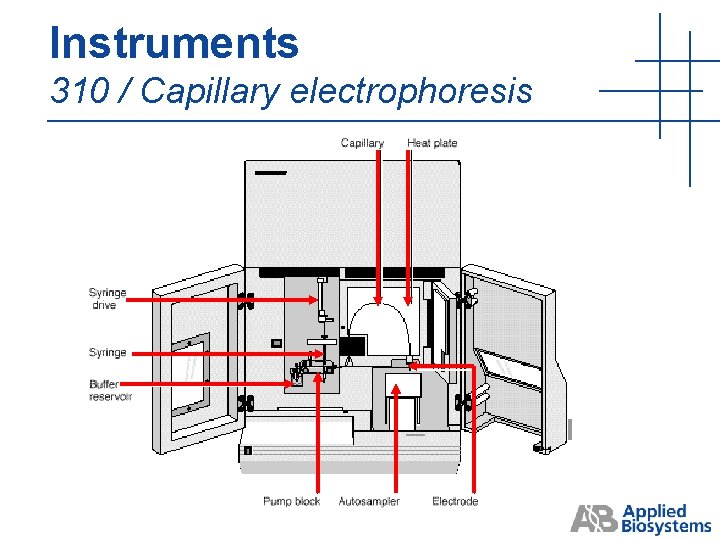
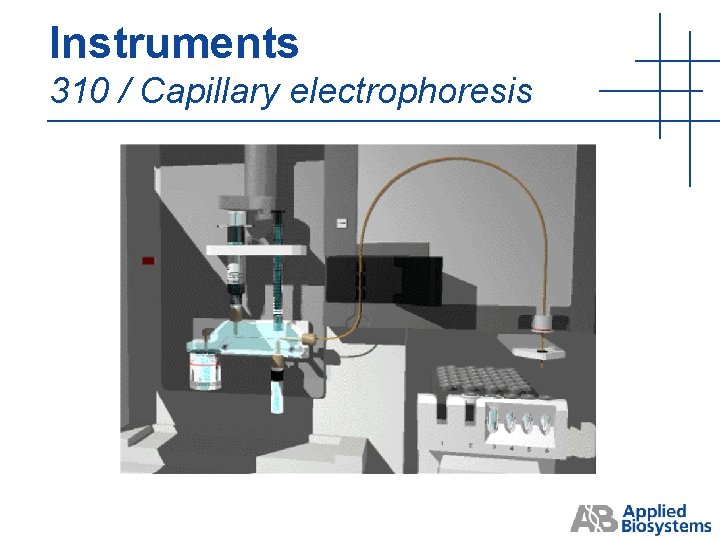
Instruments 310 / Capillary electrophoresis
Instruments 310 / Capillary electrophoresis
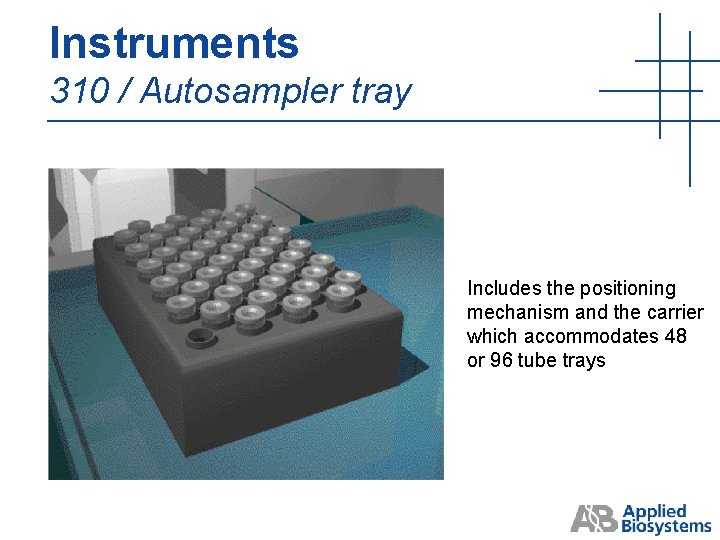
Instruments 310 / Autosampler tray Includes the positioning mechanism and the carrier which accommodates 48 or 96 tube trays
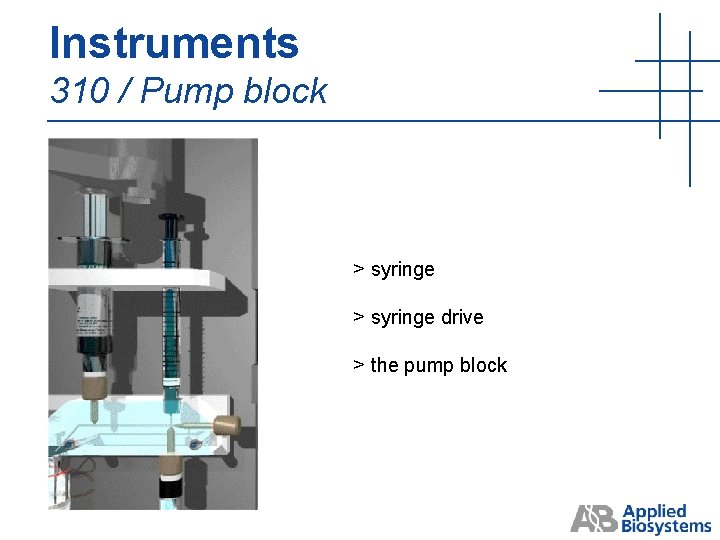
Instruments 310 / Pump block > syringe drive > the pump block
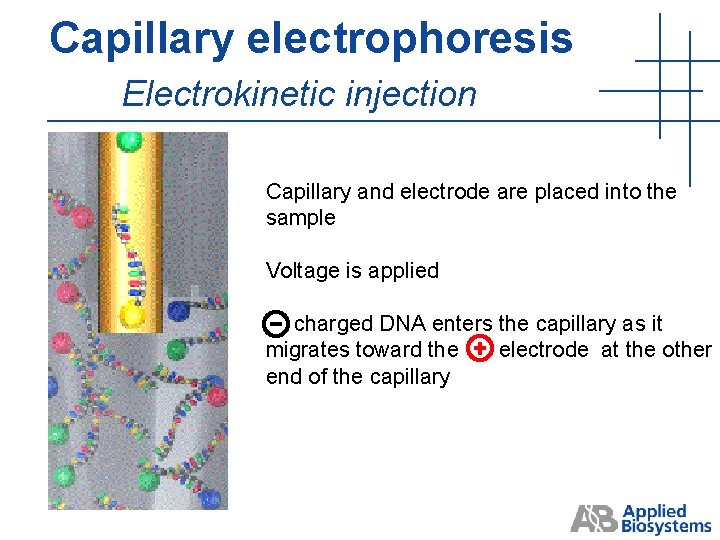
Capillary electrophoresis Electrokinetic injection Capillary and electrode are placed into the sample Voltage is applied “-” charged DNA enters the capillary as it migrates toward the “+” electrode at the other end of the capillary
Instruments overview CCD camera detector 64 512 pixels Read Dump VIRTUAL FILTER
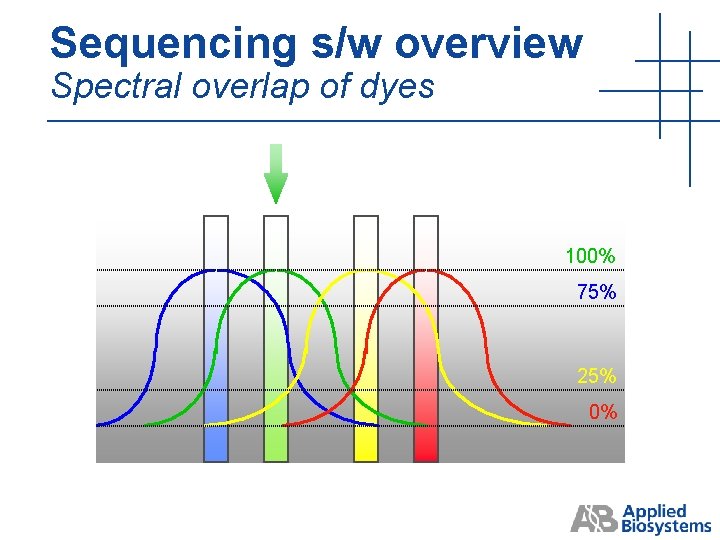
Sequencing s/w overview Spectral overlap of dyes 100% 75% 25% 0%
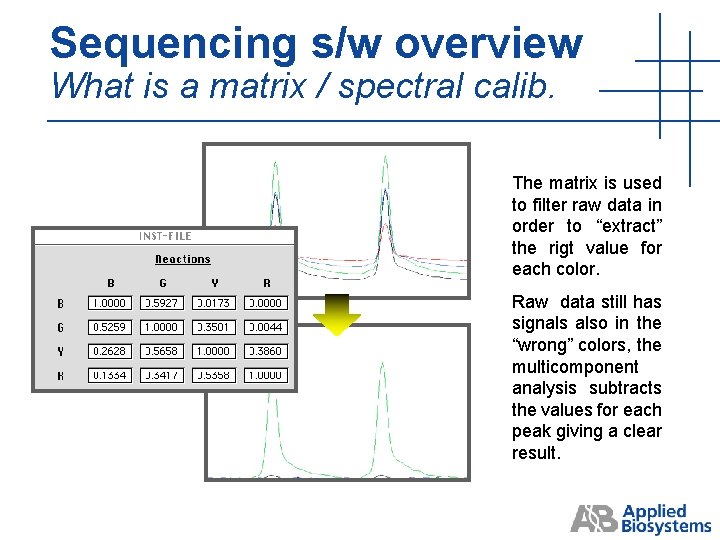
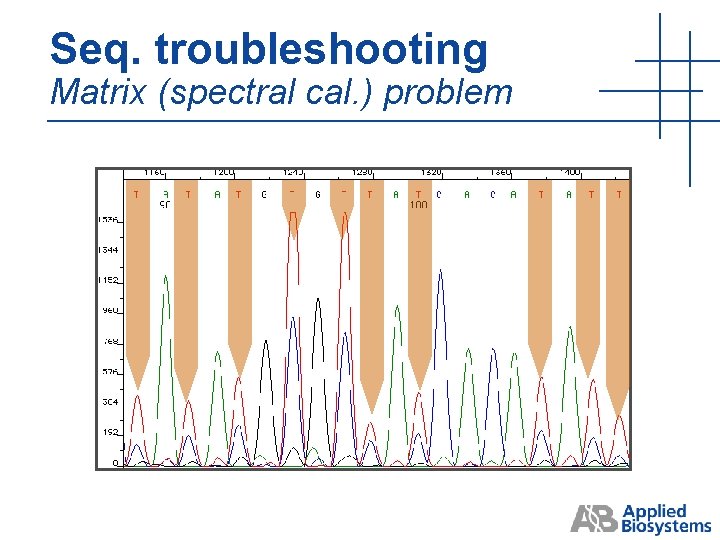
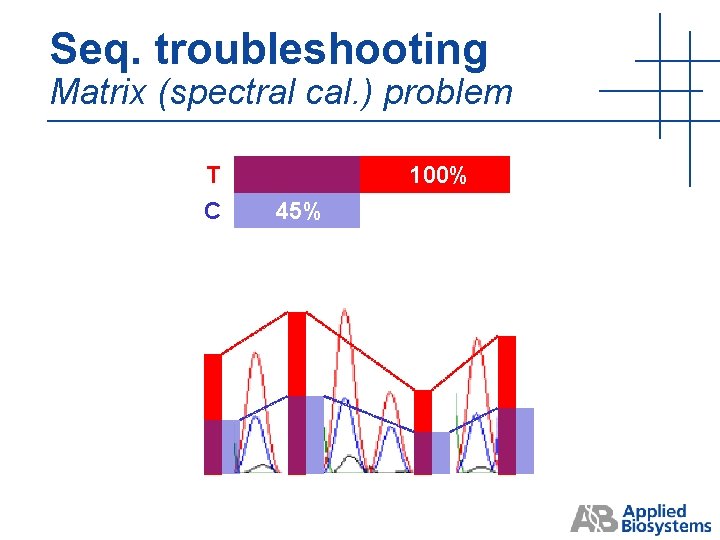
Sequencing s/w overview What is a matrix / spectral calib. The matrix is used to filter raw data in order to “extract” the rigt value for each color. Raw data still has signals also in the “wrong” colors, the multicomponent analysis subtracts the values for each peak giving a clear result.
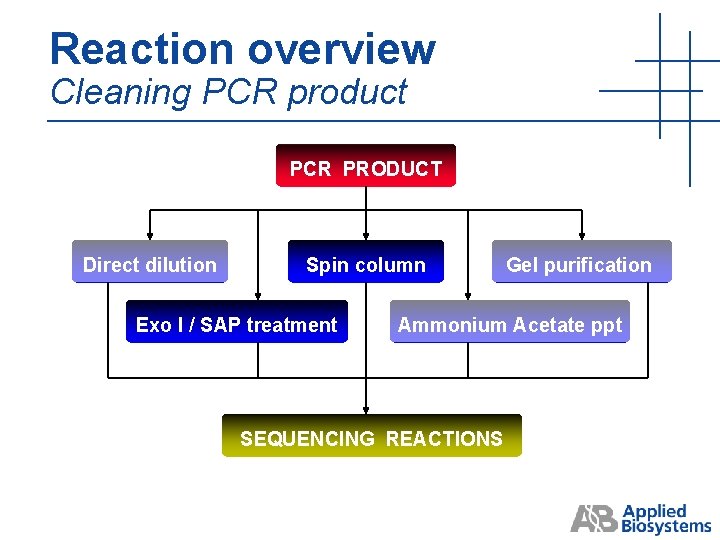
Reaction overview Cleaning PCR product PCR PRODUCT Direct dilution Spin column Exo I / SAP treatment Gel purification Ammonium Acetate ppt SEQUENCING REACTIONS
Sequencing overview Template amount evaluation It is very important to roughly estimate the amount of template DNA X ladder Y 25 50 75 100 • Agarose gel (0. 7 to 1. 2 %) stained with Et. Br + ladder or, even better, a scalar amount of a well quantified template (i. e. linearized p. GEM) • Spectrometer: OD 260 / OD 280 • Fluorometer
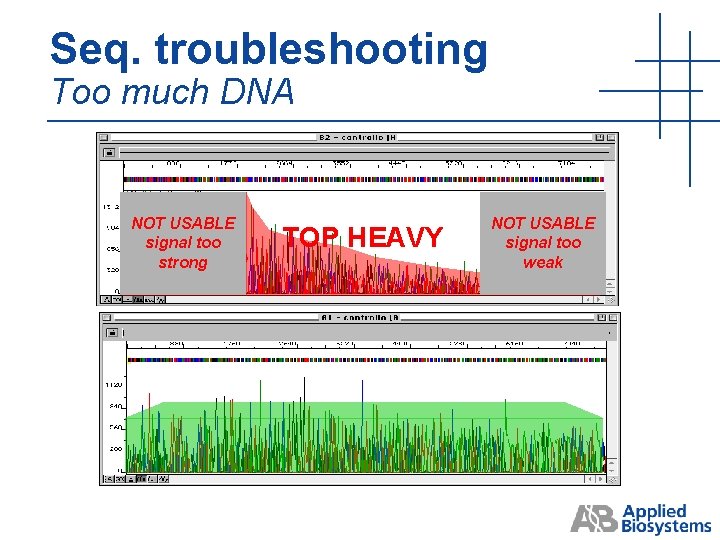
Seq. troubleshooting Too much DNA NOT USABLE signal too strong TOP HEAVY NOT USABLE signal too weak
Seq. troubleshooting Too much DNA NOT USABLE signal too strong OK TOP HEAVY NOT USABLE signal too weak
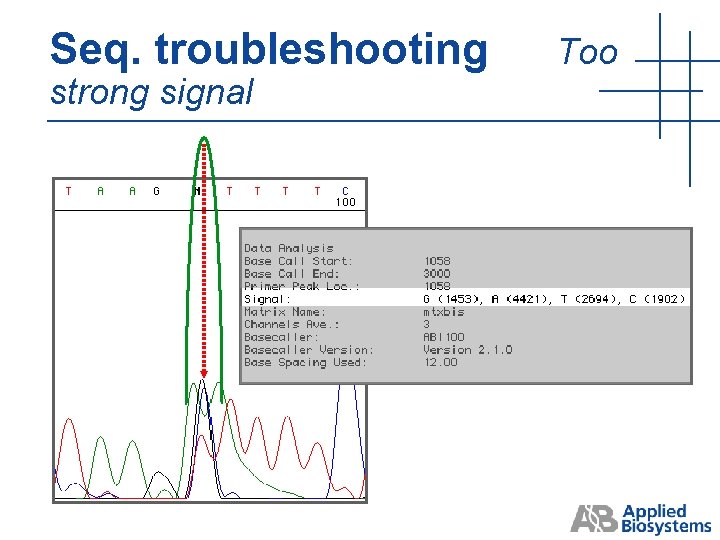
Seq. troubleshooting strong signal Too
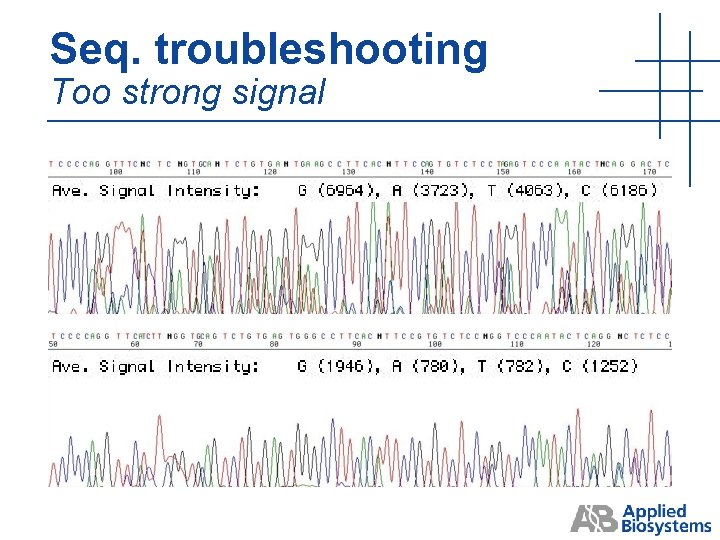
Seq. troubleshooting Too strong signal
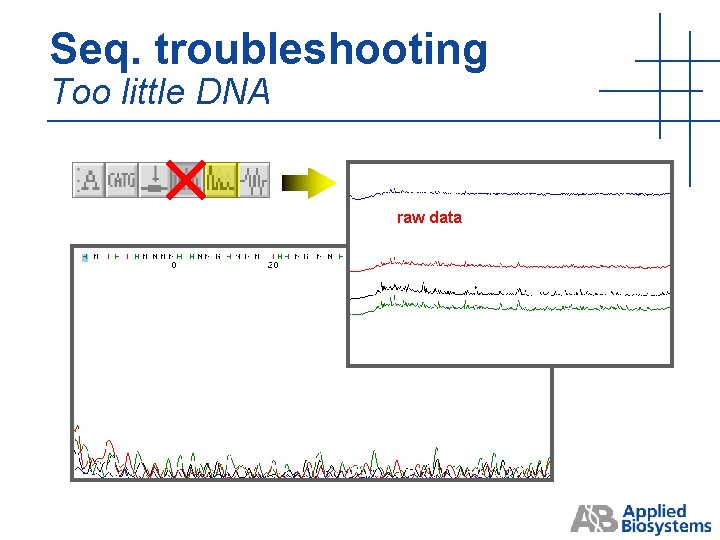
Seq. troubleshooting Too little DNA raw data
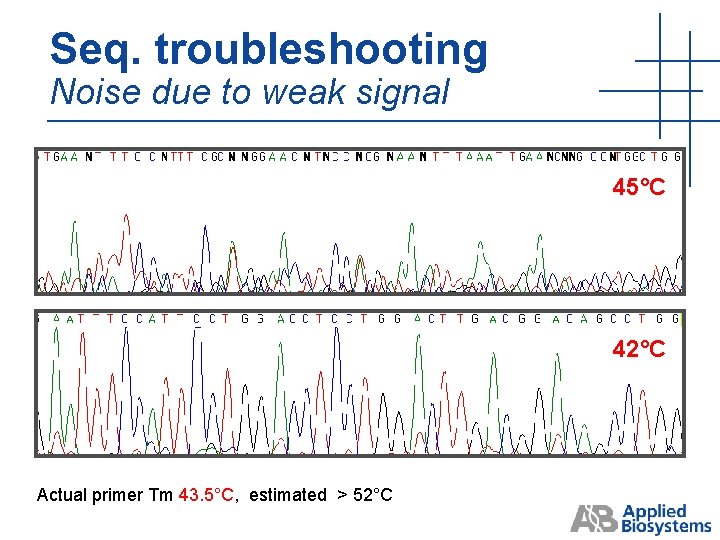
Seq. troubleshooting Noise due to weak signal 45°C 42°C Actual primer Tm 43. 5°C, estimated > 52°C
Seq. troubleshooting Noise due to weak signal <100 ng plasmid 300 ng plasmid
Seq. troubleshooting Noise due to insertion / deletion Forw. Rev.
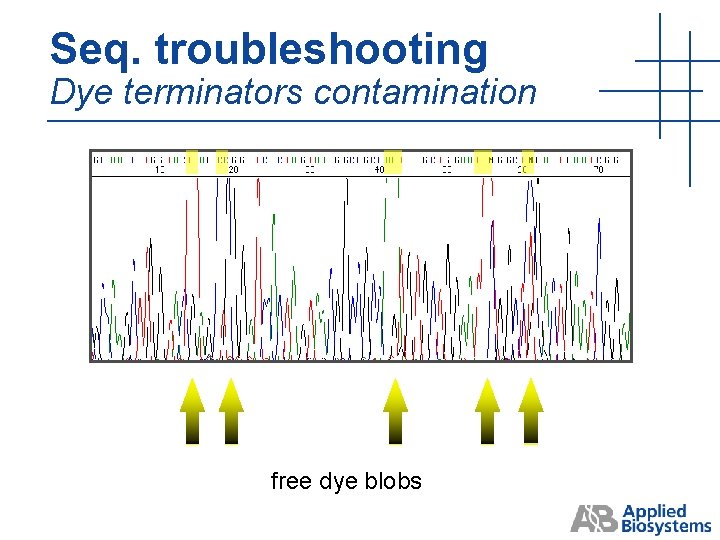
Seq. troubleshooting Dye terminators contamination free dye blobs
Seq. troubleshooting Free dye terminators removal Centrisep Columns (PE Biosystems) Multiscreen plate (Millipore) Dye. Ex or Dye. Ex 96 (Qiagen) Et. OH + 3 M Na. OAc precipitation SAP (BAP) digestion (usb Corporation) e t le Phenol: Chl extraction o s ob Et. OH (+ Mg. Cl 2) precipitation
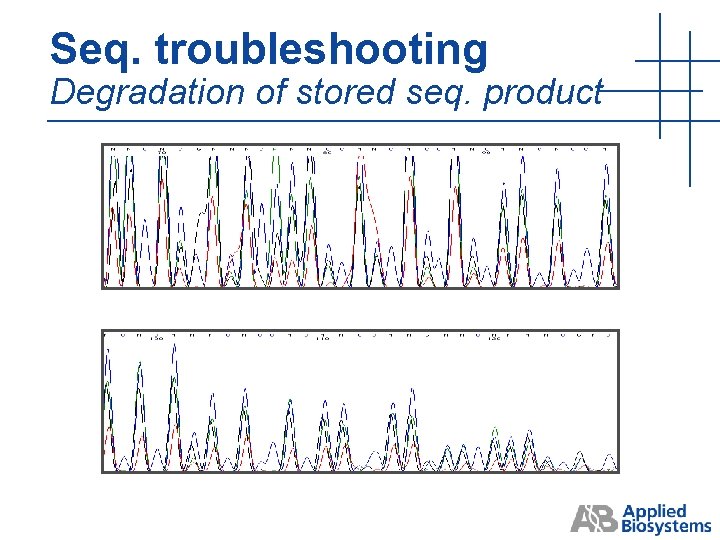
Seq. troubleshooting Degradation of stored seq. product
Seq. troubleshooting Matrix (spectral cal. ) problem
Seq. troubleshooting Matrix (spectral cal. ) problem T C 100% 45%
Instr. related problems Spike due to CCD current (310) raw data anal. data
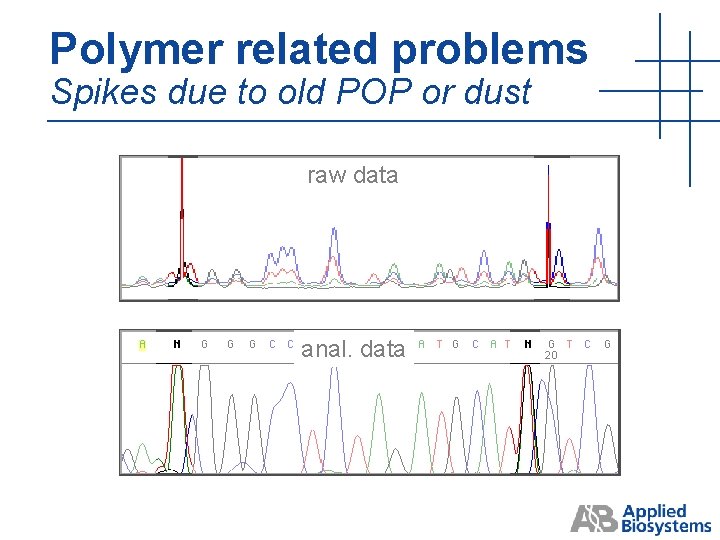
Polymer related problems Spikes due to old POP or dust raw data anal. data
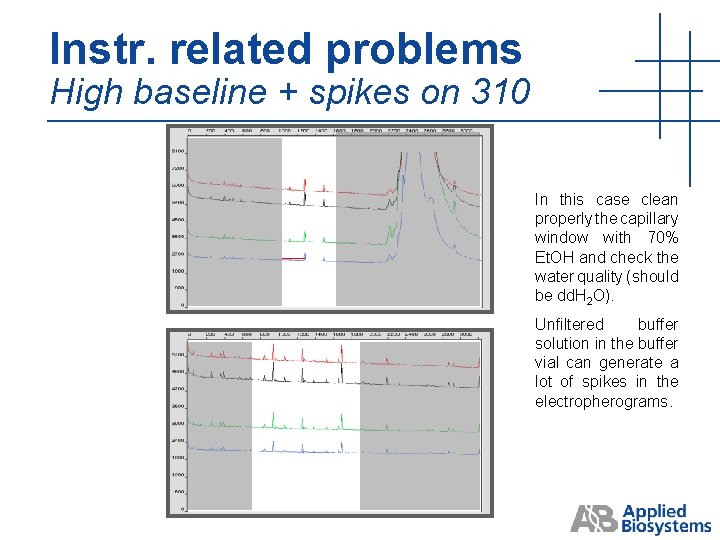
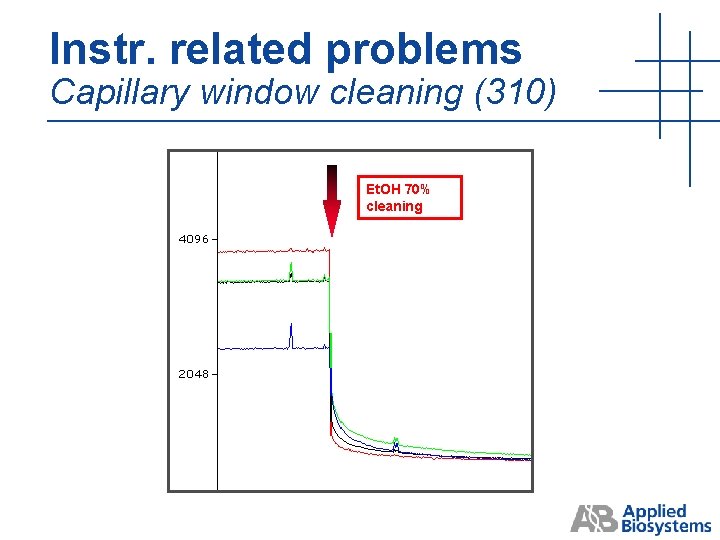
Instr. related problems High baseline + spikes on 310 In this case clean properly the capillary window with 70% Et. OH and check the water quality (should be dd. H 2 O). Unfiltered buffer solution in the buffer vial can generate a lot of spikes in the electropherograms.
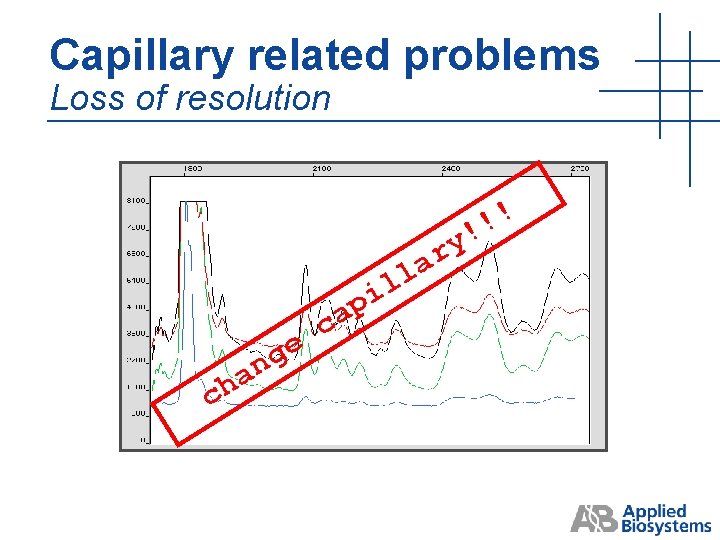
Capillary related problems Loss of resolution ! ! ! y r a ll a h c e g n i p ca
Instr. related problems Syringe problem (waterfall) Wash new syringes carefully with 60°C HPLC water from Merck, and then good with cold water. Sometimes its necessary and helps to wash new syringes with 2 N Na. OH (prepared with HPLC water from Merck and afterwards with cold HPLC water).
Instr. related problems Capillary window cleaning (310) Et. OH 70% cleaning