
Technologies used in post harvest handling and storage


- Slides: 16
Technologies used in post harvest handling and storage of agriculture products in Nepal Pragati Shrestha Department of Horticulture and Landscape Architecture
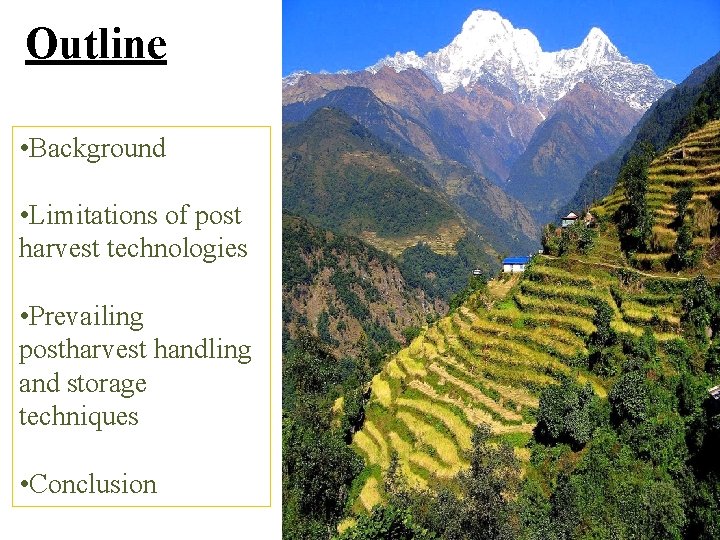
Outline • Background • Limitations of post harvest technologies • Prevailing postharvest handling and storage techniques • Conclusion
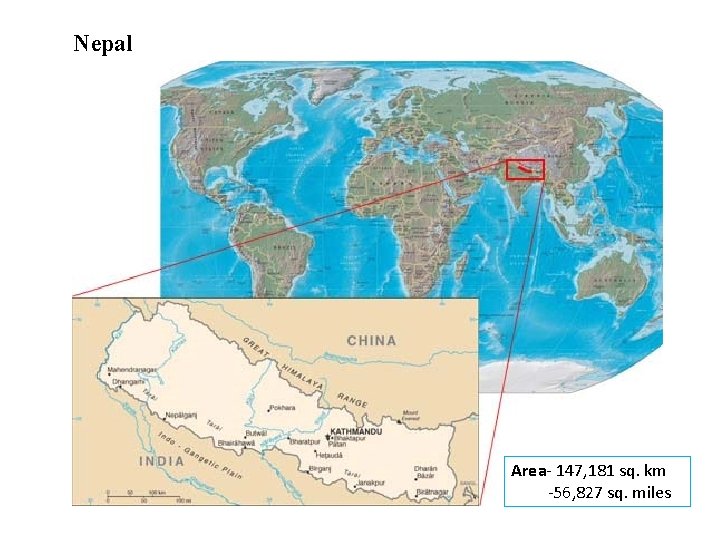
Nepal Area- 147, 181 sq. km -56, 827 sq. miles
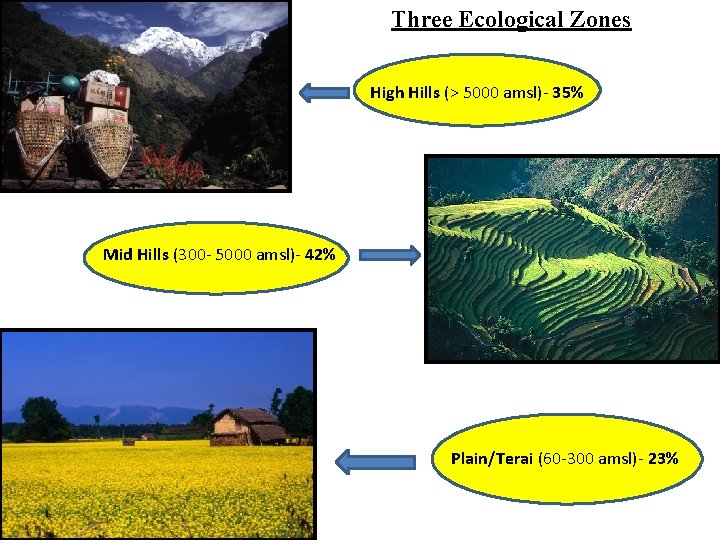
Three Ecological Zones High Hills (> 5000 amsl)- 35% Mid Hills (300 - 5000 amsl)- 42% Plain/Terai (60 -300 amsl)- 23%
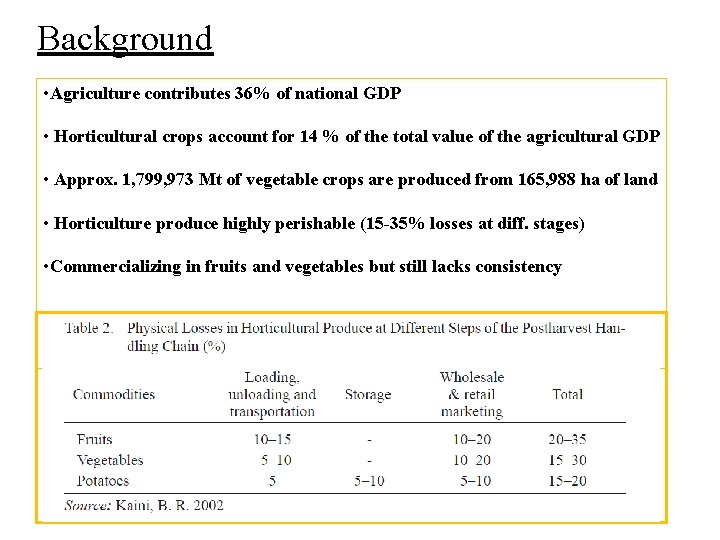
Background • Agriculture contributes 36% of national GDP • Horticultural crops account for 14 % of the total value of the agricultural GDP • Approx. 1, 799, 973 Mt of vegetable crops are produced from 165, 988 ha of land • Horticulture produce highly perishable (15 -35% losses at diff. stages) • Commercializing in fruits and vegetables but still lacks consistency
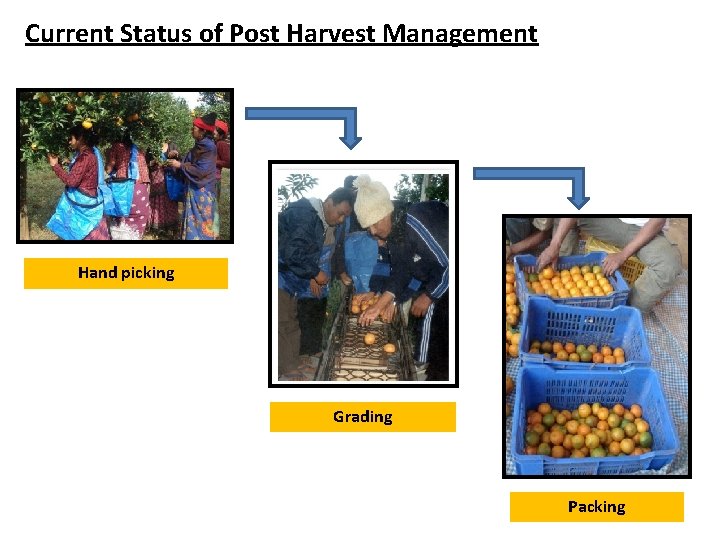
Current Status of Post Harvest Management Hand picking Grading Packing
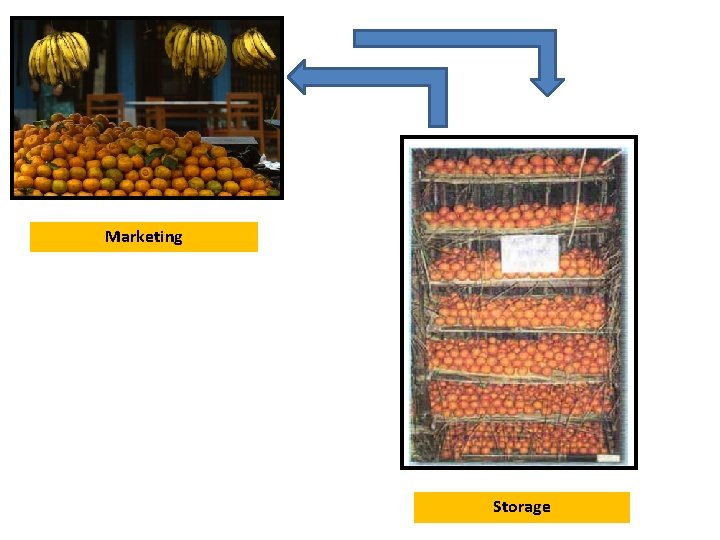
Marketing Storage
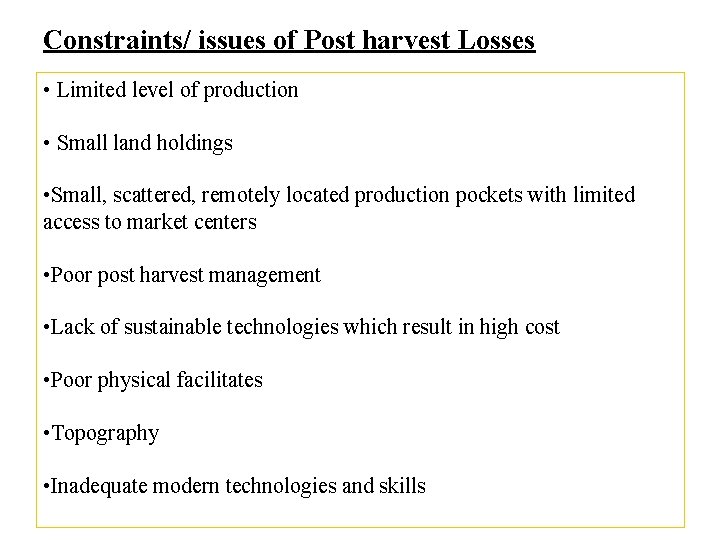
Constraints/ issues of Post harvest Losses • Limited level of production • Small land holdings • Small, scattered, remotely located production pockets with limited access to market centers • Poor post harvest management • Lack of sustainable technologies which result in high cost • Poor physical facilitates • Topography • Inadequate modern technologies and skills
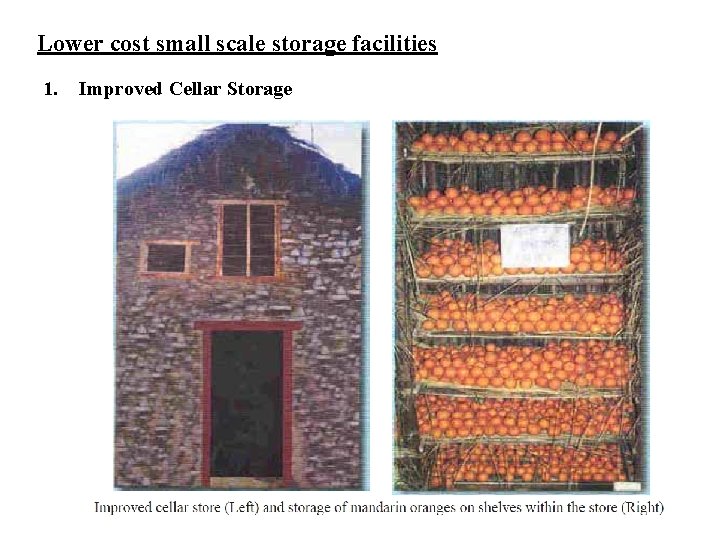
Lower cost small scale storage facilities 1. Improved Cellar Storage
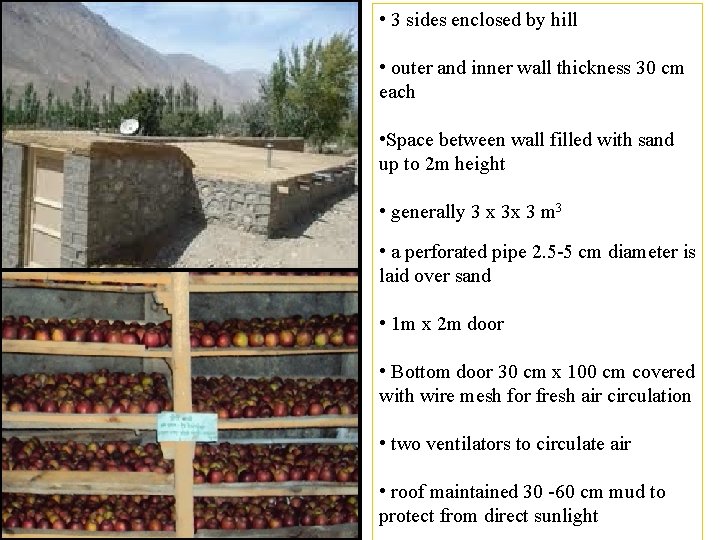
• 3 sides enclosed by hill • outer and inner wall thickness 30 cm each • Space between wall filled with sand up to 2 m height • generally 3 x 3 x 3 m 3 • a perforated pipe 2. 5 -5 cm diameter is laid over sand • 1 m x 2 m door • Bottom door 30 cm x 100 cm covered with wire mesh for fresh air circulation • two ventilators to circulate air • roof maintained 30 -60 cm mud to protect from direct sunlight
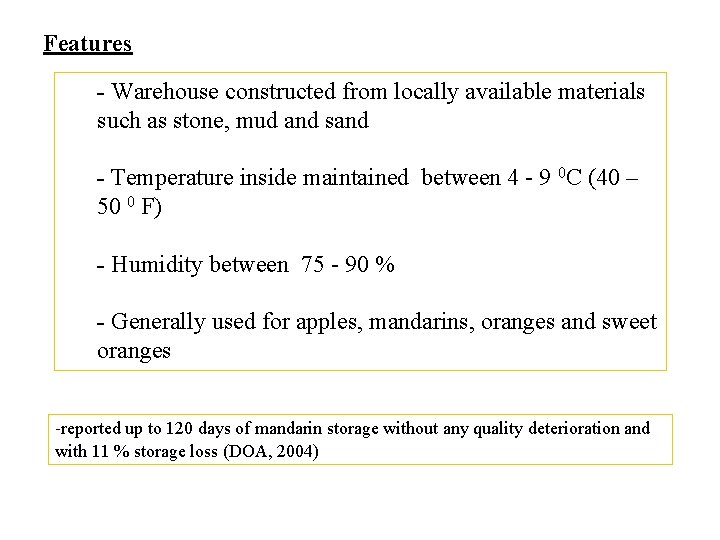
Features - Warehouse constructed from locally available materials such as stone, mud and sand - Temperature inside maintained between 4 - 9 0 C (40 – 50 0 F) - Humidity between 75 - 90 % - Generally used for apples, mandarins, oranges and sweet oranges -reported up to 120 days of mandarin storage without any quality deterioration and with 11 % storage loss (DOA, 2004)
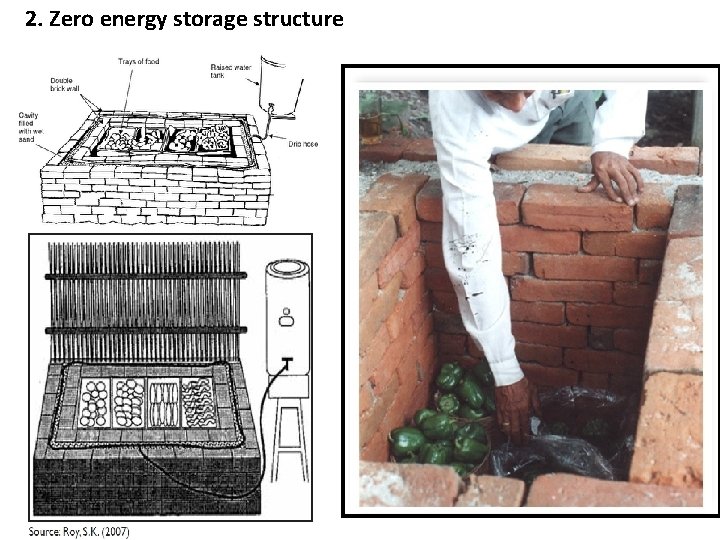
2. Zero energy storage structure
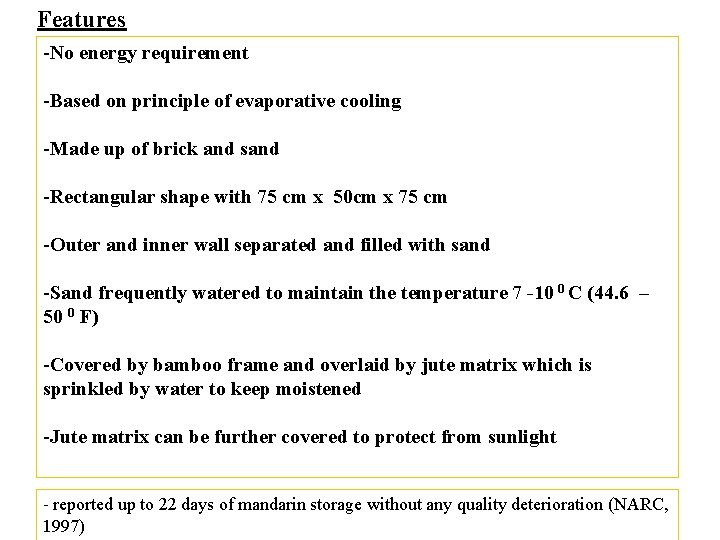
Features -No energy requirement -Based on principle of evaporative cooling -Made up of brick and sand -Rectangular shape with 75 cm x 50 cm x 75 cm -Outer and inner wall separated and filled with sand -Sand frequently watered to maintain the temperature 7 -10 0 C (44. 6 – 50 0 F) -Covered by bamboo frame and overlaid by jute matrix which is sprinkled by water to keep moistened -Jute matrix can be further covered to protect from sunlight - reported up to 22 days of mandarin storage without any quality deterioration (NARC, 1997)
Conclusion • Early stage of commercialization • Need proper postharvest management, adoption of standards, selection of appropriate varieties for competitiveness
THANK YOU