
Technologies for the Visually and Audibly Impaired Lawrence
Technologies for the Visually and Audibly Impaired Lawrence Roy and Aldiansyah S.

Introduction
Outline ● Visual Impairment ○ ○ Assistive Technology Universal Design for a Product ● Auditory Impairment ○ ○ Prevalence Technology ■ Cochlear Implants ■ Hearing Aids ■ Assistive Technology

Visual Impairment
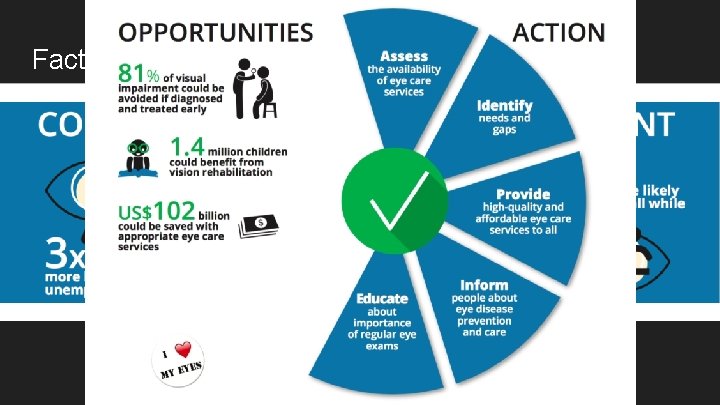
Fact Based on World Health Organization

Assistive Technologies (AT) ● AT for Navigation Source: https: //www. ultracane. com/
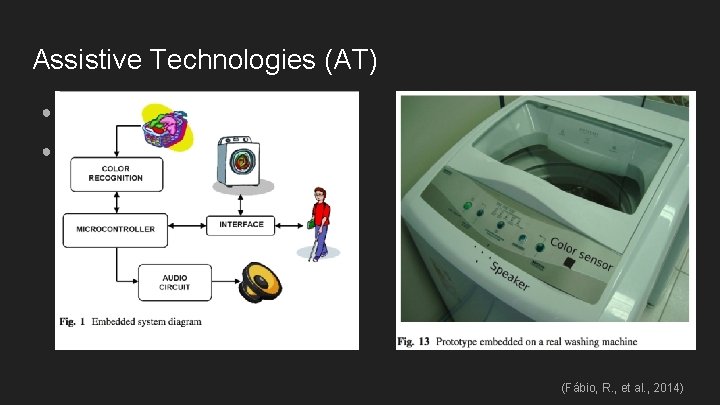
Assistive Technologies (AT) ● AT for Navigation ● AT in Household Appliances (Fábio, R. , et al. , 2014)
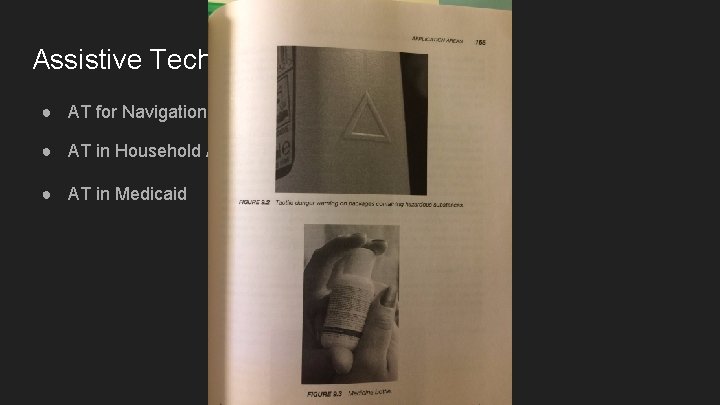
Assistive Technologies (AT) ● AT for Navigation ● AT in Household Appliances ● AT in Medicaid
Universal Design ● Equitable Use ● Flexibility in Use ● Simple and Intuitive Use ● Perceptible Information ● Tolerance for Error ● Low Physical Effort ● Size and Space for Approach and Use
Auditory Impairment
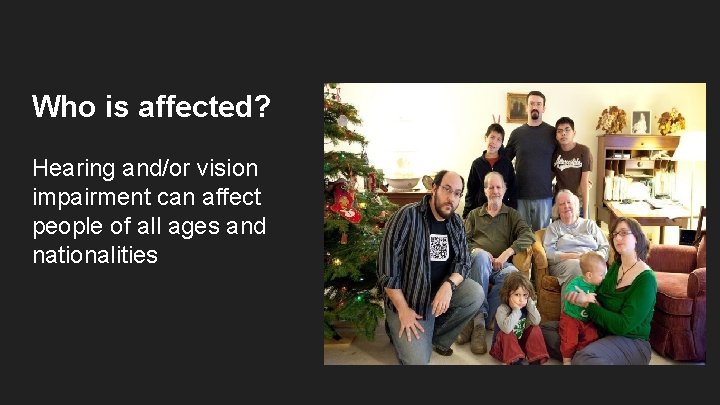
Who is affected? Hearing and/or vision impairment can affect people of all ages and nationalities

Age matters Full or partial deafness affects people differently at different ages, but they all are at risk of isolation from their families and communities.
Hearing Loss and Deafness ● Hearing loss affects 2. 5/1000 births in the USA each year. ● 2% Adults Age 45 -54 ● 8. 5 % Adults Age 55 -64 ● 25% Adults Age 65 -74 ● 50% Adults Age 75+

How Hearing Works
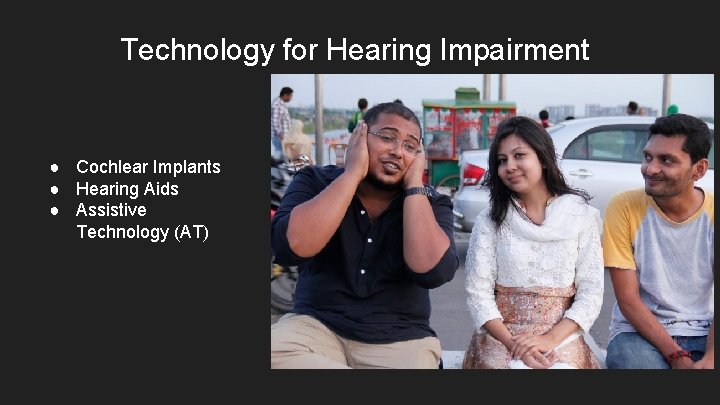
Technology for Hearing Impairment ● Cochlear Implants ● Hearing Aids ● Assistive Technology (AT)
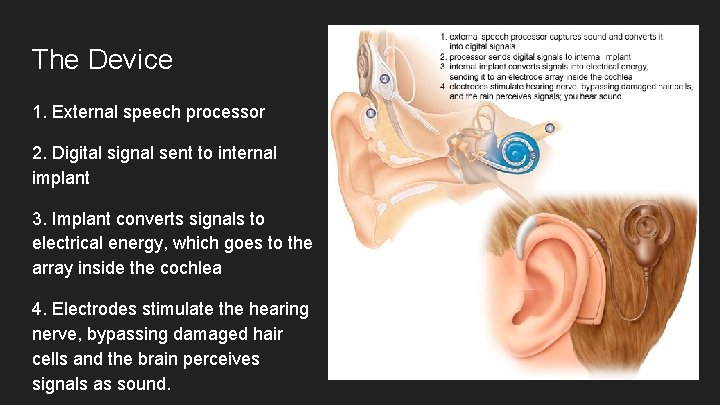
The Device 1. External speech processor 2. Digital signal sent to internal implant 3. Implant converts signals to electrical energy, which goes to the array inside the cochlea 4. Electrodes stimulate the hearing nerve, bypassing damaged hair cells and the brain perceives signals as sound.
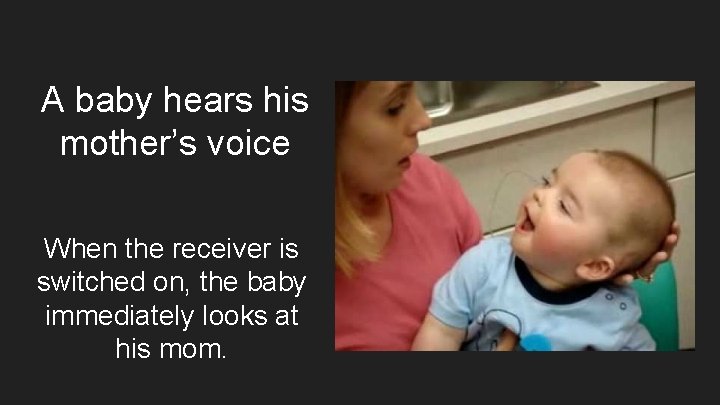
A baby hears his mother’s voice When the receiver is switched on, the baby immediately looks at his mom.
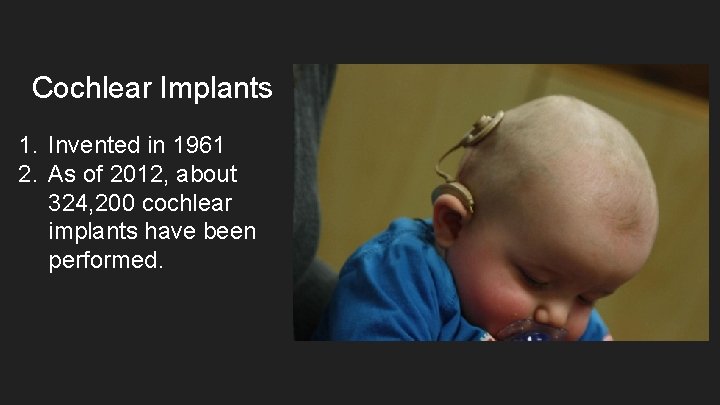
Cochlear Implants 1. Invented in 1961 2. As of 2012, about 324, 200 cochlear implants have been performed.
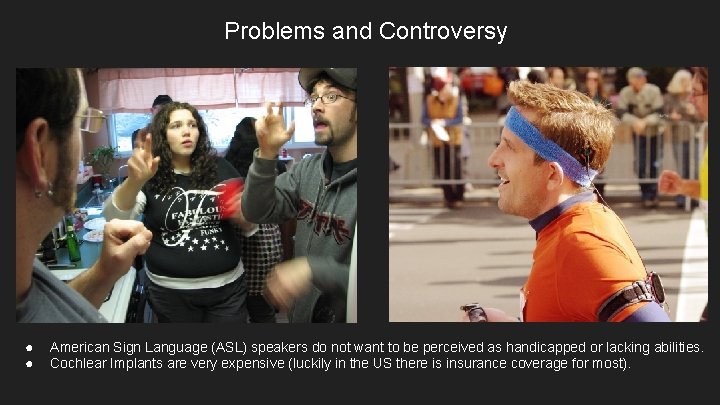
Problems and Controversy ● ● American Sign Language (ASL) speakers do not want to be perceived as handicapped or lacking abilities. Cochlear Implants are very expensive (luckily in the US there is insurance coverage for most).
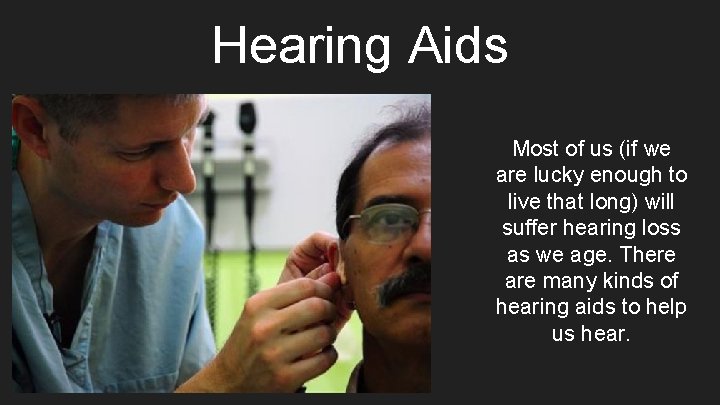
Hearing Aids Most of us (if we are lucky enough to live that long) will suffer hearing loss as we age. There are many kinds of hearing aids to help us hear.
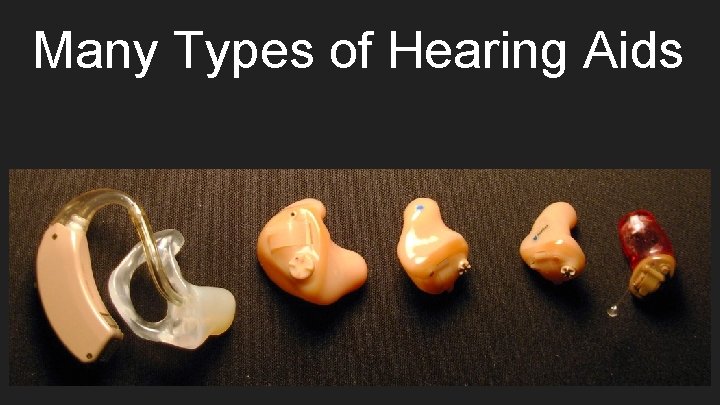
Many Types of Hearing Aids
Access Issues ● ● Expensive - average cost of $4, 700 Classified by FDA as a medical device Only available through licensed specialist Cost is not covered by Medicare or private insurance plans ● Only 25% of the 30 million people who need them have hearing aids
Good news Access is improving Personal sound amplification products (PSAPs) $30 - $350 “Self-fitting hearing aids” may help reduce prices more. Hearing loss is recognized as the disability of greatest frequency and duration in an average lifespan, so these improvements are very hopeful.
Assistive Technologies ● ● FM Headsets - useful in auditoriums Induction Looping - wire around room to send signal to headset Captioning - low-tech but very useful in movies, websites, videos, etc. Automobiles - traffic warnings, flashing lights and text with audio warnings, bluetooth connections to implants or hearing aids for better sound. ● Household - vibro-tactile pager, flashing timer, strobe alarm, in-phone amplifier
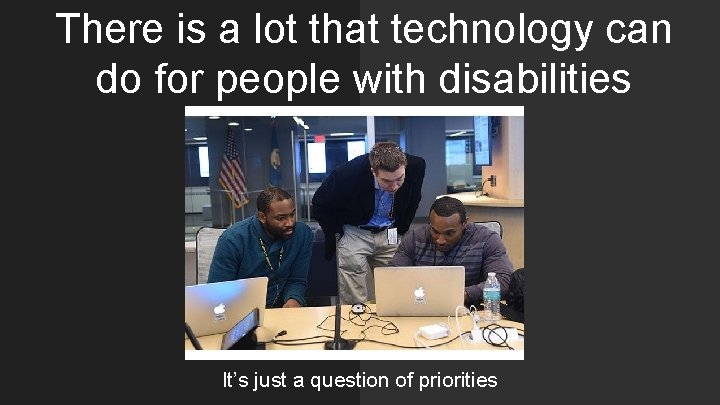
There is a lot that technology can do for people with disabilities It’s just a question of priorities
“The disability is not the problem. The accessibility is the problem” - Mohamed Jemni #TED 2013

Thanks! Contact us: Theater Oregon State University Corvallis, OR 97331 royl@oregonstate. edu suryouta@oregonstate. edu
- Slides: 27