
Technologies and Media for Distance Education ITEC 106

- Slides: 26
Technologies and Media for Distance Education ITEC 106 EASTERN MEDITERRANEAN UNIVERSITY Faculty of Education Department of Computer Education and Instructional Technology Teacher Education
A Model of Communication q Communication occurs when two or more individuals wish to share ideas. q Communication in a distance education environment happens when learners interact with one another and with instructor. -2 -
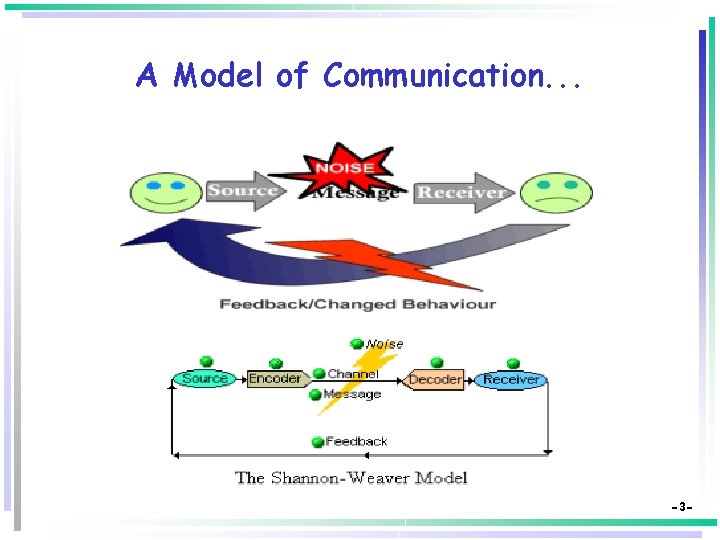
A Model of Communication. . . -3 -
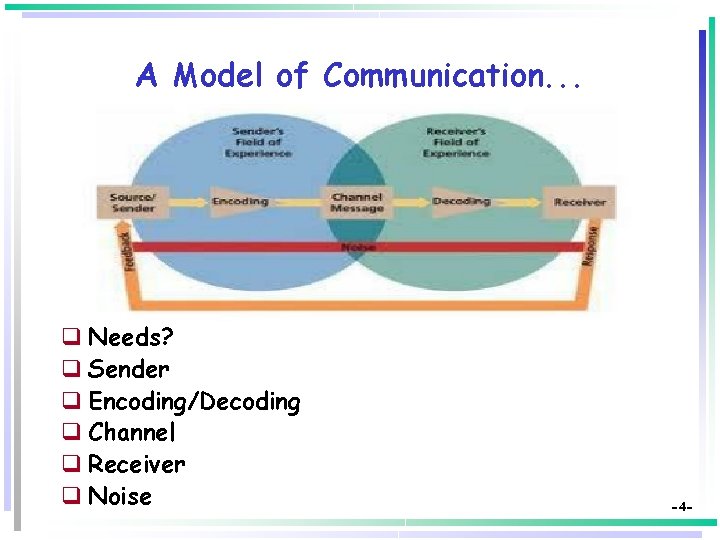
A Model of Communication. . . q Needs? q Sender q Encoding/Decoding q Channel q Receiver q Noise -4 -
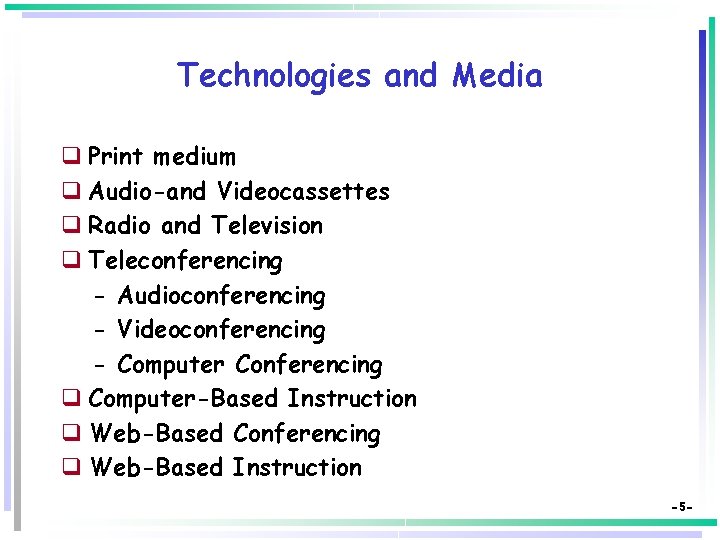
Technologies and Media q Print medium q Audio-and Videocassettes q Radio and Television q Teleconferencing - Audioconferencing - Videoconferencing - Computer Conferencing q Computer-Based Instruction q Web-Based Conferencing q Web-Based Instruction -5 -
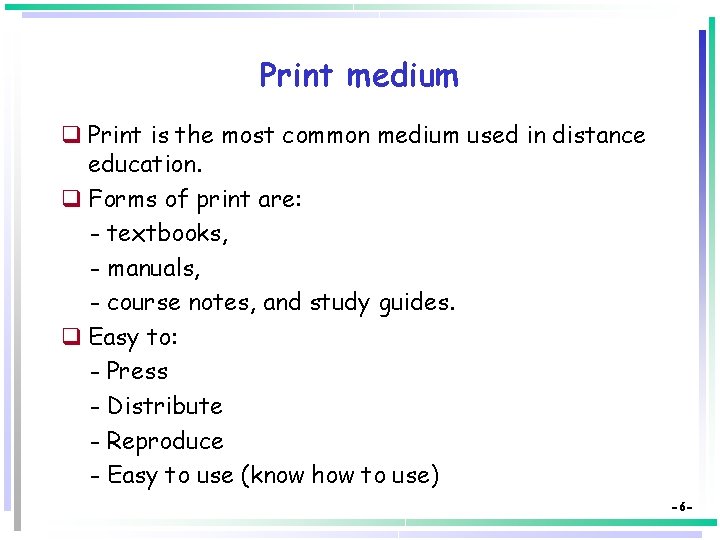
Print medium q Print is the most common medium used in distance education. q Forms of print are: - textbooks, - manuals, - course notes, and study guides. q Easy to: - Press - Distribute - Reproduce - Easy to use (know how to use) -6 -
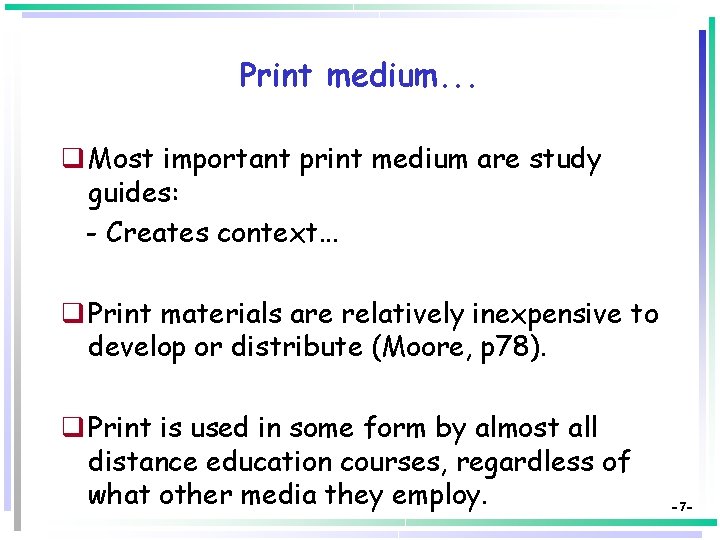
Print medium. . . q Most important print medium are study guides: - Creates context. . . q Print materials are relatively inexpensive to develop or distribute (Moore, p 78). q Print is used in some form by almost all distance education courses, regardless of what other media they employ. -7 -
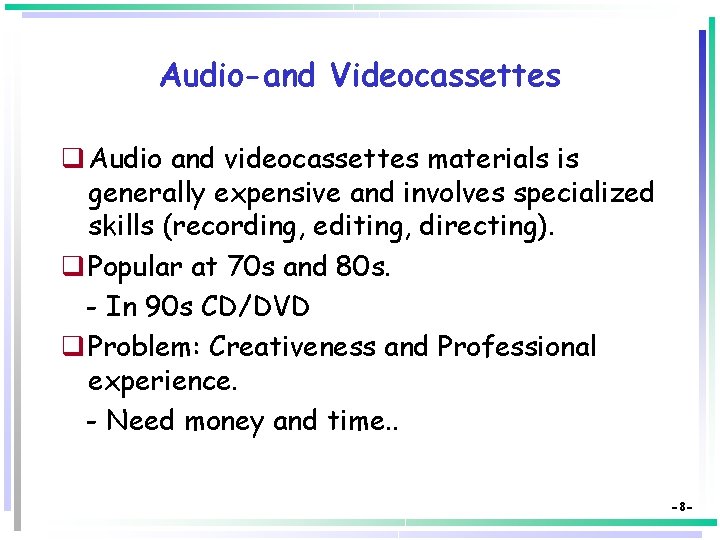
Audio-and Videocassettes q Audio and videocassettes materials is generally expensive and involves specialized skills (recording, editing, directing). q Popular at 70 s and 80 s. - In 90 s CD/DVD q Problem: Creativeness and Professional experience. - Need money and time. . -8 -
Audio-and Videocassettes. . . q Some distance learning provide what's called "video-based instruction". q In such program, video tapes are the main medium of delivery of information to the learner. -9 -
Radio and Television q Radio and television broadcasting has been used for educational purposes for many years (Moore, 85). q There are different types of broadcast: public, cable, and satellite. q Some of the advantages of radio and television broadcasting is that they Audioand videotapes have come to play an increasingly important role as media for distance education. -10 -
Radio and Television. . . q These technologies are convenient and costeffective. q Most people have VCRs in their homes, and videotapes are easy and inexpensive to distribute. q These media can be used to present the views of experts, which would increase the credibility of and interest in the materials. q Materials that cannot be communicated by print could be communicated this way. q Video is a powerful medium in terms of capturing attention, and conveying a lot of information quickly. -11 -
Radio and Television. . . q Producing audio-or videotape helps keeping students in track, and get people in the community involved, and may recruit new learners to the institute. q Broadcast may be provided to learners through cable television network or satellite broadcast. q Those channels can provide good quality broadcast and dedicated channels for educational purposes. -12 -
Teleconferencing q Moore and Kearsley define teleconferencing in terms of describing "the interaction of students and instructors via some form of telecommunications technology. There are four different types of teleconferencing: audio, - audio graphics, video, and computer. " q For teleconferencing; - Need telephone lines -13 -
Teleconferencing vs. Audioconferencing q Audio conferencing is most common and least expensive form of teleconferencing. q Audio graphic teleconferencing systems involve the use of computer or facsimile technology to transmit visuals to support the audio. q Some computer systems allow the transmission of graphics, programs, and data, where each site sees anything on the instructor computer screen, besides hearing the audio. -14 -
Teleconferencing. . . q Audio graphic systems are good for classes that involve a lot of illustration, such as equations, or computer applications. q Videoconferencing can be transmitted via satellite, cable, or standard telephone lines. q It requires compressing the videos and several equipment. -15 -
Videoconferencing q Video conferencing allows learners and instructors to interact face-to-face. q The site below is a site for a class that is being taught by videoconferencing. q The site answers questions about videoconferencing technology, when, and how to use it. -16 -
Computer Conferencing q Computer Conferencing allows students and instructors to interact via a computer network. q This interaction can be through e-mail messages, file transfer, chat rooms, real audio and video, and others. q With the fast progress in computer technology, computer conferencing is taking its place in educational technology. q Computer conferencing provides good quality, easy to use, and cost-efficient way of interaction. -17 -
Computer-Based Instruction q According to Moore, Computer-Based Instruction (CBI) refers to instructional programs that the student uses alone on a personal computer. q The program is usually provided on CD-ROM, in multimedia format (graphics, text, sound, and video). q Even though CD-ROM-based instruction provides effective presentations and cost-effective medium, it is not commonly used in distance education programs, since it does not provide dynamic content and needed interaction between the learner and the instructor. -18 -
Computer-Based Instruction. . . q The site below has a slide show about using computer technology in distance education. q It divides computer-based instruction into Multimedia-based (like CD-ROM) and Internetbased (like email and WWW). q http: //www. cs. uwyo. edu/~rex/virtualu/sld 003. htm -19 -
One-way and Two-way asynchronous communication q One-way communication includes broadcast, videotapes, and multimedia. q Two-way communication includes teleconferencing, satellite broadcast, and Cable television. -20 -
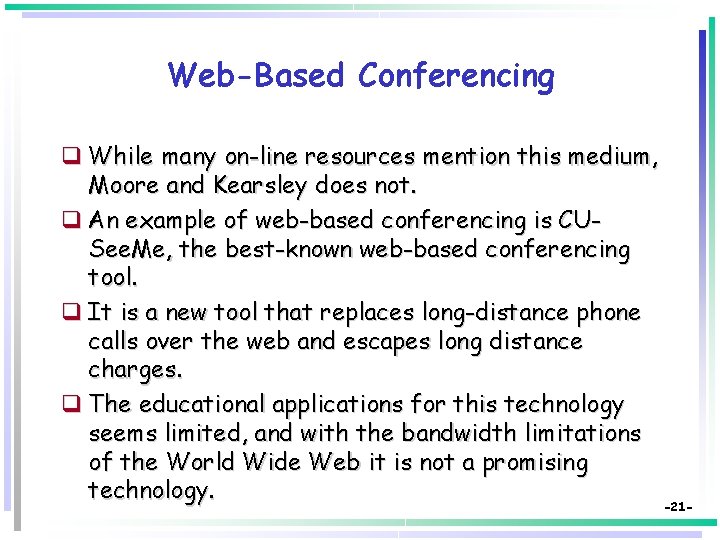
Web-Based Conferencing q While many on-line resources mention this medium, Moore and Kearsley does not. q An example of web-based conferencing is CUSee. Me, the best-known web-based conferencing tool. q It is a new tool that replaces long-distance phone calls over the web and escapes long distance charges. q The educational applications for this technology seems limited, and with the bandwidth limitations of the World Wide Web it is not a promising technology. -21 -
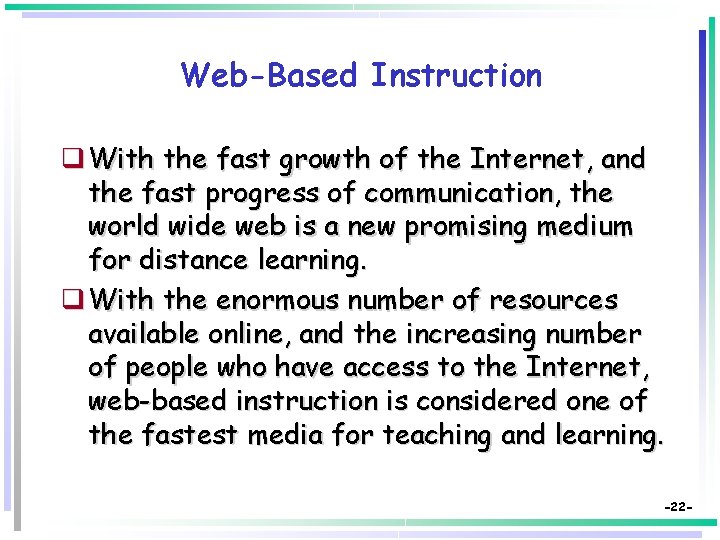
Web-Based Instruction q With the fast growth of the Internet, and the fast progress of communication, the world wide web is a new promising medium for distance learning. q With the enormous number of resources available online, and the increasing number of people who have access to the Internet, web-based instruction is considered one of the fastest media for teaching and learning. -22 -
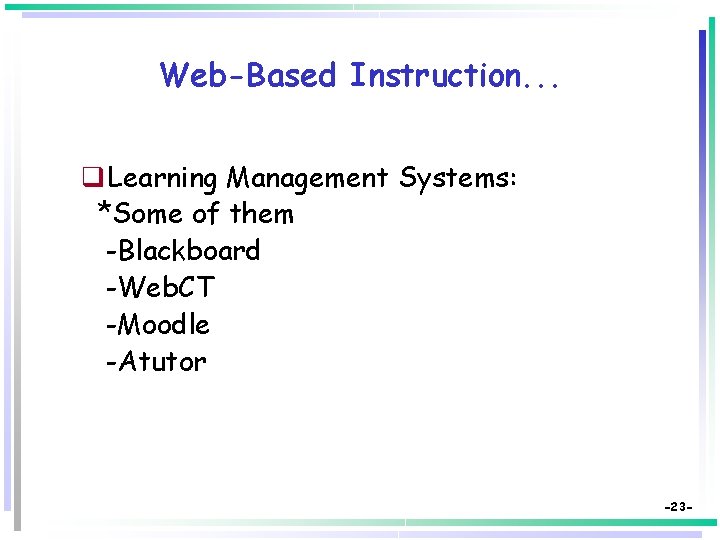
Web-Based Instruction. . . q Learning Management Systems: *Some of them -Blackboard -Web. CT -Moodle -Atutor -23 -
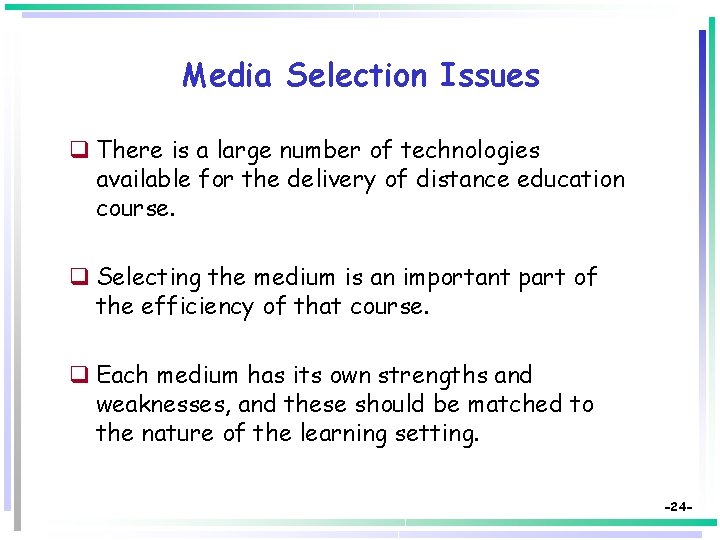
Media Selection Issues q There is a large number of technologies available for the delivery of distance education course. q Selecting the medium is an important part of the efficiency of that course. q Each medium has its own strengths and weaknesses, and these should be matched to the nature of the learning setting. -24 -
Media Selection Issues. . . q The medium selection process should be undertaken for each course and each program, since they all have different requirements depending on the objectives, learners, and learning environment. -25 -
Thank you for attention -26 -