
Technological Design Technical Drawing Why Draw Universal Language
- Slides: 17
Technological Design Technical Drawing
Why Draw ? Universal Language or the Language of Industry “A Picture is worth a 1000 words”
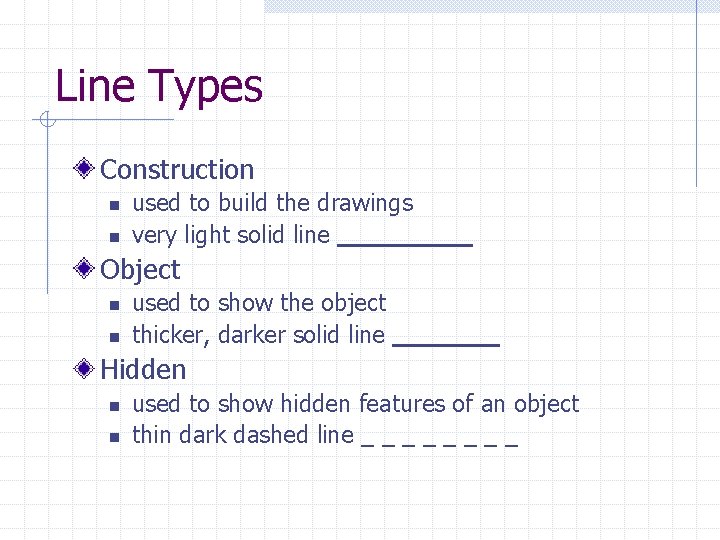
Line Types Construction n n used to build the drawings very light solid line ____ Object n n used to show the object thicker, darker solid line _______ Hidden n n used to show hidden features of an object thin dark dashed line _ _ _ _
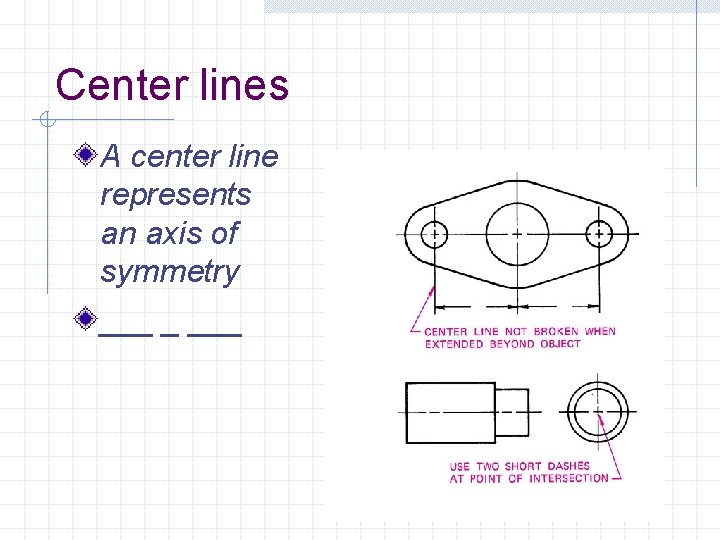
Center lines A center line represents an axis of symmetry ___ _ ___
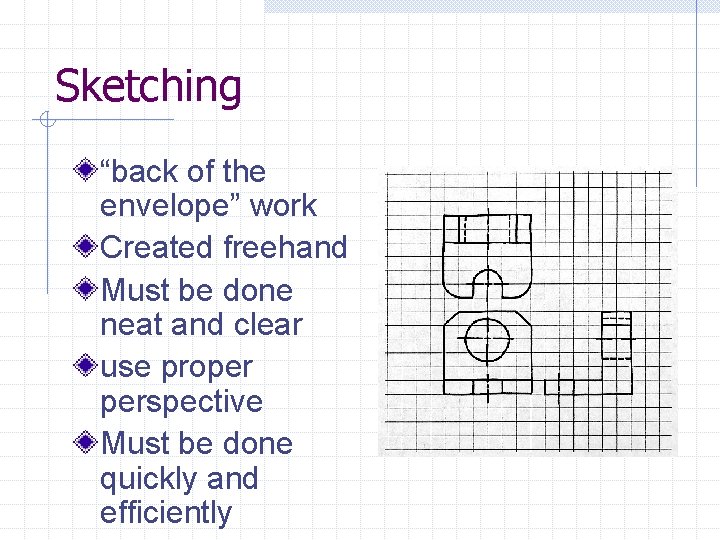
Sketching “back of the envelope” work Created freehand Must be done neat and clear use proper perspective Must be done quickly and efficiently
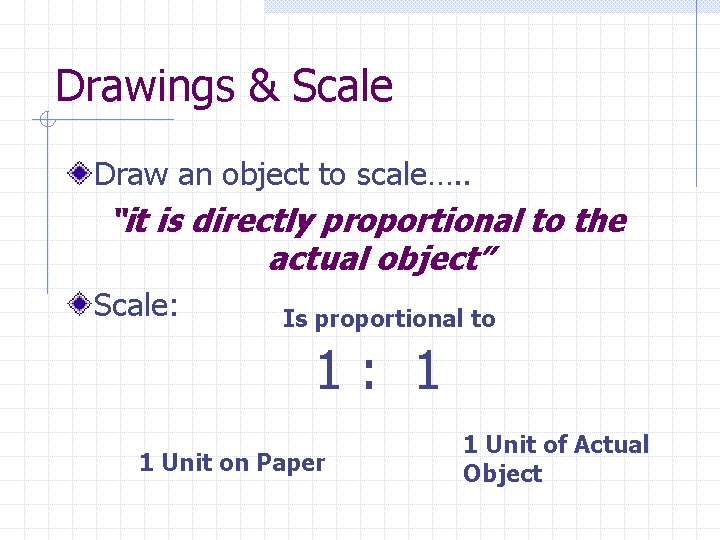
Drawings & Scale Draw an object to scale…. . “it is directly proportional to the actual object” Scale: Is proportional to 1: 1 1 Unit on Paper 1 Unit of Actual Object
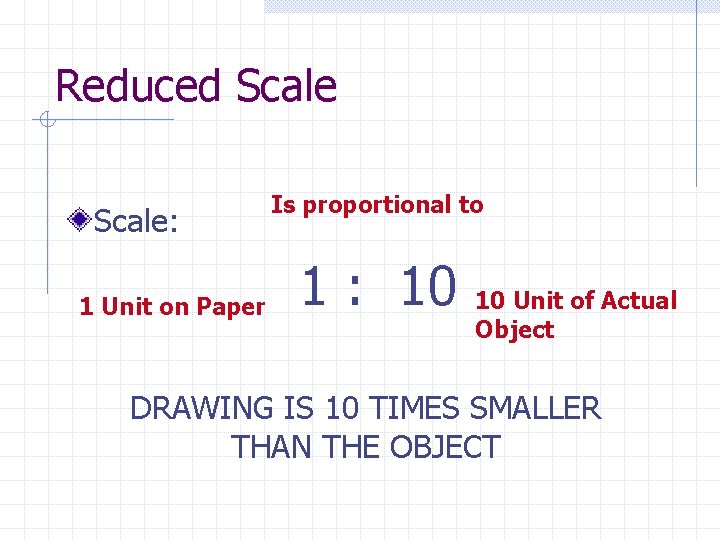
Reduced Scale: 1 Unit on Paper Is proportional to 1 : 10 10 Unit of Actual Object DRAWING IS 10 TIMES SMALLER THAN THE OBJECT
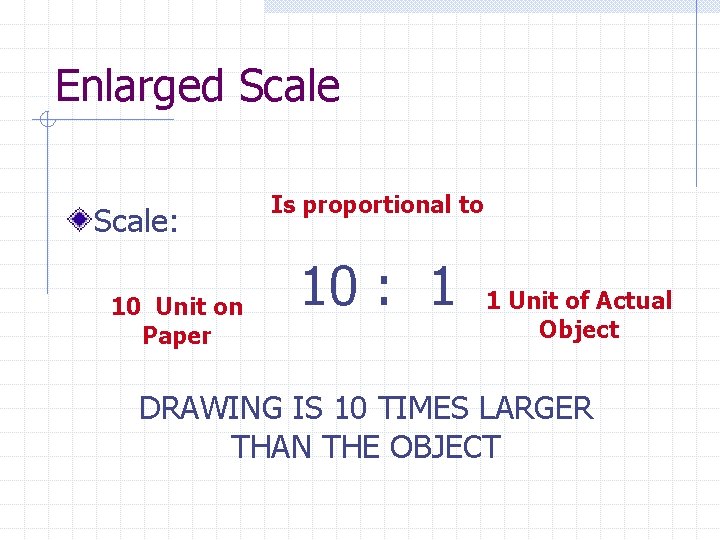
Enlarged Scale: 10 Unit on Paper Is proportional to 10 : 1 1 Unit of Actual Object DRAWING IS 10 TIMES LARGER THAN THE OBJECT
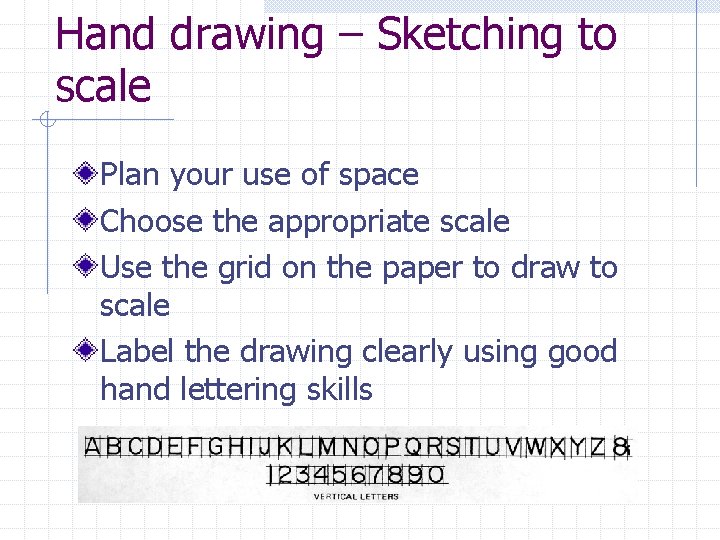
Hand drawing – Sketching to scale Plan your use of space Choose the appropriate scale Use the grid on the paper to draw to scale Label the drawing clearly using good hand lettering skills
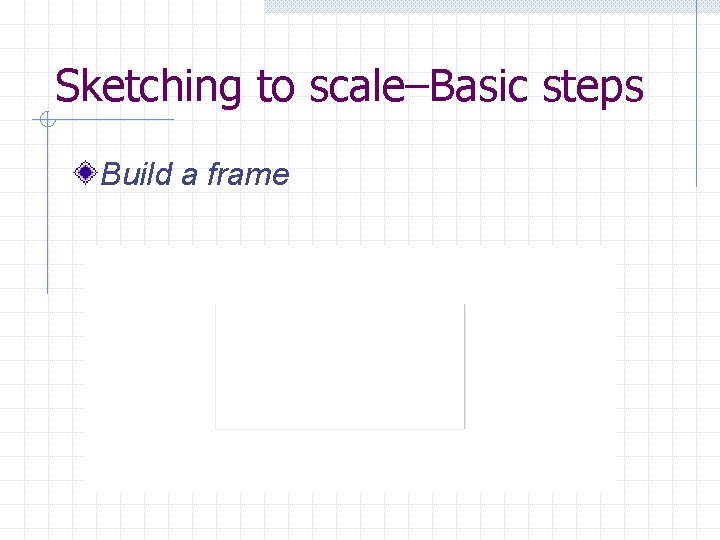
Sketching to scale–Basic steps Build a frame
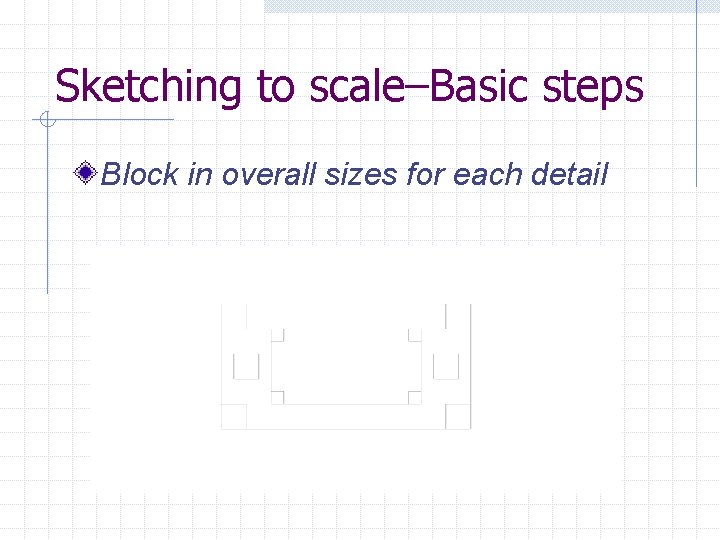
Sketching to scale–Basic steps Block in overall sizes for each detail
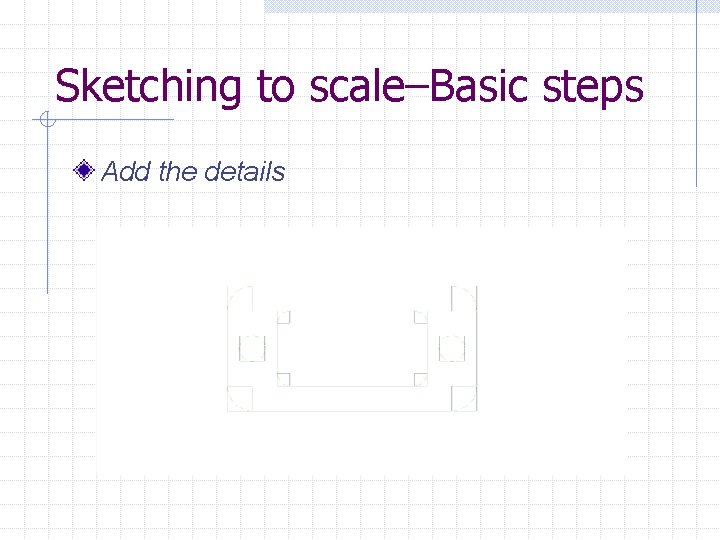
Sketching to scale–Basic steps Add the details
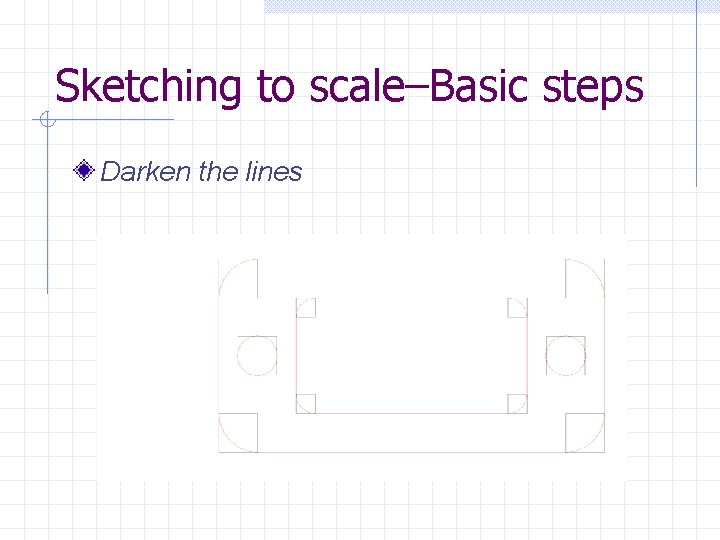
Sketching to scale–Basic steps Darken the lines
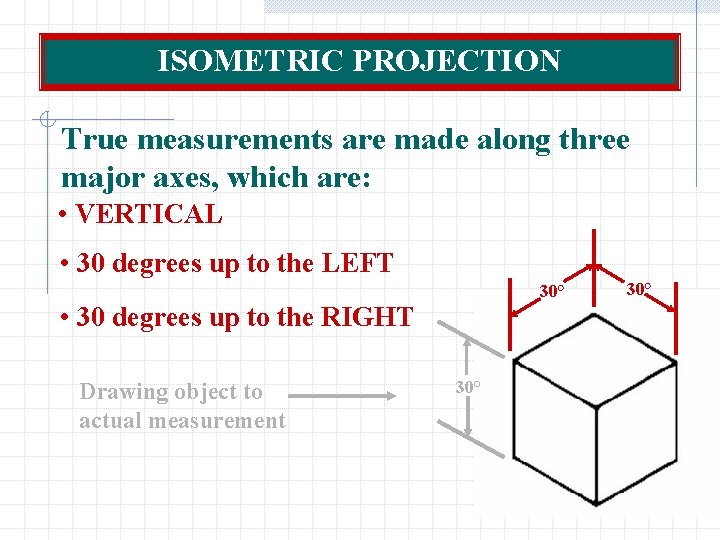
ISOMETRIC PROJECTION True measurements are made along three major axes, which are: • VERTICAL • 30 degrees up to the LEFT 30° • 30 degrees up to the RIGHT Drawing object to actual measurement 30°
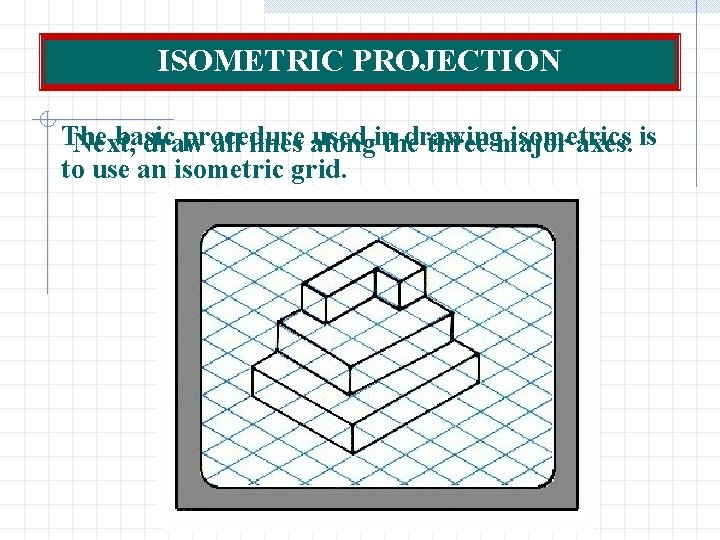
ISOMETRIC PROJECTION The basic procedure used in drawing isometrics Next, draw all lines along the three major axes. is to use an isometric grid.
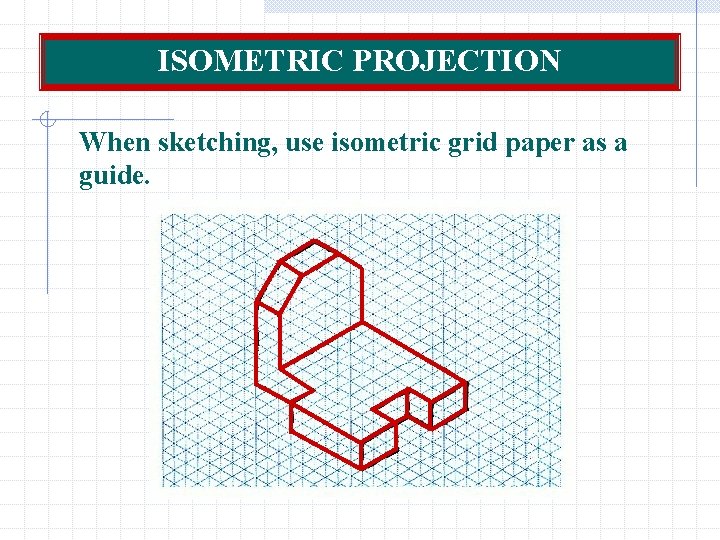
ISOMETRIC PROJECTION When sketching, use isometric grid paper as a guide.
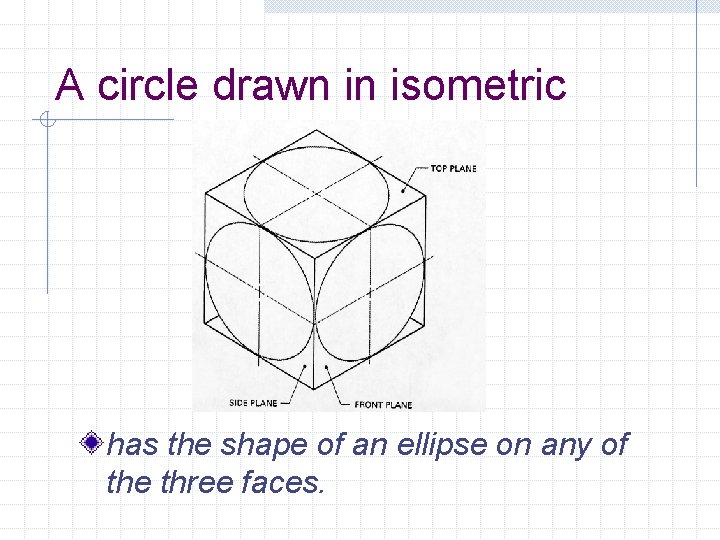
A circle drawn in isometric has the shape of an ellipse on any of the three faces.