
Technological competitiveness a case study of manufacturing small

- Slides: 14
Technological competitiveness- a case study of manufacturing small and medium enterprises (SMEs) in Sialkot, Pakistan Presenter Ahsan Munir Co-Author Dr Najam Anjum, IBA Karachi
Layout of Presentation 1. 2. 3. 4. 5. 6. 7. 8. Importance of SMEs in Pakistan General factors affecting SMEs competitiveness Scope of Go. P’s development agencies Research gap Research model Research methodology Results Conclusions and recommendations 2
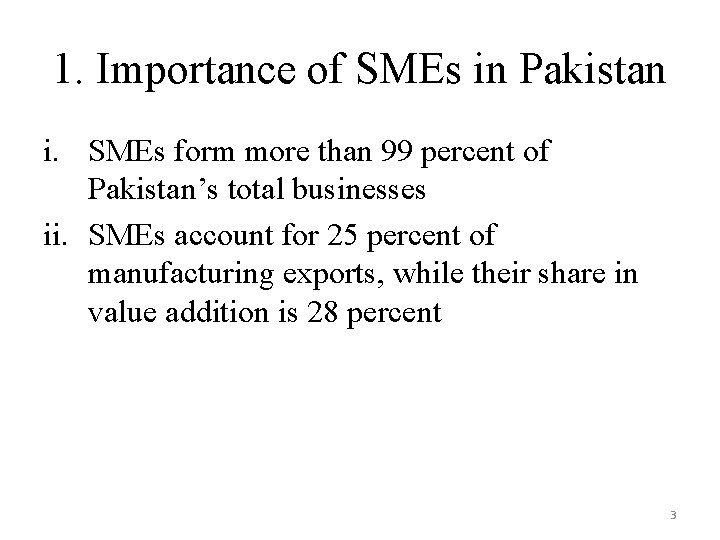
1. Importance of SMEs in Pakistan i. SMEs form more than 99 percent of Pakistan’s total businesses ii. SMEs account for 25 percent of manufacturing exports, while their share in value addition is 28 percent 3
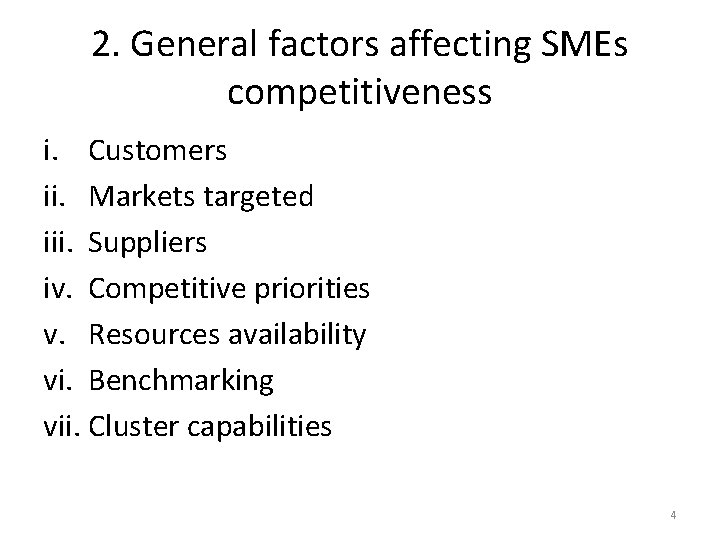
2. General factors affecting SMEs competitiveness i. Customers ii. Markets targeted iii. Suppliers iv. Competitive priorities v. Resources availability vi. Benchmarking vii. Cluster capabilities 4
3. Scope of Government of Pakistan’s (Go. P) development agencies i. SMEDA ii. TUSDEC Tasked with: • increasing productivity and quality • facilitating international accreditation • Capacity and capability building of clusters 5
4. Research gap i. Initiatives are at cluster level ii. Not enough of empirical evidence as how much individual firms in targeted clusters have benefitted from these initiatives iii. Therefore, a research was conducted to analyse competitiveness development initiatives (CDIs) of SMEs to identify: • their technological competitiveness • Types of CDIs taken • Factors affecting CDIs 6
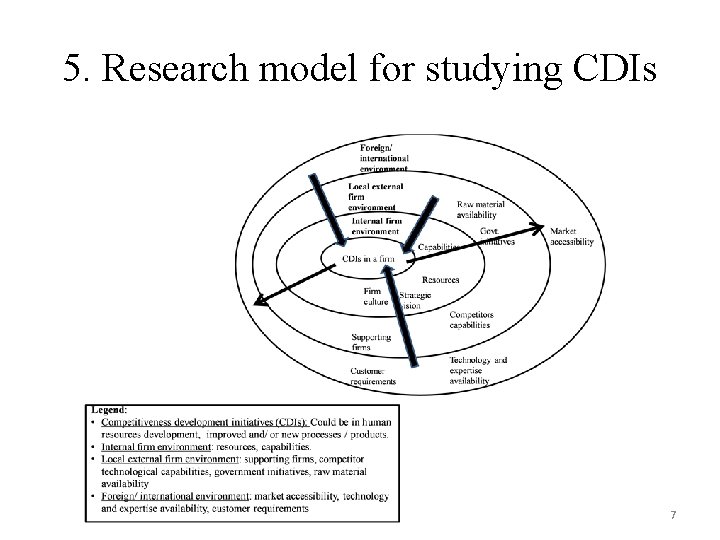
5. Research model for studying CDIs 7
6. Research methodology: general characteristics of Sialkot clusters 8
6. Research methodology: data analysis pattern 9
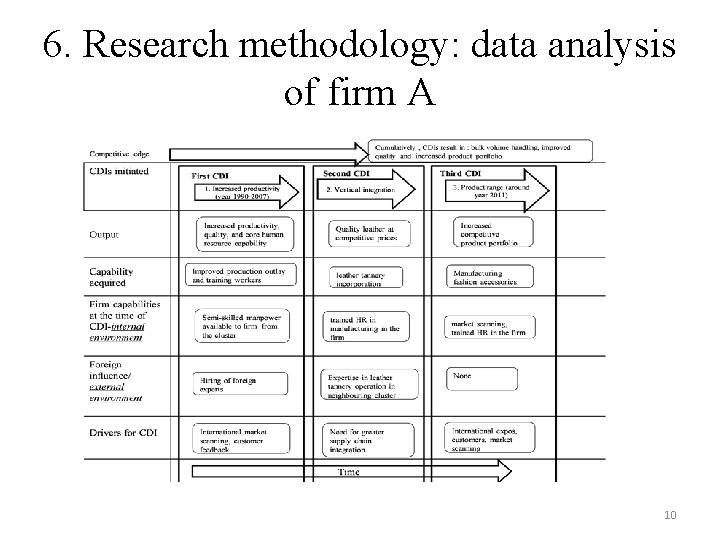
6. Research methodology: data analysis of firm A 10
7. Results: competitive advantage of interviewed firms 11
7. Results: CDI types and factors affecting them 12
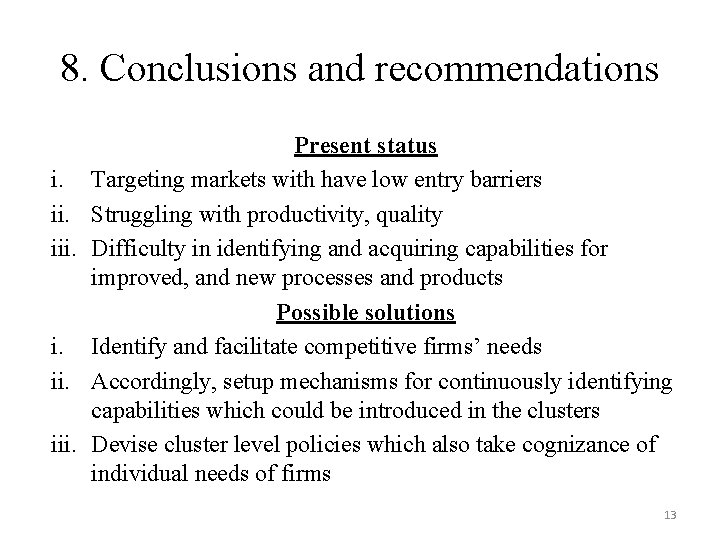
8. Conclusions and recommendations i. ii. iii. Present status Targeting markets with have low entry barriers Struggling with productivity, quality Difficulty in identifying and acquiring capabilities for improved, and new processes and products Possible solutions Identify and facilitate competitive firms’ needs Accordingly, setup mechanisms for continuously identifying capabilities which could be introduced in the clusters Devise cluster level policies which also take cognizance of individual needs of firms 13
THANKS 14