
Technological Advancements of the 1800 s Transportation Canals


- Slides: 16
Technological Advancements of the 1800 s
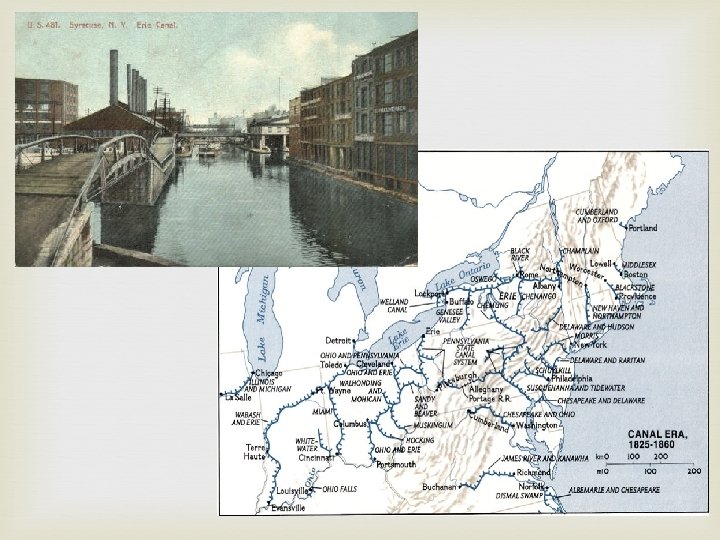
Transportation Canals allowed for faster & cheaper trade By 1840, US had 3, 300 miles of canals connecting the country Most famous – Erie Canal (allowed for trade from Atlantic Ocean to Great Lakes – made Chicago a booming city) Steamboat invented by Robert Fulton 1 st – the Clermont (steamed 150 miles up the Hudson River from NY in just 32 hrs) ? ? ? Why is transportation on water cheaper and faster? ?
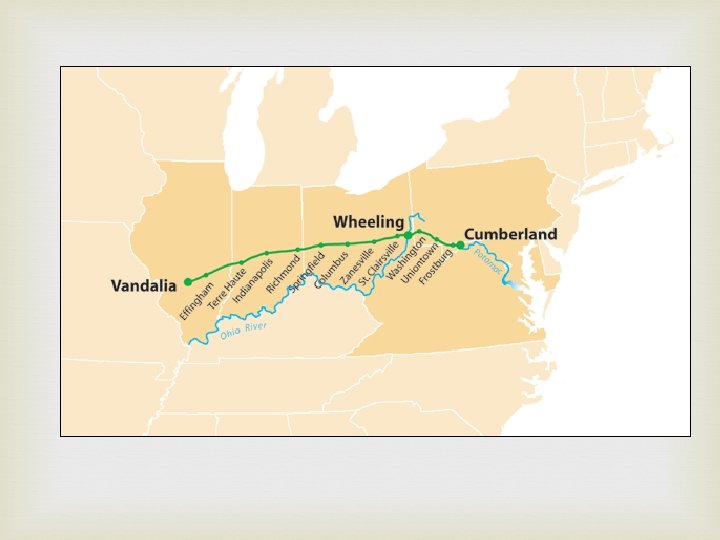
Transportation Roads & Turnpikes National Road Construction started in 1811 Started in Cumberland, MD and ended in Vandalia, Illinois (ran out of money) Several changes/improvements have been made since, but today it runs most closely with US Rt. 40 ? ? ? How was the impact of roads different from canals? ?
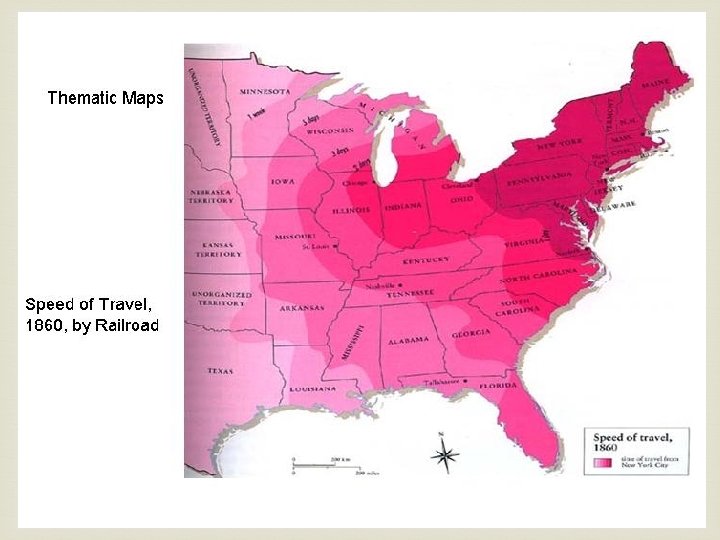
Transportation Trains Developed in early 1800 s Tom Thumb was the first American locomotive Allowed people and goods to move quickly from city to city across the country. Allowed consumers, business owners, farmers, etc. to buy items from other cities ? ? ? What other industries were spurred from the invention of the train? ?
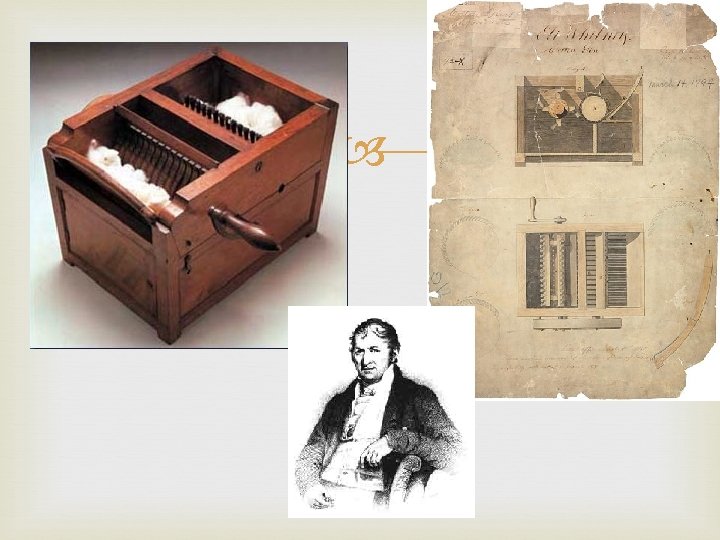
Early Industry Technological Advances Eli Whitney Cotton Gin (pulled seeds out of cotton, still had to pick it, but didn’t have to separate it) Interchangeable parts (machines were made of multiple pieces that could be replaced instead of replacing the whole machine; ex. Guns) Samuel F. B. Morse Invented the telegraph in 1832 and developed Morse Code, both for sending messages
Life in the North New inventions and advancements in transportation spurred more people to move to northern cities in search of jobs in developing industries…. like textile mills. Cities became overcrowded (overcrowding leads to unstable employment…leading to poverty…leading to crime) People worked very long hours and often under poor conditions in the factories that developed along rivers.
Life in the North City streets were filled with animal waste, garbage, etc. Until the 1850 s, many cities did not have schools, and school was not mandatory. The North became a haven for runaway slaves and free blacks Many became factory workers or dock workers and sailors in New England Others became carpenters, shoemakers, preachers, and school teachers in the Mid-Atlantic states
Life in the South Agriculture remained the leading economic activity in the US – helped feed the country (north and south) Southern farmers first produced tobacco and cotton, then corn and wheat It was very hard work; all members of the family contributed
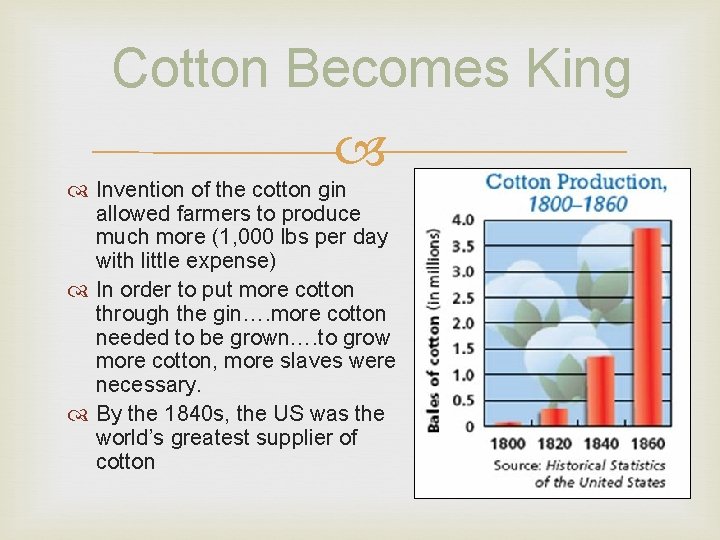
Cotton Becomes King Invention of the cotton gin allowed farmers to produce much more (1, 000 lbs per day with little expense) In order to put more cotton through the gin…. more cotton needed to be grown…. to grow more cotton, more slaves were necessary. By the 1840 s, the US was the world’s greatest supplier of cotton
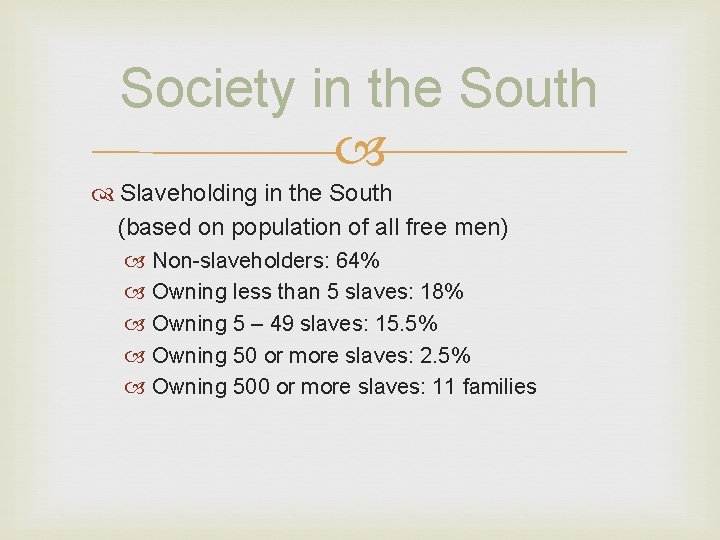
Society in the South Slaveholding in the South (based on population of all free men) Non-slaveholders: 64% Owning less than 5 slaves: 18% Owning 5 – 49 slaves: 15. 5% Owning 50 or more slaves: 2. 5% Owning 500 or more slaves: 11 families
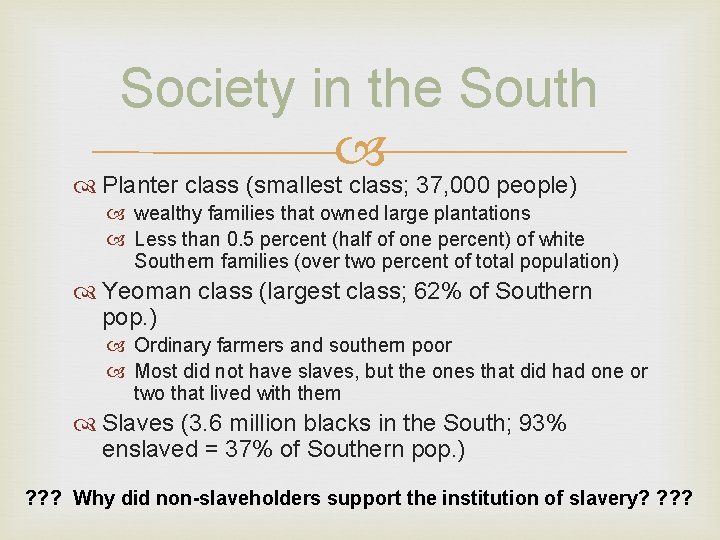
Society in the South Planter class (smallest class; 37, 000 people) wealthy families that owned large plantations Less than 0. 5 percent (half of one percent) of white Southern families (over two percent of total population) Yeoman class (largest class; 62% of Southern pop. ) Ordinary farmers and southern poor Most did not have slaves, but the ones that did had one or two that lived with them Slaves (3. 6 million blacks in the South; 93% enslaved = 37% of Southern pop. ) ? ? ? Why did non-slaveholders support the institution of slavery? ?