
techniques Lesson 6 Plating Skills techniques To show









- Slides: 22
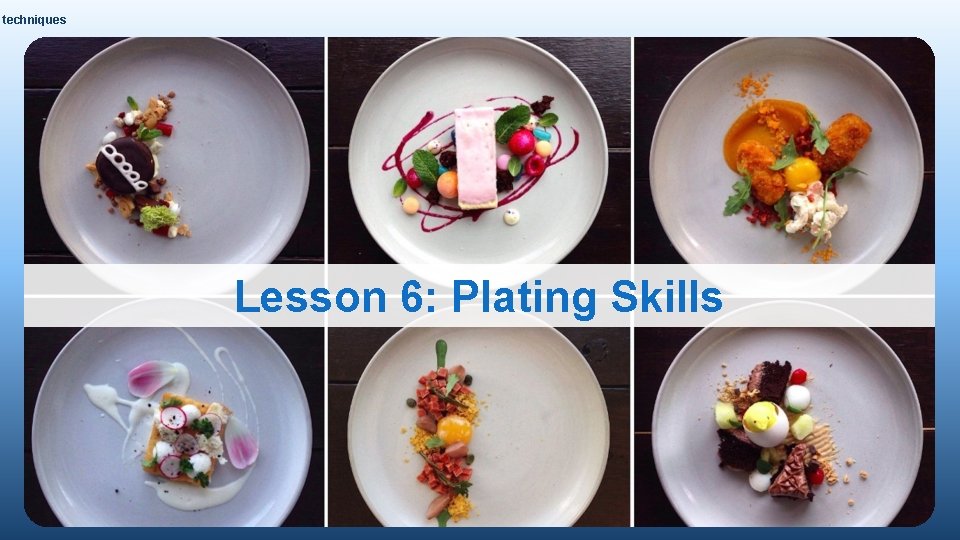
techniques Lesson 6: Plating Skills
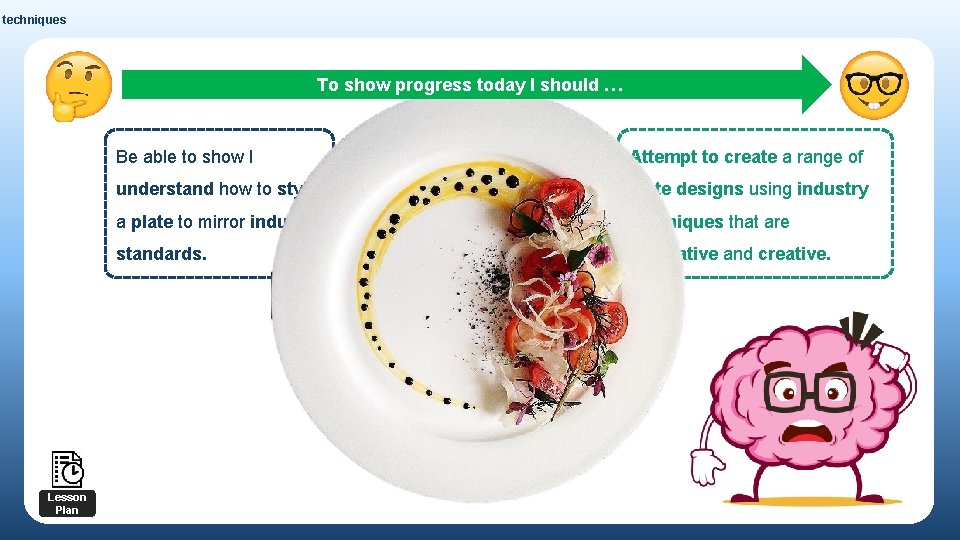
techniques To show progress today I should … Lesson Plan Be able to show I Be able to explain the Attempt to create a range of understand how to style importance of using plate designs using industry a plate to mirror industry sensory effects to style techniques that are standards. food. innovative and creative.
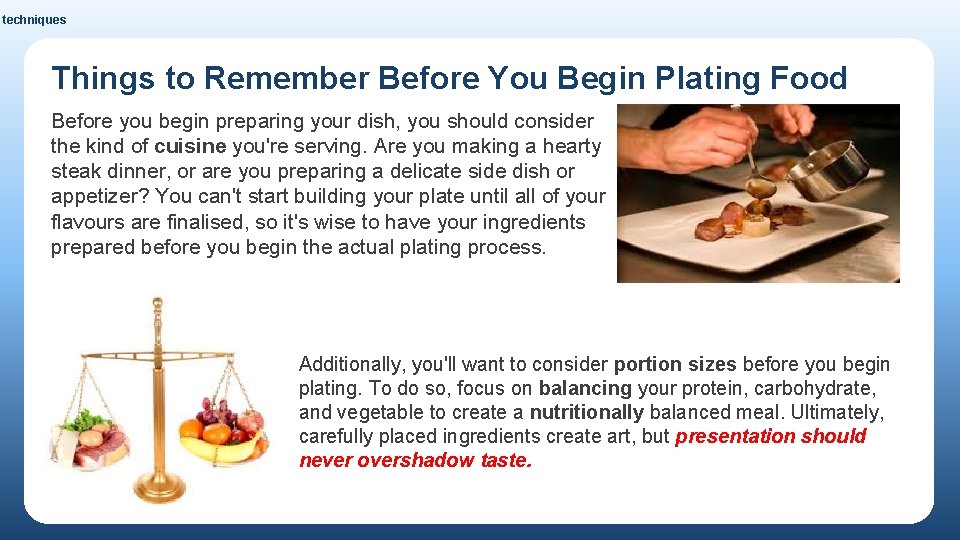
techniques Things to Remember Before You Begin Plating Food Before you begin preparing your dish, you should consider the kind of cuisine you're serving. Are you making a hearty steak dinner, or are you preparing a delicate side dish or appetizer? You can't start building your plate until all of your flavours are finalised, so it's wise to have your ingredients prepared before you begin the actual plating process. Additionally, you'll want to consider portion sizes before you begin plating. To do so, focus on balancing your protein, carbohydrate, and vegetable to create a nutritionally balanced meal. Ultimately, carefully placed ingredients create art, but presentation should never overshadow taste.
techniques Guidelines for Plating Food Choose the Perfect Plate Selecting the right plate for your meal is key to attractive food presentation. Here are some things to keep in mind: • Choose the right plate. One way to conceptualise plating is to think of yourself as an artist, the plate as your canvas, and the food as your medium. • Choose the right size plate. Choose your plate wisely by making sure it's big enough to allow your food to stand out, but small enough that your portions don't look too small. • Choose a complementary plate colour. The colour of your plate is also significant. White plates are popular because they create high contrast and provide a neutral background for your colourful creations.
techniques What would you serve on each of these plates?
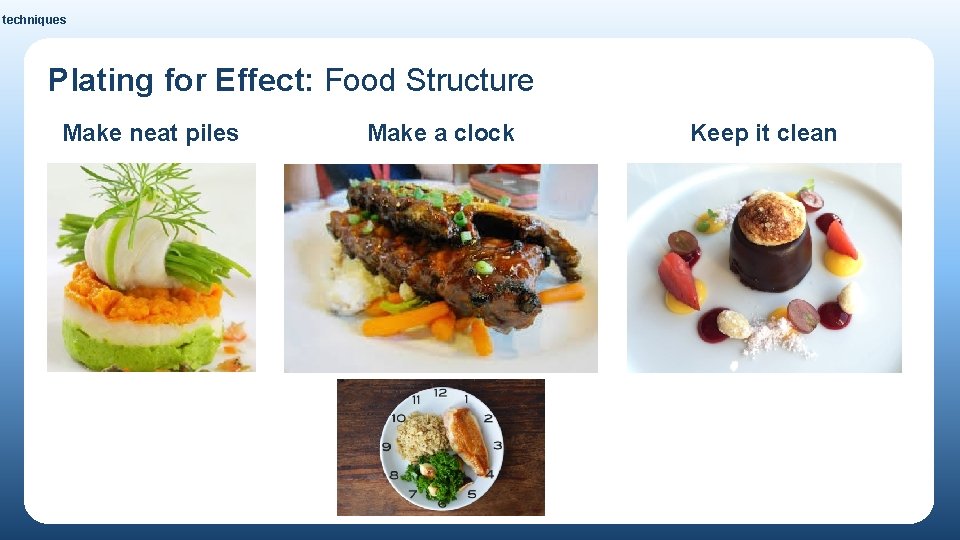
techniques Placing your ingredients Here a few of the most important aspects to consider as you build your dish: Plate with a clock in mind. As you begin plating your ingredients, picture the face of a clock. From the diner's point of view, your protein should be between 3 and 9, your starch or carbohydrate from 9 and 12, and your vegetable from 12 and 3.
techniques Placing your ingredients Use moist ingredients as your base. Another rule of thumb is to plate moist or runny ingredients first, as they tend to move during delivery if they aren't held down by other foods. One way to anchor runny ingredients is by placing other foods on top of them. For example, you can angle sliced meat or vegetables against purees and mashed vegetables.
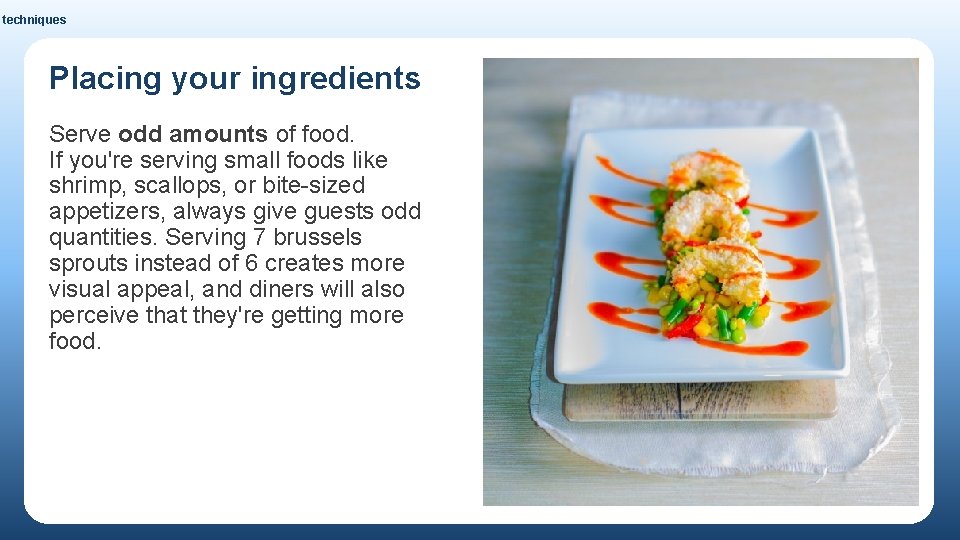
techniques Placing your ingredients Serve odd amounts of food. If you're serving small foods like shrimp, scallops, or bite-sized appetizers, always give guests odd quantities. Serving 7 brussels sprouts instead of 6 creates more visual appeal, and diners will also perceive that they're getting more food.
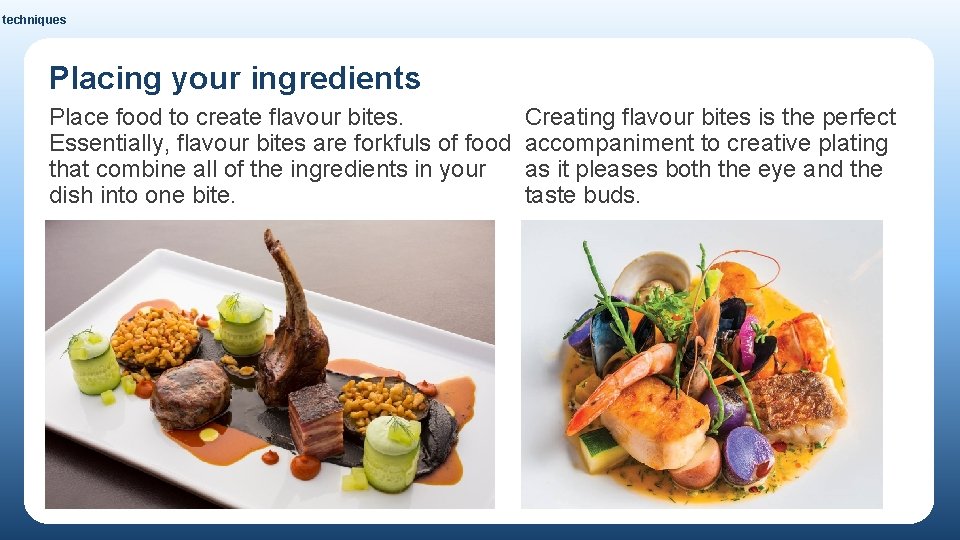
techniques Placing your ingredients Place food to create flavour bites. Essentially, flavour bites are forkfuls of food that combine all of the ingredients in your dish into one bite. Creating flavour bites is the perfect accompaniment to creative plating as it pleases both the eye and the taste buds.
techniques Placing your ingredients Don't overcrowd your plate. Be sure to never overcrowd your canvas, and keep it simple by focusing on one ingredient - usually the protein. Finding a focal point also ensures that the accompanying ingredients will play a complementary, supporting role.
techniques Task: Using the plate template, sketch a plate design for one of the following: • Chicken nuggets and chips with a side of sauce • Fish fingers chips and beans • Hotdog and wedges • Fish and chips • Chicken burger • Donner kebab
techniques Designing Your Plate Preparing an elegant plate can take precise planning. Blueprinting: Design your plate on paper beforehand, and discuss the look you are aiming to achieve. Draw pictures, make notes and work by trial and error to blueprint your idea into perfection.
techniques Use the template to sketch your designs and add notes to explain your ideas. …………………………………………………………………………. .
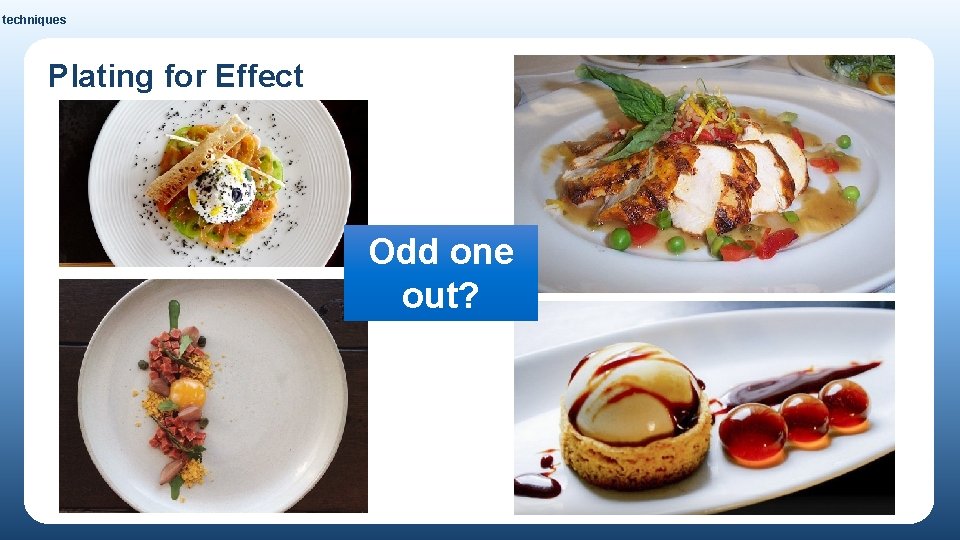
techniques Plating for Effect Odd one out?
techniques Plating for Effect Look at building up layers within your dish. Consider tastes, textures and even colours.
techniques Plating for Effect • Let the food be the focal point. • Serving pieces should complement the food. • Match the plate to the size, appearance, colour and flavour of the food. • Keep the design simple. • Odd numbers of small items looks best.
techniques Plating for Effect: Food Structure Make neat piles Make a clock Keep it clean
techniques Plating for Effect: Sauces are placed either under the food to highlight it, or on top to garnish it. Don’t hide the food. Remember, sauces are used to enhance the food – they are not the focus.
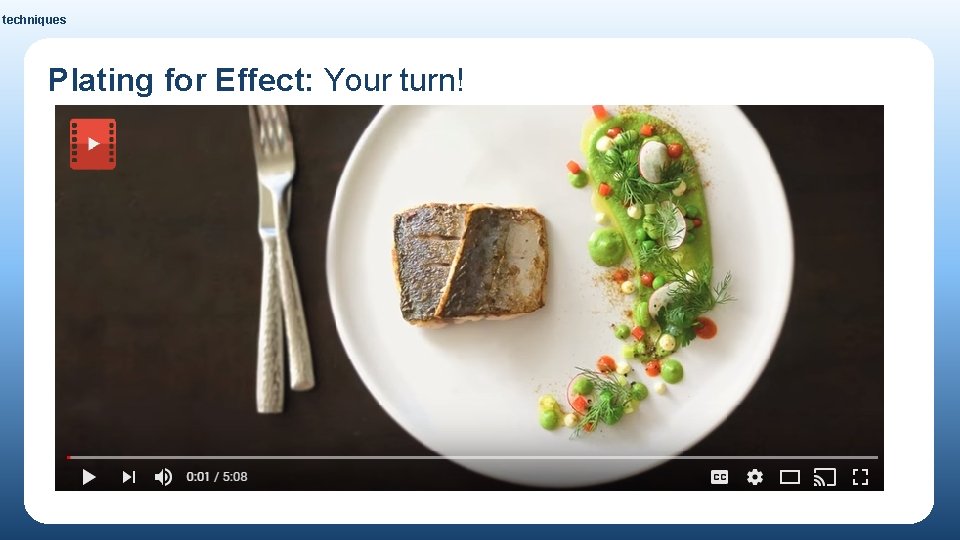
techniques Plating for Effect: Your turn!
techniques Plating for Effect: Your turn! You will need: • Puréed peas (in squeeze bottle) • Mayonnaise (in squeeze bottle) • Finely sliced shallots • Fresh peas • Edamame • Diced tomato • Diced cucumber • Parsley leaves (or other herbs) • Olive oil • Pepper • Ground cumin (or other ground spice)
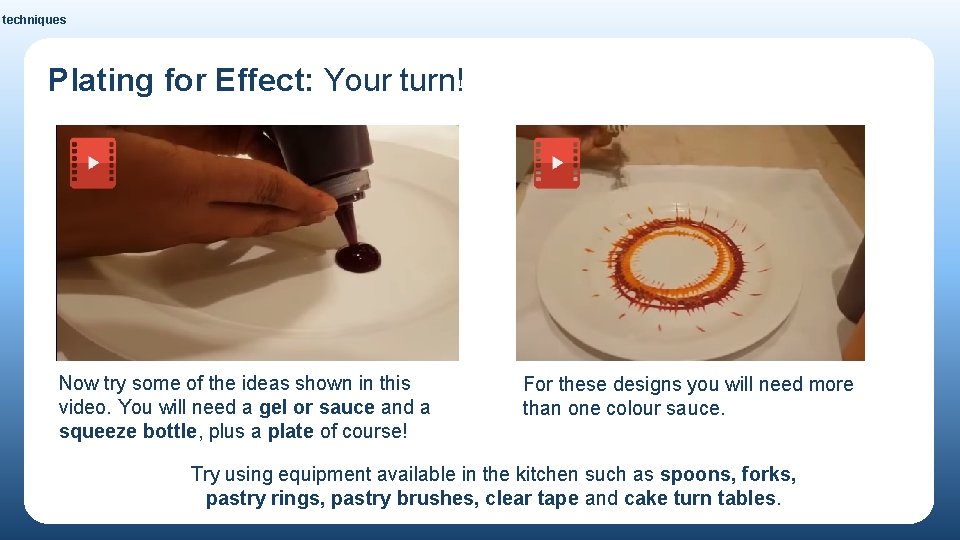
techniques Plating for Effect: Your turn! Now try some of the ideas shown in this video. You will need a gel or sauce and a squeeze bottle, plus a plate of course! For these designs you will need more than one colour sauce. Try using equipment available in the kitchen such as spoons, forks, pastry rings, pastry brushes, clear tape and cake turn tables.
techniques Final Thoughts … Be creative and innovative! Let the food speak for itself! Keep it simple!