
Techniques for Analysis of Sports and Exercise National
- Slides: 30
Techniques for Analysis of Sports and Exercise National STEM Learning Centre and Network
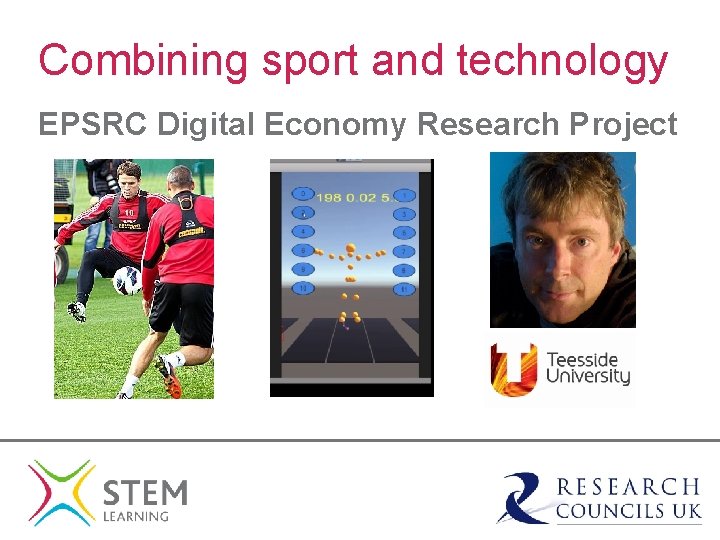
Combining sport and technology EPSRC Digital Economy Research Project
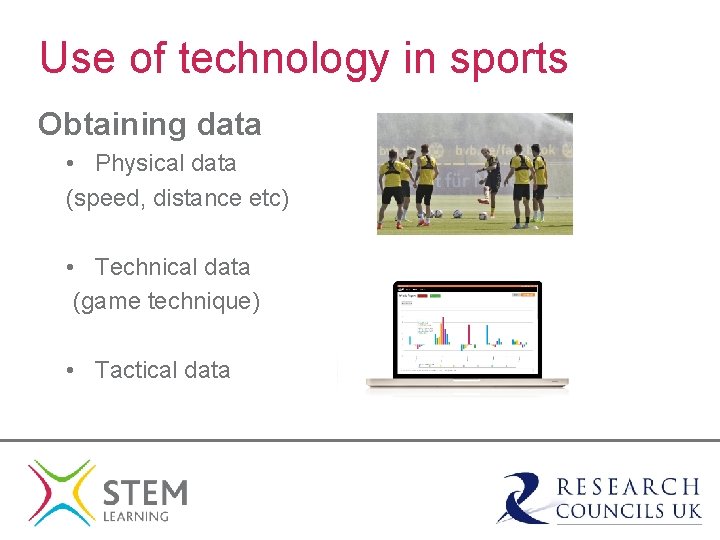
Use of technology in sports Obtaining data • Physical data (speed, distance etc) • Technical data (game technique) • Tactical data
Benefits of collecting data in sport Match analysis of own team / opponents Scouting for new players Monitoring physical activity of players - Potential for injury
Injury prevention – Activity 1 Give some reasons why this is important for people who are involved in sports Why are clubs willing to spend money on this?
Injury Prevention - Reasons - Unable to do sports – loss of income Medical costs Long term impact on health – arthritis Any others?
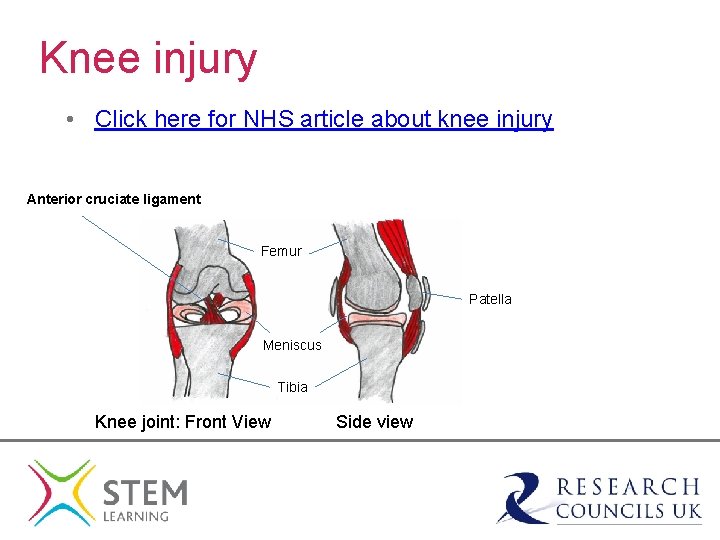
Knee injury • Click here for NHS article about knee injury Anterior cruciate ligament Femur Patella Meniscus Tibia Knee joint: Front View Side view
ACL Injury and causes Anterior cruciate ligament (ACL) injury Video explanation of ACL - important in stabilising the knee joint can be injured when overstretched: contact /non-contact In sports where there is a turning and twisting motion (football, rugby, basketball and alpine skiing)
Famous sufferers of ACL injury Paul Gascoigne Michael Owen Tiger Woods Click here for article about Theo Walcott Click here for article about professional footballer injuries
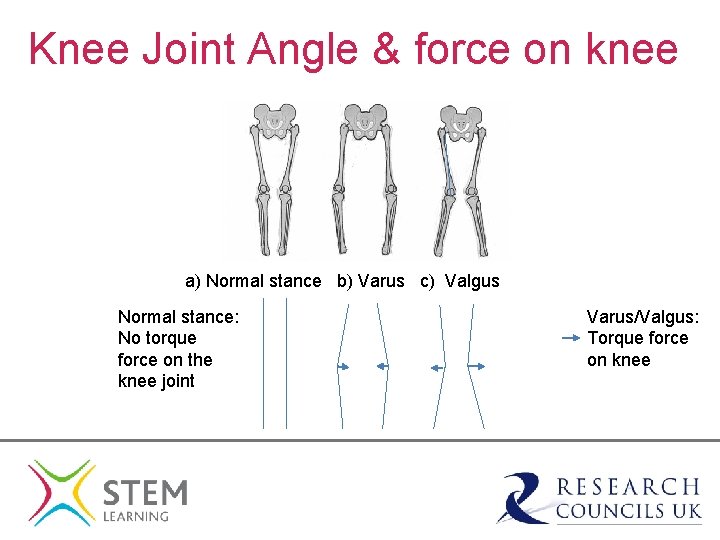
Knee Joint Angle & force on knee a) Normal stance b) Varus c) Valgus Normal stance: No torque force on the knee joint Varus/Valgus: Torque force on knee
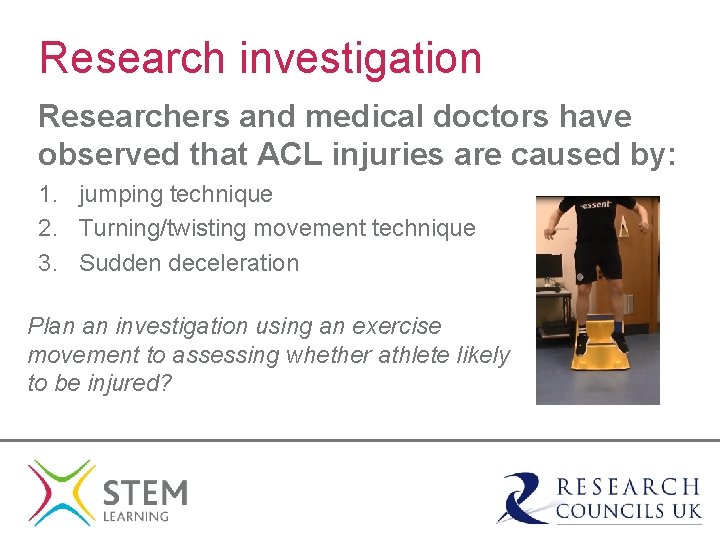
Research investigation Researchers and medical doctors have observed that ACL injuries are caused by: 1. jumping technique 2. Turning/twisting movement technique 3. Sudden deceleration Plan an investigation using an exercise movement to assessing whether athlete likely to be injured?
Research investigation planning What would you need to consider? - Type of experiment: jump, hop… - Variables: independent, control (what to keep the same) - How to record results: chart, graph - Hazards: What could go wrong? - Control measures: reduce risk to acceptable level - Measurements: repeatable, reproducible
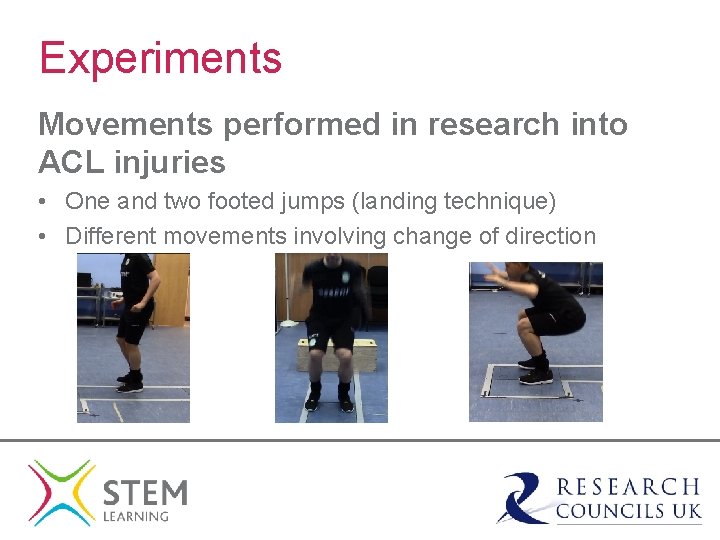
Experiments Movements performed in research into ACL injuries • One and two footed jumps (landing technique) • Different movements involving change of direction
Measurements in this research Variables: • • Flexion (bend) in the knee and hip after landing Knee valgus angle (knees bend towards each other) Knee rotation (foot not pointing forwards) Landing on front or back of the foot
Factors to consider: ethics/safety Medical ethical committee must approve research study before it can conducted Risk of injury to study participants so precautions taken: • • • warming up time between jumps to recover conduct in a controlled environment
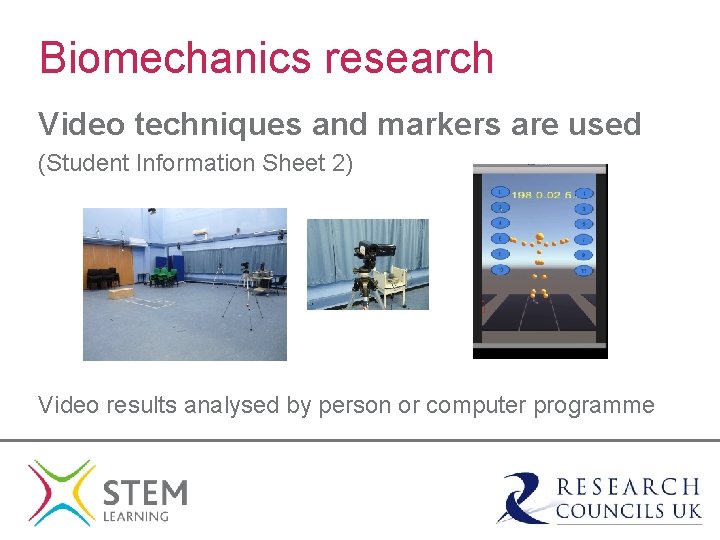
Biomechanics research Video techniques and markers are used (Student Information Sheet 2) Video results analysed by person or computer programme
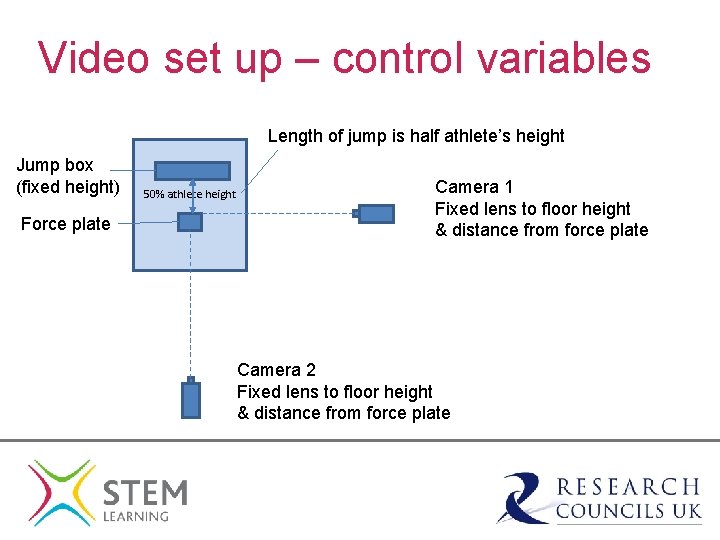
Video set up – control variables Length of jump is half athlete’s height Jump box (fixed height) Force plate 50% athlete height Camera 1 Fixed lens to floor height & distance from force plate Camera 2 Fixed lens to floor height & distance from force plate
Measurements Typical scoring system used in research “LESS” – requires expertise (Student Information Sheet 3) Can you suggest a scoring system for your investigation - For example: Risk of injury: Yes/No , Reason
Analysis of results – Activity 3 Use information about cause of ACL injuries (Information Sheet 1) to evaluate likelihood of injury Make your own videos or use the video clips of jumps provided (see next slide) Share results, how could you investigate further?
Analyse research data View videos - Record comments - Compare with researcher analysis (Information Sheet 4)
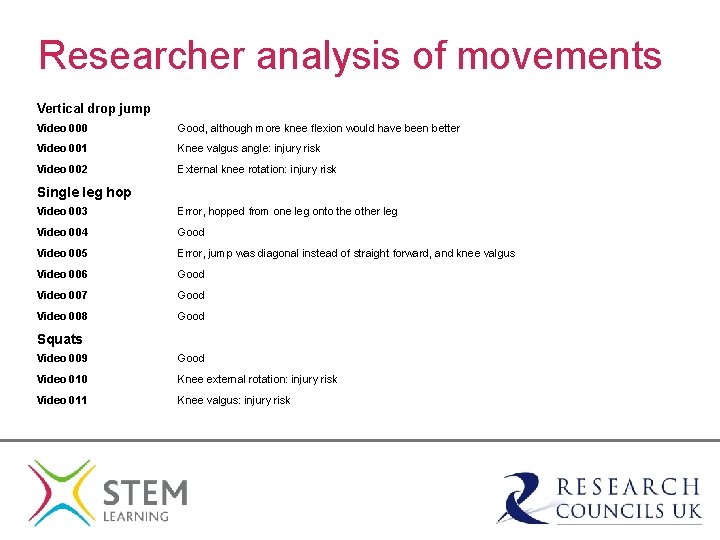
Researcher analysis of movements Vertical drop jump Video 000 Good, although more knee flexion would have been better Video 001 Knee valgus angle: injury risk Video 002 External knee rotation: injury risk Single leg hop Video 003 Error, hopped from one leg onto the other leg Video 004 Good Video 005 Error, jump was diagonal instead of straight forward, and knee valgus Video 006 Good Video 007 Good Video 008 Good Squats Video 009 Good Video 010 Knee external rotation: injury risk Video 011 Knee valgus: injury risk
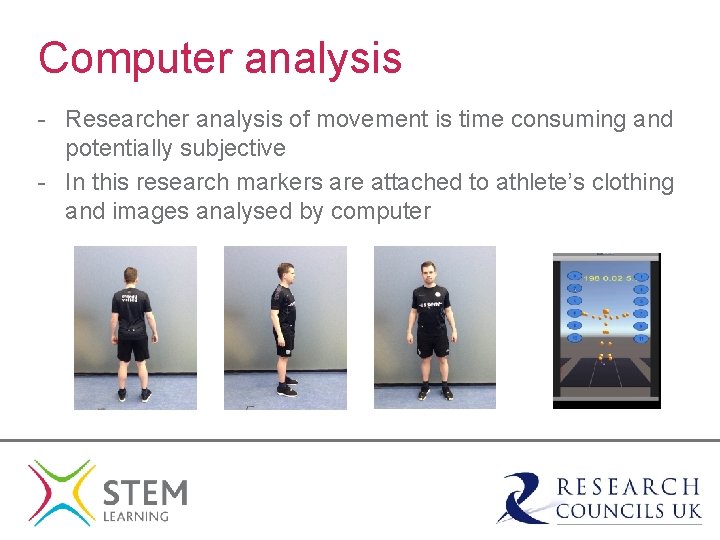
Computer analysis - Researcher analysis of movement is time consuming and potentially subjective - In this research markers are attached to athlete’s clothing and images analysed by computer
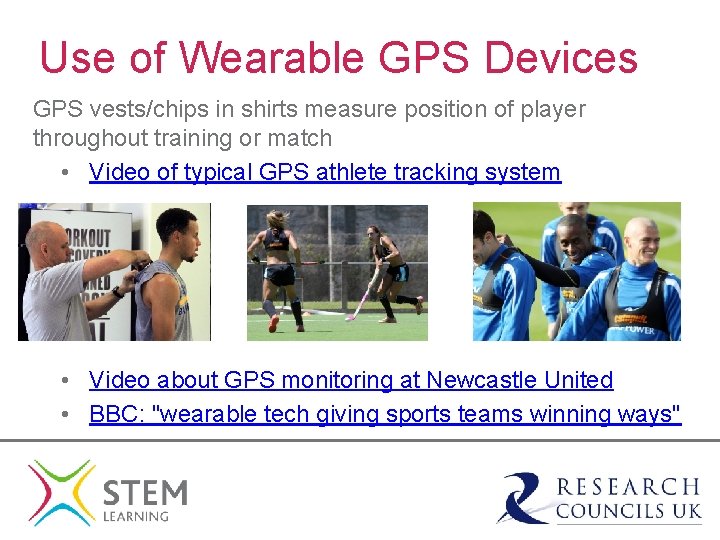
Use of Wearable GPS Devices GPS vests/chips in shirts measure position of player throughout training or match • Video of typical GPS athlete tracking system • Video about GPS monitoring at Newcastle United • BBC: "wearable tech giving sports teams winning ways"
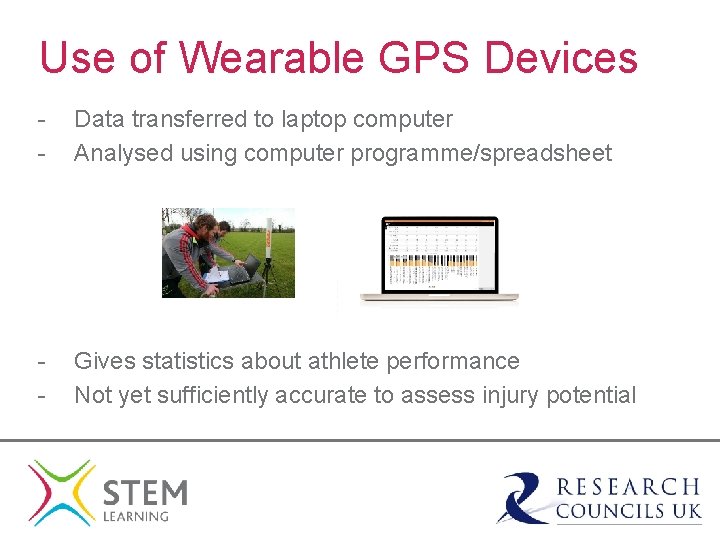
Use of Wearable GPS Devices - Data transferred to laptop computer Analysed using computer programme/spreadsheet - Gives statistics about athlete performance Not yet sufficiently accurate to assess injury potential
Collect own performance data You could also use GPS data to measure and evaluate sports performance using: - “sports watch” with GPS - Smart Phone with accelerometers - Smartphone App (for example “Runkeeper”, “Runtastic”) Measurements could be: - Acceleration/Deceleration - Average Speed - Distance covered
Wearable Tech: Boxing Game - A boxing computer game was tested by University of Teesside researchers on 50 unhealthy men from Teesside - gamers played against a virtual boxer who reacts to their punches - research showed that the exercise gained from the game could improve people's health Link to Newspaper article , BBC News Website
Career Profiles of Researchers Many routes to become a researcher - People involved in biomechanics research include: - Computer programmers, medical doctors, sports scientists, engineers, physical therapists - Normally move into research after BSc or Masters degree at university - Some enter research with experience of working with professional athletes
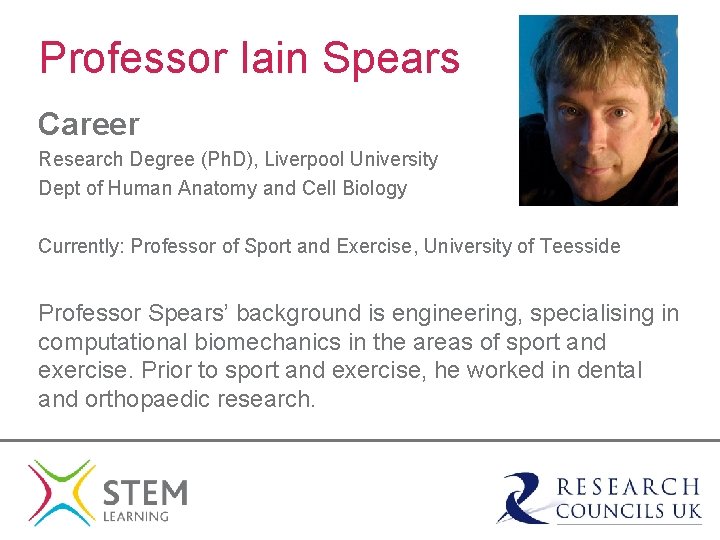
Professor Iain Spears Career Research Degree (Ph. D), Liverpool University Dept of Human Anatomy and Cell Biology Currently: Professor of Sport and Exercise, University of Teesside Professor Spears’ background is engineering, specialising in computational biomechanics in the areas of sport and exercise. Prior to sport and exercise, he worked in dental and orthopaedic research.
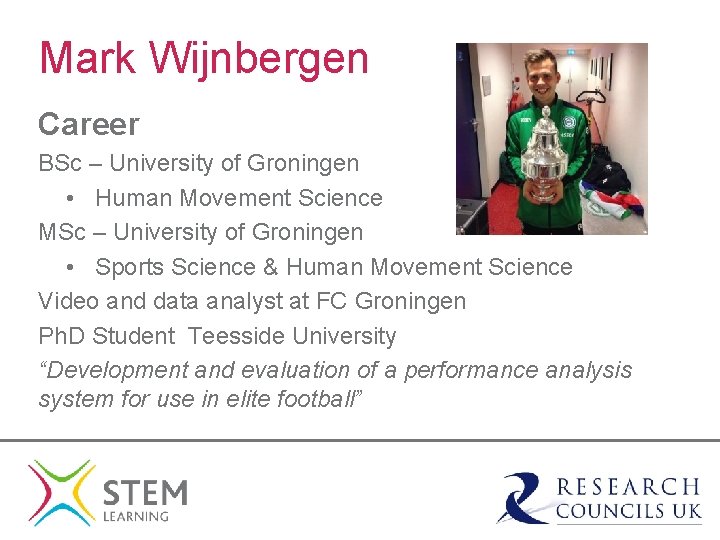
Mark Wijnbergen Career BSc – University of Groningen • Human Movement Science MSc – University of Groningen • Sports Science & Human Movement Science Video and data analyst at FC Groningen Ph. D Student Teesside University “Development and evaluation of a performance analysis system for use in elite football”
Acknowledgements Professor Iain Spears / Mark Wijnbergen - For supplying information about the research and videos Catapult Sports - For supplying and giving permission to use images