
Technicians First Guide and Workbook Section 3 Refrigeration
Technician’s First Guide and Workbook Section 3: Refrigeration Cycle Components
HVACR Refrigerant Cycle Components Hopefully you have mastered the information in the previous Section 2 lesson. If you have found it difficult to remember everything at once, keep working on it. If you have a photographic memory and got it all first time through, review it regularly so it becomes part of your long term memory. If you do not understand the basic refrigeration cycle and how it works, you will be lost when you get to the field, and will never be a qualified technician.
Hope Moving Forward I know what I just told you seems harsh. This section is designed to go through the same cycle again and show you a peek at how the individual components work, or what they look like inside from a basic perspective. Understanding how each component works will reinforce how the basic refrigeration cycle works.
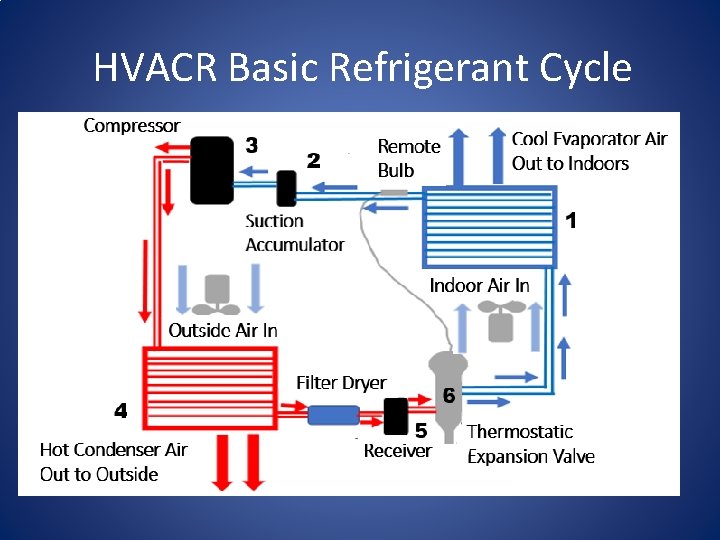
HVACR Basic Refrigerant Cycle

Compressor (Suction Side) Low Pressure Gas Inlet “Suction or Low Pressure Side”

Compressor Piston Down (Suction Side) Low Pressure Gas Inlet “Suction or Low Pressure Side”
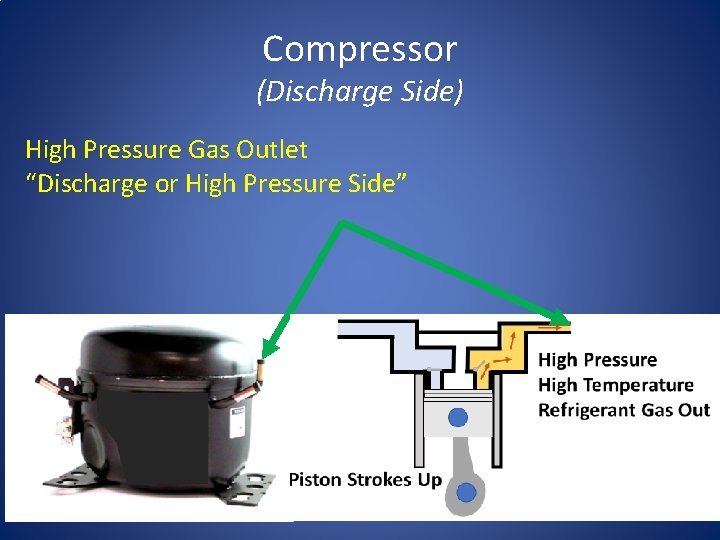
Compressor (Discharge Side) High Pressure Gas Outlet “Discharge or High Pressure Side”
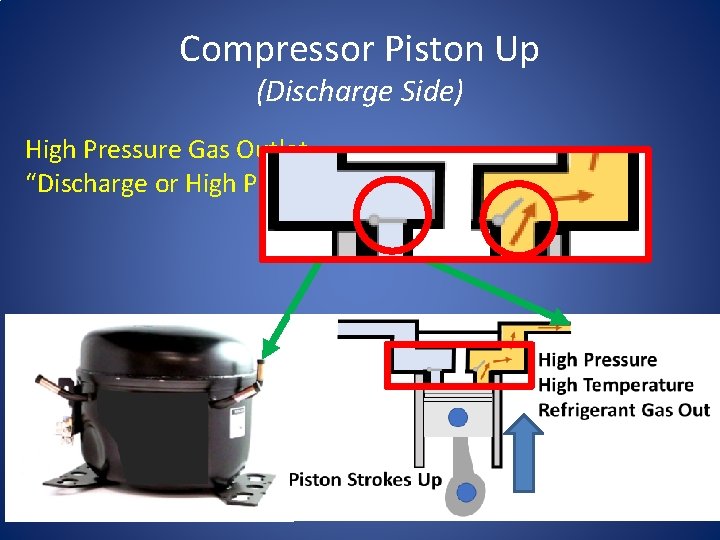
Compressor Piston Up (Discharge Side) High Pressure Gas Outlet “Discharge or High Pressure Side”
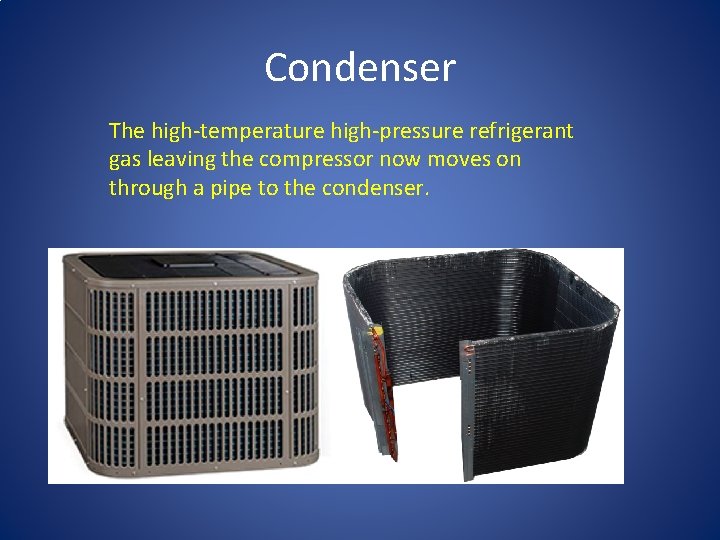
Condenser The high-temperature high-pressure refrigerant gas leaving the compressor now moves on through a pipe to the condenser.
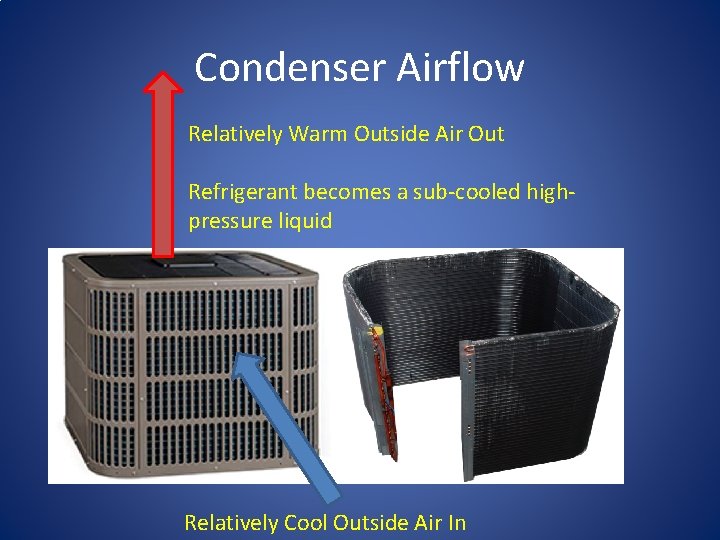
Condenser Airflow Relatively Warm Outside Air Out Refrigerant becomes a sub-cooled highpressure liquid Relatively Cool Outside Air In
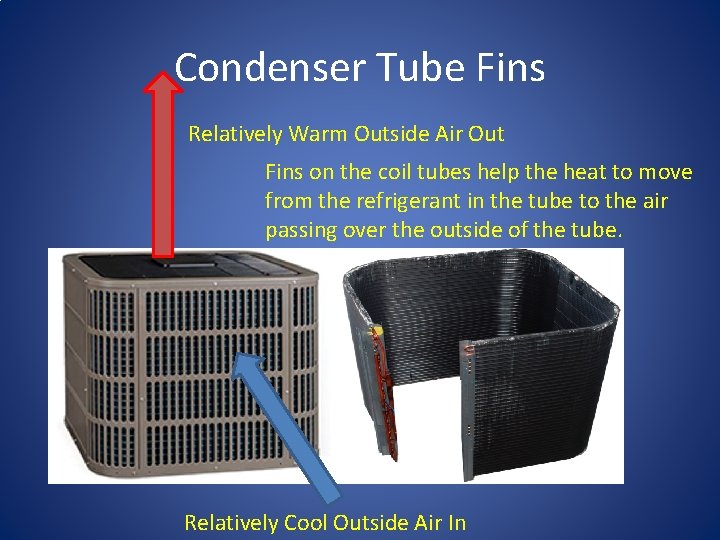
Condenser Tube Fins Relatively Warm Outside Air Out Fins on the coil tubes help the heat to move from the refrigerant in the tube to the air passing over the outside of the tube. Relatively Cool Outside Air In
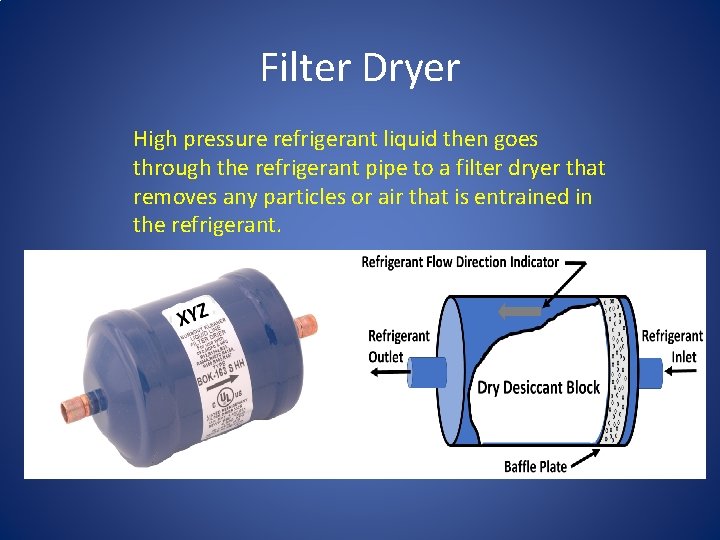
Filter Dryer High pressure refrigerant liquid then goes through the refrigerant pipe to a filter dryer that removes any particles or air that is entrained in the refrigerant.
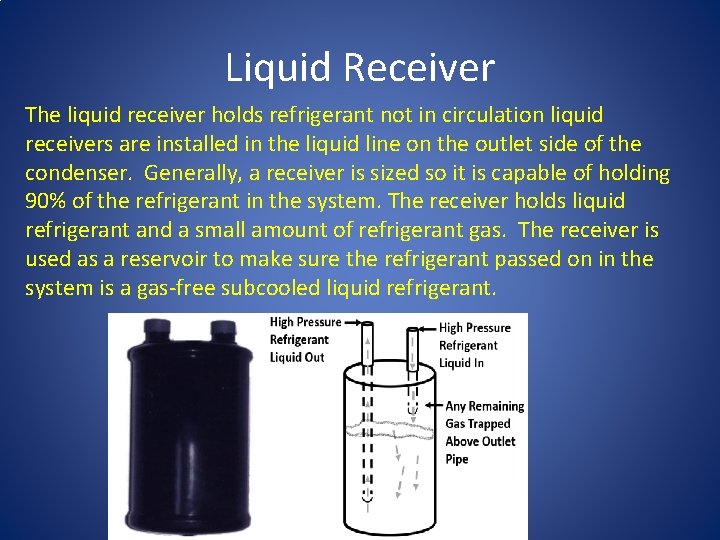
Liquid Receiver The liquid receiver holds refrigerant not in circulation liquid receivers are installed in the liquid line on the outlet side of the condenser. Generally, a receiver is sized so it is capable of holding 90% of the refrigerant in the system. The receiver holds liquid refrigerant and a small amount of refrigerant gas. The receiver is used as a reservoir to make sure the refrigerant passed on in the system is a gas-free subcooled liquid refrigerant.
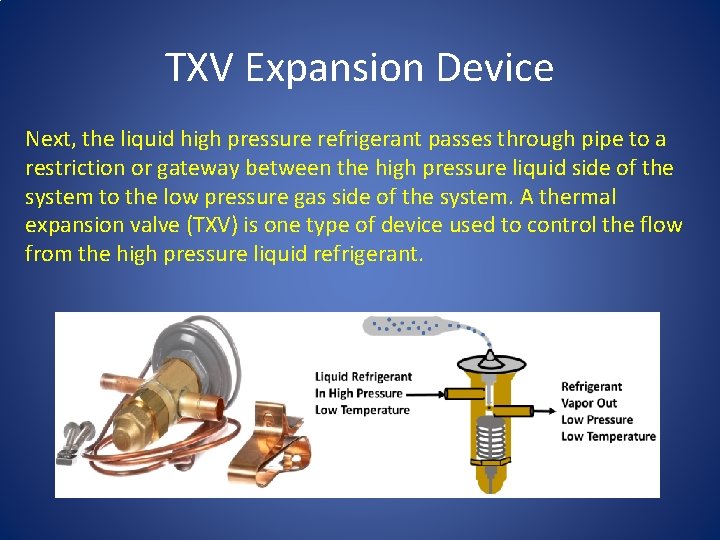
TXV Expansion Device Next, the liquid high pressure refrigerant passes through pipe to a restriction or gateway between the high pressure liquid side of the system to the low pressure gas side of the system. A thermal expansion valve (TXV) is one type of device used to control the flow from the high pressure liquid refrigerant.
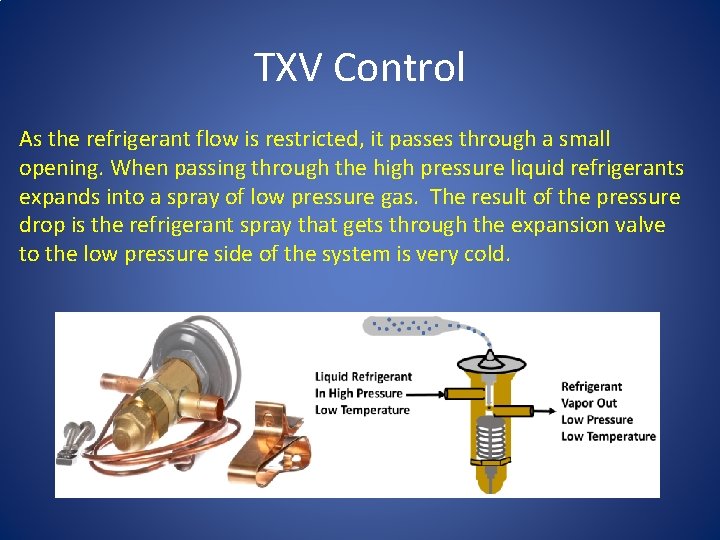
TXV Control As the refrigerant flow is restricted, it passes through a small opening. When passing through the high pressure liquid refrigerants expands into a spray of low pressure gas. The result of the pressure drop is the refrigerant spray that gets through the expansion valve to the low pressure side of the system is very cold.
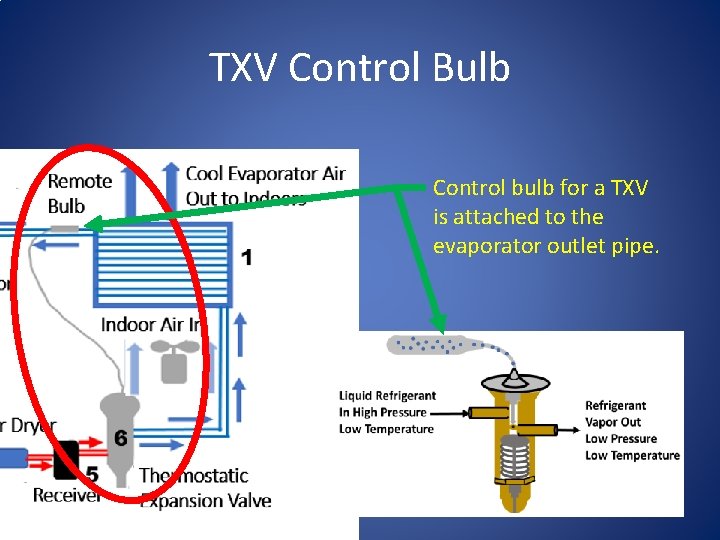
TXV Control Bulb Control bulb for a TXV is attached to the evaporator outlet pipe.
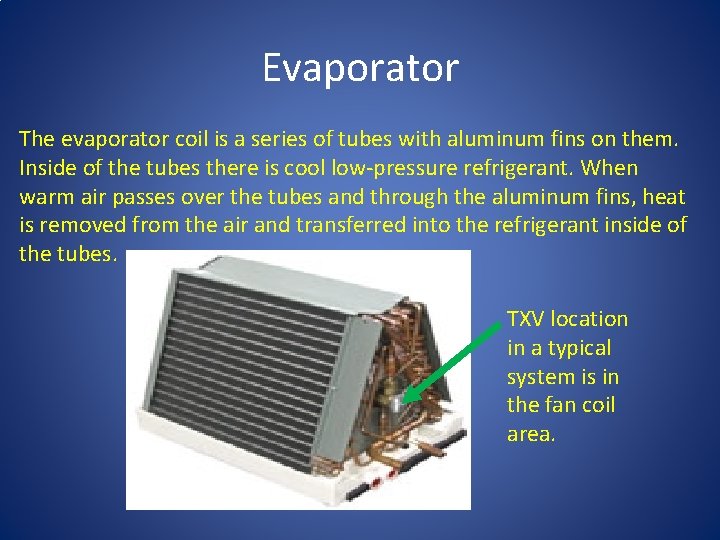
Evaporator The evaporator coil is a series of tubes with aluminum fins on them. Inside of the tubes there is cool low-pressure refrigerant. When warm air passes over the tubes and through the aluminum fins, heat is removed from the air and transferred into the refrigerant inside of the tubes. TXV location in a typical system is in the fan coil area.
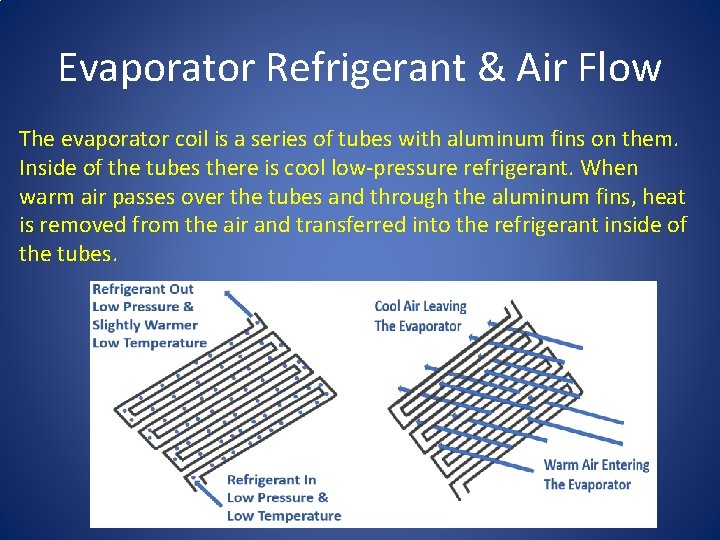
Evaporator Refrigerant & Air Flow The evaporator coil is a series of tubes with aluminum fins on them. Inside of the tubes there is cool low-pressure refrigerant. When warm air passes over the tubes and through the aluminum fins, heat is removed from the air and transferred into the refrigerant inside of the tubes.
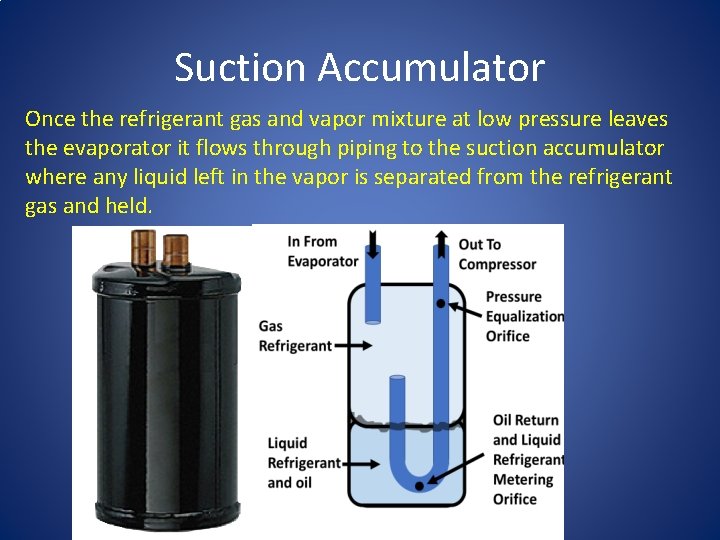
Suction Accumulator Once the refrigerant gas and vapor mixture at low pressure leaves the evaporator it flows through piping to the suction accumulator where any liquid left in the vapor is separated from the refrigerant gas and held.
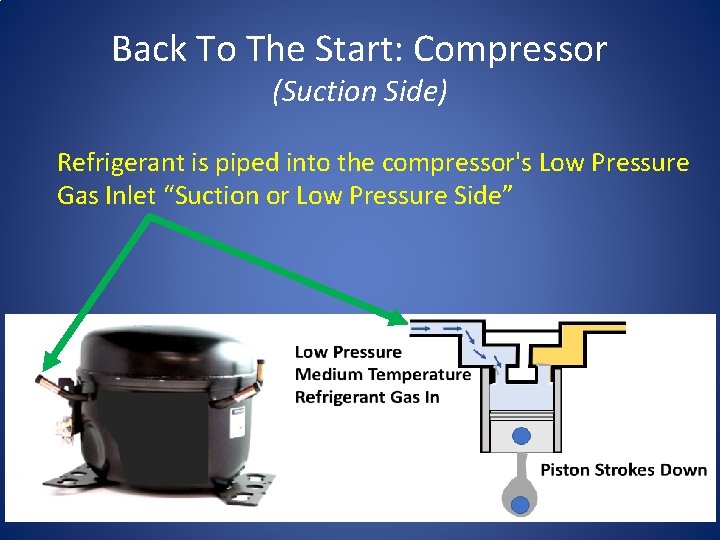
Back To The Start: Compressor (Suction Side) Refrigerant is piped into the compressor's Low Pressure Gas Inlet “Suction or Low Pressure Side”
Lessons Learned • You should now be able to explain why valves are needed in a piston type of HVACR compressor. • You should now be able to explain how a suction accumulator and a liquid receiver work and why the direction they are piped is important. • You should now be able to explain why it is important to replace a filter dryer whenever a HVACR system has been opened up for repairs. • You should now still be able to draw the basic refrigerant cycle and show where the refrigerant temperatures and pressures increase and decrease and where the air temperatures increase and decrease!
- Slides: 21