
Technical Safety Brief no 2 Storage tanks AJL

Technical Safety Brief no. 2 Storage tanks AJL 6/04
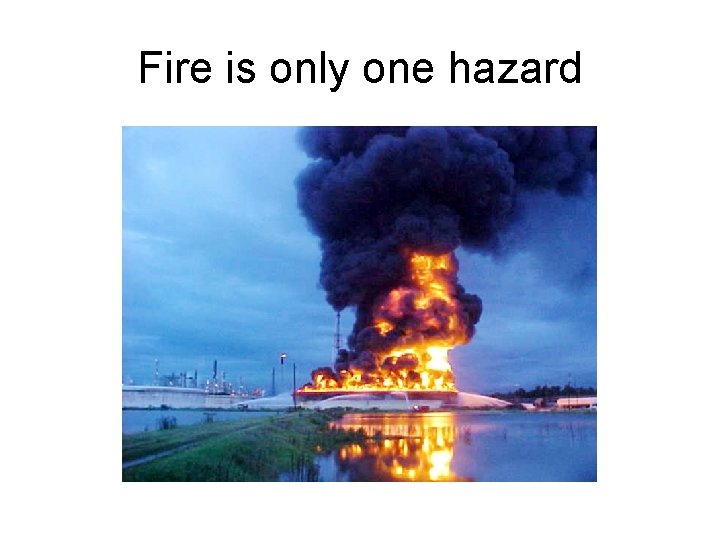
Fire is only one hazard
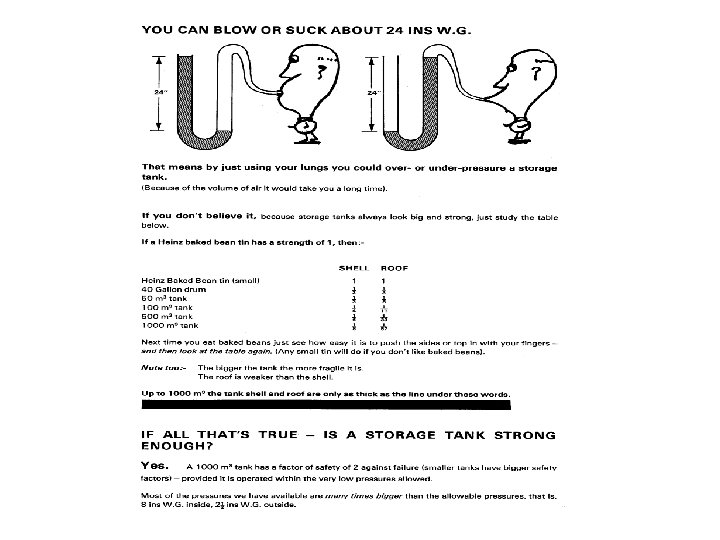
Pressure relief • Atmospheric tanks are just that • Designed for only 8’’ water positive and 21/2’’ negative • Pressure relief by open vent and blow off lid • Vents must not be obstructed – Objects, polythene bags, flame arrestors • Vents must not be modified or extended

Rail tank collapse
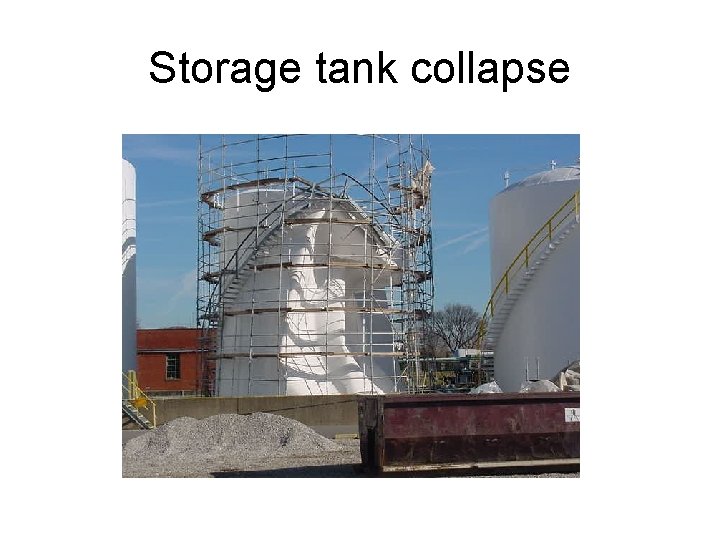
Storage tank collapse
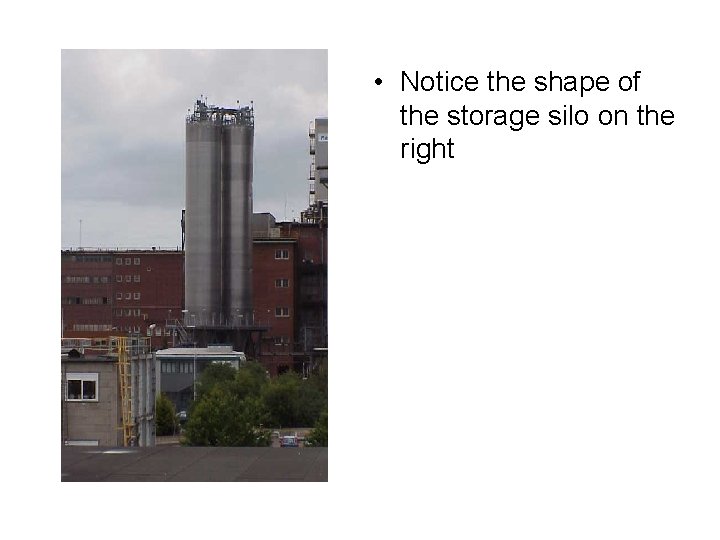
• Notice the shape of the storage silo on the right
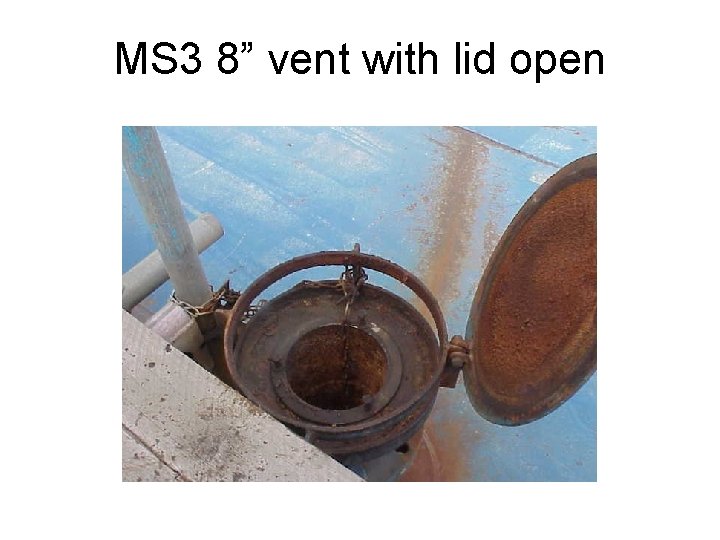
MS 3 8” vent with lid open
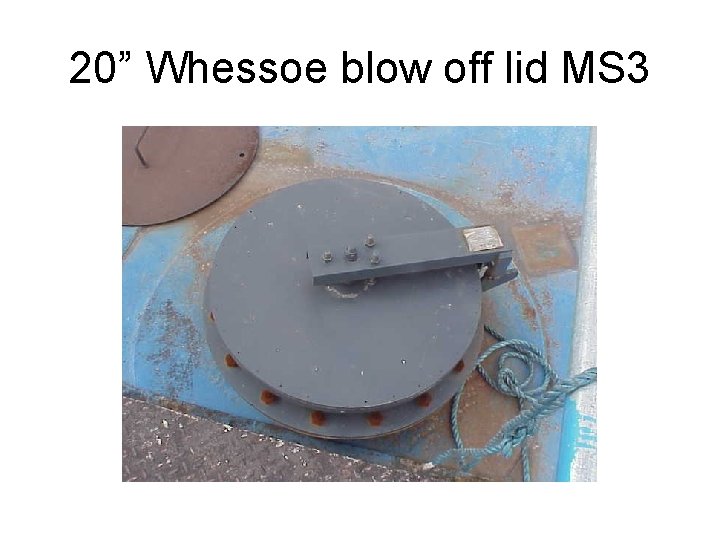
20” Whessoe blow off lid MS 3
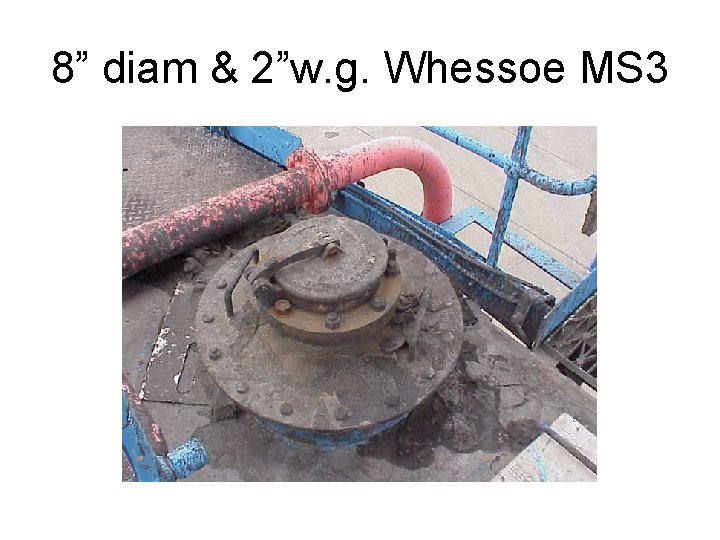
8” diam & 2”w. g. Whessoe MS 3
Corrosion • External corrosion occurs on lagged tanks where water collects – lagging support rings, roof, external attachments etc • External corrosion occurs to the floor under the tank – protected by epoxy seal • Internal corrosion caused by acids e. g. HCl protected by butyl linings • Internal corrosion by stress cracking on hot caustic tanks • Fuel oil tanks inspections frequency: internal 2 on 12 year, I on 6 year and external 2 annually and 1 biannually • Acid tanks inspected on 6 year frequency
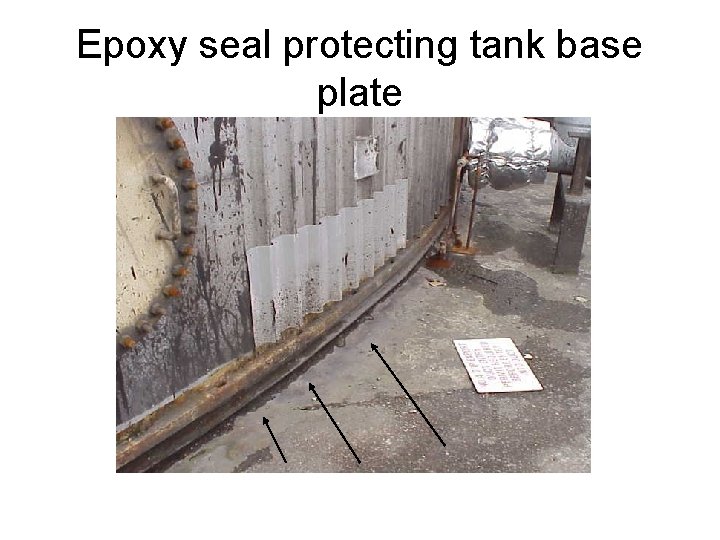
Epoxy seal protecting tank base plate
Fire hazards • Fuel oil flash point is 66 o. C, temperature is alarmed at 70 o. C • Maintain fuel oil storage temperature at 60 o. C • Fuel oil residues present particular problem for hot work e. g. roof supports. • Special care, preparation and risk assessment for fire and work permits
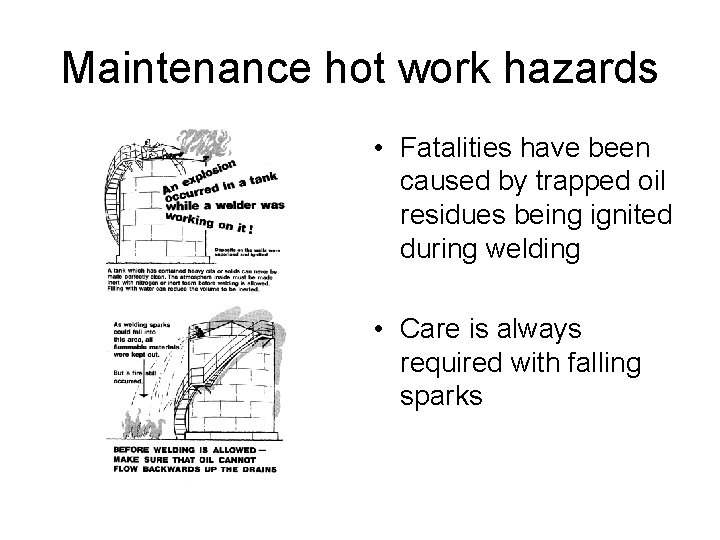
Maintenance hot work hazards • Fatalities have been caused by trapped oil residues being ignited during welding • Care is always required with falling sparks
Fuel oil tank slopover • Fuel oil above 100 o. C when mixed with water causes “slop over” • Can be sufficiently violent to rupture tank • Always ensure water bottoms drained form tank • Never allow fuel oil temperatures to exceed 100 o. C. Tank alarm at 70 o. C
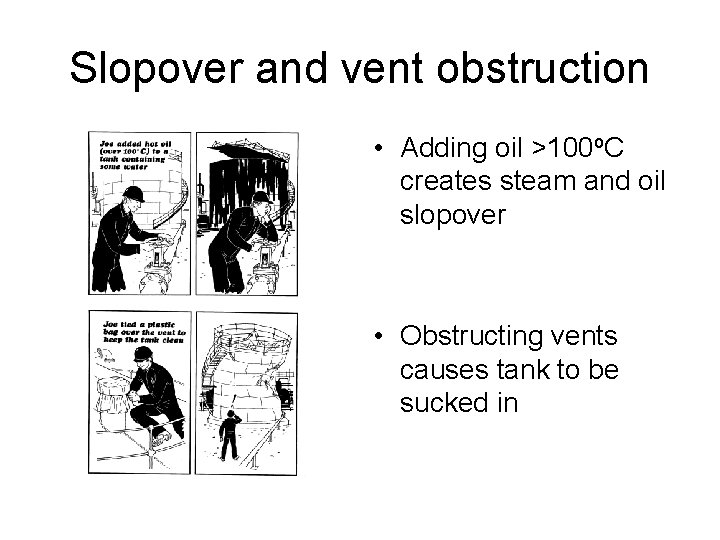
Slopover and vent obstruction • Adding oil >100 o. C creates steam and oil slopover • Obstructing vents causes tank to be sucked in
Over fill of tanks • All tanks are provided with overflow which is separate from the vent • Follow “movements” procedures – Ensure enough space in tank before starting movement. Compare despatch and receipt tanks – Check valves and pipeline for accuracy – Start and monitor movement progress at regular intervals – Check movement shut down at end and complete records
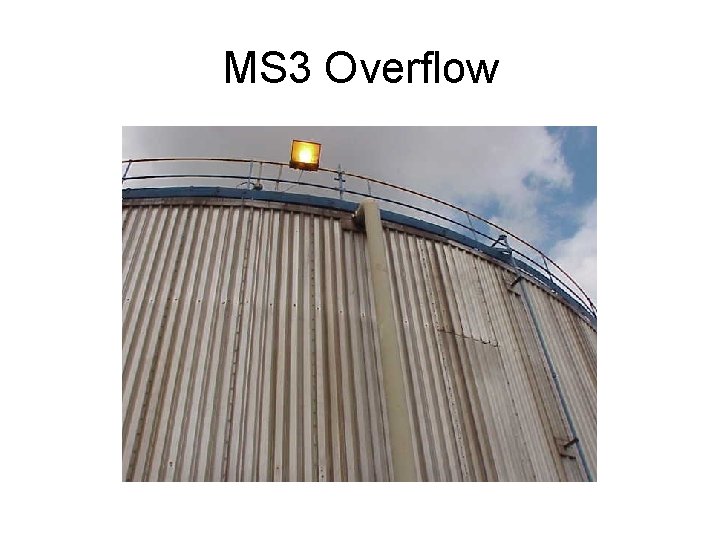
MS 3 Overflow
Summary • Routines are designed to ensure safe operation of storage tanks – Temperature not to exceed the flash point – Vents must not be obstructed or modified – Base seals in good condition – Overfill prevention by correct procedure – Routine engineering inspection at the correct frequency
- Slides: 20