
Technical Introduction to Wireless Application Development Developing applications
- Slides: 10
Technical Introduction to Wireless Application Development Developing applications in the top three wireless environments Dave Evartt ~ Systems Architect United States Army Medical Research and Materiel Command Telemedicine and Advanced Technology Research Center Email: evartt@tatrc. org
Wireless is easier than you think! ¨ It’s been around forever – Amtor, Pactor, RTTY, FAX, NASA’s Deep Space Network, Amateur Radio (packet radio). ¨ Easy to do, any programmer can do it. ¨ Convergent future can eliminate distinctions.
Most wireless applications use: ¨ WAP (Wireless Application Protocol) ¨ Web Clipping (Palm VII and similar devices) ¨ TCP/IP over RF - includes – 802. 11(a, b, e), Home. RF, X 25 a, 802. 15(Bluetooth), other x 25 derivatives – Proprietary
WAP ¨ Pros: – Handy for VERY limited use devices, most commonly cell phones ¨ Cons: – Not enough: • Page size (limited to 1500 bytes) • Low bandwidth – No future • Overcome by technology changes – No standard implementations – Not practical for most uses
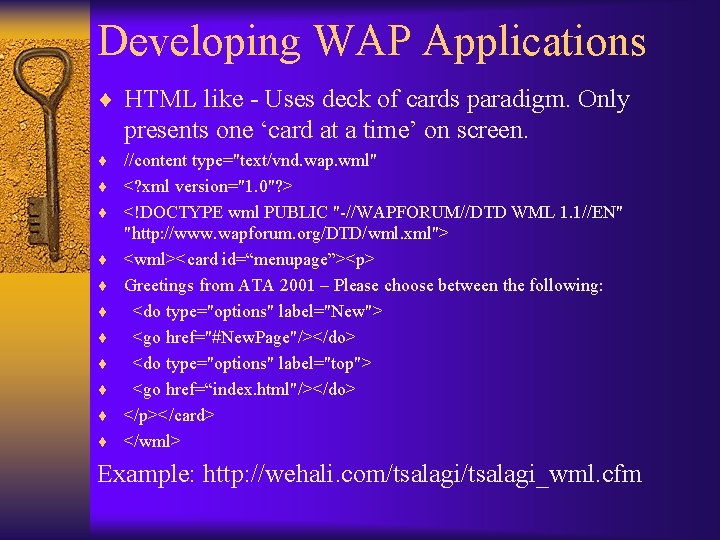
Developing WAP Applications ¨ HTML like - Uses deck of cards paradigm. Only presents one ‘card at a time’ on screen. ¨ //content type="text/vnd. wap. wml" ¨ <? xml version="1. 0"? > ¨ <!DOCTYPE wml PUBLIC "-//WAPFORUM//DTD WML 1. 1//EN" ¨ ¨ ¨ ¨ "http: //www. wapforum. org/DTD/wml. xml"> <wml><card id=“menupage”><p> Greetings from ATA 2001 – Please choose between the following: <do type="options" label="New"> <go href="#New. Page"/></do> <do type="options" label="top"> <go href=“index. html"/></do> </p></card> </wml> Example: http: //wehali. com/tsalagi_wml. cfm
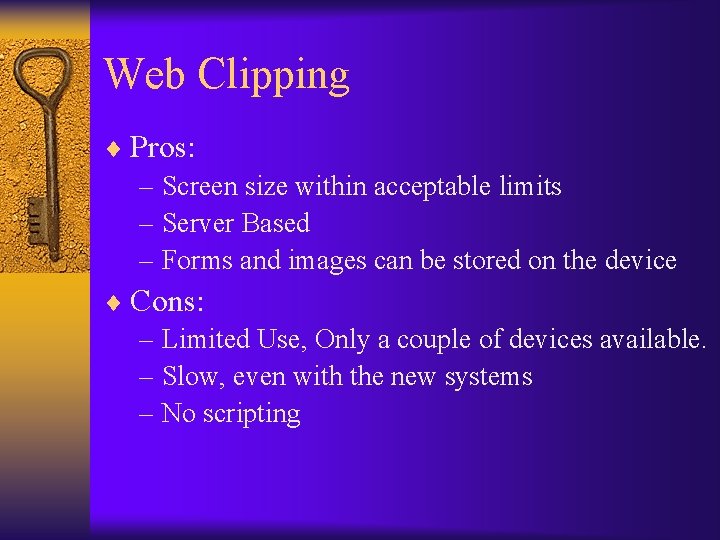
Web Clipping ¨ Pros: – Screen size within acceptable limits – Server Based – Forms and images can be stored on the device ¨ Cons: – Limited Use, Only a couple of devices available. – Slow, even with the new systems – No scripting
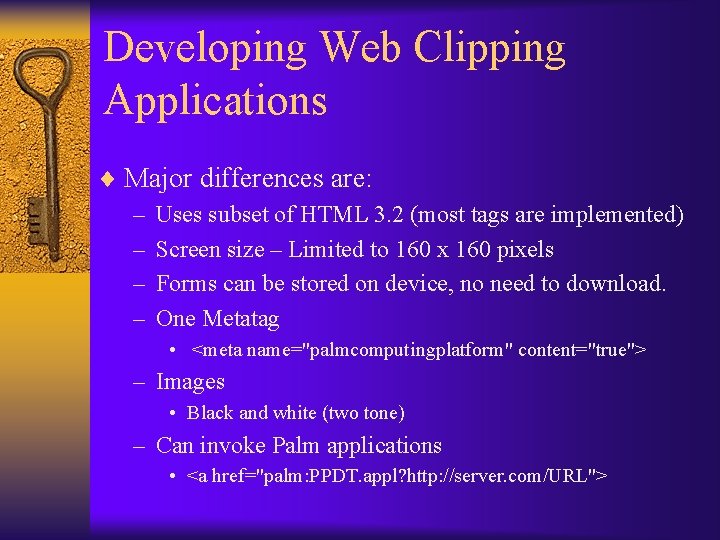
Developing Web Clipping Applications ¨ Major differences are: – Uses subset of HTML 3. 2 (most tags are implemented) – Screen size – Limited to 160 x 160 pixels – Forms can be stored on device, no need to download. – One Metatag • <meta name="palmcomputingplatform" content="true"> – Images • Black and white (two tone) – Can invoke Palm applications • <a href="palm: PPDT. appl? http: //server. com/URL">
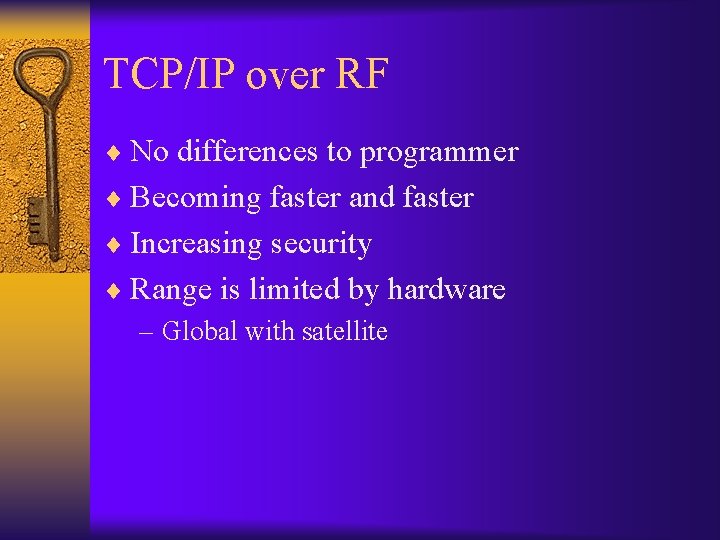
TCP/IP over RF ¨ No differences to programmer ¨ Becoming faster and faster ¨ Increasing security ¨ Range is limited by hardware – Global with satellite
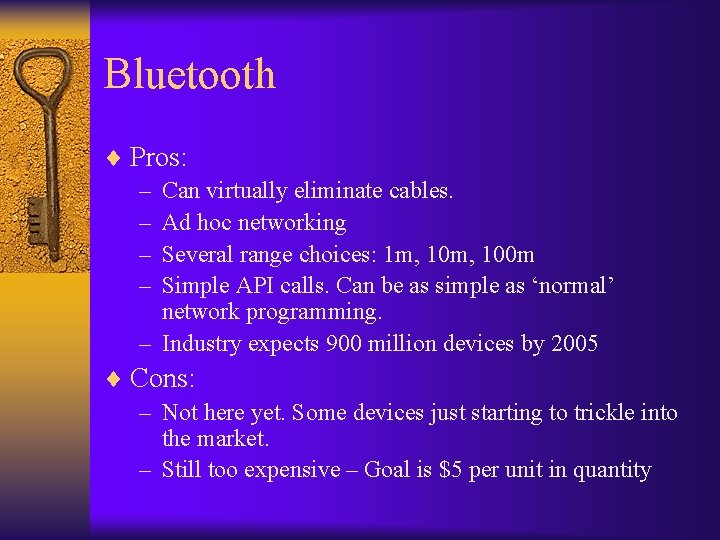
Bluetooth ¨ Pros: – Can virtually eliminate cables. – Ad hoc networking – Several range choices: 1 m, 100 m – Simple API calls. Can be as simple as ‘normal’ network programming. – Industry expects 900 million devices by 2005 ¨ Cons: – Not here yet. Some devices just starting to trickle into the market. – Still too expensive – Goal is $5 per unit in quantity
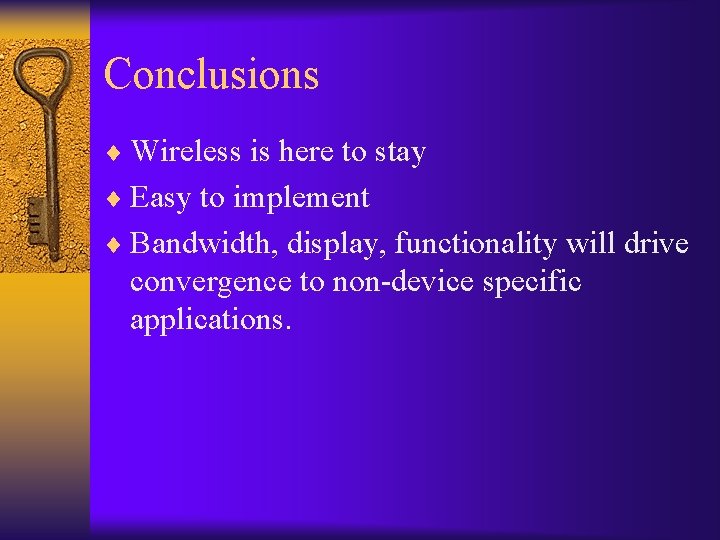
Conclusions ¨ Wireless is here to stay ¨ Easy to implement ¨ Bandwidth, display, functionality will drive convergence to non-device specific applications.