
Technical Failure Coding July 09 Todays environment Sharing

- Slides: 12
Technical Failure Coding July 09
Today’s environment • Sharing of repair information is facing several difficult problems: • • • Different countries Different languages Different types of service network (SP/OT/TP) • Actual SIRIS system it’s obsolete (90 s) and NOT Customer oriented • So, there is a clear need to use a: • unified, • simple, • language-independent, • powerful ……Repair Description Language Technical Failure Coding Confidential – not to be copied or distributed 1
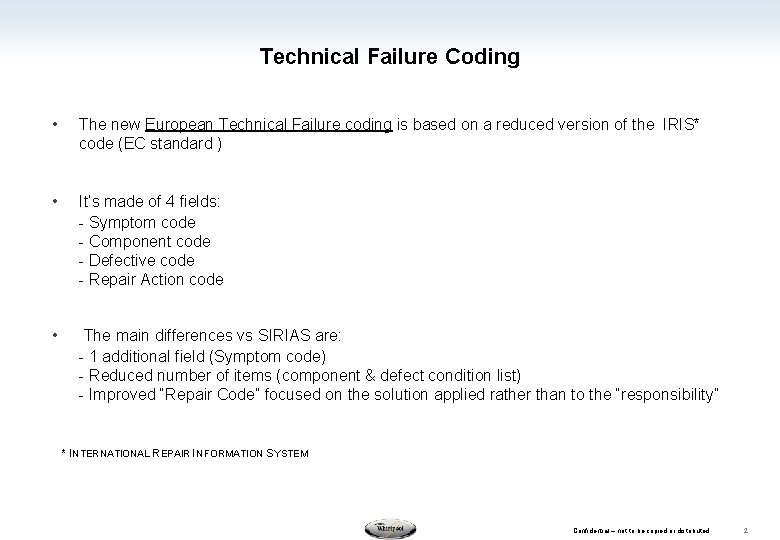
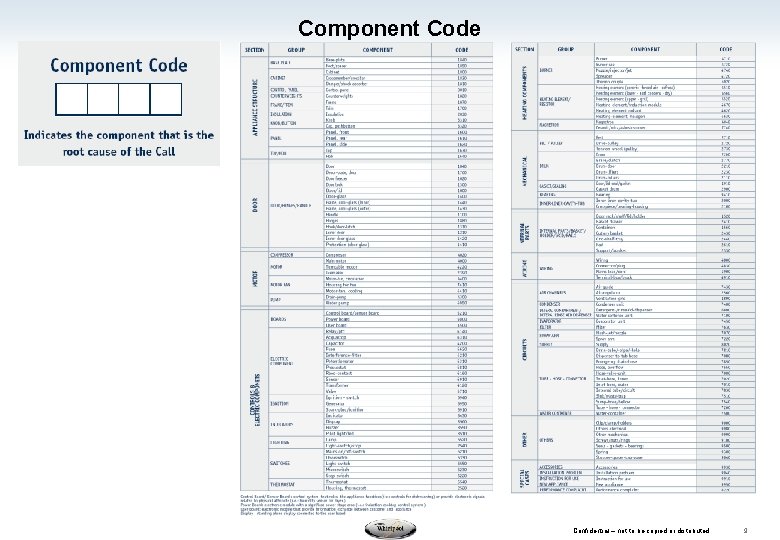
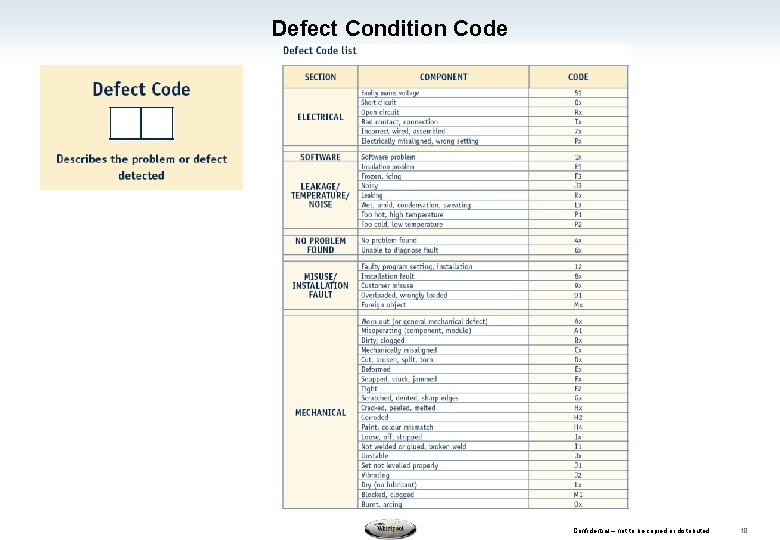
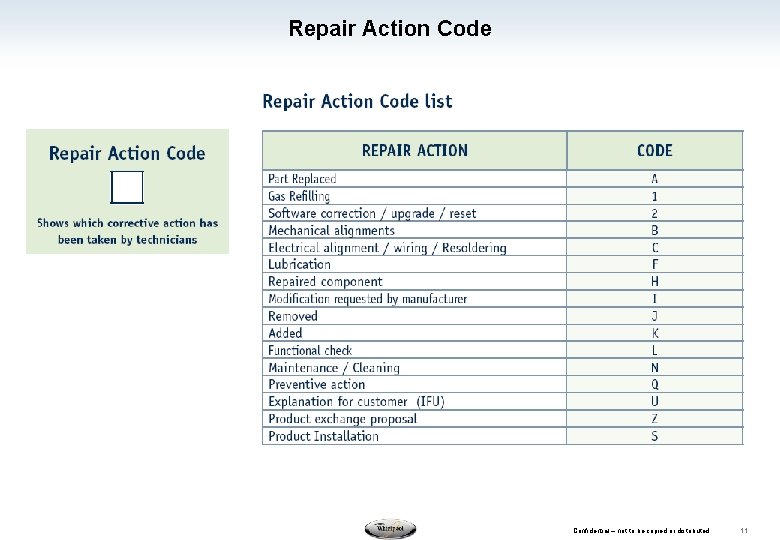
Technical Failure Coding • The new European Technical Failure coding is based on a reduced version of the IRIS* code (EC standard ) • It’s made of 4 fields: - Symptom code - Component code - Defective code - Repair Action code • The main differences vs SIRIAS are: - 1 additional field (Symptom code) - Reduced number of items (component & defect condition list) - Improved “Repair Code” focused on the solution applied rather than to the “responsibility” * INTERNATIONAL REPAIR INFORMATION SYSTEM Confidential – not to be copied or distributed 2
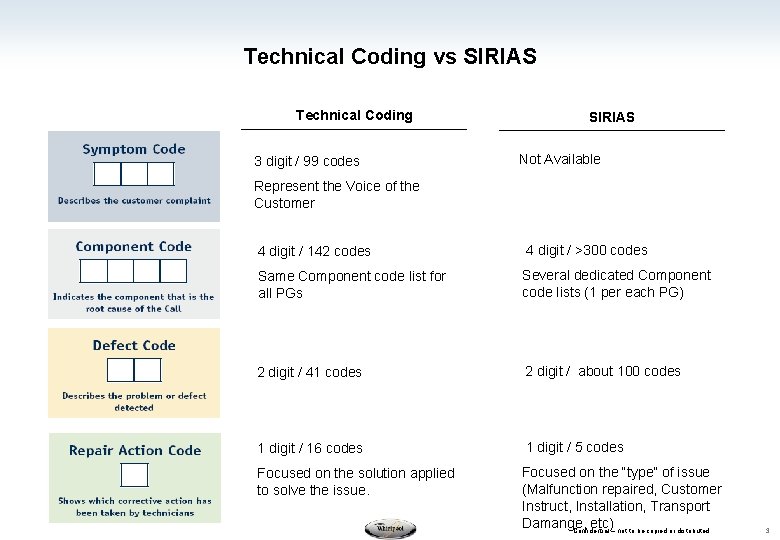
Technical Coding vs SIRIAS Technical Coding 3 digit / 99 codes SIRIAS Not Available Represent the Voice of the Customer 4 digit / 142 codes 4 digit / >300 codes Same Component code list for all PGs Several dedicated Component code lists (1 per each PG) 2 digit / 41 codes 2 digit / about 100 codes 1 digit / 16 codes 1 digit / 5 codes Focused on the solution applied to solve the issue. Focused on the “type” of issue (Malfunction repaired, Customer Instruct, Installation, Transport Damange, etc) Confidential – not to be copied or distributed 3
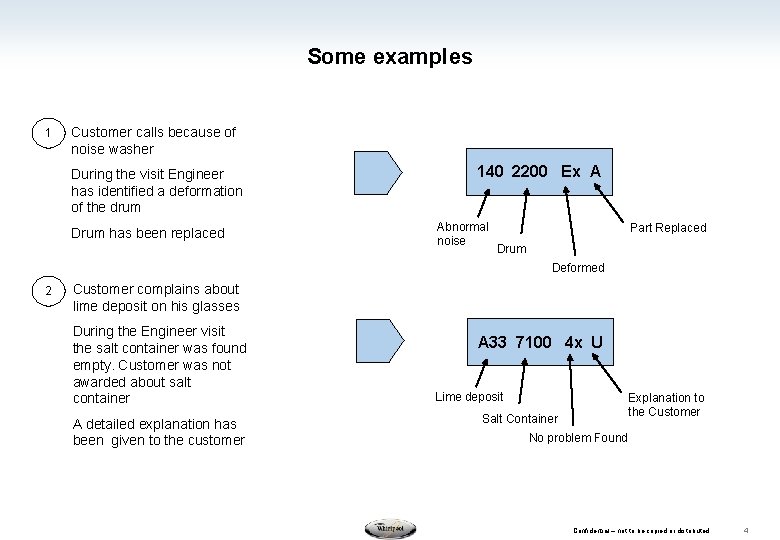
Some examples 1 Customer calls because of noise washer During the visit Engineer has identified a deformation of the drum Drum has been replaced 140 2200 Ex A Abnormal noise Part Replaced Drum Deformed 2 Customer complains about lime deposit on his glasses During the Engineer visit the salt container was found empty. Customer was not awarded about salt container A detailed explanation has been given to the customer A 33 7100 4 x U Lime deposit Explanation to the Customer Salt Container No problem Found Confidential – not to be copied or distributed 4
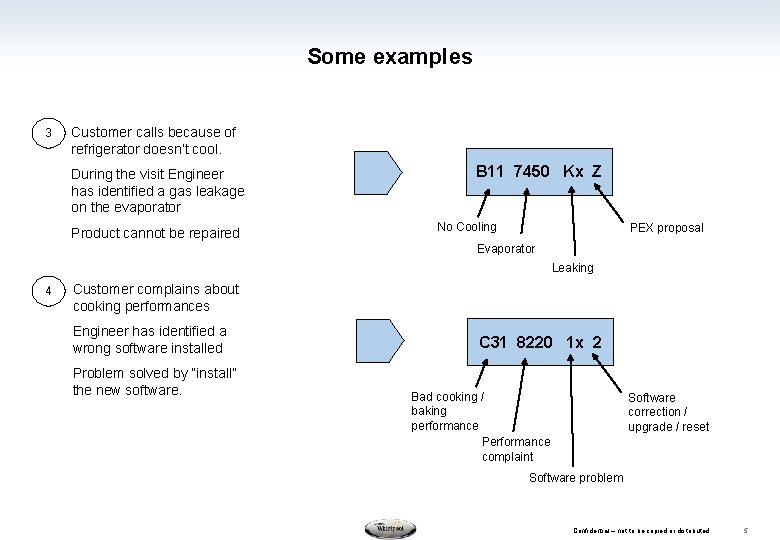
Some examples 3 Customer calls because of refrigerator doesn’t cool. During the visit Engineer has identified a gas leakage on the evaporator Product cannot be repaired B 11 7450 Kx Z No Cooling PEX proposal Evaporator Leaking 4 Customer complains about cooking performances Engineer has identified a wrong software installed Problem solved by “install” the new software. C 31 8220 1 x 2 Bad cooking / baking performance Performance complaint Software correction / upgrade / reset Software problem Confidential – not to be copied or distributed 5
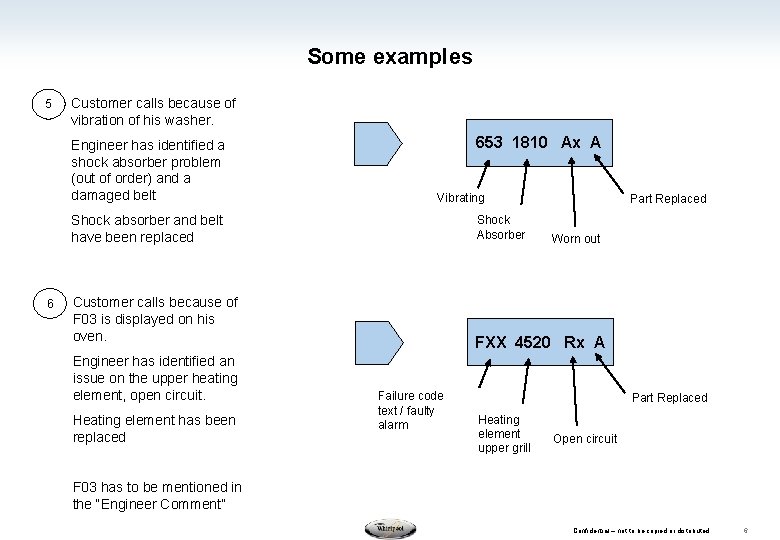
Some examples 5 Customer calls because of vibration of his washer. Engineer has identified a shock absorber problem (out of order) and a damaged belt 653 1810 Ax A Vibrating Shock absorber and belt have been replaced 6 Shock Absorber Customer calls because of F 03 is displayed on his oven. Engineer has identified an issue on the upper heating element, open circuit. Heating element has been replaced Part Replaced Worn out FXX 4520 Rx A Failure code text / faulty alarm Part Replaced Heating element upper grill Open circuit F 03 has to be mentioned in the “Engineer Comment” Confidential – not to be copied or distributed 6
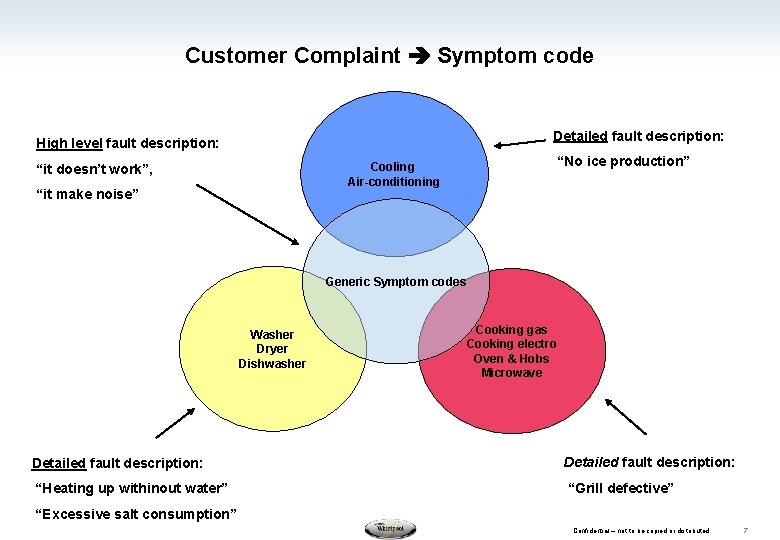
Customer Complaint Symptom code Detailed fault description: High level fault description: Cooling Air-conditioning “it doesn’t work”, “it make noise” “No ice production” Generic Symptom codes Washer Dryer Dishwasher Cooking gas Cooking electro Oven & Hobs Microwave Detailed fault description: “Heating up withinout water” “Grill defective” “Excessive salt consumption” Confidential – not to be copied or distributed 7
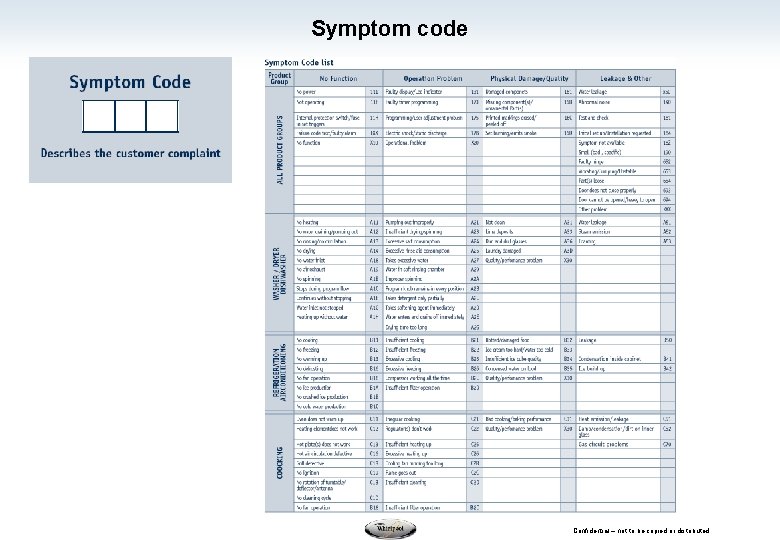
Symptom code Confidential – not to be copied or distributed
Component Code Confidential – not to be copied or distributed 9
Defect Condition Code Confidential – not to be copied or distributed 10
Repair Action Code Confidential – not to be copied or distributed 11