
TEAP Collaboration Everyone Plays a Role in Suspicion
TEAP Collaboration: Everyone Plays a Role in Suspicion Testing, Mentoring, and Relapse Prevention By: Christy Hicks, LCADC/CSW Regional TEAP Specialist Atlanta, Chicago, Dallas Regions
Today’s Objectives 1. Develop suspicion screening form, policies, and training to meet your centers needs related to drug and alcohol use. 2. Develop a list of Relapse Prevention resources that are already at your finger tips. 3. Develop strategies that will assist in retention using mentoring, wraparound programing.
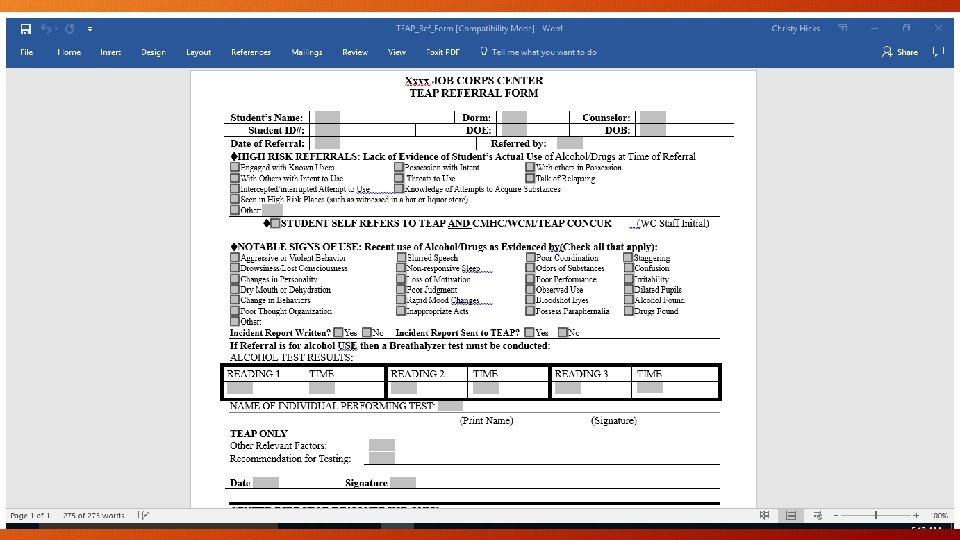
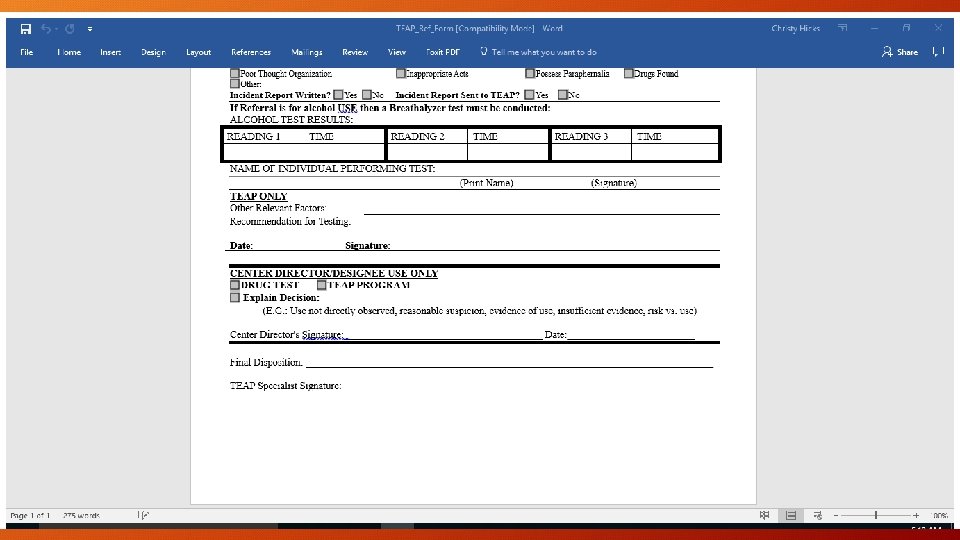
Why a suspicion test? • Reasonable suspicion drug testing determinations are sometimes the most challenging aspects of a drug-free workplace program, yet can have a profound impact on safety, well-being, morale, and productivity. • It is important to have evidence or reasonable cause to suspect an student/employee of drug use prior to testing. • Evidence is based on direct observation • Reasonable cause is based on behavioral/physical/psychological symptoms
Why do we need to train staff? • • Assist staff in understanding why students use drugs: Signs and symptoms of drug and alcohol use PRH rules and requirements Center policy SOP/COP Referral Process Documentation HIPAA
What are physical symptoms? • • Bloodshot eyes, pupils larger or smaller than usual Changes in appetite Changes in sleep pattern Sudden weightless or weight gain Deterioration of physical appearance, personal grooming habits Unusual smells on breath, body, and clothing Tremors, slurred speech, or impaired coordination Bruises, infections, or other physical signs of drugs entering the body • (Make sure all answers are justified)
What are behavioral symptoms? • Drop in attendance or participation at school, work, or other enjoyable activities • Unexplained need for money or financial problems, may borrow or steal to get it. • Engaging in secretive or suspicious behaviors • Sudden change in friends, hangouts or hobbies • Frequently getting into trouble • Increased aggression or irritability (Make sure all are justified)
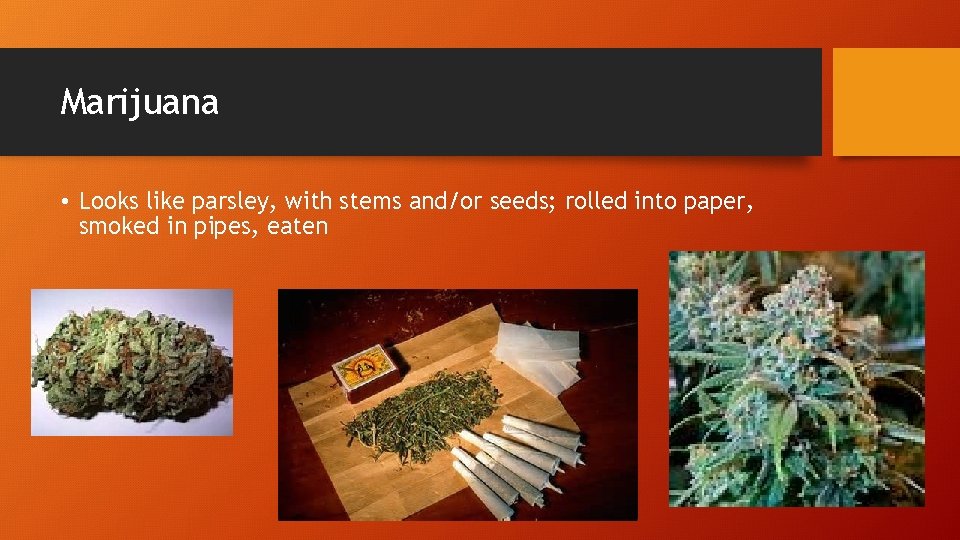
Marijuana • Looks like parsley, with stems and/or seeds; rolled into paper, smoked in pipes, eaten
Warning Signs of Marijuana Use • Glassy red eyes • Loud talking • Inappropriate laughter followed by sleepiness • Loss of interest or motivation • Weight gain or loss • Euphoric feeling; increased sense of well being • Dry mount and throat • Increased appetite- munchies • Impaired coordination, concentration and memory • Increased heart rate
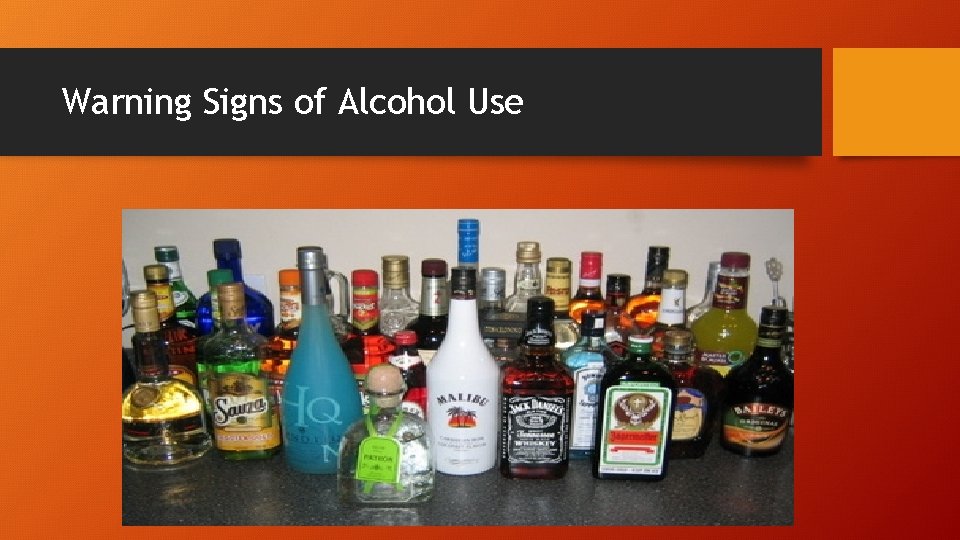
Warning Signs of Alcohol Use
Warning Signs of Alcohol Use Slurred speech Hallucinations Nausea or vomiting Extreme agitation or anxiety Profuse sweating, even in cold conditions • Sensation of warmth • Loss of motor control • • • Isolation form family, friends • Difficulty handling daily problems • Learning and memory problems • Depression • “Blackouts”
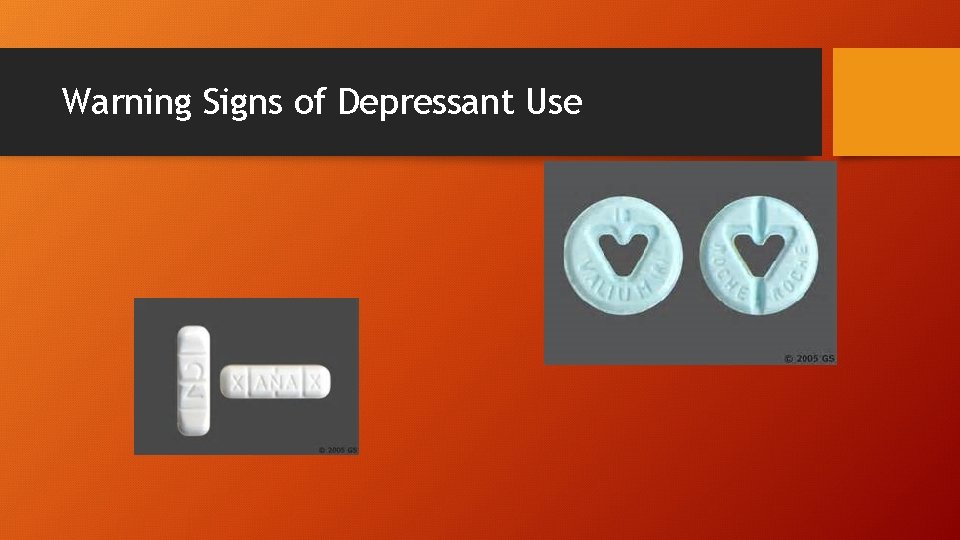
Warning Signs of Depressant Use

Warning Signs of Depressant Use • • Contracted pupils Drunk-like state Difficulty concentrating Clumsiness Poor judgement Slurred speech Sleeplessness • • Sedatives or tranquilizers Slows brain activity Prescribed by physician Slows heart rate/blood pressure
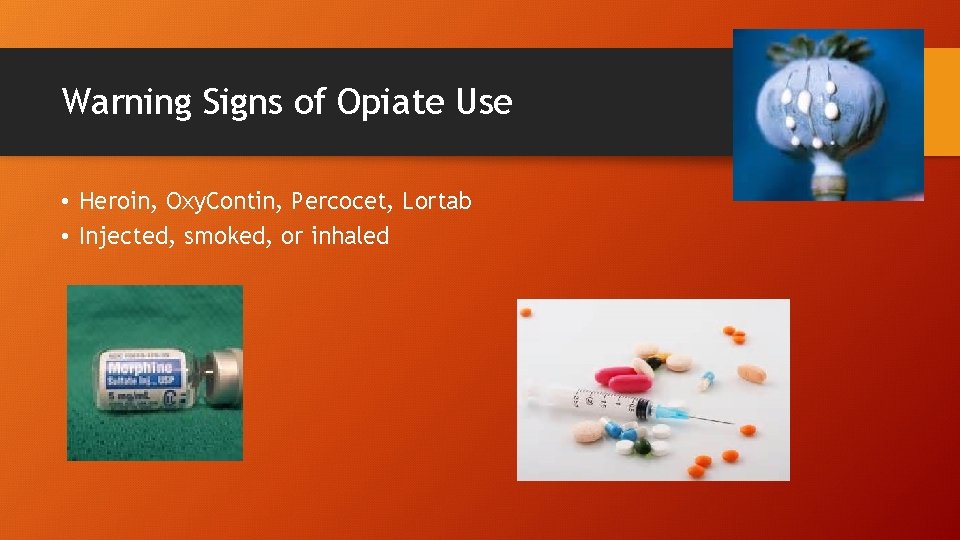
Warning Signs of Opiate Use • Heroin, Oxy. Contin, Percocet, Lortab • Injected, smoked, or inhaled
Warning Signs of Opiate Use • • Contracted pupils No pupil response to light Needle marks Sleeping at unusual times Sweating Vomiting Coughing Sniffing • Short lived state of euphoria, follow by drowsiness • Slowed heart rate, breathing, and brain activity • Depressed appetite, thirst and reflexes • Convulsions, coma, or death from overdose
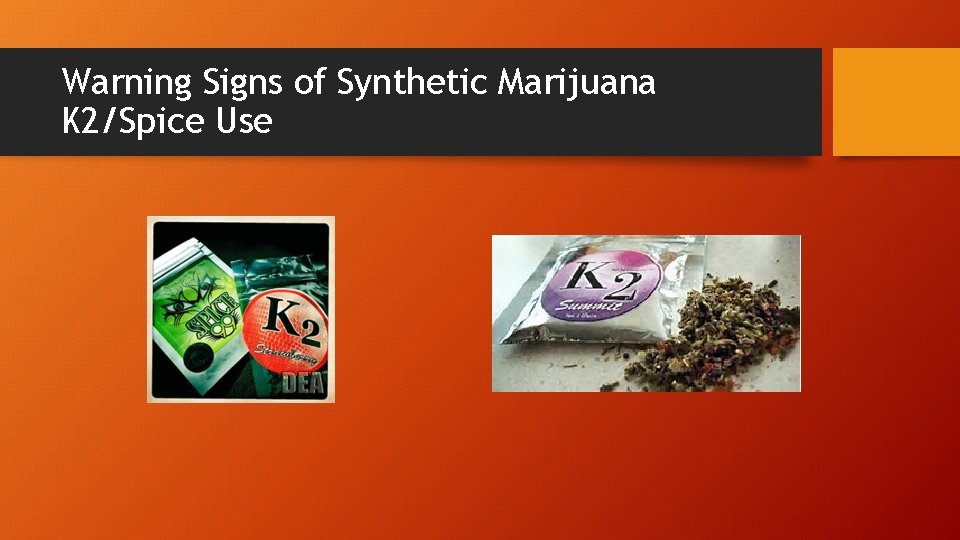
Warning Signs of Synthetic Marijuana K 2/Spice Use
Warning Signs of Synthetic Marijuana K 2/Spice Use • elevated mood • relaxation • altered perception—awareness of surrounding objects and conditions • symptoms of psychosis—delusional or disordered thinking detached from reality • extreme anxiety • confusion • paranoia—extreme and unreasonable distrust of others • hallucinations—sensations and images that seem real though they are not • rapid heart rate • vomiting • violent behavior • suicidal thoughts
TEAP is a center wide program and not just one person. All center staff are needed to make not only the program successful but to ensure the students success as well.
Relapse Prevention on Job Corps Centers • Relapse Prevention programing on center is not just a relapse groups, plans and NA meetings. Its an all inclusive program. • CHORES AND USEFUL TASKS (such as Cleaning, Cooking, Dishwashing, Ironing, Sewing). • EXERCISES (such as Jogging, Nautilus, Walking, Aerobic Dancing, Stretching or Aerobic Exercises, Shadow Boxing, Skipping Rope, Yoga, Weightlifting). • FOOD ACTIVITIES (such as Baking, Cooking, Barbecuing, Preparing Gourmet Meals, Shopping for Food).
Relapse Prevention on Job Corps Centers • GAMES (such as Bridge, Checkers, Chess, Go, Jigsaw Puzzles, Monopoly, Poker, Pinochle, Scrabble, Crosswords, Anagrams). • GRAPHIC ARTS (such as Cartooning, Drawing, Lettering, Mechanical Drawing, Painting, Photography, Silk screening). • HANDICRAFT ACTIVITIES (such as Basket making, Bookbinding, Crocheting, Embroidering, Knitting, Leatherworking, Dressmaking, Decoupage, Needlepoint). • HUMOROUS ACTIVITIES (such as Cartooning, Improvisation Games, Charades, Jesting, Joke-making, Playing Practical Pranks and Jokes, Punning).
Relapse Prevention on Job Corps Centers • MARTIAL ARTS (Akido, Jujitsu, Judo, Karate, Fencing, Wrestling). • OUTDOORS ACTIVITIES AND SPORTS (such as Birdwatching, Gardening, Crabbing, Fishing, Canoeing, Sailing, Hunting, Walking, Ice-skating, Skiing, Rowing, Hiking). • PERFORMING ARTS (such as Dancing, Ballet, Mime, Acting, Improvisation, Modern Dance, Tap Dance, Singing). • PERSONAL GROWTH (Self-help Books, Workshops, Lectures, Skills-learning, Career Development). • READING (Fiction, Novels, Plays, Poems, Nonfiction). • SCIENTIFIC ACTIVITIES (such as Anatomy, Biology, Herpetology, Physics, Medicine, Zoology, Anthropology, Psychology, Sociology).
Relapse Prevention on Job Corps Centers • SOCIALIZING ACTIVITIES (such as Conversing, Group Activities, Attending or Giving Parties, Rap Sessions). • SPECTATING (watching Movies, Plays, Sports, Pageants, Circuses). • SPORTS (such as Baseball, Basketball, Golf, Gym, Football, Hockey, Dancing, Tennis, Skating, Running, Volleyball). • STUDYING ACADEMIC SUBJECTS (such as Art History, Language, Math, Music, Science, Social Science). • TRADES AND CRAFTS (such as Bricklayer, Builder, Carpenter, Foreman, Factory Worker, Gardener, Mechanic, Machinist, Police Officer). • VENTING FEELINGS (such as Punching Pillows, Yelling, Talking, Writing, Expressing Good Feelings).

Relapse Prevention on Job Corps Centers • Build new services • • Groups Support Meetings Mentoring Programs Community Partnerships • Use what you have • • • Recreation Department Student Government Community Resources Cafeteria Logistics
PRH 6 -11, R 1(a) • Centers shall provide basic TEAP services, as described: The general emphasis of TEAP shall be on prevention, education, identification of substance use problems, relapse prevention, and helping students overcome barriers to employment.
Recovery and relapse can be described as related process that unfolds in 6 stages: 1. Abstaining from alcohol and other drugs 2. Separating from people, places, and things that promote the use of alcohol or drugs, and establishing a social network that supports recovery. 3. Stopping self-defeating behaviors that prevent awareness of painful feelings and irrational thoughts.

Cont 4. Learning how to mange feelings and emotions responsibility without resorting to compulsive behavior or the use of alcohol and drugs. 5. Learning to change addictive thinking patterns that create painful feelings and self-defeating behaviors. 6. Identifying and changing the mistake core beliefs about oneself, others, and the world that promote irrational thinking.
Relapse Education • • Reading assignments Writing assignments Warning sign identification Complicating factors in relapse Relapse warning sign management strategies Effective recovery planning All should be tailored to specifically to fit your individual students.
Warning Sign Management • This involves teaching students how to mange or cope with their warning signs as they occur. The better they are at coping with warning signs, the better their ability will be to stay in recovery. • Situational and behavioral • Thoughts and feelings level • Core issues
The Relapse Prevention Plan • Triggers • People, places and things that trigger cravings • How to avoid triggers • How to manage high risk situations that cannot be avoided • Managing Cravings • • Relapse Emotional Mental Physical
The Relapse Prevention Plan • Useful Tools • • • Gratitude list Relaxation techniques Stress management techniques Support People to call when you have cravings or stress Mental and physical wellness • Recovery Program • 12 Step work • Moral inventory/character defects • Ways to make amends
The Relapse Prevention Plan • Life Improvement • • • Family relationships Spousal/significant other relationship Support/friends Legal issues School Employment Finances Housing Basic needs Mental health Spirituality Purpose
Adolescent Risk • Adolescents are at higher risk for relapse due to their developmental stage. • Chemically dependency may have delayed normal development, making it difficult for them to function in an appropriate way.
Adolescent Risk • • Learning disabilities Dual or multiple diagnosis High stress personalities Inadequate coping skills Lack of a support system Dysfunctional families Lack of impulse control
Adolescent Risk • • Divorce or separation of parents Moving away from old friends, changing schools Loss or death of family members Breakup of relationship with boyfriend or girlfriend
Mentoring • Mentoring is a proven approach to drive rich leaning and development of adolescents. • Increases retention • School/job satisfaction • Can engage students to give back as mentor (Peer Mentoring) • What you need to do to get started. Decide the type of mentoring program our center needs/desires.
Designing a Mentoring Program • Determine why we are starting the program? • What are the outcomes that we desire? • Successful mentoring programs offer both structure and flexibility. • Things to Consider: • • Enrollment Mentoring style Connection type Connection duration
Attracting Participants for Your Mentoring Program • The best designed mentoring programs wont get far without effective promotion, recruitment, training and support. • Promote benefits for mentors and mentees • Consider recognition and rewards for participation • Provide training and support through out the program
Connect Mentors and Mentees • A productive mentoring relationship depends on a good match. • Matching is often one of the most challenging aspects of a program. Students will bring various competencies, backgrounds, learning styles, and needs. • Self matching • Administrative Matching
Matching • We need a solid profile for all mentors/mentees • • • Goals Interests Location Experiences Matching preferences (male/female)
Guiding Relationships • Now that participants are enrolled, trained, and matched, the real action begins. • • Assist with direction and a plan Monitor for accountability Keep educating Allow for some type of documentation
All of this programing at JC is based on the Wraparound Process • Wraparound is an intensive, holistic method of engaging with individuals with complex needs so that they can live in their communities and realize their hopes and dreams. • All of the processes we have discussed are deeply rooted in individualizing the programs to meet the students needs. (Exactly what we do on center. ) • TEAP is a program not just a person.

Questions?
- Slides: 43