
Teamwork Skills n n n Why Teams Project

- Slides: 19
Teamwork Skills n n n Why Teams? Project Management Team Success Stages Working Styles Member Styles
Why Teams? n n n More Complex Problems Power of Collaboration Global Companies Concurrent Engineering Project Management
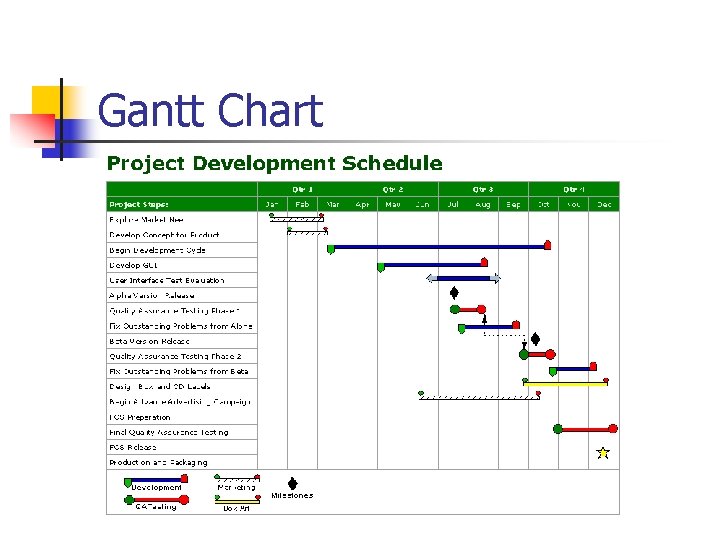
Project Management n n n Focuses on tasks, not Org Chart Teams formed to complete a project Task assignments based on time Overall plan - start to finish Gantt Chart
Gantt Chart
Team Success n n n n Common Goal Each Member Contributes Communications Creative Spark Effective Use of Resources Leadership Team Harmony
Member Attributes n n Attendance – be there, on time! Responsibility n n n Does his/her share Completes the work – on time! Shares abilities Creative spark! Contributes positively!
Leadership Attributes n n n n Focus on Purpose Be a Team Builder Plan Well – use resources well Run Effective Meetings Communicate! Promote Team Harmony Foster Performance
Team Stages These stages define how team members will interact: n n n Forming – “What’s going on? ” Norming – “I have to work with them? ” Storming – “How do we work this out? ” Performing – “How can we keep this up? ” Adjourning – “We did it – now what? ”
Forming n Characterized by: n n Anxiety Search for Structure Silence Reaction to the Leader
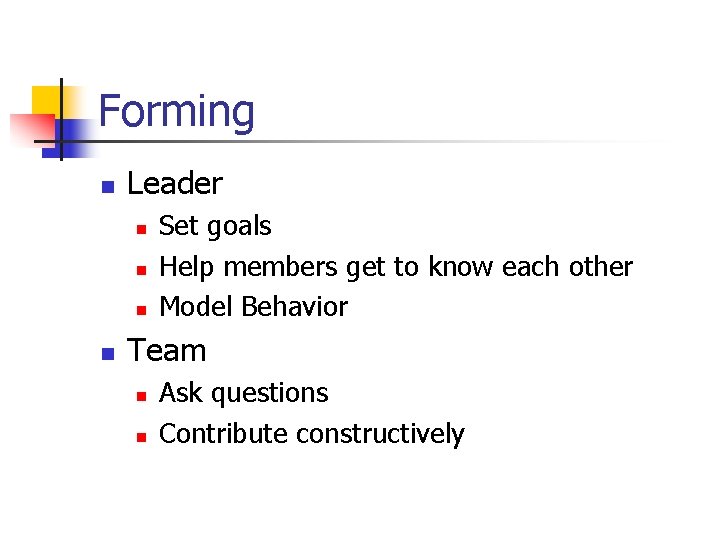
Forming n Leader n n Set goals Help members get to know each other Model Behavior Team n n Ask questions Contribute constructively
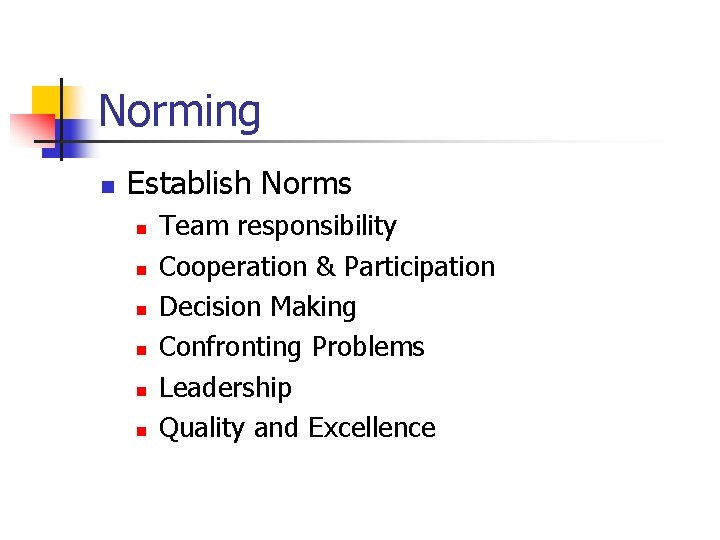
Norming n Establish Norms n n n Team responsibility Cooperation & Participation Decision Making Confronting Problems Leadership Quality and Excellence
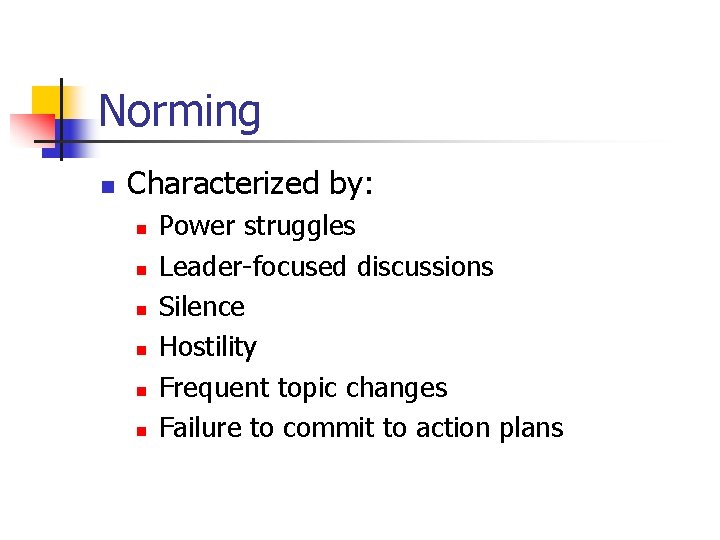
Norming n Characterized by: n n n Power struggles Leader-focused discussions Silence Hostility Frequent topic changes Failure to commit to action plans
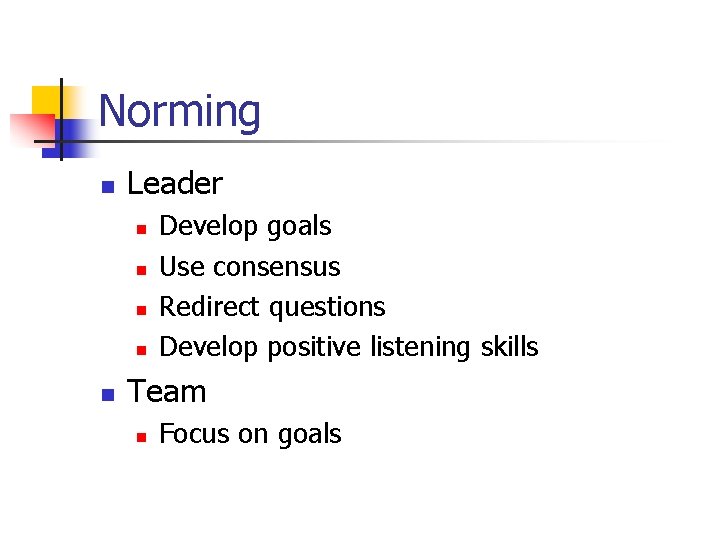
Norming n Leader n n n Develop goals Use consensus Redirect questions Develop positive listening skills Team n Focus on goals
Storming n Characterized by: n n Increased conflict Increased participation Testing of norms Increased independence from leader
Storming n Leader: n n Examine your responses to conflict Reinforce positive resolution efforts Accept conflict as essential for change Team n n Avoid polarization, cliques Avoid attacks on the leader Support norms or seek acceptable change Watch for “Fight or Flight”
Performing n Characterized by: n n n Cohesiveness Conflict Management Support for Leader Active Listening Focus on “Here and Now”
Performing n Leader: n n Maintain interpersonal skills Provide feedback Assist in gaining more Team: n n n Monitor accomplishments Avoid “Groupthink” Critique process – analyze interactions
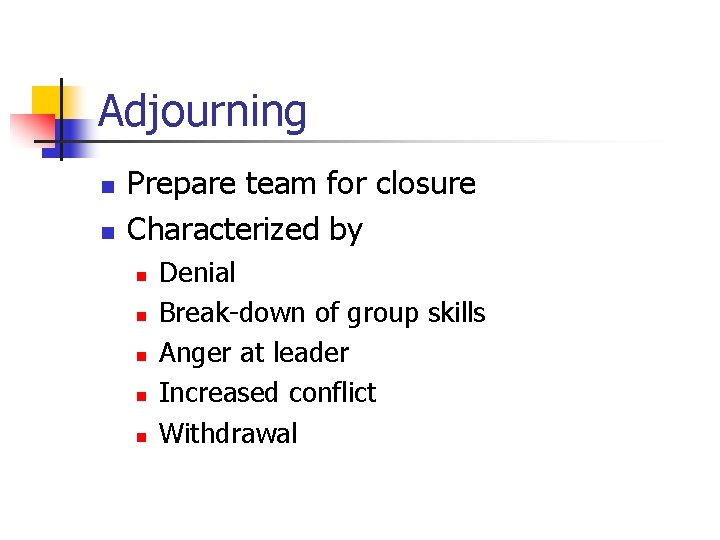
Adjourning n n Prepare team for closure Characterized by n n n Denial Break-down of group skills Anger at leader Increased conflict Withdrawal
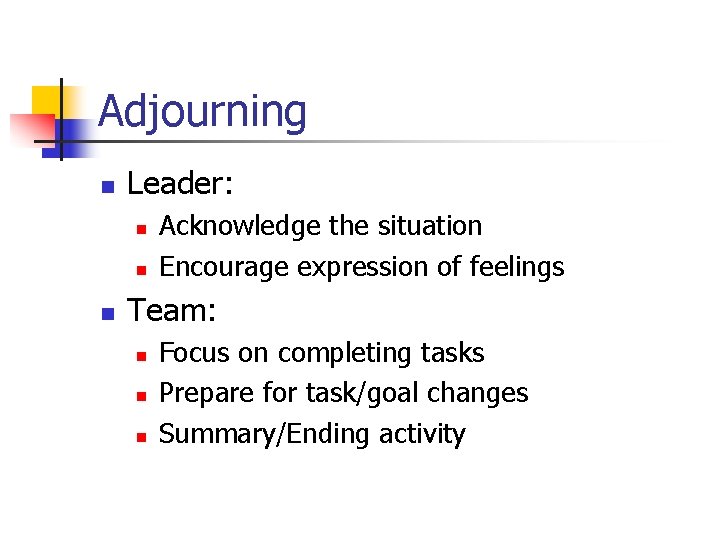
Adjourning n Leader: n n n Acknowledge the situation Encourage expression of feelings Team: n n n Focus on completing tasks Prepare for task/goal changes Summary/Ending activity