
Team Manager Behavioural Philosophies Swim England Talent January

Team Manager Behavioural Philosophies Swim England Talent January 2018
Behavioural Philosophy ‘A behavioural philosophy is a personal statement that is based on the values and beliefs that direct ones behaviours. ’ Kidman and Hanrahan (1997)
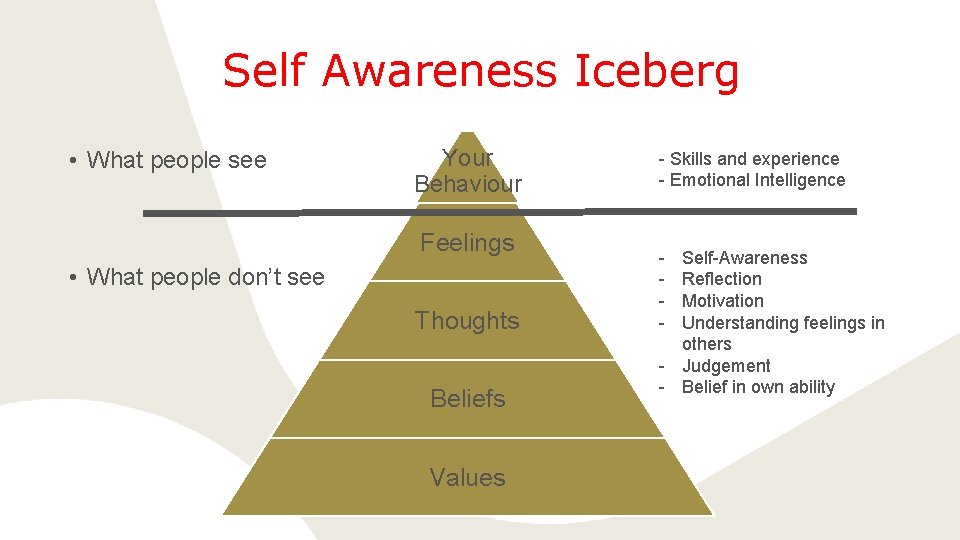
Self Awareness Iceberg • What people see Your Behaviour Feelings • What people don’t see Thoughts Beliefs Values - Skills and experience - Emotional Intelligence - Self-Awareness Reflection Motivation Understanding feelings in others - Judgement - Belief in own ability
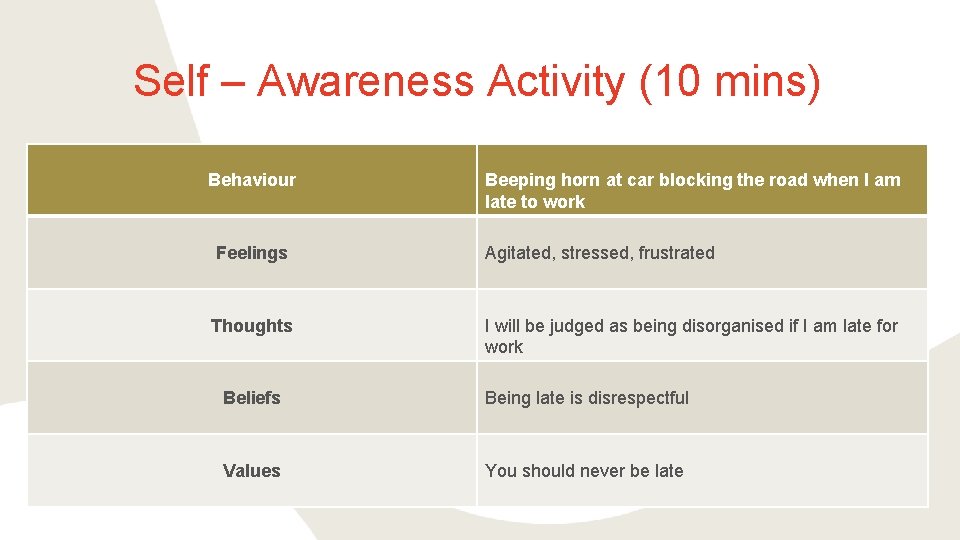
Self – Awareness Activity (10 mins) Behaviour Beeping horn at car blocking the road when I am late to work Feelings Agitated, stressed, frustrated Thoughts I will be judged as being disorganised if I am late for work Beliefs Being late is disrespectful Values You should never be late
Developing a Behavioural Philosophy
Developing a Behavioural Philosophy The critical ingredients of your philosophy: • Identifying your core values and beliefs • Recognise significant past experiences - life script • Acknowledge the impact of role models
Trademarks (Activity 1: 10 mins) • List 6 – 8 words or ‘Trademarks’ that are important to you (values and beliefs) • Explain to the person next to you why they are important and why they stand for YOU as a person

How we see the world depends on the lenses we look through. .
Trademarks (Activity 2: 10 mins) • Consider the last time that you experienced a situation involving some kind of conflict • Map back through the self – awareness iceberg to reflect upon how you behaved in that situation and how your values, beliefs, thoughts and feelings resulted in this subsequent behaviour • Next consider the behaviour of the other person, how did they behave? Reflect on what you think they were feeling and thinking at the time. What values or beliefs may they hold that are different to yours in regards to this situation?

Any Questions?
- Slides: 10