
TEAM F ADDIN Prof David Bourne Astha Prasad
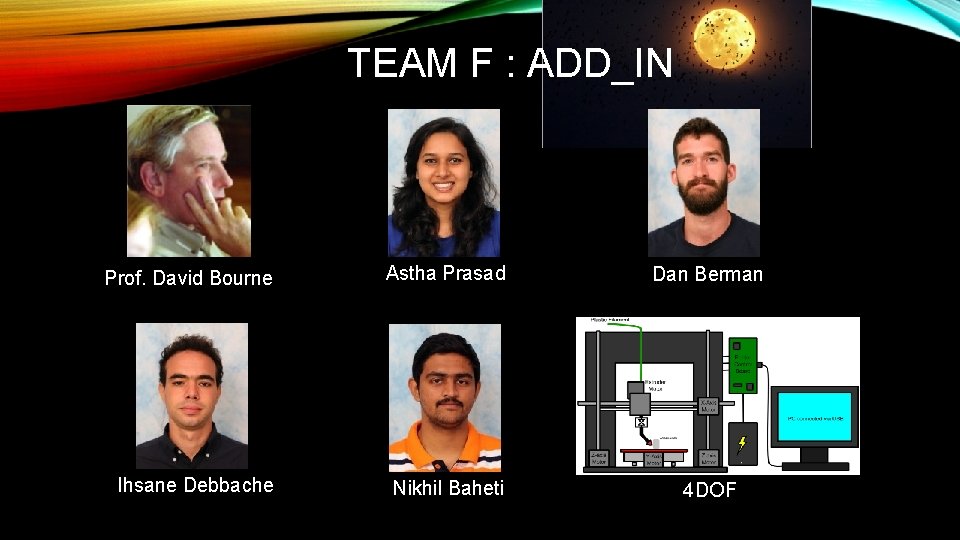
TEAM F : ADD_IN Prof. David Bourne Astha Prasad Dan Berman Ihsane Debbache Nikhil Baheti 4 DOF
PROJECT DESCRIPTION “By adding an additional degree of freedom, ADD_IN proposes to develop a 3 D printer that can enclose COTS items, thus rapidly producing strong, useful and low cost parts. ”
STANDARDS AND REGULATIONS: OUTLINE • • Description of Standards Targeted Markets Standard Prescription Standards and ADDIN
STANDARD 1: ASTM F 2971 -13 “Standard Practice for Reporting Data for Test specimens Prepared by Additive Manufacturing”
STANDARD 1: ASTM F 2971 -13 • Describes a standard procedure/format for reporting results obtained by testing specimens produced by additive manufacturing. Purpose: • To establish further data reporting requirements • Provide information to build material property databases • Describes the format for reporting the units of the above mentioned results.
STANDARD 1: ASTM F 2971 -13 Need Different AM processes introduce unique variables Critical to standardize descriptions used to report data obtained during preparation, processing and post processing of specimens Intent • Establish minimum requirements for reporting material & process data • Consistently document material and processing history for future use
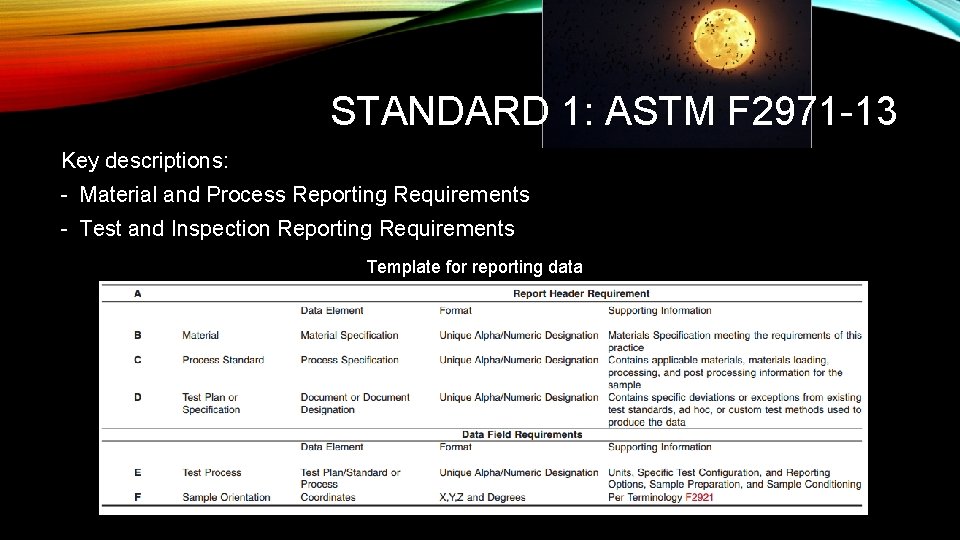
STANDARD 1: ASTM F 2971 -13 Key descriptions: - Material and Process Reporting Requirements - Test and Inspection Reporting Requirements Template for reporting data
STANDARD 2: ASTM JTE 20150317 “Recommended Protocols for Round Robin Studies in Additive Manufacturing”
STANDARD 2: ASTM JTE 20150317 What is Round-Robin testing? - Experimental methodology to determine reproducibility of a process or test method - Tests are performed independently multiple times - Results are analyzed statistically to assess variability - Aka. Interlaboratory study (ILS)
STANDARD 2: ASTM JTE 20150317 What are the benefits of Round-Robin Testing? - Testing can include multiple participants, spread across locations - Generates large data sets while distributing the cost among participants - Provides Top-Down evaluation - Captures sources of variability in results that may not be visible to only one user
STANDARD 2: ASTM JTE 20150317 Current roadblock hindering widespread adoption of AM: “Lack of confidence in materials, processes and parts” Possible solution: “Generate more high-quality data describing performance of AM processes and parts”
STANDARD 2: ASTM JTE 20150317 Problem with that is. . - AM is rapidly evolving and extremely diverse - End products are complex and highly customized vs standard mass produced high-volume products - Cost of producing hundreds/thousands of test pieces is prohibitively expensive
STANDARD 2: ASTM JTE 20150317 Solution? Round Robin Testing! - ASTM International Committee on Additive Manufacturing and ISO identified the need for high-level round-robin standards for Additive Manufacturing. - National Institute for Standards and Technology (NIST) organized and participated in several round-robin AM studies - These studies form the basis of the recommended standardized protocols for AM RR.
STANDARD 2: ASTM JTE 20150317 Round Robin Manufacturing plan documents: - Procedures and parameters needed to produce a part (expected to be followed by each participating entity) - Centralized procedures performed by the study coordinator
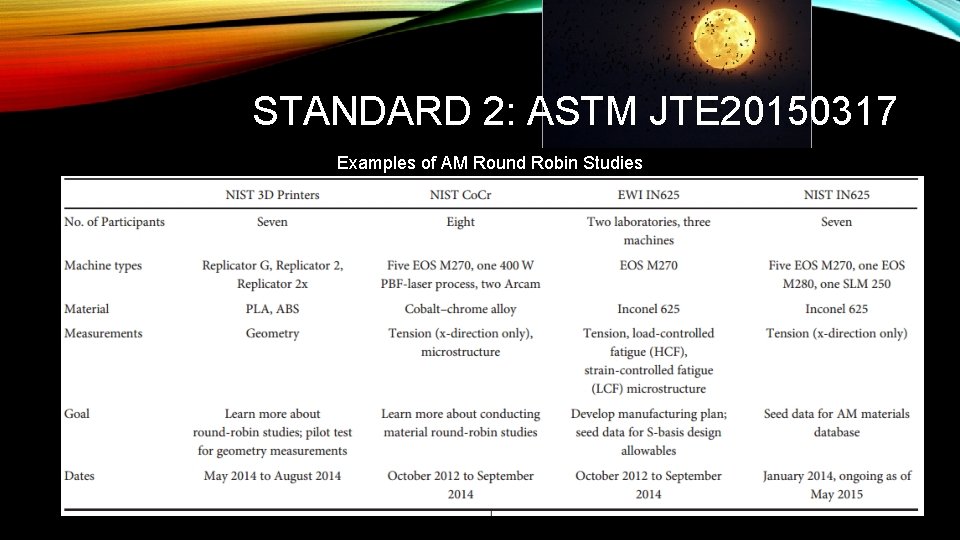
STANDARD 2: ASTM JTE 20150317 Examples of AM Round Robin Studies
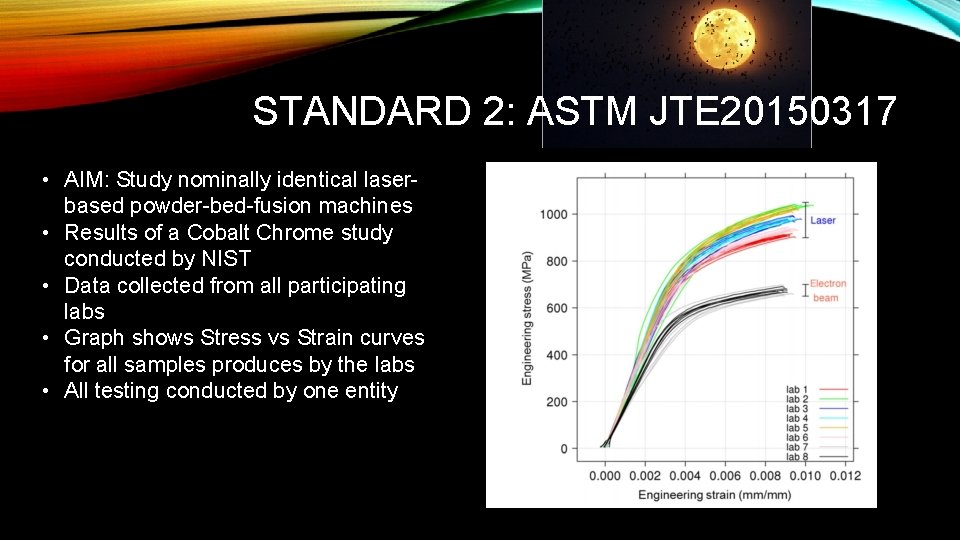
STANDARD 2: ASTM JTE 20150317 • AIM: Study nominally identical laserbased powder-bed-fusion machines • Results of a Cobalt Chrome study conducted by NIST • Data collected from all participating labs • Graph shows Stress vs Strain curves for all samples produces by the labs • All testing conducted by one entity
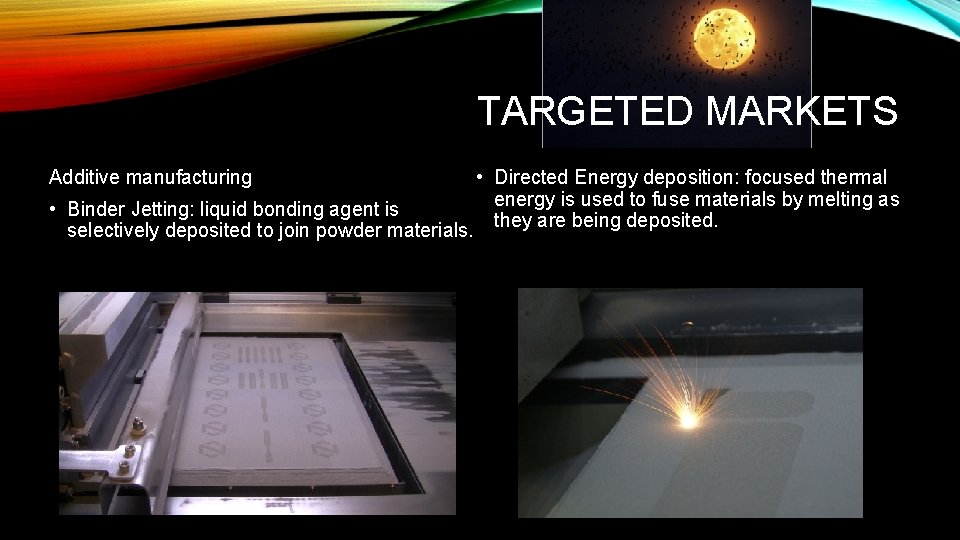
TARGETED MARKETS • Directed Energy deposition: focused thermal energy is used to fuse materials by melting as • Binder Jetting: liquid bonding agent is they are being deposited. selectively deposited to join powder materials. Additive manufacturing
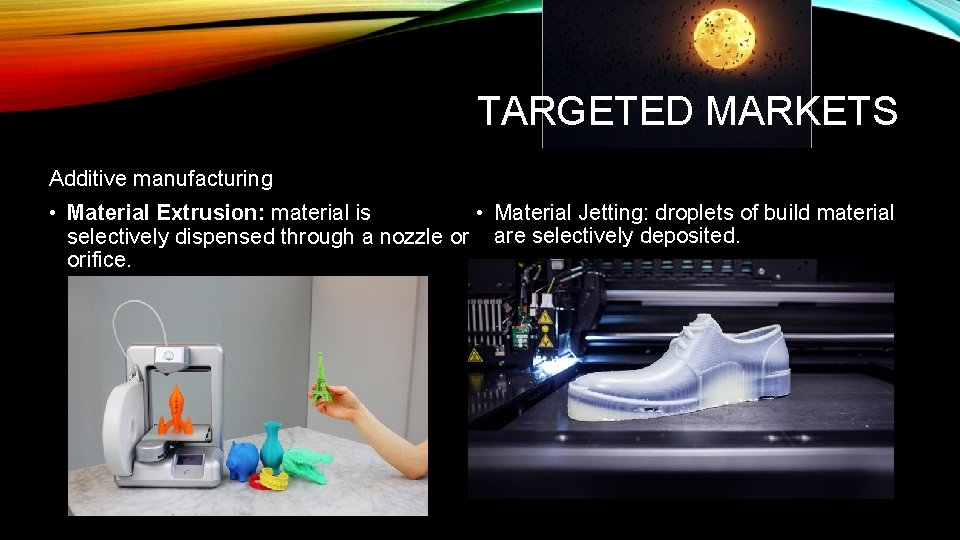
TARGETED MARKETS Additive manufacturing • Material Jetting: droplets of build material • Material Extrusion: material is selectively dispensed through a nozzle or are selectively deposited. orifice.
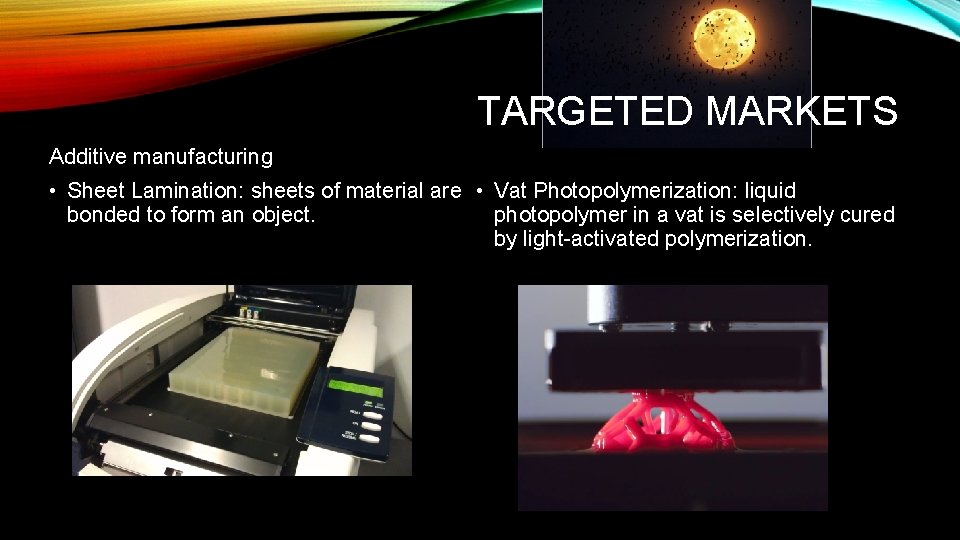
TARGETED MARKETS Additive manufacturing • Sheet Lamination: sheets of material are • Vat Photopolymerization: liquid photopolymer in a vat is selectively cured bonded to form an object. by light-activated polymerization.
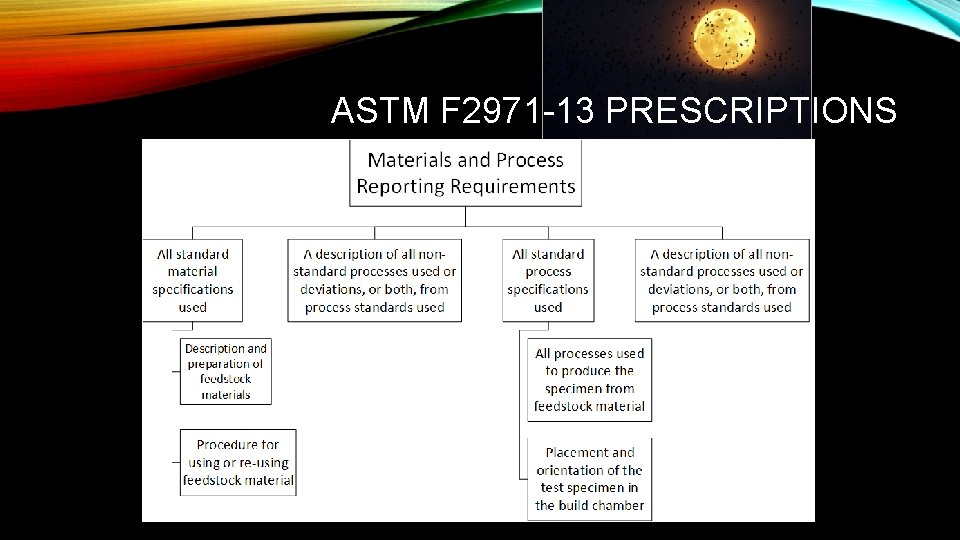
ASTM F 2971 -13 PRESCRIPTIONS
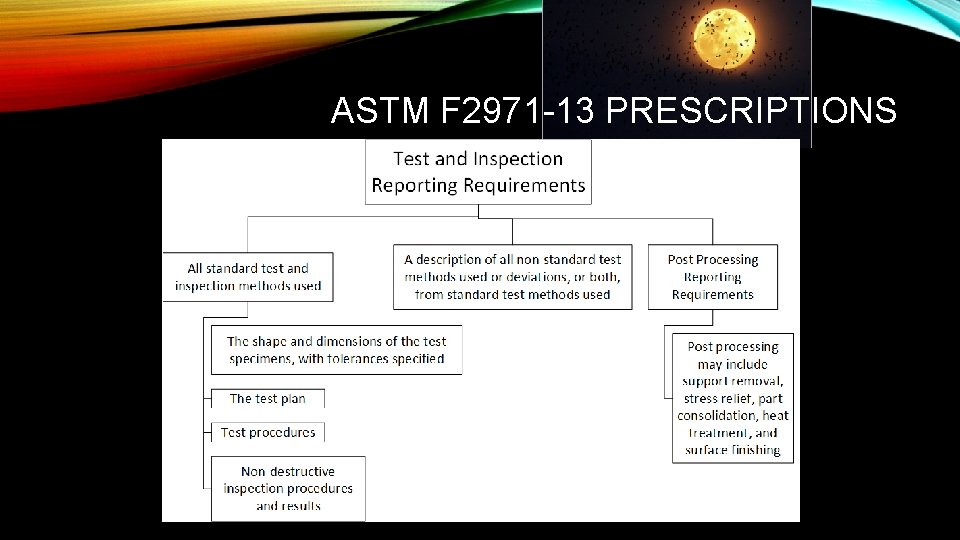
ASTM F 2971 -13 PRESCRIPTIONS
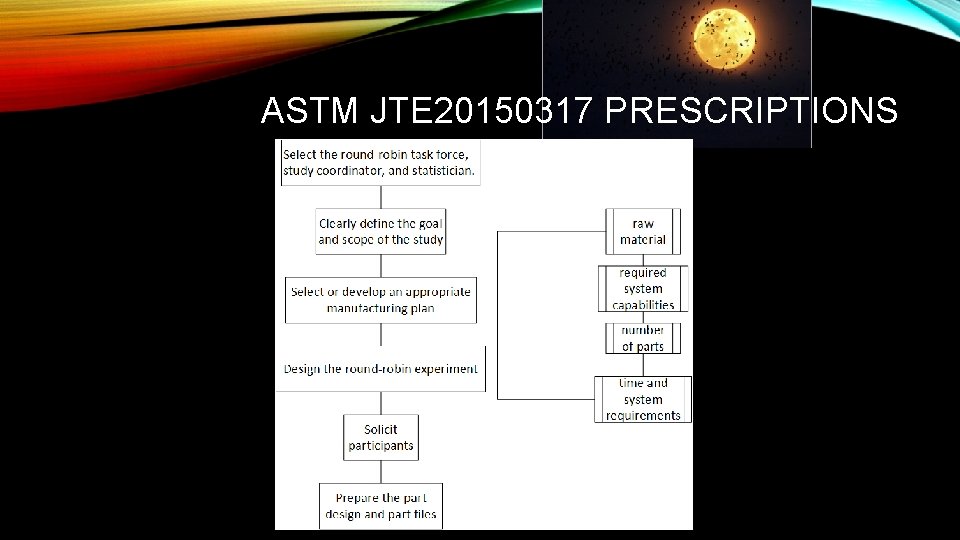
ASTM JTE 20150317 PRESCRIPTIONS
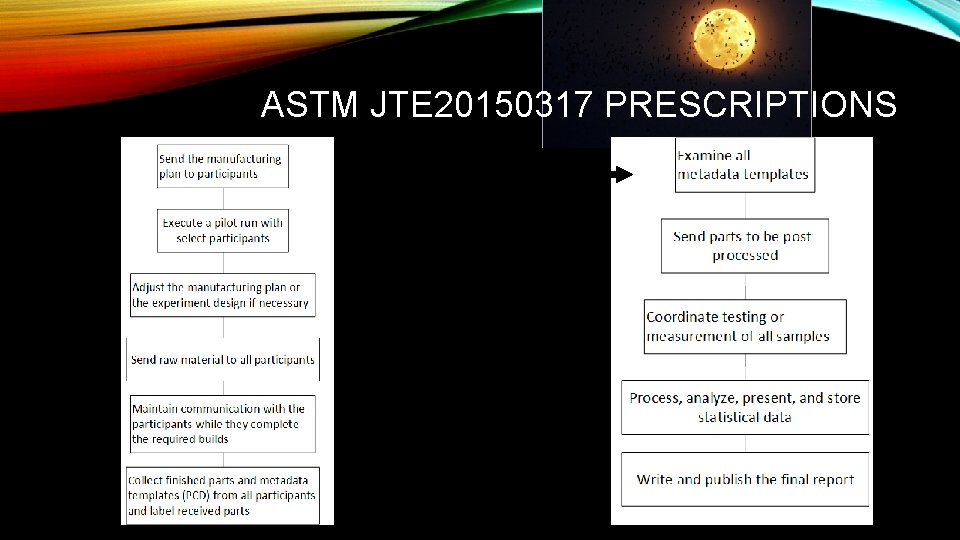
ASTM JTE 20150317 PRESCRIPTIONS
ADDIN AND ASTM JTE 20150317, ASTM F 2971 − 13 ”To improve confidence and encourage proliferation of additive manufacturing (AM) technologies and parts by generating more high-quality data describing the performance of AM processes and parts. “ – ASTM JTE 20150317 ADDIN is a new technology focused on improving 3 D printing material properties. To gain acceptance reliable material data must be generated
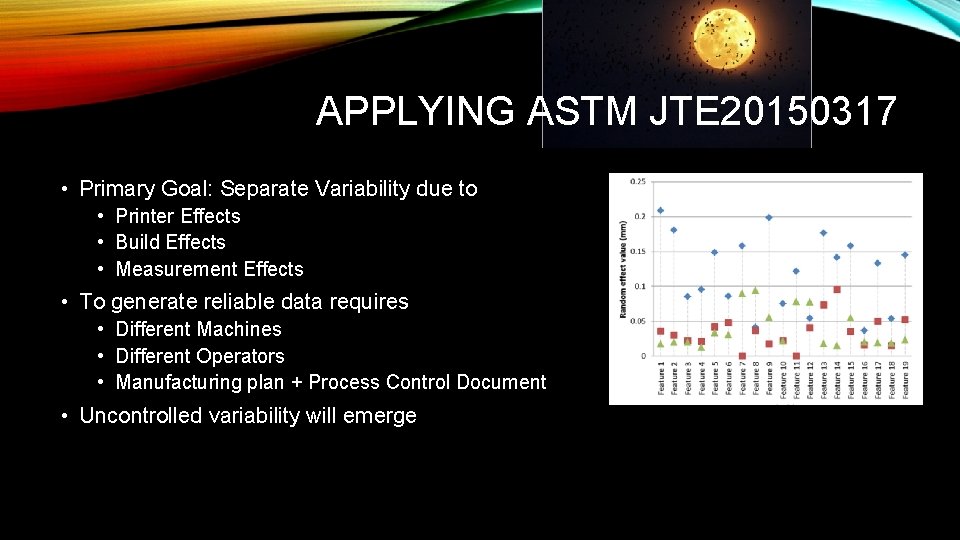
APPLYING ASTM JTE 20150317 • Primary Goal: Separate Variability due to • Printer Effects • Build Effects • Measurement Effects • To generate reliable data requires • Different Machines • Different Operators • Manufacturing plan + Process Control Document • Uncontrolled variability will emerge
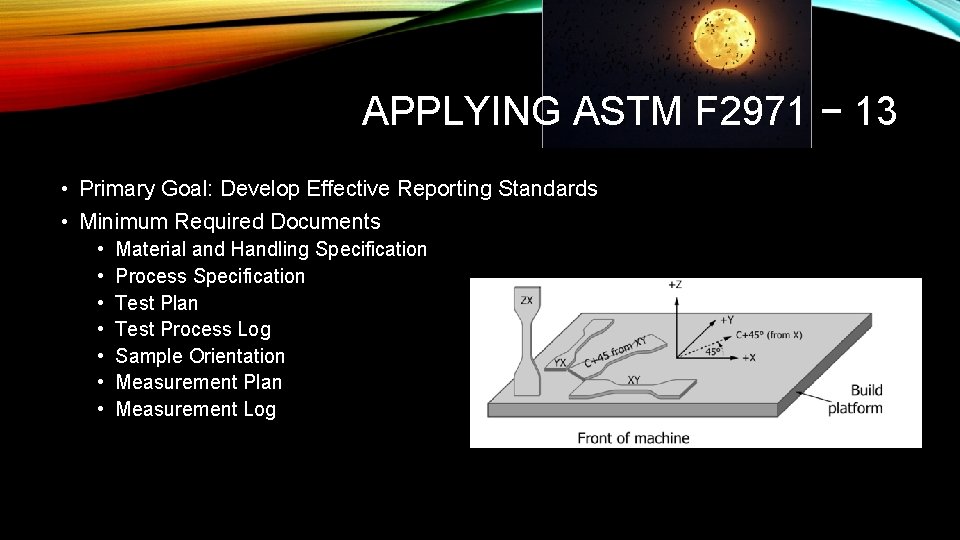
APPLYING ASTM F 2971 − 13 • Primary Goal: Develop Effective Reporting Standards • Minimum Required Documents • • Material and Handling Specification Process Specification Test Plan Test Process Log Sample Orientation Measurement Plan Measurement Log
ADDIN MATERIAL SPECS • Material (Print Material + COTS Item) • Supplier • Production Date • Storage Conditions (Temp + Humidity)
ADDIN PROCESS SPECS • Software Configuration (exportable as. ini file) • ADDIN Hardware Revision • ADDIN Nozzle Configuration (Type, Diameter)
ADDIN TEST PLAN • . stl file for part to be printed • COTS item and installation requirements • Printer setup and initialization (surface leveling, nozzle purge) • Ambient conditions (temp + humidity)
MEASUREMENT PLAN • Make, Model, Calibration of test equipment • Test Fixture and Calibration • Setup instructions • Ambient condition requirements • Time to measurement requirements

THANK YOU! ANY QUESTIONS?
- Slides: 31