
Team Empowerment Developing PD Day 2 Buffalo July
Team Empowerment & Developing PD Day 2 Buffalo, July 2015 Donna Burrill, Maria Le. Fort, & Bill Serritella - ICLE Consultants
Agenda for this Session v. Finding a focus v. Why a team? v. Building your teams v. Establishing ground rules, mission, goals v. Running meetings, decision making v. Roles and responsibilities v. Developing a PD
Buffalo, Day 2 Team Activity 1. Categorize and prioritize challenges. 2. Select 1 (2 at most) areas of focus that you will work on in the coming year school-wide. 3. Develop a structured discussion around an area of focus that will be the basis of a faculty meeting.
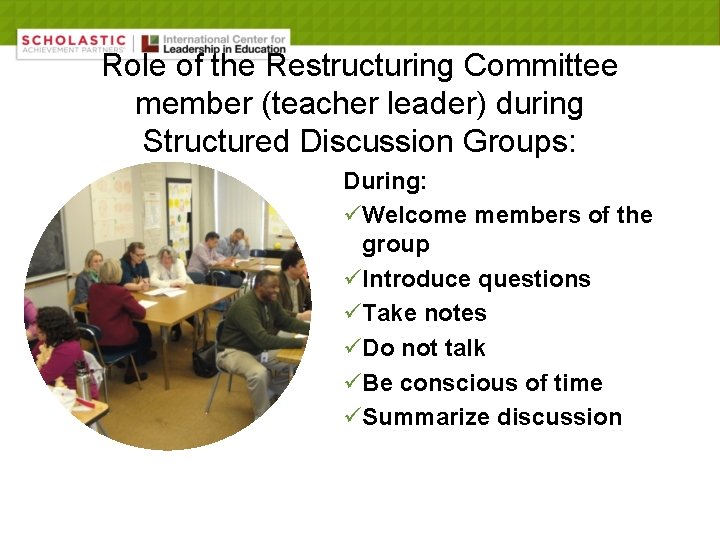
Role of the Restructuring Committee member (teacher leader) during Structured Discussion Groups: During: üWelcome members of the group üIntroduce questions üTake notes üDo not talk üBe conscious of time üSummarize discussion
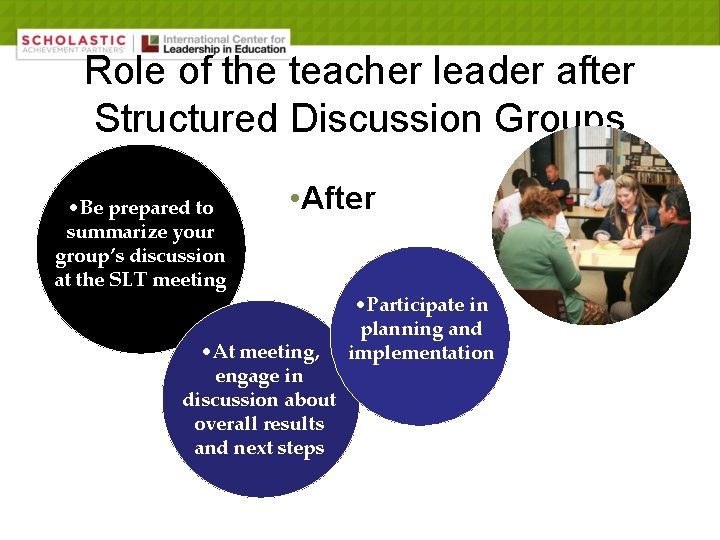
Role of the teacher leader after Structured Discussion Groups • Be prepared to summarize your group’s discussion at the SLT meeting • After • At meeting, engage in discussion about overall results and next steps • Participate in planning and implementation

After every Faculty Discussion Group, we always: • Debriefed at Restructuring Meeting • Put together a Voices of the Faculty Feedback Newsletter
Faculty Feedback: Voices of the Faculty May 2008 ISSUE: The Attendance Policy • Note: There was very strong support for the attendance policy, but frustration with the amount of paperwork generated by waivers and buybacks, etc… Subcommittees of the Restructuring Committee will look at both waivers and buybacks to address some of those concerns. • The number of allowable absent days is fair, but have the attendance days count by semester rather than term. That might help to control the amount of paperwork, and help with students who were sick, but did not go to a doctor.
Faculty Feedback: Voices of the Faculty May 2008 ISSUE: The Attendance Policy (cont. ) • Have the nurses verify a student who went home sick, but didn’t necessarily need to see a doctor. (THAT SHOULD BE A WAIVED ABSENCE) • There should be no limit on the buyback days – when students participate in the buyback policy, they are attending, doing their work, and behaving. • The air quality in the classrooms is poor, and the custodian hasn’t cleaned my room for two days. • These waivers and buy back days should be automated; they should show up on the portal.
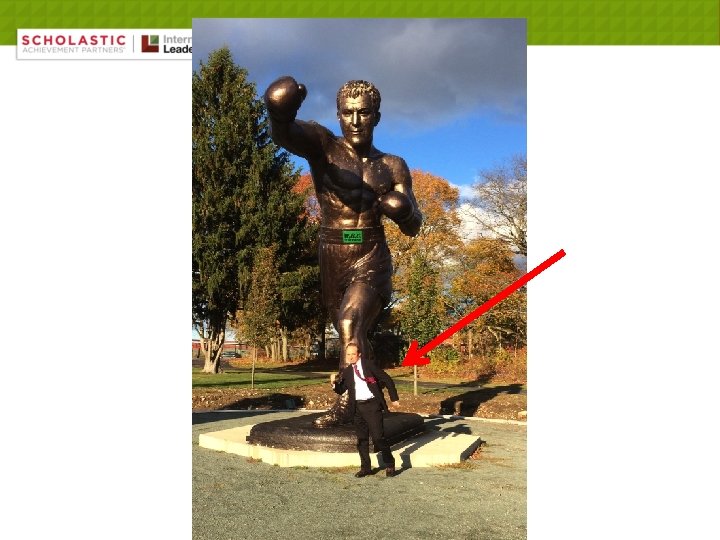
Why A Team Change happens in the school! You have Building Leadership Teams! This is where the change begins!
Build Capacity Build Expertise Build Collaboration
How Do You Get Your Team to Function Effectively?
Leadership Challenge You selected a teacher for your leadership team who in the past has been somewhat negative, a union activist, and generally a pain. But she had come to you and asked for consideration to be part of the team. She told you she was in a graduate program and really wanted to learn more about the school leadership, so you decided to give it a try. That was the wrong decision! In no time, she was trying to derail meetings, and constantly breaking the trust of the group by sharing initial discussion topics with the union, and talking about meetings and discussions in the teachers’ room. The dynamic of the committee was damaged and trust was broken. Do you keep her on the committee or dismiss her? How do you deal with this so that the committee can resume working effectively?
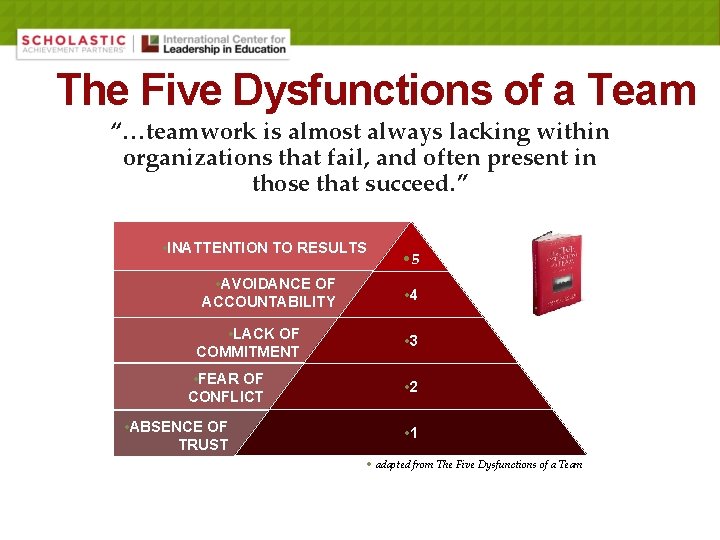
The Five Dysfunctions of a Team “…teamwork is almost always lacking within organizations that fail, and often present in those that succeed. ” • INATTENTION TO RESULTS • AVOIDANCE OF ACCOUNTABILITY • LACK OF COMMITMENT • FEAR OF CONFLICT • ABSENCE OF TRUST • 5 • 4 • 3 • 2 • 1 • adapted from The Five Dysfunctions of a Team
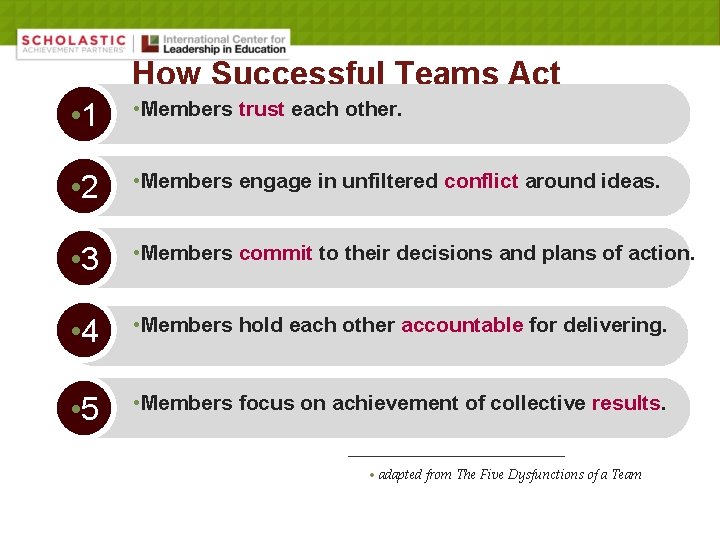
How Successful Teams Act • 1 • Members trust each other. • 2 • Members engage in unfiltered conflict around ideas. • 3 • Members commit to their decisions and plans of action. • 4 • Members hold each other accountable for delivering. • 5 • Members focus on achievement of collective results. • adapted from The Five Dysfunctions of a Team
Leadership Team Self-Check Who is on your leadership team? Who SHOULD be on your leadership team?

Selecting the Team Who should be on the team? • Represent all constituencies (subjects, grades, veterans, new teachers) • Balance of teachers and administrators (suggest 2/3 majority of teachers)
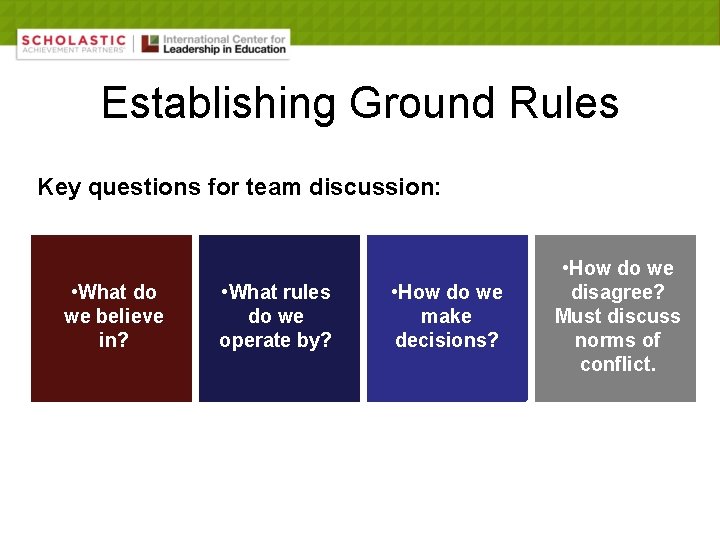
Establishing Ground Rules Key questions for team discussion: • What do we believe in? • What rules do we operate by? • How do we make decisions? • How do we disagree? Must discuss norms of conflict.
Example: Brockton’s Ground Rules Keep it simple: 3 rules • Respectful dialogue • (we had some great fights!) • Criticizing only with a suggestion • What happens in Vegas stays in Vegas…
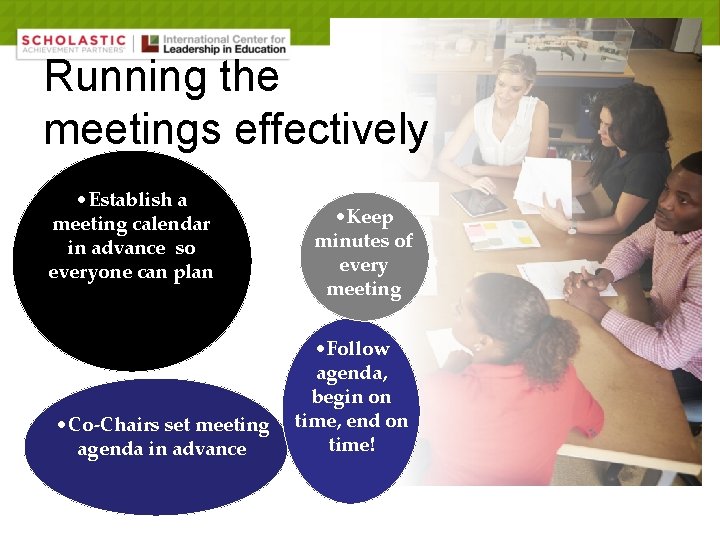
Running the meetings effectively • Establish a meeting calendar in advance so everyone can plan • Co-Chairs set meeting agenda in advance • Keep minutes of every meeting • Follow agenda, begin on time, end on time!
Responsibilities of the Team • Serving as teacher-leaders, providing faculty voices and • • • feedback Leading and facilitating faculty discussion groups Modeling best instructional practices Conducting professional development, presenting workshops Providing other support for colleagues (cheerleaders) Chairing subcommittees
Responsibilities of the Team • They do NOT evaluate! • They do NOT monitor! • They DO support!
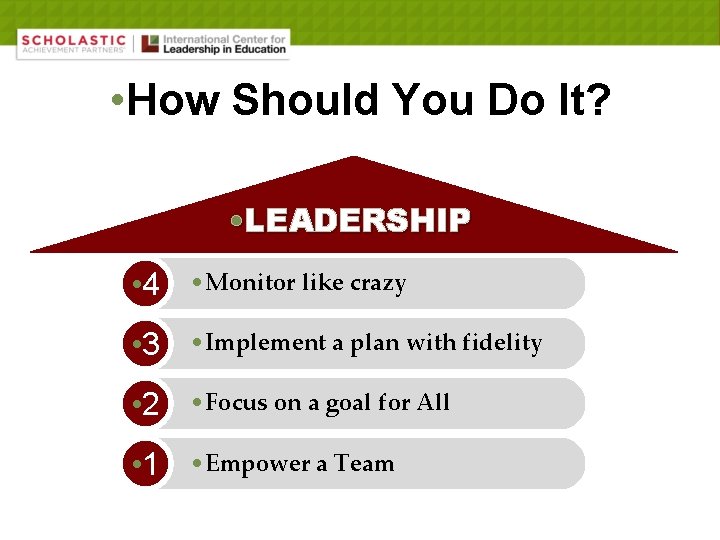
• How Should You Do It? • LEADERSHIP • 4 • Monitor like crazy • 3 • Implement a plan with fidelity • 2 • Focus on a goal for All • 1 • Empower a Team
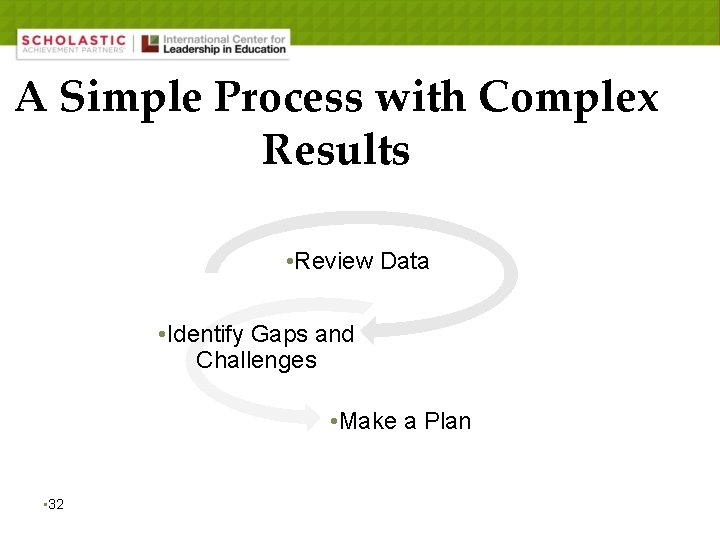
A Simple Process with Complex Results • Review Data • Identify Gaps and Challenges • Make a Plan • 32
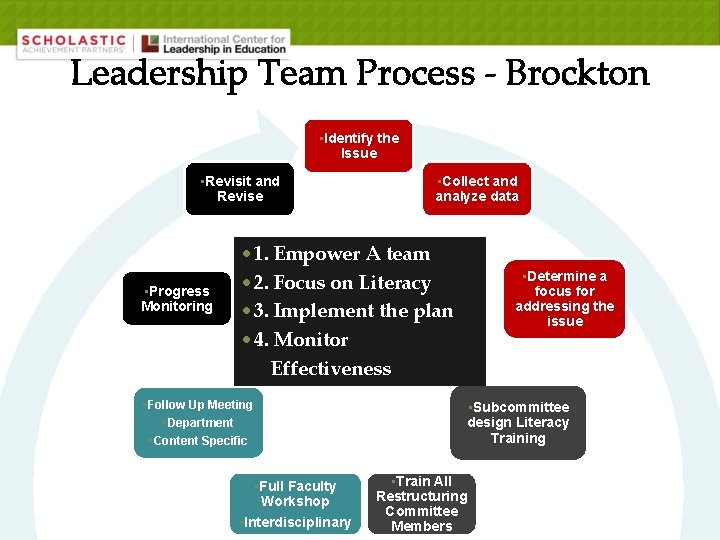
Leadership Team Process - Brockton • Identify the Issue • Revisit and Revise • Progress Monitoring • Collect and analyze data • 1. Empower A team • 2. Focus on Literacy • 3. Implement the plan • 4. Monitor Effectiveness • Follow Up Meeting • Department • Content Specific • Full Faculty Workshop • Interdisciplinary • Determine a focus for addressing the issue • Subcommittee design Literacy Training • Train All Restructuring Committee Members
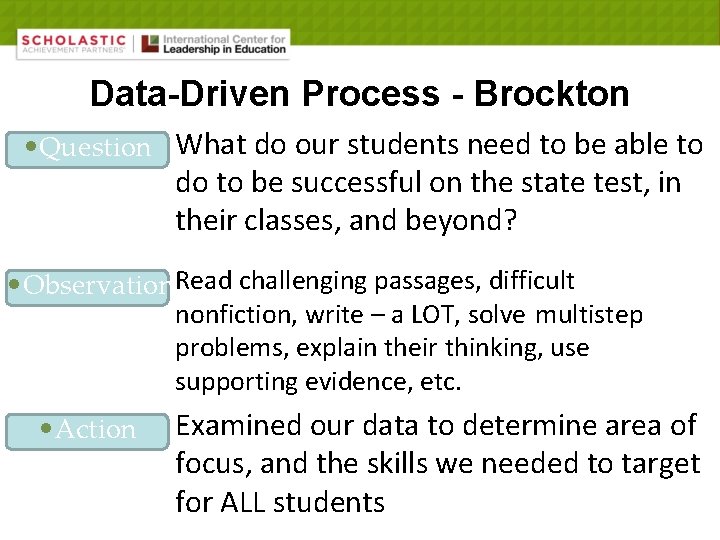
Data-Driven Process - Brockton • Question What do our students need to be able to do to be successful on the state test, in their classes, and beyond? • Observation. Read challenging passages, difficult nonfiction, write – a LOT, solve multistep problems, explain their thinking, use supporting evidence, etc. • Action Examined our data to determine area of focus, and the skills we needed to target for ALL students
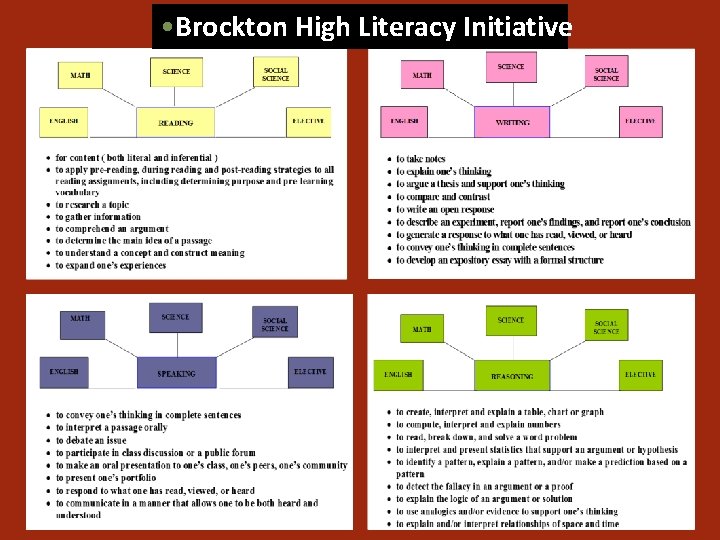
• Brockton High Literacy Initiative
• Step THREE: Implemented with fidelity and a plan Faculty Meetings became Literacy Workshops KEY = Adult Learning Teachers teaching teachers – GOOD stuff!

Active Reading/ Open Response Writing Literacy Workshop
Active Reading/ Open Response Writing Why are we here? ØTo improve students’ performance on state assessments. BUT, it’s not just about test taking… ØTo provide students with skills that will help them succeed in their classes, in college, and in their lives beyond school.
OUR AGENDA 1. Active Reading Strategies 2. Open Response Writing Steps 3. Using the Rubric 4. The Implementation Process
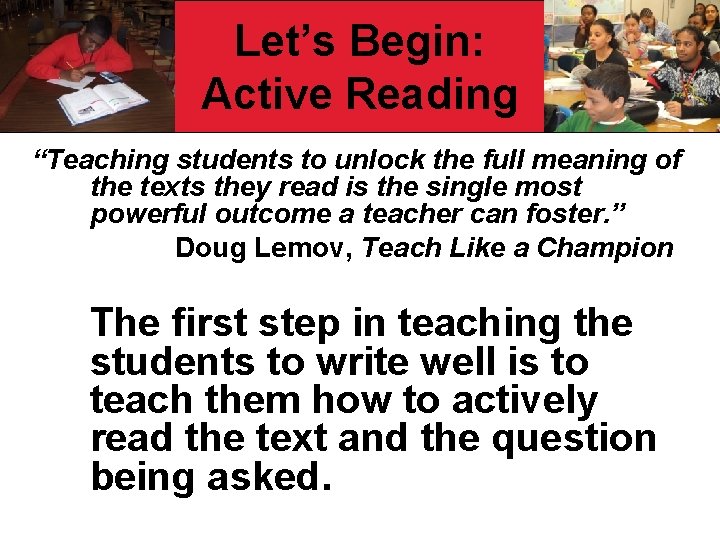
Let’s Begin: Active Reading “Teaching students to unlock the full meaning of the texts they read is the single most powerful outcome a teacher can foster. ” Doug Lemov, Teach Like a Champion The first step in teaching the students to write well is to teach them how to actively read the text and the question being asked.
Determining the purpose for reading Carefully reading and analyzing the question helps the student determine the purpose for reading. • 41
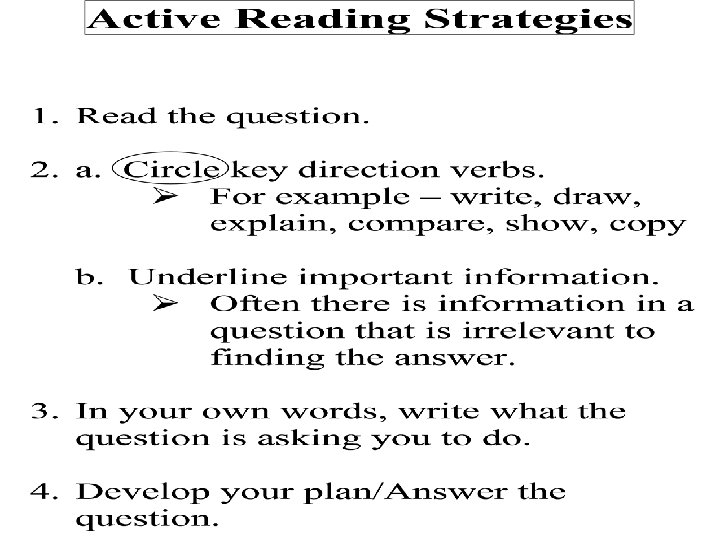
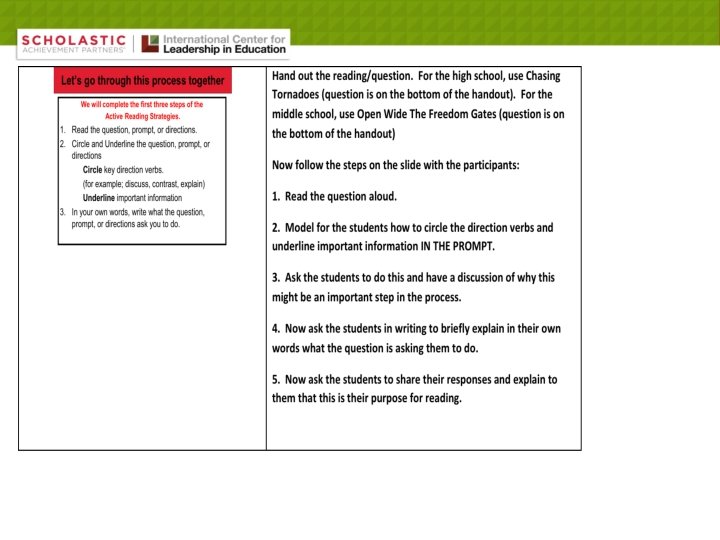
Let’s go through this process together We will complete the first three steps of the Active Reading Strategies. 1. Read the question, prompt, or directions. 2. Circle and Underline the question, prompt, or directions Circle key direction verbs. (for example; discuss, contrast, explain) Underline important information 3. In your own words, write what the question, prompt, or directions ask you to do.
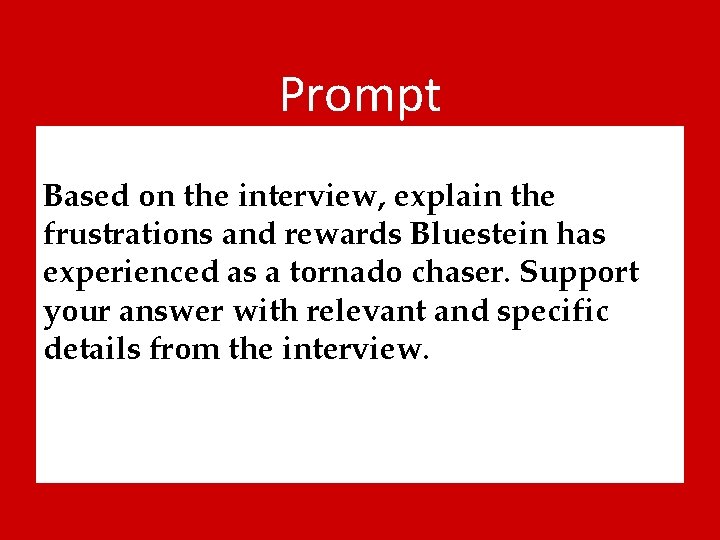
Prompt Based on the interview, explain the frustrations and rewards Bluestein has experienced as a tornado chaser. Support your answer with relevant and specific details from the interview.
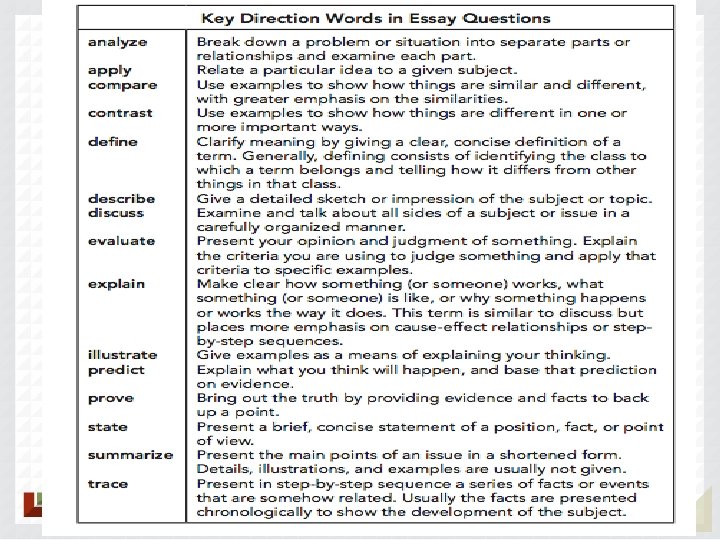
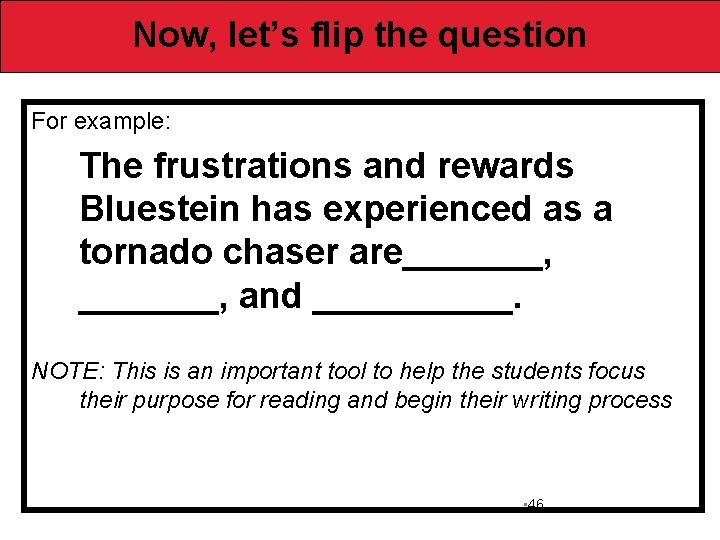
Now, let’s flip the question For example: The frustrations and rewards Bluestein has experienced as a tornado chaser are_______, and _____. NOTE: This is an important tool to help the students focus their purpose for reading and begin their writing process • 46
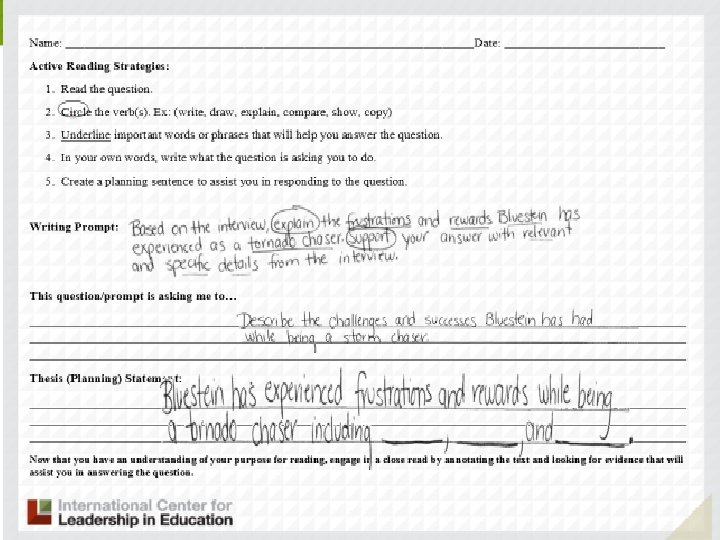
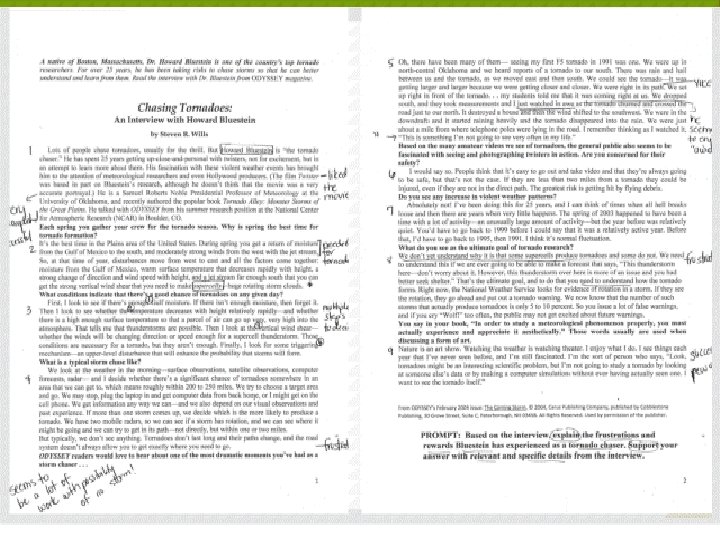

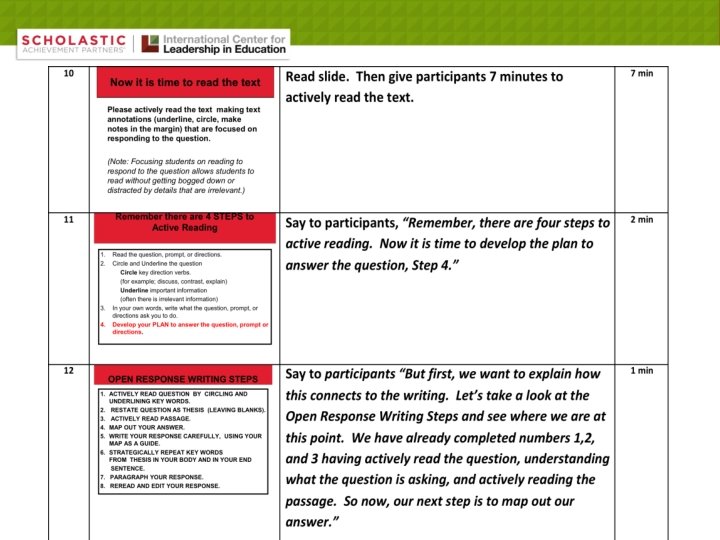
Now it is time to read the text Please actively read the text making text annotations (underline, circle, make notes in the margin) that are focused on responding to the question. (Note: Focusing students on reading to respond to the question allows students to read without getting bogged down or distracted by details that are irrelevant. )
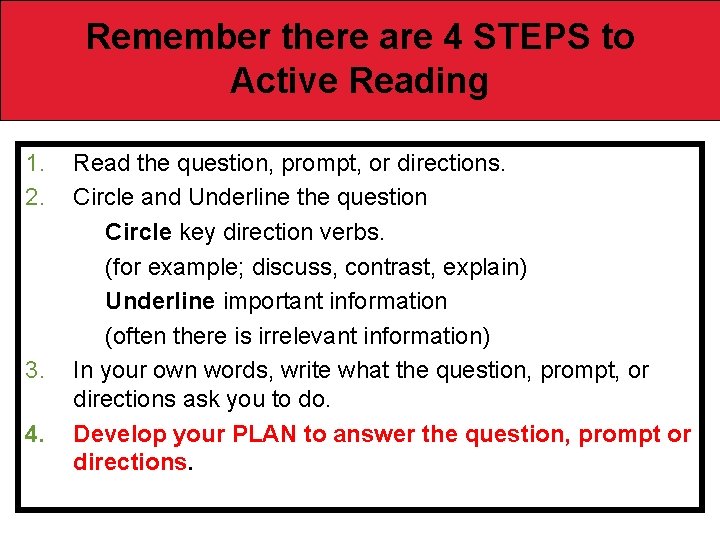
Remember there are 4 STEPS to Active Reading 1. 2. 3. 4. Read the question, prompt, or directions. Circle and Underline the question Circle key direction verbs. (for example; discuss, contrast, explain) Underline important information (often there is irrelevant information) In your own words, write what the question, prompt, or directions ask you to do. Develop your PLAN to answer the question, prompt or directions.
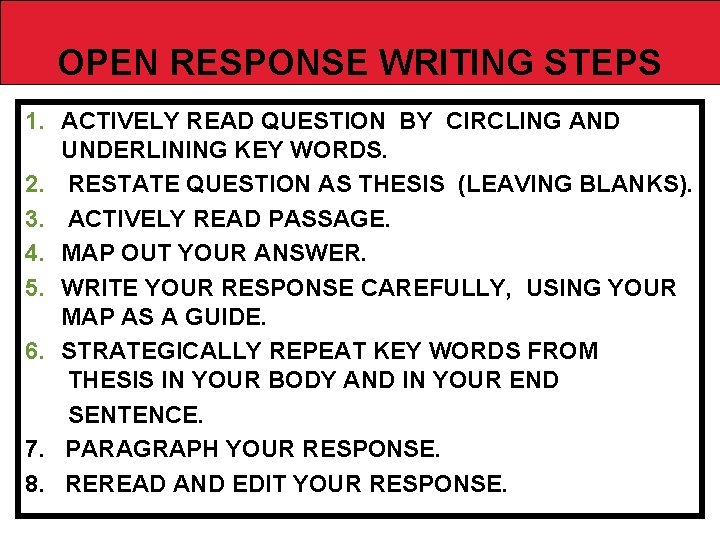
OPEN RESPONSE WRITING STEPS 1. ACTIVELY READ QUESTION BY CIRCLING AND UNDERLINING KEY WORDS. 2. RESTATE QUESTION AS THESIS (LEAVING BLANKS). 3. ACTIVELY READ PASSAGE. 4. MAP OUT YOUR ANSWER. 5. WRITE YOUR RESPONSE CAREFULLY, USING YOUR MAP AS A GUIDE. 6. STRATEGICALLY REPEAT KEY WORDS FROM THESIS IN YOUR BODY AND IN YOUR END SENTENCE. 7. PARAGRAPH YOUR RESPONSE. 8. REREAD AND EDIT YOUR RESPONSE.
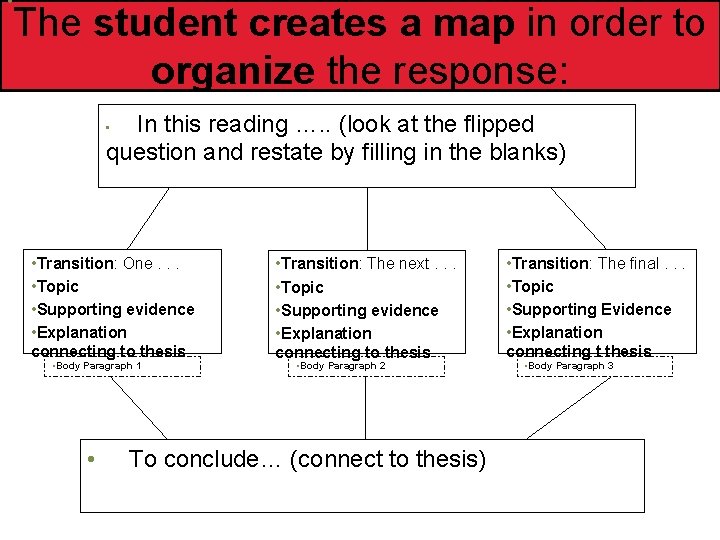
• The student creates a map in order to organize the response: In this reading …. . (look at the flipped question and restate by filling in the blanks) • • Transition: One. . . • Topic • Supporting evidence • Explanation connecting to thesis • Body Paragraph 1 • • Transition: The next. . . • Topic • Supporting evidence • Explanation connecting to thesis • Body Paragraph 2 To conclude… (connect to thesis) • Transition: The final. . . • Topic • Supporting Evidence • Explanation connecting t thesis • Body Paragraph 3
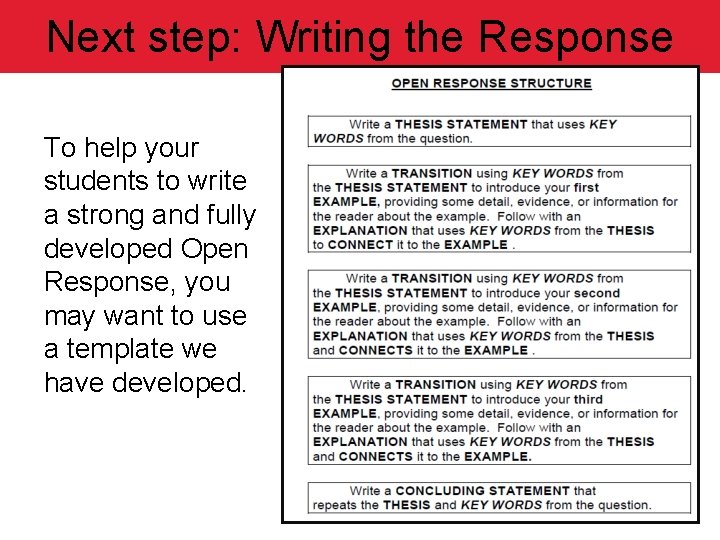
Next step: Writing the Response To help your students to write a strong and fully developed Open Response, you may want to use a template we have developed.
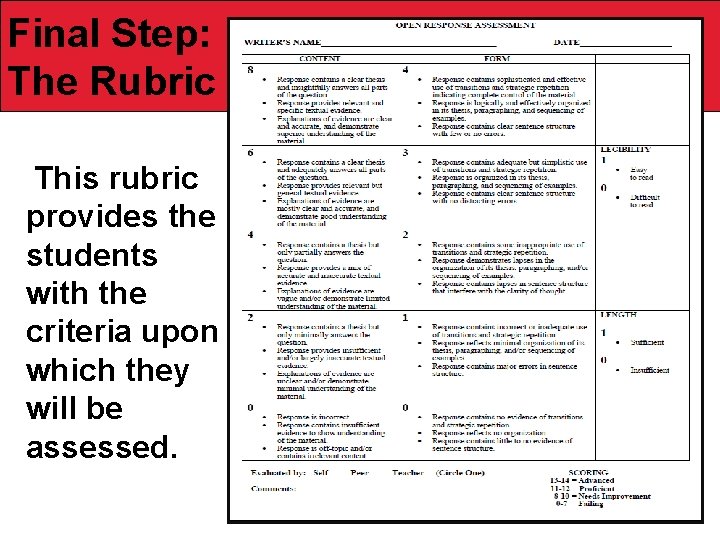
Final Step: The Rubric This rubric provides the students with the criteria upon which they will be assessed. • 54
Suggestions for Follow Up Lessons Ø Present the class two or three representative student samples showing a high, middle, and low level response (names omitted, of course). Ø Use the rubric to have students score these papers so that everyone sees and agrees upon the criteria. Ø After that, you could use the rubric to score the papers yourself, or you could pair the students and have them score each others’ papers using the rubric. Ø Students can see what a good paper looks like and do a self- assessment on ways that they can improve their own papers. .
Recap/Next Steps • You will be receiving a calendar of implementation • Select an appropriate reading passage that supports the content that you are teaching that day/week, challenges the students – it needs to be rigorous! • Develop a challenging question based on that reading. Remember do NOT simply ask for a summary – make them THINK! • Explain to the students why you are doing this lesson and why it will help them. WRITING MATTERS! WRITING IS THINKING! • Be very directive teaching the process. DO NOT SKIP ANY STEPS!

From Talent is Overrated by Geoff Colvin “The factor that seems to explain the most about great performance is something the researchers call deliberate practice… Deliberate practice is hard. It hurts. But it works. More of it equals better performance. Tons of it equals great performance. ” • THANK YOU!!! • YOU WILL MAKE A DIFFERENCE!!!
Tomorrow You will: 1. Participate in a Knowledge Café. 2. Work with your team to create your plan.
THANK YOU! International Center for Leadership in Education: 1587 Route 146 Rexford, NY 12148 Phone (518) 399 -2776 www. leadered. com info@leadered. com
- Slides: 53