
Team Design From Silos to CrossFunctional Delivery Teams

- Slides: 19
Team Design
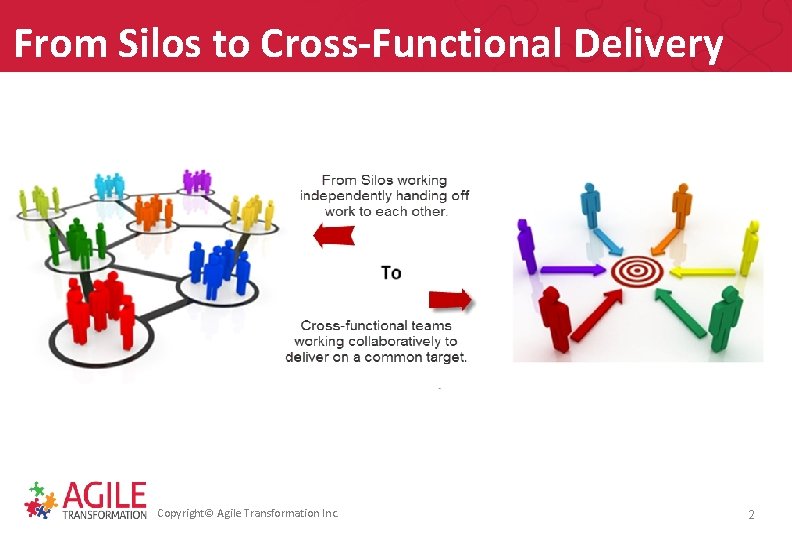
From Silos to Cross-Functional Delivery Teams Roles Copyright© Agile Transformation Inc. 2
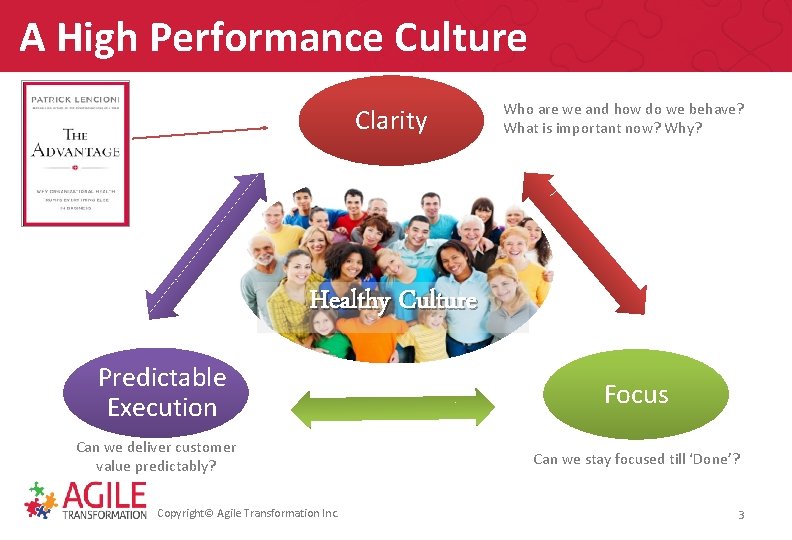
A High Performance Culture Roles Clarity Who are we and how do we behave? What is important now? Why? Healthy Culture Predictable Execution Can we deliver customer value predictably? Copyright© Agile Transformation Inc. Focus Can we stay focused till ‘Done’? 3
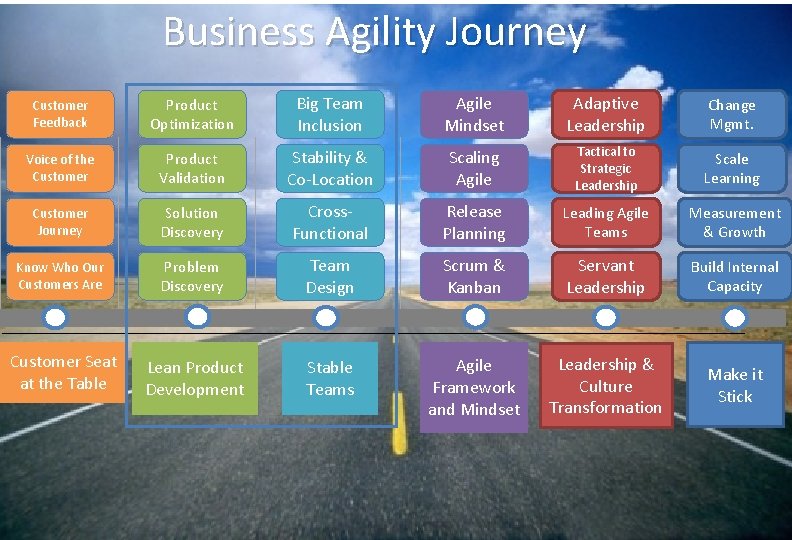
Business Agility Journey Customer Feedback Product Optimization Big Team Inclusion Agile Mindset Adaptive Leadership Change Mgmt. Voice of the Customer Product Validation Stability & Co-Location Scaling Agile Tactical to Strategic Leadership Scale Learning Customer Journey Solution Discovery Cross. Functional Release Planning Leading Agile Teams Measurement & Growth Know Who Our Customers Are Problem Discovery Team Design Scrum & Kanban Servant Leadership Build Internal Capacity Customer Seat at the Table Lean Product Development Stable Teams Agile Framework and Mindset Leadership & Culture Transformation Make it Stick
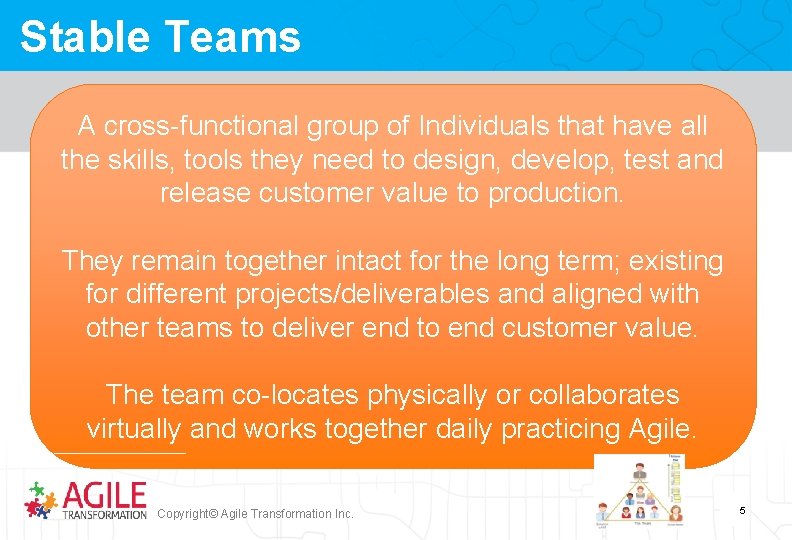
Stable Teams A cross-functional group of Individuals that have all the skills, tools they need to design, develop, test and release customer value to production. They remain together intact for the long term; existing for different projects/deliverables and aligned with other teams to deliver end to end customer value. The team co-locates physically or collaborates virtually and works together daily practicing Agile. Copyright© Agile Transformation Inc. 5
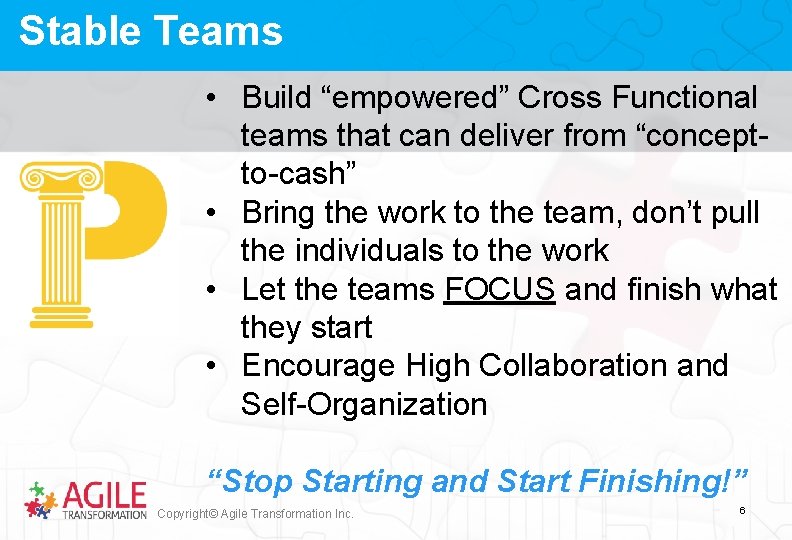
Stable Teams • Build “empowered” Cross Functional teams that can deliver from “conceptto-cash” • Bring the work to the team, don’t pull the individuals to the work • Let the teams FOCUS and finish what they start • Encourage High Collaboration and Self-Organization “Stop Starting and Start Finishing!” Copyright© Agile Transformation Inc. 6
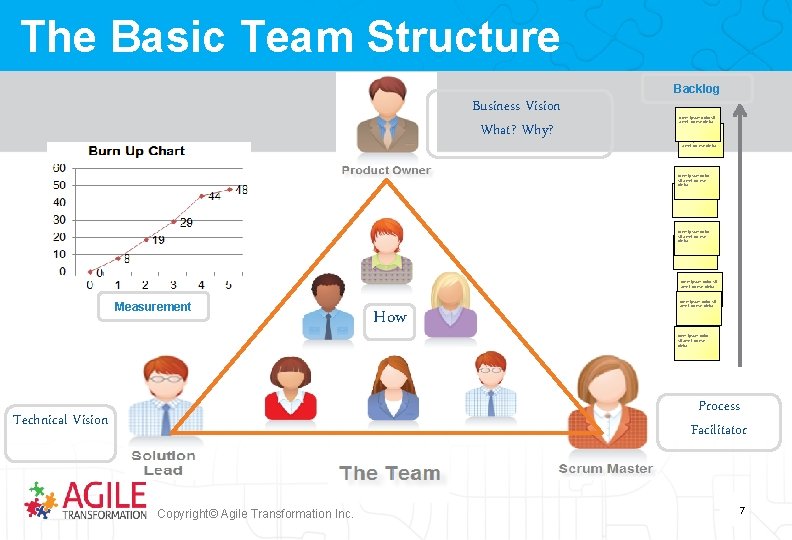
The Basic Team Structure Backlog Business Vision What? Why? orem ipsum dolor sit amet, co nse ctetur orem ipsum dolor sit amet, co nse ctetur Measurement How orem ipsum dolor sit amet, co nse ctetur Process Facilitator Technical Vision Copyright© Agile Transformation Inc. 7
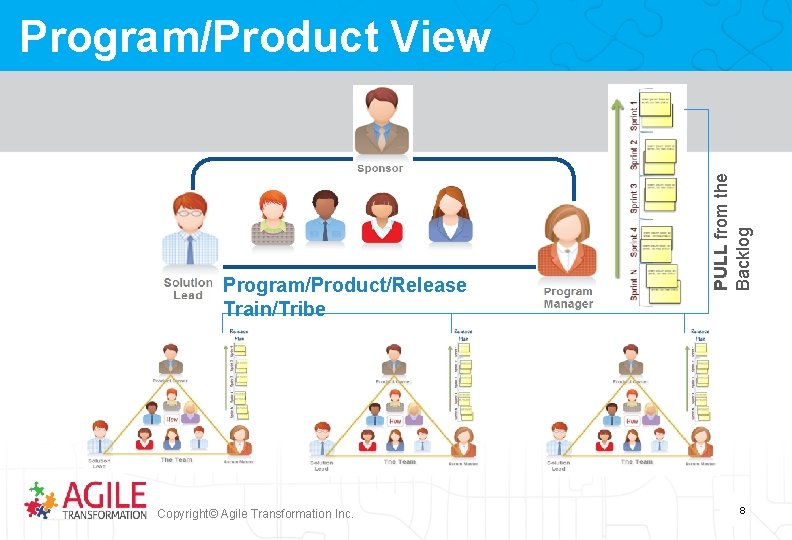
Program/Product/Release Train/Tribe Copyright© Agile Transformation Inc. PULL from the Backlog Program/Product View 8
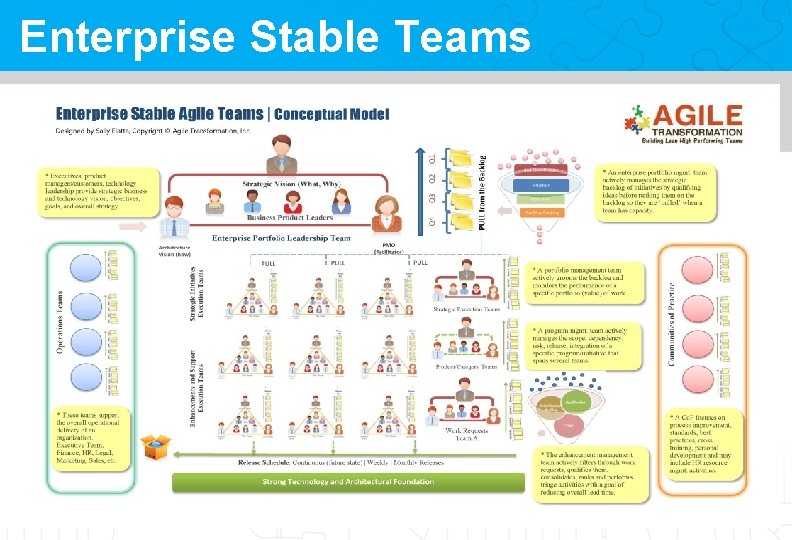
Enterprise Stable Teams Copyright© Agile Transformation Inc. 9
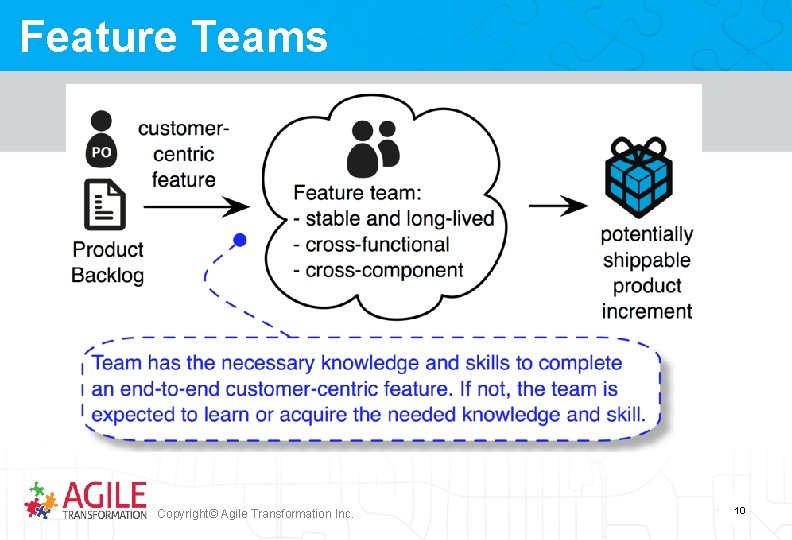
Feature Teams Copyright© Agile Transformation Inc. 10
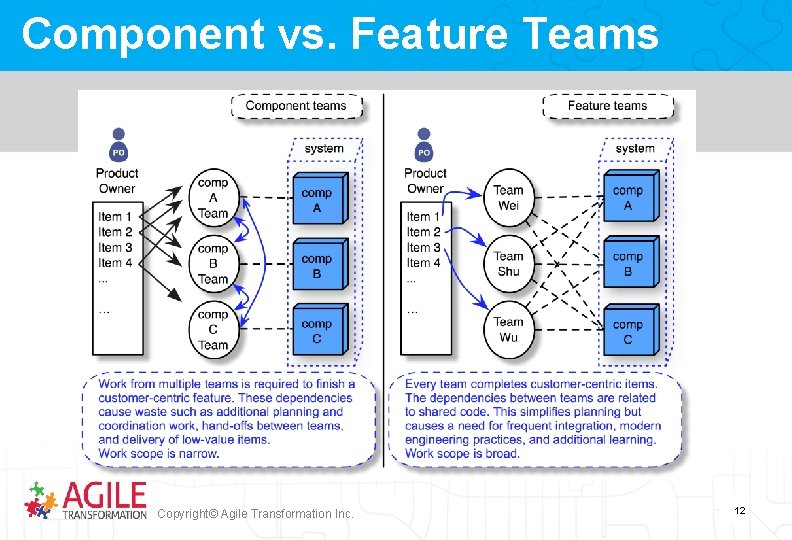
Component Team Definition Component Team is specialized in a specific application, product, platform, system or technology that is used and leveraged by other internal teams. Component teams have internal customers and typically don’t deliver end to end value to customers. Learn more here. Copyright© Agile Transformation Inc. 11
Component vs. Feature Teams Copyright© Agile Transformation Inc. 12
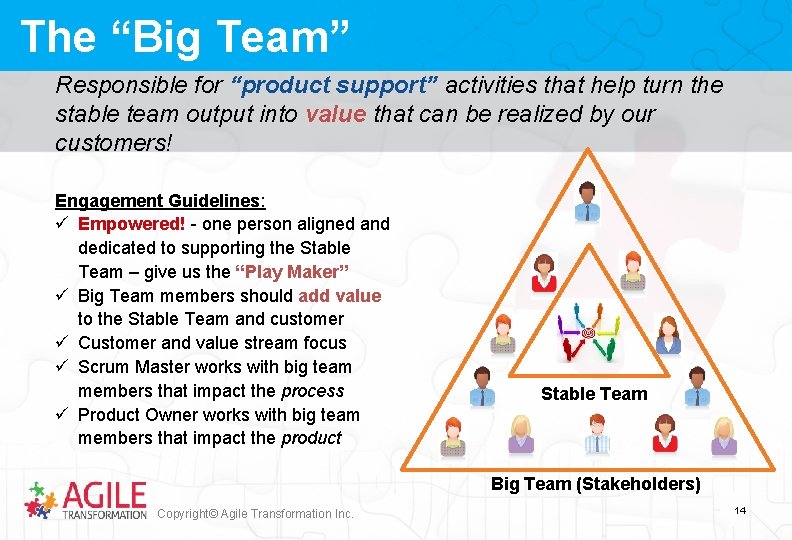
Big Team - Definition Big Team refers to the group of partners, support staff, leaders and other key stakeholders that play critical roles in the product development value stream for defining, planning, designing, validating and implementing solutions. Big Teams are formed to support and collaborate with one or more Stable Teams in the development of product features. Copyright© Agile Transformation Inc. 13
The “Big Team” Responsible for “product support” activities that help turn the stable team output into value that can be realized by our customers! Engagement Guidelines: ü Empowered! - one person aligned and dedicated to supporting the Stable Team – give us the “Play Maker” ü Big Team members should add value to the Stable Team and customer ü Customer and value stream focus ü Scrum Master works with big team members that impact the process ü Product Owner works with big team members that impact the product Stable Team Big Team (Stakeholders) Copyright© Agile Transformation Inc. 14
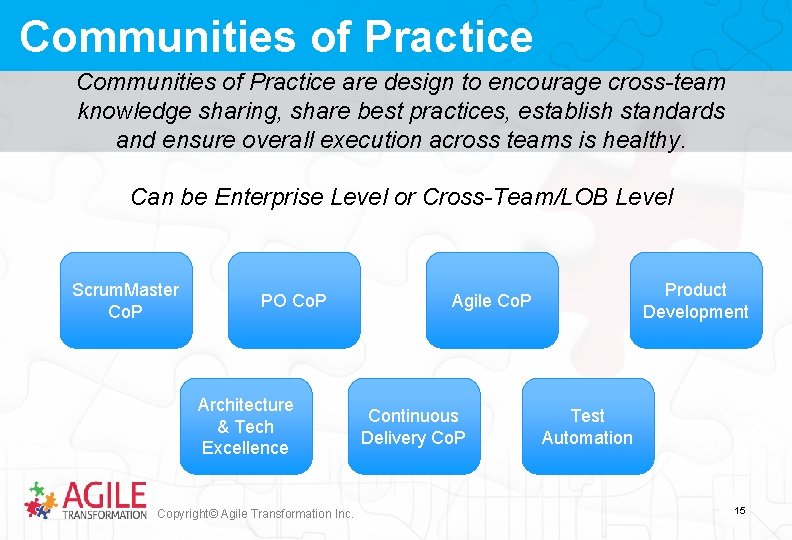
Communities of Practice are design to encourage cross-team knowledge sharing, share best practices, establish standards and ensure overall execution across teams is healthy. Can be Enterprise Level or Cross-Team/LOB Level Scrum. Master Co. P PO Co. P Architecture & Tech Excellence Copyright© Agile Transformation Inc. Product Development Agile Co. P Continuous Delivery Co. P Test Automation 15
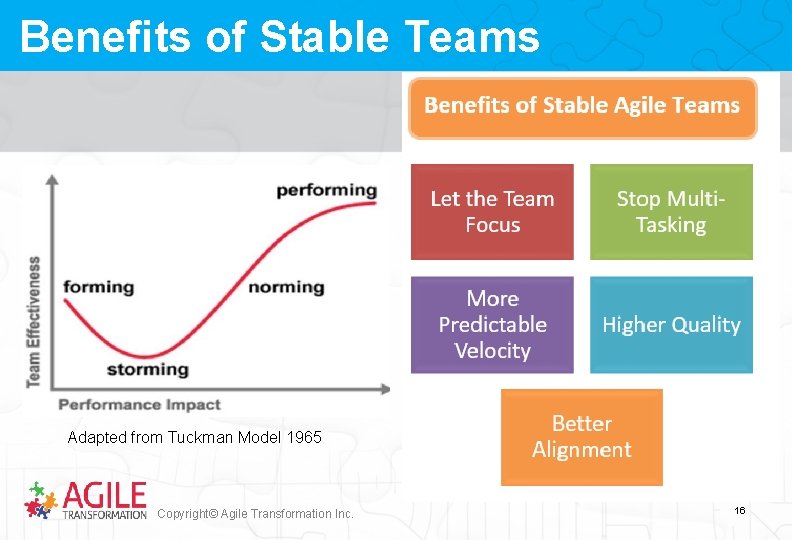
Benefits of Stable Teams Adapted from Tuckman Model 1965 Copyright© Agile Transformation Inc. 16
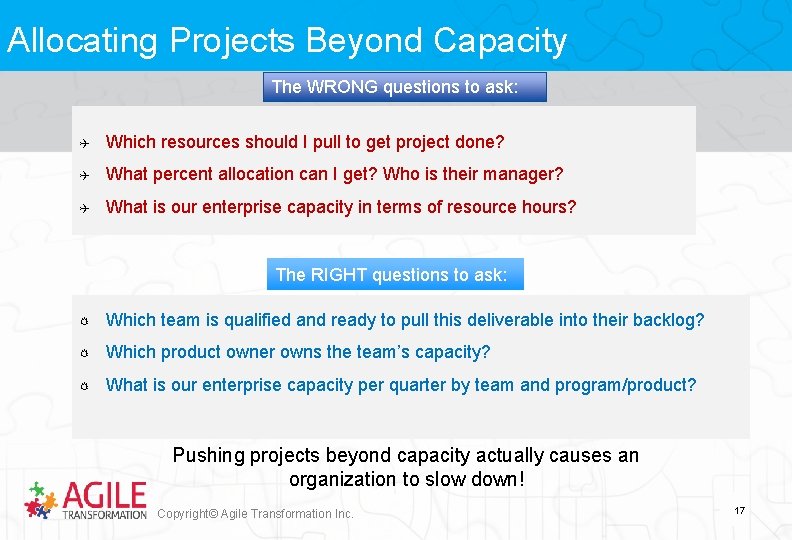
Allocating Projects Beyond Capacity The WRONG questions to ask: Which resources should I pull to get project done? What percent allocation can I get? Who is their manager? What is our enterprise capacity in terms of resource hours? The RIGHT questions to ask: Which team is qualified and ready to pull this deliverable into their backlog? Which product owner owns the team’s capacity? What is our enterprise capacity per quarter by team and program/product? Pushing projects beyond capacity actually causes an organization to slow down! Copyright© Agile Transformation Inc. 17
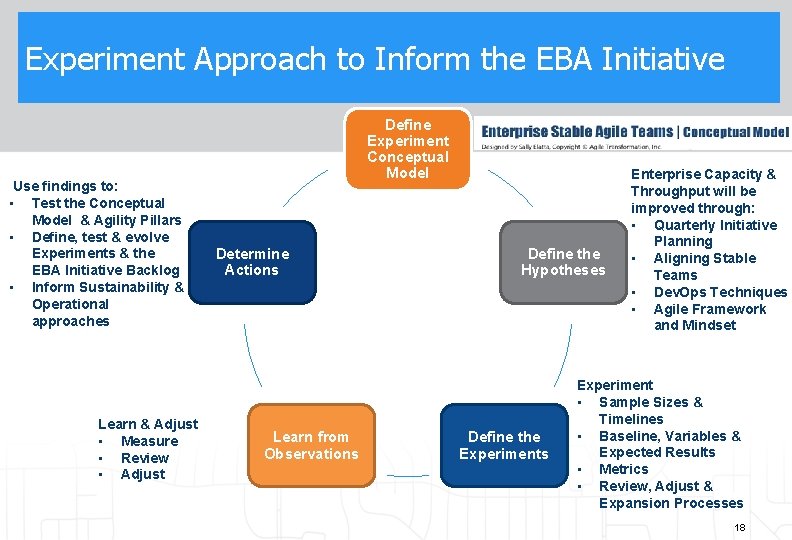
Experiment Approach to Inform the EBA Initiative Use findings to: • Test the Conceptual Model & Agility Pillars • Define, test & evolve Experiments & the EBA Initiative Backlog • Inform Sustainability & Operational approaches Learn & Adjust • Measure • Review • Adjust Define Experiment Conceptual Model Determine Actions Learn from Observations Define the Hypotheses Define the Experiments Enterprise Capacity & Throughput will be improved through: • Quarterly Initiative Planning • Aligning Stable Teams • Dev. Ops Techniques • Agile Framework and Mindset Experiment • Sample Sizes & Timelines • Baseline, Variables & Expected Results • Metrics • Review, Adjust & Expansion Processes 18
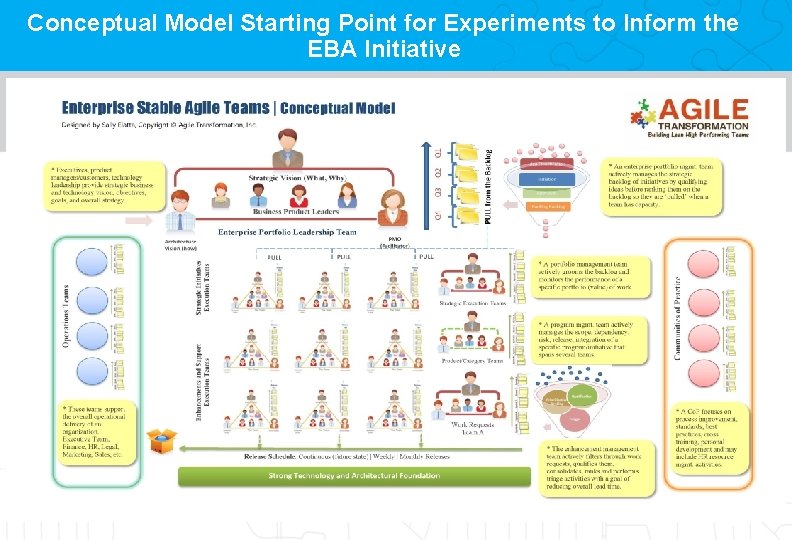
Conceptual Model Starting Point for Experiments to Inform the EBA Initiative Copyright© Agile Transformation Inc. 19