
Team Based Model of Care Pandemic Response 20202021
Team Based Model of Care Pandemic Response 2020/2021 Professional practice and Education Department April 20, 2020
Objective for this presentation To provide guidelines on how to utilize the entire workforce to support each other, optimizing the skills of clinicians and highly trained acute care staff with other staff that can serve in various support roles This process is to support the higher demand for patient care outside of the typical primary care nursing framework only to be used in the event of an emergency
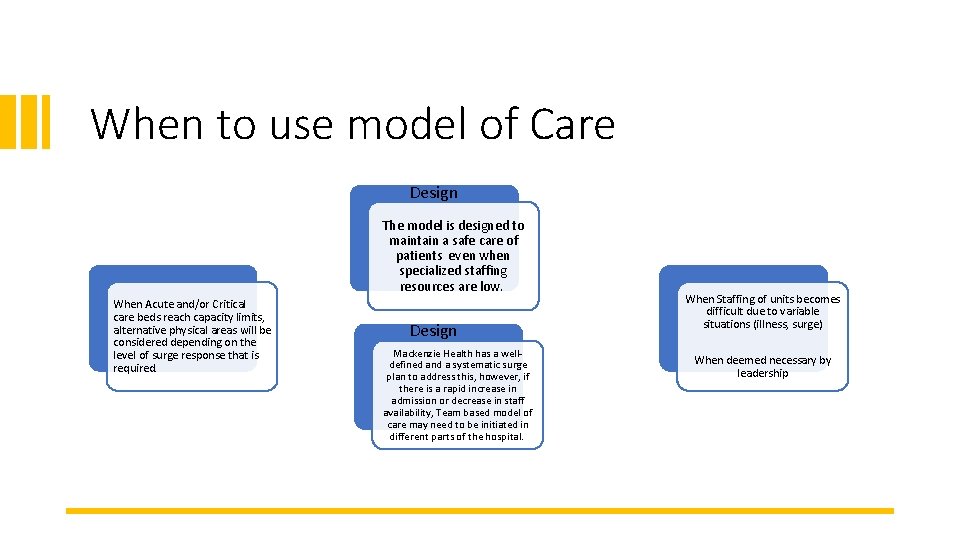
When to use model of Care Design The model is designed to maintain a safe care of patients even when specialized staffing resources are low. When Acute and/or Critical care beds reach capacity limits, alternative physical areas will be considered depending on the level of surge response that is required. Design Mackenzie Health has a welldefined and a systematic surge plan to address this, however, if there is a rapid increase in admission or decrease in staff availability, Team based model of care may need to be initiated in different parts of the hospital. When Staffing of units becomes difficult due to variable situations (illness, surge) When deemed necessary by leadership
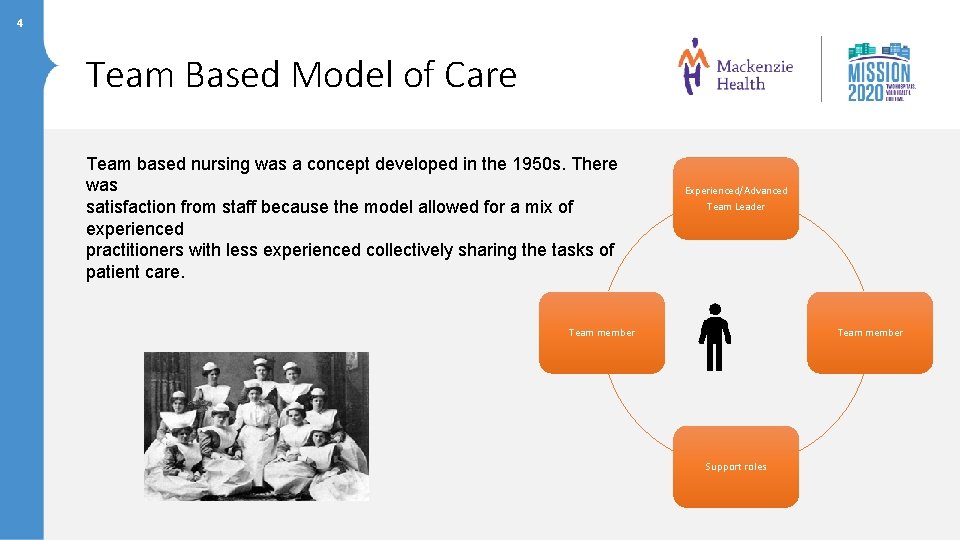
4 Team Based Model of Care Team based nursing was a concept developed in the 1950 s. There was satisfaction from staff because the model allowed for a mix of experienced practitioners with less experienced collectively sharing the tasks of patient care. Experienced/Advanced Team Leader Team member Support roles

5 Team Based Model of Care Team based model of care will allow safe care for greater number of patients utilizing defined roles and responsibilities within the team Success factors of a team: ü Strong clinical skill mix ü Good communication & decision-making skills ü Cooperative working environment All clinical programs, Allied health, clinical and non-clinical support services and physicians have developed a plan utilizing the concept of team based model of care to respond to the demand
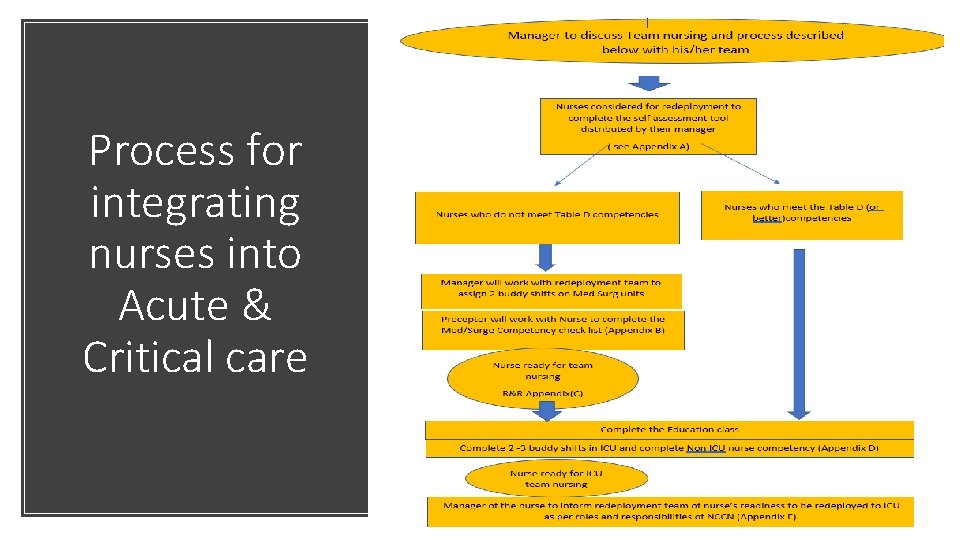
Process for integrating nurses into Acute & Critical care 6
• There is now a 2. 5 hour education module in our “My learning” On line Education module for upskilling • All nurses will benefit from completing this module as it is a review on how to care for Covid-19 patients • This module has particularly been designed for nurses(RN & RPN) who will be going to Critical care units to work with the Critical care nurses in a team based model of care • It is recommended for this module to be completed prior to or during the 1 st buddy shift in Critical care department • The module can be done on the nurses’ home unit, or at the library if no computer available on the unit
• Team based model of care There are 10 topics within the online module on Upskilling Nurses to the ICU: • ICU model of care • Nursing care for a patient with COVID-19 • Respiratory care for COVID-19 patient • IPAC ICU • Protected code blue • Ventilator- Associated pneumonia and Oral care • Promoting Nutrition in the ICU • ICU sepsis • Handling of the deceased patient with COVID-19
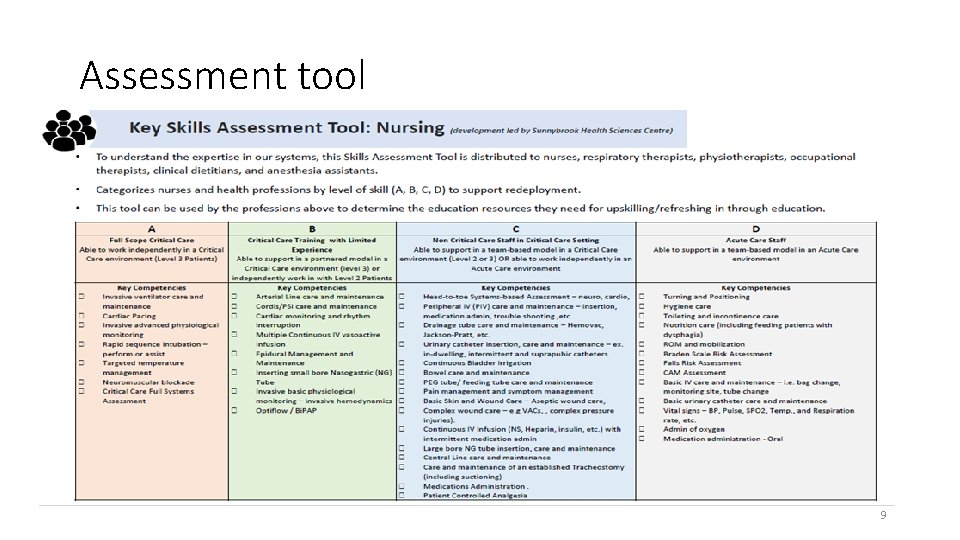
Assessment tool 9
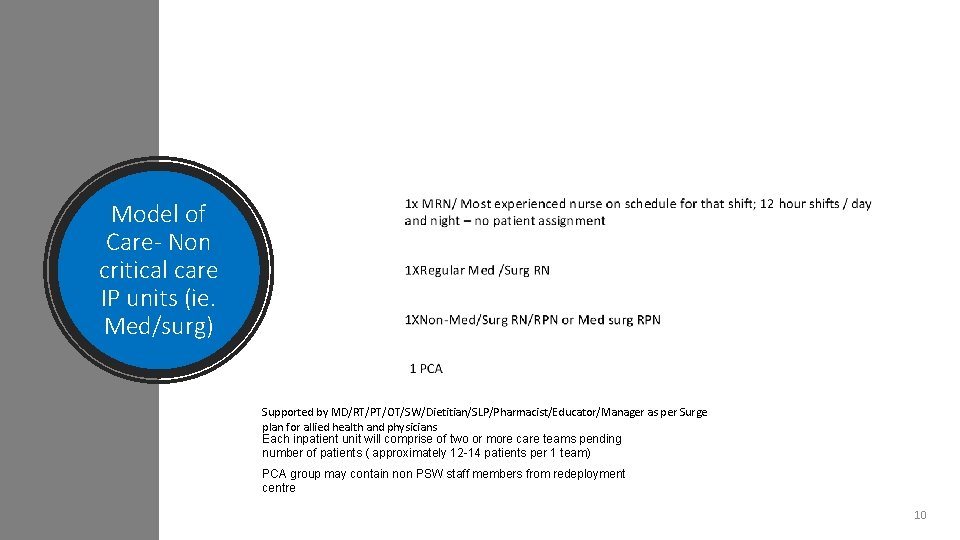
Model of Care- Non critical care IP units (ie. Med/surg) Supported by MD/RT/PT/OT/SW/Dietitian/SLP/Pharmacist/Educator/Manager as per Surge plan for allied health and physicians Each inpatient unit will comprise of two or more care teams pending number of patients ( approximately 12 -14 patients per 1 team) PCA group may contain non PSW staff members from redeployment centre 10
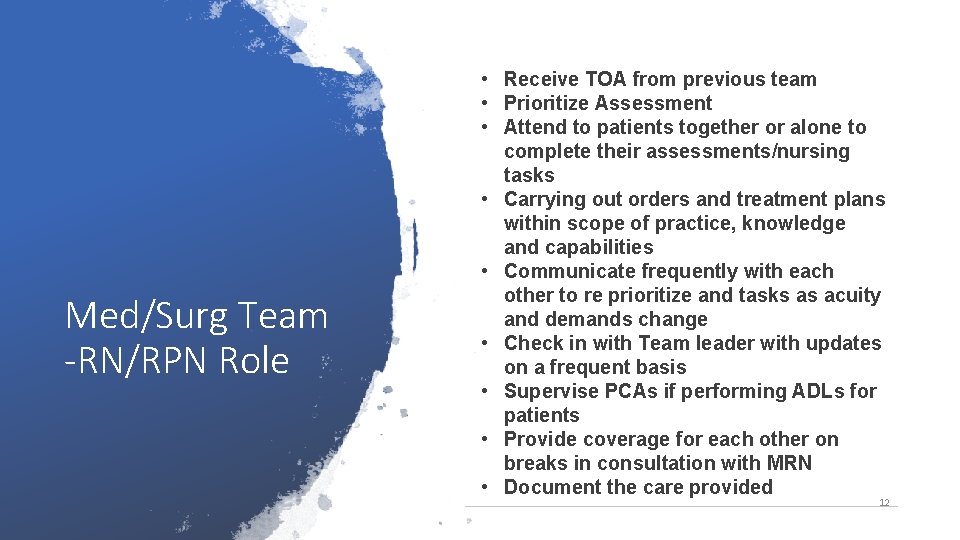
Med/Surg Team -RN/RPN Role • Receive TOA from previous team • Prioritize Assessment • Attend to patients together or alone to complete their assessments/nursing tasks • Carrying out orders and treatment plans within scope of practice, knowledge and capabilities • Communicate frequently with each other to re prioritize and tasks as acuity and demands change • Check in with Team leader with updates on a frequent basis • Supervise PCAs if performing ADLs for patients • Provide coverage for each other on breaks in consultation with MRN • Document the care provided 12
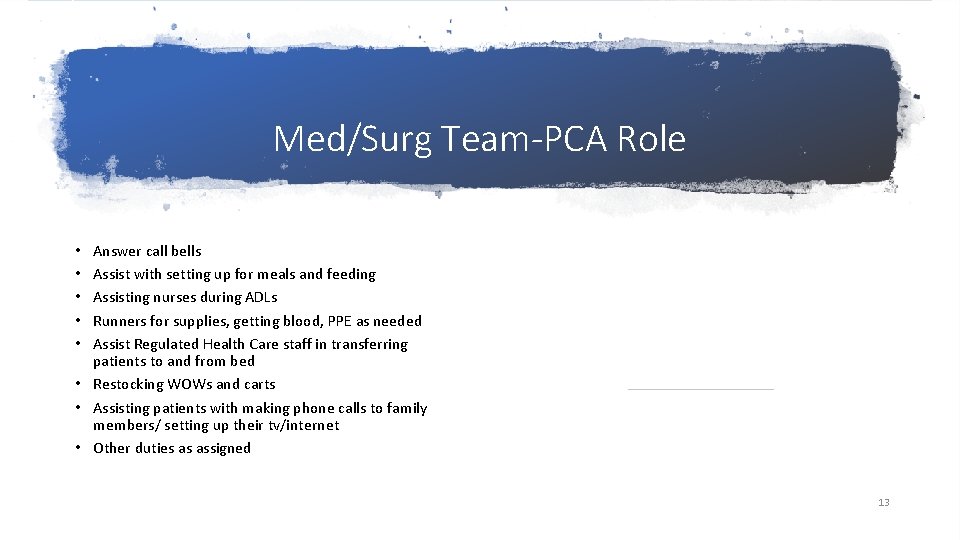
Med/Surg Team-PCA Role Answer call bells Assist with setting up for meals and feeding Assisting nurses during ADLs Runners for supplies, getting blood, PPE as needed Assist Regulated Health Care staff in transferring patients to and from bed • Restocking WOWs and carts • Assisting patients with making phone calls to family members/ setting up their tv/internet • Other duties as assigned • • • 13
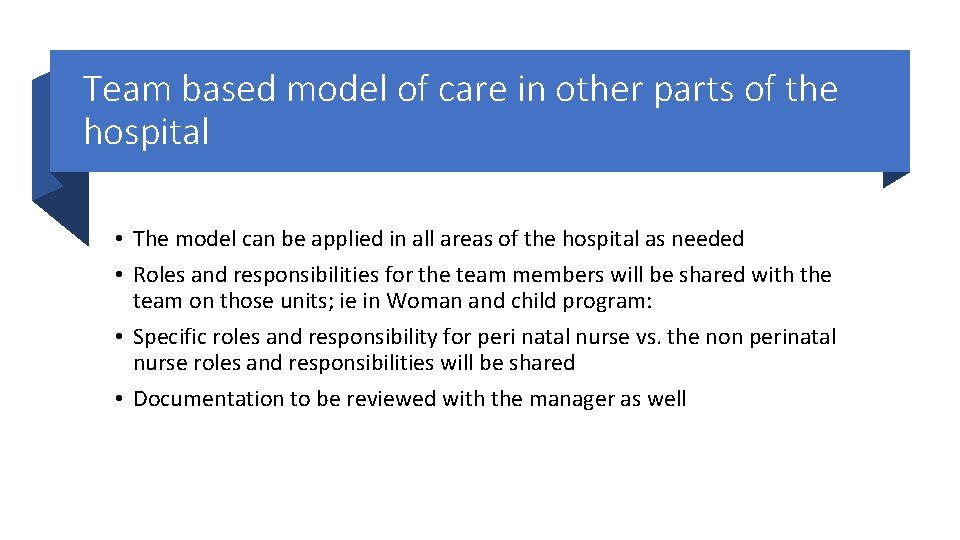
Team based model of care in other parts of the hospital • The model can be applied in all areas of the hospital as needed • Roles and responsibilities for the team members will be shared with the team on those units; ie in Woman and child program: • Specific roles and responsibility for peri natal nurse vs. the non perinatal nurse roles and responsibilities will be shared • Documentation to be reviewed with the manager as well
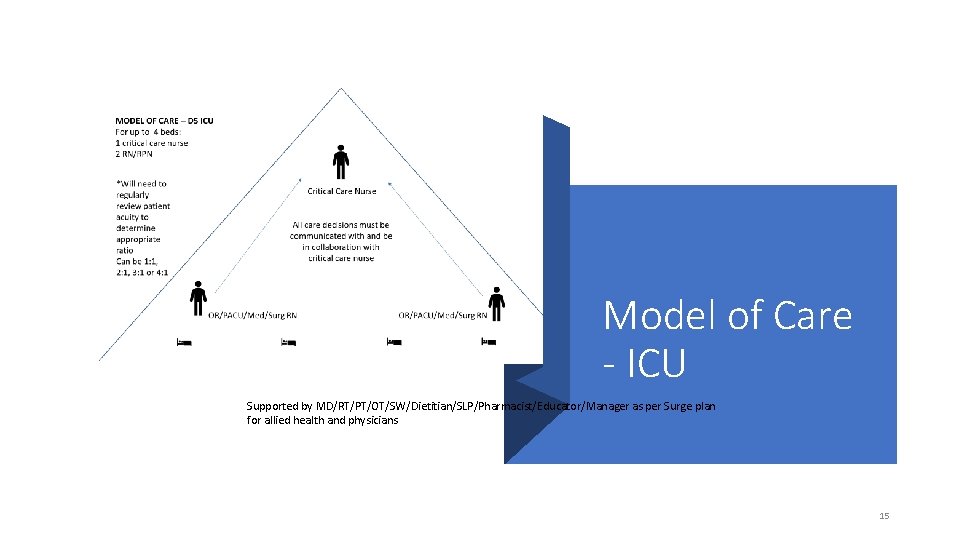
Model of Care - ICU Supported by MD/RT/PT/OT/SW/Dietitian/SLP/Pharmacist/Educator/Manager as per Surge plan for allied health and physicians 15
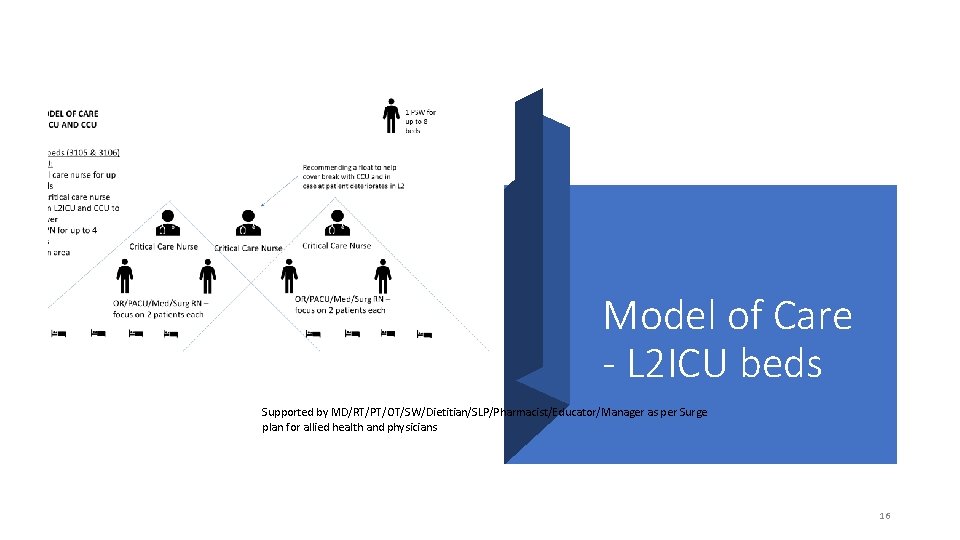
Model of Care - L 2 ICU beds Supported by MD/RT/PT/OT/SW/Dietitian/SLP/Pharmacist/Educator/Manager as per Surge plan for allied health and physicians 16
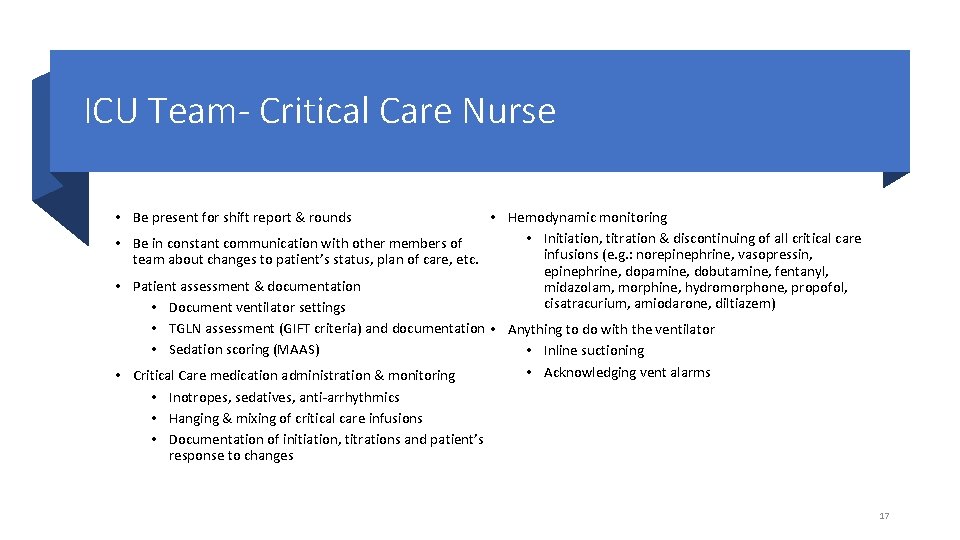
ICU Team- Critical Care Nurse • Hemodynamic monitoring • Initiation, titration & discontinuing of all critical care • Be in constant communication with other members of infusions (e. g. : norepinephrine, vasopressin, team about changes to patient’s status, plan of care, etc. epinephrine, dopamine, dobutamine, fentanyl, • Patient assessment & documentation midazolam, morphine, hydromorphone, propofol, cisatracurium, amiodarone, diltiazem) • Document ventilator settings • Be present for shift report & rounds • TGLN assessment (GIFT criteria) and documentation • Anything to do with the ventilator • Sedation scoring (MAAS) • Inline suctioning • Acknowledging vent alarms • Critical Care medication administration & monitoring • Inotropes, sedatives, anti-arrhythmics • Hanging & mixing of critical care infusions • Documentation of initiation, titrations and patient’s response to changes 17
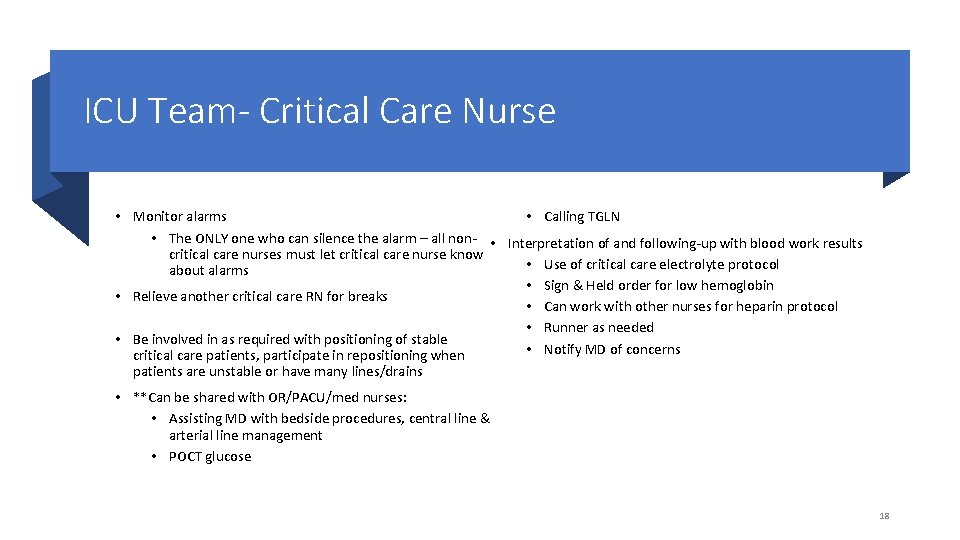
ICU Team- Critical Care Nurse • Calling TGLN • Monitor alarms • The ONLY one who can silence the alarm – all non- • Interpretation of and following-up with blood work results critical care nurses must let critical care nurse know • Use of critical care electrolyte protocol about alarms • Sign & Held order for low hemoglobin • Relieve another critical care RN for breaks • Can work with other nurses for heparin protocol • Runner as needed • Be involved in as required with positioning of stable • Notify MD of concerns critical care patients, participate in repositioning when patients are unstable or have many lines/drains • **Can be shared with OR/PACU/med nurses: • Assisting MD with bedside procedures, central line & arterial line management • POCT glucose 18
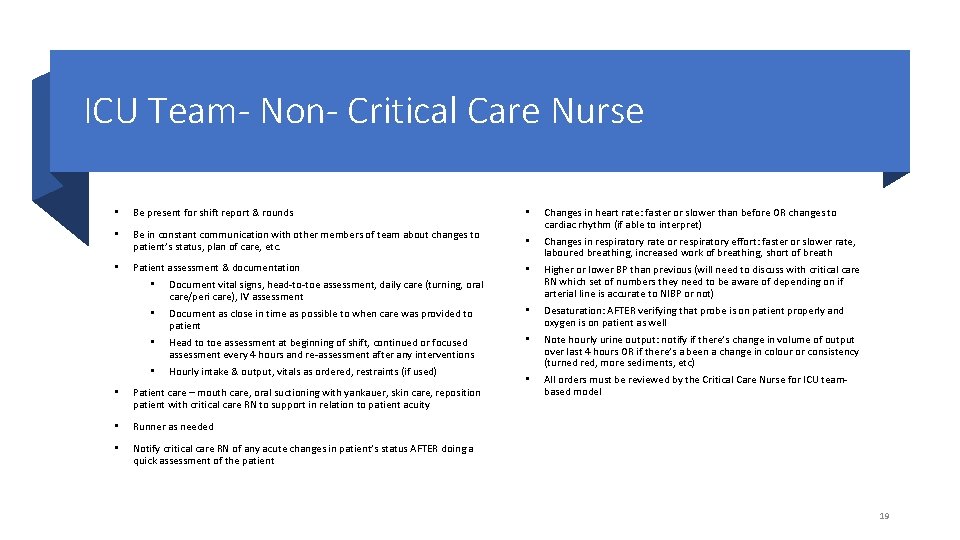
ICU Team- Non- Critical Care Nurse • Be present for shift report & rounds • • Be in constant communication with other members of team about changes to patient’s status, plan of care, etc. Changes in heart rate: faster or slower than before OR changes to cardiac rhythm (if able to interpret) • Changes in respiratory rate or respiratory effort: faster or slower rate, laboured breathing, increased work of breathing, short of breath • Patient assessment & documentation • Higher or lower BP than previous (will need to discuss with critical care RN which set of numbers they need to be aware of depending on if arterial line is accurate to NIBP or not) • Document vital signs, head-to-toe assessment, daily care (turning, oral care/peri care), IV assessment • Document as close in time as possible to when care was provided to patient • Desaturation: AFTER verifying that probe is on patient properly and oxygen is on patient as well • Head to toe assessment at beginning of shift, continued or focused assessment every 4 hours and re-assessment after any interventions • • Hourly intake & output, vitals as ordered, restraints (if used) Note hourly urine output: notify if there’s change in volume of output over last 4 hours OR if there’s a been a change in colour or consistency (turned red, more sediments, etc) • All orders must be reviewed by the Critical Care Nurse for ICU teambased model • Patient care – mouth care, oral suctioning with yankauer, skin care, reposition patient with critical care RN to support in relation to patient acuity • Runner as needed • Notify critical care RN of any acute changes in patient’s status AFTER doing a quick assessment of the patient 19
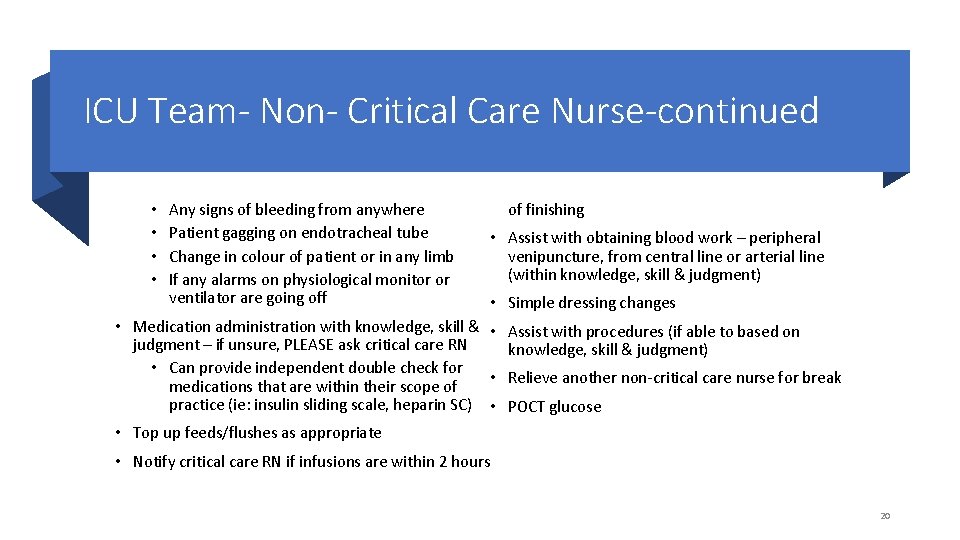
ICU Team- Non- Critical Care Nurse-continued • • Any signs of bleeding from anywhere Patient gagging on endotracheal tube Change in colour of patient or in any limb If any alarms on physiological monitor or ventilator are going off of finishing • Assist with obtaining blood work – peripheral venipuncture, from central line or arterial line (within knowledge, skill & judgment) • Simple dressing changes • Medication administration with knowledge, skill & • Assist with procedures (if able to based on judgment – if unsure, PLEASE ask critical care RN knowledge, skill & judgment) • Can provide independent double check for • Relieve another non-critical care nurse for break medications that are within their scope of practice (ie: insulin sliding scale, heparin SC) • POCT glucose • Top up feeds/flushes as appropriate • Notify critical care RN if infusions are within 2 hours 20
Documentation • All Regulated Health Care Professionals must document care provided, assessments and findings in the appropriate EPIC application • Notes, Vital sign flow sheet and MAR are accessible and visible in all Epic applications • Ensuring that documentation is completed by the individual who performed the action or observed the event, except when there is a designated recorder, who must sign and indicate the circumstances (i. e. during team-based model of care during pandemic time- similar idea as during a code) 21
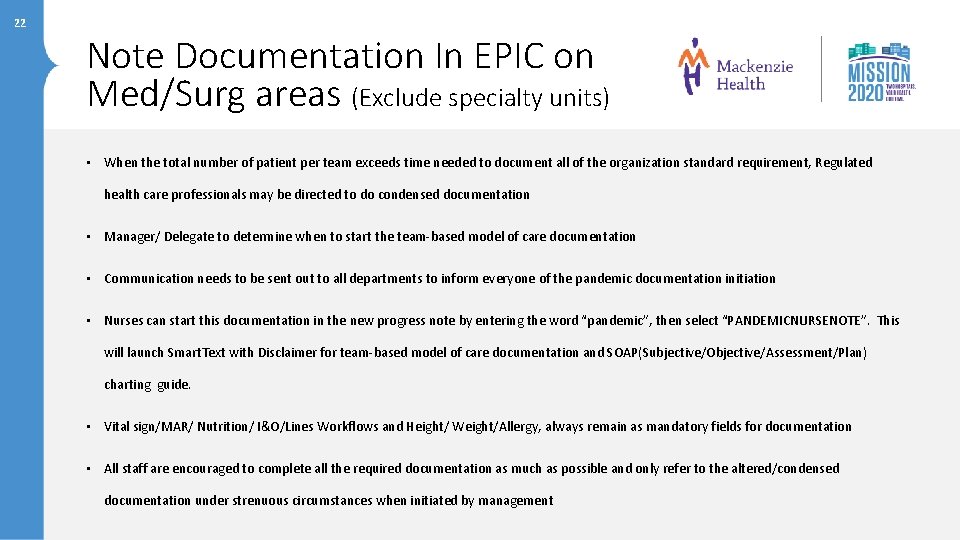
22 Note Documentation In EPIC on Med/Surg areas (Exclude specialty units) • When the total number of patient per team exceeds time needed to document all of the organization standard requirement, Regulated health care professionals may be directed to do condensed documentation • Manager/ Delegate to determine when to start the team-based model of care documentation • Communication needs to be sent out to all departments to inform everyone of the pandemic documentation initiation • Nurses can start this documentation in the new progress note by entering the word “pandemic”, then select “PANDEMICNURSENOTE”. This will launch Smart. Text with Disclaimer for team-based model of care documentation and SOAP(Subjective/Objective/Assessment/Plan) charting guide. • Vital sign/MAR/ Nutrition/ I&O/Lines Workflows and Height/ Weight/Allergy, always remain as mandatory fields for documentation • All staff are encouraged to complete all the required documentation as much as possible and only refer to the altered/condensed documentation under strenuous circumstances when initiated by management
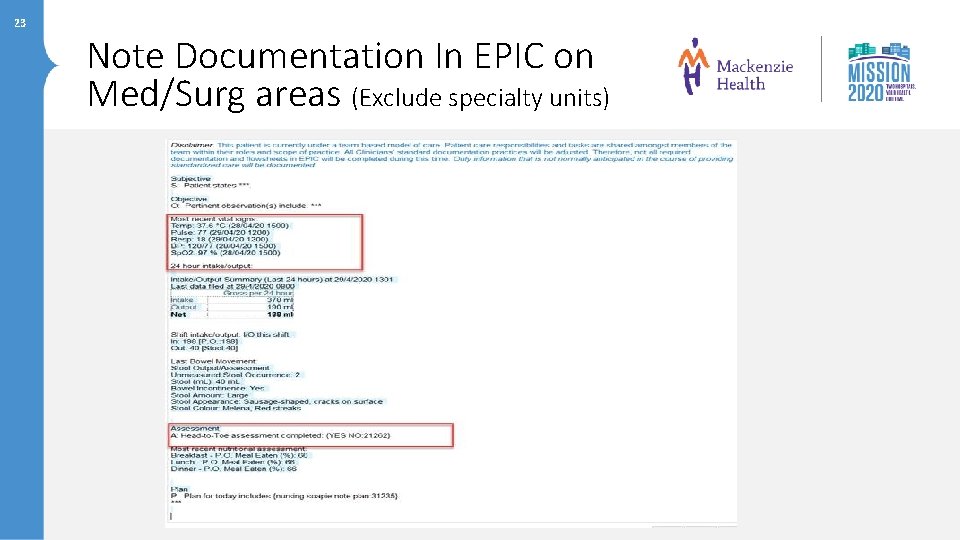
23 Note Documentation In EPIC on Med/Surg areas (Exclude specialty units)

• Please feel free to contact one of the members of the Professional Practice and Education Department as listed below if you have any further questions Questions. . . • Linda Gravel X 7265 • Jackie Samimi X 3077 • Angela Chan X 7461
- Slides: 23