
Team Based Learning in a Mechanical Engineering undergraduate
Team Based Learning in a Mechanical Engineering undergraduate programme Victor Geh Steve Cayzer

Goals of this talk • If you are new to Team Based Learning (TBL) • To motivate you to talk to me, find out more and maybe give it a try • If you are a TBL expert • To motivate you to provide help and guidance particularly on peer evaluation • Anyone else • To motivate you to engage - all comments welcome!
Picture of Tutorial showing - lack of peer engagement - patchy attendance
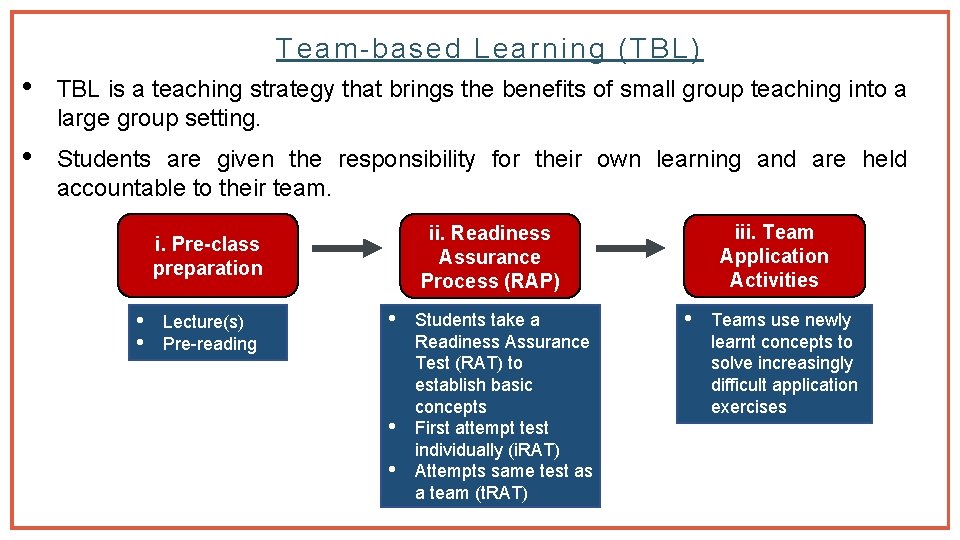
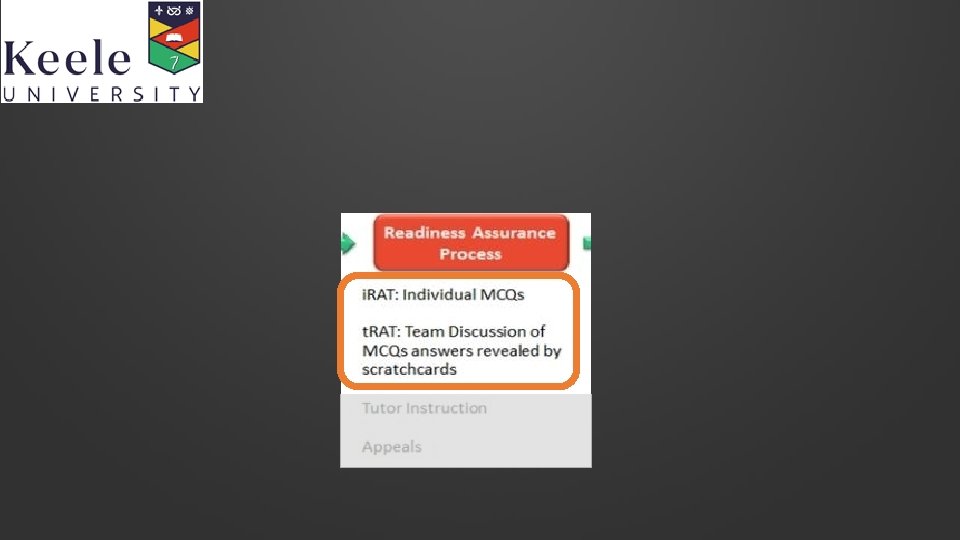
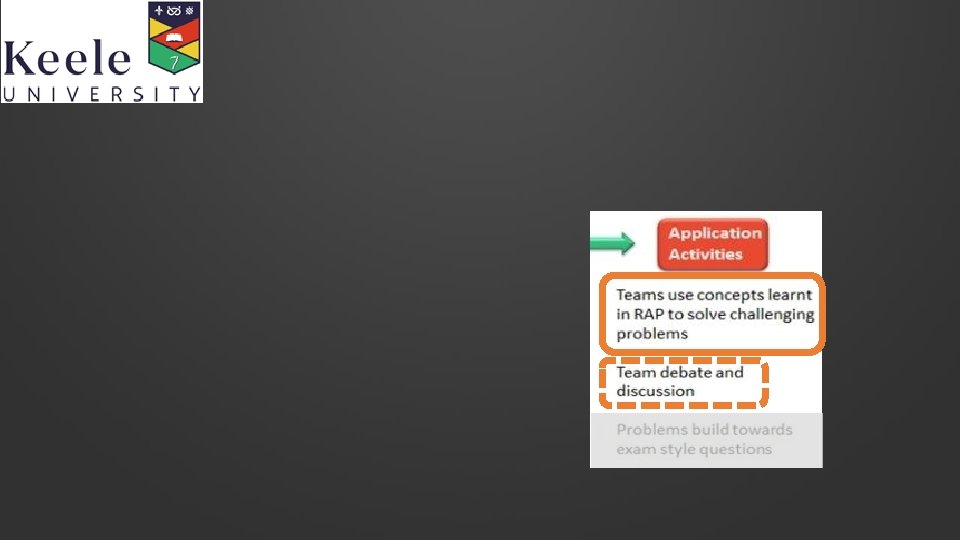
Team-based Learning (TBL) • TBL is a teaching strategy that brings the benefits of small group teaching into a large group setting. • Students are given the responsibility for their own learning and are held accountable to their team. • • Lecture(s) Pre-reading iii. Team Application Activities ii. Readiness Assurance Process (RAP) i. Pre-class preparation • • • Students take a Readiness Assurance Test (RAT) to establish basic concepts First attempt test individually (i. RAT) Attempts same test as a team (t. RAT) • Teams use newly learnt concepts to solve increasingly difficult application exercises


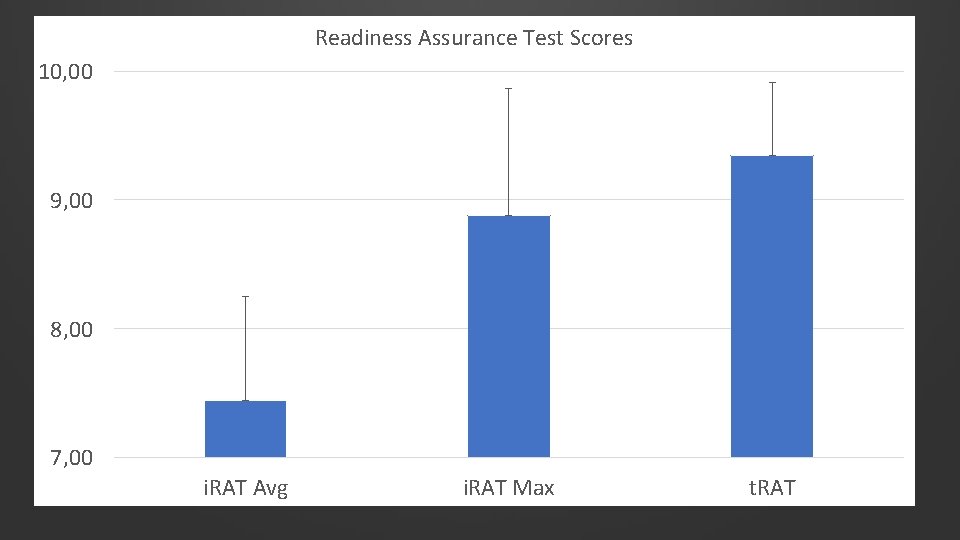
Readiness Assurance Test Scores 10, 00 9, 00 8, 00 7, 00 i. RAT Avg i. RAT Max t. RAT
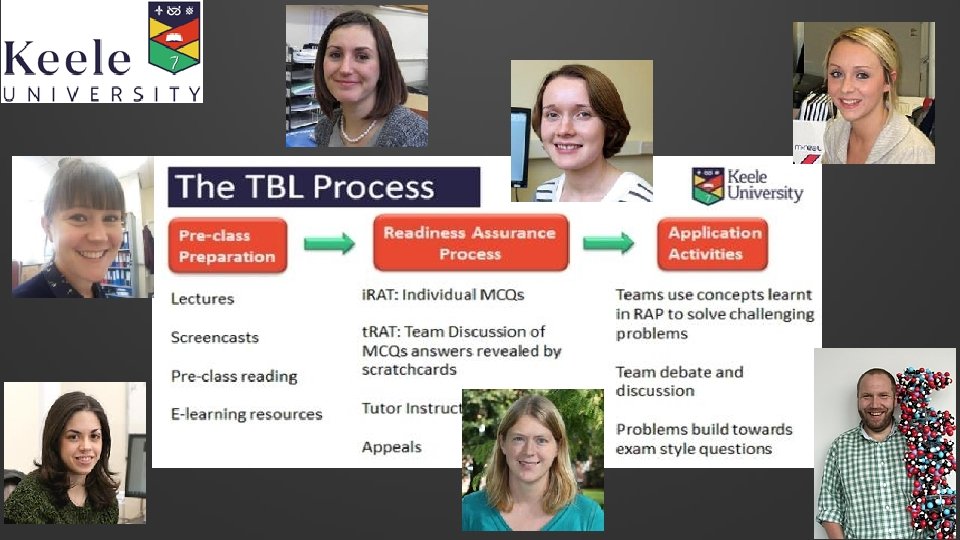
Picture of students engaged in i. RAT/t. RAT
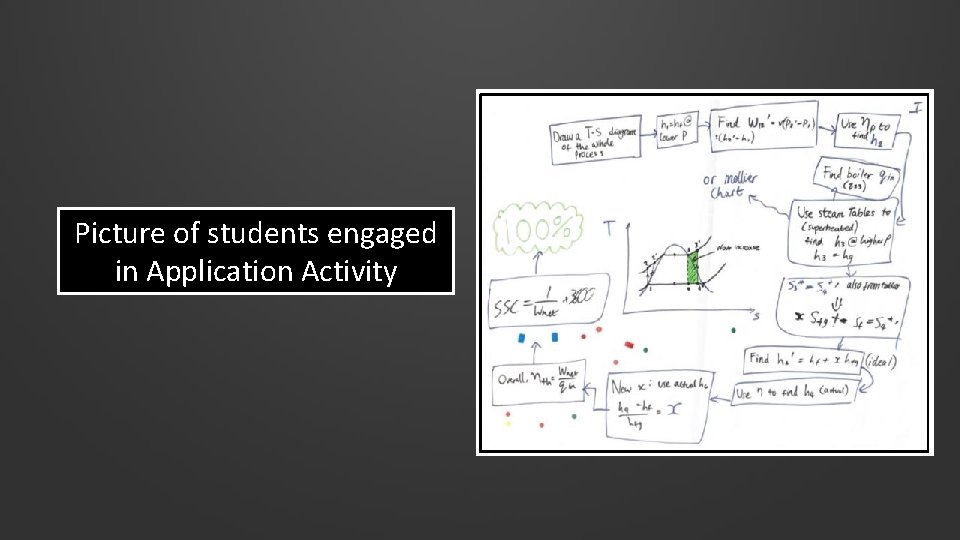
Picture of students engaged in Application Activity
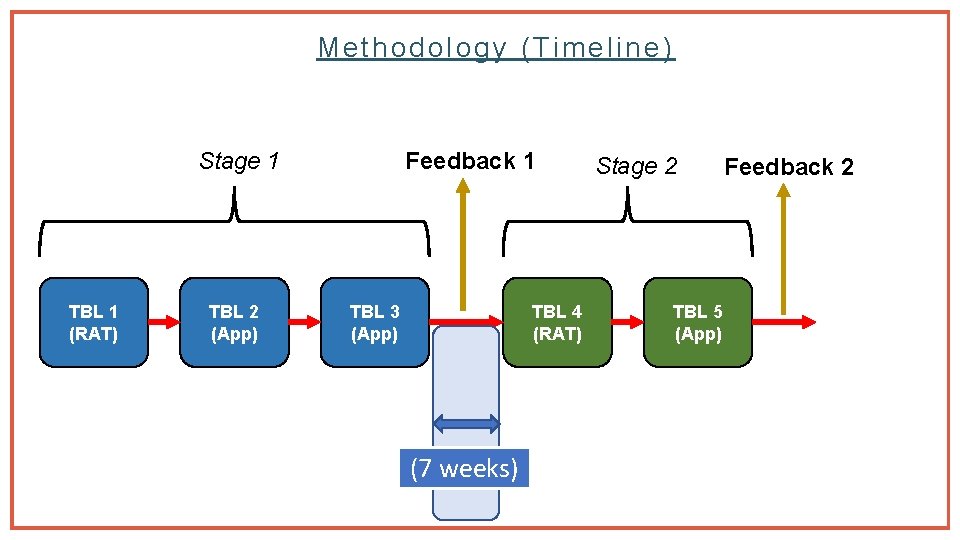
Methodology (Timeline) Feedback 1 Stage 1 TBL 1 (RAT) TBL 2 (App) TBL 3 (App) TBL 4 (RAT) (7 weeks) Stage 2 TBL 5 (App) Feedback 2
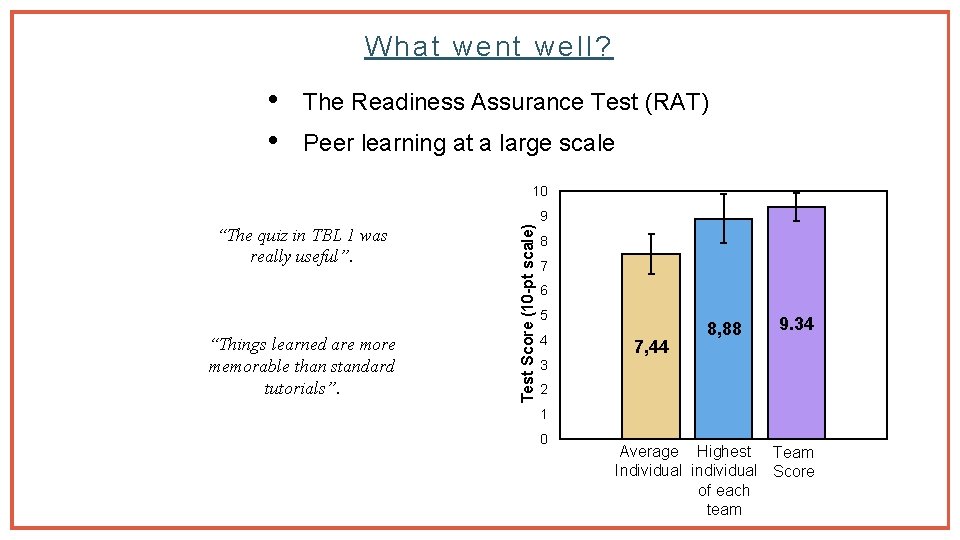
What went well? • • The Readiness Assurance Test (RAT) Peer learning at a large scale “The quiz in TBL 1 was really useful”. “Things learned are more memorable than standard tutorials”. Test Score (10 -pt scale) 10 9 8 7 6 5 4 3 7, 44 8, 88 9. 34 2 1 0 Average Highest Team Individual individual Score of each team
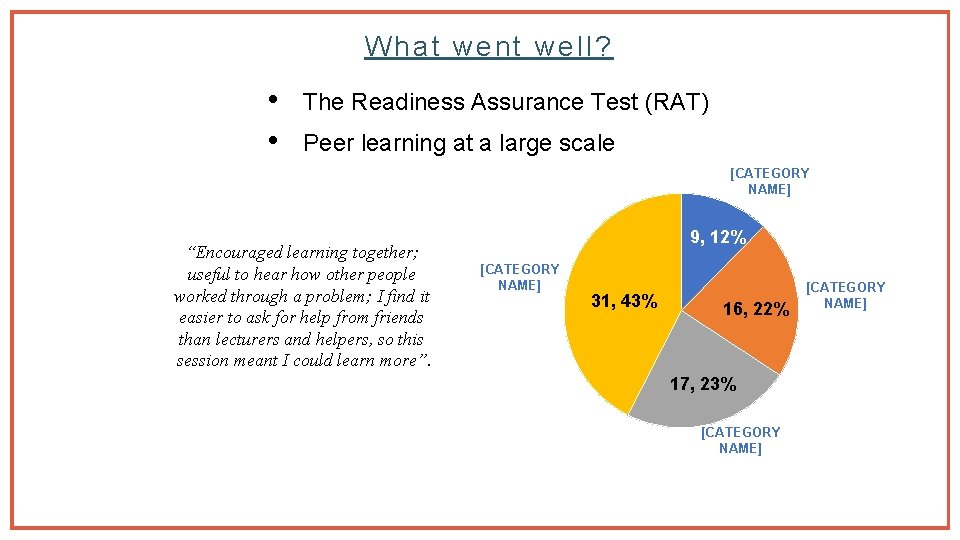
What went well? • • The Readiness Assurance Test (RAT) Peer learning at a large scale [CATEGORY NAME] “Encouraged learning together; useful to hear how other people worked through a problem; I find it easier to ask for help from friends than lecturers and helpers, so this session meant I could learn more”. 9, 12% [CATEGORY NAME] 31, 43% 16, 22% 17, 23% [CATEGORY NAME]
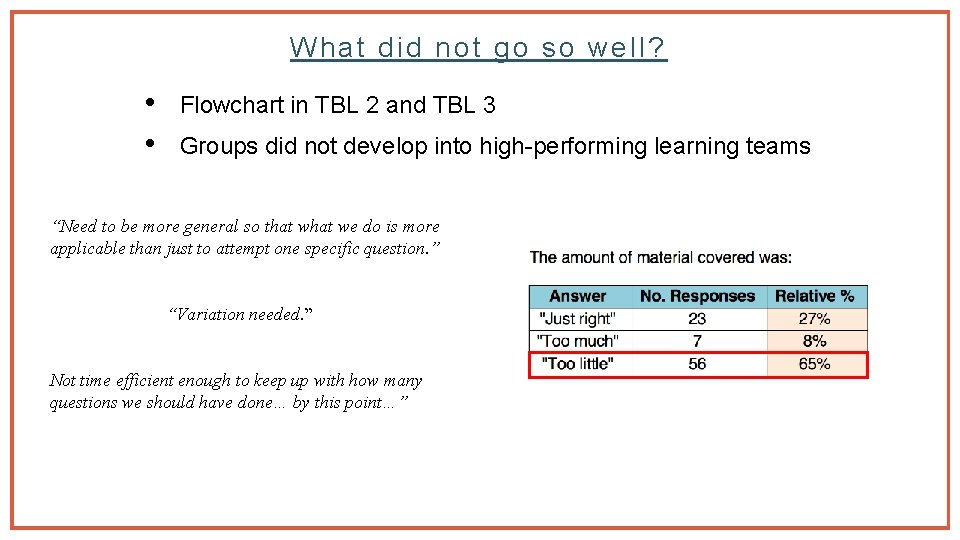
What did not go so well? • • Flowchart in TBL 2 and TBL 3 Groups did not develop into high-performing learning teams “Need to be more general so that we do is more applicable than just to attempt one specific question. ” “Variation needed. ” Not time efficient enough to keep up with how many questions we should have done… by this point…”
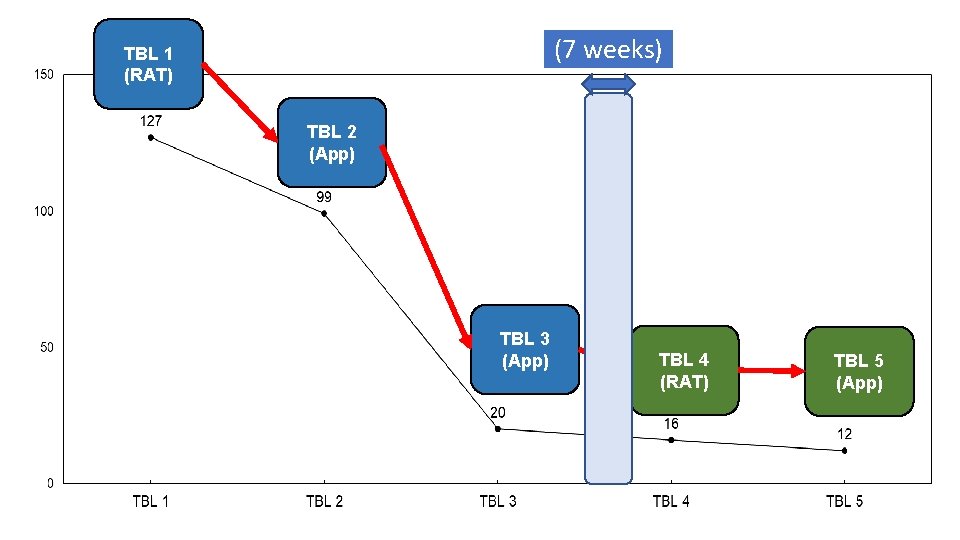
(7 weeks) TBL 1 (RAT) TBL 2 (App) TBL 3 (App) TBL 4 (RAT) TBL 5 (App)
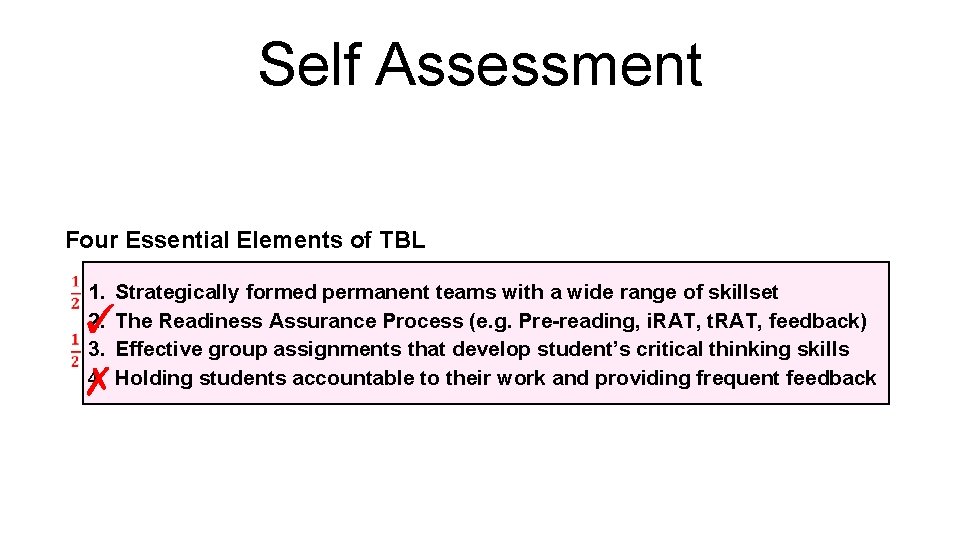
Self Assessment Four Essential Elements of TBL 1. 2. 3. 4. Strategically formed permanent teams with a wide range of skillset The Readiness Assurance Process (e. g. Pre-reading, i. RAT, t. RAT, feedback) Effective group assignments that develop student’s critical thinking skills Holding students accountable to their work and providing frequent feedback ✓ ✗
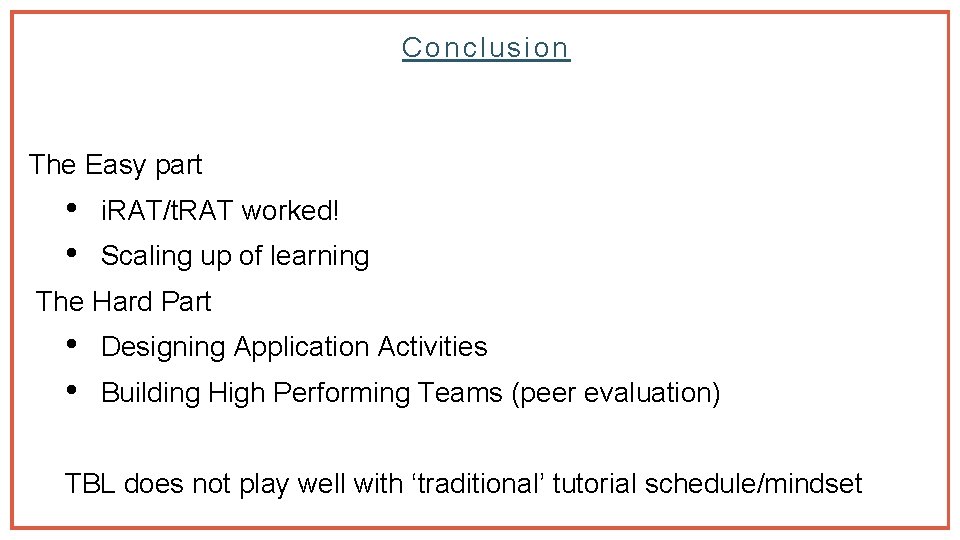
Conclusion The Easy part • • i. RAT/t. RAT worked! Scaling up of learning The Hard Part • • Designing Application Activities Building High Performing Teams (peer evaluation) TBL does not play well with ‘traditional’ tutorial schedule/mindset
- Slides: 19