
Team 1 Sleep Management System Anthony Bharrat Facundo

Team 1 – Sleep Management System Anthony Bharrat Facundo Gauna Ryan Murphy Bartholomew Straka
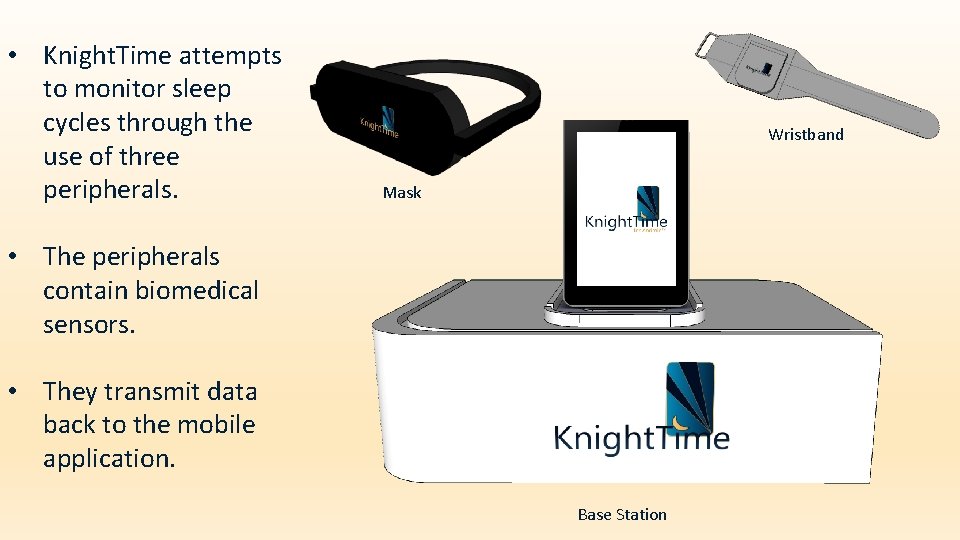
• Knight. Time attempts to monitor sleep cycles through the use of three peripherals. Wristband Mask • The peripherals contain biomedical sensors. • They transmit data back to the mobile application. Base Station
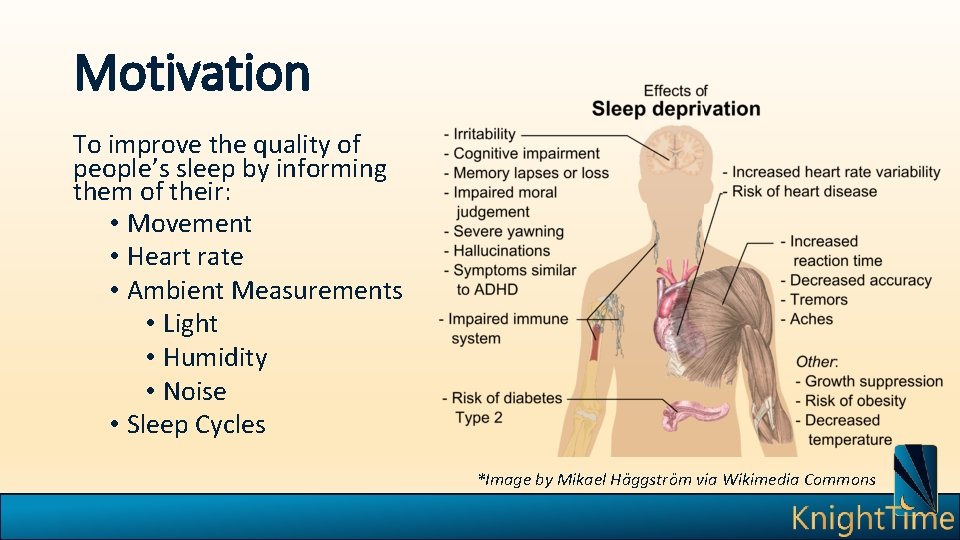
Motivation To improve the quality of people’s sleep by informing them of their: • Movement • Heart rate • Ambient Measurements • Light • Humidity • Noise • Sleep Cycles *Image by Mikael Häggström via Wikimedia Commons
Goals and Objectives • The system is: • Modular • User-Friendly • Low-Cost • Power-Efficient User. Friendly Modular Low. Cost Power. Efficient
Requirements Be able to measure: • Skin Temperature • Body Movement • Ambient Temperature • Ambient Humidity • Heart Rate • Ambient Sound Be able to sound an alarm at: • A particular time based on measured physiological cues. • At a user-defined time.
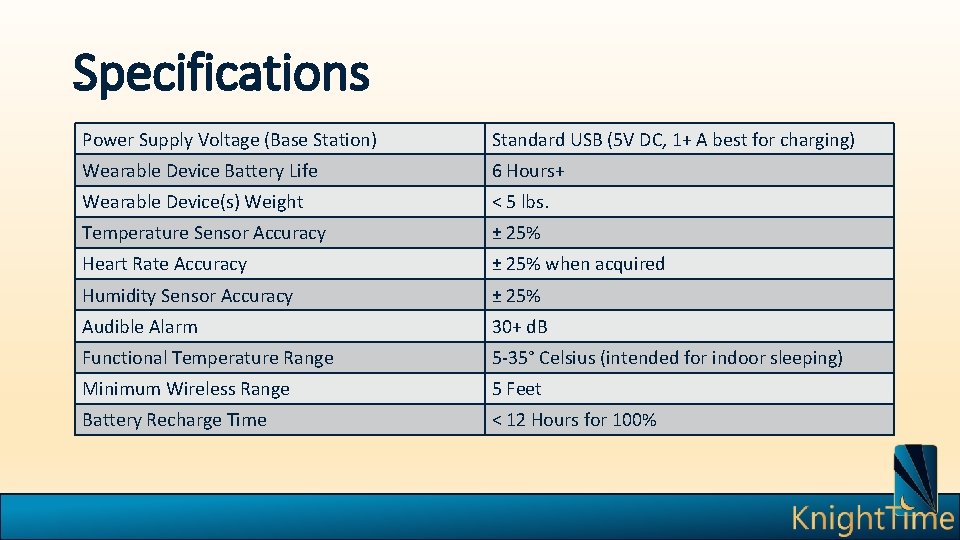
Specifications Power Supply Voltage (Base Station) Standard USB (5 V DC, 1+ A best for charging) Wearable Device Battery Life 6 Hours+ Wearable Device(s) Weight < 5 lbs. Temperature Sensor Accuracy ± 25% Heart Rate Accuracy ± 25% when acquired Humidity Sensor Accuracy ± 25% Audible Alarm 30+ d. B Functional Temperature Range 5 -35° Celsius (intended for indoor sleeping) Minimum Wireless Range 5 Feet Battery Recharge Time < 12 Hours for 100%

Concept of Operation
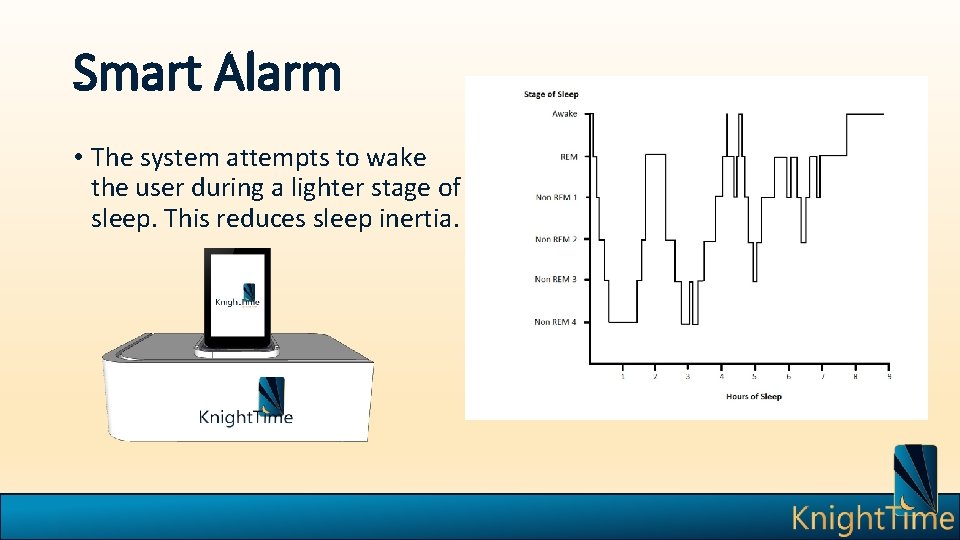
Smart Alarm • The system attempts to wake the user during a lighter stage of sleep. This reduces sleep inertia.
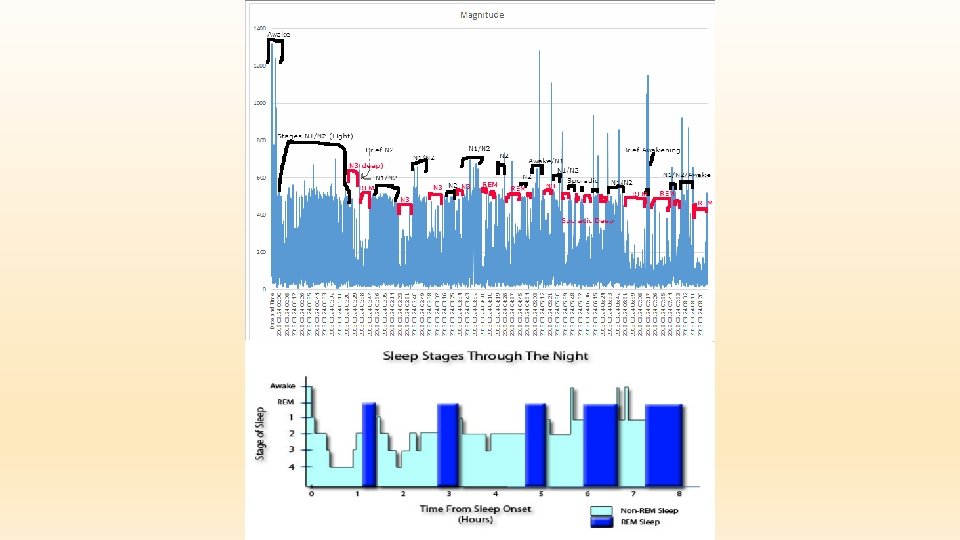
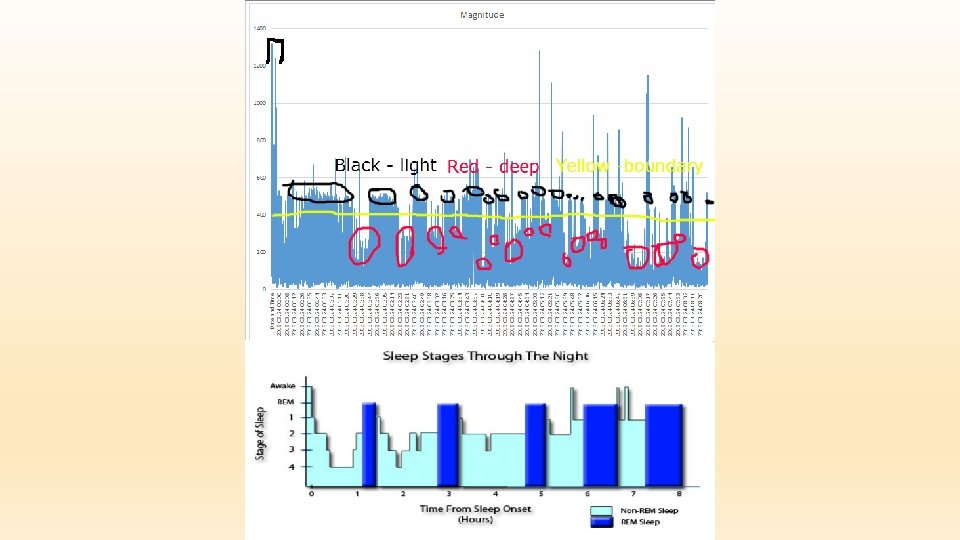
Smart Alarm The peripherals allow the system to continue an alarm until the user shows significant signs of wakefulness such as a math problem. Additional tasks may be added in the future.
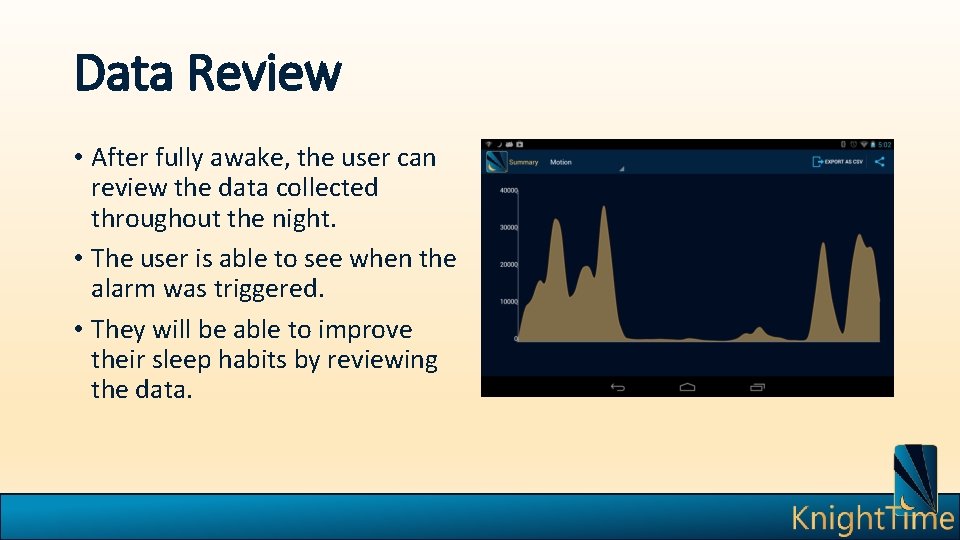
Data Review • After fully awake, the user can review the data collected throughout the night. • The user is able to see when the alarm was triggered. • They will be able to improve their sleep habits by reviewing the data.

Implementation
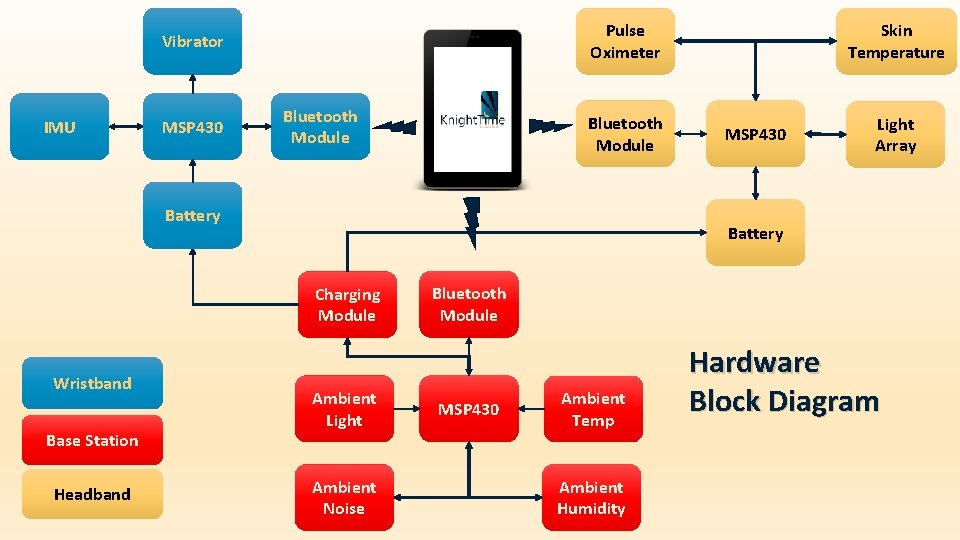
Pulse Oximeter Vibrator IMU MSP 430 Bluetooth Module Battery Base Station Headband MSP 430 Light Array Battery Charging Module Wristband Skin Temperature Ambient Light Ambient Noise Bluetooth Module MSP 430 Ambient Temp Ambient Humidity Hardware Block Diagram
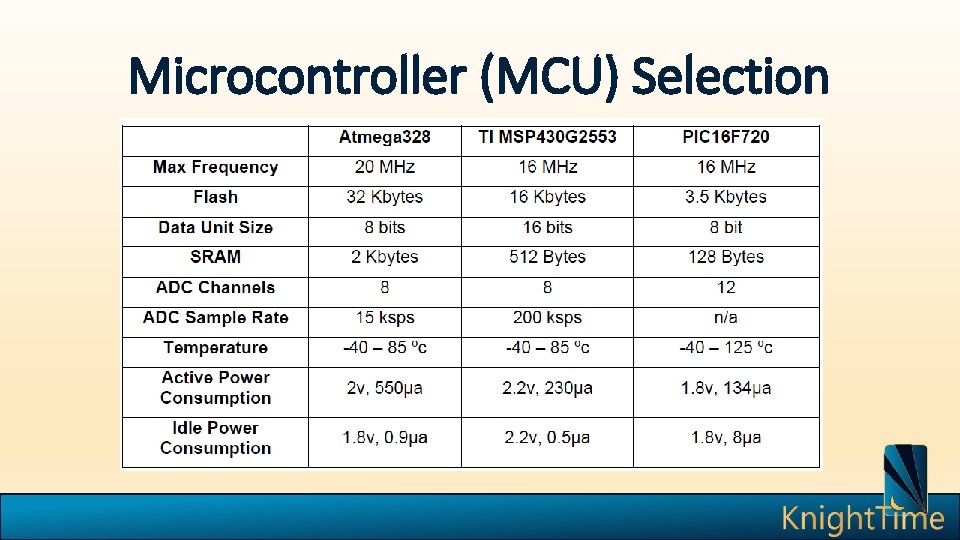
Microcontroller (MCU) Selection
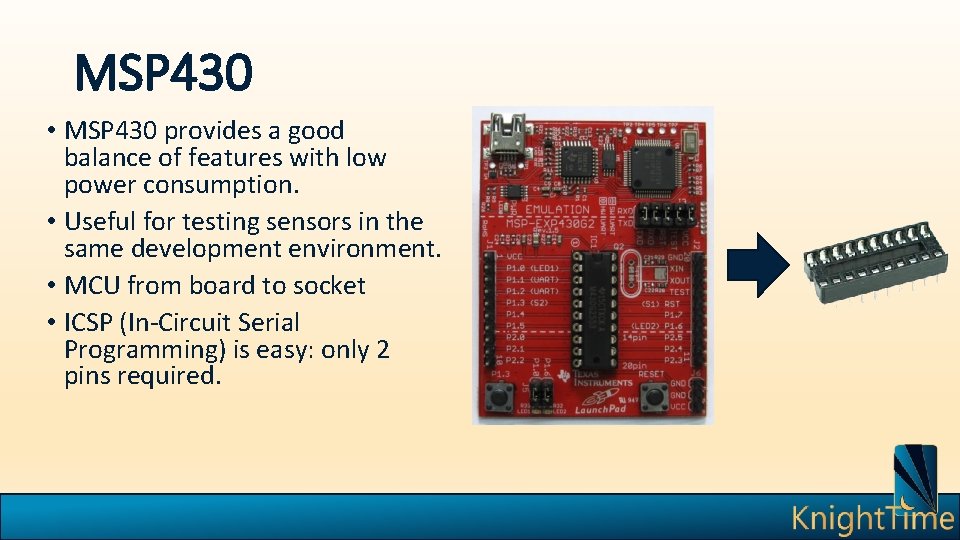
MSP 430 • MSP 430 provides a good balance of features with low power consumption. • Useful for testing sensors in the same development environment. • MCU from board to socket • ICSP (In-Circuit Serial Programming) is easy: only 2 pins required.
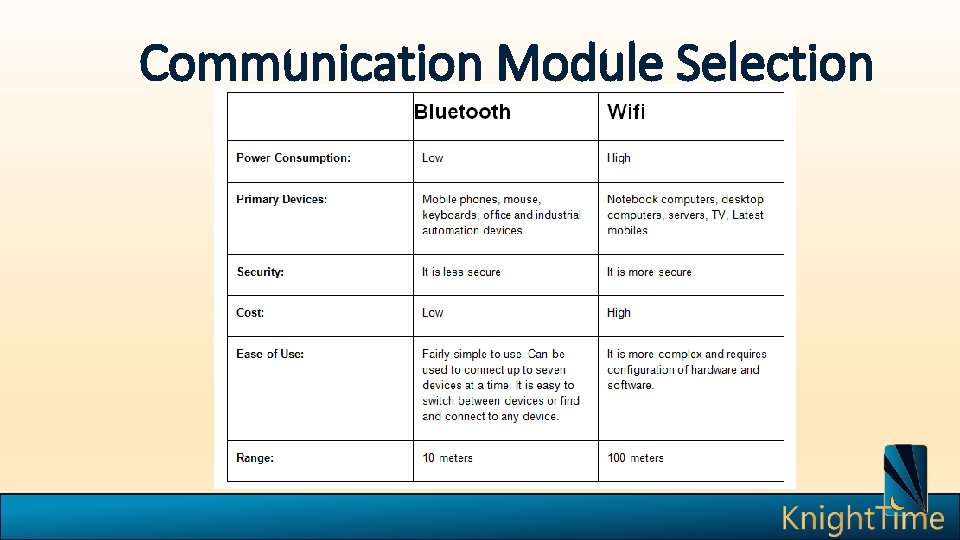
Communication Module Selection
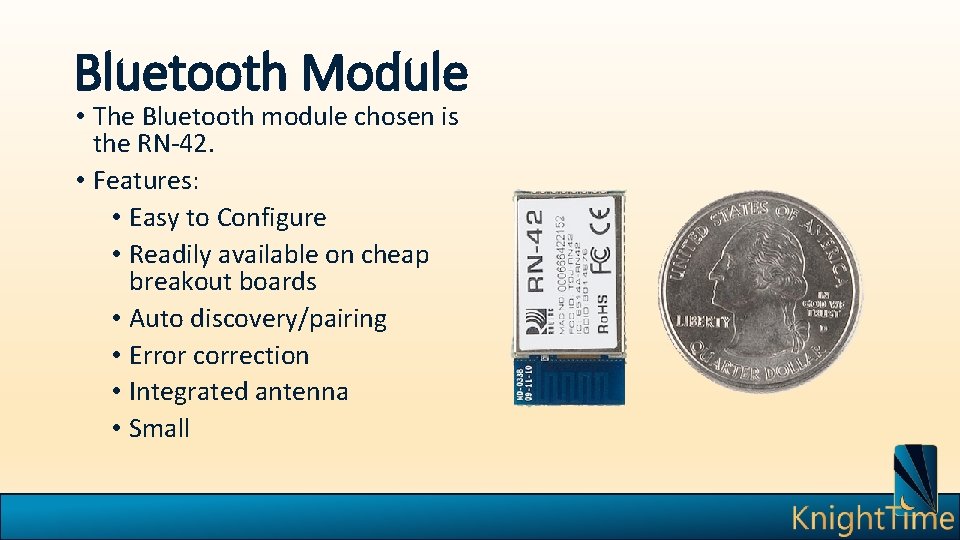
Bluetooth Module • The Bluetooth module chosen is the RN-42. • Features: • Easy to Configure • Readily available on cheap breakout boards • Auto discovery/pairing • Error correction • Integrated antenna • Small
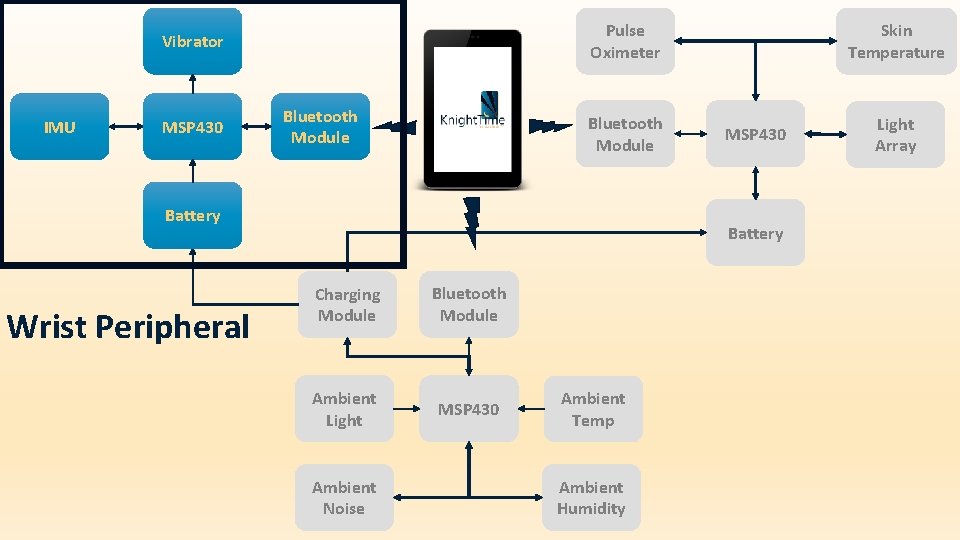
Pulse Oximeter Vibrator IMU MSP 430 Bluetooth Module Battery Wrist Peripheral Skin Temperature MSP 430 Battery Charging Module Bluetooth Module Ambient Light MSP 430 Ambient Noise Ambient Temp Ambient Humidity Light Array
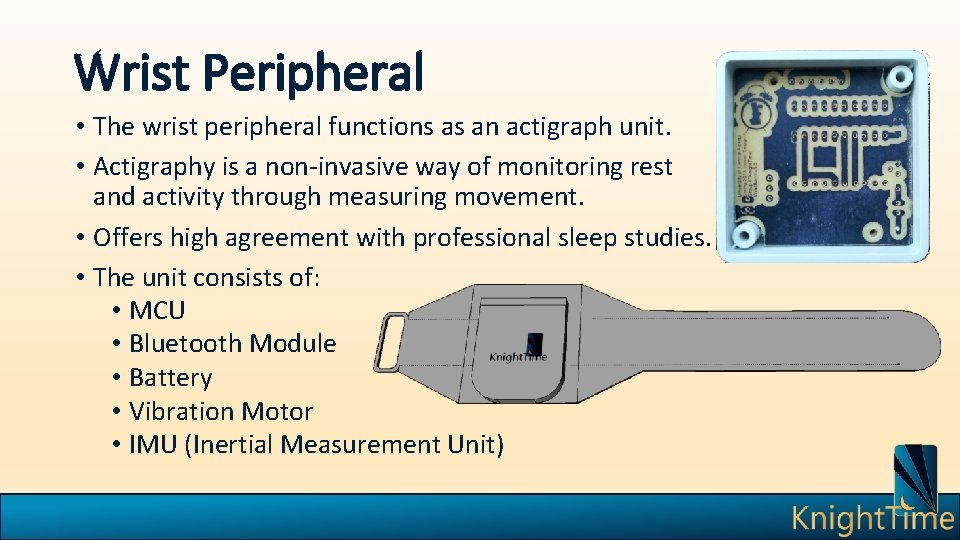
Wrist Peripheral • The wrist peripheral functions as an actigraph unit. • Actigraphy is a non-invasive way of monitoring rest and activity through measuring movement. • Offers high agreement with professional sleep studies. • The unit consists of: • MCU • Bluetooth Module • Battery • Vibration Motor • IMU (Inertial Measurement Unit)
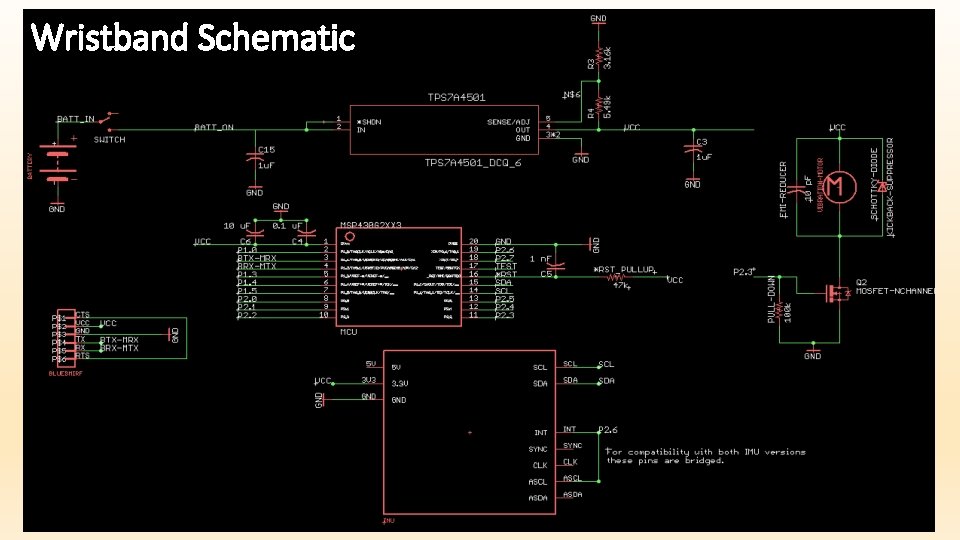
Wristband Schematic
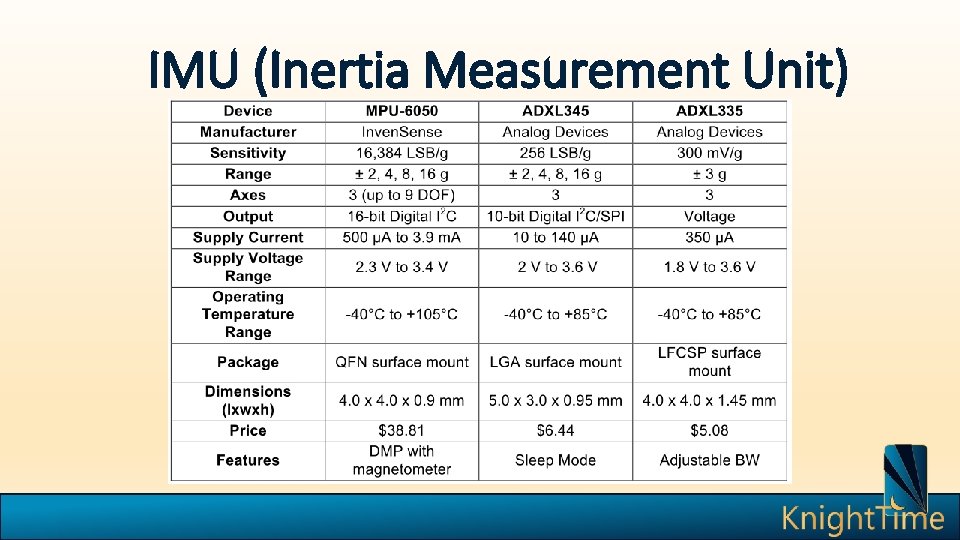
IMU (Inertia Measurement Unit)
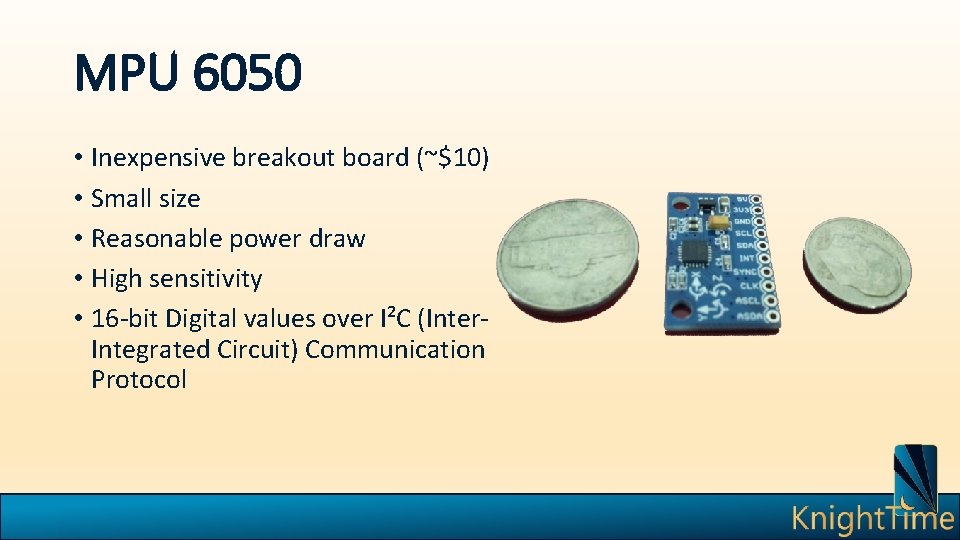
MPU 6050 • Inexpensive breakout board (~$10) • Small size • Reasonable power draw • High sensitivity • 16 -bit Digital values over I²C (Inter. Integrated Circuit) Communication Protocol
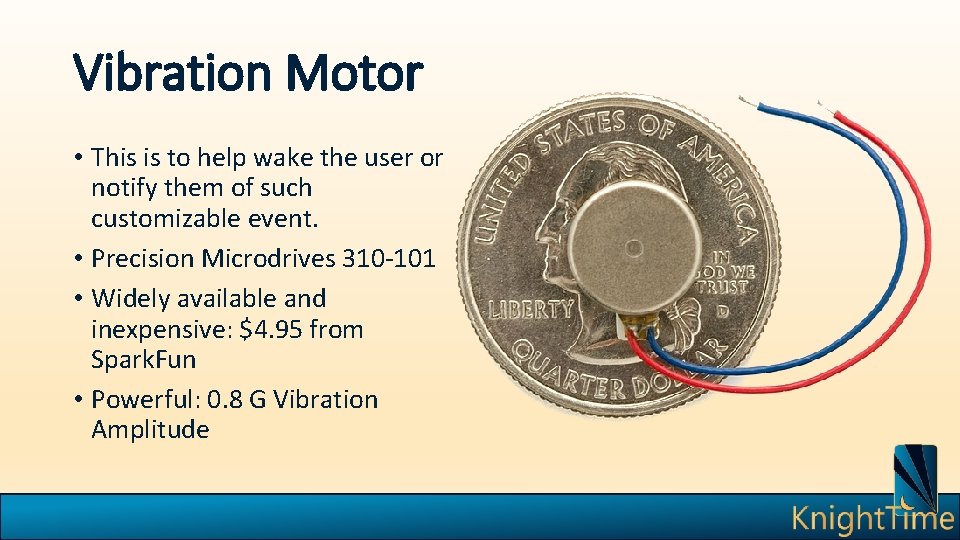
Vibration Motor • This is to help wake the user or notify them of such customizable event. • Precision Microdrives 310 -101 • Widely available and inexpensive: $4. 95 from Spark. Fun • Powerful: 0. 8 G Vibration Amplitude
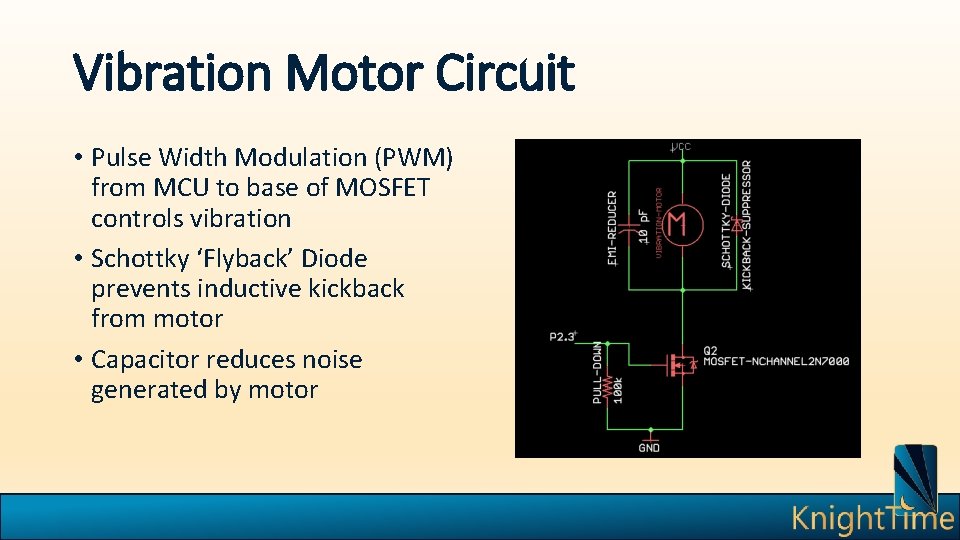
Vibration Motor Circuit • Pulse Width Modulation (PWM) from MCU to base of MOSFET controls vibration • Schottky ‘Flyback’ Diode prevents inductive kickback from motor • Capacitor reduces noise generated by motor
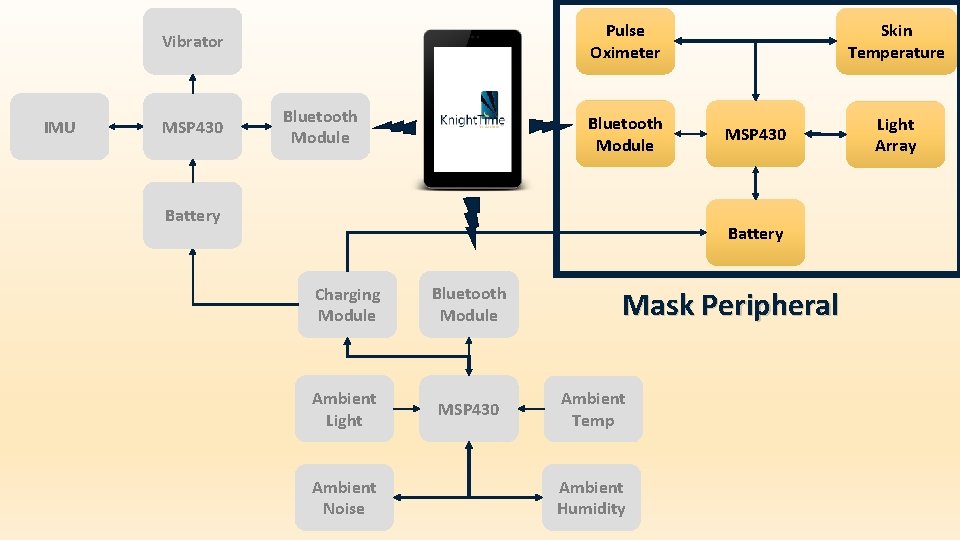
Pulse Oximeter Vibrator IMU MSP 430 Bluetooth Module Battery Skin Temperature MSP 430 Battery Charging Module Bluetooth Module Ambient Light MSP 430 Ambient Noise Mask Peripheral Ambient Temp Ambient Humidity Light Array
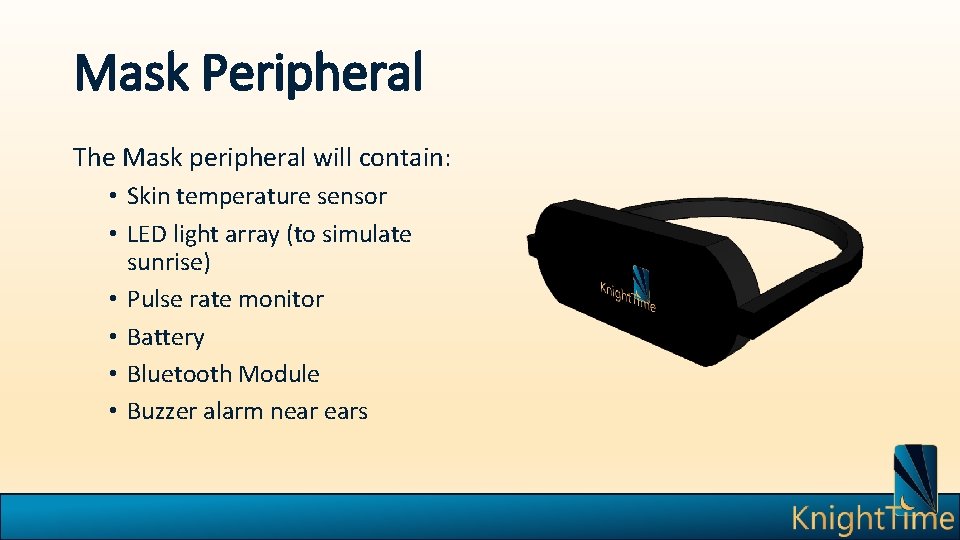
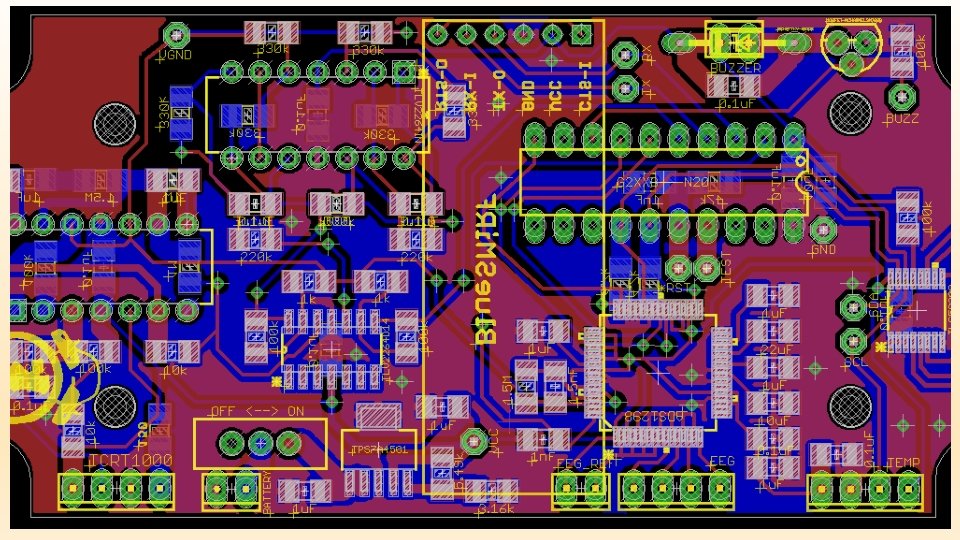
Mask Peripheral The Mask peripheral will contain: • Skin temperature sensor • LED light array (to simulate sunrise) • Pulse rate monitor • Battery • Bluetooth Module • Buzzer alarm near ears
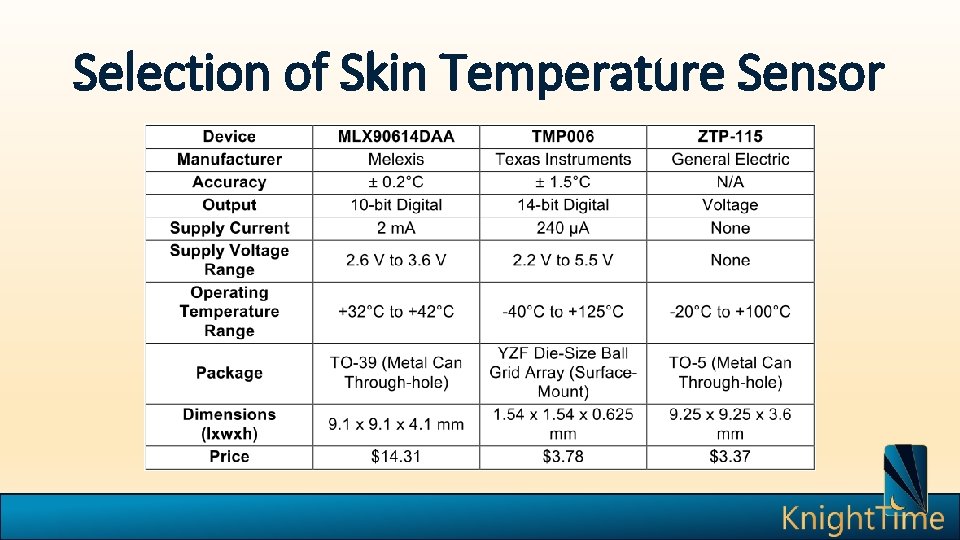
Selection of Skin Temperature Sensor
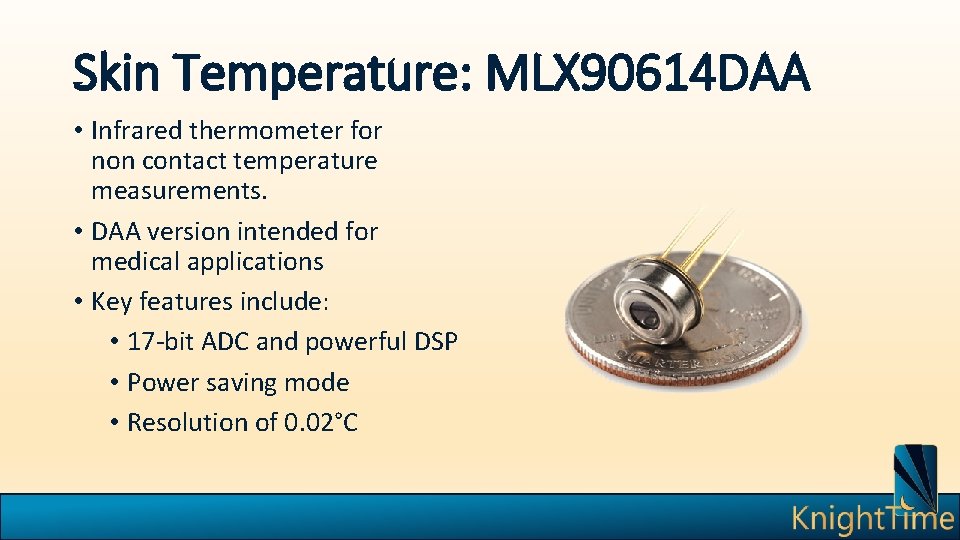
Skin Temperature: MLX 90614 DAA • Infrared thermometer for non contact temperature measurements. • DAA version intended for medical applications • Key features include: • 17 -bit ADC and powerful DSP • Power saving mode • Resolution of 0. 02°C
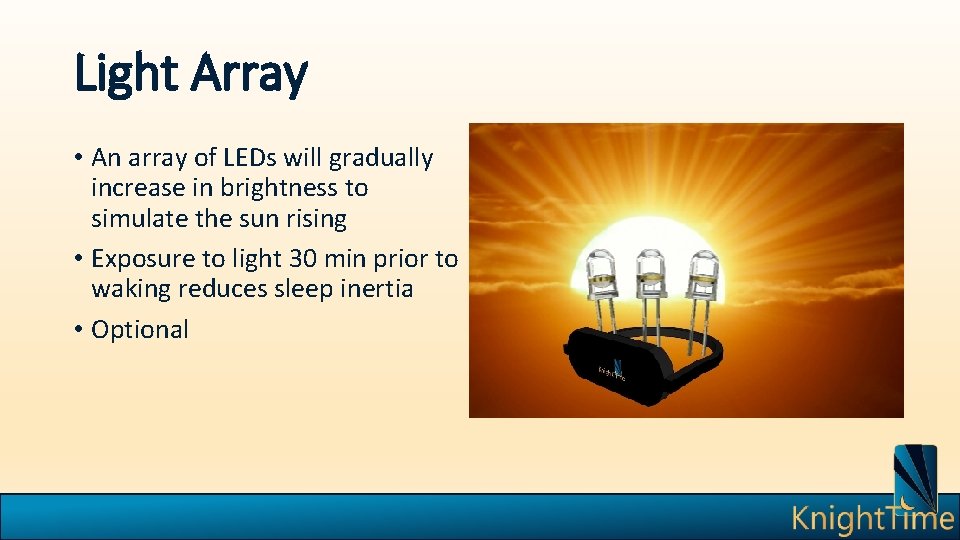
Light Array • An array of LEDs will gradually increase in brightness to simulate the sun rising • Exposure to light 30 min prior to waking reduces sleep inertia • Optional
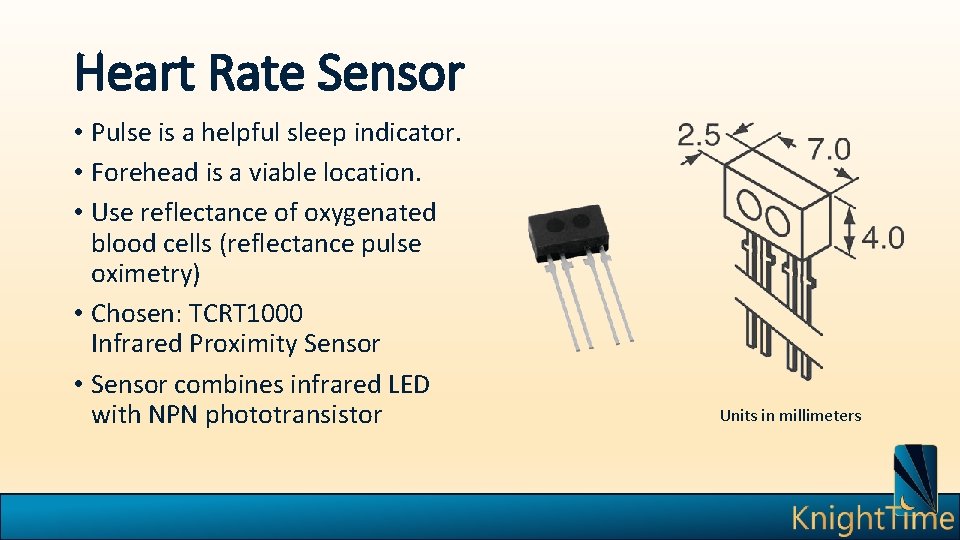
Heart Rate Sensor • Pulse is a helpful sleep indicator. • Forehead is a viable location. • Use reflectance of oxygenated blood cells (reflectance pulse oximetry) • Chosen: TCRT 1000 Infrared Proximity Sensor • Sensor combines infrared LED with NPN phototransistor Units in millimeters
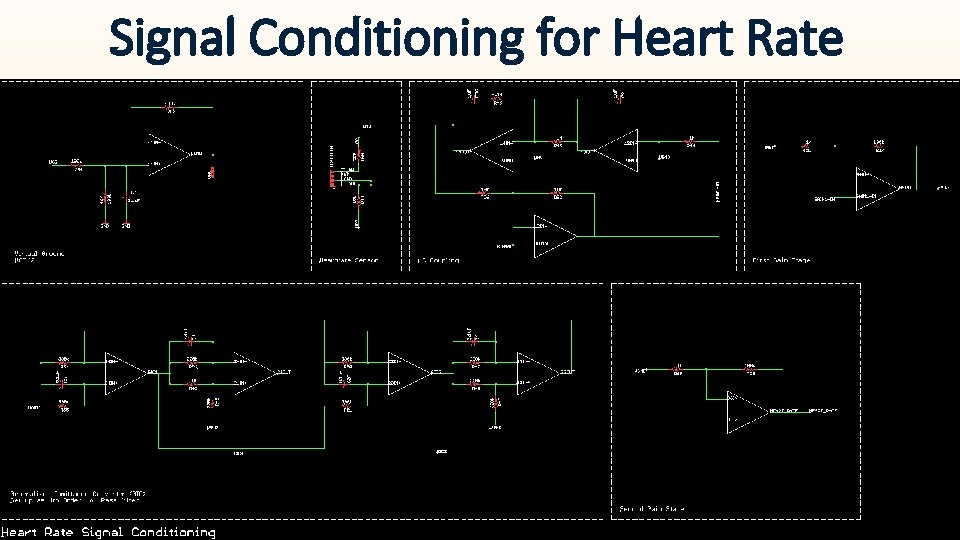
Signal Conditioning for Heart Rate
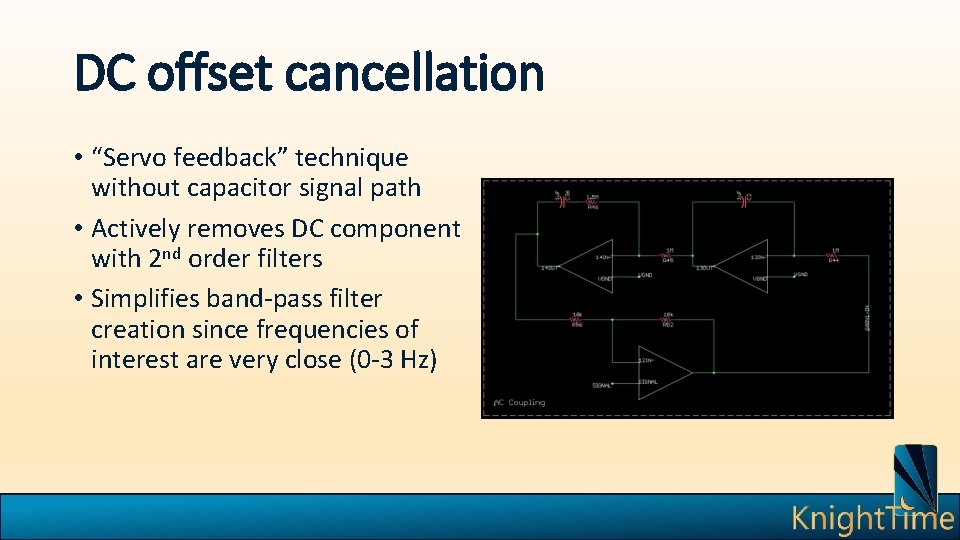
DC offset cancellation • “Servo feedback” technique without capacitor signal path • Actively removes DC component with 2 nd order filters • Simplifies band-pass filter creation since frequencies of interest are very close (0 -3 Hz)
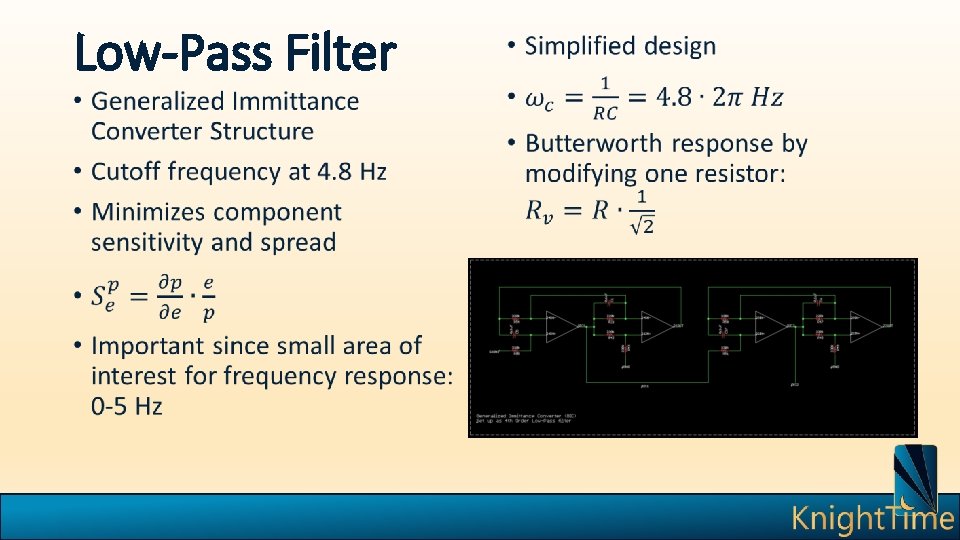
Low-Pass Filter •
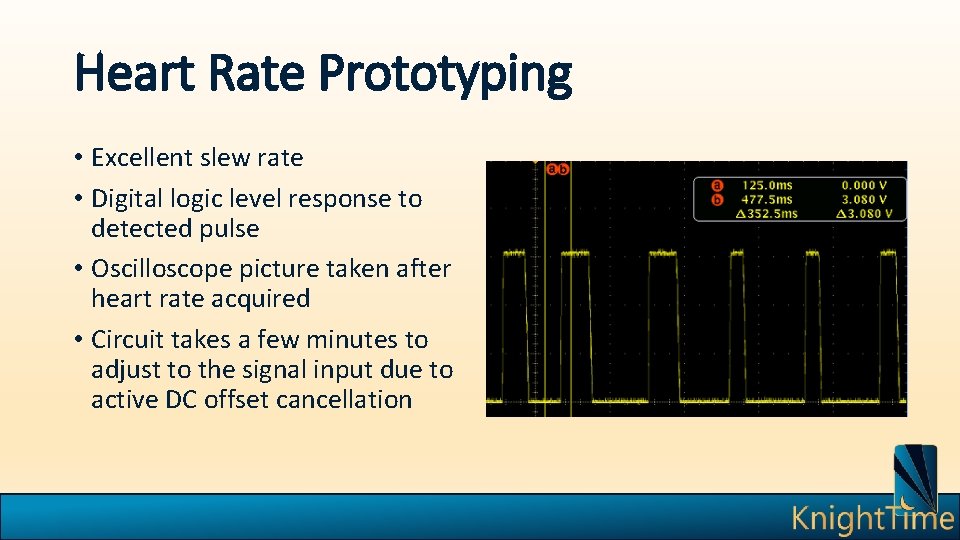
Heart Rate Prototyping • Excellent slew rate • Digital logic level response to detected pulse • Oscilloscope picture taken after heart rate acquired • Circuit takes a few minutes to adjust to the signal input due to active DC offset cancellation
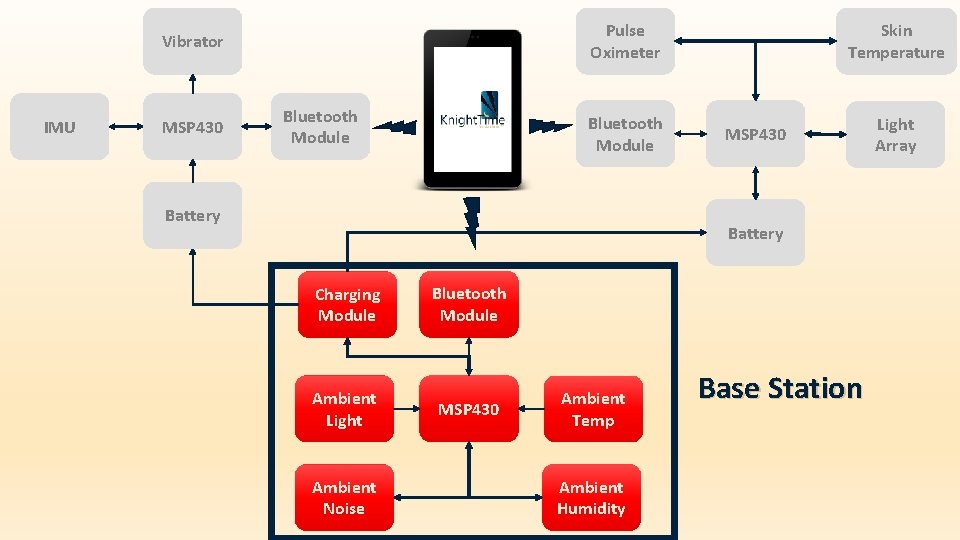
Pulse Oximeter Vibrator IMU MSP 430 Bluetooth Module Battery Skin Temperature MSP 430 Battery Charging Module Ambient Light Ambient Noise Bluetooth Module MSP 430 Ambient Temp Ambient Humidity Base Station Light Array
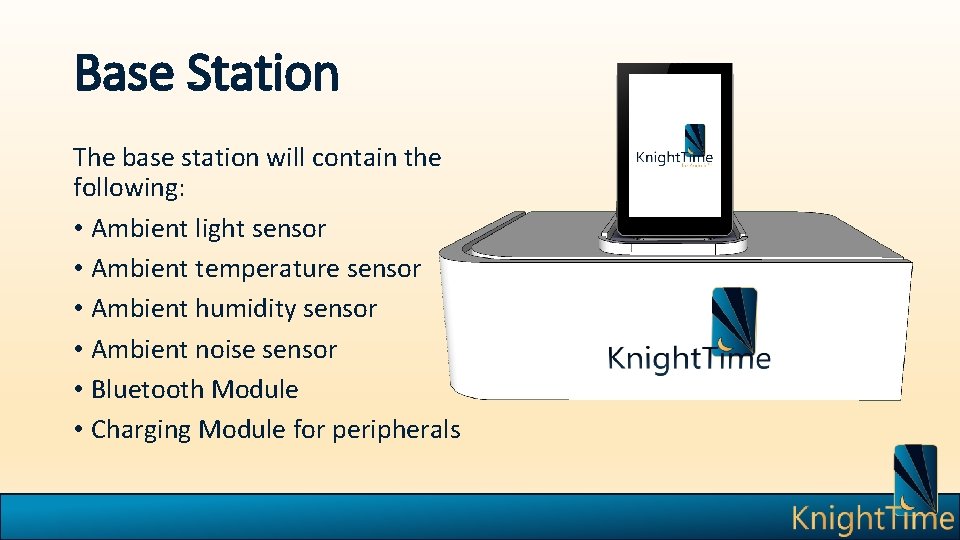
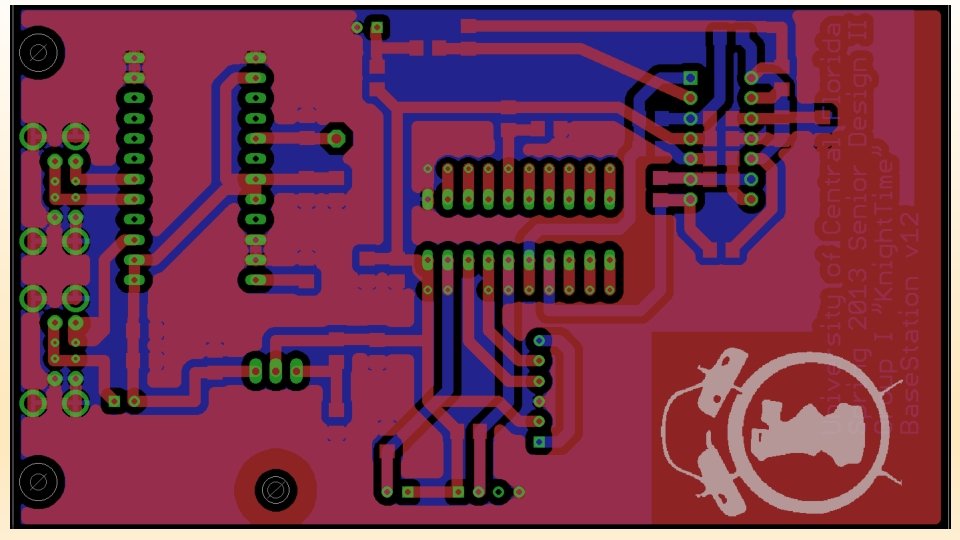
Base Station The base station will contain the following: • Ambient light sensor • Ambient temperature sensor • Ambient humidity sensor • Ambient noise sensor • Bluetooth Module • Charging Module for peripherals
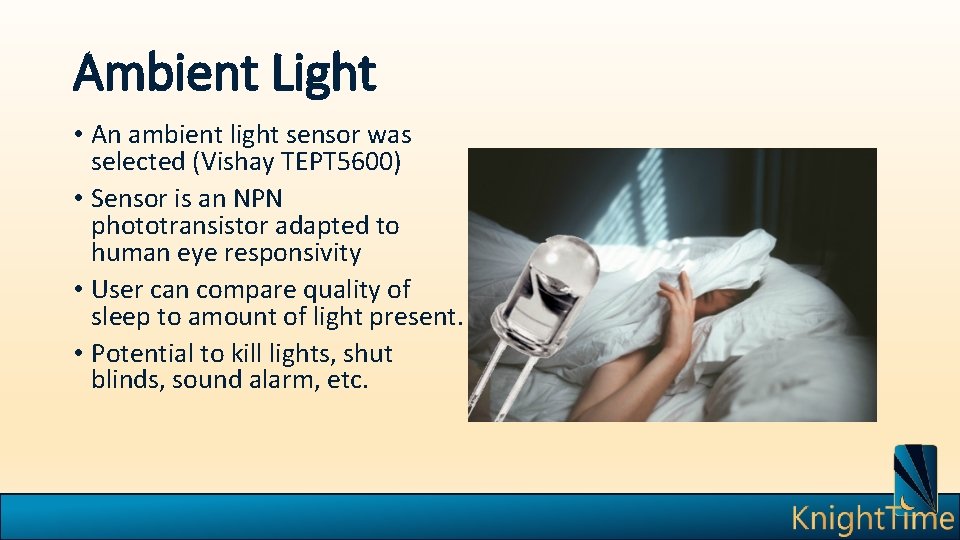
Ambient Light • An ambient light sensor was selected (Vishay TEPT 5600) • Sensor is an NPN phototransistor adapted to human eye responsivity • User can compare quality of sleep to amount of light present. • Potential to kill lights, shut blinds, sound alarm, etc.
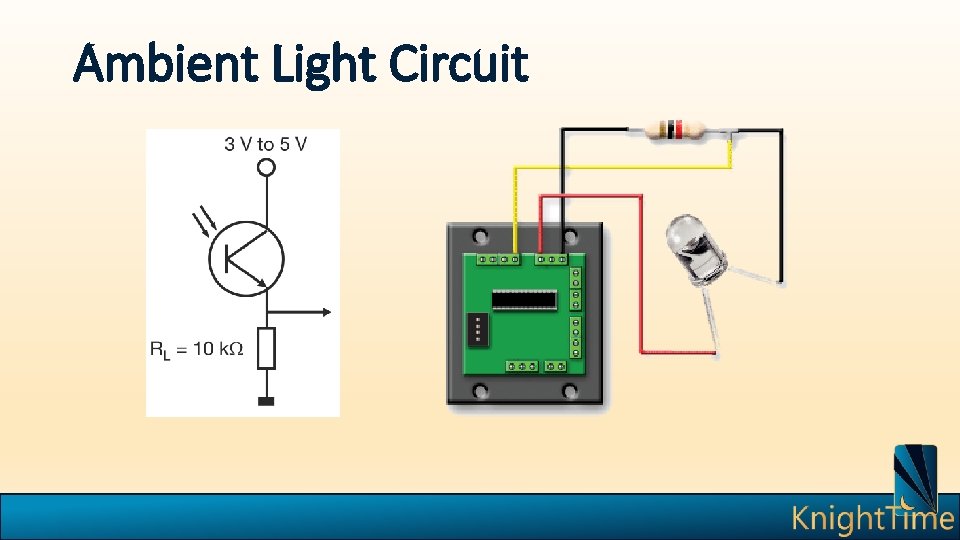
Ambient Light Circuit
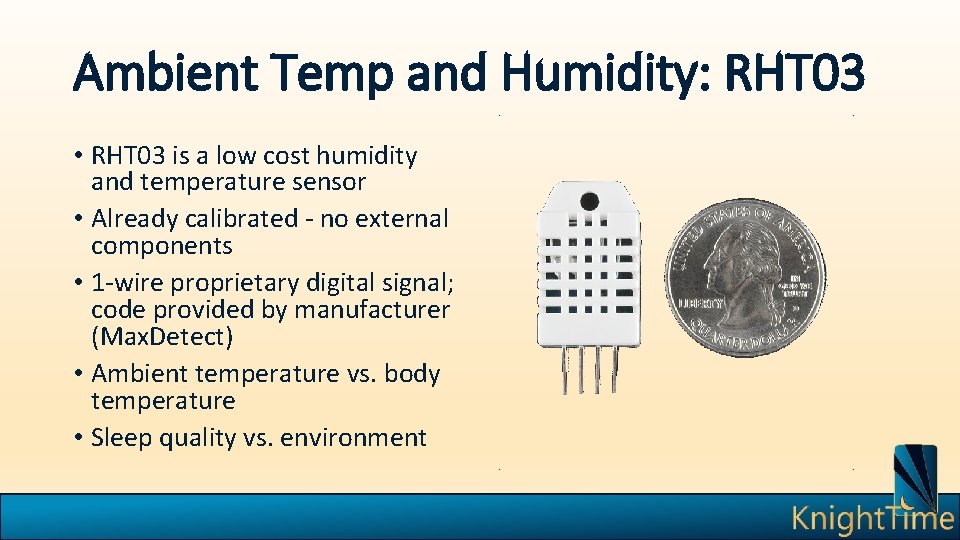
Ambient Temp and Humidity: RHT 03 • RHT 03 is a low cost humidity and temperature sensor • Already calibrated - no external components • 1 -wire proprietary digital signal; code provided by manufacturer (Max. Detect) • Ambient temperature vs. body temperature • Sleep quality vs. environment
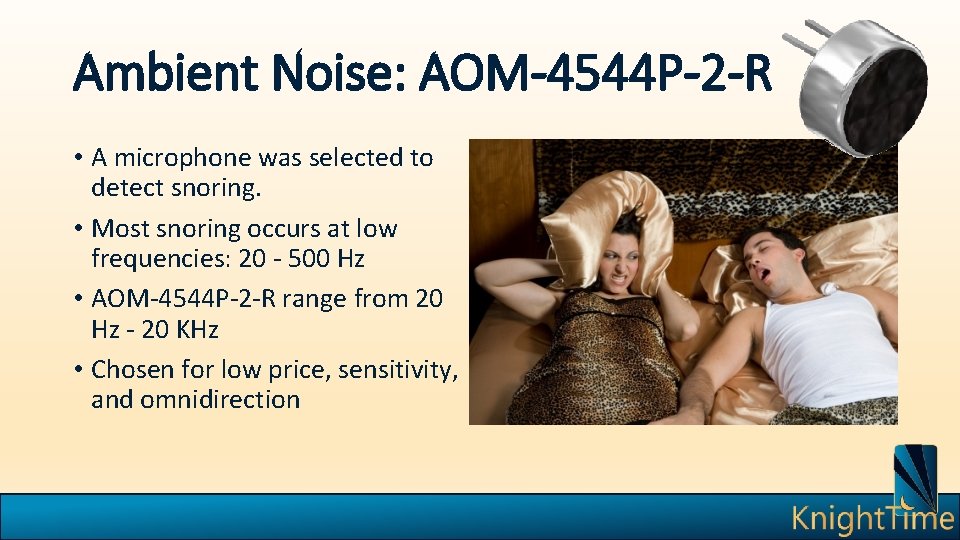
Ambient Noise: AOM-4544 P-2 -R • A microphone was selected to detect snoring. • Most snoring occurs at low frequencies: 20 - 500 Hz • AOM-4544 P-2 -R range from 20 Hz - 20 KHz • Chosen for low price, sensitivity, and omnidirection
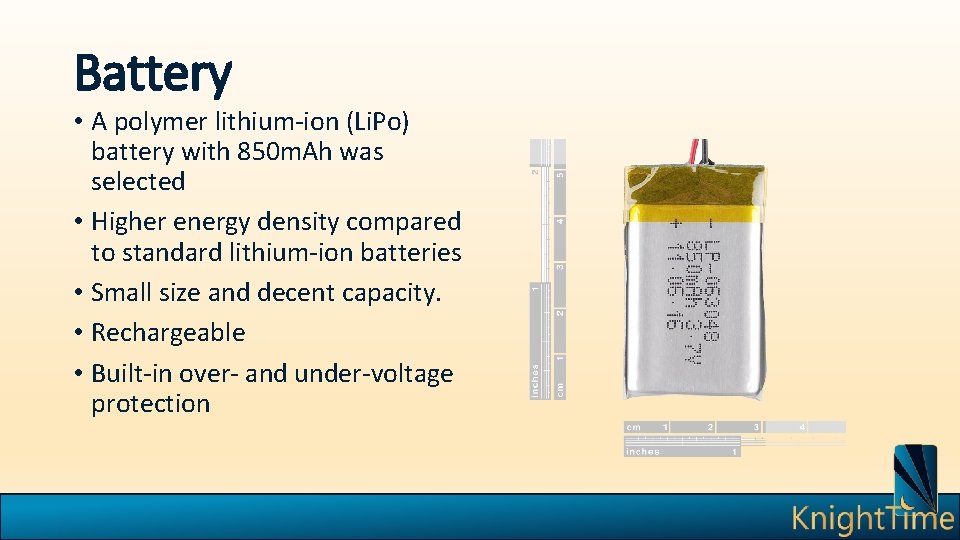
Battery • A polymer lithium-ion (Li. Po) battery with 850 m. Ah was selected • Higher energy density compared to standard lithium-ion batteries • Small size and decent capacity. • Rechargeable • Built-in over- and under-voltage protection
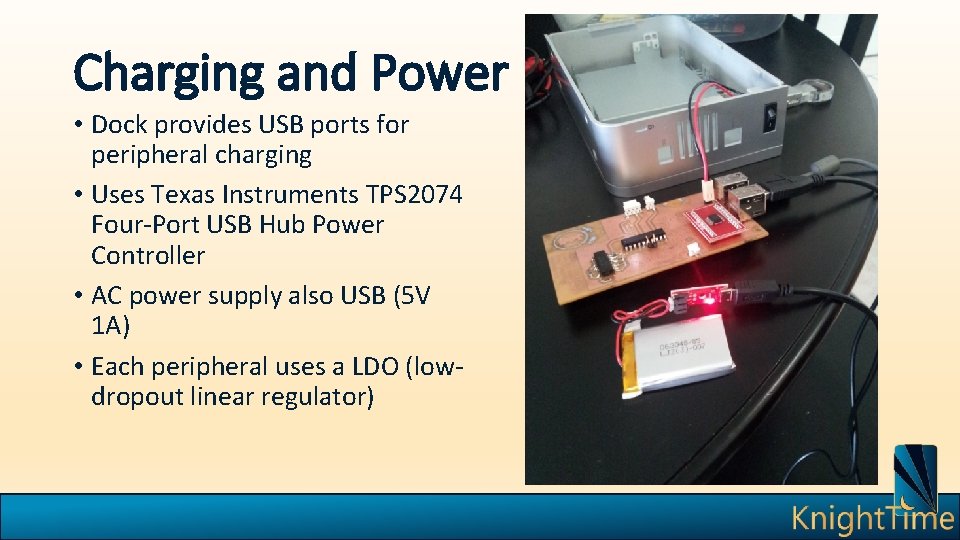
Charging and Power • Dock provides USB ports for peripheral charging • Uses Texas Instruments TPS 2074 Four-Port USB Hub Power Controller • AC power supply also USB (5 V 1 A) • Each peripheral uses a LDO (lowdropout linear regulator)
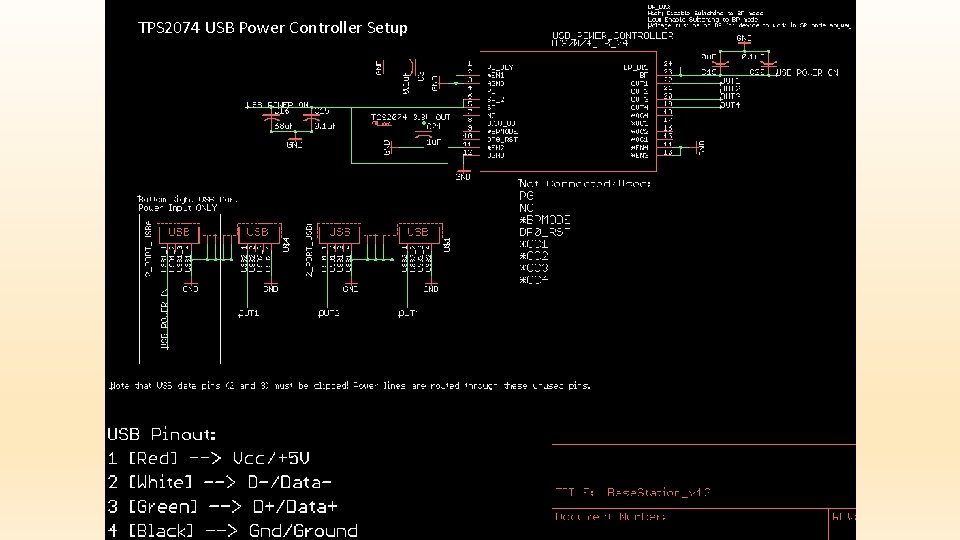
TPS 2074 USB Power Controller Setup
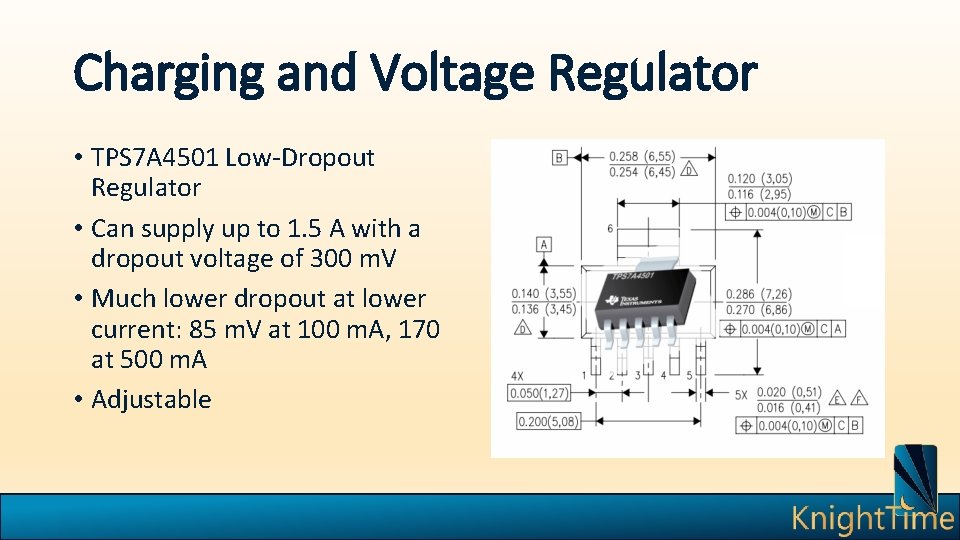
Charging and Voltage Regulator • TPS 7 A 4501 Low-Dropout Regulator • Can supply up to 1. 5 A with a dropout voltage of 300 m. V • Much lower dropout at lower current: 85 m. V at 100 m. A, 170 at 500 m. A • Adjustable
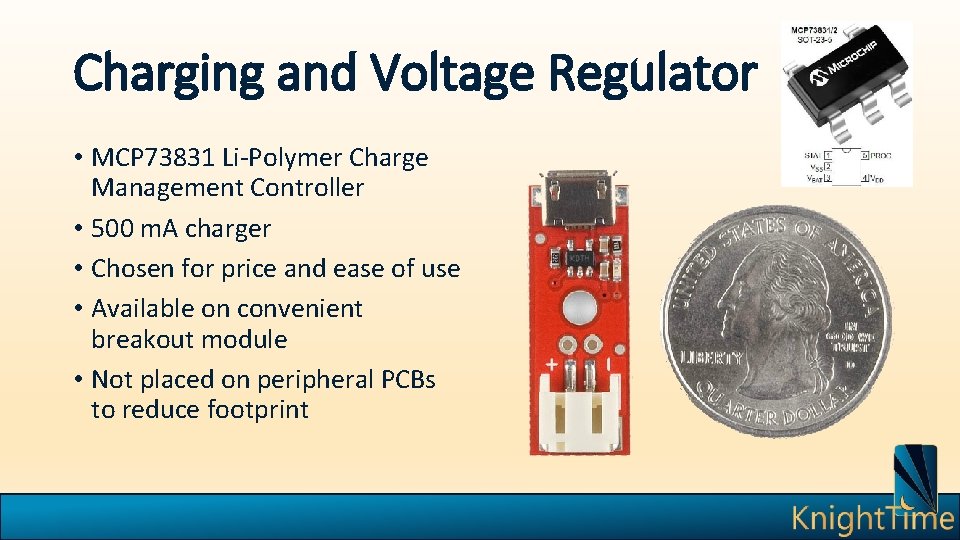
Charging and Voltage Regulator • MCP 73831 Li-Polymer Charge Management Controller • 500 m. A charger • Chosen for price and ease of use • Available on convenient breakout module • Not placed on peripheral PCBs to reduce footprint
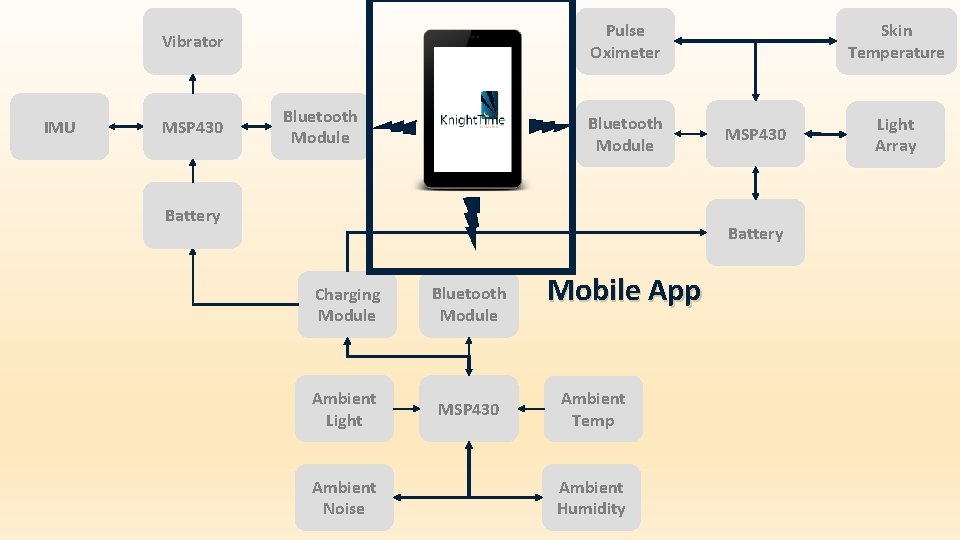
Pulse Oximeter Vibrator IMU MSP 430 Bluetooth Module Battery Skin Temperature MSP 430 Battery Charging Module Bluetooth Module Ambient Light MSP 430 Ambient Noise Mobile App Ambient Temp Ambient Humidity Light Array
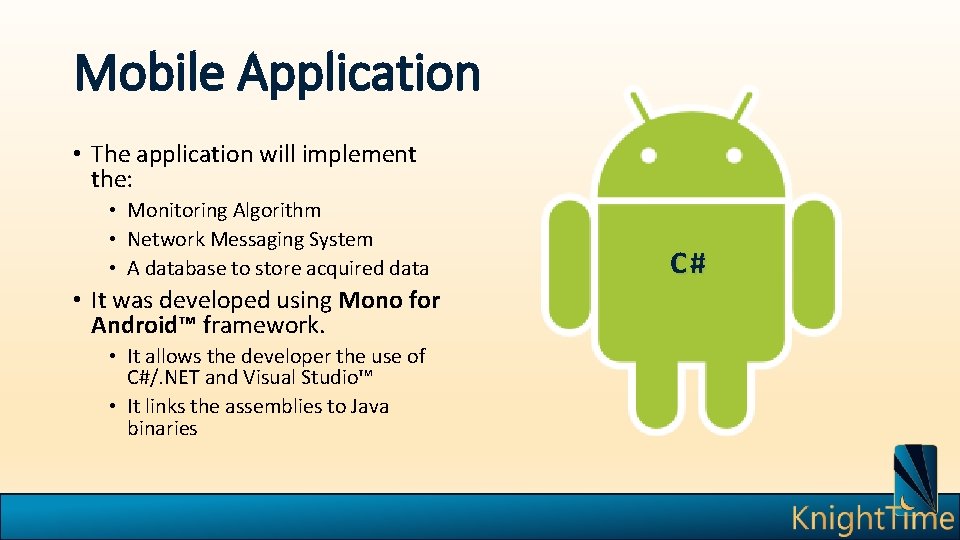
Mobile Application • The application will implement the: • Monitoring Algorithm • Network Messaging System • A database to store acquired data • It was developed using Mono for Android™ framework. • It allows the developer the use of C#/. NET and Visual Studio™ • It links the assemblies to Java binaries C#
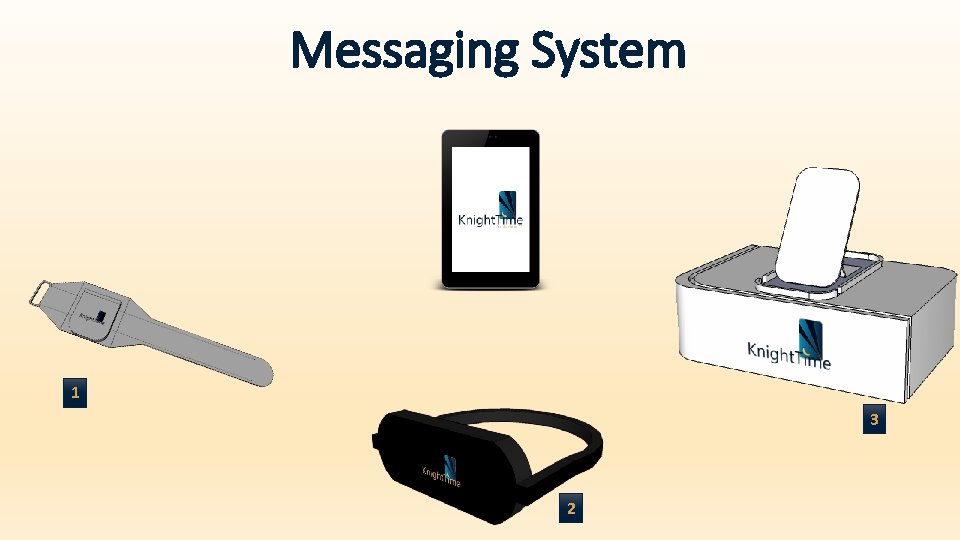
Messaging System 1 3 2
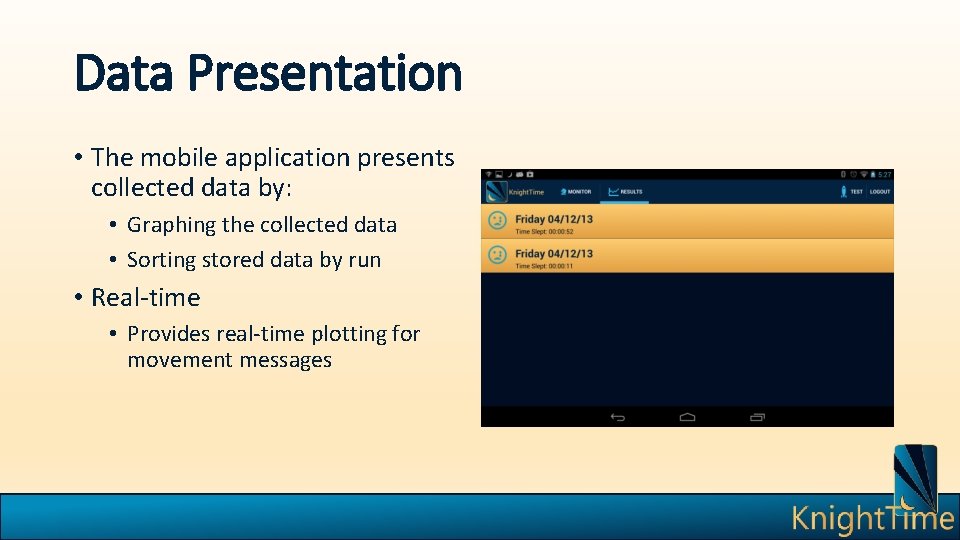
Data Presentation • The mobile application presents collected data by: • Graphing the collected data • Sorting stored data by run • Real-time • Provides real-time plotting for movement messages

Administrative Content
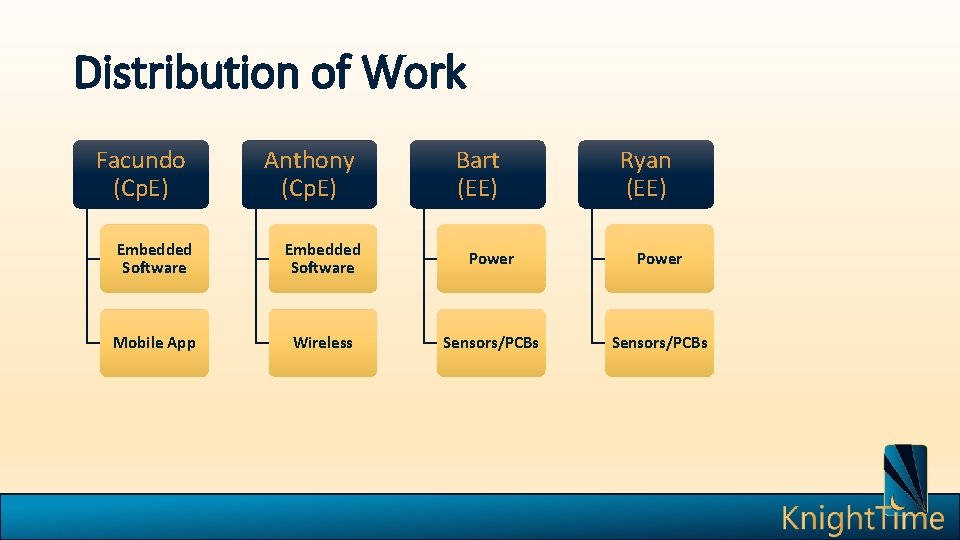
Distribution of Work Facundo (Cp. E) Anthony (Cp. E) Bart (EE) Ryan (EE) Embedded Software Power Mobile App Wireless Sensors/PCBs
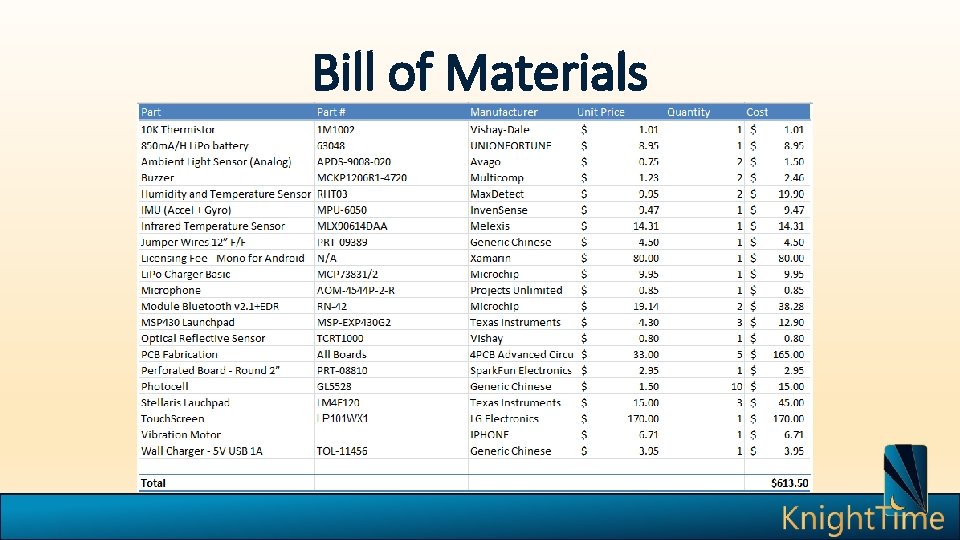
Bill of Materials

Questions?
- Slides: 56