
Teaching your child to read Workshop for Parents



- Slides: 33
Teaching your child to read Workshop for Parents
• To teach your child to read we will be use letters and sounds alongside story making. • It is important that you know what we are going to be teaching them to enable you to support them at home.
The spoken language • From a very early age, children develop an awareness of the different sounds in our spoken language(s). • They learn how to use their voices: – to make contact with you – to let you know what they need – to show they are feeling • As parents and carers, you best understand your child’s communications; you are key in helping them to develop their speaking and listening skills.
How can you help? • Provide your child with lots of different opportunities to speak and listen with others: • • – Preparing meals – Tidying up – Putting shopping away – Getting ready to go out Switch off the TV, radio, tablets and mobile phones Show you are interested in their conversation Read stories Use puppets and toys
The importance of speech sounds • As children grow older, they will begin to understand the different sounds in languages, and join in with stories, songs, rhymes by clapping, stamping and skipping. • This is an important stage, as the ears are beginning to tune into the important sounds they can hear, and discriminate. • Over time, your child will begin to distinguish between different speech sounds (phonemes), and they will match sounds to letters (graphemes). This is called phonic knowledge.
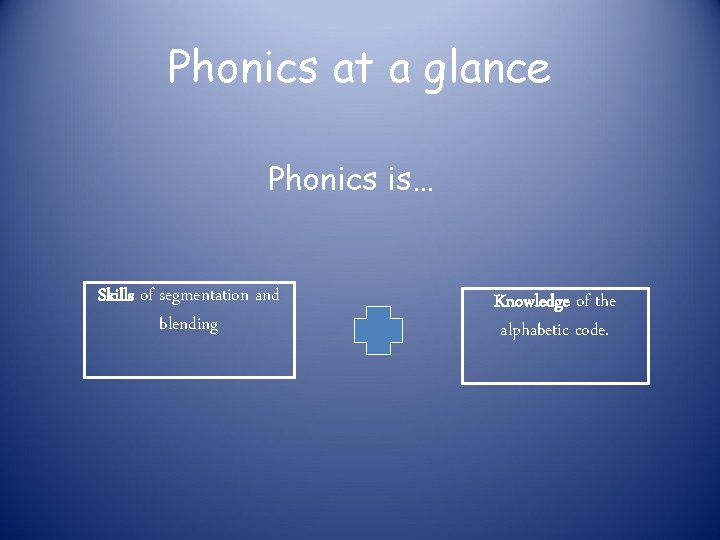
Phonics at a glance Phonics is… Skills of segmentation and blending Knowledge of the alphabetic code.
ØThe English language has 44 phonemes ØThey should be taught to write each letter, forming it accurately. ØChildren are taught to produce the sounds as shortly as possible, e. g no ‘uh’ on the end of ‘d’ and ‘g’. Øhttp: //mrthorne. com/
Phonics Consists of: • Identifying sounds in spoken words • Recognising the common spellings of each phoneme. • Blending phonemes into words for reading. • Segmenting words into phonemes for spelling. • Phoneme manipulation
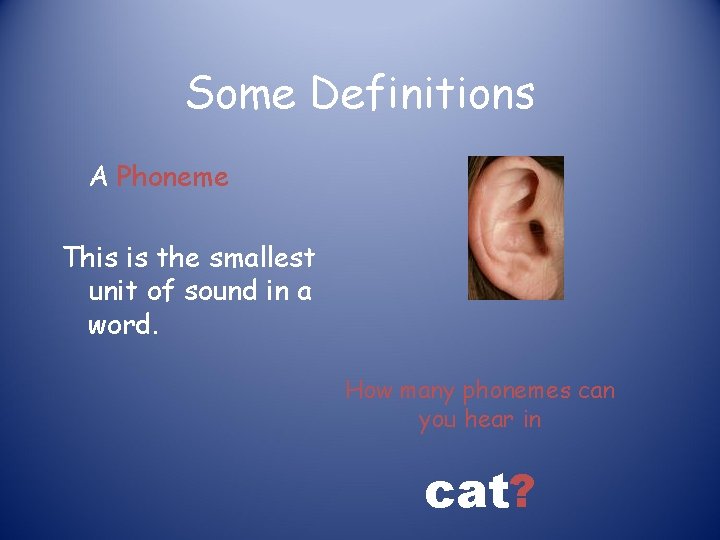
Some Definitions A Phoneme This is the smallest unit of sound in a word. How many phonemes can you hear in cat?
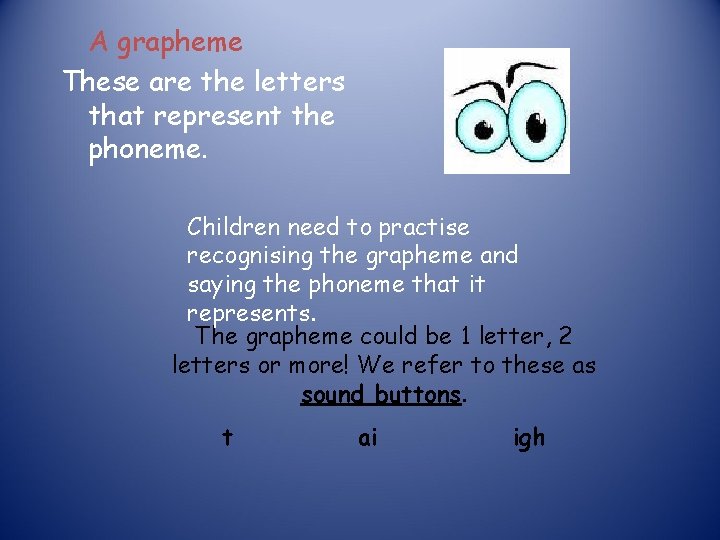
A grapheme These are the letters that represent the phoneme. Children need to practise recognising the grapheme and saying the phoneme that it represents. The grapheme could be 1 letter, 2 letters or more! We refer to these as sound buttons. t ai igh
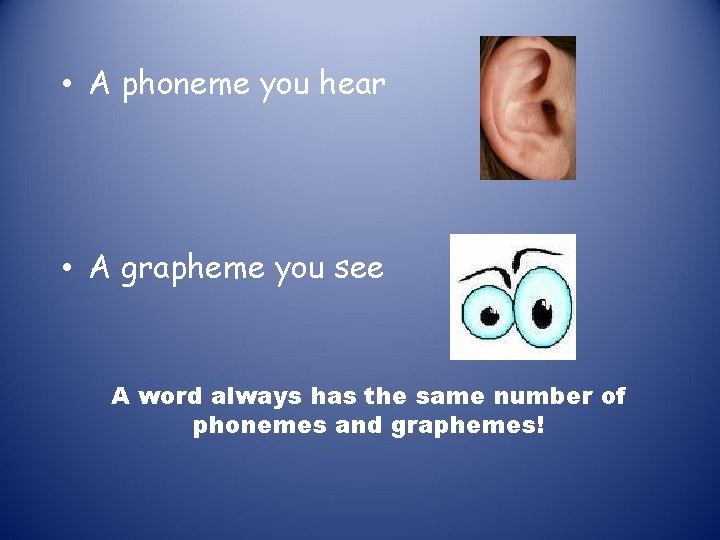
• A phoneme you hear • A grapheme you see A word always has the same number of phonemes and graphemes!
Jolly Phonics Ø Each sound is supported by a story, a song and an action. Ø https: //www. youtube. com/watch? v=ybi. JTZNLv. TI Ø https: //www. youtube. com/watch? v=yj. Kq 8 s 8154 s
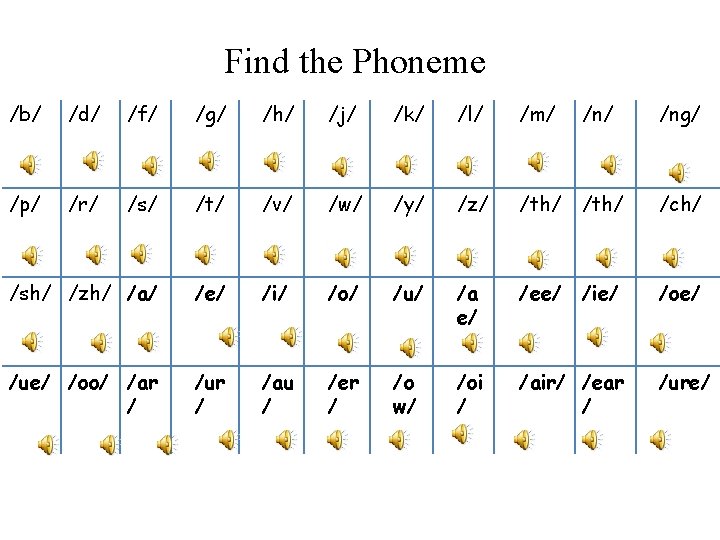
Find the Phoneme /b/ /d/ /f/ /g/ /h/ /j/ /k/ /l/ /m/ /ng/ /p/ /r/ /s/ /t/ /v/ /w/ /y/ /z/ /th/ /ch/ /sh/ /zh/ /a/ /e/ /i/ /o/ /u/ /a e/ /ee/ /ie/ /oe/ /ue/ /oo/ /ar / /ur / /au / /er / /o w/ /oi / /air/ /ear / /ure/
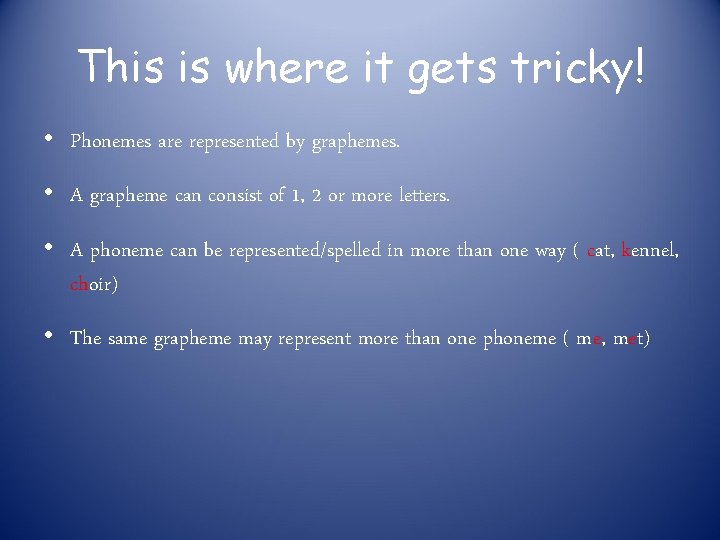
This is where it gets tricky! • Phonemes are represented by graphemes. • A grapheme can consist of 1, 2 or more letters. • A phoneme can be represented/spelled in more than one way ( cat, kennel, choir) • The same grapheme may represent more than one phoneme ( me, met)
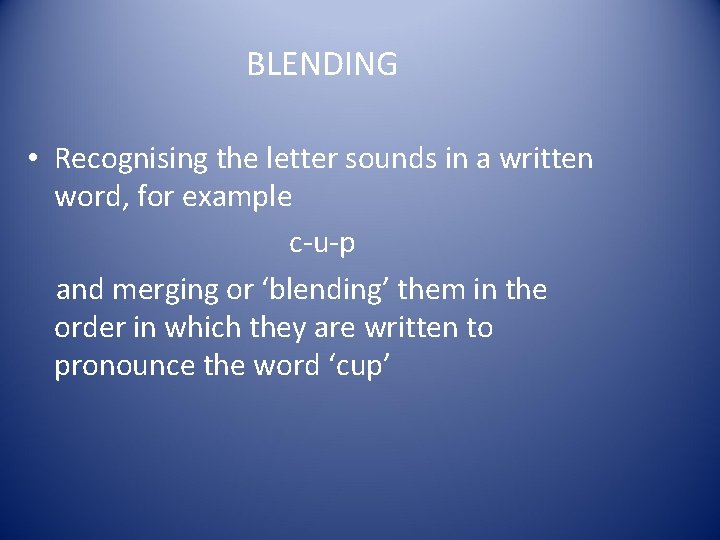
BLENDING • Recognising the letter sounds in a written word, for example c-u-p and merging or ‘blending’ them in the order in which they are written to pronounce the word ‘cup’
Alien Blending • To prepare your child for their reading test in Year 1 the children will also learn to read alien words. Alien word game! http: //www. phonicsplay. co. uk/Picnic. O n. Pluto. html
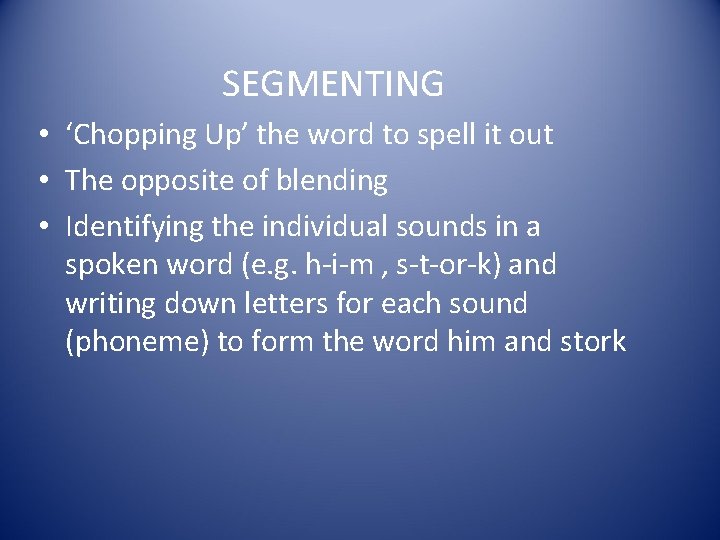
SEGMENTING • ‘Chopping Up’ the word to spell it out • The opposite of blending • Identifying the individual sounds in a spoken word (e. g. h-i-m , s-t-or-k) and writing down letters for each sound (phoneme) to form the word him and stork
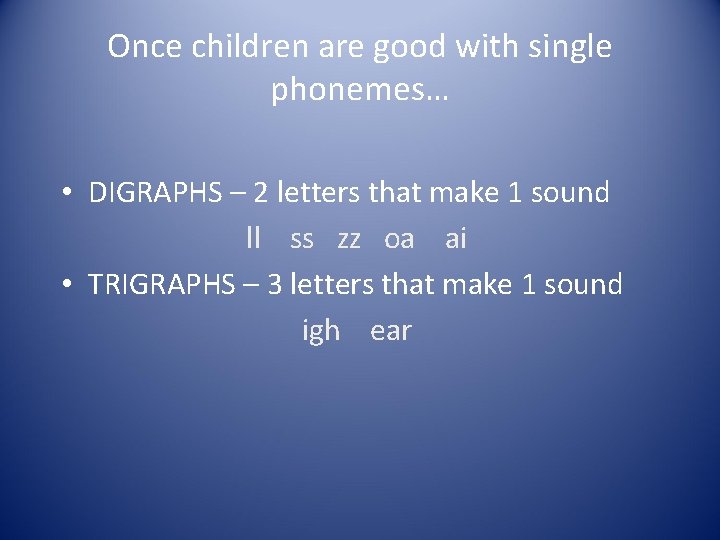
Once children are good with single phonemes… • DIGRAPHS – 2 letters that make 1 sound ll ss zz oa ai • TRIGRAPHS – 3 letters that make 1 sound igh ear
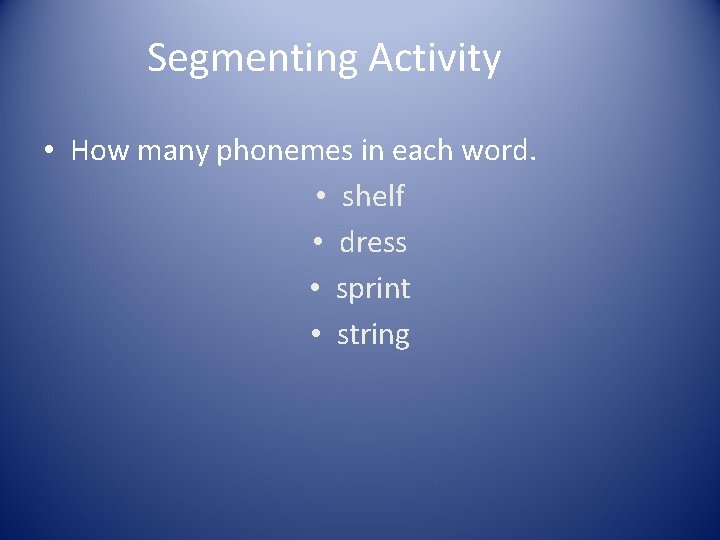
Segmenting Activity • How many phonemes in each word. • shelf • dress • sprint • string
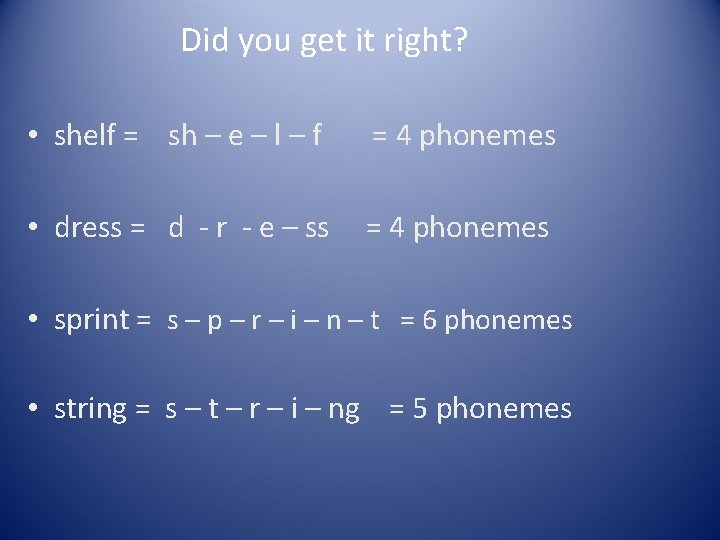
Did you get it right? • shelf = sh – e – l – f = 4 phonemes • dress = d - r - e – ss = 4 phonemes • sprint = s – p – r – i – n – t = 6 phonemes • string = s – t – r – i – ng = 5 phonemes
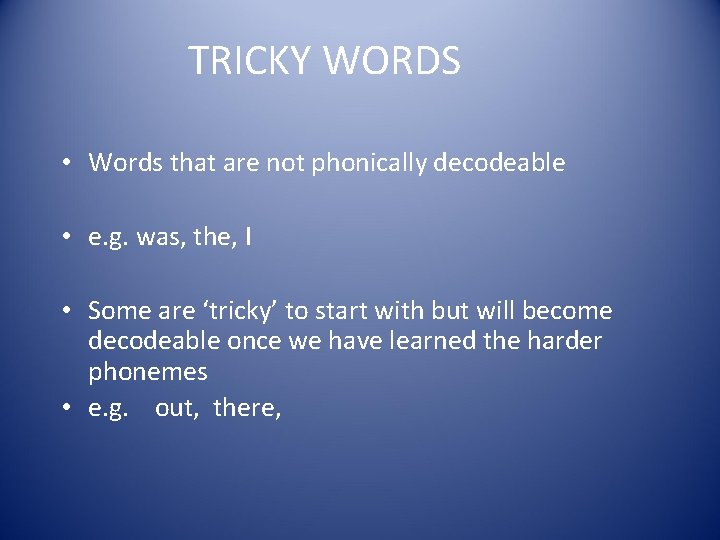
TRICKY WORDS • Words that are not phonically decodeable • e. g. was, the, I • Some are ‘tricky’ to start with but will become decodeable once we have learned the harder phonemes • e. g. out, there,
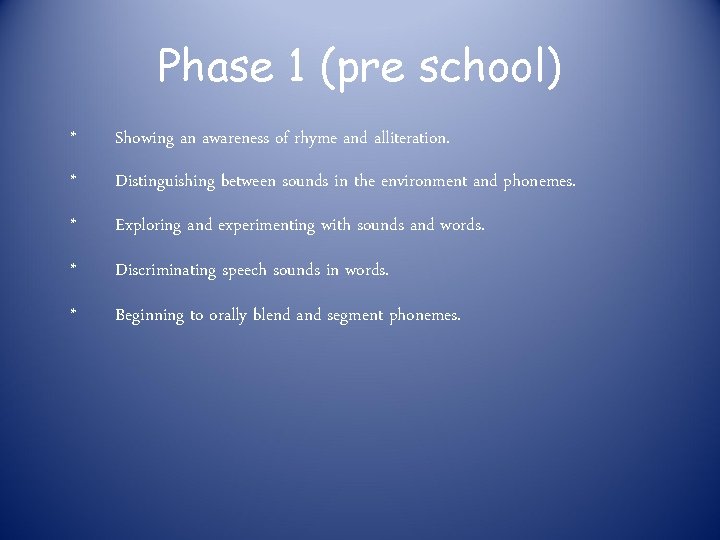
Phase 1 (pre school) * Showing an awareness of rhyme and alliteration. * Distinguishing between sounds in the environment and phonemes. * Exploring and experimenting with sounds and words. * Discriminating speech sounds in words. * Beginning to orally blend and segment phonemes.
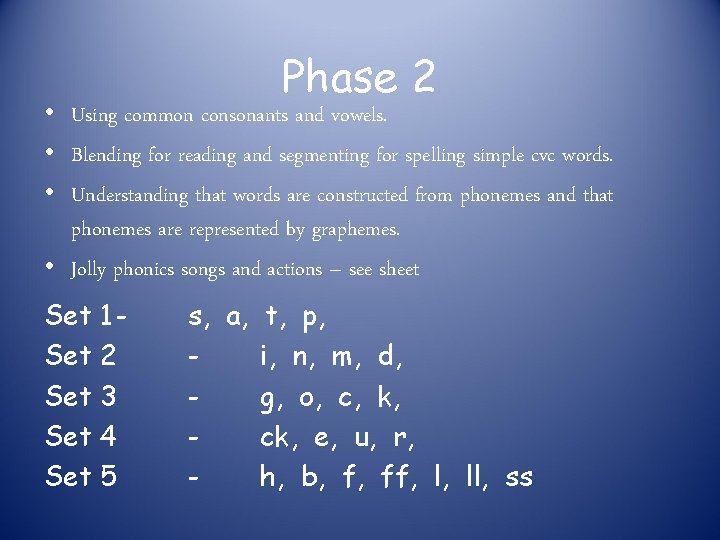
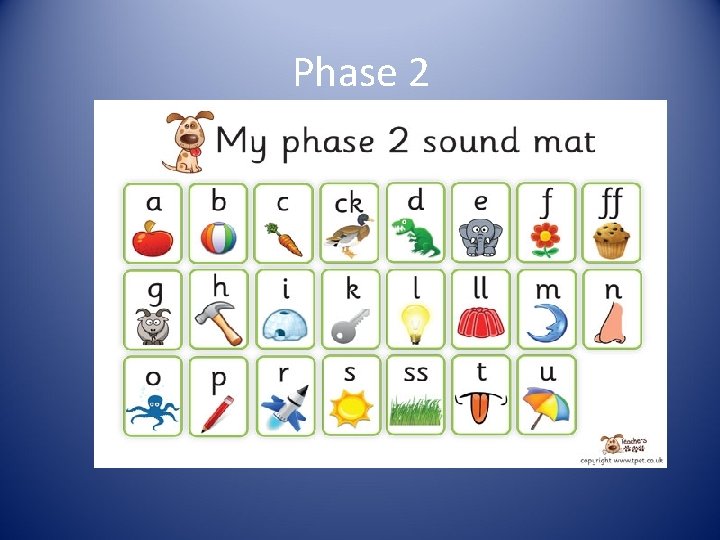
Phase 2 • Using common consonants and vowels. • Blending for reading and segmenting for spelling simple cvc words. • Understanding that words are constructed from phonemes and that phonemes are represented by graphemes. • Jolly phonics songs and actions – see sheet Set 1 Set 2 Set 3 Set 4 Set 5 s, a, t, p, i, n, m, d, g, o, c, k, ck, e, u, r, h, b, f, ff, l, ll, ss
Phase 2
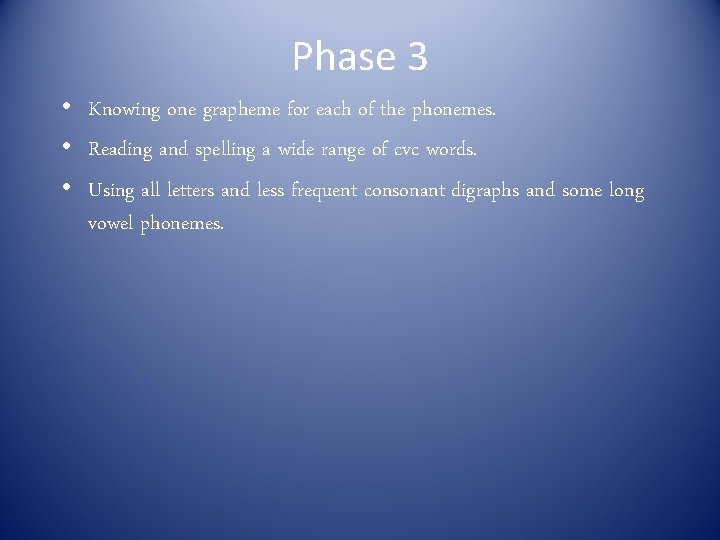
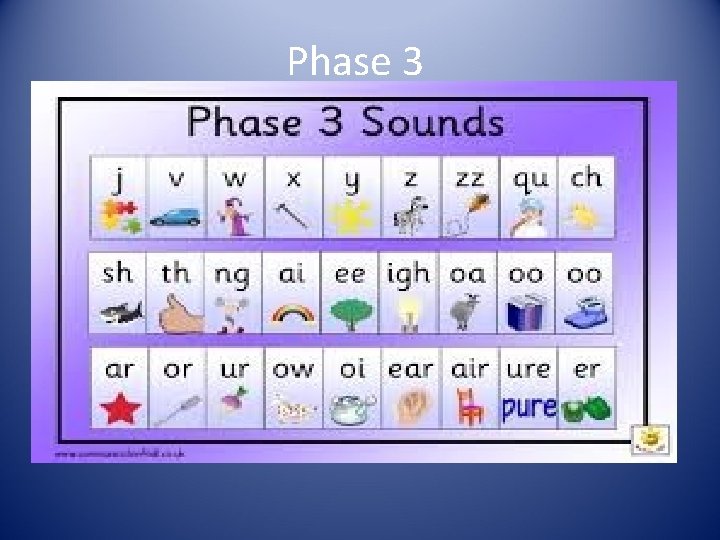
Phase 3 • Knowing one grapheme for each of the phonemes. • Reading and spelling a wide range of cvc words. • Using all letters and less frequent consonant digraphs and some long vowel phonemes.
Phase 3
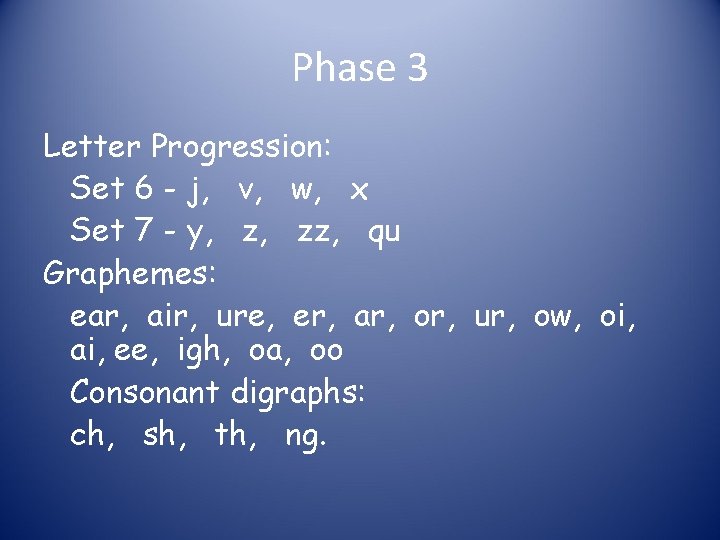
Phase 3 Letter Progression: Set 6 - j, v, w, x Set 7 - y, z, zz, qu Graphemes: ear, air, ure, er, ar, or, ur, ow, oi, ai, ee, igh, oa, oo Consonant digraphs: ch, sh, th, ng.
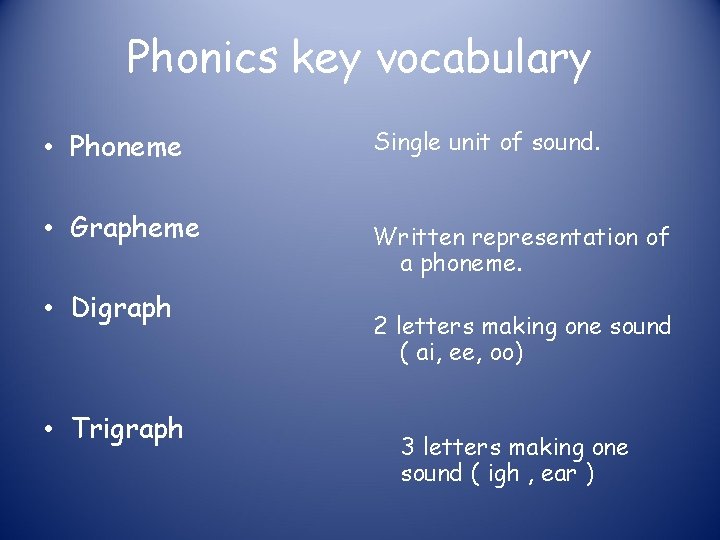
Phonics key vocabulary • Phoneme • Grapheme • Digraph • Trigraph Single unit of sound. Written representation of a phoneme. 2 letters making one sound ( ai, ee, oo) 3 letters making one sound ( igh , ear )
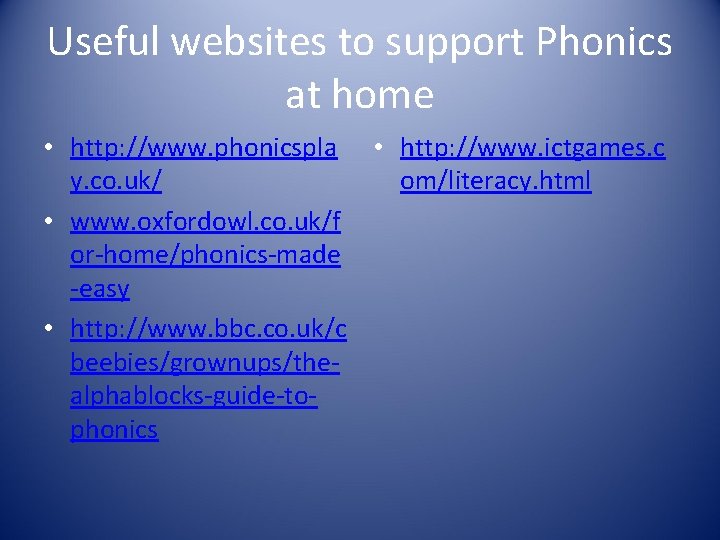
Useful websites to support Phonics at home • http: //www. phonicspla • http: //www. ictgames. c y. co. uk/ om/literacy. html • www. oxfordowl. co. uk/f or-home/phonics-made -easy • http: //www. bbc. co. uk/c beebies/grownups/thealphablocks-guide-tophonics
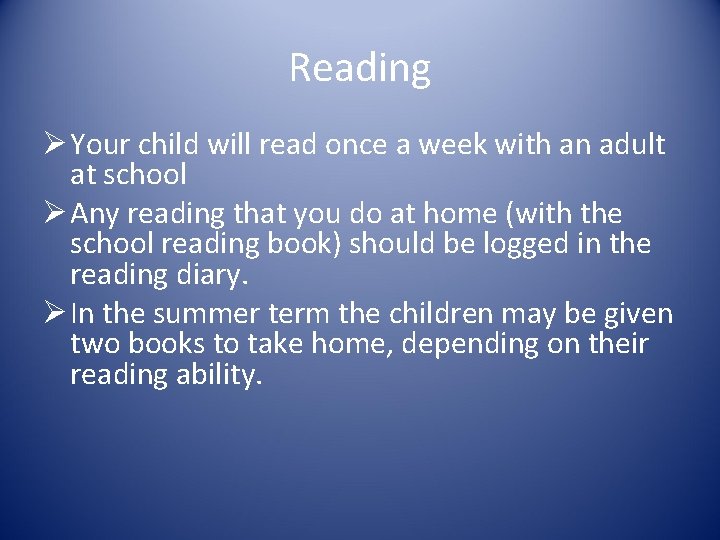
Reading Ø Your child will read once a week with an adult at school Ø Any reading that you do at home (with the school reading book) should be logged in the reading diary. Ø In the summer term the children may be given two books to take home, depending on their reading ability.
Tricky words Ø We have a set of the phase 2 and 3 tricky words for you to take home. Ø Practise with your child regularly as this will aide their reading and writing skills. Try to make this as fun as possible! Ø Record this in the reading diary. Ø We incorporate these words into our Phonics sessions.
How can you help at home? Ø Use the pack we provide with you today- stick the sound mats up on the fridge! Ø Practise isolated sounds at home – possibly display them on the fridge? Ø Challenge the children to find objects that begin with a certain sound. Ø Play ‘I Spy’ with phonemes not letter names. Ø Practise letter formation. Ø Play rhyming bingo, lotto and extend rhyming strings. Ø Play games with word cards. Ø Make sentences with word cards.
Any questions?