
Teaching Young Children Basic Skills Teaching Skills Which
Teaching Young Children Basic Skills Teaching Skills… …Which Are Necessary For All Learning Presenter: Vicki Chandler, M. Ed. 1
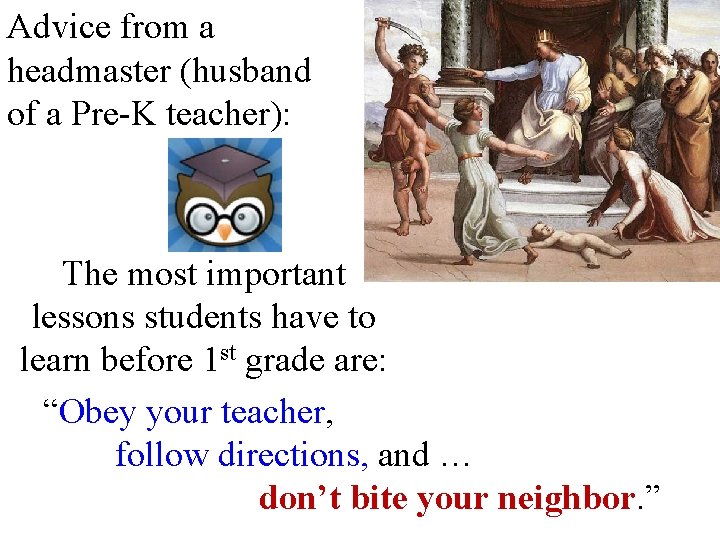
Advice from a headmaster (husband of a Pre-K teacher): The most important lessons students have to learn before 1 st grade are: “Obey your teacher, follow directions, and … don’t bite your neighbor. ”
What are the skills necessary for successful performance in school?
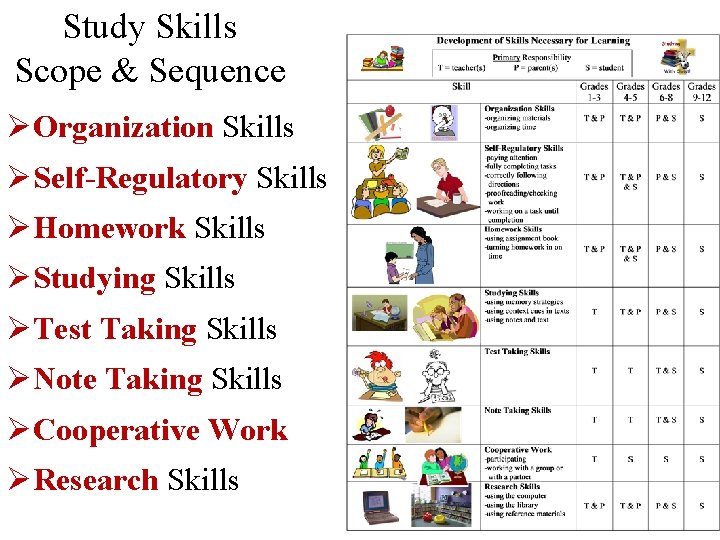
Study Skills Scope & Sequence ØOrganization Skills ØSelf-Regulatory Skills ØHomework Skills ØStudying Skills ØTest Taking Skills ØNote Taking Skills ØCooperative Work ØResearch Skills
Key Strategy ☞ To elevate attention: tell students ahead of time where to focus their attention.
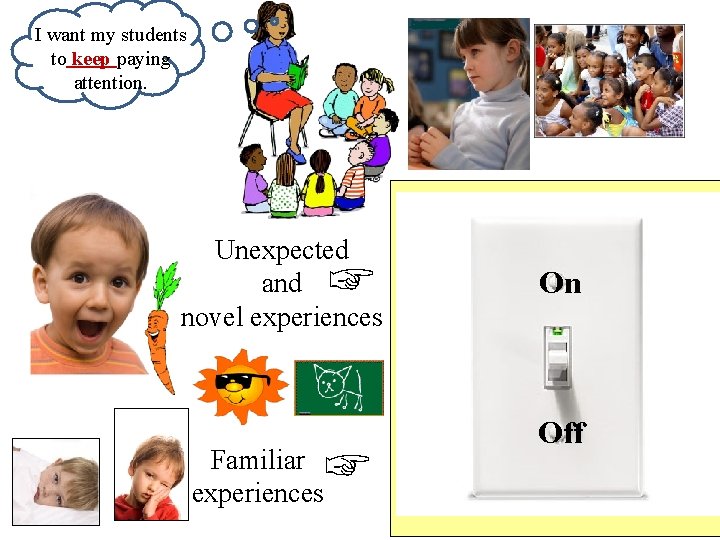
I want my students to keep paying attention. Unexpected and novel experiences ☞ ☞ Familiar experiences On Off
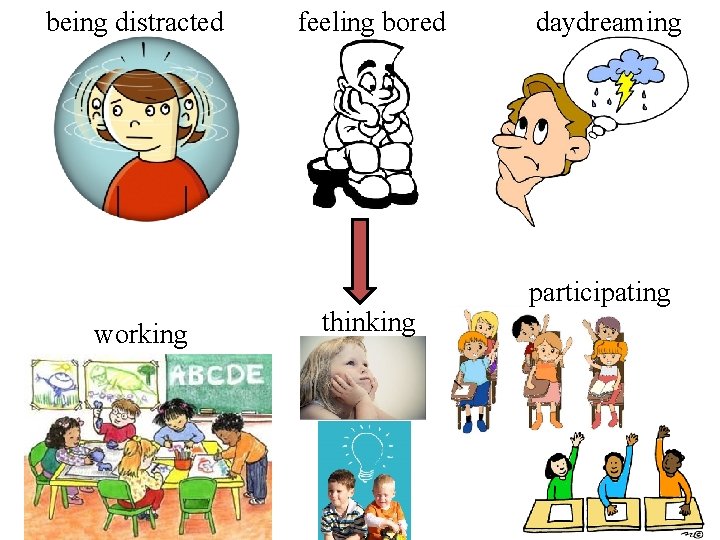
being distracted working feeling bored thinking daydreaming participating
tips some new ideas resources Some familiar, but good reminders suggestions Some affirming: Powerful practices you implement regularly
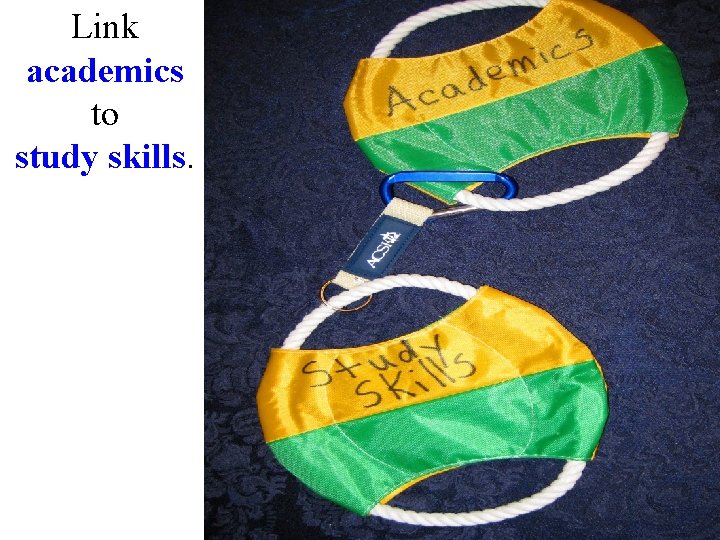
Link academics to study skills.
The idea is to purposefully link academics to study skills. Deliberately and explicitly teach study skills while teaching & reviewing academics. Be cognizant of opportunities to reinforce study skills.
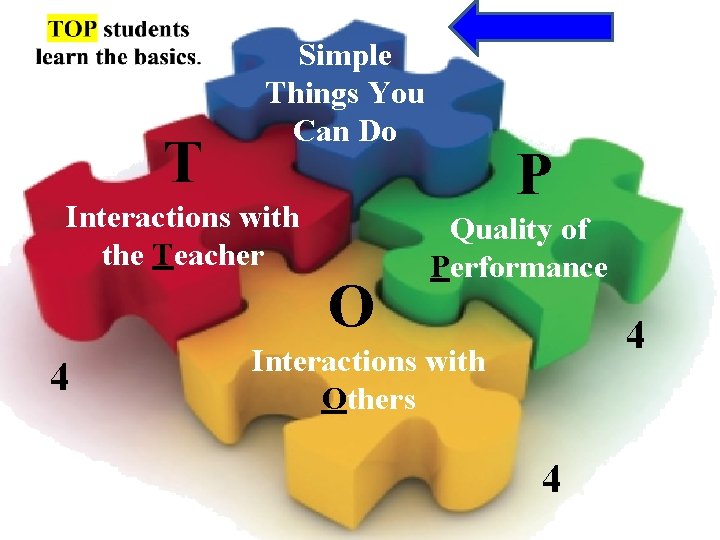
T Simple Things You Can Do Interactions with the Teacher O 4 P Quality of Performance 4 Interactions with Others 4
1. Say what to do (in addition to telling students what not to do). Simple Things You Can Do 2. Structure situations. 3. Teach steps ahead of time. • explaining clearly what is expected • providing visual reminders
4. Use humor and puppets. Simple Things You Can Do 5. Color code whenever possible. 6. Teach what most students learn incidentally (e. g. , how to stand near another person) 7. Find creative ways for students to evaluate and regulate their own performance. 8. Use timers to help students maintain attention to a task. 9. Use objects as reminders (cards, Koosh ball, direction arrows)
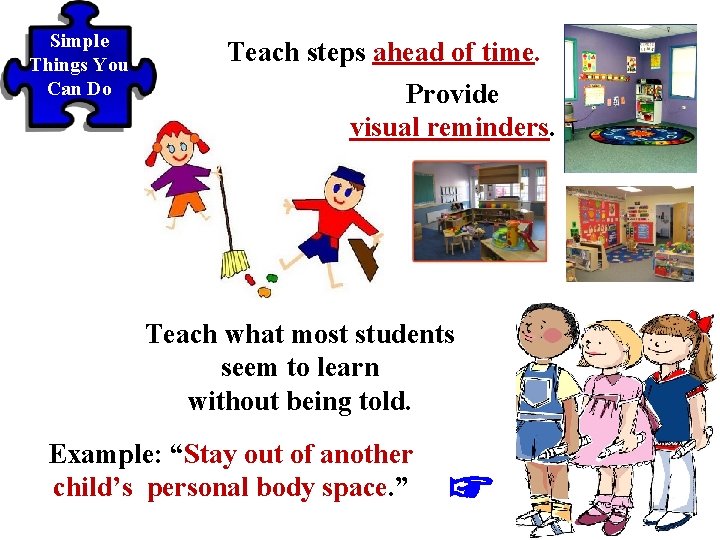
Simple Things You Can Do Teach steps ahead of time. Provide visual reminders. Teach what most students seem to learn without being told. Example: “Stay out of another child’s personal body space. ” ☞
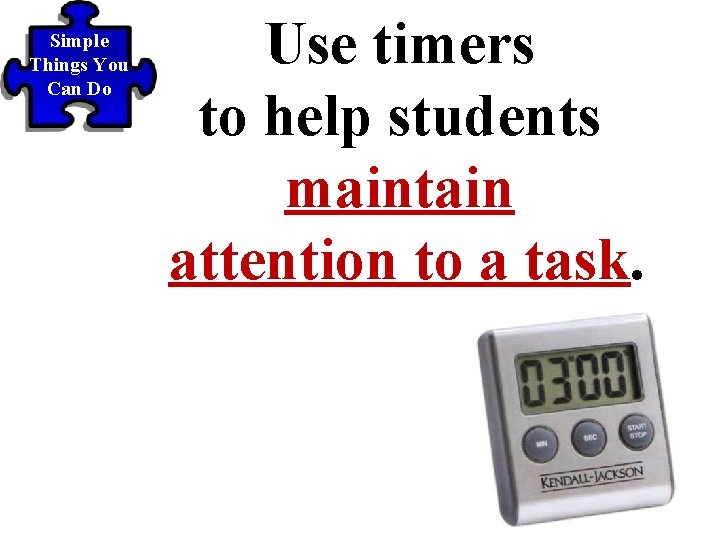
Simple Things You Can Do Use timers to help students maintain attention to a task.
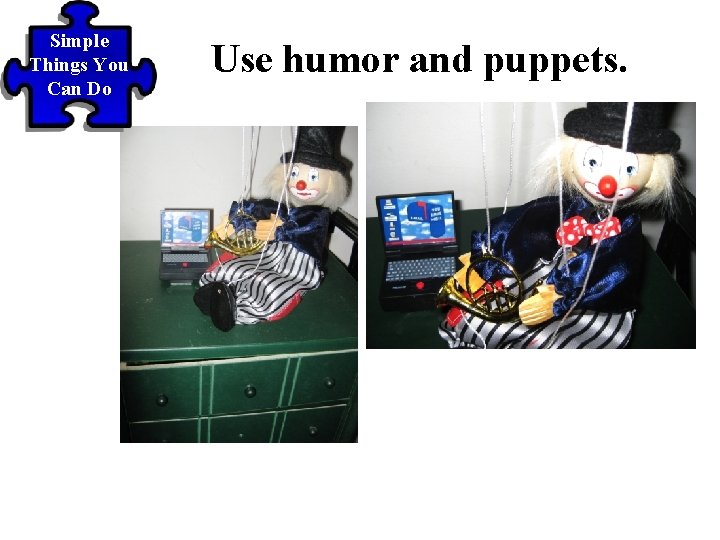
Simple Things You Can Do Use humor and puppets.
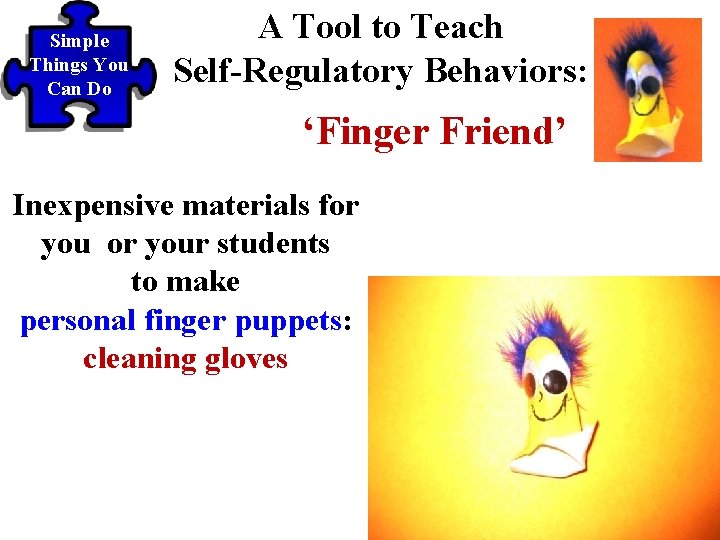
Simple Things You Can Do A Tool to Teach Self-Regulatory Behaviors: ‘Finger Friend’ Inexpensive materials for your students to make personal finger puppets: cleaning gloves
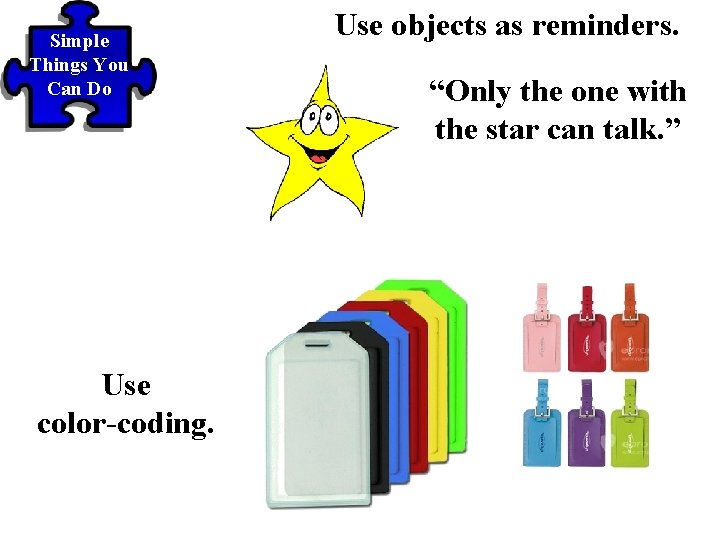
Simple Things You Can Do Use color-coding. Use objects as reminders. “Only the one with the star can talk. ”
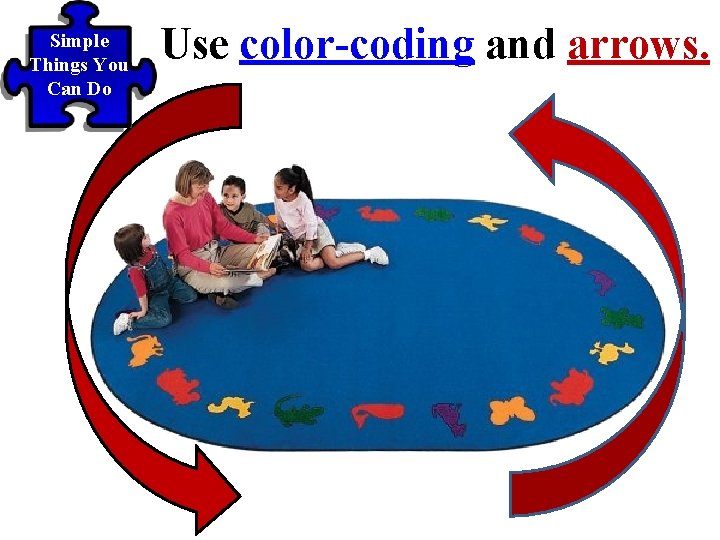
Simple Things You Can Do Use color-coding and arrows.
Many of the skills necessary for learning are skills necessary for Christian living: ØListening to God ØFocusing on the Lord ØObeying His authority ØCooperating with others loving others ØFollowing directions in His Word 20
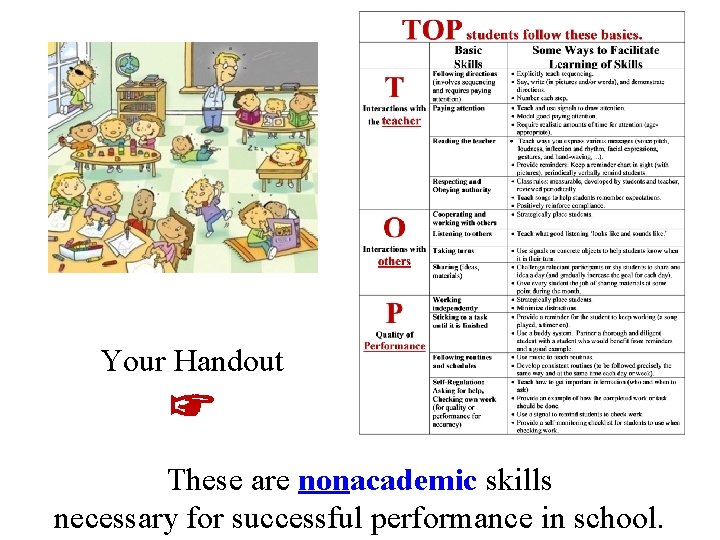
Your Handout ☞ These are nonacademic skills necessary for successful performance in school.
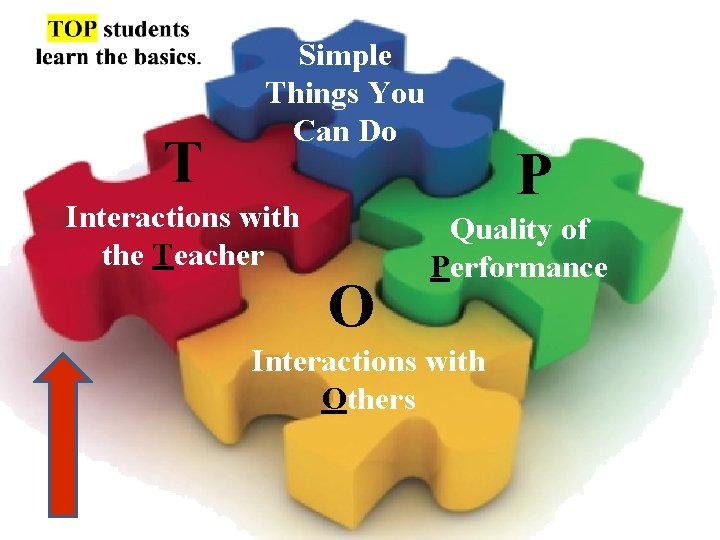
T Simple Things You Can Do Interactions with the Teacher O P Quality of Performance Interactions with Others
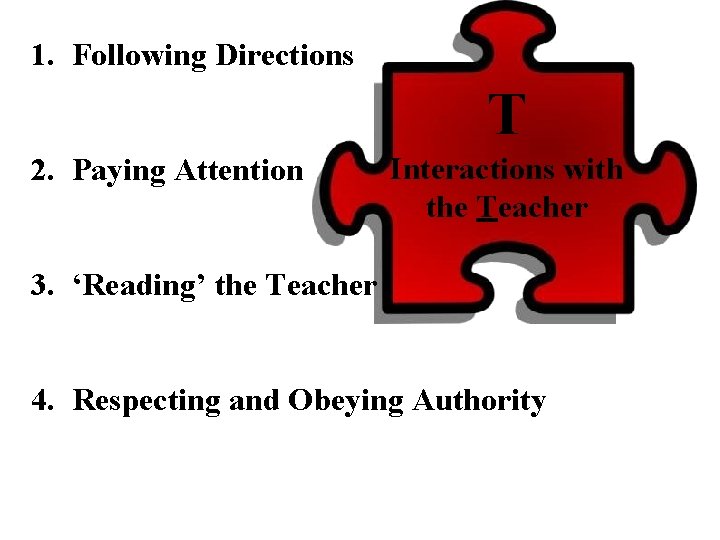
1. Following Directions T 2. Paying Attention Interactions with the Teacher 3. ‘Reading’ the Teacher 4. Respecting and Obeying Authority
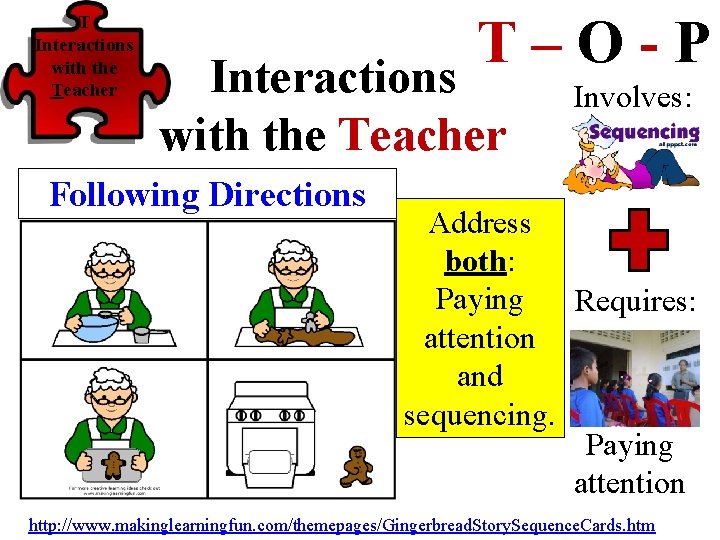
T Interactions with the Teacher T–O-P Interactions with the Teacher Following Directions Involves: Address both: Paying Requires: attention and sequencing. Paying attention http: //www. makinglearningfun. com/themepages/Gingerbread. Story. Sequence. Cards. htm
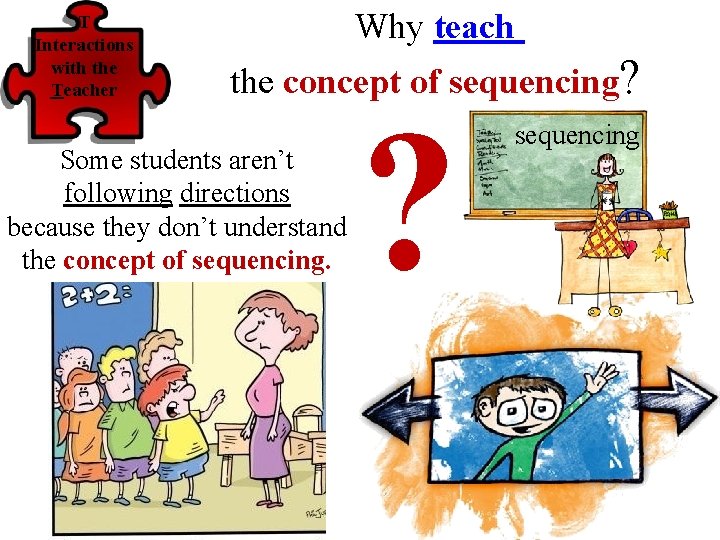
T Interactions with the Teacher Why teach the concept of sequencing? Some students aren’t following directions because they don’t understand the concept of sequencing. ? sequencing
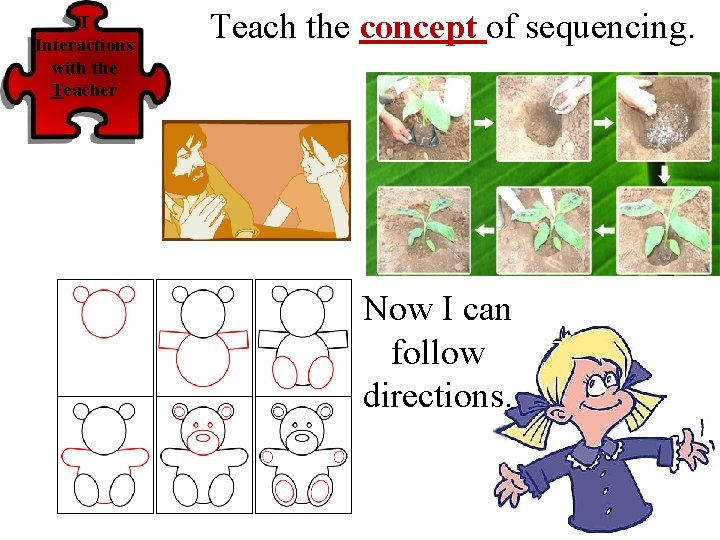
T Interactions with the Teacher Teach the concept of sequencing. Now I can follow directions.
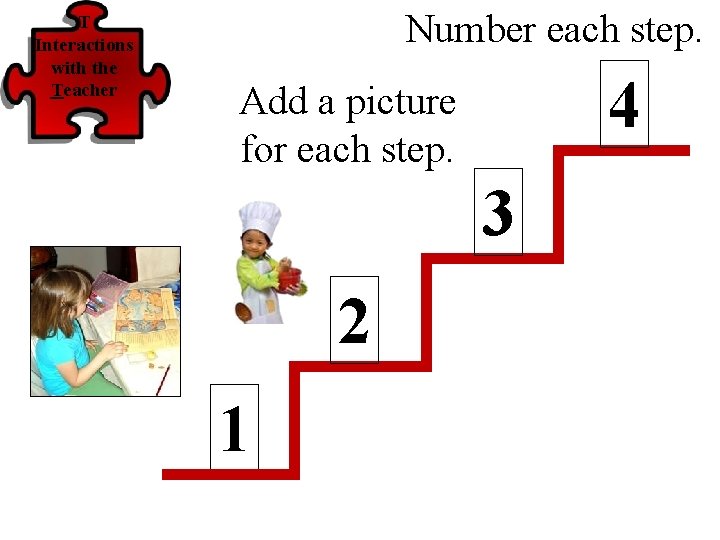
T Interactions with the Teacher Number each step. 4 Add a picture for each step. 3 2 1
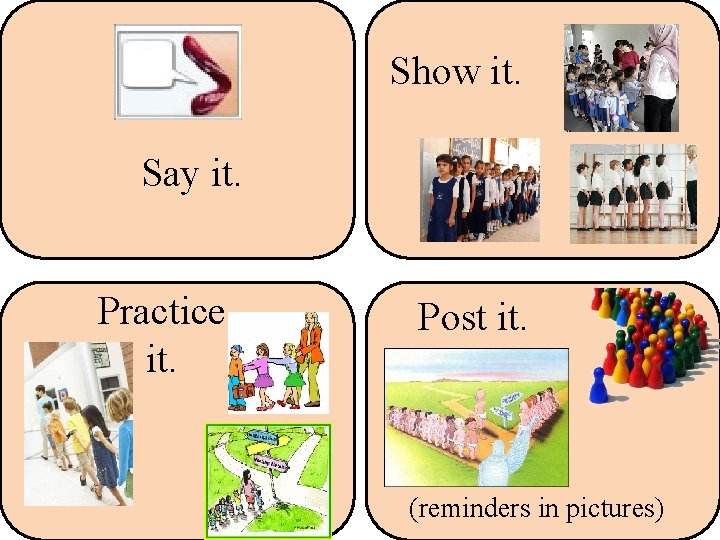
Show it. Say it. Practice it. Post it. (reminders in pictures)
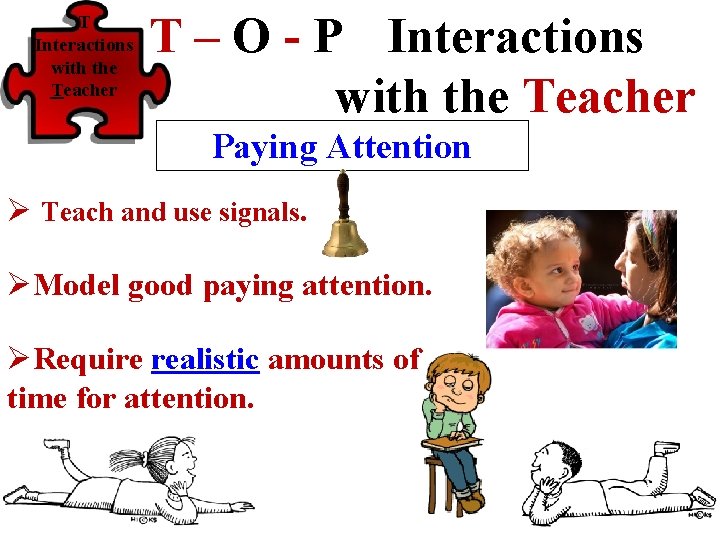
T Interactions with the Teacher T – O - P Interactions with the Teacher Paying Attention Ø Teach and use signals. ØModel good paying attention. ØRequire realistic amounts of time for attention.
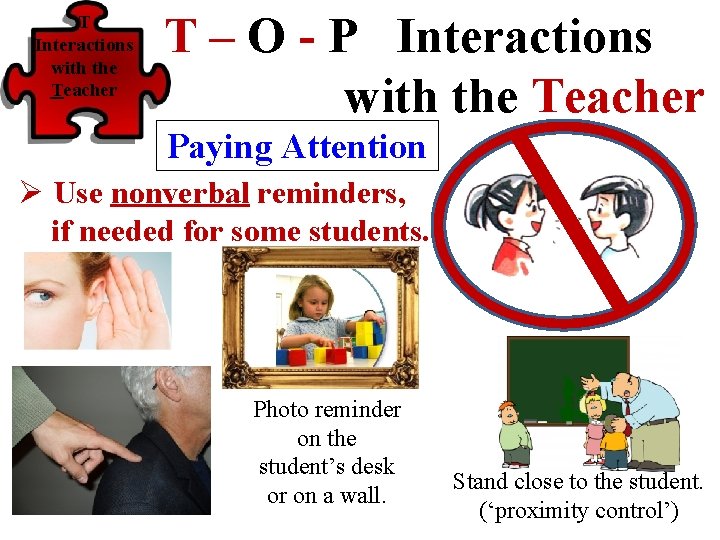
T Interactions with the Teacher T – O - P Interactions with the Teacher Paying Attention Ø Use nonverbal reminders, if needed for some students. Photo reminder on the student’s desk or on a wall. Stand close to the student. (‘proximity control’)
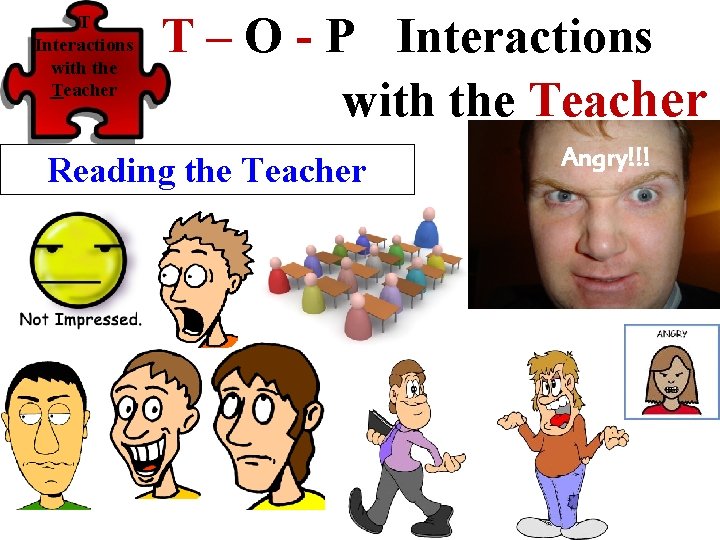
T Interactions with the Teacher T – O - P Interactions with the Teacher Reading the Teacher Angry!!!
T Interactions with the Teacher T–O-P Interactions with the Teacher Respecting and Obeying Authority
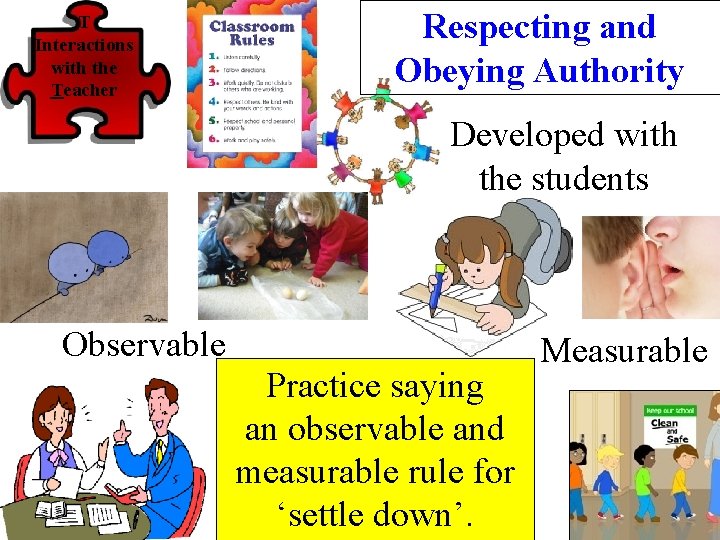
T Interactions with the Teacher Respecting and Obeying Authority Developed with the students Observable Practice saying an observable and measurable rule for ‘settle down’. Measurable
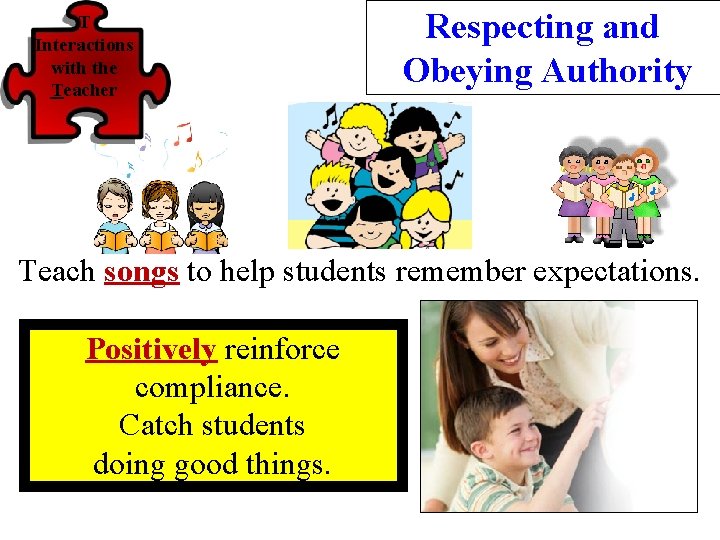
T Interactions with the Teacher Respecting and Obeying Authority Teach songs to help students remember expectations. Positively reinforce compliance. Catch students doing good things.
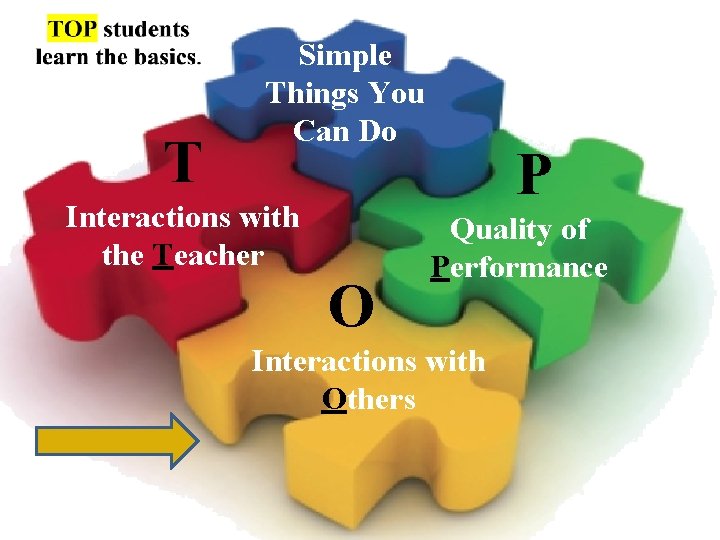
T Simple Things You Can Do Interactions with the Teacher O P Quality of Performance Interactions with Others
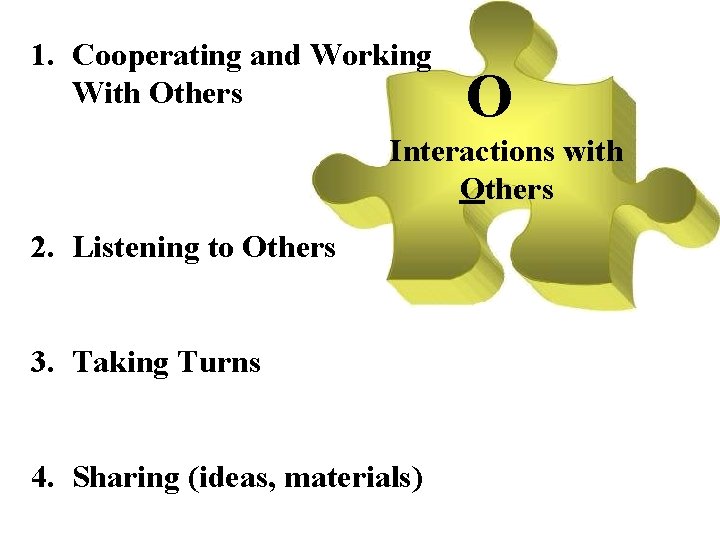
1. Cooperating and Working With Others O Interactions with Others 2. Listening to Others 3. Taking Turns 4. Sharing (ideas, materials)
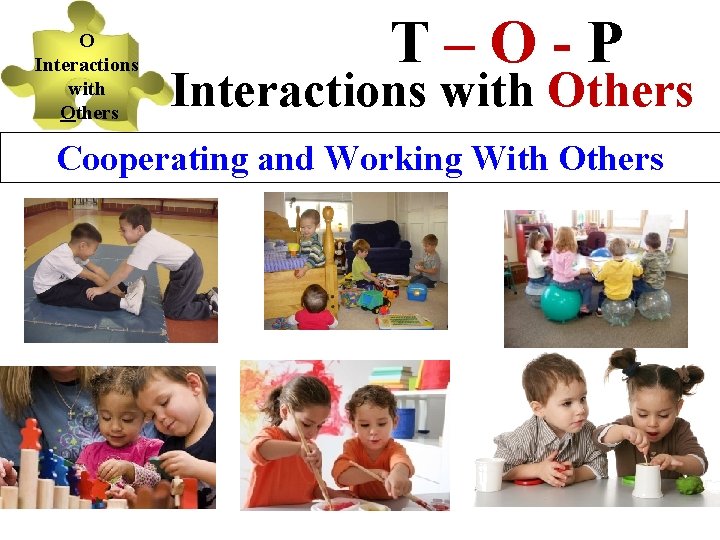
O Interactions with Others T–O-P Interactions with Others Cooperating and Working With Others
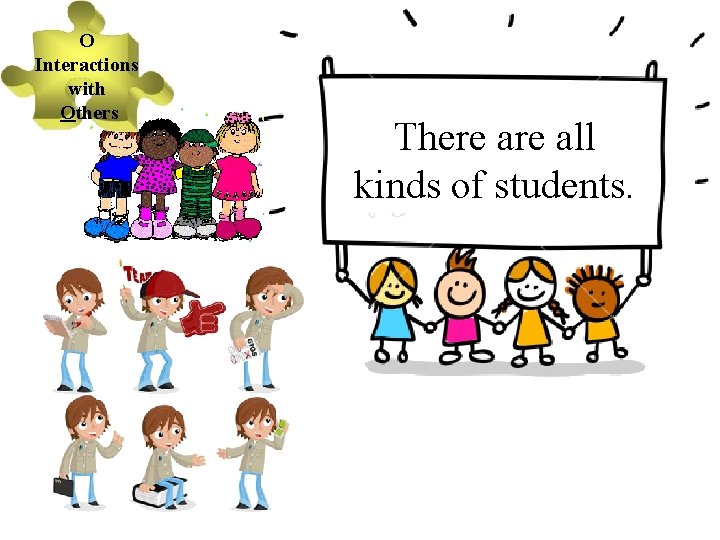
O Interactions with Others There all kinds of students.
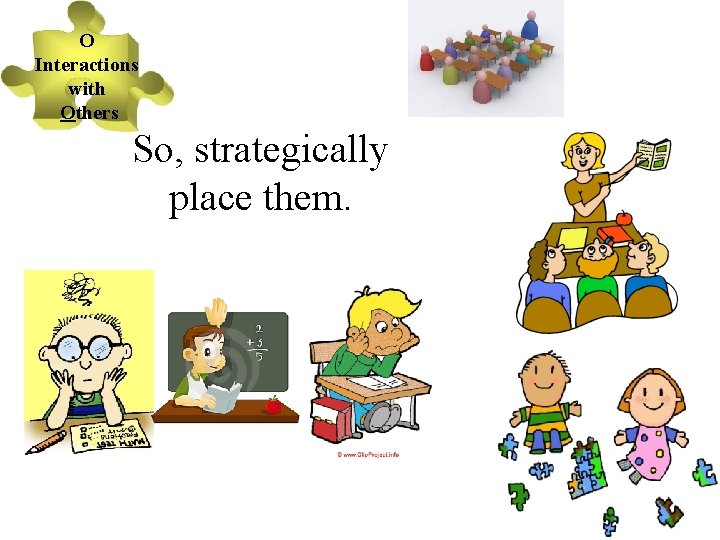
O Interactions with Others So, strategically place them.
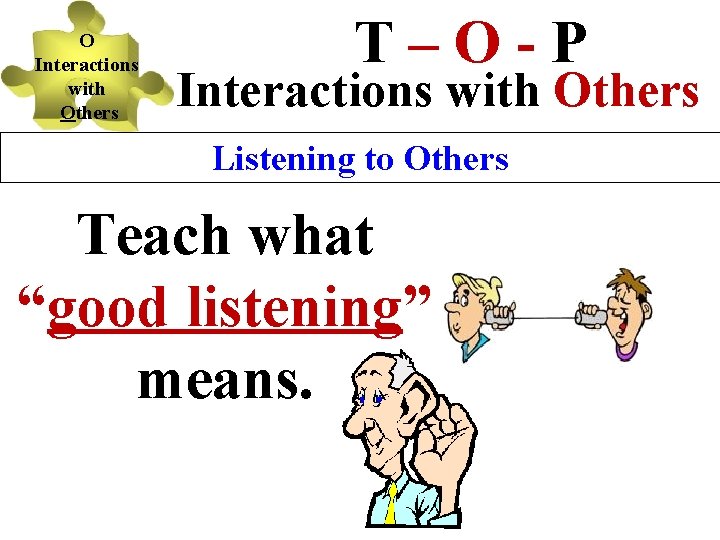
O Interactions with Others T–O-P Interactions with Others Listening to Others Teach what “good listening” means.
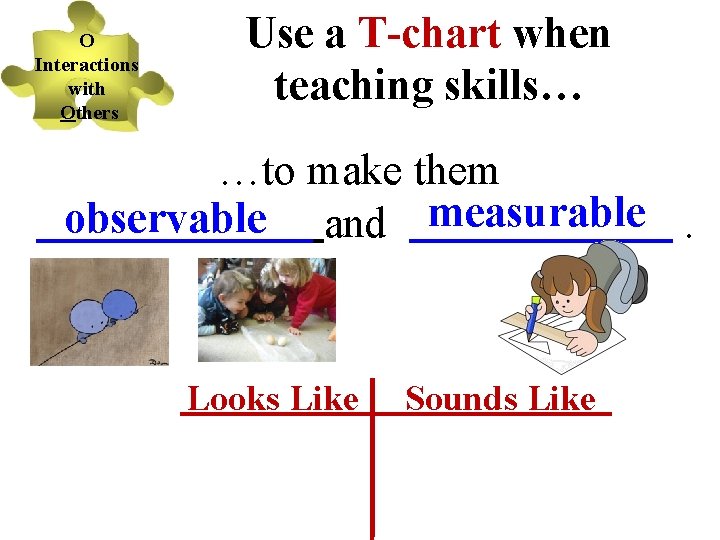
O Interactions with Others Use a T-chart when teaching skills… …to make them observable and measurable. Looks Like Sounds Like
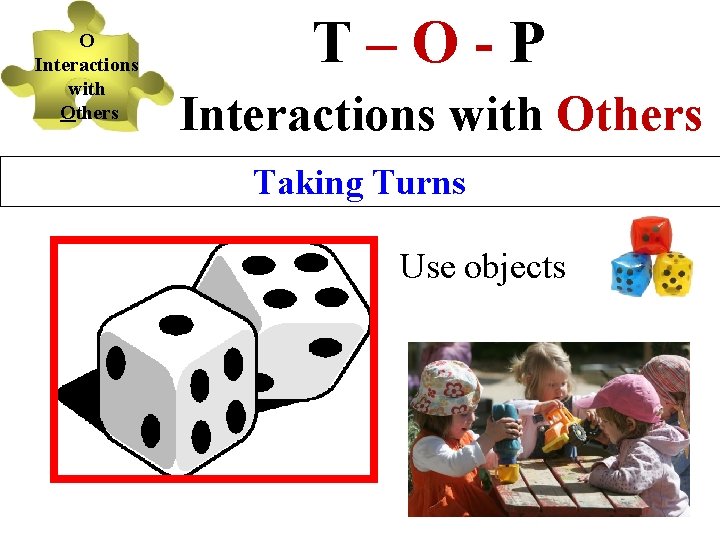
O Interactions with Others T–O-P Interactions with Others Taking Turns Use objects
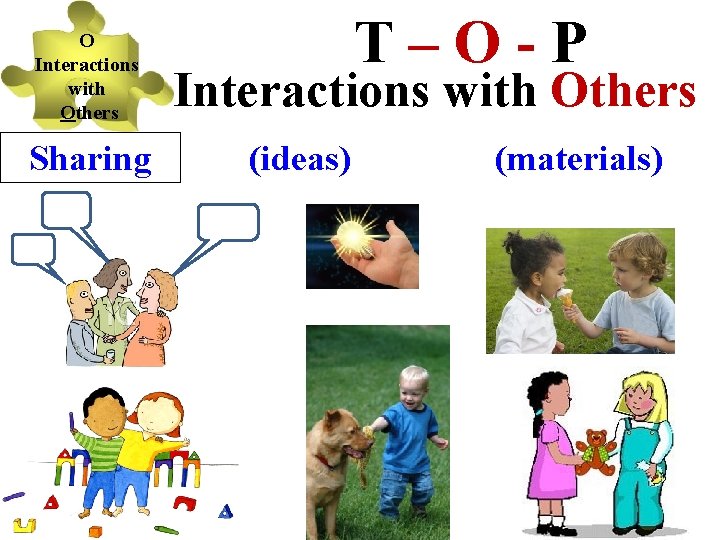
O Interactions with Others Sharing T–O-P Interactions with Others (ideas) (materials)
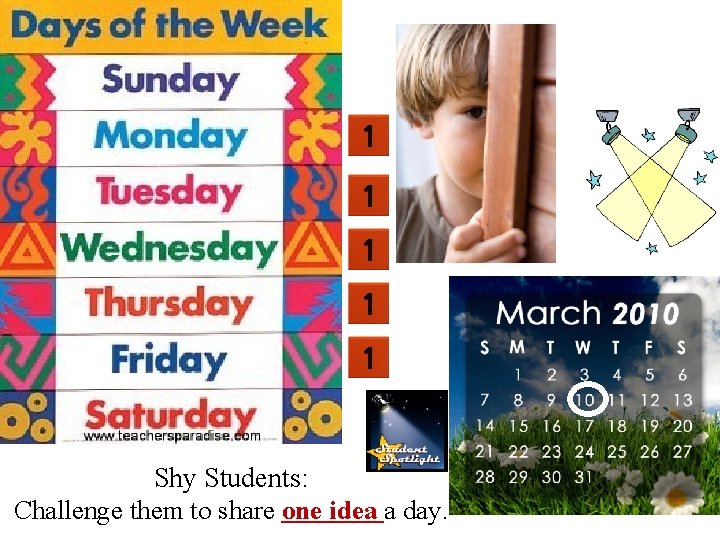
Shy Students: Challenge them to share one idea a day.
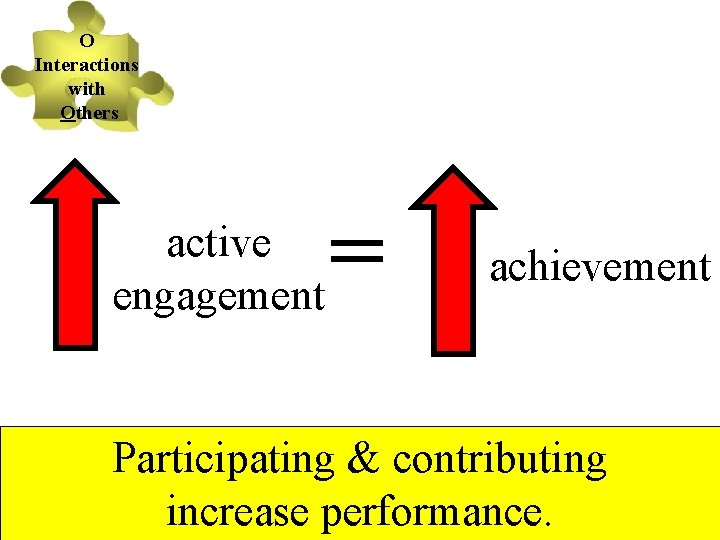
O Interactions with Others active engagement = achievement Participating & contributing increase performance.
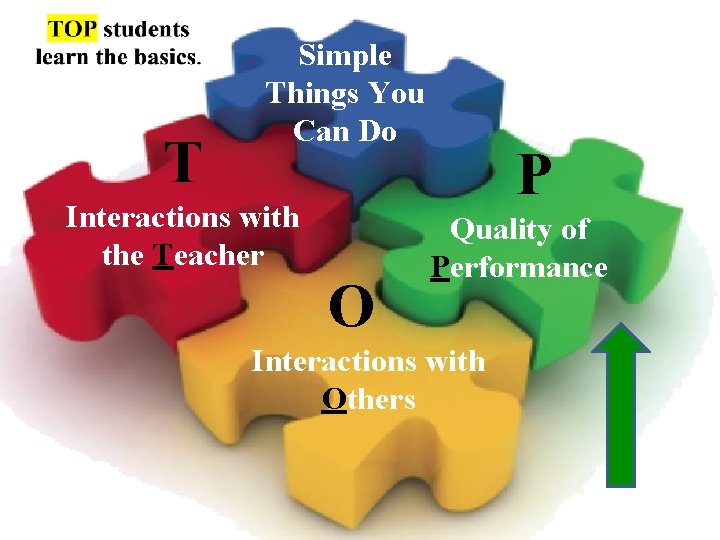
T Simple Things You Can Do Interactions with the Teacher O P Quality of Performance Interactions with Others
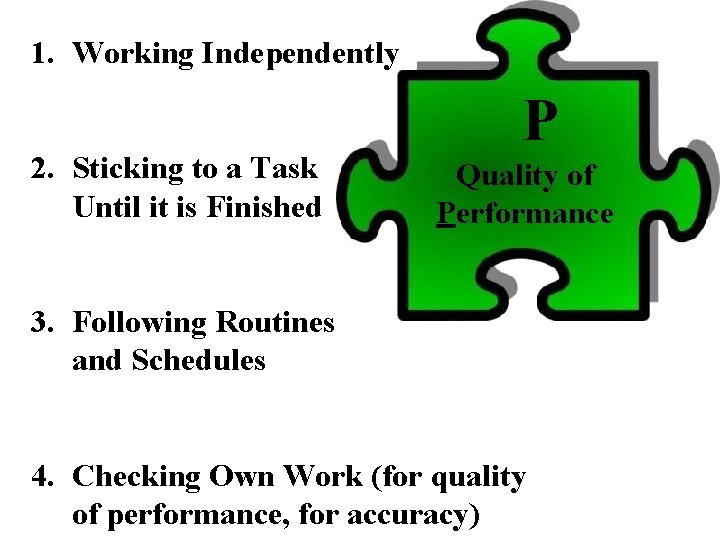
1. Working Independently 2. Sticking to a Task Until it is Finished P Quality of Performance 3. Following Routines and Schedules 4. Checking Own Work (for quality of performance, for accuracy)
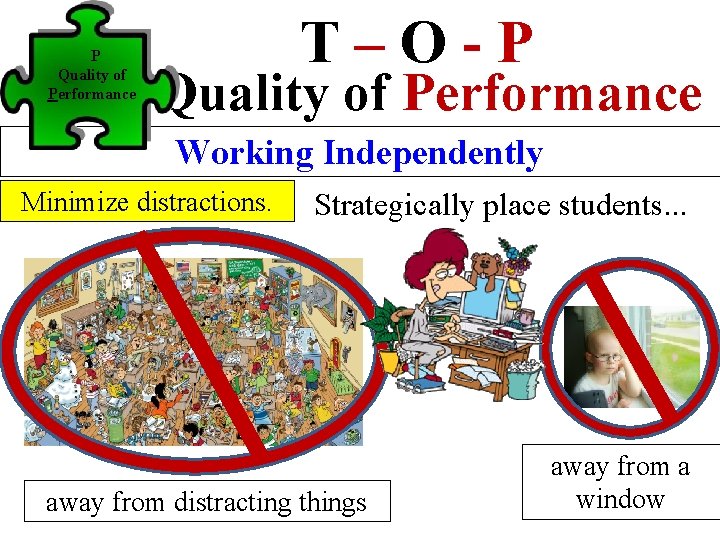
P Quality of Performance T–O-P Quality of Performance Working Independently Minimize distractions. Strategically place students. . . away from distracting things away from a window
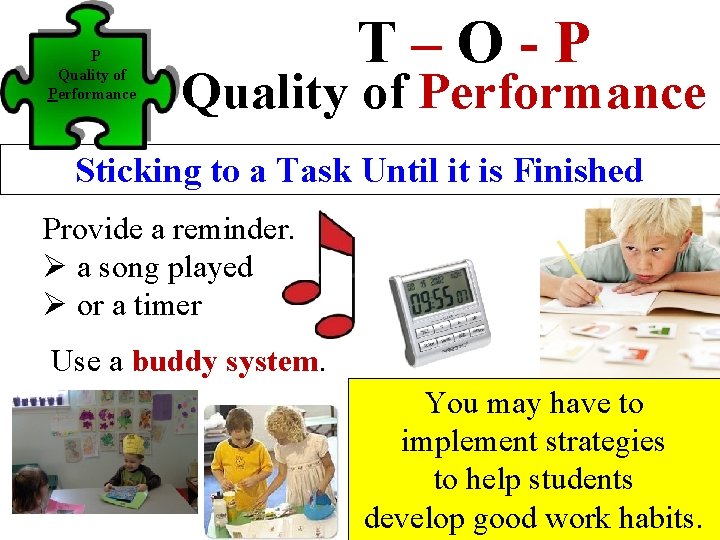
P Quality of Performance T–O-P Quality of Performance Sticking to a Task Until it is Finished Provide a reminder. Ø a song played Ø or a timer Use a buddy system. You may have to implement strategies to help students develop good work habits.
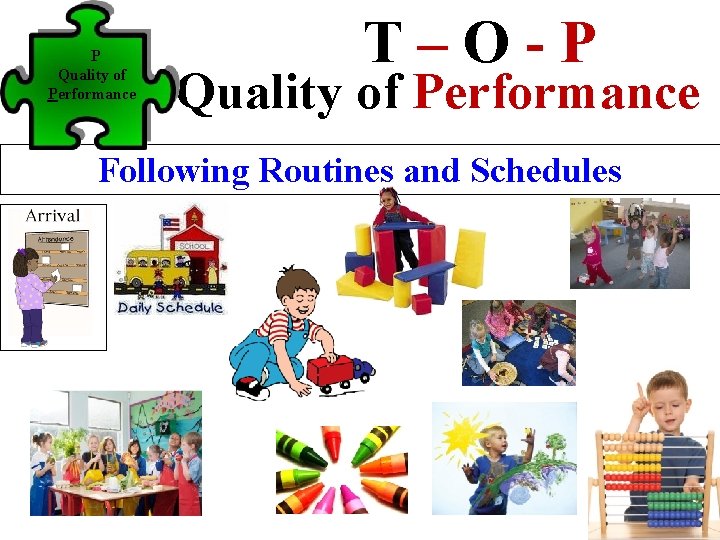
P Quality of Performance T–O-P Quality of Performance Following Routines and Schedules
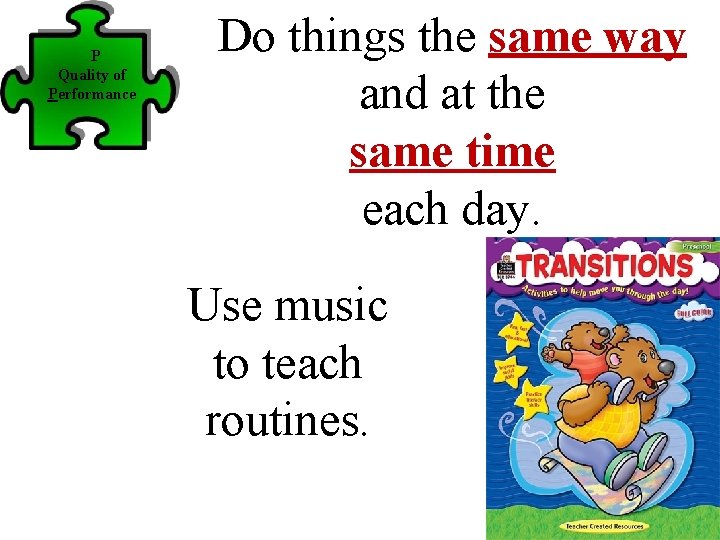
P Quality of Performance Do things the same way and at the same time each day. Use music to teach routines.
P Quality of Performance T–O-P Quality of Performance Self-Regulation: Asking for Help Teach how to get information: Who to ask When to ask How to get attention
P Quality of Performance T–O-P Quality of Performance Self-Regulation: Checking Own Work Tips to Develop This Skill: Provide an example of how the completed work or task should be done. Use a signal to remind students to check work. Chant while checking work: “Name on top, name on top…before Mrs. Chandler says, ‘Stop’…Name on top, name on top…” Provide a self-monitoring picture checklist for student(s) to use when checking.
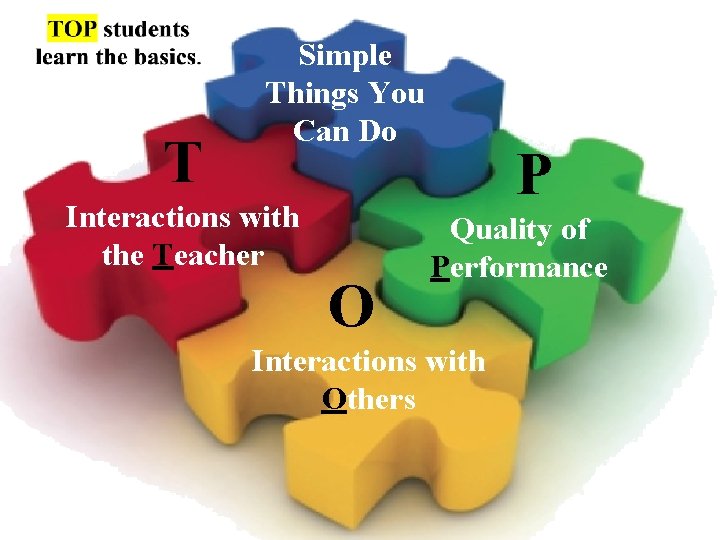
T Simple Things You Can Do Interactions with the Teacher O P Quality of Performance Interactions with Others
- Slides: 54