
Teaching with a Focus on Culture Voces Summer




- Slides: 22
Teaching with a Focus on Culture Voces Summer CI Conference Nina Holzfeind
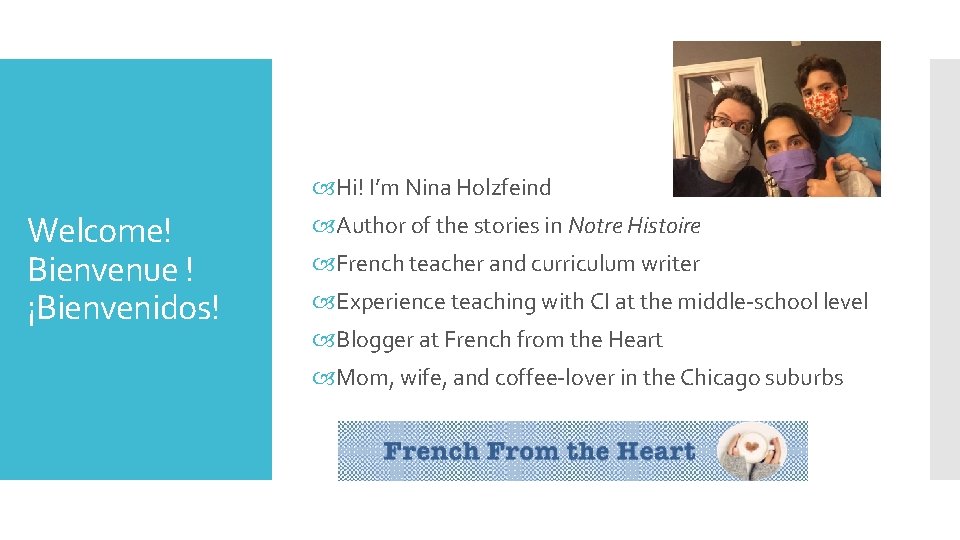
Hi! I’m Nina Holzfeind Welcome! Bienvenue ! ¡Bienvenidos! Author of the stories in Notre Histoire French teacher and curriculum writer Experience teaching with CI at the middle-school level Blogger at French from the Heart Mom, wife, and coffee-lover in the Chicago suburbs
Discuss the Nuestra Historia/Notre Histoire approach to teaching CI with a focus on culture Our focus for this session Dive in to the curriculum Explore ways to add even more cultural richness to your classes with personal experiences, CI activities, and authentic resources Q & A
What is one of your favorite cultural products, practices, or perspectives from anywhere in the world where your target language is spoken? Quick question What is one of your favorite things about your own culture? Pop it in the chat!
Why teach with a focus on culture? Why culture? “When children cannot find themselves reflected in the books they read, or when the images they see are distorted, negative, or laughable, they learn a powerful lesson about how they are devalued in the society of which they are a part. Our classrooms need to be places where all the children from all the cultures that make up the salad bowl of American society can find their mirrors. ” (Rudine Sims Bishop)
Why culture? ”Children from dominant social groups have always found their mirrors in books, but they, too, have suffered from the lack of availability of books about others. . . They need books that will help them understand the multicultural nature of the world they live in, and their place as a member of just one group, as well as their connections to all other humans. ” (Rudine Sims Bishop)
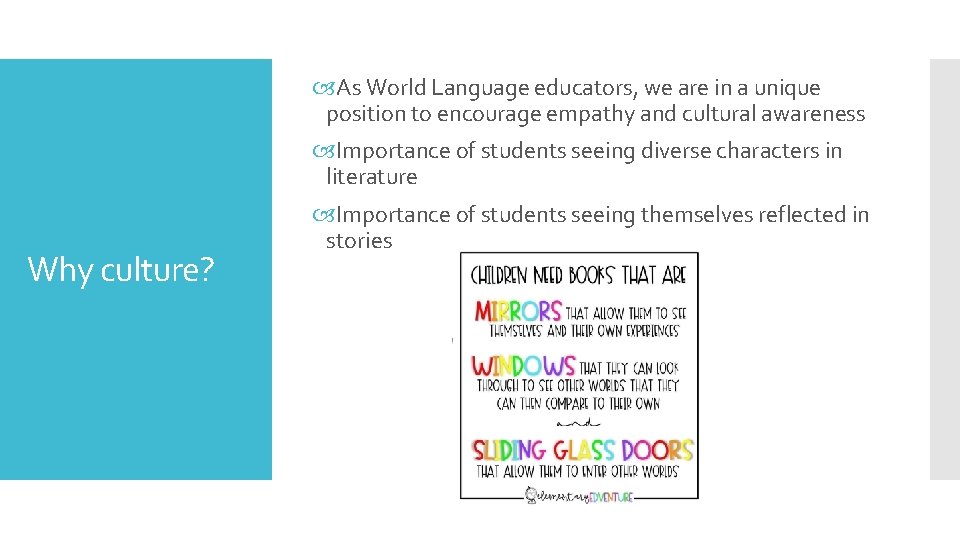
As World Language educators, we are in a unique position to encourage empathy and cultural awareness Importance of students seeing diverse characters in literature Why culture? Importance of students seeing themselves reflected in stories
Culture is compelling! Compelling input = greater acquisition Why culture? “Compelling input appears to eliminate the need for motivation, a conscious desire to improve. When you get compelling input, you acquire whether you are interested in improving or not. ” (Stephen Krashen)
In many traditional language programs, culture is an ”add-on” Why culture? In some CI classrooms, teachers struggle with how to incorporate culture while focusing on providing input Teachers already have so much on their plates—it’s a lot to ask them to create their own cultural materials as well!
With Nuestra Historia/Notre Histoire, we’ve tried to address these challenges Culture is at the center Our approach Stories are tied to AP themes and essential questions Set in Spanish- or French-speaking countries Inspired by real people, places, practices, and historical events in the target countries
Comprehensible input emerges from this foundation Our approach Structures are high-frequency and tied to the culture in the stories Authentic resources, interviews, and videos included to provide additional support
Our goal has been to provide compelling comprehensible input through stories that highlight a variety of cultures Our approach That said, we recognize that we are not experts in all cultures We hope we have provided a strong foundation for you Feedback and suggestions welcome!
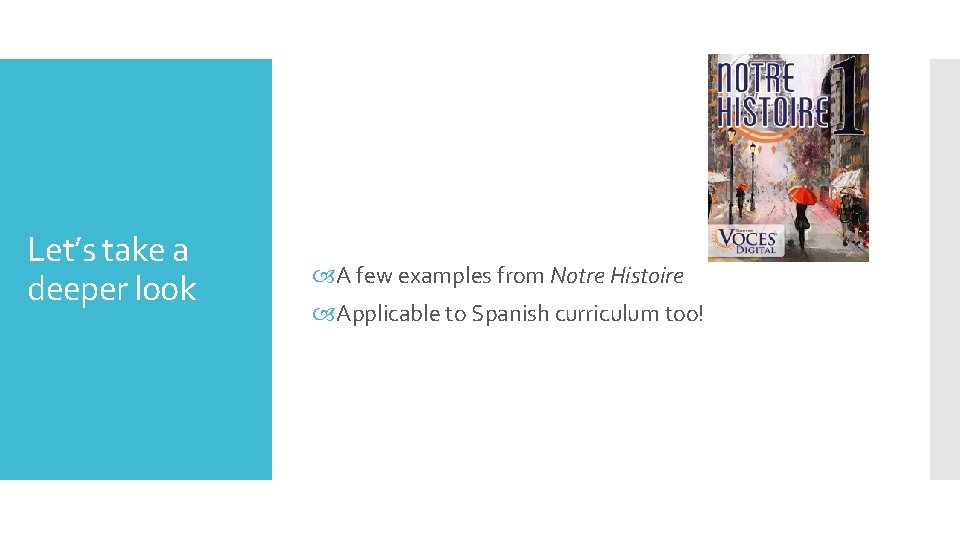
Let’s take a deeper look A few examples from Notre Histoire Applicable to Spanish curriculum too!
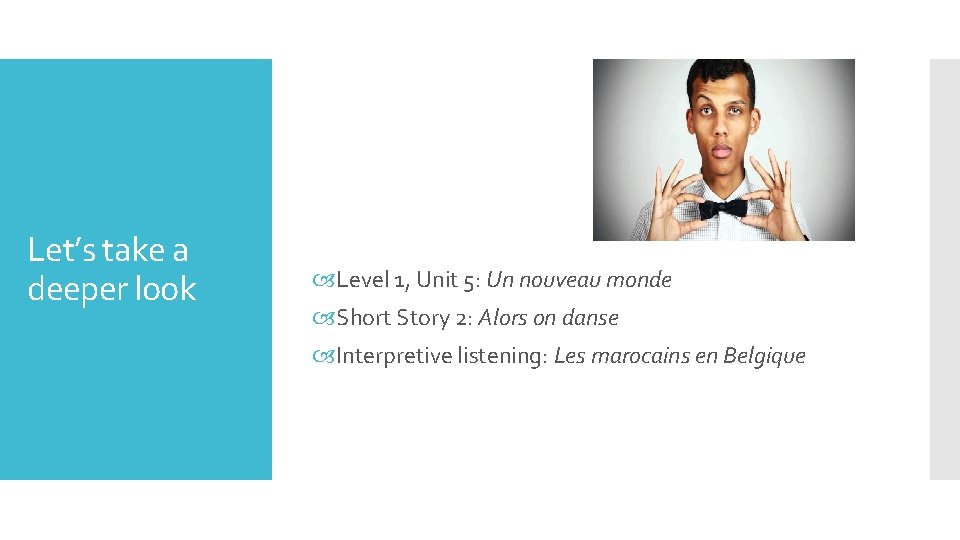
Let’s take a deeper look Level 1, Unit 5: Un nouveau monde Short Story 2: Alors on danse Interpretive listening: Les marocains en Belgique
How can we enhance the culture of this story? Go even further Connect to the people Connect to the places Connect to the events/activities
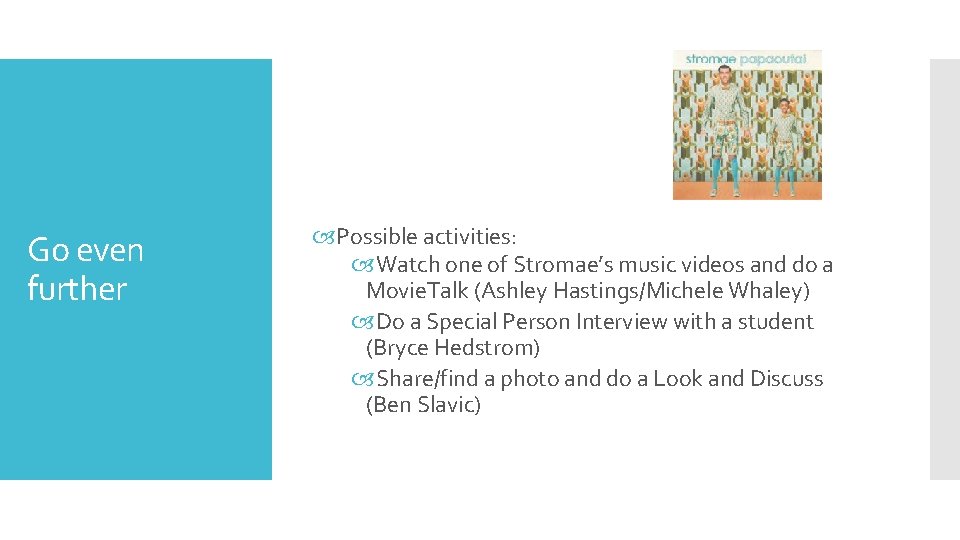
Go even further Possible activities: Watch one of Stromae’s music videos and do a Movie. Talk (Ashley Hastings/Michele Whaley) Do a Special Person Interview with a student (Bryce Hedstrom) Share/find a photo and do a Look and Discuss (Ben Slavic)
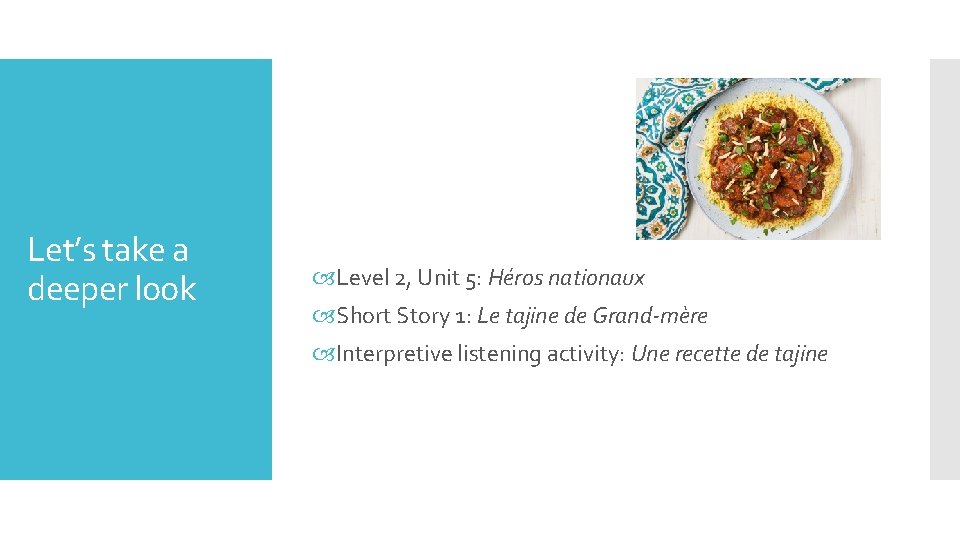
Let’s take a deeper look Level 2, Unit 5: Héros nationaux Short Story 1: Le tajine de Grand-mère Interpretive listening activity: Une recette de tajine
Now, it’s your turn! Go even further How might you enhance the culture in this story? Connect to the people, places, and events/activities What are your favorite ways to incorporate culture in general? Breakout rooms, 5 min Share responses
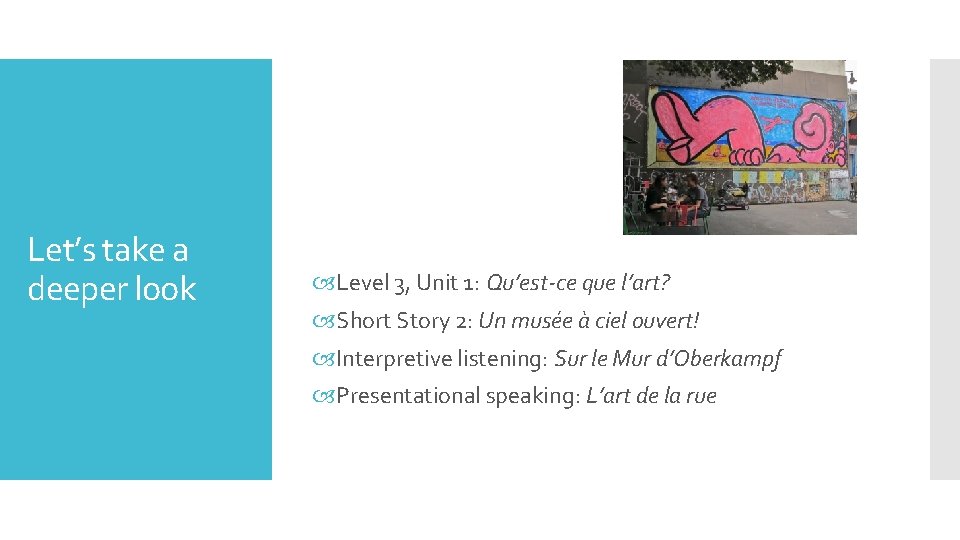
Let’s take a deeper look Level 3, Unit 1: Qu’est-ce que l’art? Short Story 2: Un musée à ciel ouvert! Interpretive listening: Sur le Mur d’Oberkampf Presentational speaking: L’art de la rue
Go even further Let’s brainstorm! Breakout rooms, 5 min
Questions and answers Questions, comments, or thoughts? The whole team at Voces is happy to help Feedback welcome!
Thanks! Merci ! ¡Gracias! Thank you for joining this session! Hope you enjoy the rest of the conference : ) Wishing you a happy and healthy school year ahead