
Teaching through BSL its impact on teaching practice
Teaching through BSL: its impact on teaching practice Rob Wilks © University of South Wales
Objectives of research Examine and reflect on teaching and assessment practice and their effect on student learning Consider how the involvement of BSL/English Interpreters in teaching delivery impacts on learning, teaching and assessment practice Explore the learner journey and students’ experience of the involvement of interpreters © University of South Wales
Objective of presentation © University of South Wales Explore the learner journey and students’ experience of the involvement of interpreters
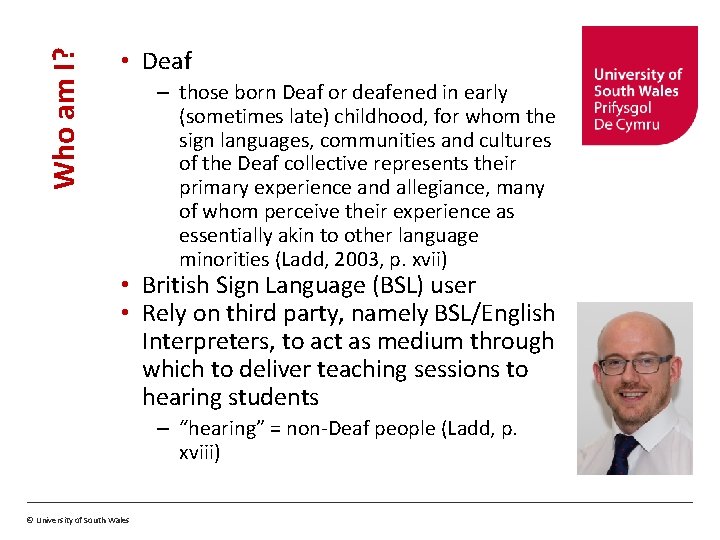
Who am I? • Deaf – those born Deaf or deafened in early (sometimes late) childhood, for whom the sign languages, communities and cultures of the Deaf collective represents their primary experience and allegiance, many of whom perceive their experience as essentially akin to other language minorities (Ladd, 2003, p. xvii) • British Sign Language (BSL) user • Rely on third party, namely BSL/English Interpreters, to act as medium through which to deliver teaching sessions to hearing students – “hearing” = non-Deaf people (Ladd, p. xviii) © University of South Wales
Teaching through BSL • Basic Google search = little or no evidence of a Deaf person teaching through sign language • Literature review reveals most research focuses on experiences of d/Deaf students taught by hearing lecturers at HE level, not experiences of hearing students being taught by Deaf lecturers • Designated interpreting – “a marriage between field of interpreting and Deaf professional’s discipline or work environment” (Hauser and Hauser, 2008, p. 4) © University of South Wales
Language • Use BSL in general terms • Use of Sign Supported English (SSE) – Sign key words of sentence with main vocabulary produced from BSL but much grammar is English on the mouth (Sutton-Spence and Woll, p. 16) • • “the veil of incorporation” “as far as reasonably practicable” “failure to make reasonable adjustments” res ipsa loquitor or volenti non fit injuria – If no lexicalised sign exists, might borrow English word into BSL and fingerspell lexical item, and paraphrase with explanation (Napier, 2002, p. 3) © University of South Wales Lexicons are the signs that form the mental vocabulary of a language, which everyone agrees has a certain meaning (Sutton -Spence and Woll, p. 8)
Survey • Two informal surveys – February and April 2015 (first year of teaching) – May 2018 (fourth year of teaching) • Aimed at students enrolled on modules I taught in respective academic years to glean perspectives of being taught through BSL and designated interpreters • Aimed to examine what students said about impact designated interpreters thrown into the teaching mix has had (or not) on their learning © University of South Wales
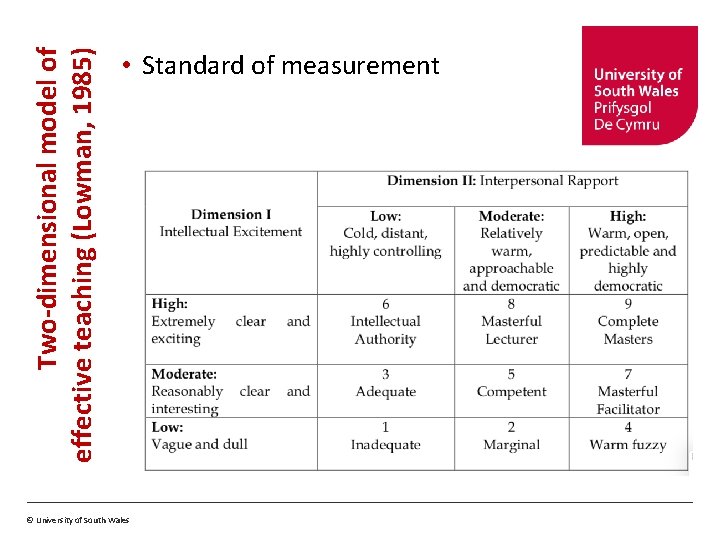
Two-dimensional model of effective teaching (Lowman, 1985) • Standard of measurement © University of South Wales
The results © University of South Wales
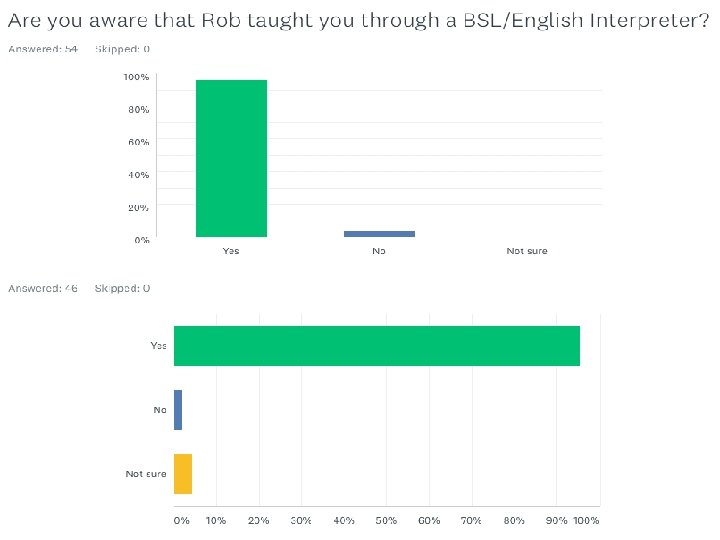
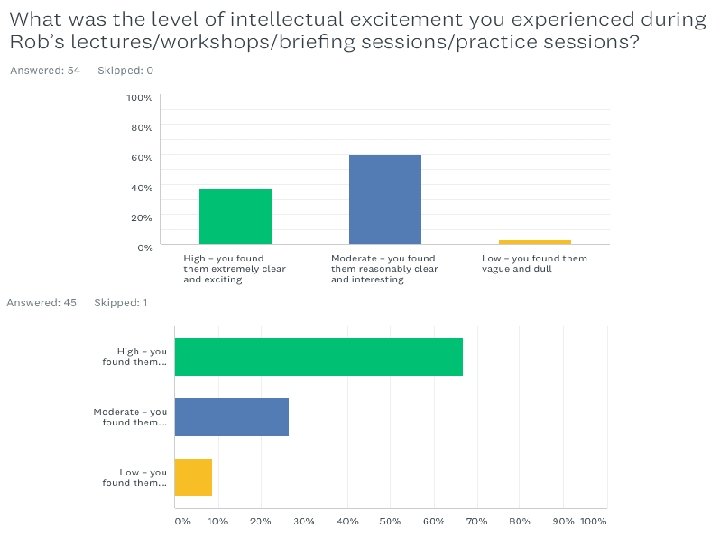
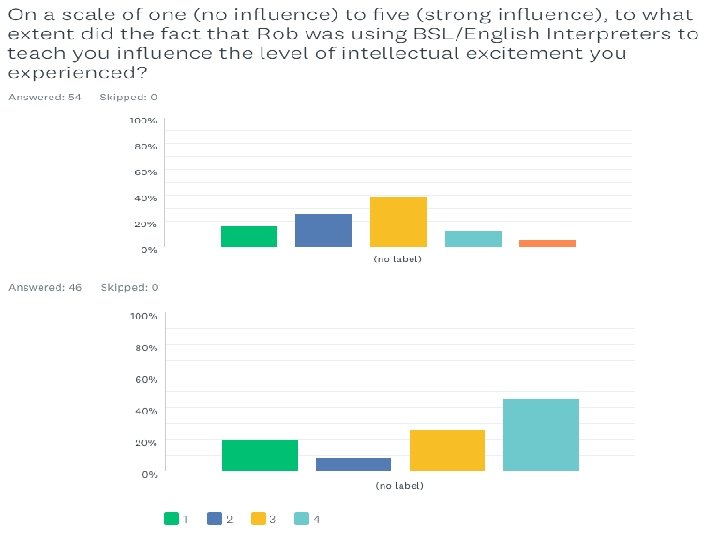
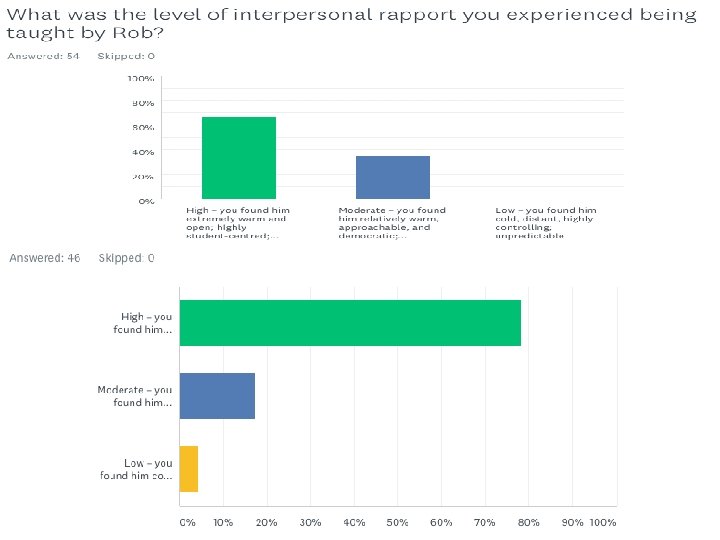
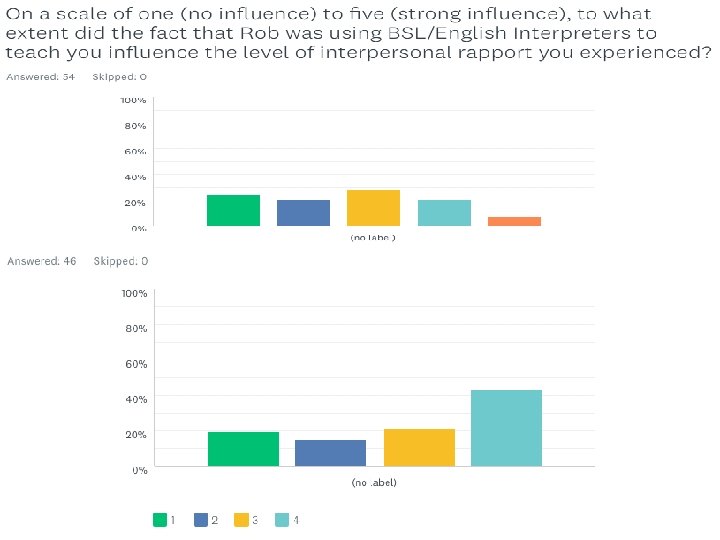
Conclusions • For majority of students, using designated interpreters to teach had little or no influence on my teaching • Therefore, use of designated interpreters had little or no influence on their learner journey • Being a lecturer means learning about “one’s own values, selftheories, thoughts and identities as well as gaining other forms of knowledge needed to encourage that valued, complex learning which can involve the student as a whole person”(Knight, 2002, p. 24) © University of South Wales
Thank you © University of South Wales
- Slides: 16