
Teaching the tricky stuff and developing a historical
- Slides: 40
Teaching the tricky stuff and developing a historical mindset: sources and historical interpretations for ordinary pupils in ordinary classrooms West London Free School History Conference 2017 Ben Walsh ben@bwalsh. uk. com @History_Ben
Part 1 Sources
The problem: Is using ‘real’ documents an indulgence and just for the privileged? • Students appear to have a problematic relationship with documents / sources. • A prosopographical analysis of examination scripts and related items can tell us much
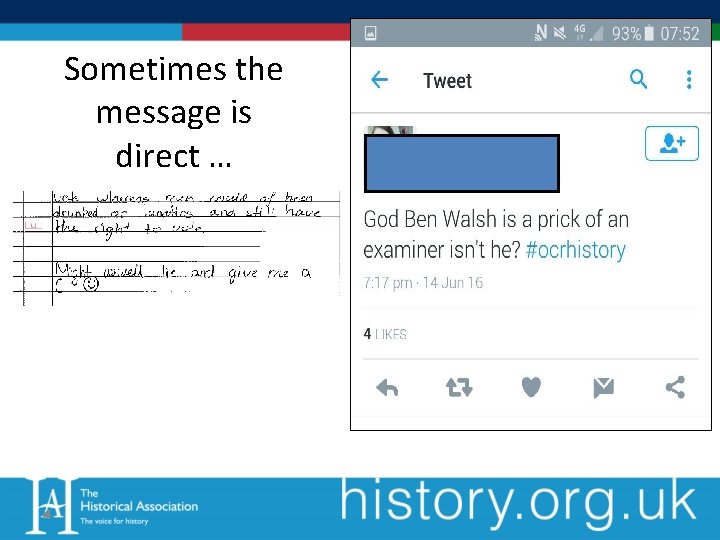
Sometimes the message is direct … 4
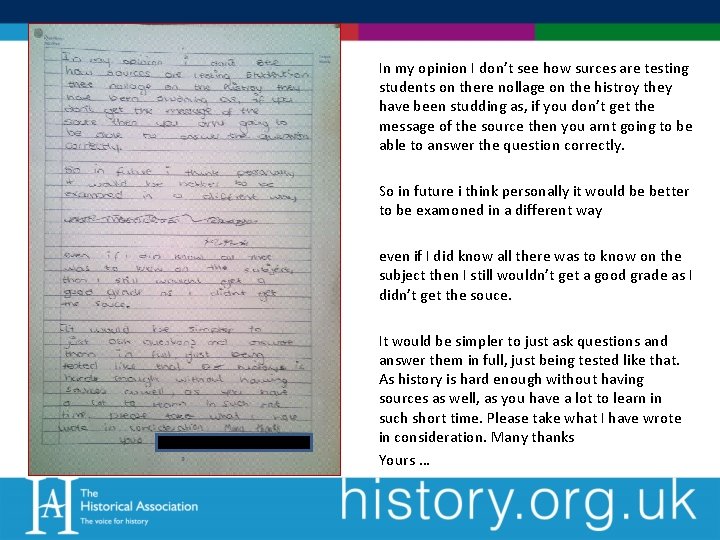
More often the message is subtle In my opinion I don’t see how surces are testing students on there nollage on the histroy they have been studding as, if you don’t get the message of the source then you arnt going to be able to answer the question correctly. So in future i think personally it would be better to be examoned in a different way even if I did know all there was to know on the subject then I still wouldn’t get a good grade as I didn’t get the souce. It would be simpler to just ask questions and answer them in full, just being tested like that. As history is hard enough without having sources as well, as you have a lot to learn in such short time. Please take what I have wrote in consideration. Many thanks Yours …
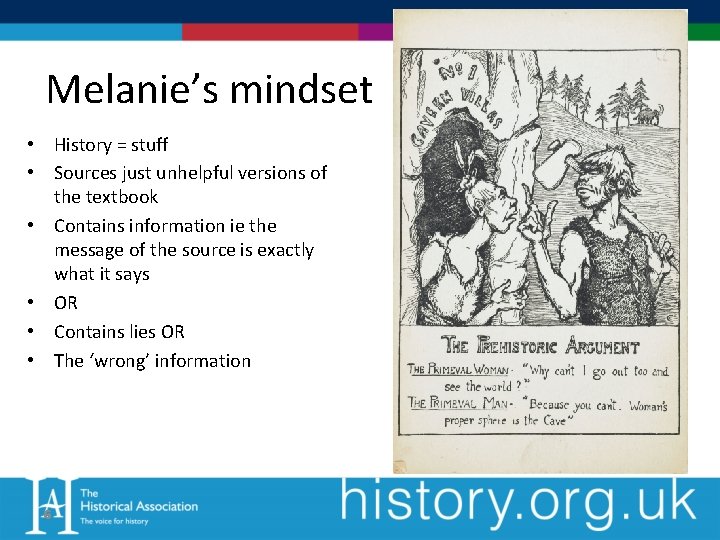
Melanie’s mindset • History = stuff • Sources just unhelpful versions of the textbook • Contains information ie the message of the source is exactly what it says • OR • Contains lies OR • The ‘wrong’ information 6
Why do students find it hard to adopt the historian’s mindset? • Because it’s difficult! • Also threatening – requires the student to open up and say what he/she thinks • Counter intuitive? • Against the grain of the signature pedagogy of the classroom? • Binary thinking and/or confirmation bias …. See next slide
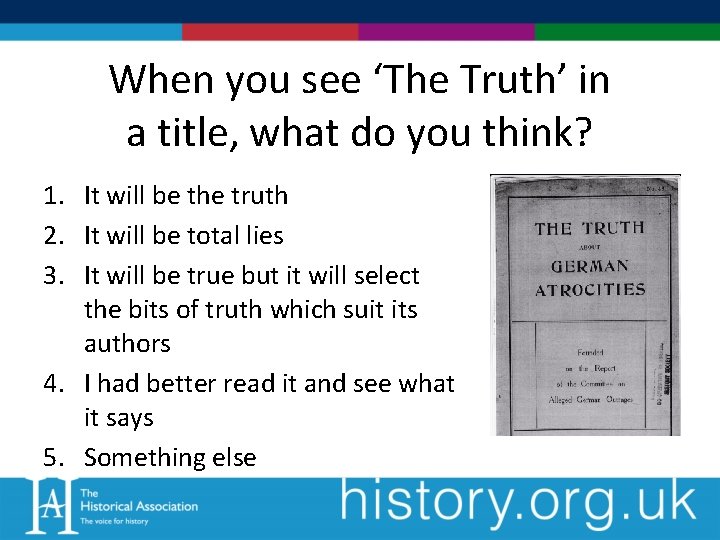
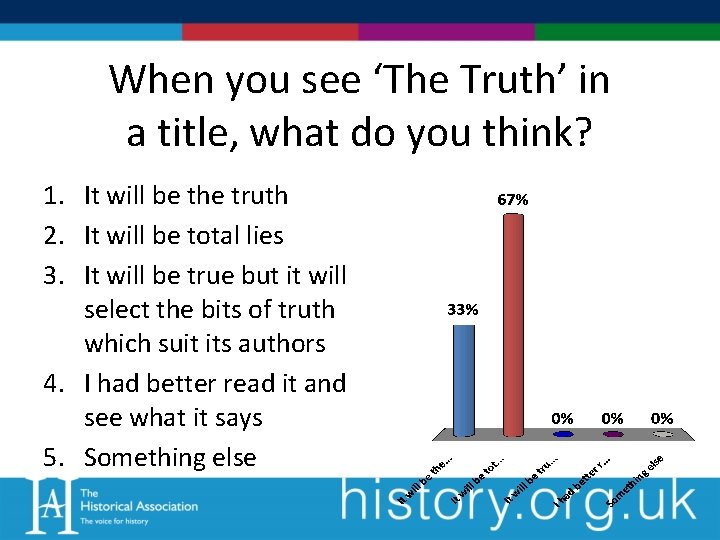
When you see ‘The Truth’ in a title, what do you think? 1. It will be the truth 2. It will be total lies 3. It will be true but it will select the bits of truth which suit its authors 4. I had better read it and see what it says 5. Something else
When you see ‘The Truth’ in a title, what do you think? 1. It will be the truth 2. It will be total lies 3. It will be true but it will select the bits of truth which suit its authors 4. I had better read it and see what it says 5. Something else
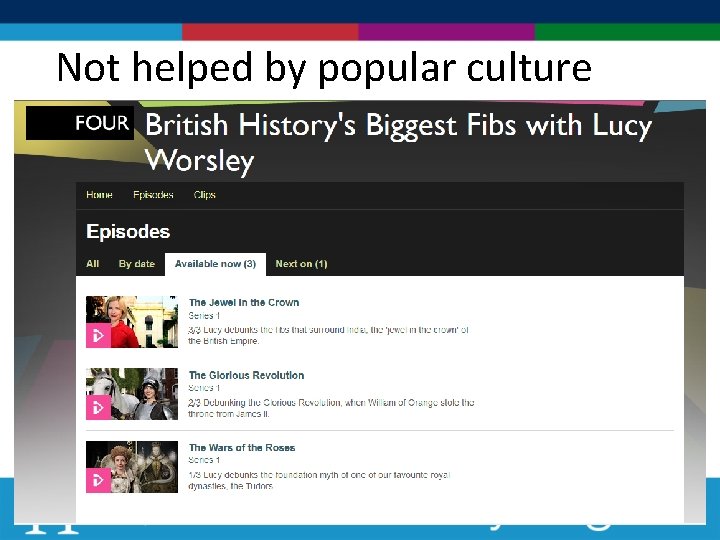
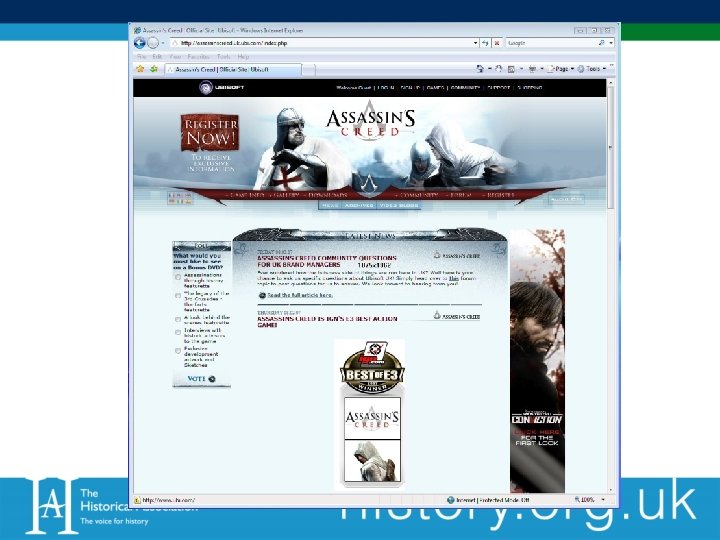
Not helped by popular culture
What Melanie doesn’t want to hear …. • Sources are NOT just unhelpful versions of the textbook • If you see them as ‘information’ you will not be thinking like a historian. • Historians use sources to look for the things which are not found in textbooks – Attitudes, values, concerns, anger …. – Purpose and what this reveals about the author / society – Methods used by groups / individuals to influence others • Historians can sometimes learn from the creation / existence of the source (cultural artefact) 11
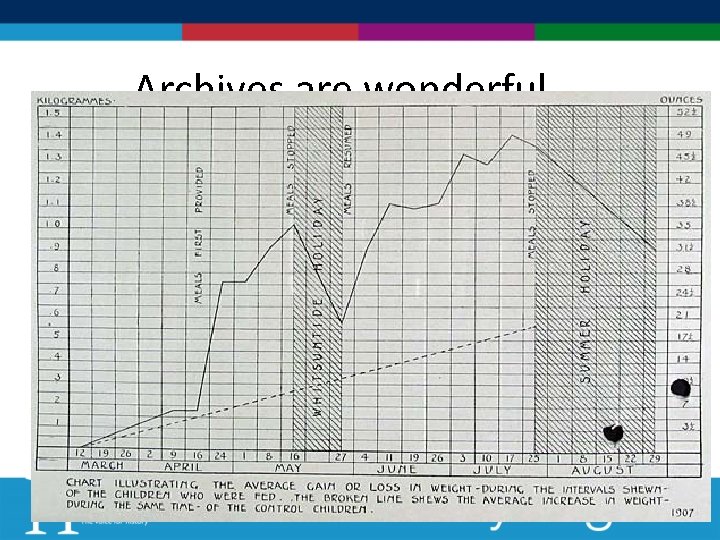
Archives are wonderful …
The dreaded useful question …. • How is it useful rather than how useful is it • Is bias really a problem?
Approaches to questions • Let’s NOT ask what they can find out • Let’s NOT pretend a knowledge question is a source question • Let’s NOT ask whether the sources are useful or reliable about X, Y, Z • Let’s ask … – What questions can these sources answer? – And how satisfied are you with those answers?
Collection, Distraction, Development • Sources are generally more powerful as collections harnessed in a clear but engaging enquiry … • Collection: Cold War – what’s going on?
Slightly more scaffolded approach … Study your collection. Can you find … • • • Someone denying? Someone belittling? Someone praising? Someone warning? Someone accusing? Someone threatening? • • Someone afraid? Someone unhappy? Someone outraged? Someone on a mission? What else?
Meeting them halfway … • Gimmickry … – Use? – Avoid? – Explore (metacognition) • Suffragettes on Ebay
Going the extra mile … • Useful checklist • Surprising checklist • Richard White and his mother
Part 2 Historical Interpretations
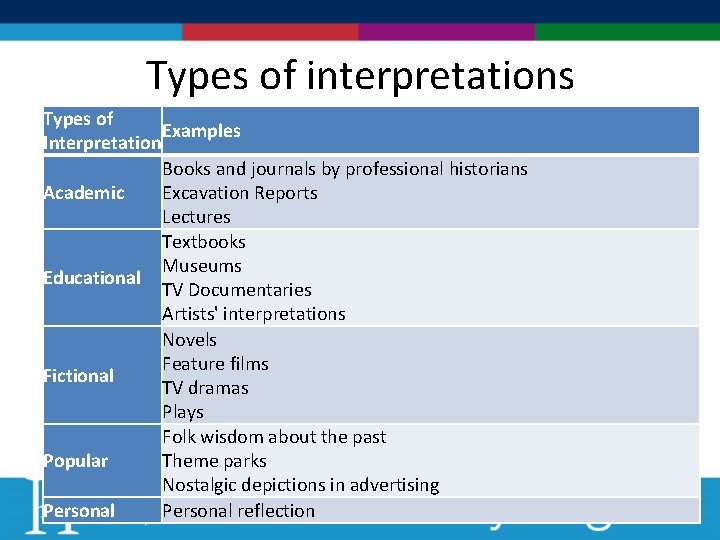
Types of interpretations Types of Examples Interpretation Books and journals by professional historians Academic Excavation Reports Lectures Textbooks Museums Educational TV Documentaries Artists' interpretations Novels Feature films Fictional TV dramas Plays Folk wisdom about the past Popular Theme parks Nostalgic depictions in advertising Personal reflection
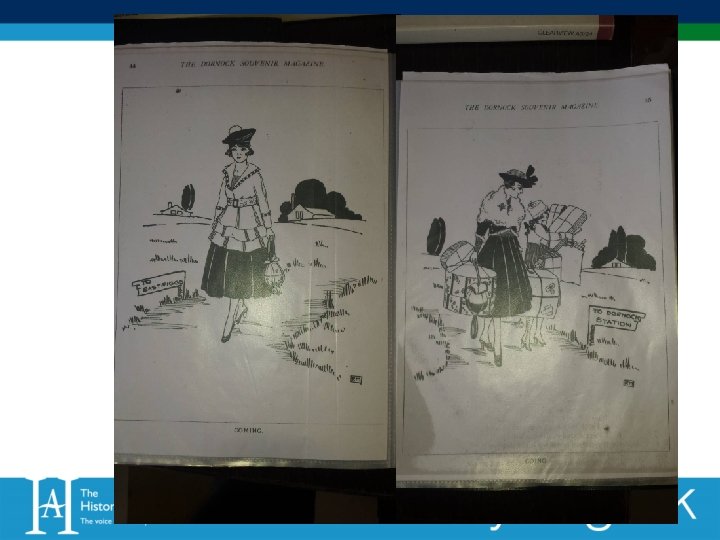
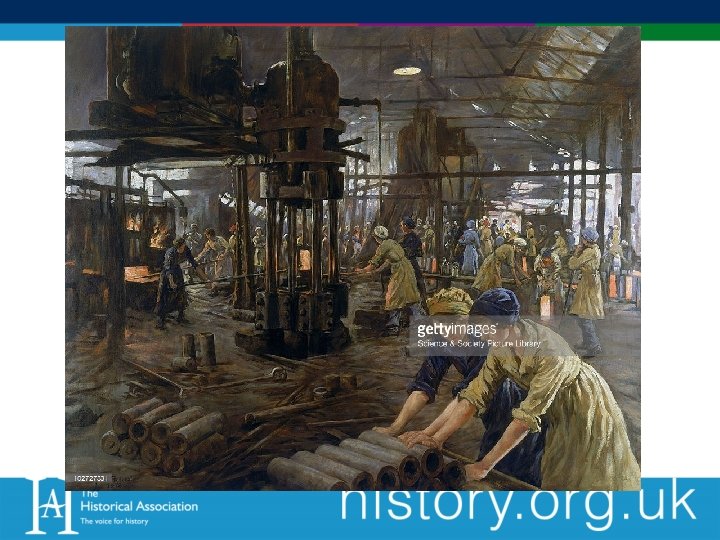
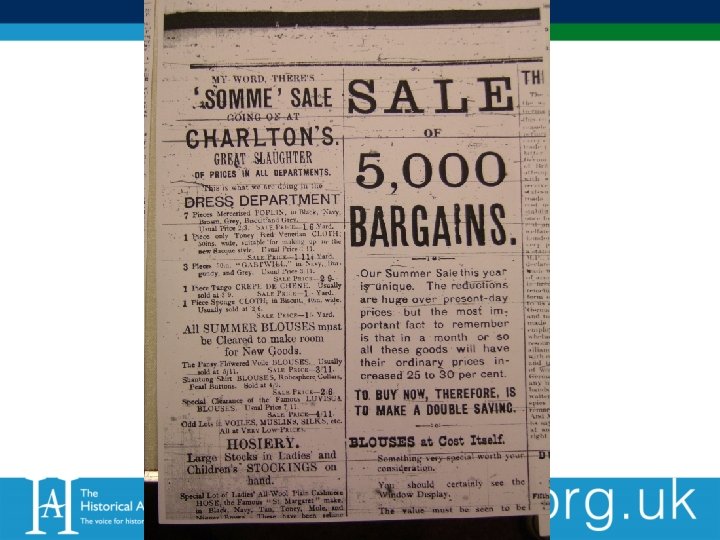
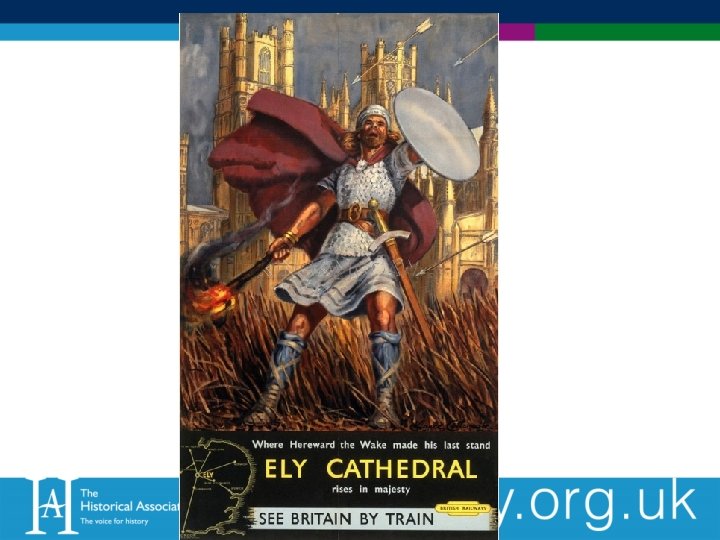
The No Man’s Land between interpretations and sources … • • Medieval woman Conscription appeals Munition Girl Advertisement
What is this medieval woman doing?
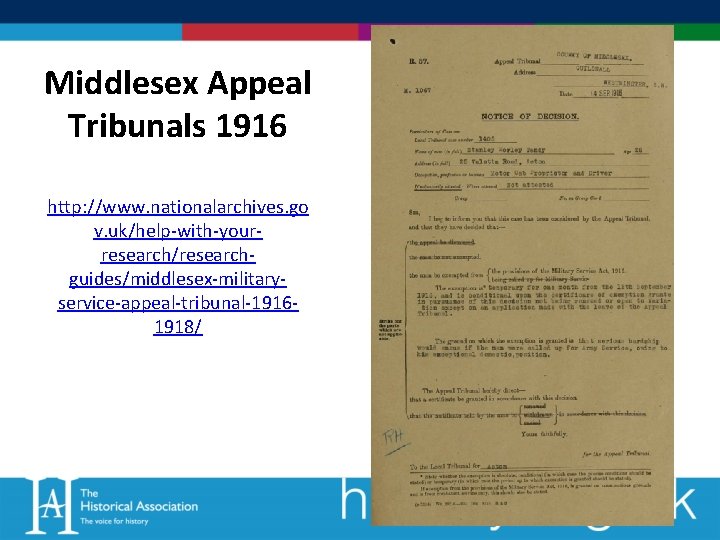
Middlesex Appeal Tribunals 1916 http: //www. nationalarchives. go v. uk/help-with-yourresearch/researchguides/middlesex-militaryservice-appeal-tribunal-19161918/
Interpretations in the new GCSEs • Comprehending • Comparing • Evaluating
Evaluating interpretations
Evaluating interpretations • Not easy • Hard to avoid trite and generic observations • Choose the right kinds of interpretations
Rewriting Russian history • What matters more …. – An evaluation? – A correction? – Understanding how and why the rewriting is happening?
Evaluating academic interpretations …. • What are we thinking? !
OCR Spec A approach • Two controversies – Appeasement – Origins of Cold War • Two key features – Story of the story – Context of the changes in the story
Evaluation ‘tools’ The Question 3 ‘Evaluation toolkit’ • Evaluation is probably the trickiest part of the assessment. Don’t fall into the trap of simplistic comments like ‘Historian X said this because he is Russian’ or ‘He might not have had all the sources’. This question demands more than that. Use as many of these evaluation ‘tools’ as you can: • Tool A The context of the historian: This is the context in which the historian is writing, not the events they are writing about. Think about how events, or the personal views or experiences of the historian, influenced the way they interpreted events. • Tool B The views of other historians: Use the views of other historians who have agreed with or criticised the original view or suggested alternative interpretations. • Tool C Relevant factual knowledge: Use your knowledge of specific events or developments to support or challenge any claim made by the historian.
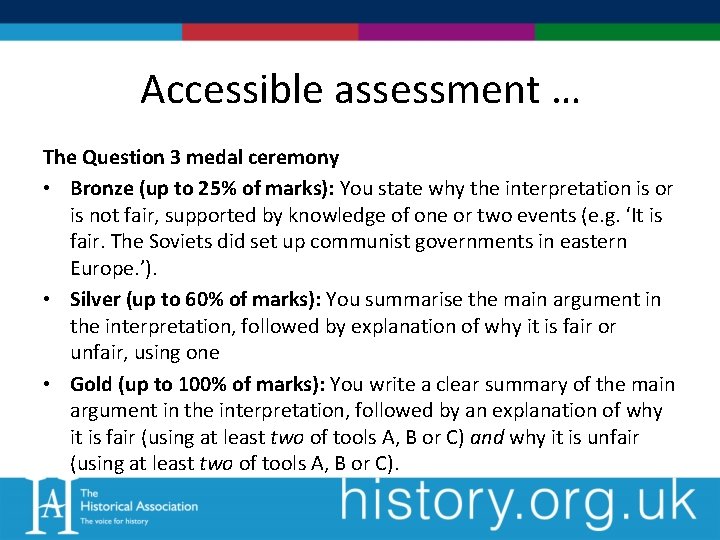
Accessible assessment … The Question 3 medal ceremony • Bronze (up to 25% of marks): You state why the interpretation is or is not fair, supported by knowledge of one or two events (e. g. ‘It is fair. The Soviets did set up communist governments in eastern Europe. ’). • Silver (up to 60% of marks): You summarise the main argument in the interpretation, followed by explanation of why it is fair or unfair, using one • Gold (up to 100% of marks): You write a clear summary of the main argument in the interpretation, followed by an explanation of why it is fair (using at least two of tools A, B or C) and why it is unfair (using at least two of tools A, B or C).
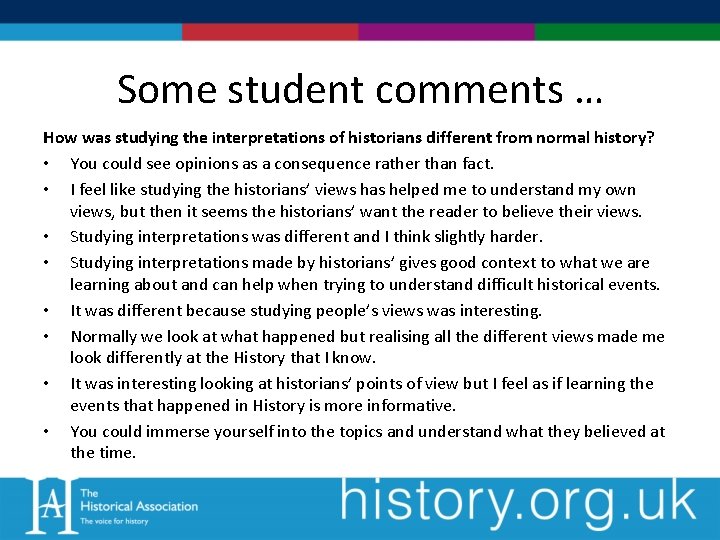
Some student comments … How was studying the interpretations of historians different from normal history? • You could see opinions as a consequence rather than fact. • I feel like studying the historians’ views has helped me to understand my own views, but then it seems the historians’ want the reader to believe their views. • Studying interpretations was different and I think slightly harder. • Studying interpretations made by historians’ gives good context to what we are learning about and can help when trying to understand difficult historical events. • It was different because studying people’s views was interesting. • Normally we look at what happened but realising all the different views made me look differently at the History that I know. • It was interesting looking at historians’ points of view but I feel as if learning the events that happened in History is more informative. • You could immerse yourself into the topics and understand what they believed at the time.
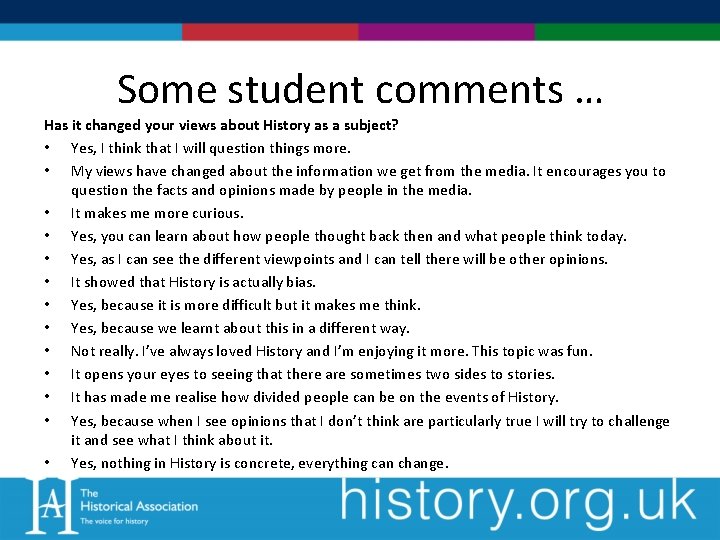
Some student comments … Has it changed your views about History as a subject? • Yes, I think that I will question things more. • My views have changed about the information we get from the media. It encourages you to question the facts and opinions made by people in the media. • It makes me more curious. • Yes, you can learn about how people thought back then and what people think today. • Yes, as I can see the different viewpoints and I can tell there will be other opinions. • It showed that History is actually bias. • Yes, because it is more difficult but it makes me think. • Yes, because we learnt about this in a different way. • Not really. I’ve always loved History and I’m enjoying it more. This topic was fun. • It opens your eyes to seeing that there are sometimes two sides to stories. • It has made me realise how divided people can be on the events of History. • Yes, because when I see opinions that I don’t think are particularly true I will try to challenge it and see what I think about it. • Yes, nothing in History is concrete, everything can change.
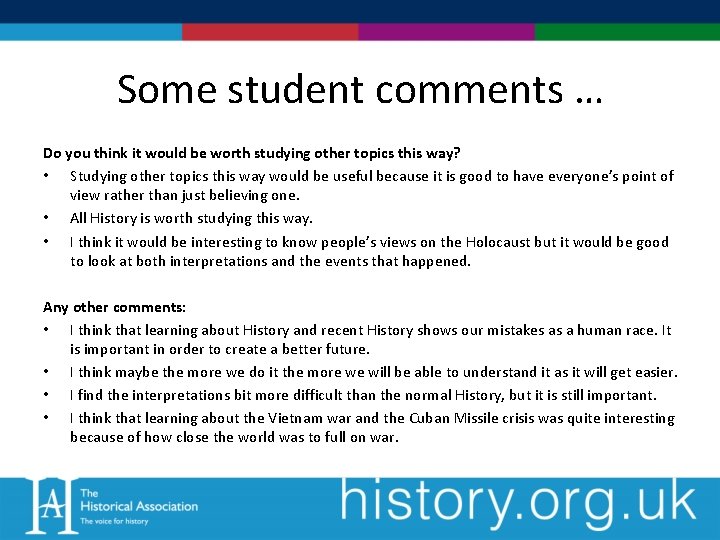
Some student comments … Do you think it would be worth studying other topics this way? • Studying other topics this way would be useful because it is good to have everyone’s point of view rather than just believing one. • All History is worth studying this way. • I think it would be interesting to know people’s views on the Holocaust but it would be good to look at both interpretations and the events that happened. Any other comments: • I think that learning about History and recent History shows our mistakes as a human race. It is important in order to create a better future. • I think maybe the more we do it the more we will be able to understand it as it will get easier. • I find the interpretations bit more difficult than the normal History, but it is still important. • I think that learning about the Vietnam war and the Cuban Missile crisis was quite interesting because of how close the world was to full on war.