
Teaching the History and Culture of Tribes in
Teaching the History and Culture of Tribes in the Northwest Partnering for the Future – Investing in Native Students Success Megan Bang & Elizabeth West 2012 -2013
Thank-You ~ Contributions This course was a collaborative venture amongst a variety of constituents: • • UW - College of Education (COE) • • Office of Native Education (ONE) Office of Superintendent of Public Instruction (OSPI) • • Education Outreach (EO) • • Bill and Melinda Gates Foundation Main Contributors: • Dr. Laura Lynn – Developer and Instructor • Emma Elliott – Research Assistant – Fieldwork and data • Chairman Leonard Forsman, Suquamish Tribe - Introduction • Patricia Whitefoot (Yakama Nation) – Shared Gathering of Native Americans (GONA) Curriculum. Trainer Guide and Trainer Resources. • Shana Brown – STI Demonstration Lesson • Yakama Nations – Learning with STI Interviews • Sally Brownfield (Squaxin Island) – Lesson on Boarding Schools
Overview • Support was requested to develop and implement a certificate program which relies upon the web-based curriculum, “Since Time Immemorial: Tribal Sovereignty in Washington State (herein referred to as - STI Curriculum). ” • Initial component to an Indigenous Certificate Program (certificate = 15 credits – 3 to 5 classes) • Overwhelming interest in the Indigenous Certificate Program and STI Curriculum • Technology has played a central role
Overview • Education Outreach – EO, University of Washington • Market survey assisted to establish content • 10 -week course (10 modules) offered in an online format through EO • Purpose - to provide pre-service and in-service educators learning opportunities, instructional resources and strategies to better serve Native American children in our schools.

Module Content • Module 1: Course introduction, Pre-Course Reflection, History of HB 1495, Navigating the STI website • Module 2: STI Units: Washington State History for Elementary and Middle School, Sample STI Lesson – Tribal Homelands • Module 3: STI Units: U. S. History for Elementary and Middle School • Module 4: STI Units: U. S. History for High School • Module 5: STI Units: U. S. History for High School • Module 6: STI Units: Contemporary World Problems for High School, Mid-Course Reflection • Module 7: Implementing STI into your classroom • Module 8: Barriers to Opportunities to Learn for Native American Learners • Module 9: Promoting Achievement of Native American Students • Module 10: Presentation of Final Projects and Course Reflections
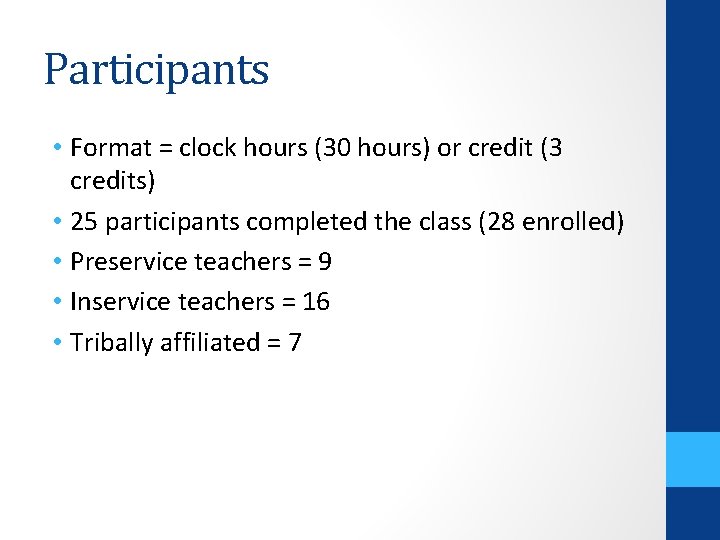
Participants • Format = clock hours (30 hours) or credit (3 credits) • 25 participants completed the class (28 enrolled) • Preservice teachers = 9 • Inservice teachers = 16 • Tribally affiliated = 7
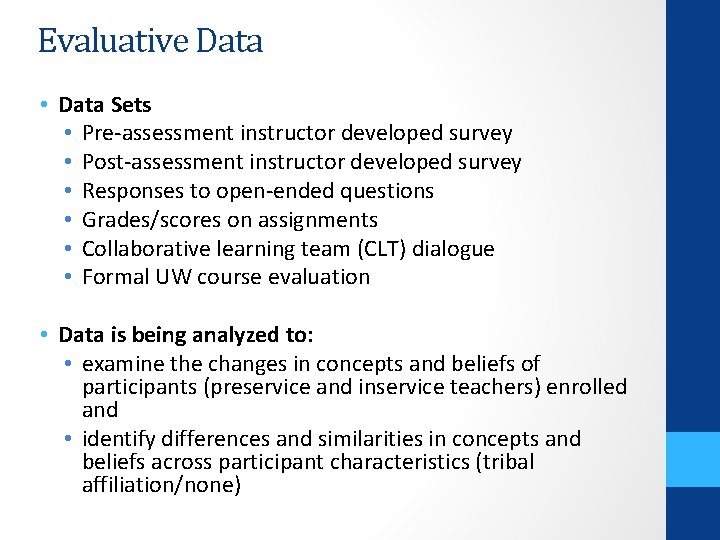
Evaluative Data • Data Sets • Pre-assessment instructor developed survey • Post-assessment instructor developed survey • Responses to open-ended questions • Grades/scores on assignments • Collaborative learning team (CLT) dialogue • Formal UW course evaluation • Data is being analyzed to: • examine the changes in concepts and beliefs of participants (preservice and inservice teachers) enrolled and • identify differences and similarities in concepts and beliefs across participant characteristics (tribal affiliation/none)
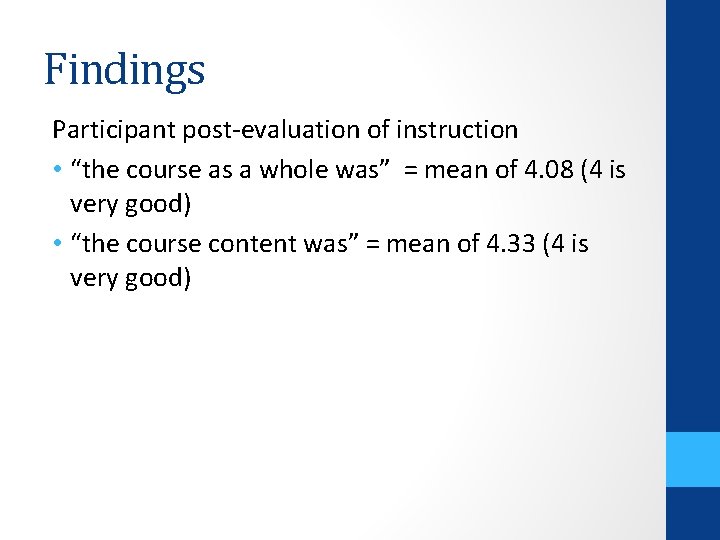
Findings Participant post-evaluation of instruction • “the course as a whole was” = mean of 4. 08 (4 is very good) • “the course content was” = mean of 4. 33 (4 is very good)
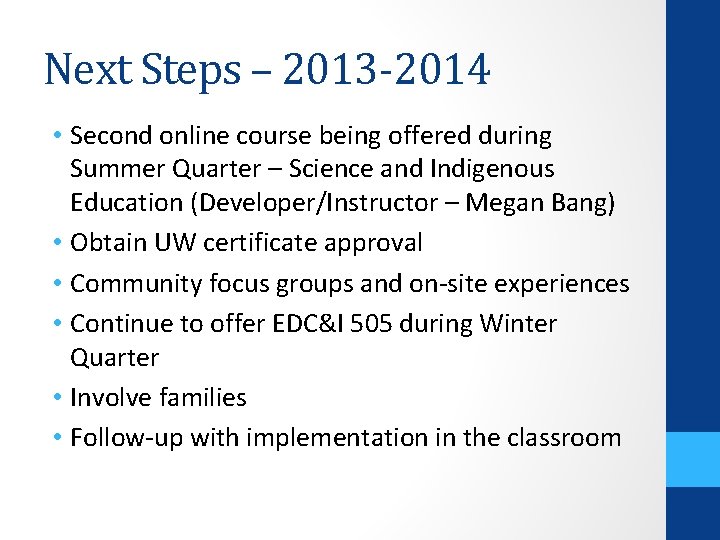
Next Steps – 2013 -2014 • Second online course being offered during Summer Quarter – Science and Indigenous Education (Developer/Instructor – Megan Bang) • Obtain UW certificate approval • Community focus groups and on-site experiences • Continue to offer EDC&I 505 during Winter Quarter • Involve families • Follow-up with implementation in the classroom
- Slides: 9