
Teaching the Broken Water Cycle A Reality Check
Teaching the “Broken” Water Cycle: A Reality Check Cornelia Harris & Kim Notin harrisc@caryinstitute. org ; notink@caryinstitute. org

Research & Education based on Ecosystem Ecology
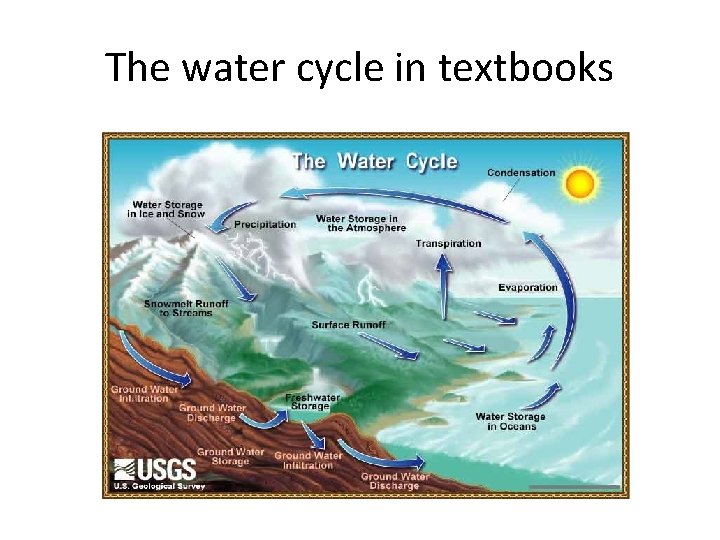
The water cycle in textbooks
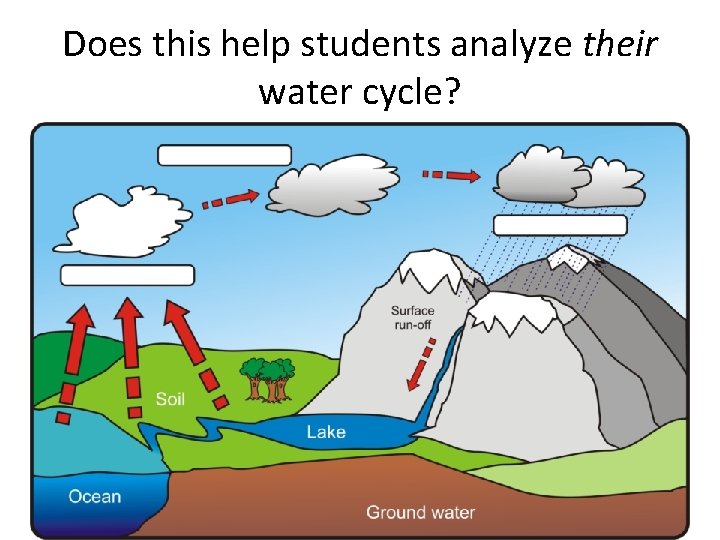
Does this help students analyze their water cycle?
How do you think the local water cycle has been altered (or “broken”)?
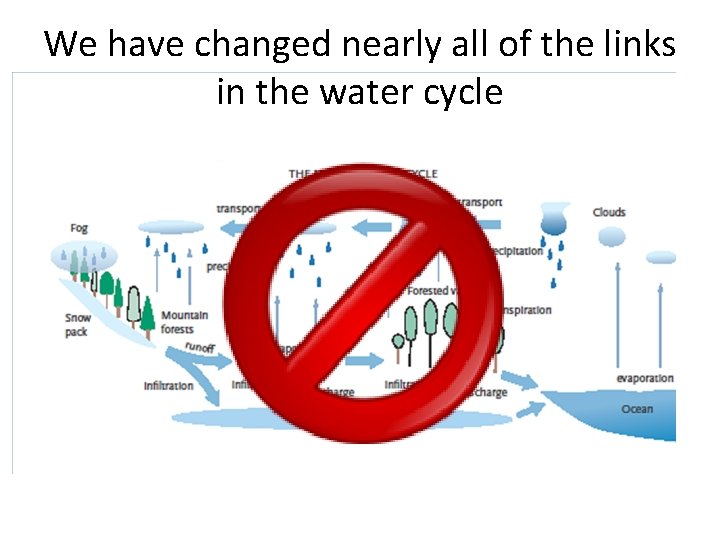
We have changed nearly all of the links in the water cycle
Why are forested streamflows lower in the summer?
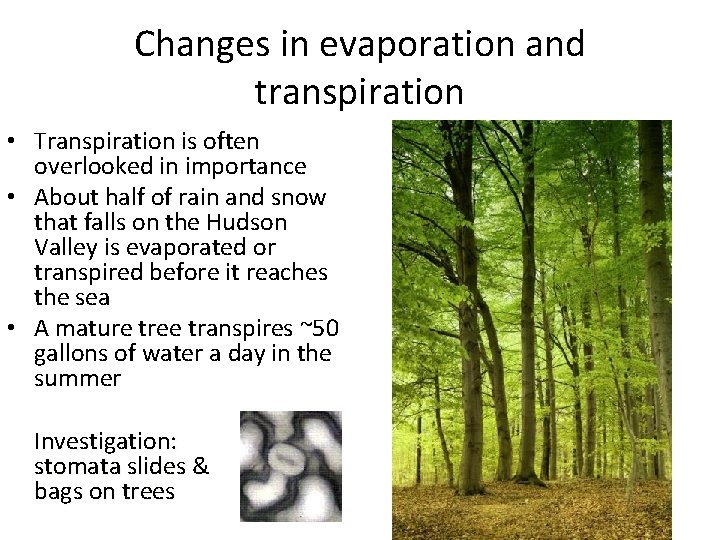
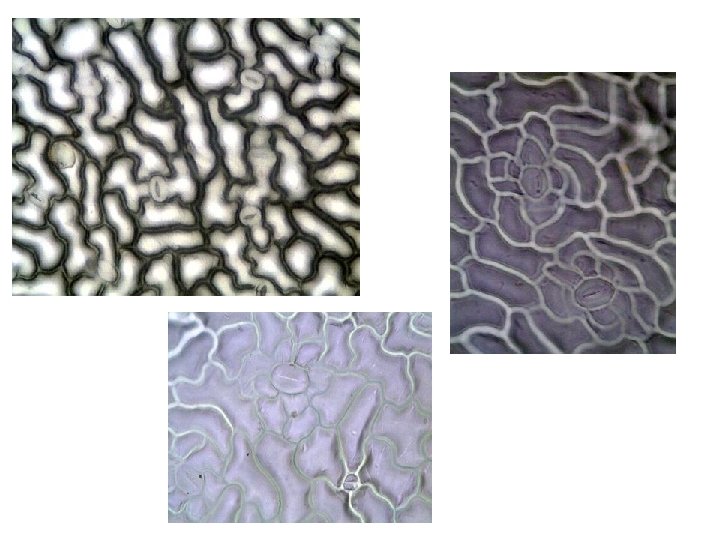
Changes in evaporation and transpiration • Transpiration is often overlooked in importance • About half of rain and snow that falls on the Hudson Valley is evaporated or transpired before it reaches the sea • A mature tree transpires ~50 gallons of water a day in the summer Investigation: stomata slides & bags on trees
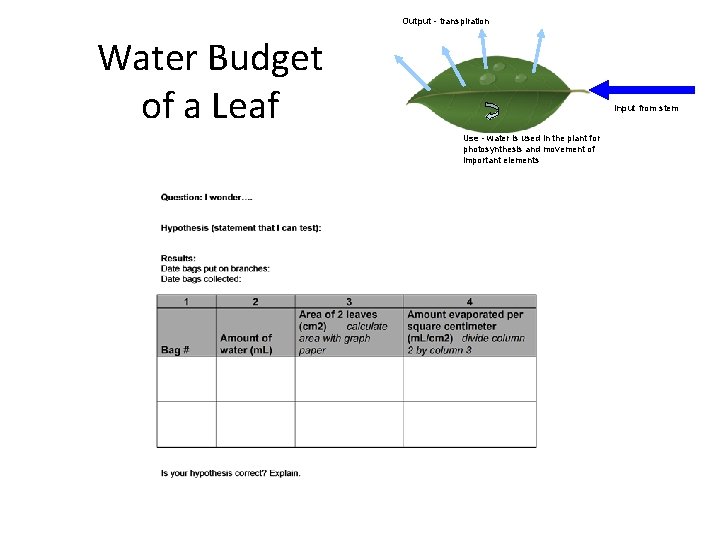
Output - transpiration Water Budget of a Leaf Input from stem Use - water is used in the plant for photosynthesis and movement of important elements
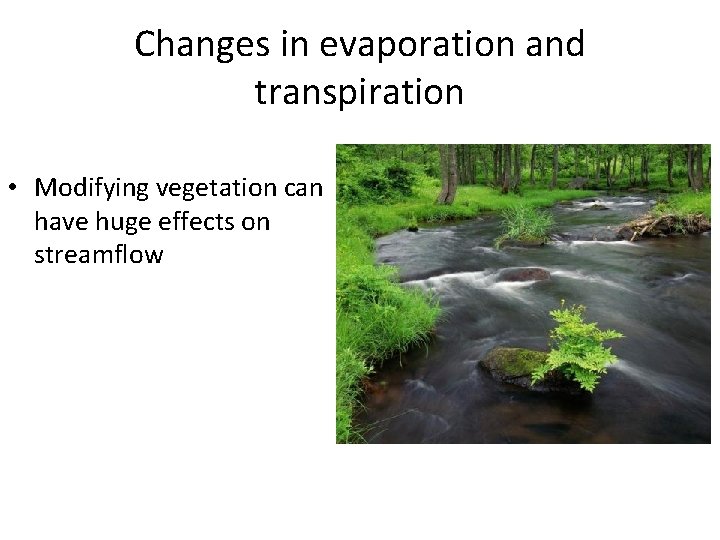
Changes in evaporation and transpiration • Modifying vegetation can have huge effects on streamflow
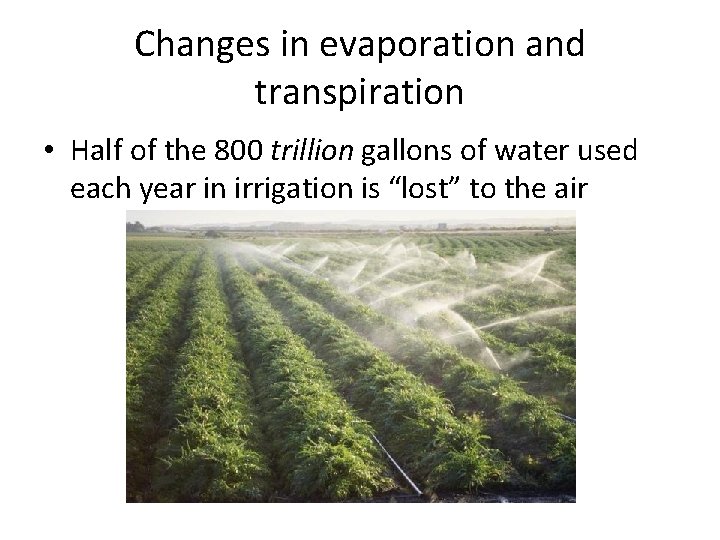
Changes in evaporation and transpiration • Half of the 800 trillion gallons of water used each year in irrigation is “lost” to the air
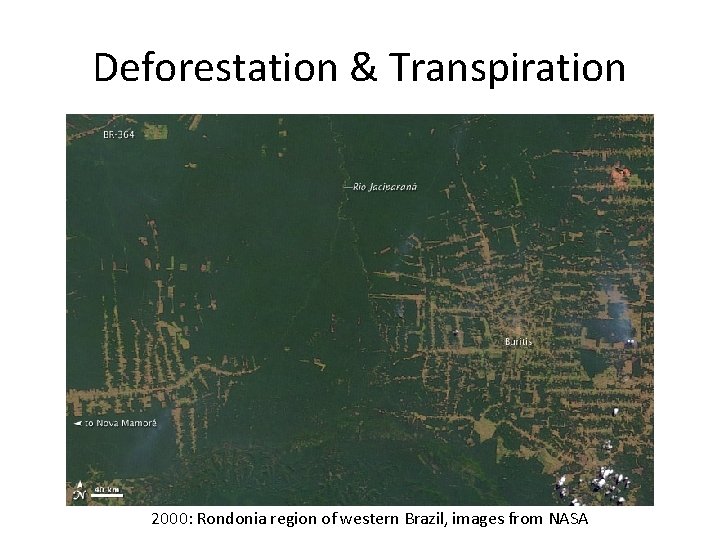
Deforestation & Transpiration 2000: Rondonia region of western Brazil, images from NASA
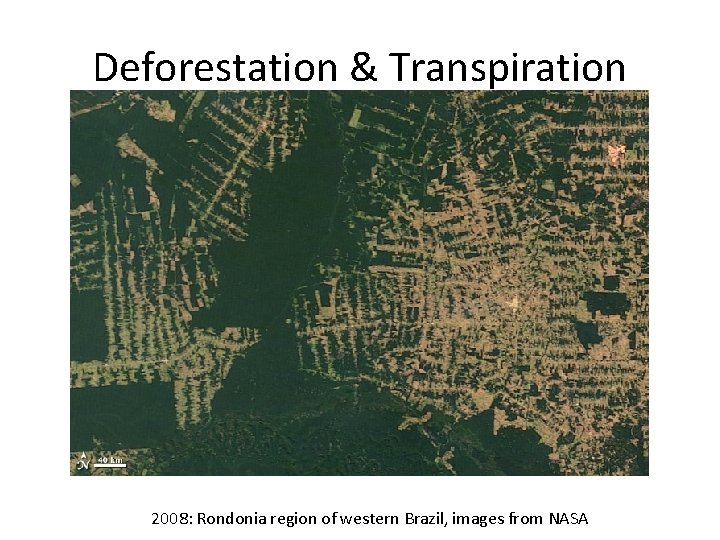
Deforestation & Transpiration 2008: Rondonia region of western Brazil, images from NASA
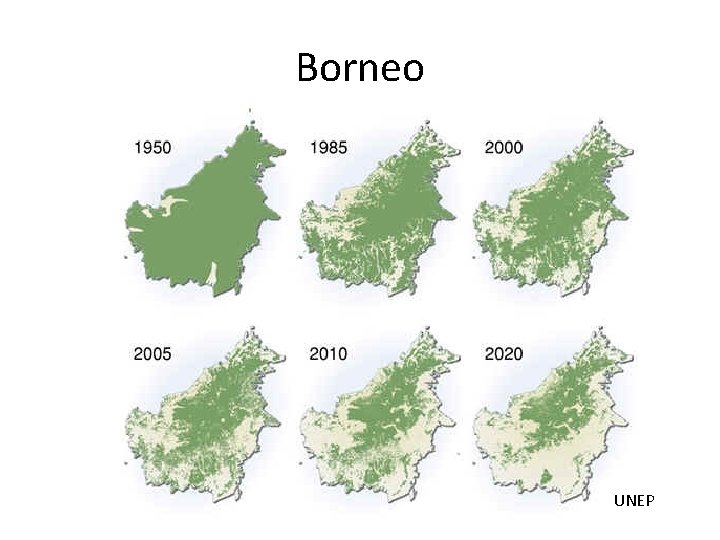
Borneo UNEP
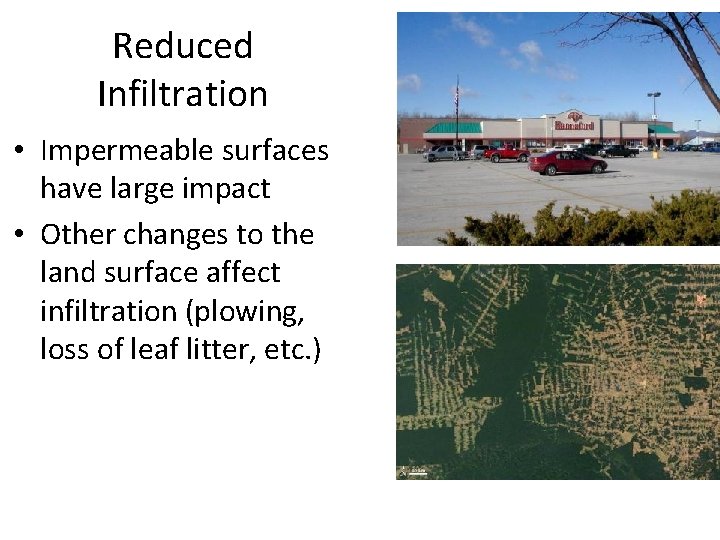
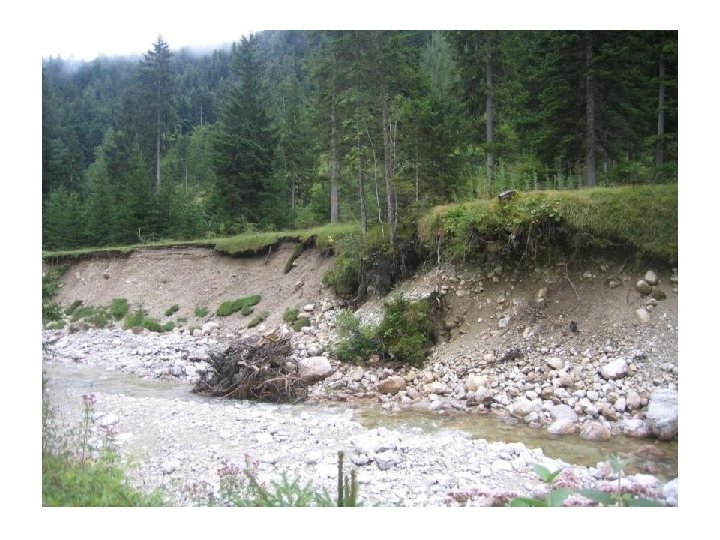
Reduced Infiltration • Impermeable surfaces have large impact • Other changes to the land surface affect infiltration (plowing, loss of leaf litter, etc. )
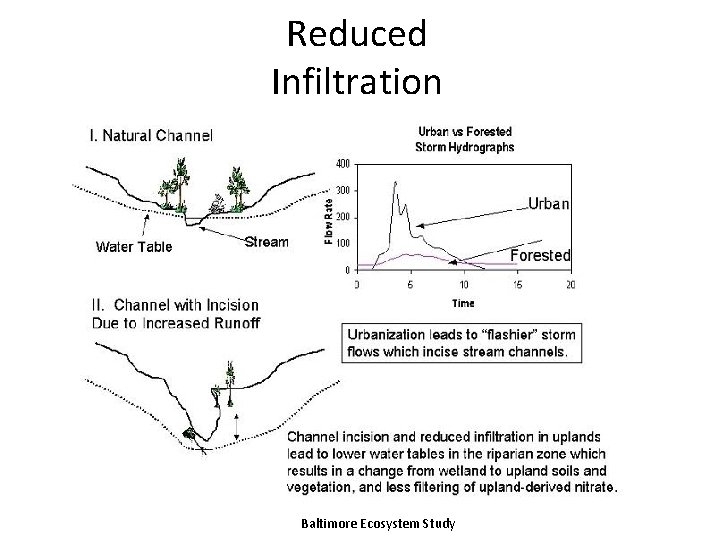
Reduced Infiltration Baltimore Ecosystem Study
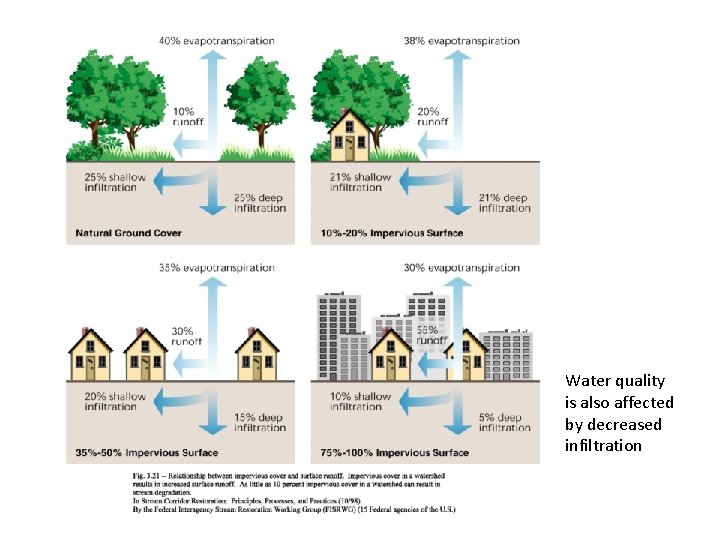
Water quality is also affected by decreased infiltration
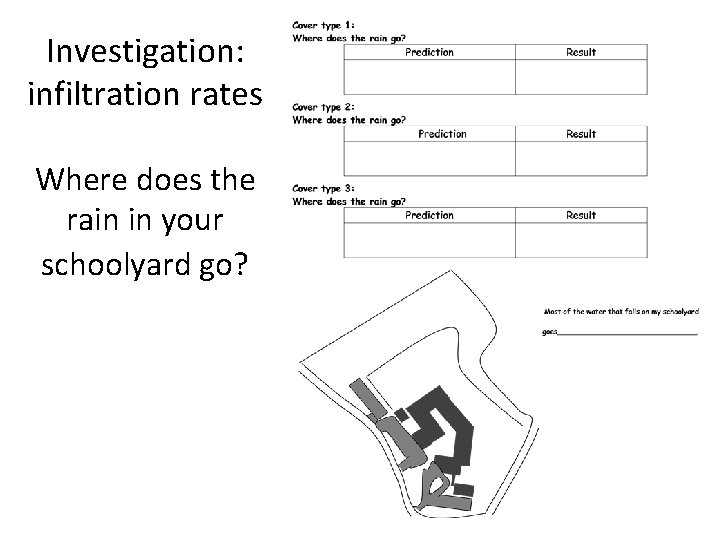
Investigation: infiltration rates Where does the rain in your schoolyard go?
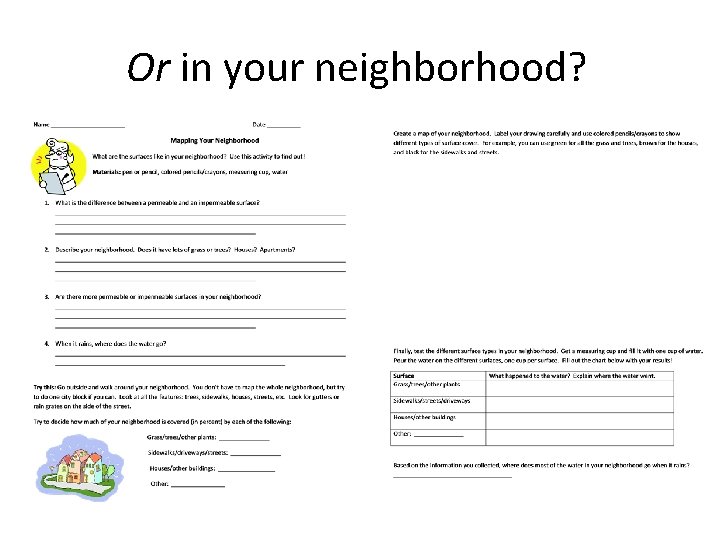
Or in your neighborhood?
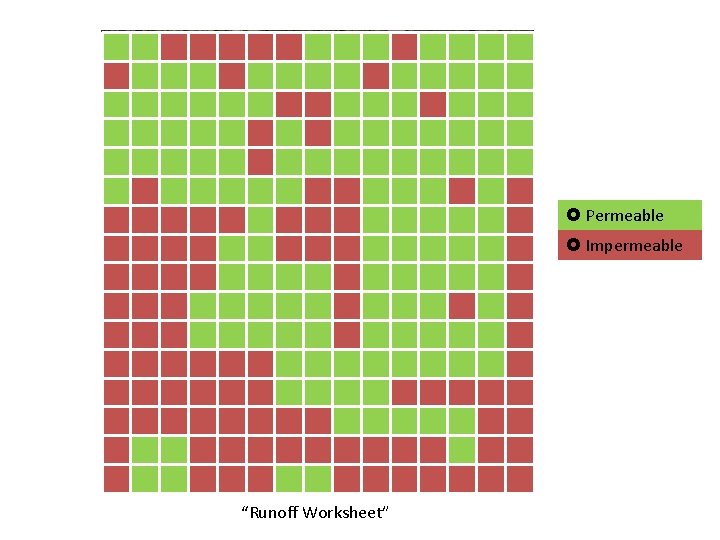
Permeable Impermeable “Runoff Worksheet”
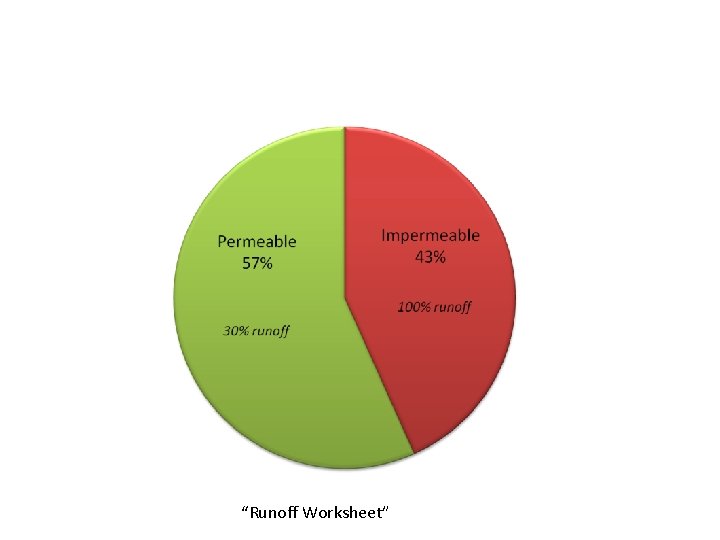
“Runoff Worksheet”
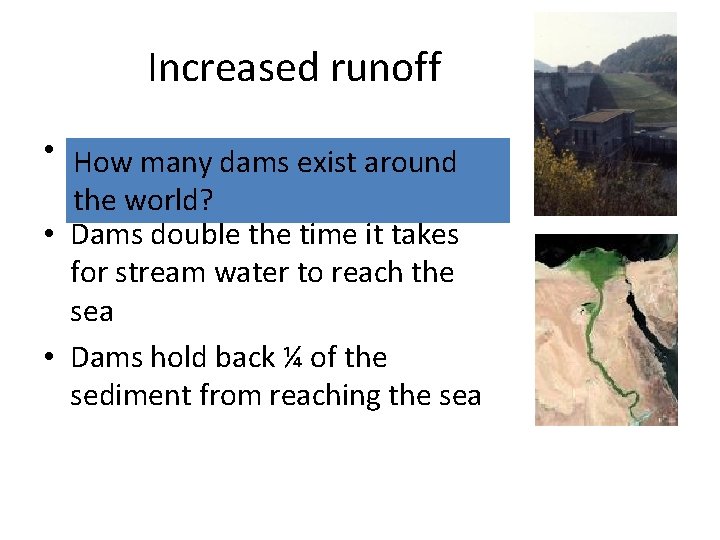
Increased runoff • ~1 million the How manydamsaround exist around world the world? • Dams double the time it takes for stream water to reach the sea • Dams hold back ¼ of the sediment from reaching the sea
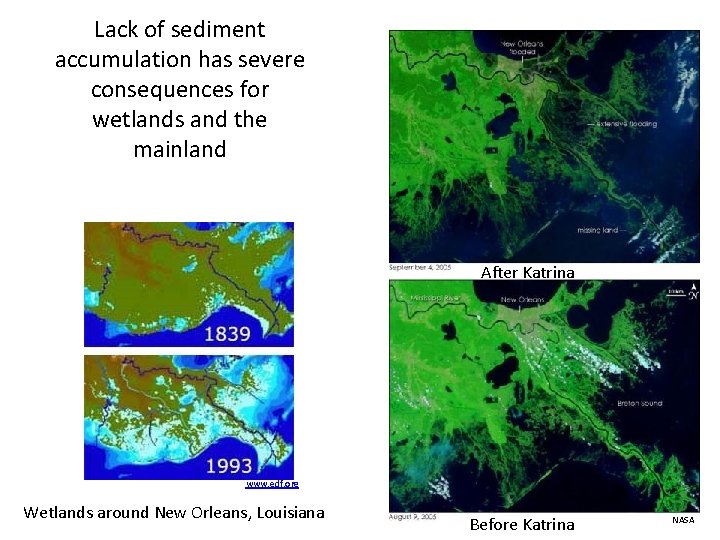
Lack of sediment accumulation has severe consequences for wetlands and the mainland After Katrina www. edf. org Wetlands around New Orleans, Louisiana Before Katrina NASA
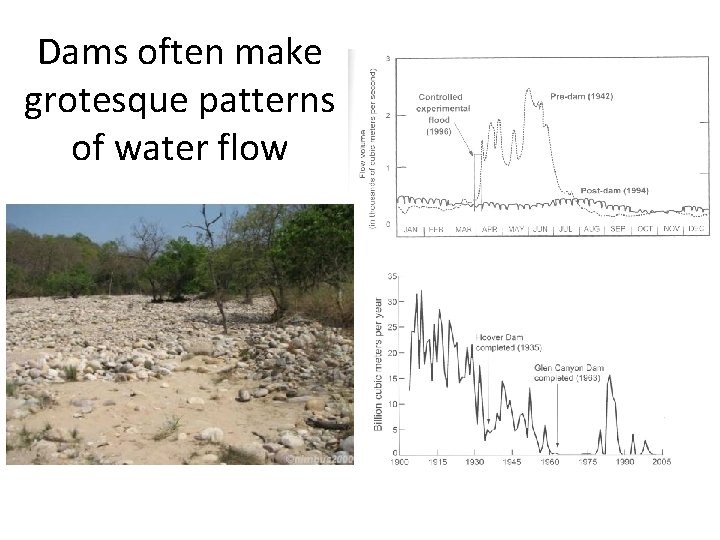
Dams often make grotesque patterns of water flow
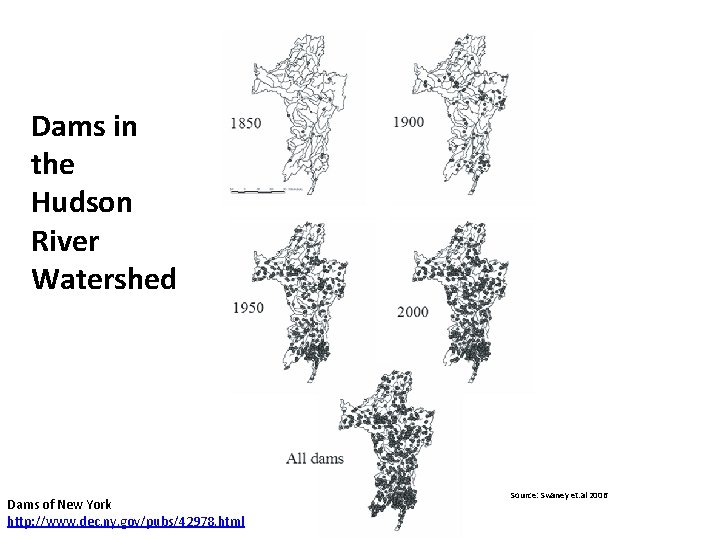
Dams in the Hudson River Watershed Dams of New York http: //www. dec. ny. gov/pubs/42978. html Source: Swaney et. al 2006
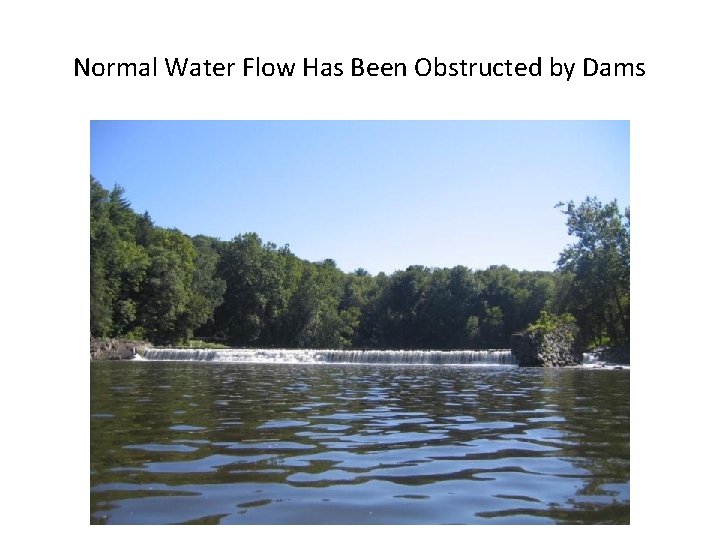
Normal Water Flow Has Been Obstructed by Dams
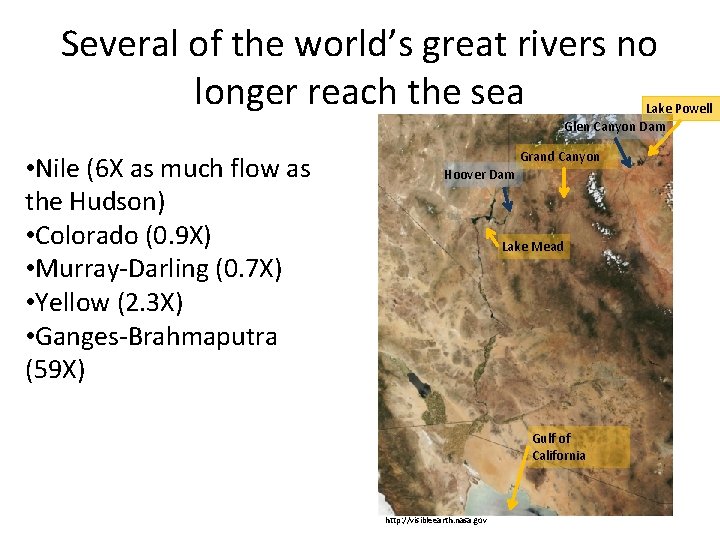
Several of the world’s great rivers no longer reach the sea Lake Powell Glen Canyon Dam • Nile (6 X as much flow as the Hudson) • Colorado (0. 9 X) • Murray-Darling (0. 7 X) • Yellow (2. 3 X) • Ganges-Brahmaputra (59 X) Grand Canyon Hoover Dam Lake Mead Gulf of California http: //visibleearth. nasa. gov
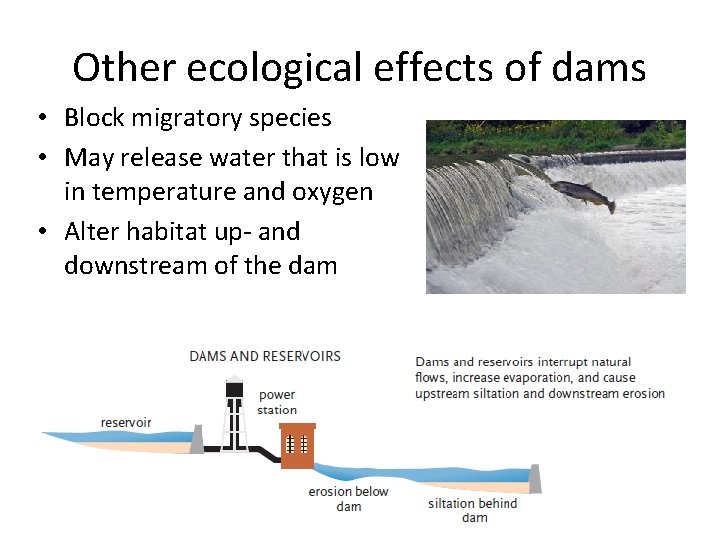
Other ecological effects of dams • Block migratory species • May release water that is low in temperature and oxygen • Alter habitat up- and downstream of the dam
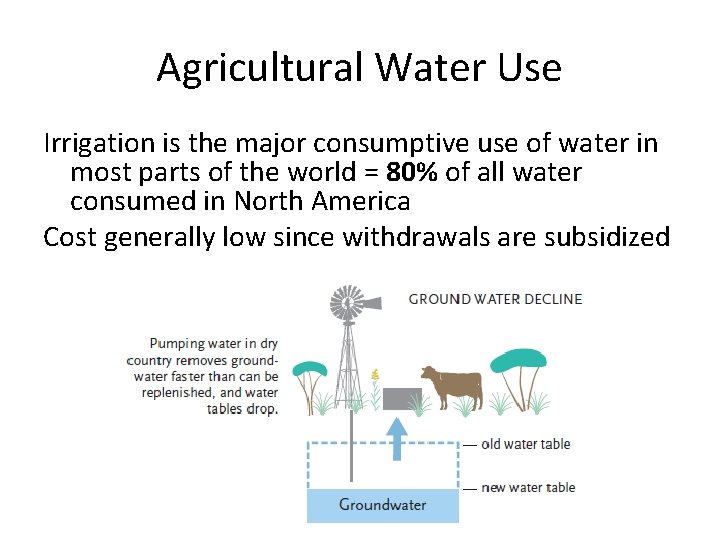
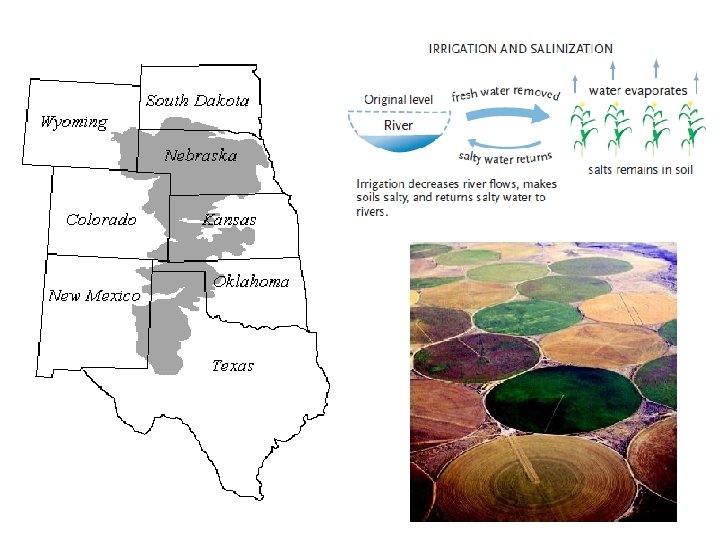
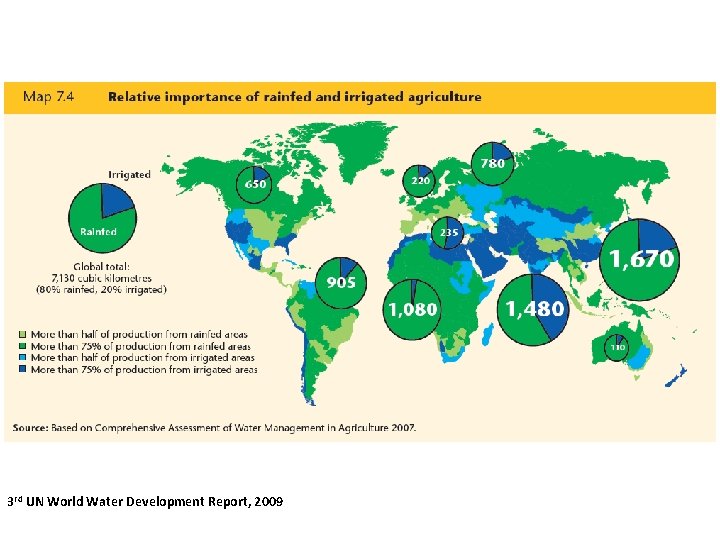
Agricultural Water Use Irrigation is the major consumptive use of water in most parts of the world = 80% of all water consumed in North America Cost generally low since withdrawals are subsidized
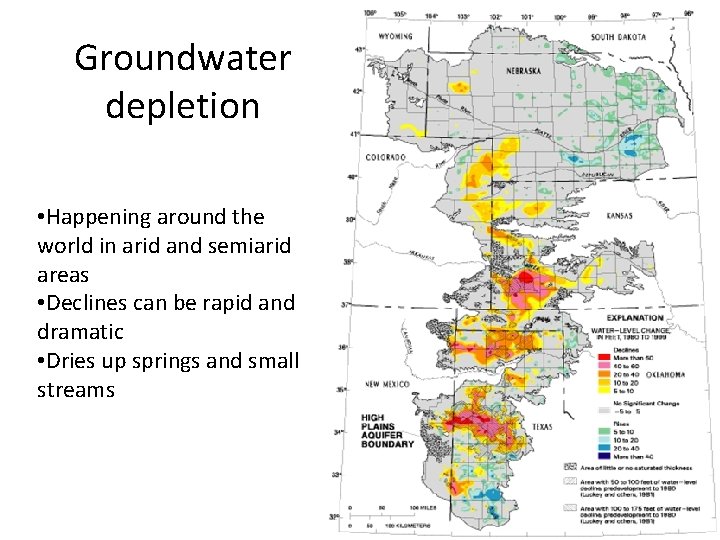
Groundwater depletion • Happening around the world in arid and semiarid areas • Declines can be rapid and dramatic • Dries up springs and small streams
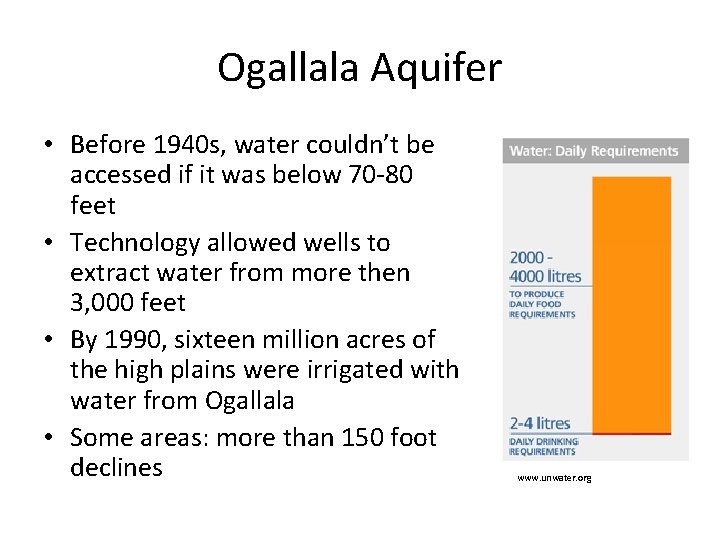
Ogallala Aquifer • Before 1940 s, water couldn’t be accessed if it was below 70 -80 feet • Technology allowed wells to extract water from more then 3, 000 feet • By 1990, sixteen million acres of the high plains were irrigated with water from Ogallala • Some areas: more than 150 foot declines www. unwater. org
3 rd UN World Water Development Report, 2009
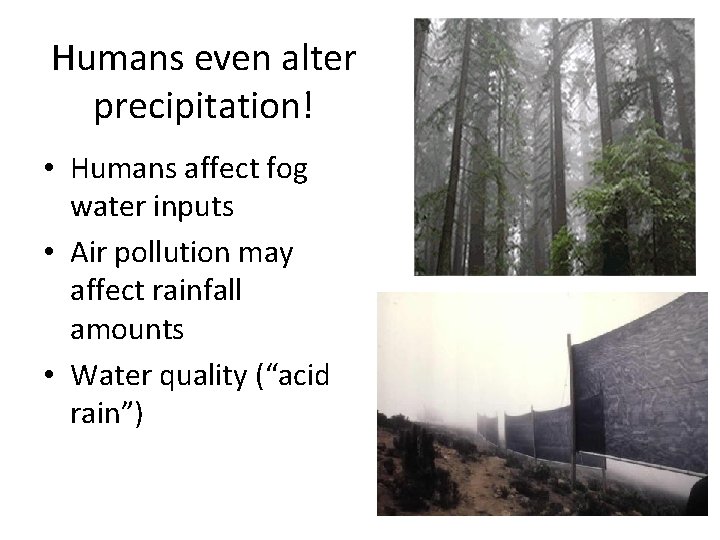
Humans even alter precipitation! • Humans affect fog water inputs • Air pollution may affect rainfall amounts • Water quality (“acid rain”)
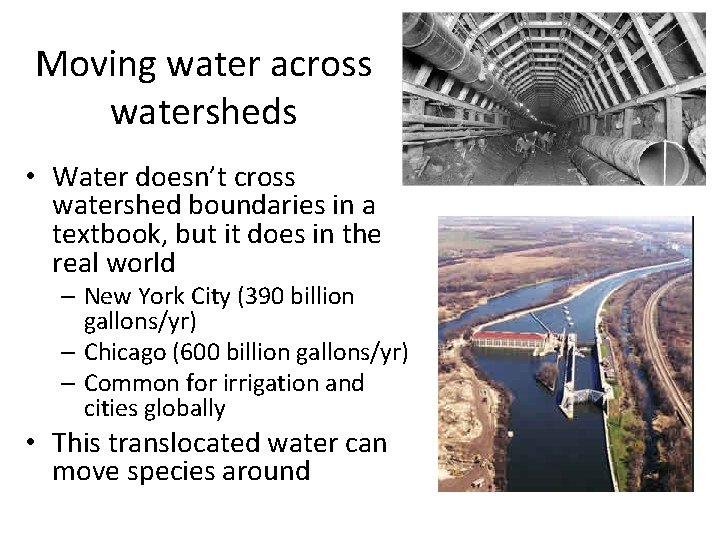
Moving water across watersheds • Water doesn’t cross watershed boundaries in a textbook, but it does in the real world – New York City (390 billion gallons/yr) – Chicago (600 billion gallons/yr) – Common for irrigation and cities globally • This translocated water can move species around
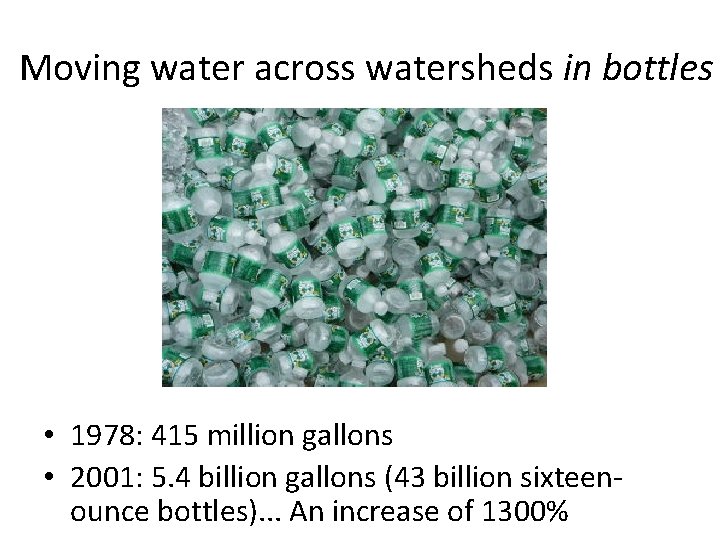
Moving water across watersheds in bottles • 1978: 415 million gallons • 2001: 5. 4 billion gallons (43 billion sixteenounce bottles). . . An increase of 1300%
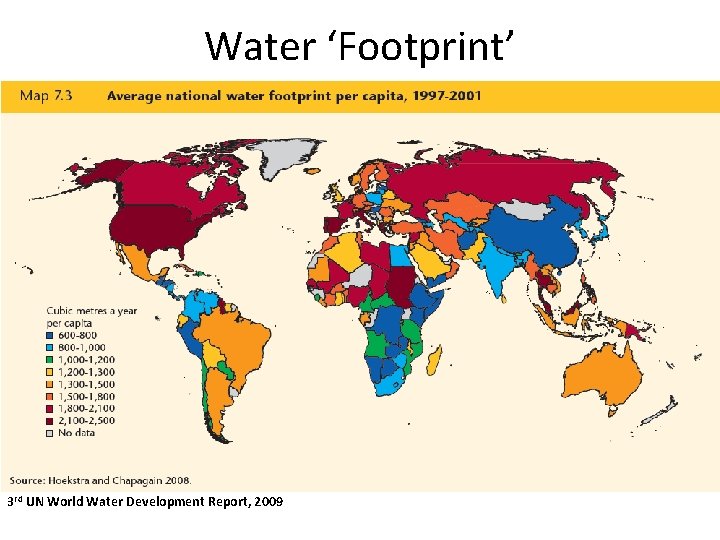
Water ‘Footprint’ 3 rd UN World Water Development Report, 2009
Opportunities to teach the real water cycle • Humans materially affect the water cycle • You are connected to the water cycle (and affect it) – Where does your drinking water come from? – Where does your sewage go? – How do local activities (even on the school grounds) affect the water cycle? – Are there concerns with how the water cycle is treated locally? – If so, how could the community do better?
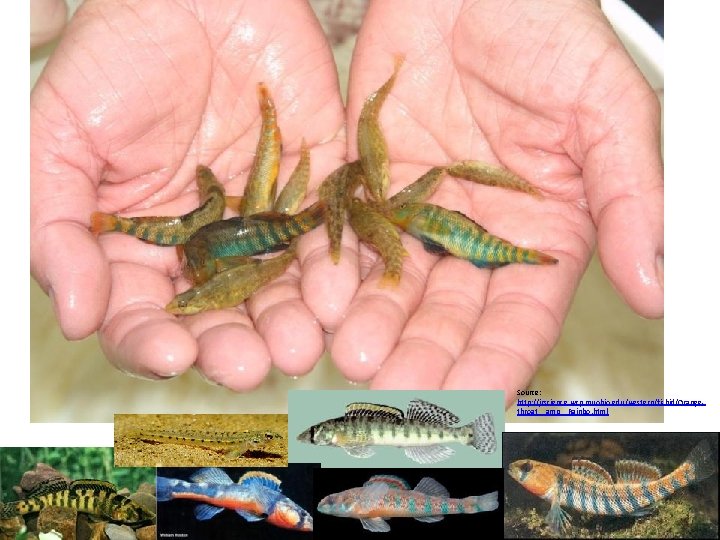
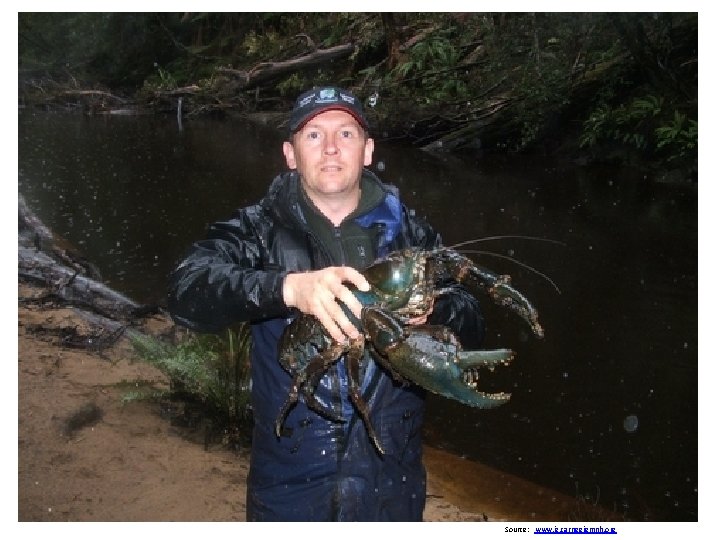
Conclusions from these lessons • The cycle is a “messy web” and humans have large effects on all parts of the water cycle. • This is just one example of how human activities (partially) control the character of the global ecosystem • We need to exercise responsibility with this control • Fresh waters contain remarkable biodiversity • That biodiversity is badly endangered
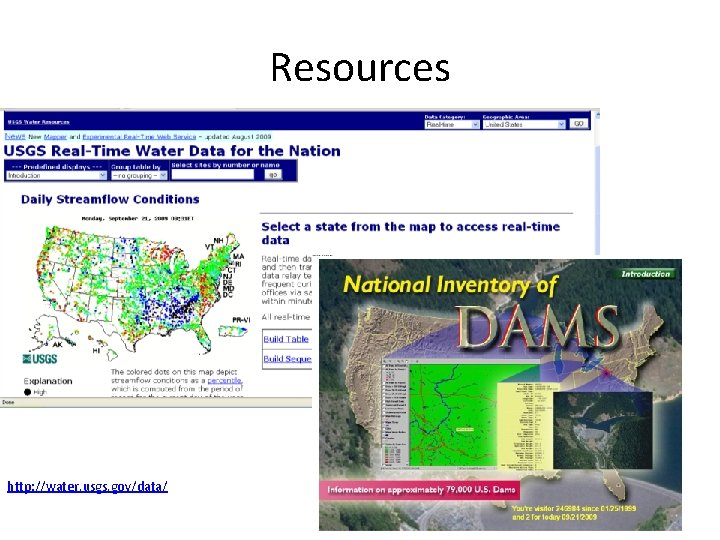
Resources http: //water. usgs. gov/data/
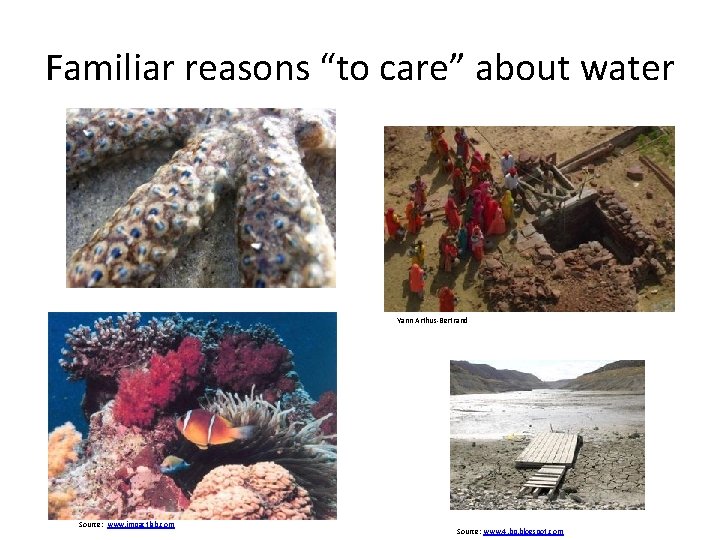
Familiar reasons “to care” about water Yann Arthus-Bertrand Source: www. impactlab. com Source: www. 4. bp. blogspot. com
The forgotten piece…
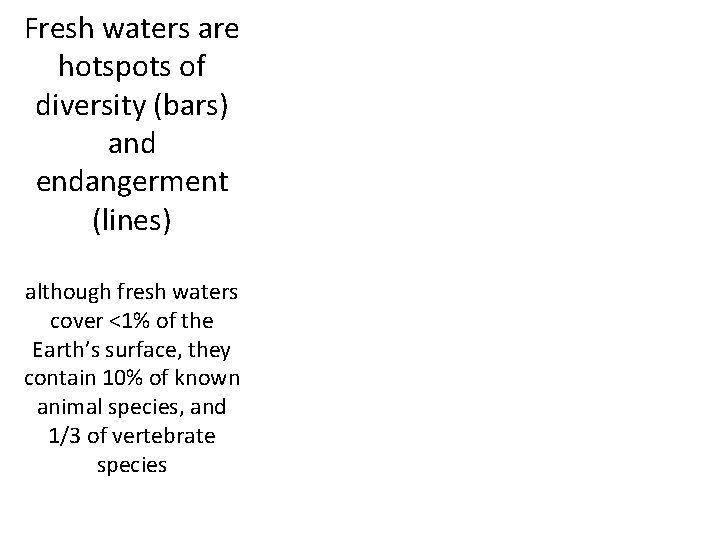
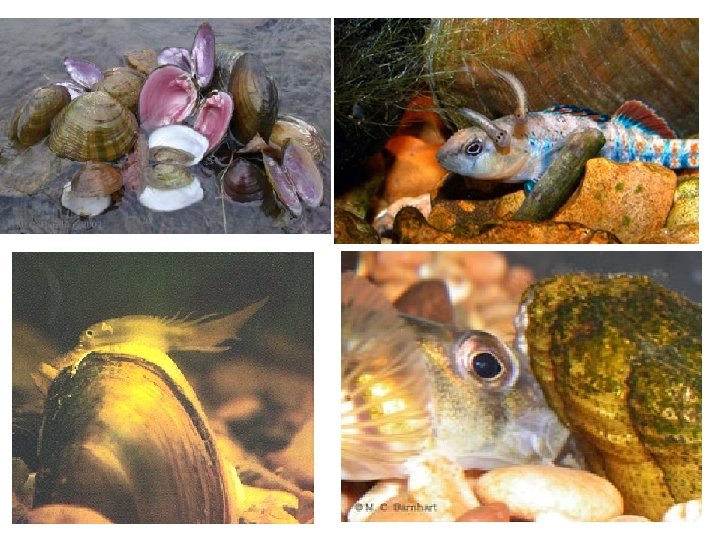
Fresh waters are hotspots of diversity (bars) and endangerment (lines) although fresh waters cover <1% of the Earth’s surface, they contain 10% of known animal species, and 1/3 of vertebrate species
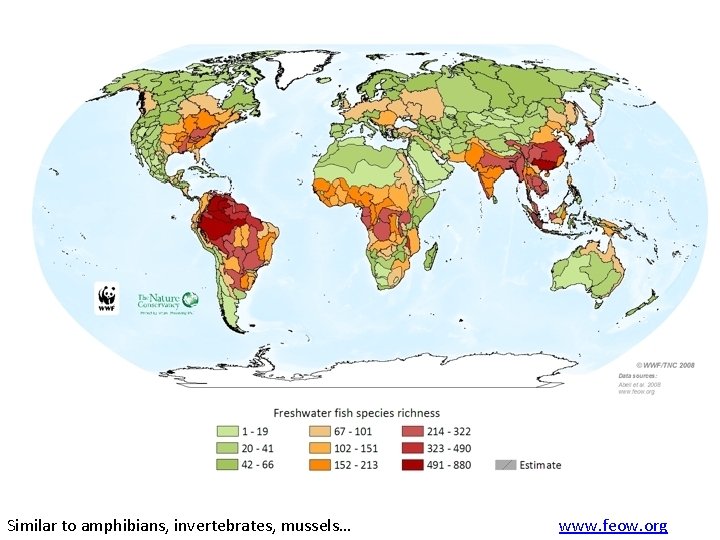
Similar to amphibians, invertebrates, mussels… www. feow. org
Freshwater organisms are more imperiled than their terrestrial counterparts
Source: http: //jrscience. wcp. muohio. edu/western/fishid/Orangethroat__amp__Rainbo. html
Source: www. iz. carnegiemnh. org
- Slides: 50