
Teaching Students What They Dont Want to Learn
- Slides: 32
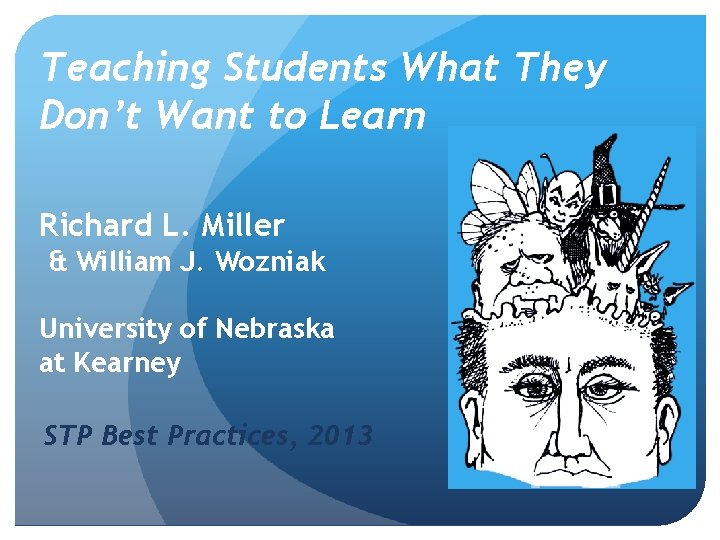
Teaching Students What They Don’t Want to Learn Richard L. Miller & William J. Wozniak University of Nebraska at Kearney STP Best Practices, 2013
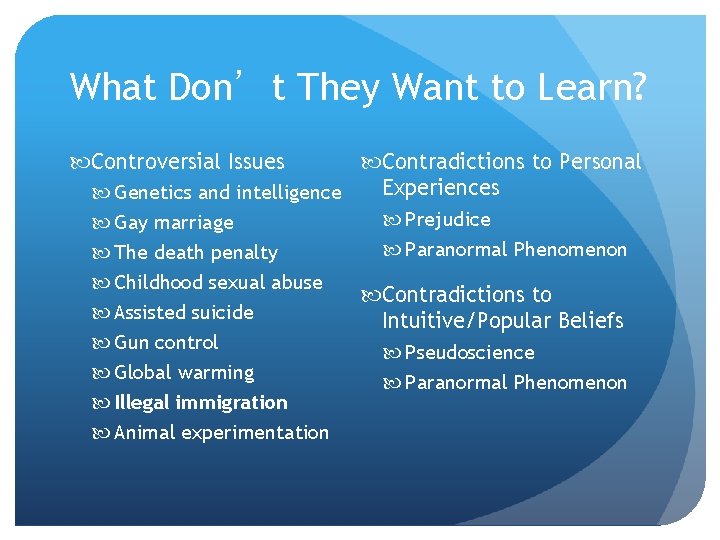
What Don’t They Want to Learn? Contradictions to Personal Experiences Genetics and intelligence Controversial Issues Gay marriage The death penalty Childhood sexual abuse Assisted suicide Gun control Global warming Illegal immigration Animal experimentation Prejudice Paranormal Phenomenon Contradictions to Intuitive/Popular Beliefs Pseudoscience Paranormal Phenomenon
Our Own Focus Overcoming Students Cherished Beliefs in Pseudoscience and the Paranormal Collaborators: Marci Rust, Beverly Miller, Jennifer Slezak, Logan Stickney, Robert Bechtel, D. Dymak, Ben Clancy, & Haley Milam
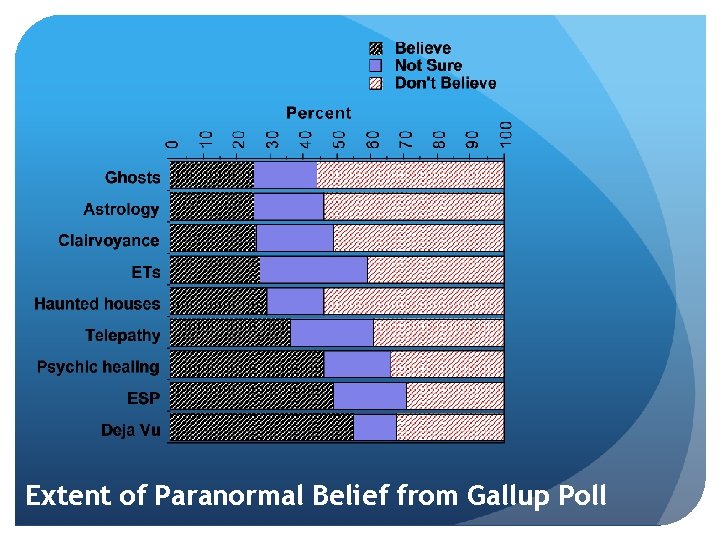
Extent of Paranormal Belief from Gallup Poll
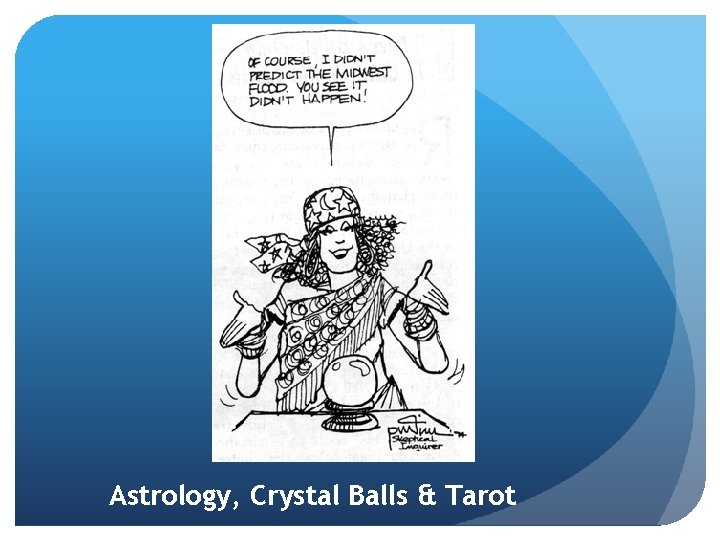
Astrology, Crystal Balls & Tarot
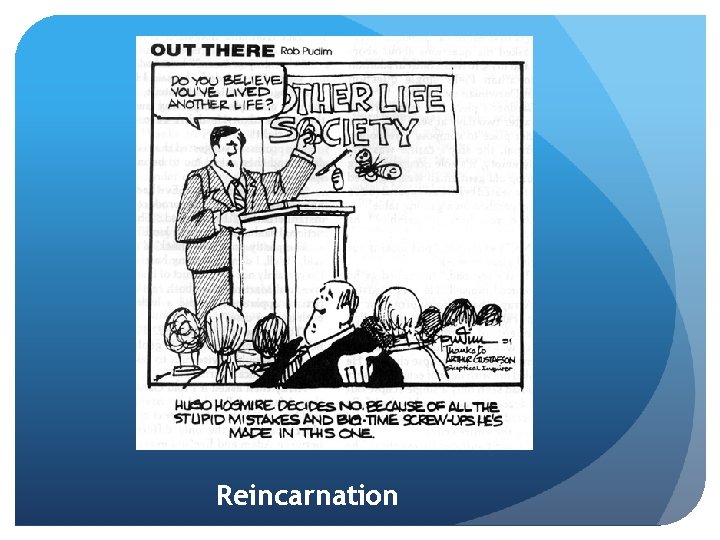
Reincarnation
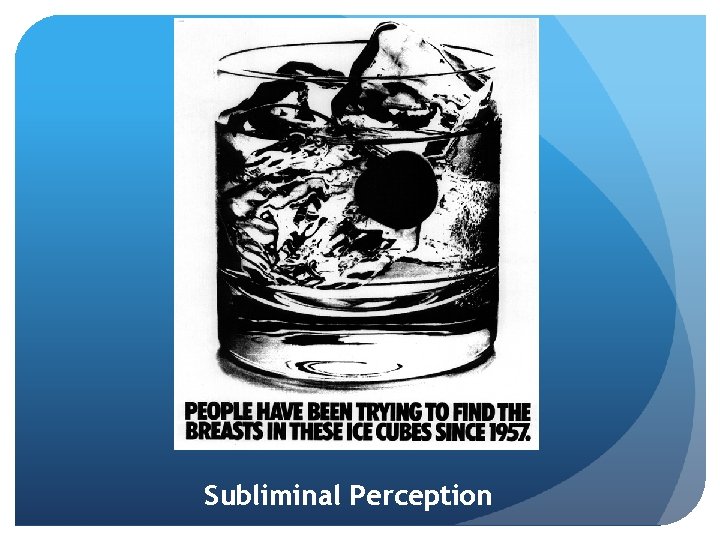
Subliminal Perception
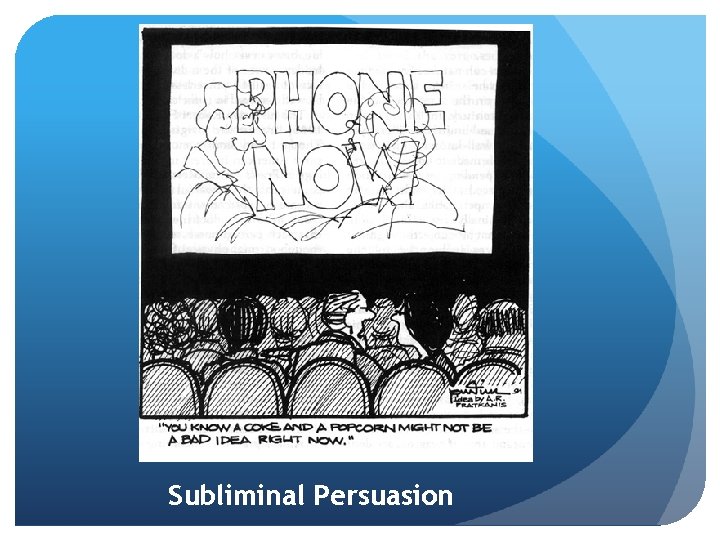
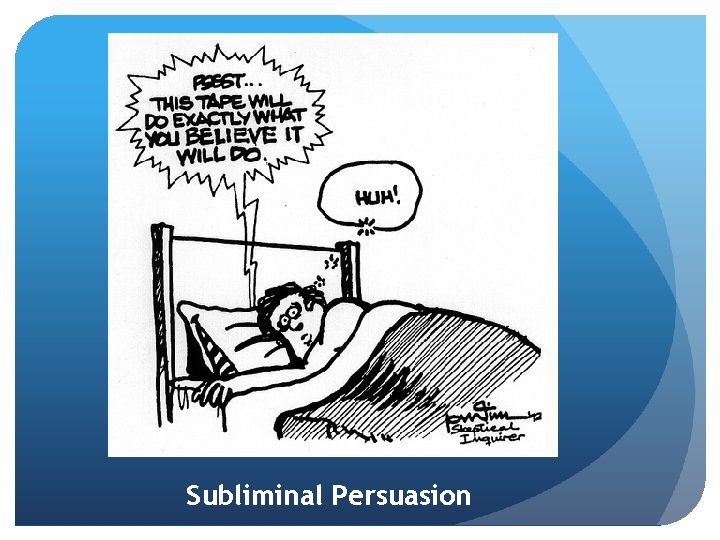
Subliminal Persuasion
Subliminal Persuasion
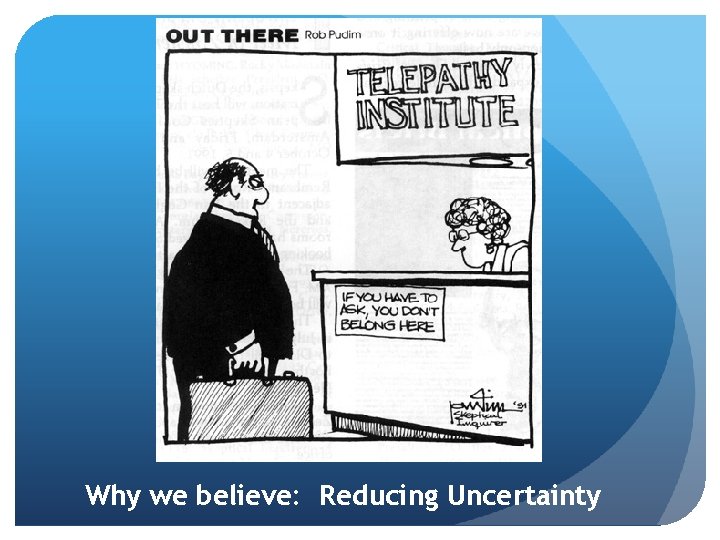
Why we believe: Reducing Uncertainty
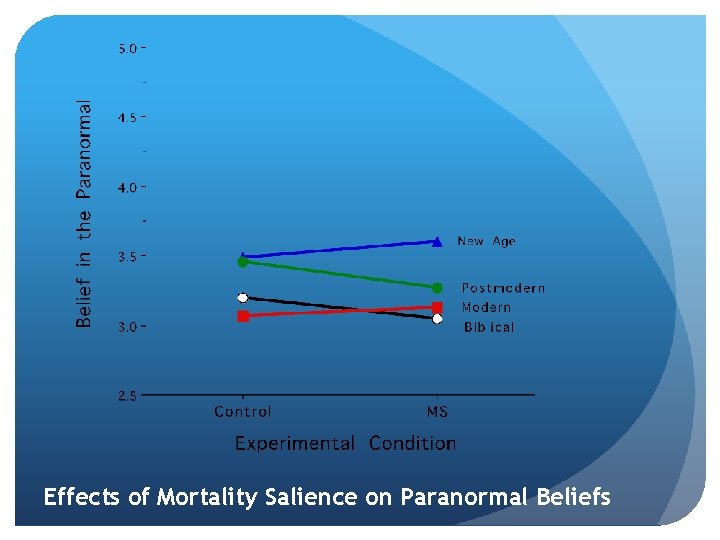
Why We Believe: Reducing Uncertainty - Terror Management Belief Systems: Biblical Literalists Modernists Post-modernists New Agers Changes in Traditional & Paranormal Beliefs as a function of Death Anxiety
Effects of Mortality Salience on Paranormal Beliefs
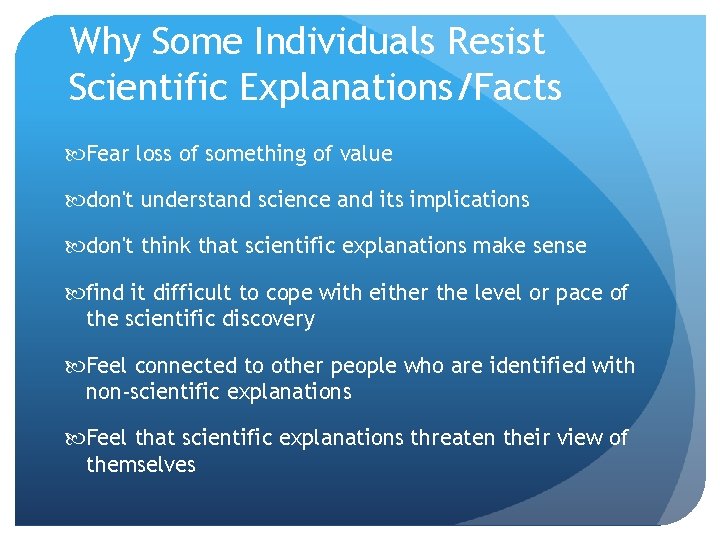
Why Some Individuals Resist Scientific Explanations/Facts Fear loss of something of value don't understand science and its implications don't think that scientific explanations make sense find it difficult to cope with either the level or pace of the scientific discovery Feel connected to other people who are identified with non-scientific explanations Feel that scientific explanations threaten their view of themselves
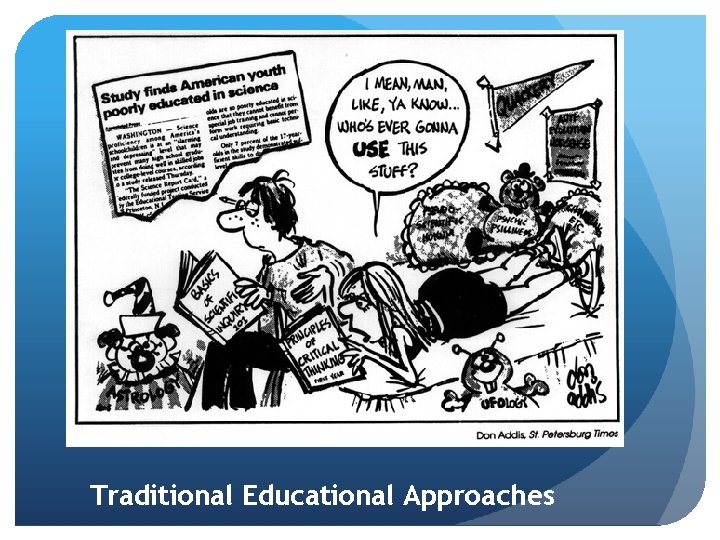
Traditional Educational Approaches
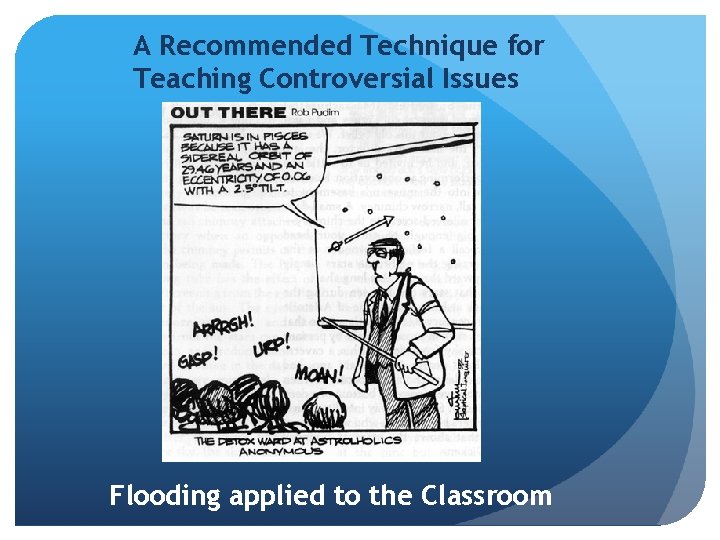
A Recommended Technique for Teaching Controversial Issues Flooding applied to the Classroom
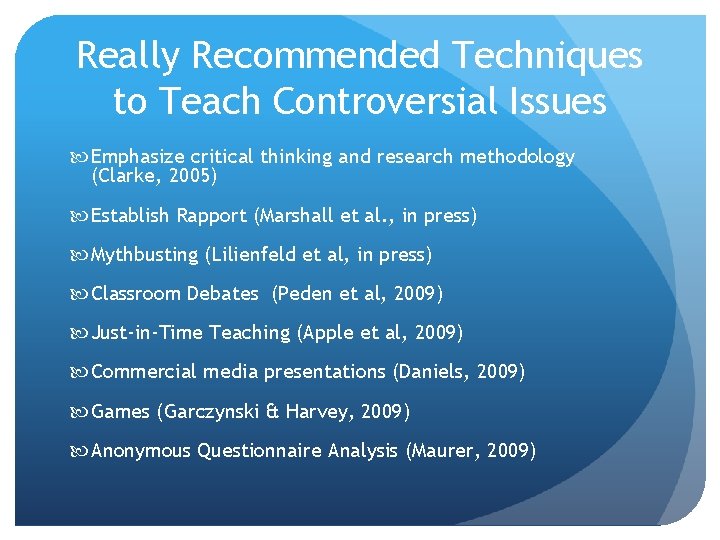
Really Recommended Techniques to Teach Controversial Issues Emphasize critical thinking and research methodology (Clarke, 2005) Establish Rapport (Marshall et al. , in press) Mythbusting (Lilienfeld et al, in press) Classroom Debates (Peden et al, 2009) Just-in-Time Teaching (Apple et al, 2009) Commercial media presentations (Daniels, 2009) Games (Garczynski & Harvey, 2009) Anonymous Questionnaire Analysis (Maurer, 2009)
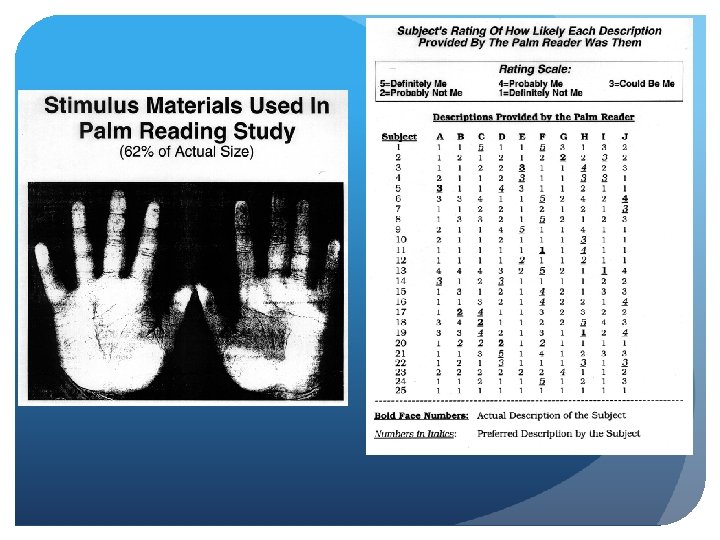
Research Methods Class: Palm Reading Discussion of Research Methods in PSY 270 Outed by a Student to the local palm reader Study Design: Double-blind Technique Preparation of Stimulus Materials Descriptions Provided by the Reader Finding Yourself Response from data collection
Educational Interventions based on Cognitive Dissonance Theory o Counter-attitudinal Advocacy o Belief Perseverance o Hypocrisy Induction
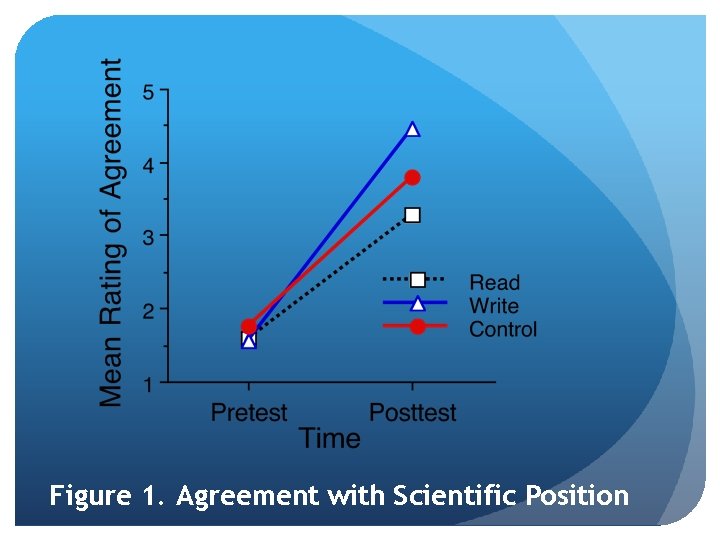
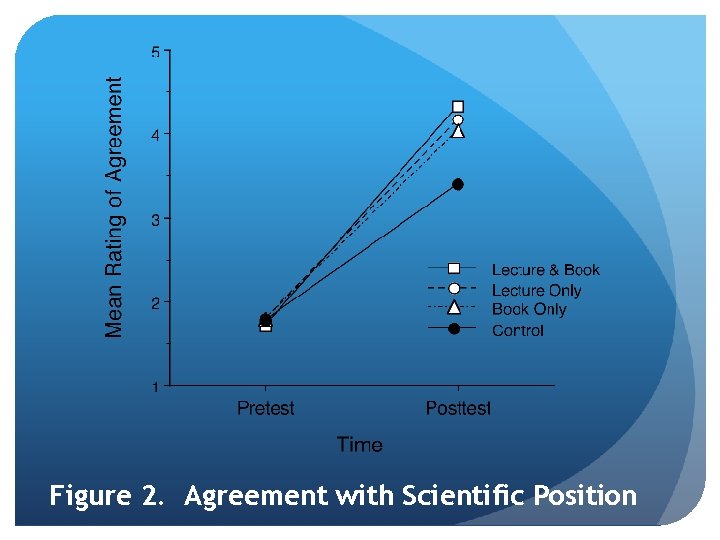
Counterattitudinal Advocacy I Stimulus Materials Reading, Writing and Control Before and After Miller, et al. Teaching of Psyhology, 1998
Figure 1. Agreement with Scientific Position
Figure 2. Agreement with Scientific Position
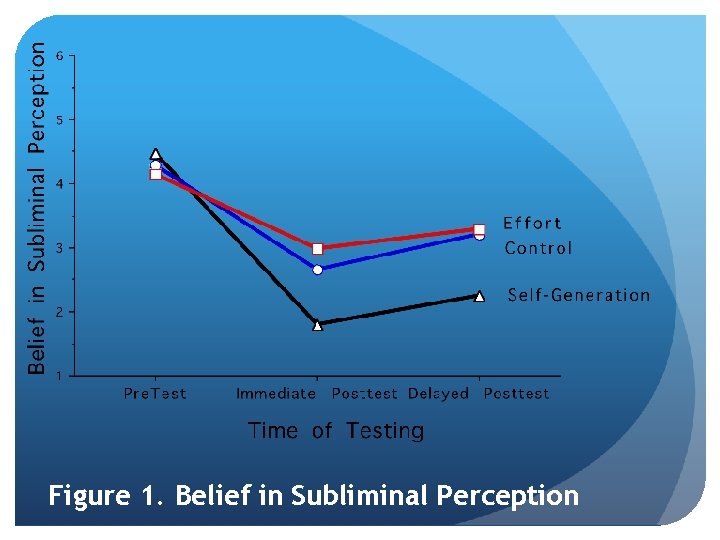
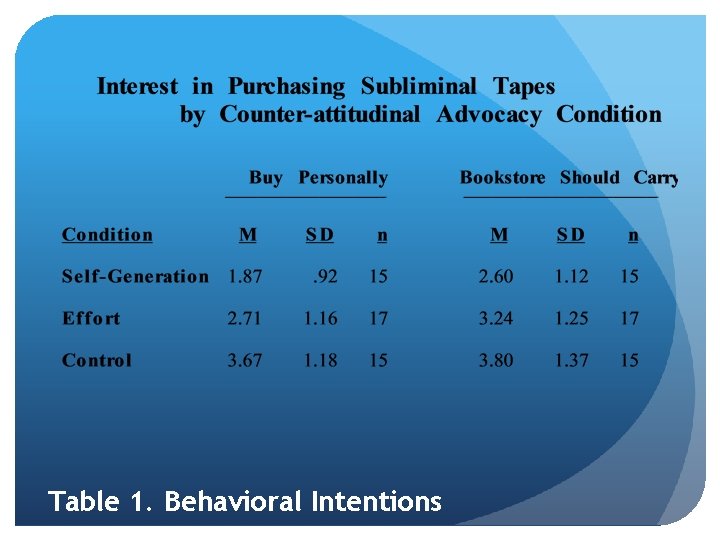
Counter-attitudinal Advocacy II Effort vs. Self-generation of Arguments Attitudes and Behavioral Intentions Miller & Wozniak, Current Research in Social Psychology, 2001
Figure 1. Belief in Subliminal Perception
Table 1. Behavioral Intentions
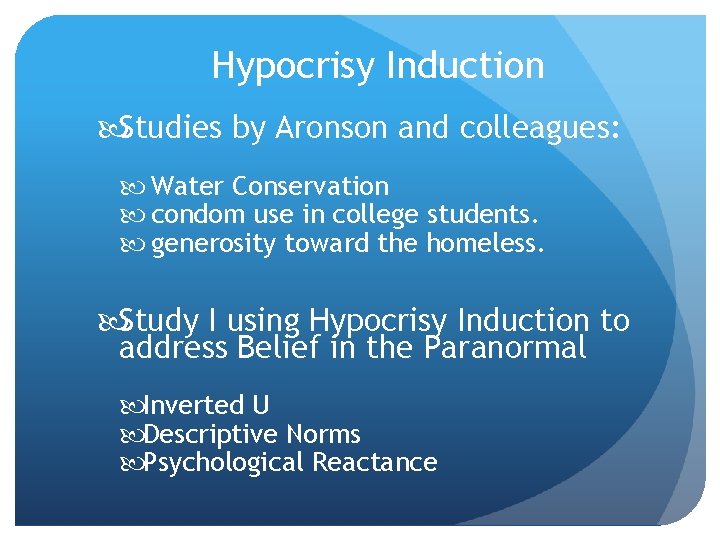
Hypocrisy Induction Studies by Aronson and colleagues: Water Conservation condom use in college students. generosity toward the homeless. Study I using Hypocrisy Induction to address Belief in the Paranormal Inverted U Descriptive Norms Psychological Reactance
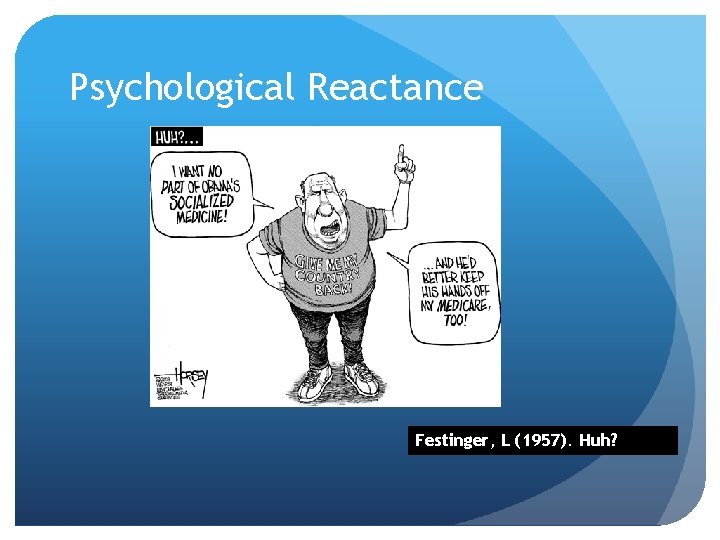
Psychological Reactance Festinger, L (1957). Huh?
Background Psychological Reactance: Psychological reactance occurs when behavioral freedoms are reduced or threatened and the individual is motivated to regain them (Brehm, 1966). Hong and Faedda (1996) created the Hong Psychological Reactance Scale.
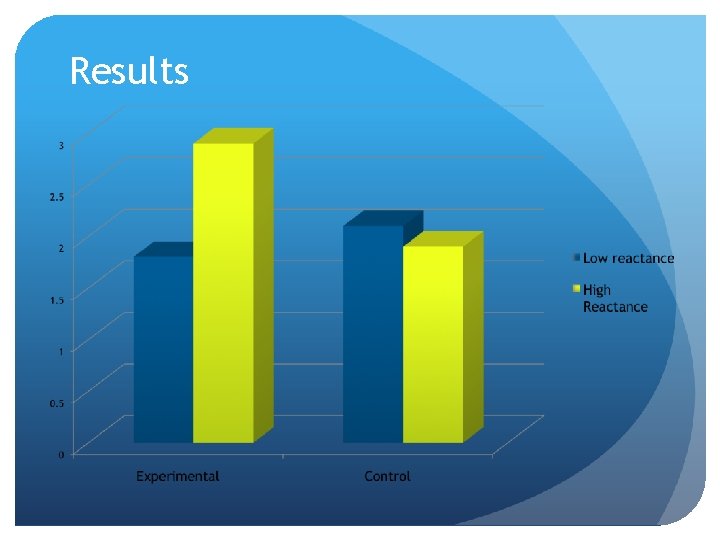
Hypocrisy Induction: Study 2 Does a person’s reactivity affect whether they are influenced by hypocrisy induction. Hypothesis: People with high psychological reactance scores will be less affected by the hypocrisy induction and, therefore, less likely to change their beliefs. Clancy & Milam, 2010
Measurements Participants were asked to complete Reactance Scale and the Belief in the Paranormal Scale To induce hypocrisy in paranormal beliefs, participants wrote a short response to the prompt: “Why is it important to use logic and the scientific method in everyday life? Be sure to include examples of how scientific evidence is a necessity in becoming an intelligent, collegeeducated citizen. ” To measure belief change, participants later received a marketing survey disguised as though it was from the local book store
Results
Tips for Teachers Preserve freedom of choice in the assignment. Individual responsibility for the assignment. Require both effort and self-generation of arguments. Don’t overuse the technique. Use after grounding in scientific literature.