
Teaching Strategy Talking Circle Assessing Prior Knowledge Protocol
- Slides: 3
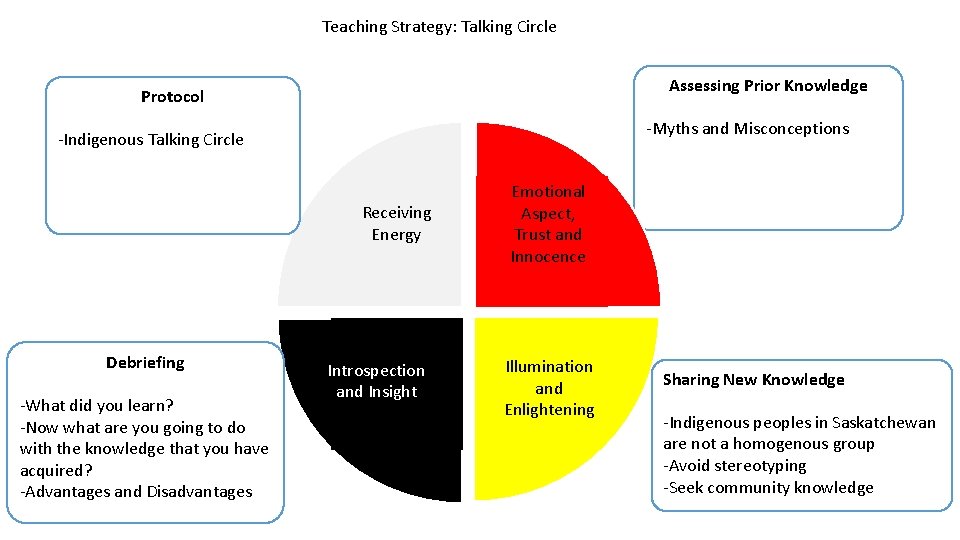
Teaching Strategy: Talking Circle Assessing Prior Knowledge Protocol -Myths and Misconceptions -Indigenous Talking Circle Receiving Energy Debriefing -What did you learn? -Now what are you going to do with the knowledge that you have acquired? -Advantages and Disadvantages Introspection and Insight Emotional Aspect, Trust and Innocence Illumination and Enlightening Sharing New Knowledge -Indigenous peoples in Saskatchewan are not a homogenous group -Avoid stereotyping -Seek community knowledge
Learning Outcomes • I can interact with others for the purposes of contributing to a class learning goal. • I can listen purposefully to understand ideas and information. **Talking circles can be used for discussions in any subject area. An excellent way of engaging students to share their ideas in a safe and respectful space and manner.
Sources: Indigenous content The Office of the Treaty Commission http: //www. otc. ca/ Assembly of First Nations http: //www. afn. ca/uploads/files/10_-_fact_sheet_-_lifelong_learning. pdf University of Saskatchewan Library Guides http: //libguides. usask. ca/FNMIperspectives/home Indigenous Studies Research Portal http: //iportal. usask. ca/ University of Saskatchewan Student Teachers Anti-racism society http: //starsusask. blogspot. ca/ First Nations, Metis, Inuit Educational Resources http: //curriculum. nesd. ca/instruction/fnmi-instruction/instructional-supports