
Teaching Point To compare and contrast compound and

- Slides: 15
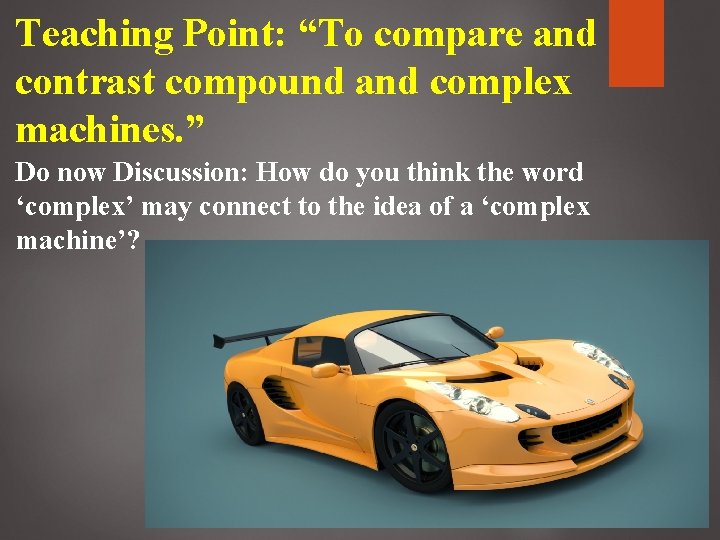
Teaching Point: “To compare and contrast compound and complex machines. ” Do now Discussion: How do you think the word ‘complex’ may connect to the idea of a ‘complex machine’?
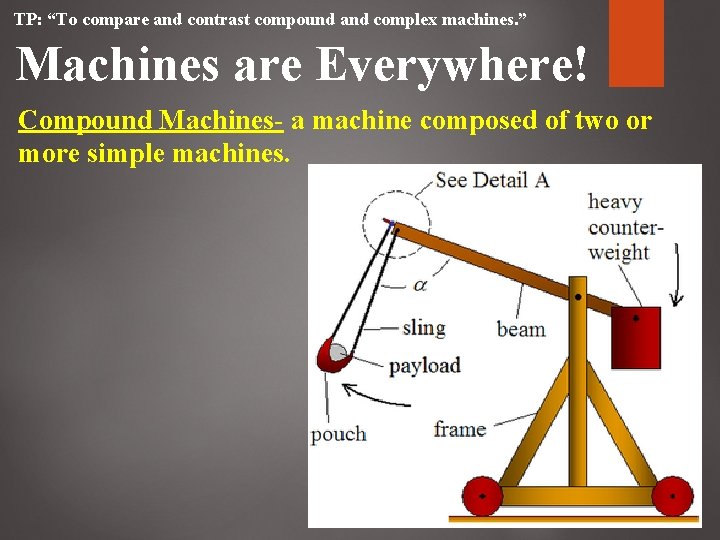
TP: “To compare and contrast compound and complex machines. ” Machines are Everywhere! Compound Machines- a machine composed of two or more simple machines.
TP: “To compare and contrast compound and complex machines. ” Compound Machine Examples 1. Stapler- a lever and a wedge
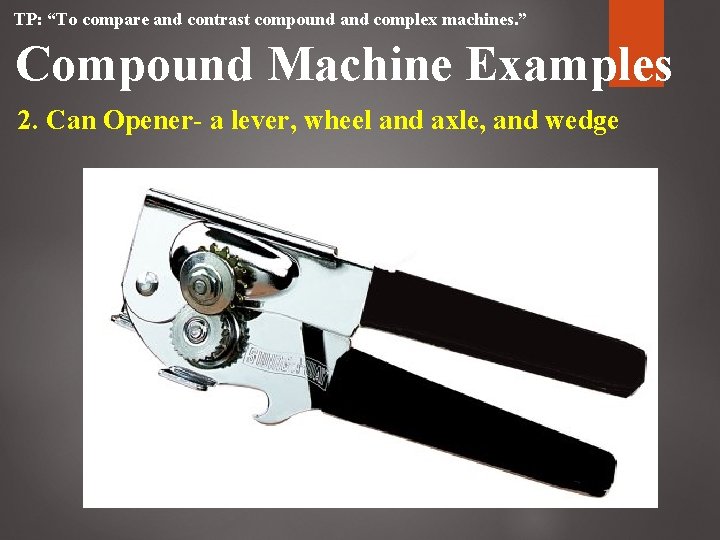
TP: “To compare and contrast compound and complex machines. ” Compound Machine Examples 2. Can Opener- a lever, wheel and axle, and wedge
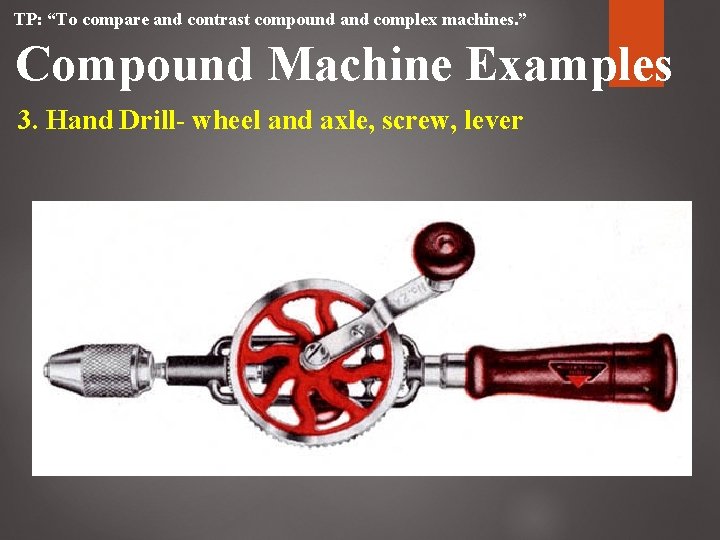
TP: “To compare and contrast compound and complex machines. ” Compound Machine Examples 3. Hand Drill- wheel and axle, screw, lever
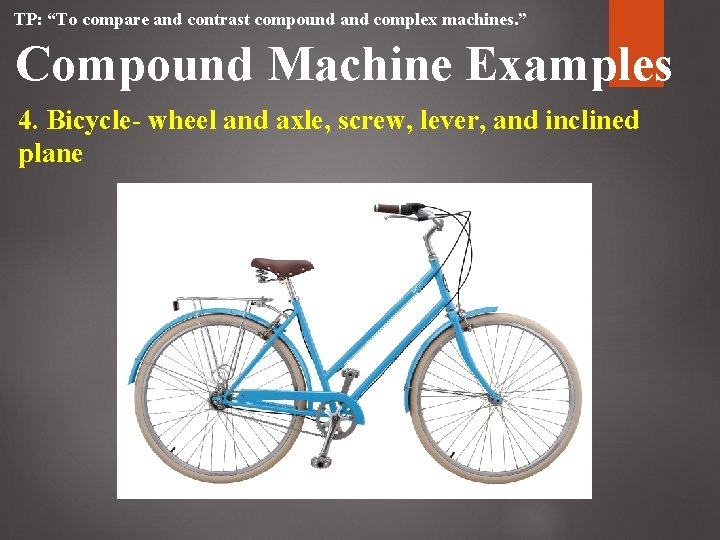
TP: “To compare and contrast compound and complex machines. ” Compound Machine Examples 4. Bicycle- wheel and axle, screw, lever, and inclined plane
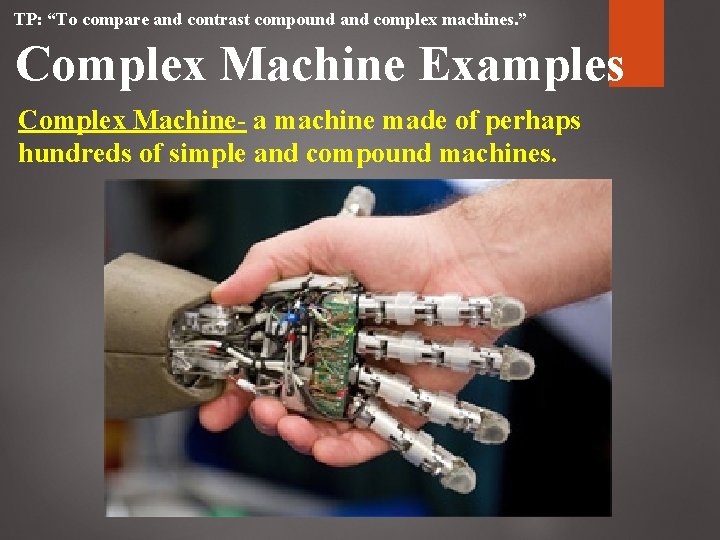
TP: “To compare and contrast compound and complex machines. ” Complex Machine Examples Complex Machine- a machine made of perhaps hundreds of simple and compound machines.
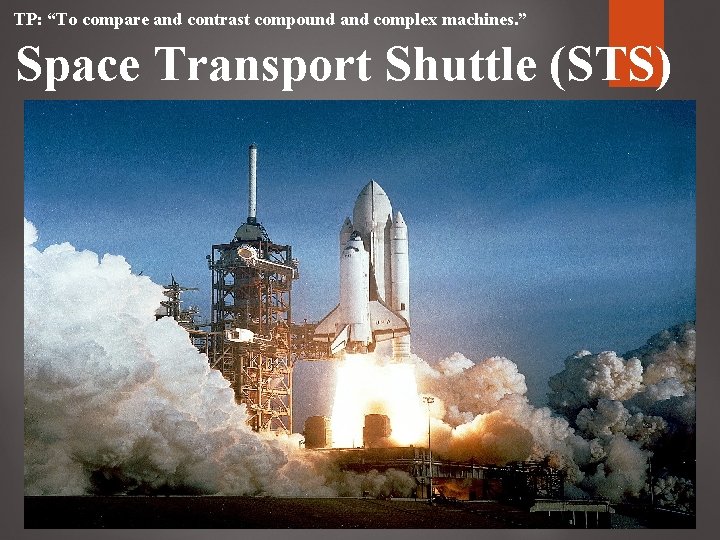
TP: “To compare and contrast compound and complex machines. ” Space Transport Shuttle (STS)
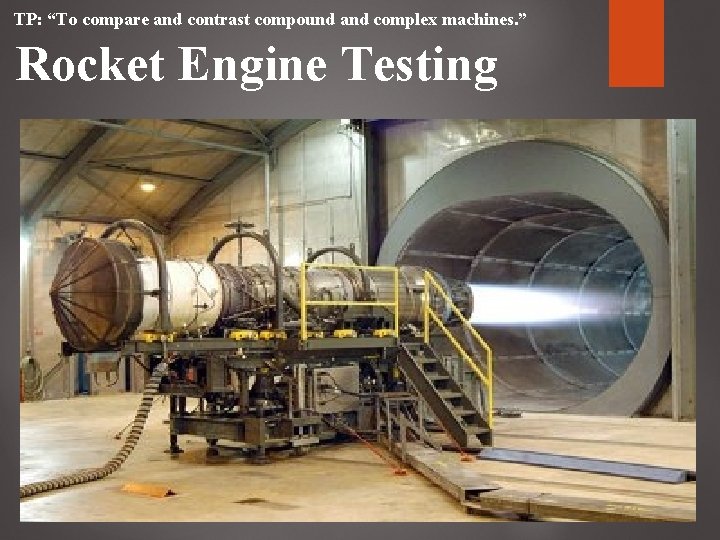
TP: “To compare and contrast compound and complex machines. ” Rocket Engine Testing
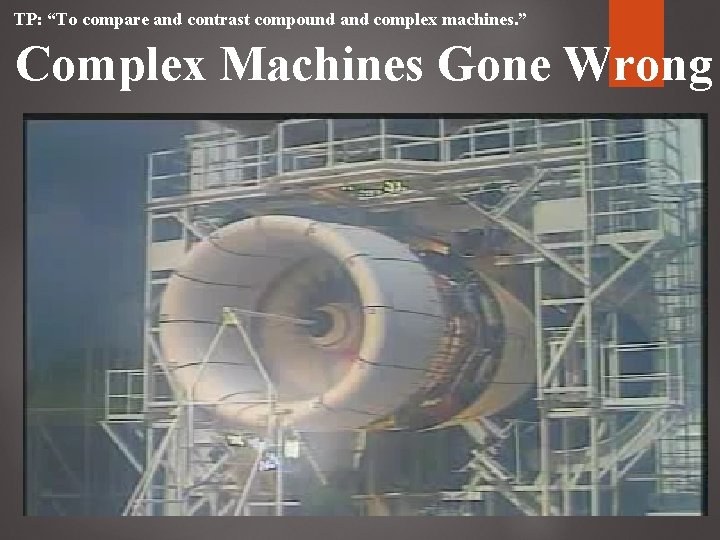
TP: “To compare and contrast compound and complex machines. ” Complex Machines Gone Wrong
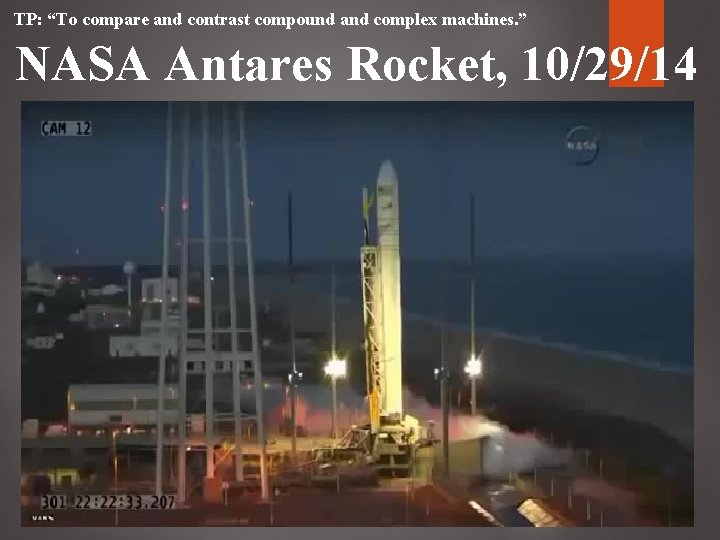
TP: “To compare and contrast compound and complex machines. ” NASA Antares Rocket, 10/29/14
TP: “To compare and contrast compound and complex machines. ” Quick Assessments 1. A complex machine may contain more moving parts than a compound machine. True or False 2. Which of the following is an example of a compound machine: a. 1 st class lever b. Ramp c. Movable pulley d. Hand drill
TP: “To compare and contrast compound and complex machines. ” Intellectual Engagement Which do you think was invented first, a compound or complex machine? Explain your reasoning.
TP: “To compare and contrast compound and complex machines. ” Class Activity- Complex Machines Instructions: Using what we just learned about complex and compound machines… Task A- create a bubble map organizing all the different compound machine we learned Task B- create a tree diagram organizing all of the different compound machines we just learned. Task C- create a venn-diagram that compares and contrasts compound and complex machine. Flexible Group- take out your portfolio and meet me in the back of the room at my desk.
TP: “To compare and contrast compound and complex machines. ” Lesson Summary In your tables of four, go back into your notes and consider what we have just learned today, and then… 1. Identify three (3) important concepts we learned today 2. Place those three in order from the most important concept to least important.