
TEACHING OUTSIDE THE BOX RESEARCH IN INSTRUCTIONAL DESIGN
TEACHING OUTSIDE THE BOX RESEARCH IN INSTRUCTIONAL DESIGN CAROL PIPPEN
WHY THE RESEARCH? • Students consistently performed below grade level on classroom and district assessments • Entered 6 th grade at least 2 grade levels behind • Comprehension of passages poor • Information retention difficult • Teacher’s baffled and frustrated
PARTICIPANTS AND DESIGN • • Participants: Students at risk who were reading below grade level Students with exceptionalities that continued to struggle Design: Classes were small (12 or less students) Students received pull out services during normal ELA block Instruction consisted of word analysis, guided reading and differentiated independent work • Students grouped into 3 groups based on performance on reading diagnostic assessments and spelling feature inventories.
METHODS • Word Study Group- Students were giving word sort activities based on spelling feature • Guided Reading Group-This group worked with the teacher with leveled readers that closely match their instructional reading level • Independent Group-Completed skill practiced that was tiered to differentiate instruction and complimented work they had completed with the teacher
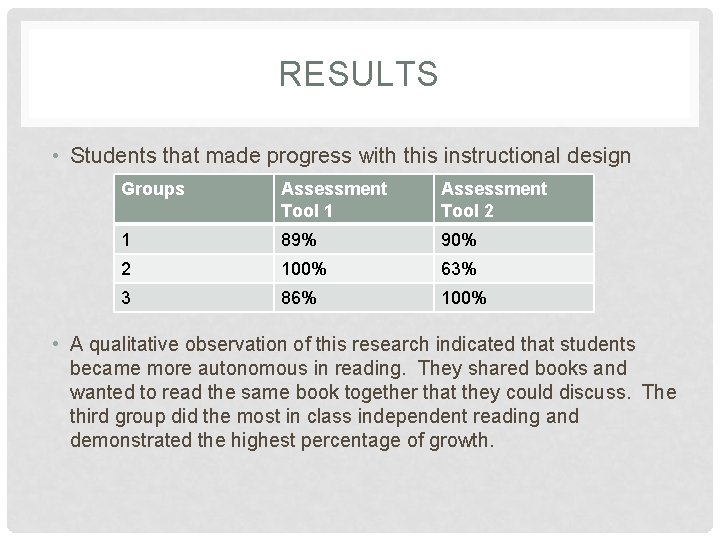
RESULTS • Students that made progress with this instructional design Groups Assessment Tool 1 Assessment Tool 2 1 89% 90% 2 100% 63% 3 86% 100% • A qualitative observation of this research indicated that students became more autonomous in reading. They shared books and wanted to read the same book together that they could discuss. The third group did the most in class independent reading and demonstrated the highest percentage of growth.
LIMITATIONS • Groups not flexible • Students not able to receive support when working independently or with word analysis because the teacher was working with the guided reading group • Writing process not taught or addressed at length • What needs to change to better serve the students?
- Slides: 6