
Teaching mathematical modelling using a research based approach

Teaching mathematical modelling using a research based approach Greg Foley School of Biotechnology Dublin City University
BSc in Biotechnology, DCU
Context • Third year students with no formal training in computer programming (or any form of computing!) • Often mathematically ‘un-practiced’ • ‘Exciting’ biology versus ‘mundane’ engineering
As a chemical engineer, How can I engage these students in a mathematical / quantitative approach to science ?
Mathematical Models • Key tool of bioprocess engineering – Typically involve understanding, mathematical skill and judgement and creativity • Model formulation – possibly too challenging for Biotechnology students – Emphasis on simulation and investigation of model predictions
Requirements • User friendly software for solving ODEs • Modelling problems that will stimulate student engagement – Avoid using models to confirm what is already known! – Try to discover something by modelling – Instructor doesn’t have the answer!
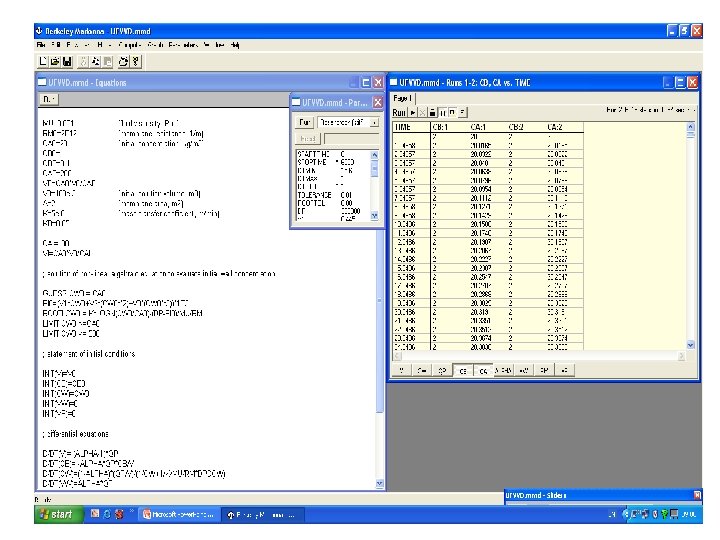
Solution! • Berkeley Madonna (www. berkeleymadonna. com) • Topical research problem
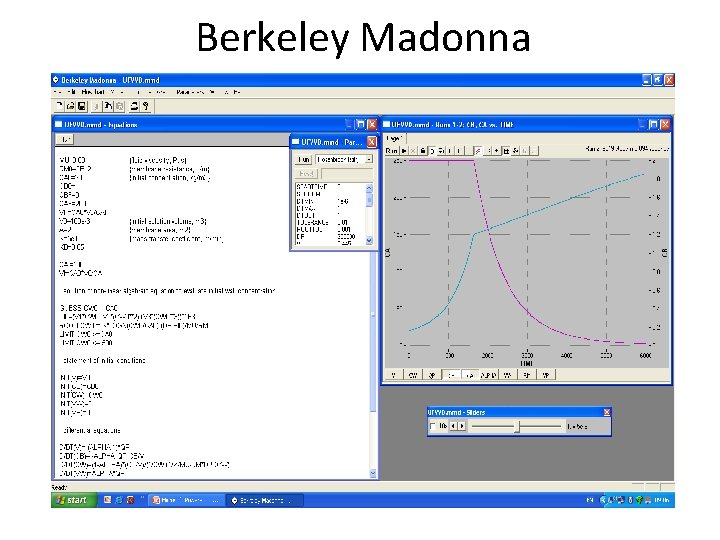
Berkeley Madonna
Research Problem (Interaction of Teaching and Research!) Jaffrin M Y and Charrier J Ph. Optimization of ultrafiltration and diafiltration processes for albumin production. Journal of Membrane Science 1994, 97: 71 -81. Tekić MN, Zavargo ZZ, Krstić DM and Djurić MS. Mathematical model of variable volume diafiltration. Hungarian Journal of Industrial Chemistry 2000 30: 211 -214. Krstić DM, Tekić MN, Zavargo ZZ, Djurić MS and Ćirić GM. Saving water in a volume-decreasing diafiltration process. Desalination 2004, 165: 283 -288. G. Foley (2006) Water usage in variable volume diafiltration: comparison with ultrafiltration and constant volume diafiltration. Desalination 196, 160 -163. G. Foley (2006) Ultrafiltration with variable volume diafiltration: a novel approach to water saving in diafiltration processes. Desalination 196, 220 -221.
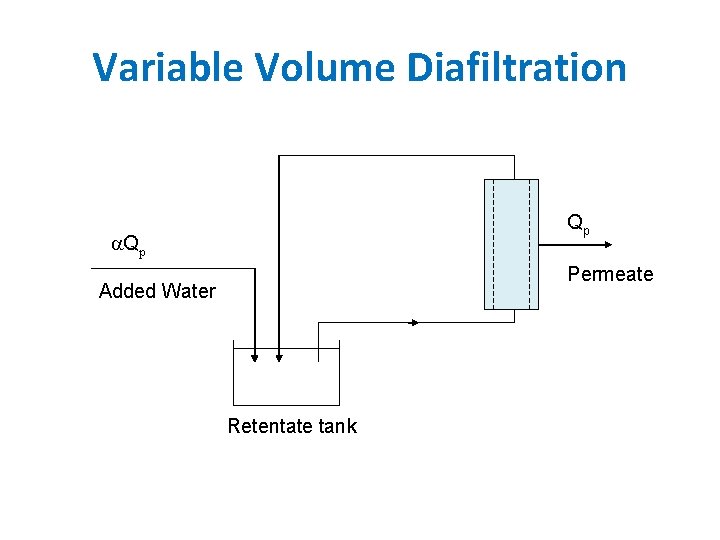
Variable Volume Diafiltration Qp Permeate Added Water Retentate tank
Class Project • Optimisation of a novel type of variable volume diafiltration (UFVVD) • Unsolved problem • Non-obvious answers revealed by modelling
Organisation • • • 6 groups of three students Different aspect of problem for each group Inter-group communication via email Collation of all results Examination based on collated results
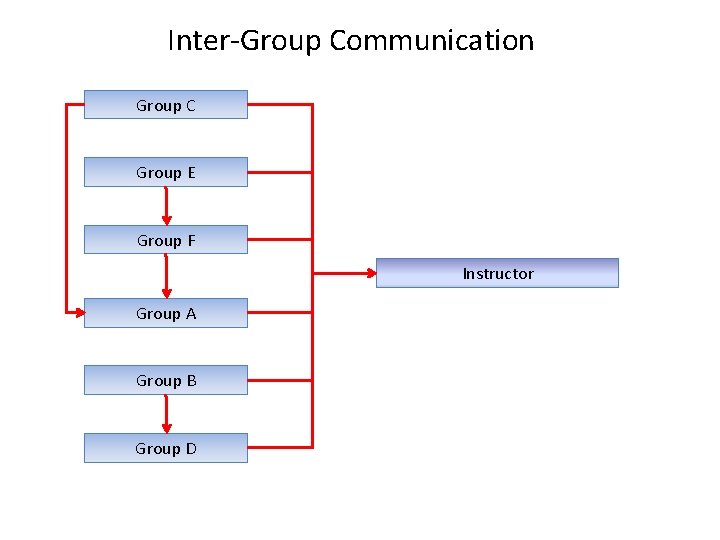
Inter-Group Communication Group C Group E Group F Instructor Group A Group B Group D
Experience • Moderate level of engagement by students • A little consumed with technicalities of programming (Attention to detail!) • Problem chosen possibly a little obscure • Administration not prohibitive for small class sizes
Future • Prior instruction in using Berkeley Madonna • Better, less ‘obscure’ problem
- Slides: 16