
Teaching Legal Ethics UK Workshop Reflections on Moral
- Slides: 27
Teaching Legal Ethics UK Workshop Reflections on Moral Courage and the Necessity of Practical Wisdom Phil Drake and Stuart Toddington
Teaching Legal Ethics UK Workshop Reflections on Moral Courage and the Necessity of Practical Wisdom Phil Drake and Stuart Toddington
The Predicament of Practical Wisdom
Teaching Practical Wisdom • Should we teach Practical Wisdom? • How do we teach Practical Wisdom?
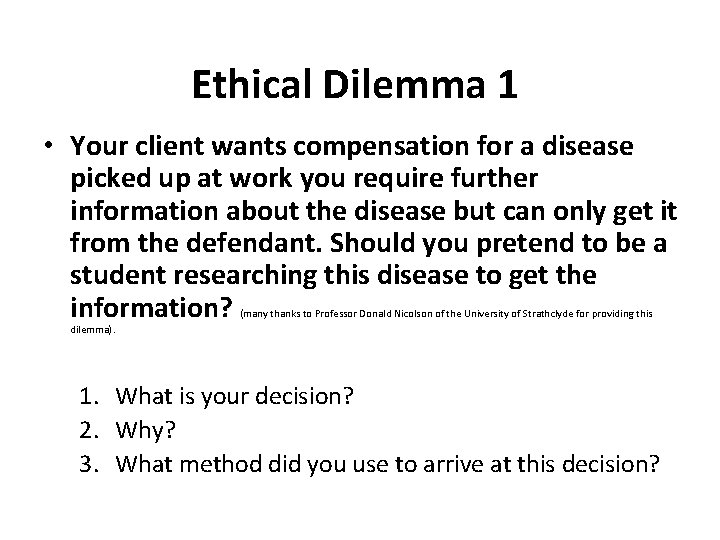
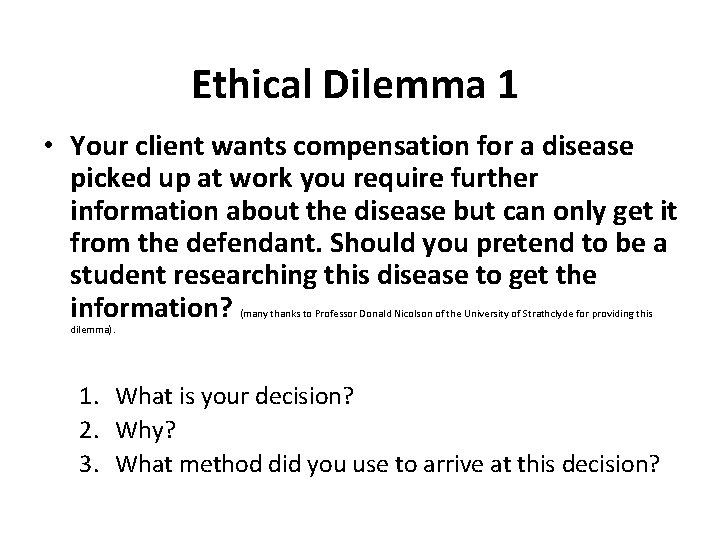
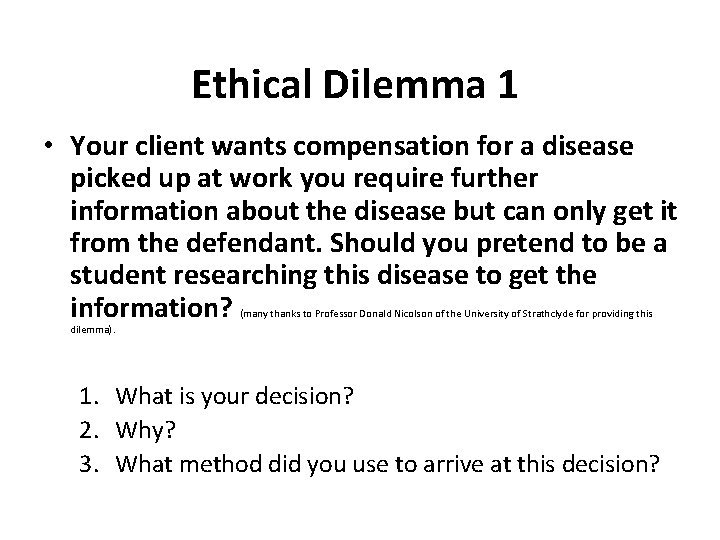
Ethical Dilemma 1 • Your client wants compensation for a disease picked up at work you require further information about the disease but can only get it from the defendant. Should you pretend to be a student researching this disease to get the information? (many thanks to Professor Donald Nicolson of the University of Strathclyde for providing this dilemma). 1. What is your decision? 2. Why? 3. What method did you use to arrive at this decision?
Ethical Dilemma 1
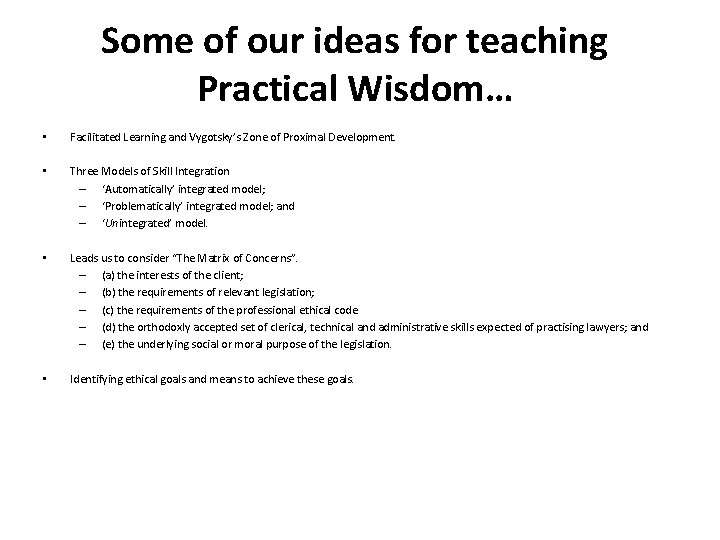
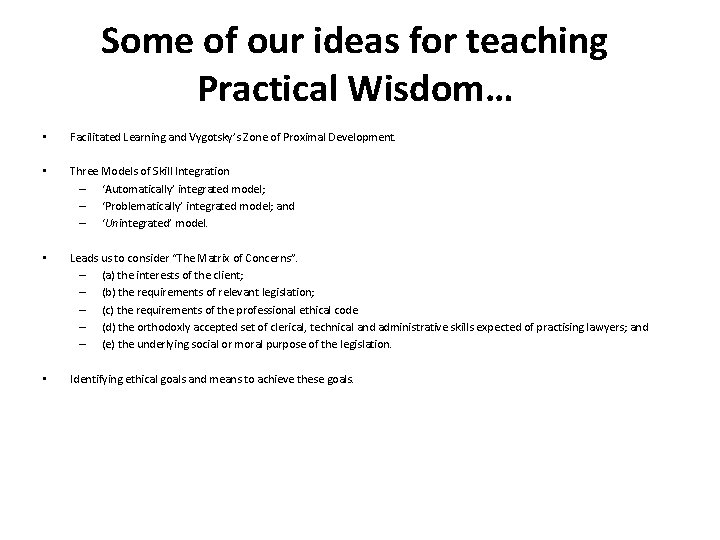
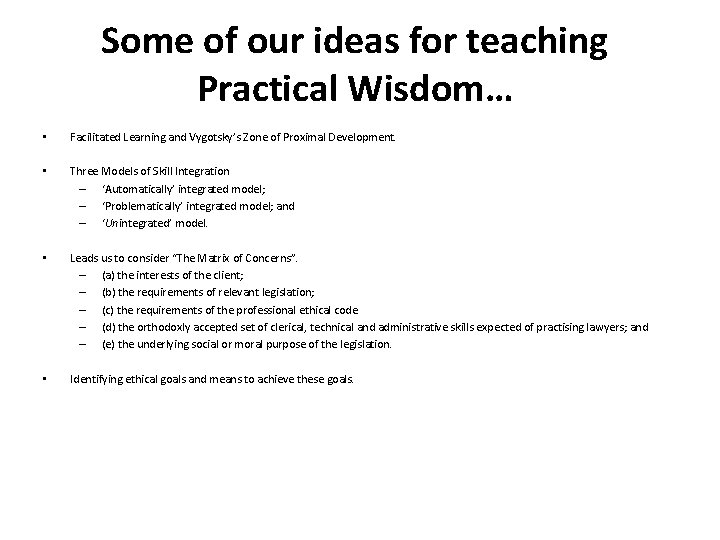
Some of our ideas for teaching Practical Wisdom… • Facilitated Learning and Vygotsky’s Zone of Proximal Development. • Three Models of Skill Integration – ‘Automatically’ integrated model; – ‘Problematically’ integrated model; and – ‘Unintegrated’ model. • Leads us to consider “The Matrix of Concerns”. – (a) the interests of the client; – (b) the requirements of relevant legislation; – (c) the requirements of the professional ethical code – (d) the orthodoxly accepted set of clerical, technical and administrative skills expected of practising lawyers; and – (e) the underlying social or moral purpose of the legislation. • Identifying ethical goals and means to achieve these goals.
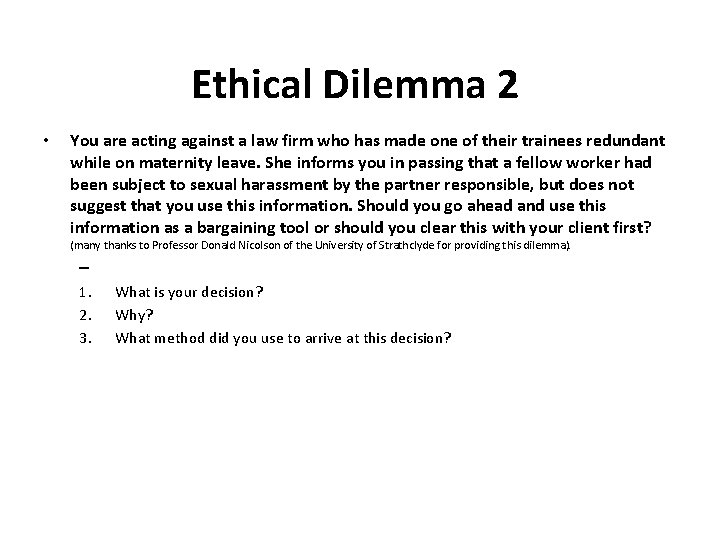
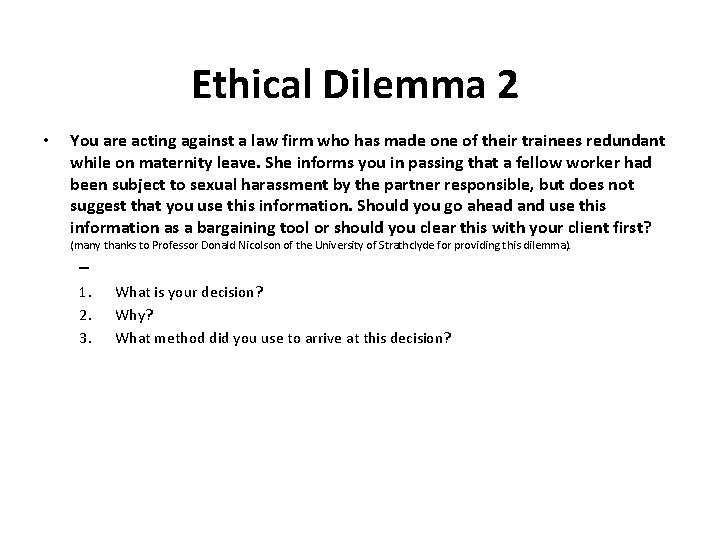
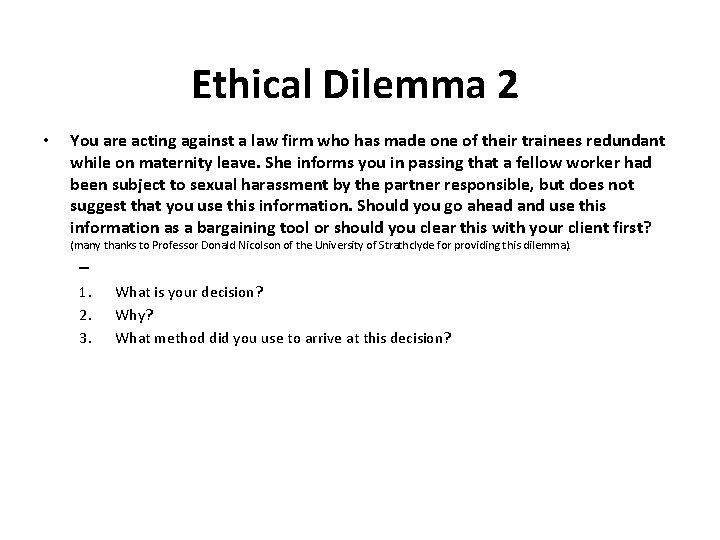
Ethical Dilemma 2 • You are acting against a law firm who has made one of their trainees redundant while on maternity leave. She informs you in passing that a fellow worker had been subject to sexual harassment by the partner responsible, but does not suggest that you use this information. Should you go ahead and use this information as a bargaining tool or should you clear this with your client first? (many thanks to Professor Donald Nicolson of the University of Strathclyde for providing this dilemma). – 1. 2. 3. What is your decision? Why? What method did you use to arrive at this decision?
Ethical Dilemma 2
Ideas and Questions
Teaching Legal Ethics UK Workshop Reflections on Moral Courage and the Necessity of Practical Wisdom Phil Drake and Stuart Toddington
The Predicament of Practical Wisdom
Teaching Practical Wisdom • Should we teach Practical Wisdom? • How do we teach Practical Wisdom?
Ethical Dilemma 1 • Your client wants compensation for a disease picked up at work you require further information about the disease but can only get it from the defendant. Should you pretend to be a student researching this disease to get the information? (many thanks to Professor Donald Nicolson of the University of Strathclyde for providing this dilemma). 1. What is your decision? 2. Why? 3. What method did you use to arrive at this decision?
Ethical Dilemma 1
Some of our ideas for teaching Practical Wisdom… • Facilitated Learning and Vygotsky’s Zone of Proximal Development. • Three Models of Skill Integration – ‘Automatically’ integrated model; – ‘Problematically’ integrated model; and – ‘Unintegrated’ model. • Leads us to consider “The Matrix of Concerns”. – (a) the interests of the client; – (b) the requirements of relevant legislation; – (c) the requirements of the professional ethical code – (d) the orthodoxly accepted set of clerical, technical and administrative skills expected of practising lawyers; and – (e) the underlying social or moral purpose of the legislation. • Identifying ethical goals and means to achieve these goals.
Ethical Dilemma 2 • You are acting against a law firm who has made one of their trainees redundant while on maternity leave. She informs you in passing that a fellow worker had been subject to sexual harassment by the partner responsible, but does not suggest that you use this information. Should you go ahead and use this information as a bargaining tool or should you clear this with your client first? (many thanks to Professor Donald Nicolson of the University of Strathclyde for providing this dilemma). – 1. 2. 3. What is your decision? Why? What method did you use to arrive at this decision?
Ethical Dilemma 2
Ideas and Questions
The Predicament of Practical Wisdom
Teaching Practical Wisdom • Should we teach Practical Wisdom? • How do we teach Practical Wisdom?
Ethical Dilemma 1 • Your client wants compensation for a disease picked up at work you require further information about the disease but can only get it from the defendant. Should you pretend to be a student researching this disease to get the information? (many thanks to Professor Donald Nicolson of the University of Strathclyde for providing this dilemma). 1. What is your decision? 2. Why? 3. What method did you use to arrive at this decision?
Ethical Dilemma 1
Some of our ideas for teaching Practical Wisdom… • Facilitated Learning and Vygotsky’s Zone of Proximal Development. • Three Models of Skill Integration – ‘Automatically’ integrated model; – ‘Problematically’ integrated model; and – ‘Unintegrated’ model. • Leads us to consider “The Matrix of Concerns”. – (a) the interests of the client; – (b) the requirements of relevant legislation; – (c) the requirements of the professional ethical code – (d) the orthodoxly accepted set of clerical, technical and administrative skills expected of practising lawyers; and – (e) the underlying social or moral purpose of the legislation. • Identifying ethical goals and means to achieve these goals.
Ethical Dilemma 2 • You are acting against a law firm who has made one of their trainees redundant while on maternity leave. She informs you in passing that a fellow worker had been subject to sexual harassment by the partner responsible, but does not suggest that you use this information. Should you go ahead and use this information as a bargaining tool or should you clear this with your client first? (many thanks to Professor Donald Nicolson of the University of Strathclyde for providing this dilemma). – 1. 2. 3. What is your decision? Why? What method did you use to arrive at this decision?
Ethical Dilemma 2
Ideas and Questions