
Teaching Introductory Statistics Using Simulation Based Inference Methods
Teaching Introductory Statistics Using Simulation. Based Inference Methods Kari Lock Morgan Department of Statistics Penn State University JSM 2017 Baltimore, MD August 3 rd, 2017
Outline • Differences • Similarities
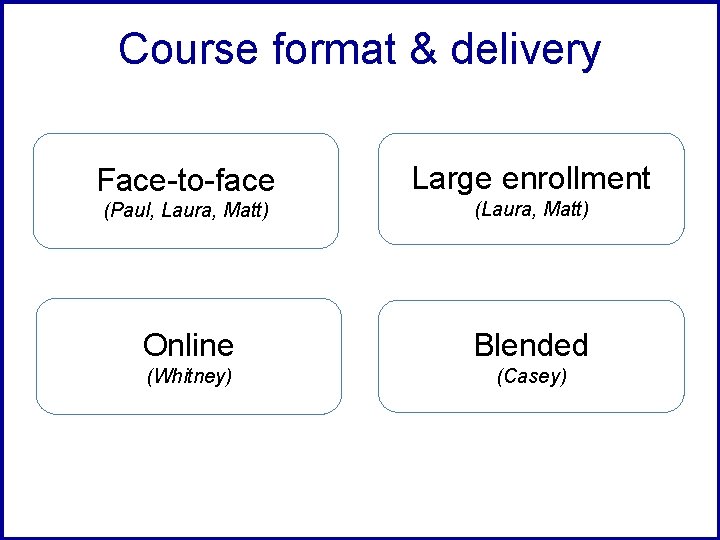
Course format & delivery Face-to-face Large enrollment (Paul, Laura, Matt) (Laura, Matt) Online Blended (Whitney) (Casey)
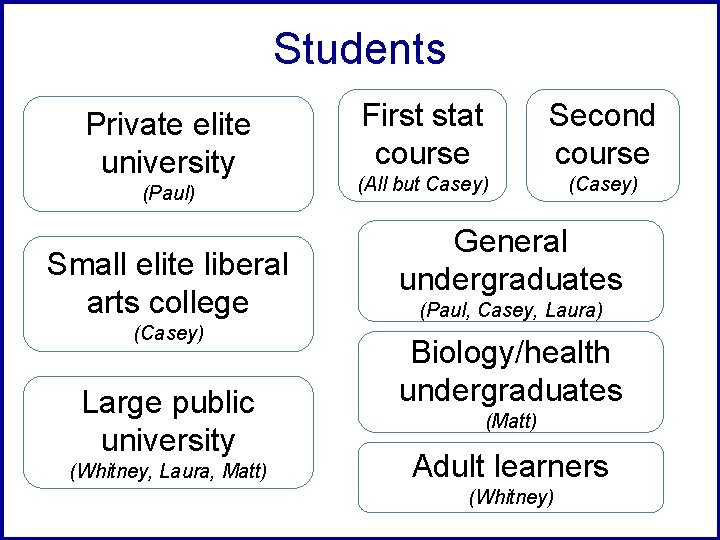
Students Private elite university (Paul) Small elite liberal arts college (Casey) Large public university (Whitney, Laura, Matt) First stat course Second course (All but Casey) (Casey) General undergraduates (Paul, Casey, Laura) Biology/health undergraduates (Matt) Adult learners (Whitney)
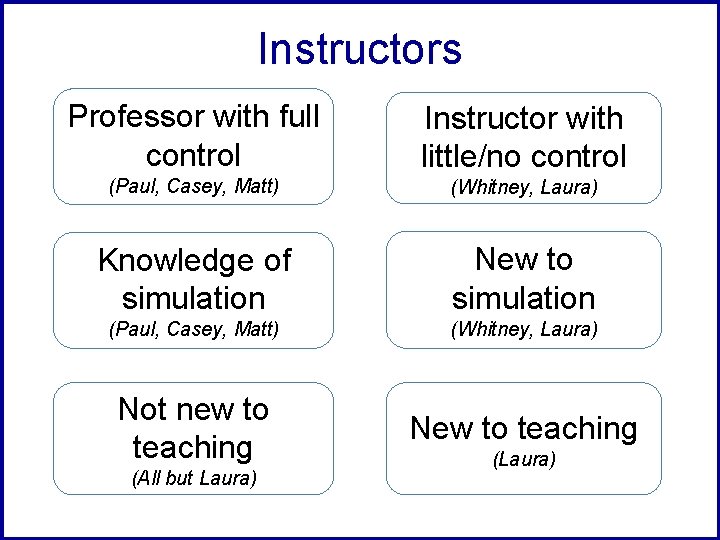
Instructors Professor with full control Instructor with little/no control (Paul, Casey, Matt) (Whitney, Laura) Knowledge of simulation New to simulation (Paul, Casey, Matt) (Whitney, Laura) Not new to teaching New to teaching (All but Laura) (Laura)
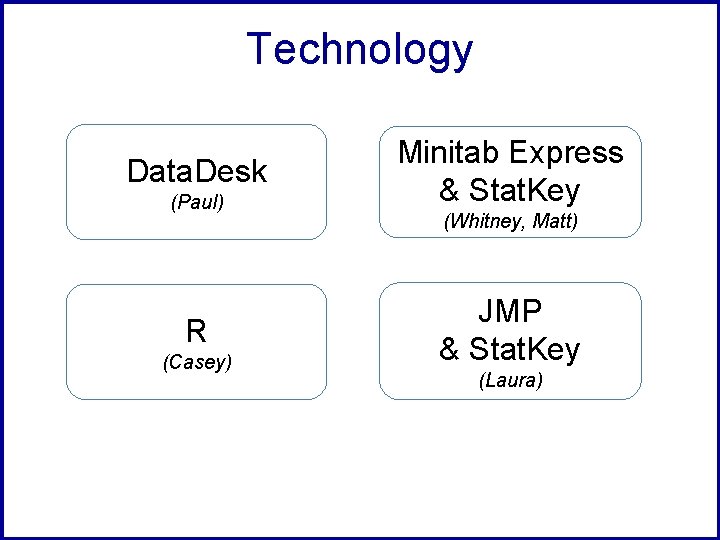
Technology Data. Desk (Paul) R (Casey) Minitab Express & Stat. Key (Whitney, Matt) JMP & Stat. Key (Laura)

By parameter or method? Order Paul: Descriptive statistics & Simulation inference Traditional inference Whitney: Descriptive statistics Simulation & Traditional inference Casey: Descriptive statistics Traditional inference Simulation inference Traditional inference Laura, Matt: Descriptive statistics
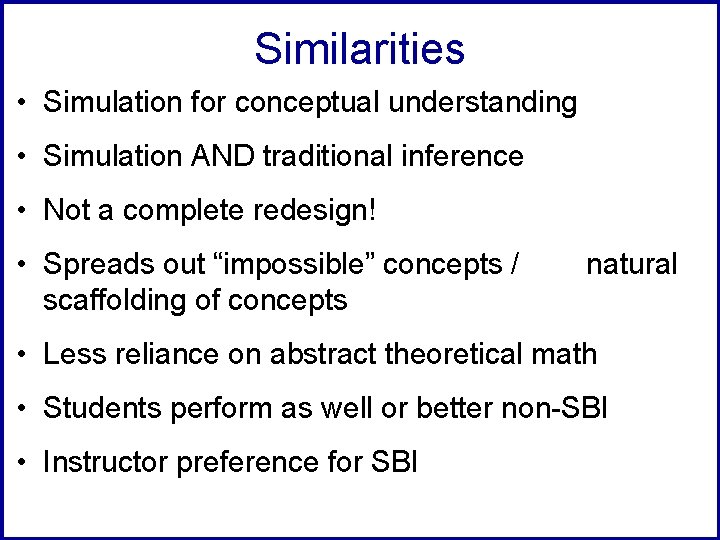
Similarities • Simulation for conceptual understanding • Simulation AND traditional inference • Not a complete redesign! • Spreads out “impossible” concepts / scaffolding of concepts natural • Less reliance on abstract theoretical math • Students perform as well or better non-SBI • Instructor preference for SBI

QUESTIONS?
- Slides: 9