
Teaching in the information age ASIAEUROPE CLASSROOM INTERNATIONAL


- Slides: 29
Teaching in the information age ASIA-EUROPE CLASSROOM INTERNATIONAL TEACHER’S CONFERENCE Singapore, 2 -5 September 2001 Nancy Law Director, CITE University of Hong Kong
Teachers’ lives in the information age • The education environment • The changing school settings • Images of education in the information age
The education environment • negative publicity about education – image that somehow the school system is crumbling and standards are falling. • Negative publicity about teachers – backward, not able to catch up with times. • A lot of flux and changes in the education system: curriculum reform, changing assessment formats, etc. • Increasing monitoring and appraisal mechanism put onto the teaching force: benchmarks, teaching license renewal, …
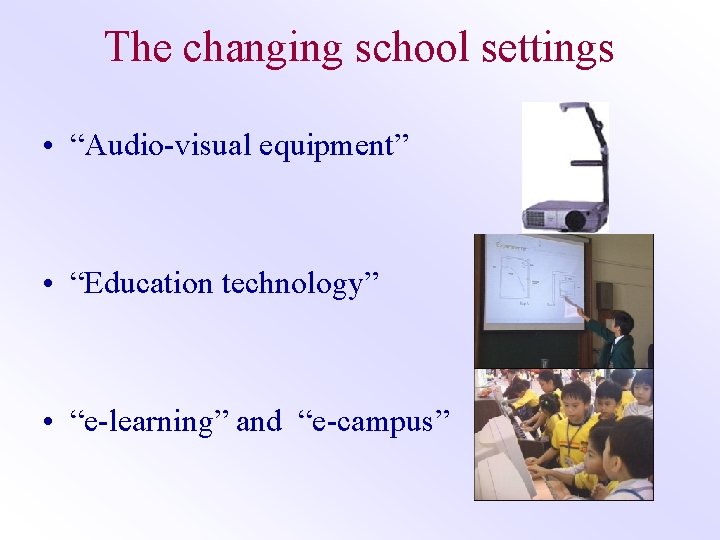
The changing school settings • “Audio-visual equipment” • “Education technology” • “e-learning” and “e-campus”
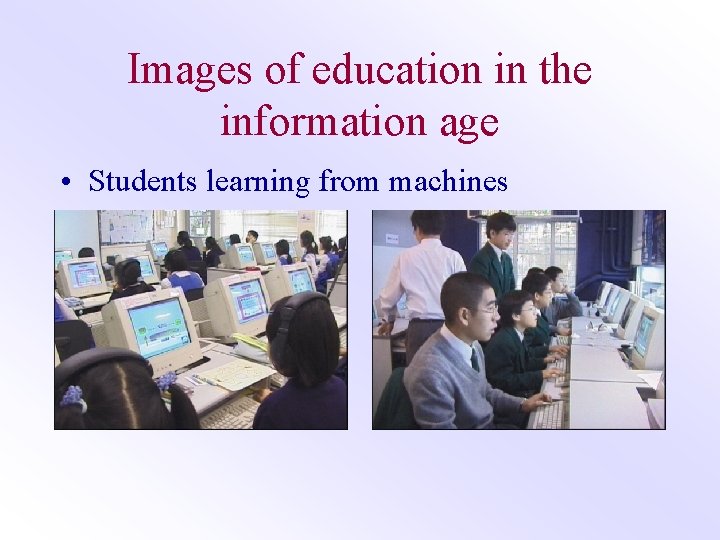
Images of education in the information age • Students learning from machines
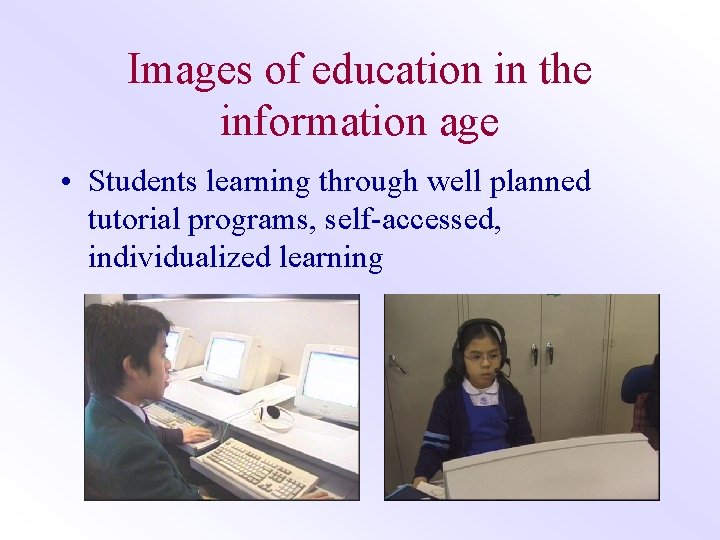
Images of education in the information age • Students learning through well planned tutorial programs, self-accessed, individualized learning
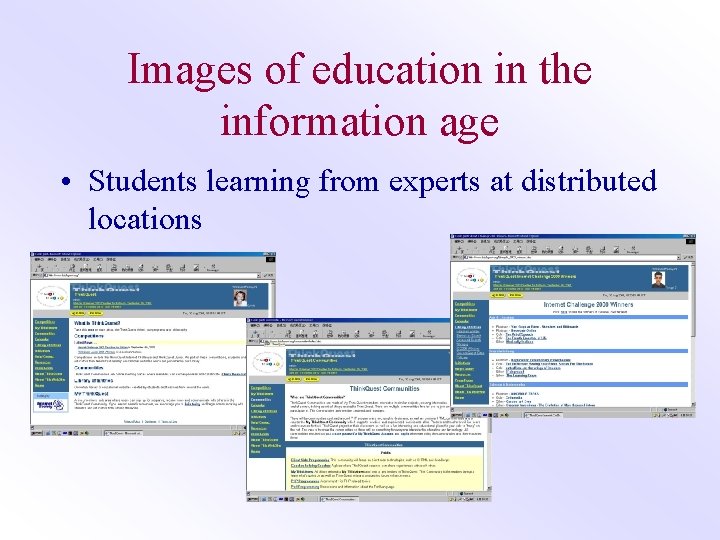
Images of education in the information age • Students learning from experts at distributed locations
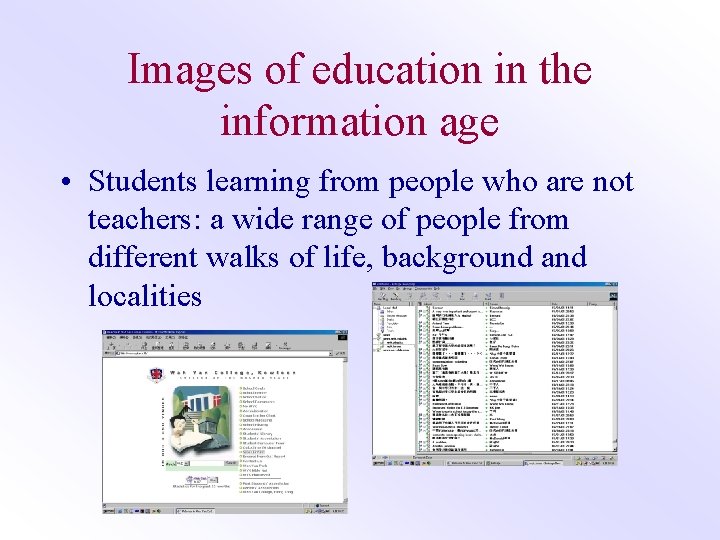
Images of education in the information age • Students learning from people who are not teachers: a wide range of people from different walks of life, background and localities
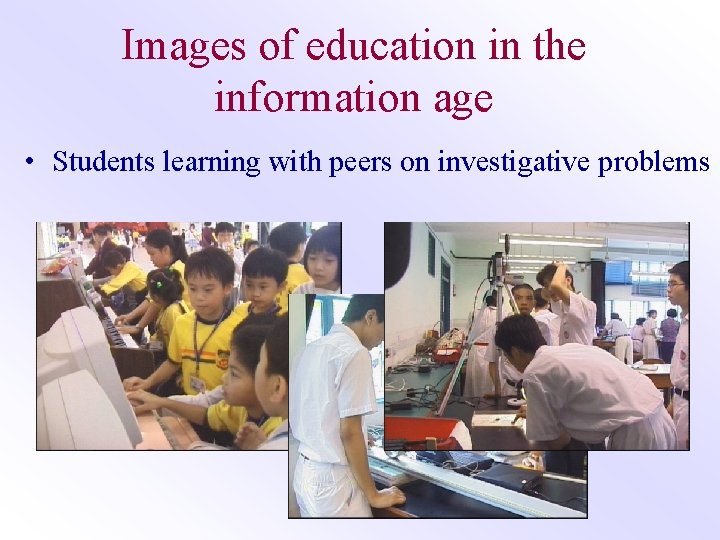
Images of education in the information age • Students learning with peers on investigative problems
Images of education in the information age ……. Contradictory visions and expectations
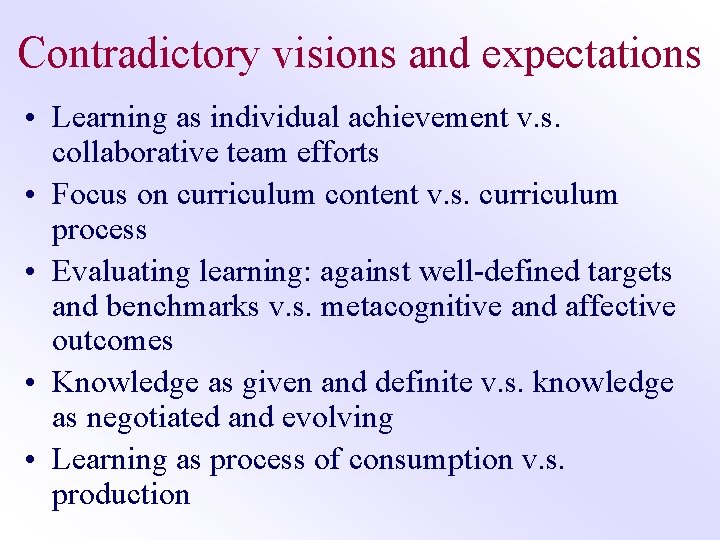
Contradictory visions and expectations • Learning as individual achievement v. s. collaborative team efforts • Focus on curriculum content v. s. curriculum process • Evaluating learning: against well-defined targets and benchmarks v. s. metacognitive and affective outcomes • Knowledge as given and definite v. s. knowledge as negotiated and evolving • Learning as process of consumption v. s. production
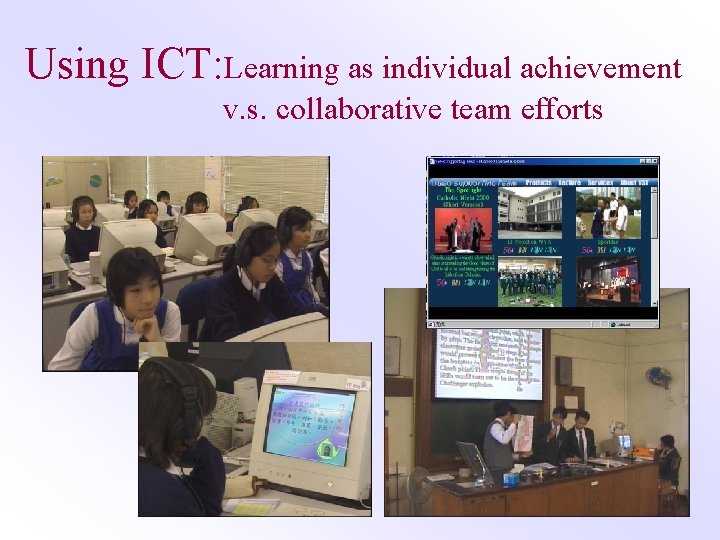
Using ICT: Learning as individual achievement v. s. collaborative team efforts
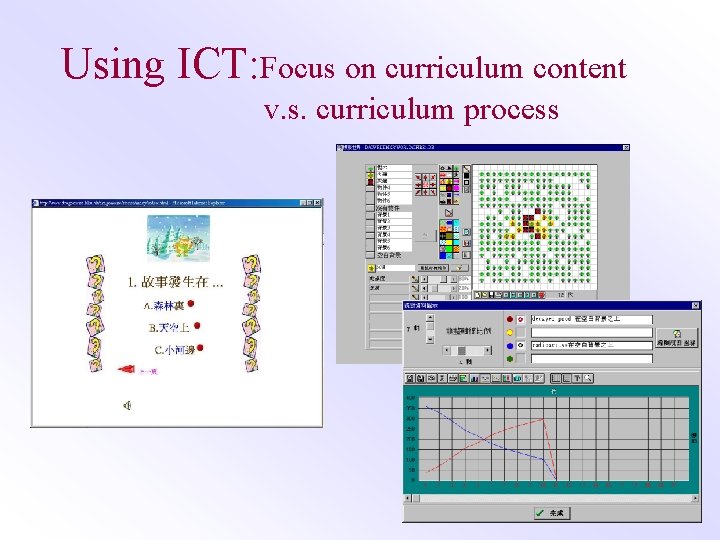
Using ICT: Focus on curriculum content v. s. curriculum process
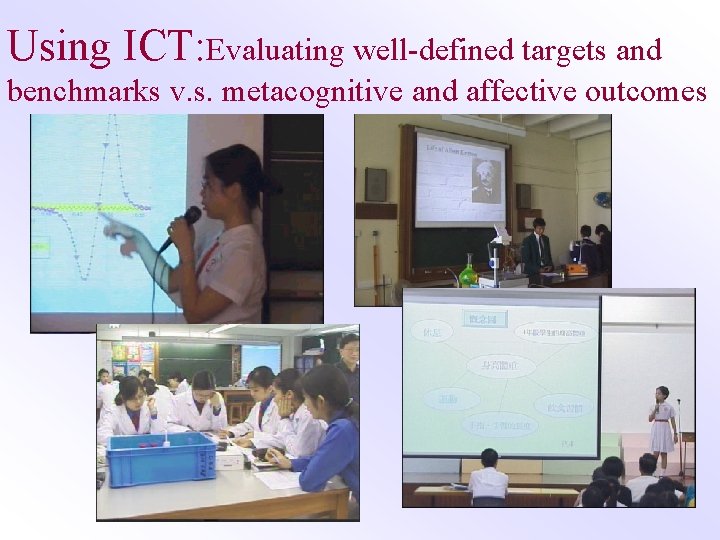
Using ICT: Evaluating well-defined targets and benchmarks v. s. metacognitive and affective outcomes
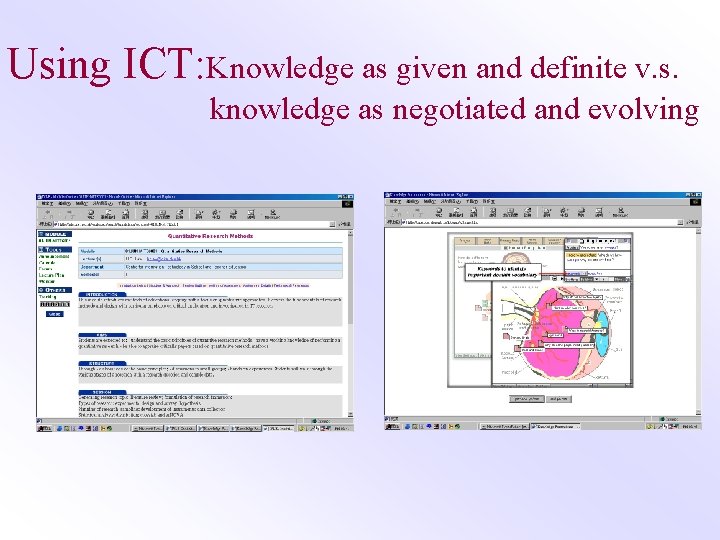
Using ICT: Knowledge as given and definite v. s. knowledge as negotiated and evolving
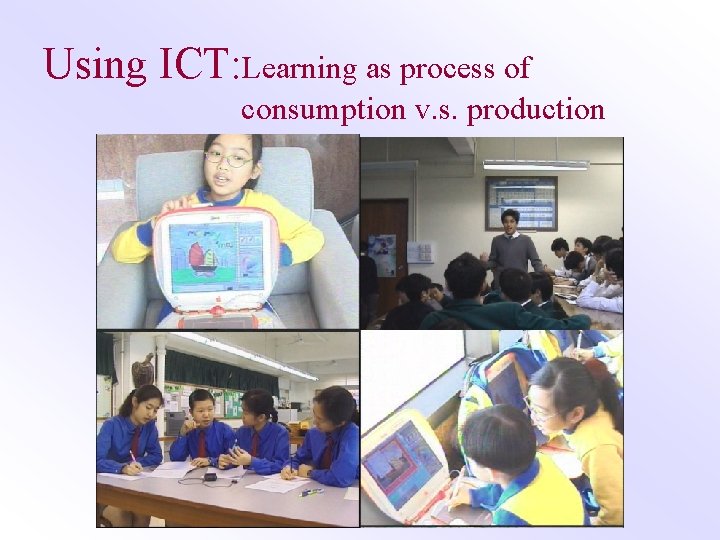
Using ICT: Learning as process of consumption v. s. production
What has these contradictions have to do with the information age? • Our school system was designed for the modern industrial society where well-defined standards and good quality assurance mechanisms are seen to be guarantees for success • Knowledge creation as a corporate enterprise as crucial to the well-being and competitiveness of an economy than strict adhesion and mastery of welldefined knowledge and skills • Re-engineering education?
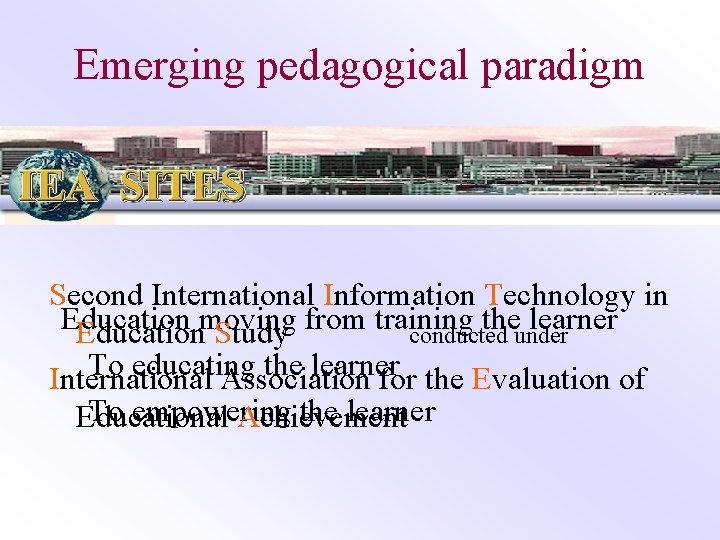
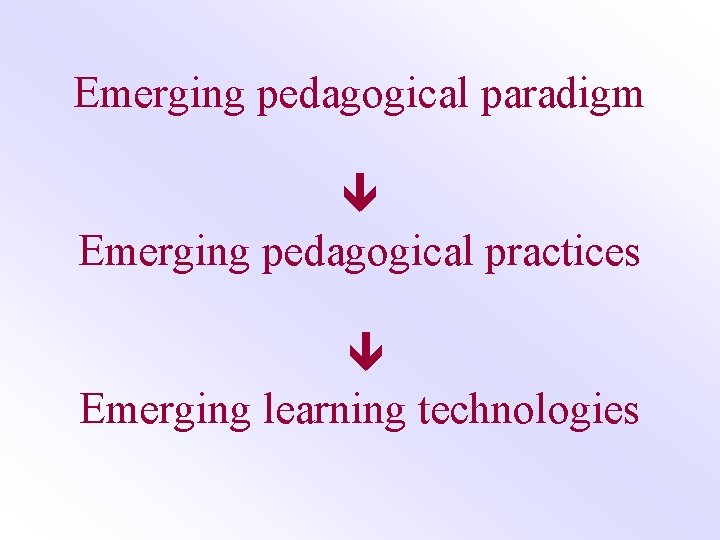
Emerging pedagogical paradigm Second International Information Technology in Education the learner Educationmoving Study from training conducted under To educating the learner International Association for the Evaluation of To empowering the learner Educational Achievement
Features of the innovative case studies • Initiated by the teachers themselves. • Mostly involve project-based approach that provide room for students to determine their own learning problems and methods. • Students have a substantial period of time to work on their project. • The school principals usually gave freedom and support for teacher to implement their practice and to provided support for them.
Innovative practices & innovative technologies • Which should lead? - Technologizing education or Re-engineering education ? • Who should lead? - Technologists? Teachers? Administrators? • How should education innovation be led? - Top-down? Bottom-up? System approach?
Emerging pedagogical paradigm Emerging pedagogical practices Emerging learning technologies
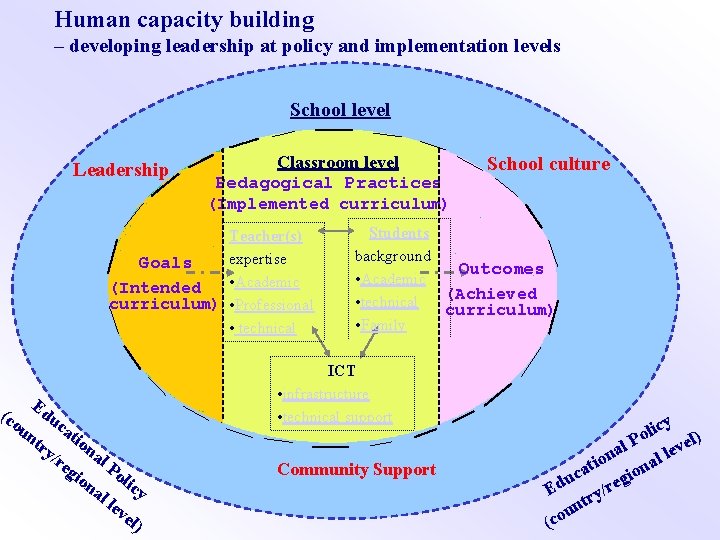
Human capacity building – developing leadership at policy and implementation levels School level Leadership Classroom level Pedagogical Practices School culture (Implemented curriculum) Teacher(s) expertise Goals • Academic (Intended curriculum) • Professional • technical Ed u un cat try ion /re al gio Po na licy ll ev el) (co Students background Outcomes • Academic (Achieved • technical curriculum) • Family ICT • infrastructure • technical support Community Support cy i l l) Po e l v a on nal le i t ca io u g e d E y/r r t un o c (
Changing educational scenes: …. . confusing & threatening
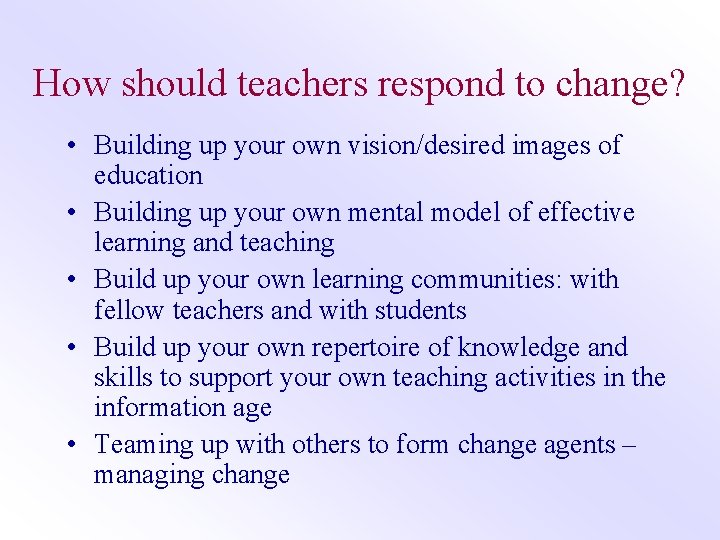
How should teachers respond to change? • Building up your own vision/desired images of education • Building up your own mental model of effective learning and teaching • Build up your own learning communities: with fellow teachers and with students • Build up your own repertoire of knowledge and skills to support your own teaching activities in the information age • Teaming up with others to form change agents – managing change
International collaboration, e. g. ….
ASIA-EUROPE CLASSROOM INTERNATIONAL TEACHER’S CONFERENCE as a good start to supporting such changes to take place: Empowering the teachers as good learners in the information age
International collaboration, e. g. …. APEC Cyber Education Cooperation Project (ACEC) WWW. APEC Network for Education Consortium for APEC Cyber Education Cooperation APEC Education Foundation
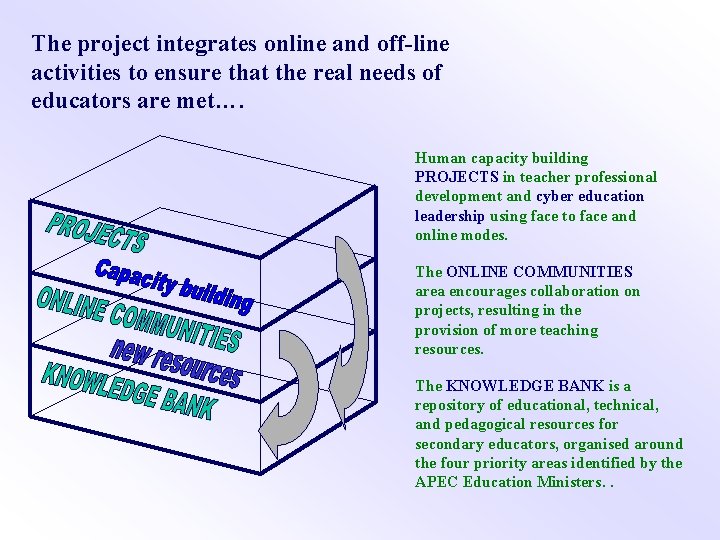
The project integrates online and off-line activities to ensure that the real needs of educators are met…. Human capacity building PROJECTS in teacher professional development and cyber education leadership using face to face and online modes. The ONLINE COMMUNITIES area encourages collaboration on projects, resulting in the provision of more teaching resources. The KNOWLEDGE BANK is a repository of educational, technical, and pedagogical resources for secondary educators, organised around the four priority areas identified by the APEC Education Ministers. .
Email contact : nlaw@hku. hk CITE URL: http: //www. cite. hku. hk