
Teaching Goals Learning Styles and ActivitiesAssignments What are
- Slides: 22
Teaching Goals, Learning Styles, and Activities/Assignments What are your teaching goals? What do you hope to accomplish in your courses? Heather Macdonald
What makes an activity or assignment successful?
How Do Students Learn 1? • They learn by actively participating – Observing, speaking, writing, listening, thinking, drawing, doing • They must be engaged to learn – Learning is enhanced when students see potential implications, applications, and benefits to others • Learning builds on current understanding How People Learn (NRC, 1999)
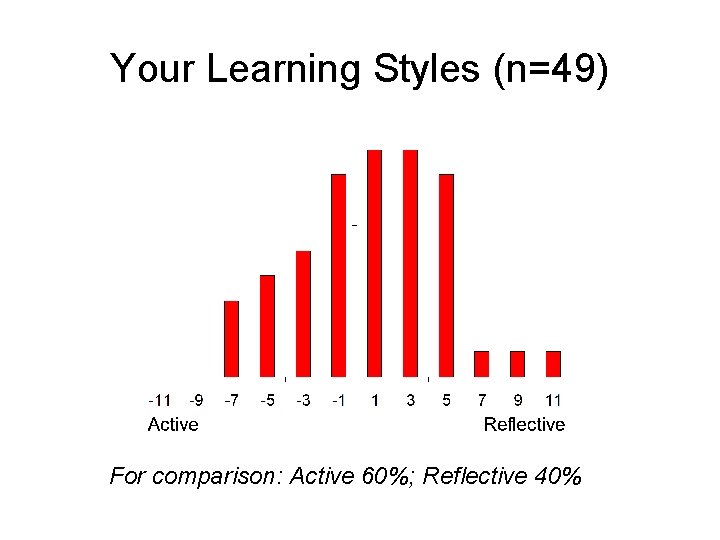
Learning Styles How does the person prefer to process information? • Actively – through engagement in physical activity or discussion • Reflectively – through introspection Questionnaire - Barbara Soloman & Richard Felder http: //www. engr. ncsu. edu/learningstyles/ilsweb. html Thanks to Robyn Dunbar and Jeremy Sobel, Stanford University Center for Teaching and Learning
Your Learning Styles (n=49) For comparison: Active 60%; Reflective 40%
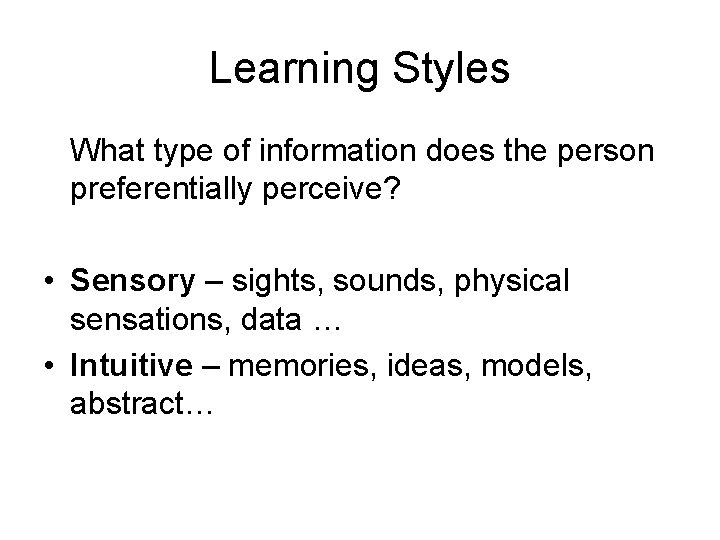
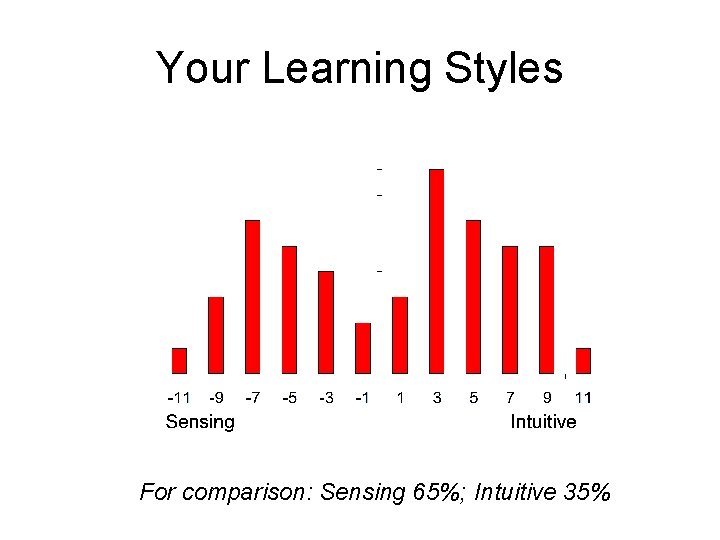
Learning Styles What type of information does the person preferentially perceive? • Sensory – sights, sounds, physical sensations, data … • Intuitive – memories, ideas, models, abstract…
Your Learning Styles For comparison: Sensing 65%; Intuitive 35%
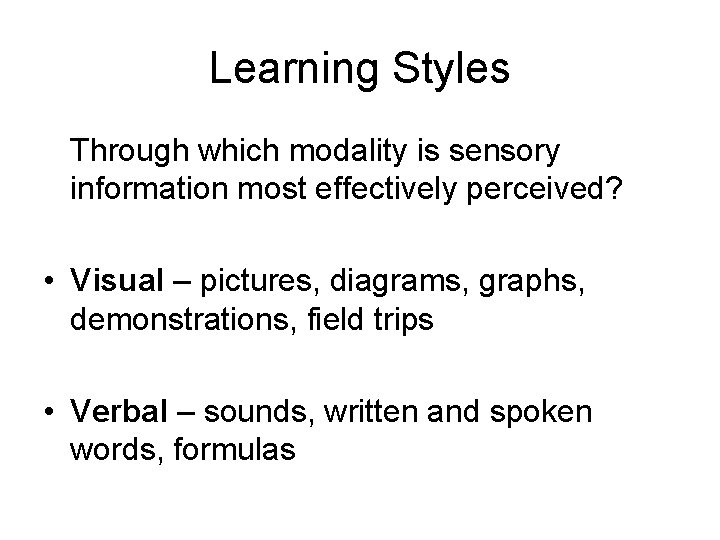
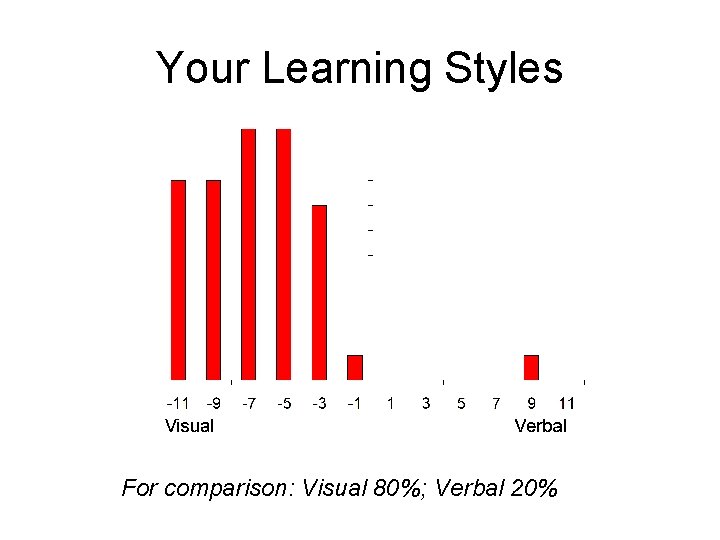
Learning Styles Through which modality is sensory information most effectively perceived? • Visual – pictures, diagrams, graphs, demonstrations, field trips • Verbal – sounds, written and spoken words, formulas
Your Learning Styles For comparison: Visual 80%; Verbal 20%
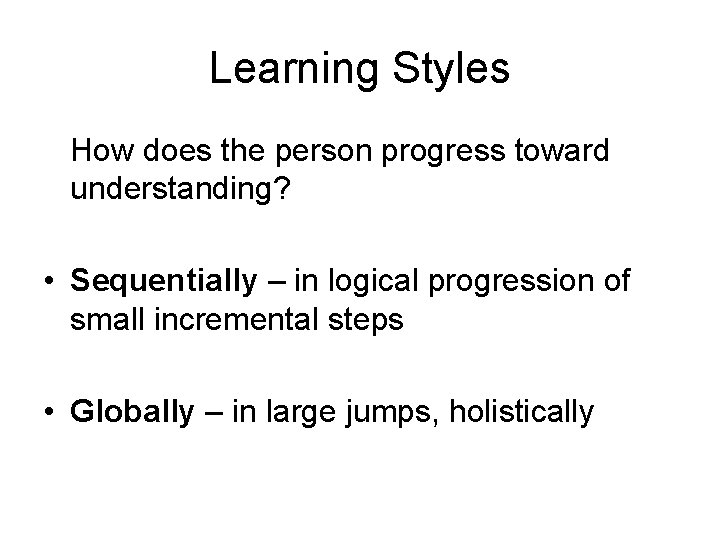
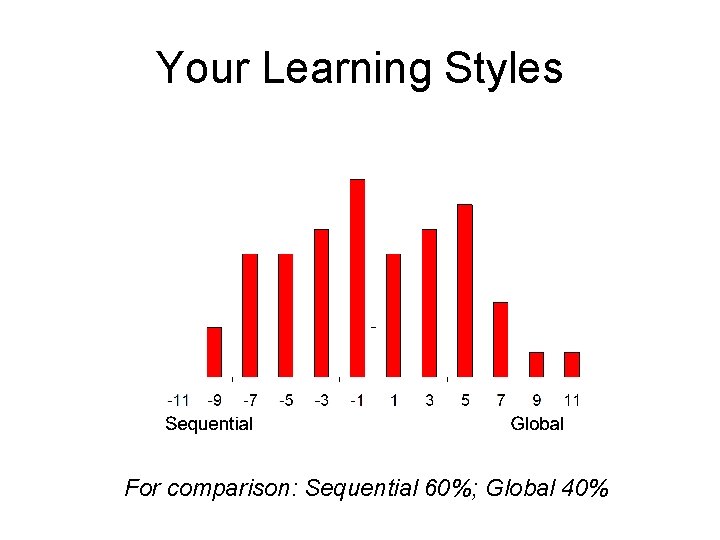
Learning Styles How does the person progress toward understanding? • Sequentially – in logical progression of small incremental steps • Globally – in large jumps, holistically
Your Learning Styles For comparison: Sequential 60%; Global 40%
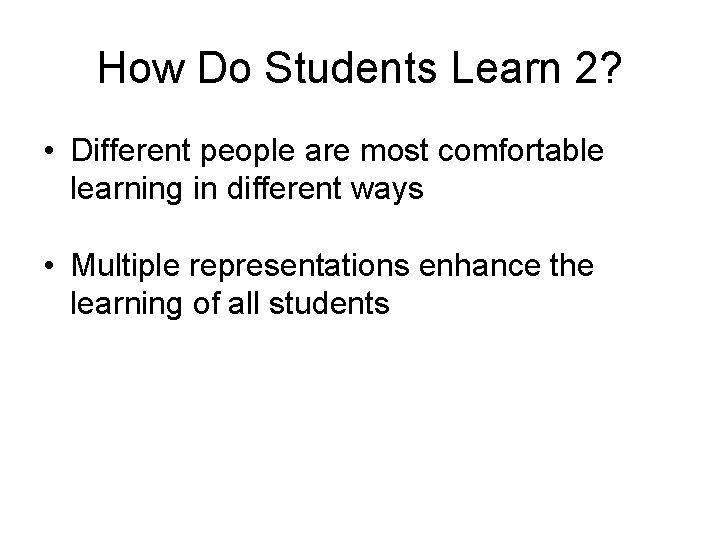
How Do Students Learn 2? • Different people are most comfortable learning in different ways • Multiple representations enhance the learning of all students
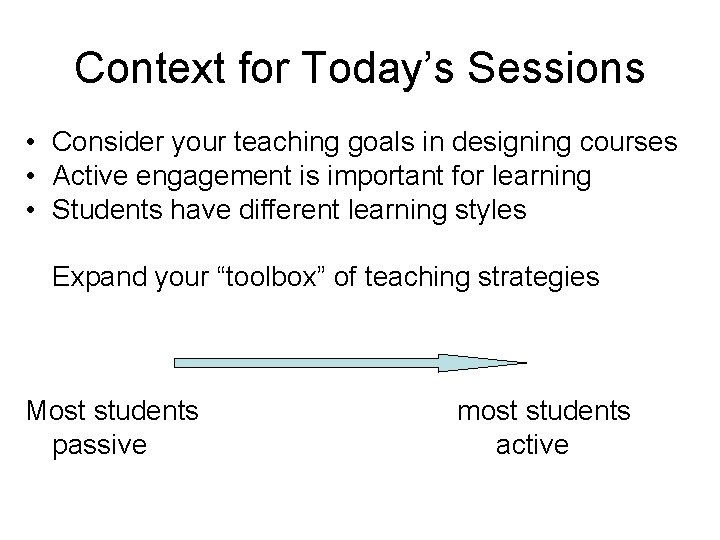
Context for Today’s Sessions • Consider your teaching goals in designing courses • Active engagement is important for learning • Students have different learning styles Expand your “toolbox” of teaching strategies Most students passive most students active
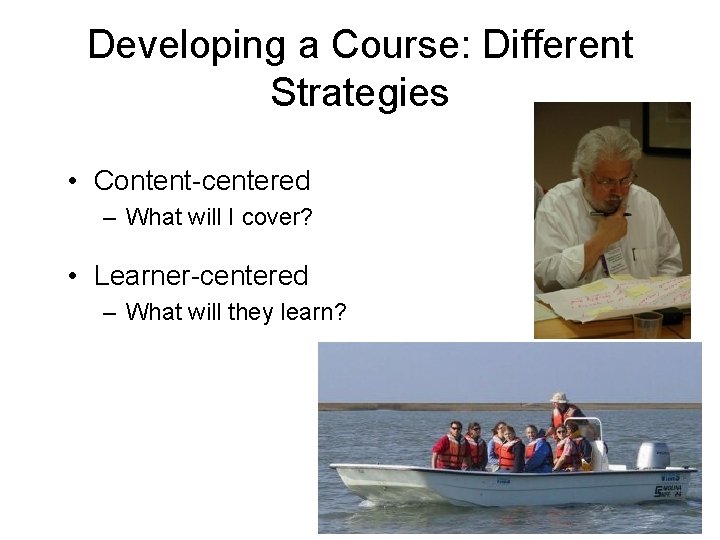
Developing a Course: Different Strategies • Content-centered – What will I cover? • Learner-centered – What will they learn?
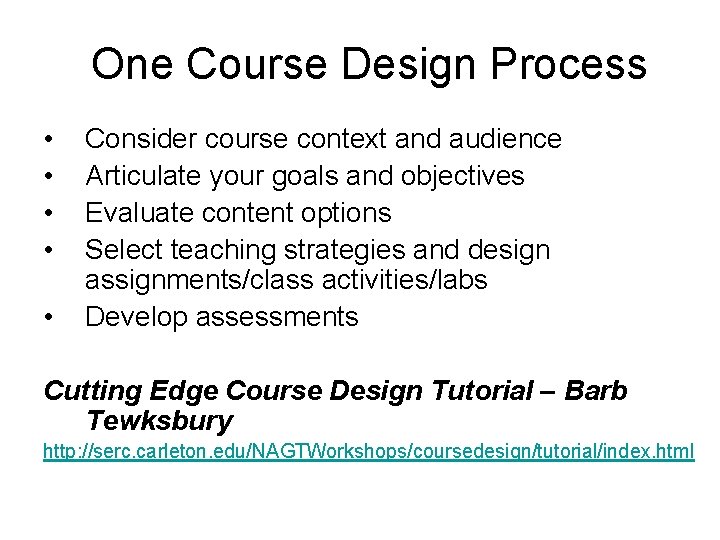
One Course Design Process • • • Consider course context and audience Articulate your goals and objectives Evaluate content options Select teaching strategies and design assignments/class activities/labs Develop assessments Cutting Edge Course Design Tutorial – Barb Tewksbury http: //serc. carleton. edu/NAGTWorkshops/coursedesign/tutorial/index. html
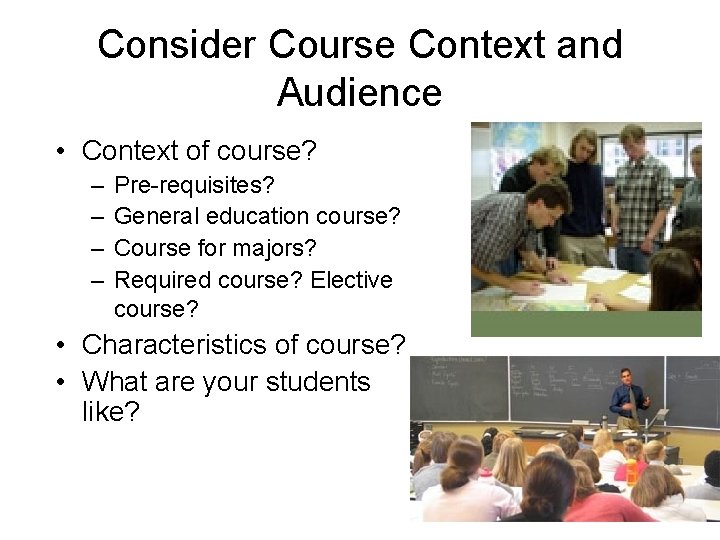
Consider Course Context and Audience • Context of course? – – Pre-requisites? General education course? Course for majors? Required course? Elective course? • Characteristics of course? • What are your students like?
Articulate Your Goals I: Overarching Goals • What do you want students to be able to do as a result of having taken your course? – What kinds of problems do you want them to be able to tackle? – How might students apply what they have learned in the future?
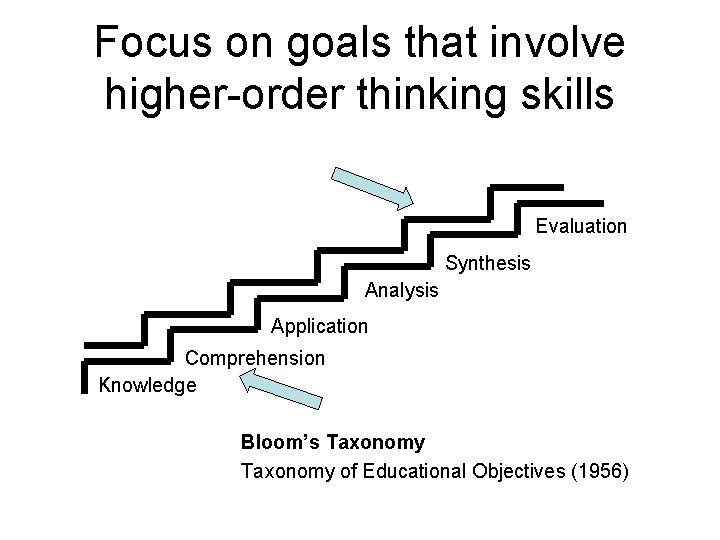
Focus on goals that involve higher-order thinking skills Evaluation Synthesis Analysis Application Comprehension Knowledge Bloom’s Taxonomy of Educational Objectives (1956)
Writing Goals • Use verbs that indicate your goals extend beyond recalling, reciting, or explaining what was covered in class – Interpret, construct, formulate, solve, analyze, predict … • “recognizing plate boundaries” vs. “being able to interpret tectonic setting based on information on physiography, seismicity, and volcanic activity”
Two Comments • Translate fuzzy language into skills – observable/measurable Students will learn to appreciate their natural surroundings. What does that mean? What could students do to show they have mastered this objective? • Focus on higher-order learning skills: analyze, synthesize, interpret Some examples
Some Examples of Goals I want students to be able to: • use characteristics of rocks and surficial features in an area to analyze the geologic history • interpret unfamiliar geologic maps and construct cross sections • analyze unfamiliar areas and assess geologic hazards (different than recalling those done in class) • predict the weather given appropriate meteorological data • design computer models of geologic processes
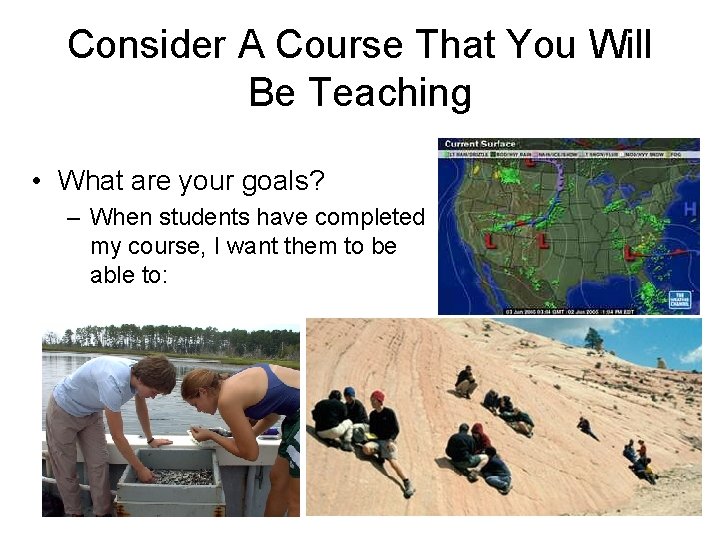
Consider A Course That You Will Be Teaching • What are your goals? – When students have completed my course, I want them to be able to: