
Teaching for Neurodiversity Engaging learners with SEND Working






























- Slides: 46
Teaching for Neurodiversity Engaging learners with SEND Working together to empower educators to cater for Special Educational Needs 1
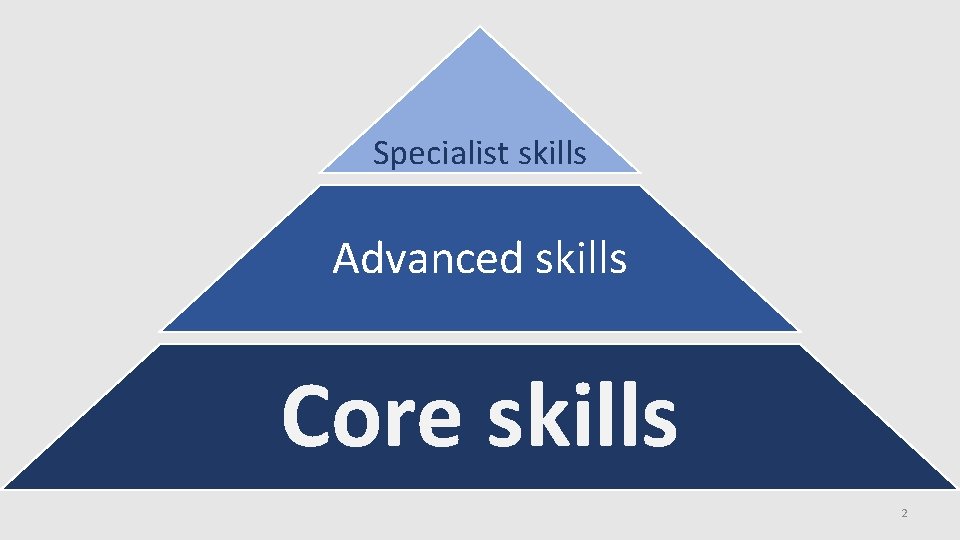
Specialist skills Advanced skills Core skills 2
All schools should have a clear approach to identifying and responding to SEN. The benefits of early identification are widely recognised – identifying need at the earliest point and then making effective provision improves long-term outcomes for the child or young person. SEND Code of Practice 6: 14 3
Breaking the ice! 4
Teaching for Neurodiversity Part 1: Seeing the whole picture Working together to empower educators to cater for Special Educational Needs 5
Meet Hannah 6
Seeing the whole picture 7
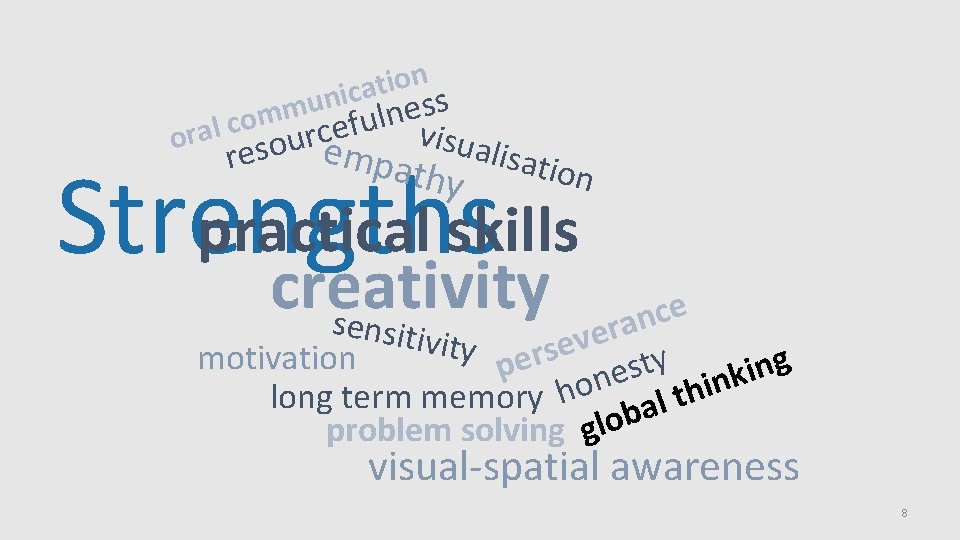
n o i t a s unic s m e n m l o u c f l e a visu c r r o u reso empat alisatio n hy practical skills Strengths creativity e c n sensiti a r e v v i t e y s motivation per nesty nking long term memory ho al thi b o l problem solving g visual-spatial awareness 8
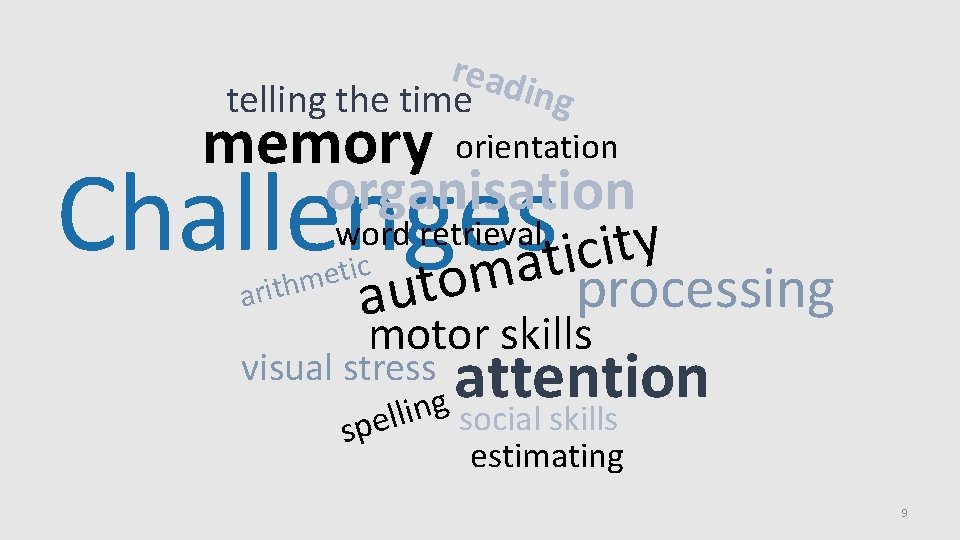
read telling the time ing memory orientation Challenges organisation word retrieval y t i c t i t a e m m h t o i r t a processing au motor skills attention lling visual stress spe social skills estimating 9
What about Hannah? 10
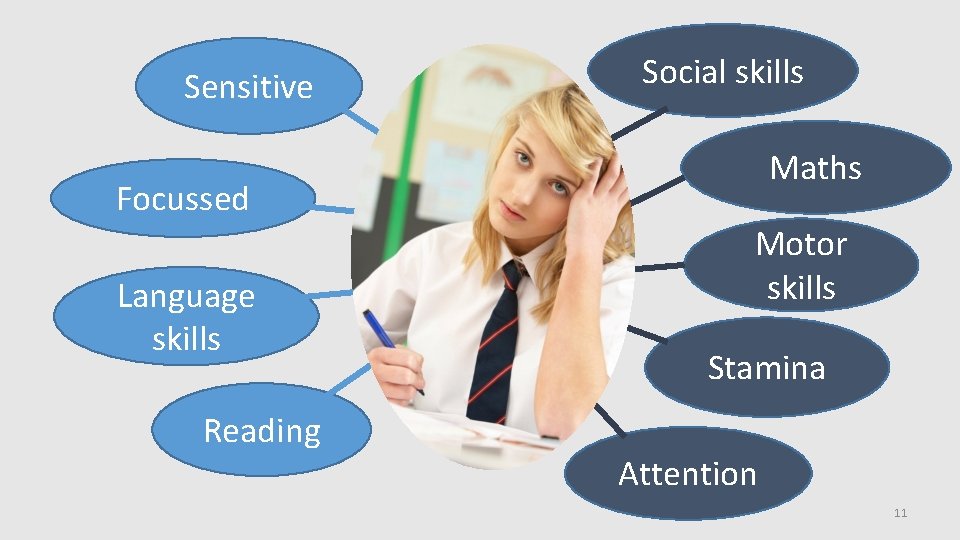
Sensitive Social skills Maths Focussed Language skills Reading Motor skills Stamina Attention 11
Your pupil 12
Teaching for Neurodiversity Part 2: Understanding neurodiversity Working together to empower educators to cater for Special Educational Needs 13
So what is neurodiversity? 14
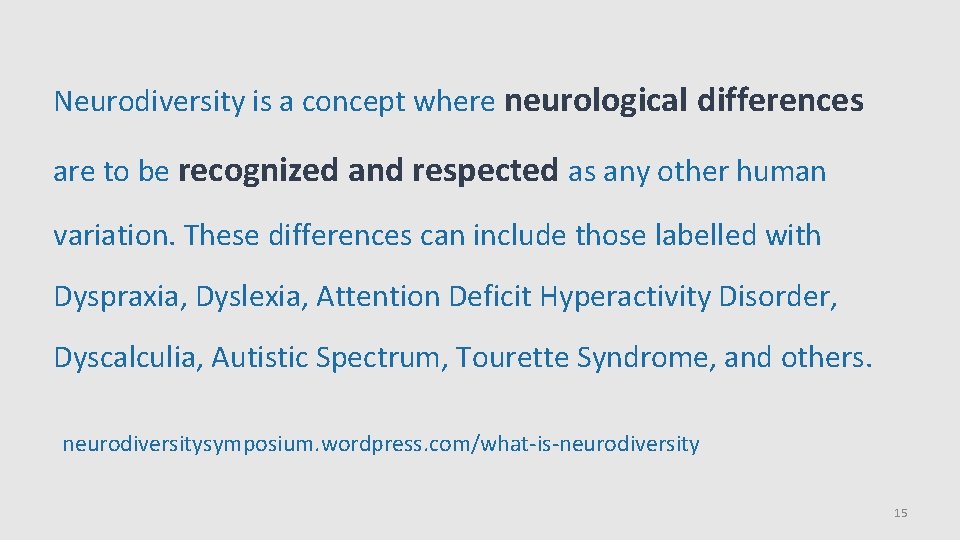
Neurodiversity is a concept where neurological differences are to be recognized and respected as any other human variation. These differences can include those labelled with Dyspraxia, Dyslexia, Attention Deficit Hyperactivity Disorder, Dyscalculia, Autistic Spectrum, Tourette Syndrome, and others. neurodiversitysymposium. wordpress. com/what-is-neurodiversity 15
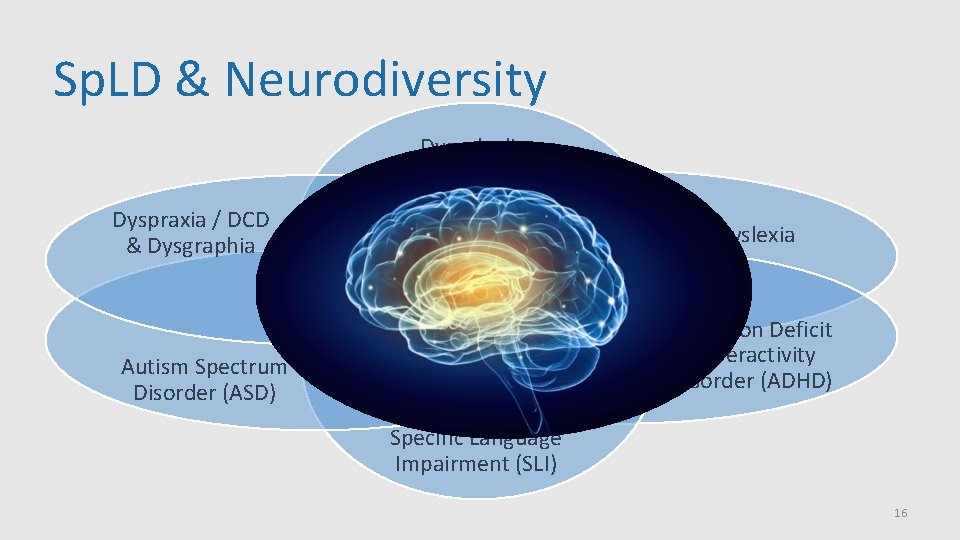
Sp. LD & Neurodiversity Dyscalculia Dyspraxia / DCD & Dysgraphia Dyslexia Attention Deficit Hyperactivity Disorder (ADHD) Autism Spectrum Disorder (ASD) Specific Language Impairment (SLI) 16
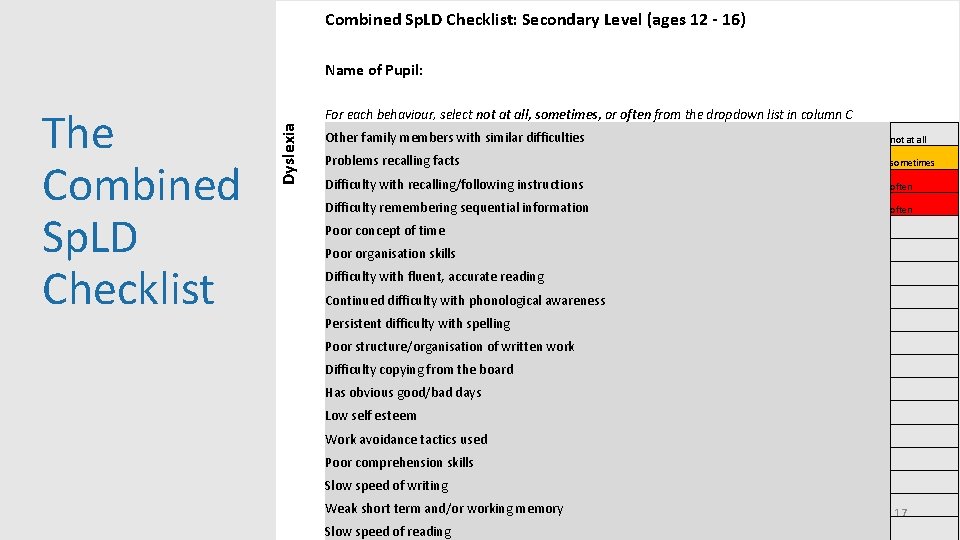
Name of Pupil: For each behaviour, select not at all, sometimes, or often from the dropdown list in column C Other family members with similar difficulties not at all Problems recalling facts sometimes Difficulty with recalling/following instructions often Difficulty remembering sequential information often Poor concept of time Poor organisation skills Difficulty with fluent, accurate reading Continued difficulty with phonological awareness Persistent difficulty with spelling Poor structure/organisation of written work Difficulty copying from the board Has obvious good/bad days Low self esteem Work avoidance tactics used Poor comprehension skills Slow speed of writing Weak short term and/or working memory 17 Slow speed of reading Dyslexia The Combined Sp. LD Checklist: Secondary Level (ages 12 - 16)
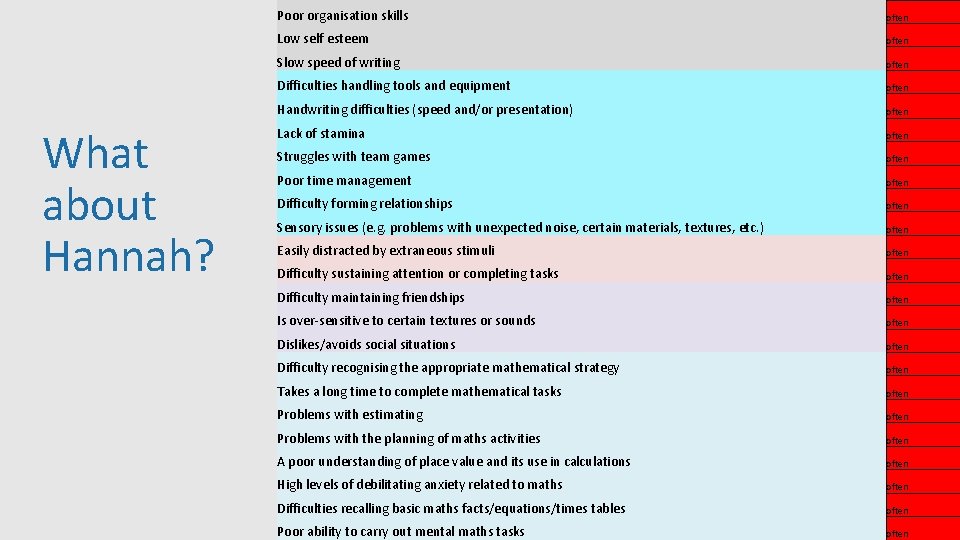
What about Hannah? Poor organisation skills often Low self esteem often Slow speed of writing often Difficulties handling tools and equipment often Handwriting difficulties (speed and/or presentation) often Lack of stamina often Struggles with team games often Poor time management often Difficulty forming relationships often Sensory issues (e. g. problems with unexpected noise, certain materials, textures, etc. ) often Easily distracted by extraneous stimuli often Difficulty sustaining attention or completing tasks often Difficulty maintaining friendships often Is over-sensitive to certain textures or sounds often Dislikes/avoids social situations often Difficulty recognising the appropriate mathematical strategy often Takes a long time to complete mathematical tasks often Problems with estimating often Problems with the planning of maths activities often A poor understanding of place value and its use in calculations often High levels of debilitating anxiety related to maths often Difficulties recalling basic maths facts/equations/times tables often 18 Poor ability to carry out mental maths tasks often
And what about your pupil? 19
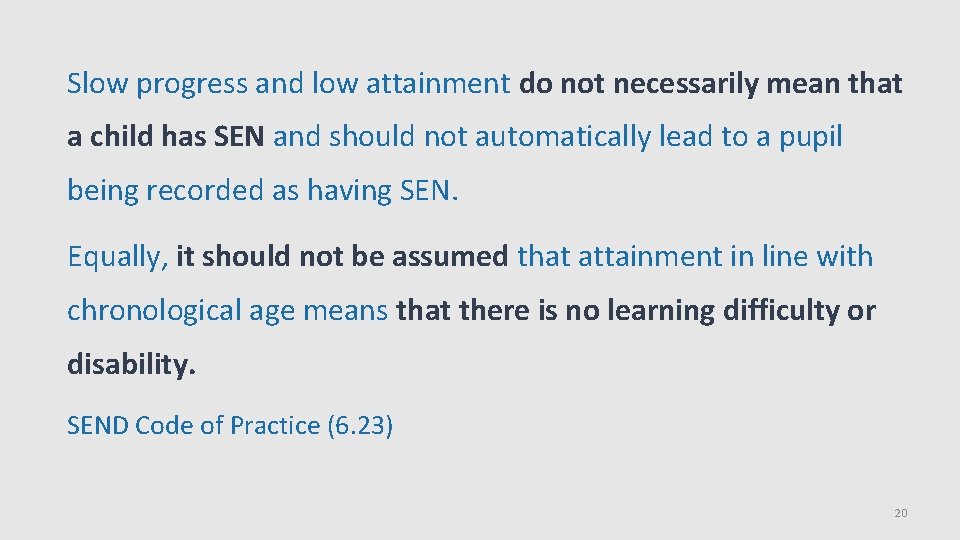
Slow progress and low attainment do not necessarily mean that a child has SEN and should not automatically lead to a pupil being recorded as having SEN. Equally, it should not be assumed that attainment in line with chronological age means that there is no learning difficulty or disability. SEND Code of Practice (6. 23) 20
Teaching for Neurodiversity Part 3: Classroom support strategies Working together to empower educators to cater for Special Educational Needs 21
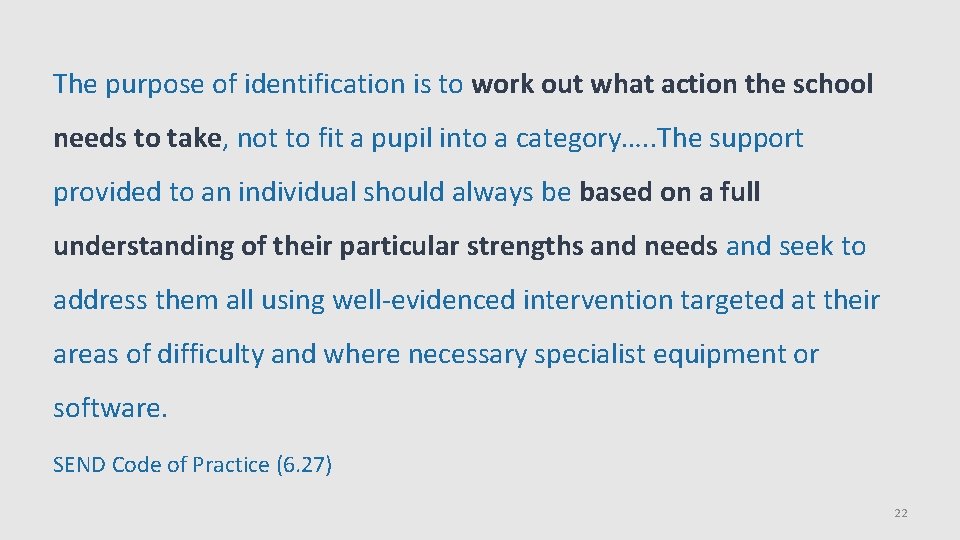
The purpose of identification is to work out what action the school needs to take, not to fit a pupil into a category…. . The support provided to an individual should always be based on a full understanding of their particular strengths and needs and seek to address them all using well-evidenced intervention targeted at their areas of difficulty and where necessary specialist equipment or software. SEND Code of Practice (6. 27) 22
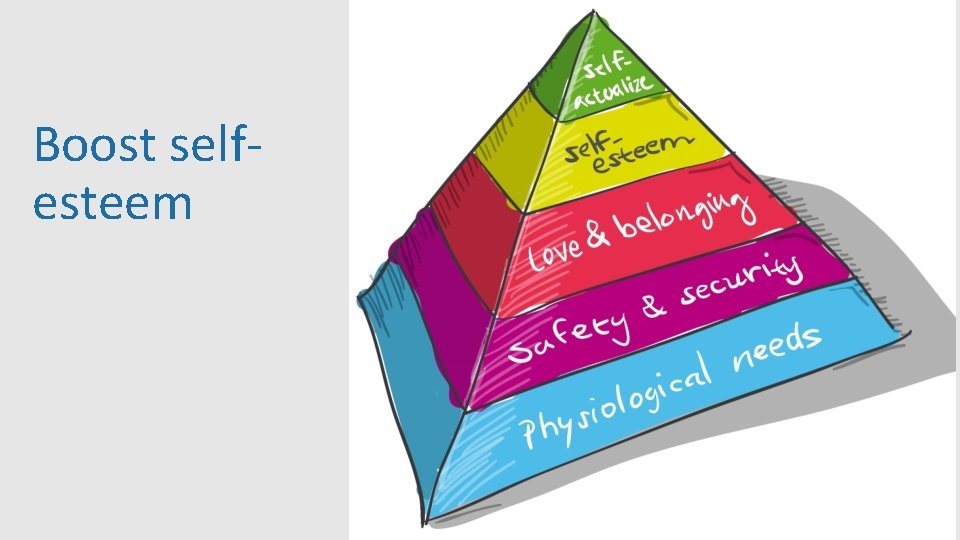
Boost selfesteem 23
Understand challenging behaviour 24
Motivate 25
Teach metacognition 26
Use positive language 27
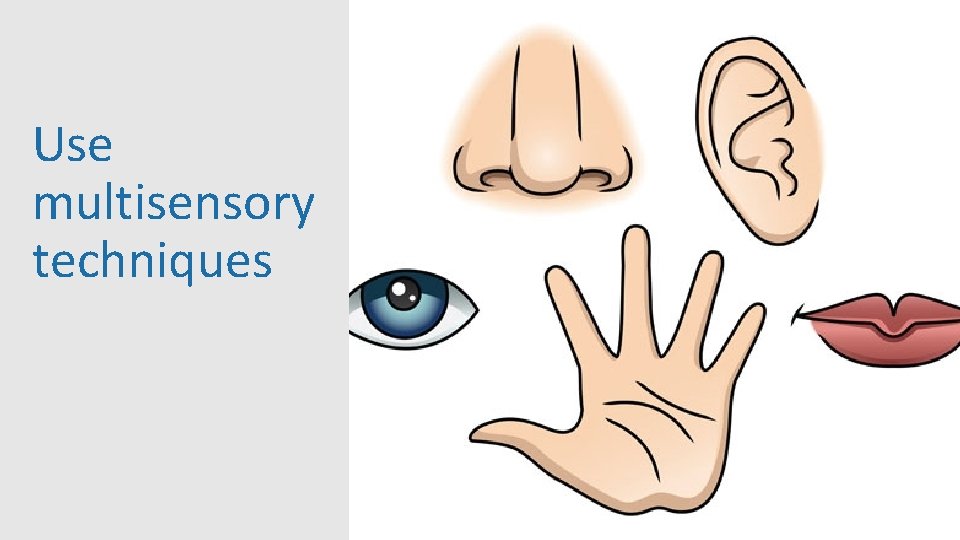
Use multisensory techniques 28
Give one instruction at a time 29
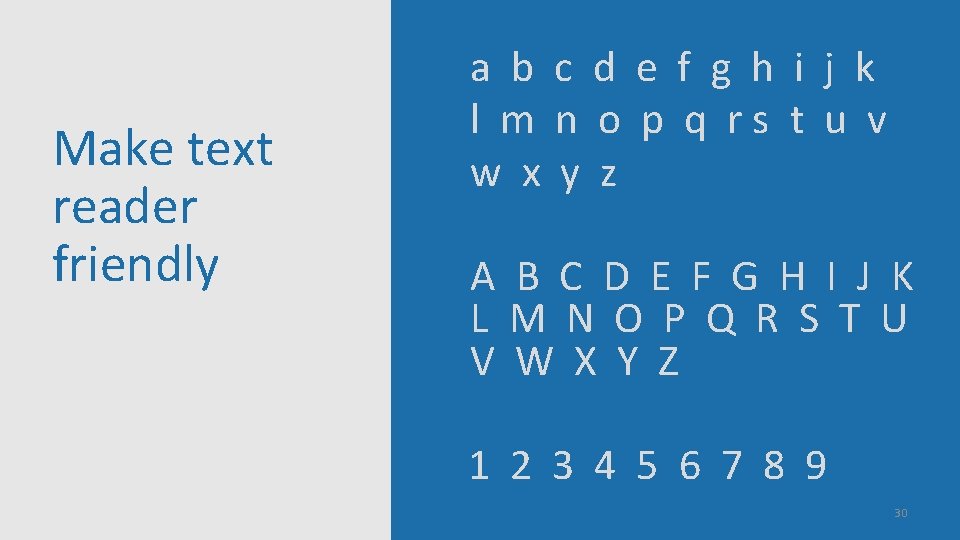
Make text reader friendly a b c d e f g h i j k l m n o p q r s t u v w x y z A B C D E F G H I J K L M N O P Q R S T U V W X Y Z 1 2 3 4 5 6 7 8 9 30
Allow ‘think time’ 31
Reduce memory load 32
Keep your language simple 33
Encourage alternatives to handwriting 34
Support gross motor skills 35
Support academic language development 36
Teach organisational skills 37
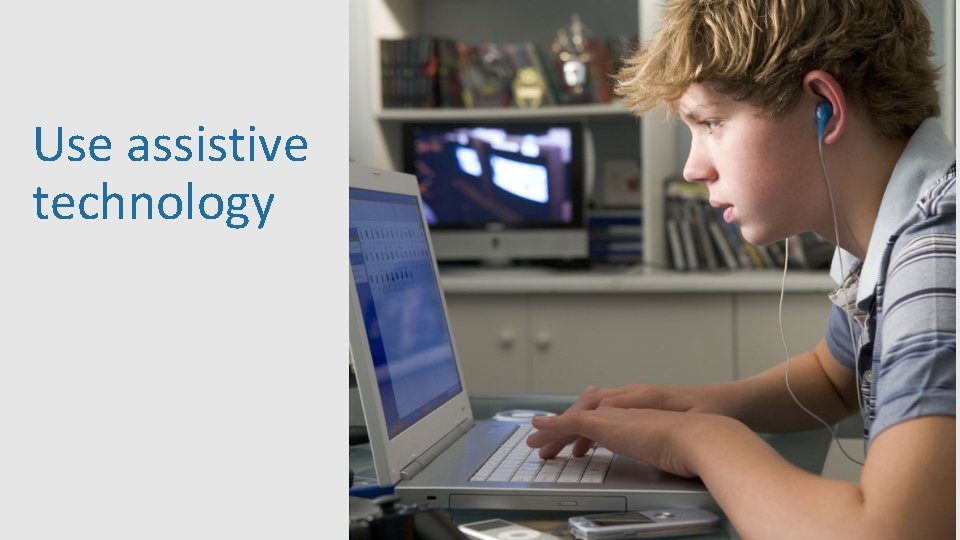
Use assistive technology 38
Teach reading and proof reading techniques 39
Teach study skills and exam techniques 40
Exam Access Arrangements 41
Have high expectations 42
How would we support Hannah? 43
And how will you support your pupil? 44
What have we covered? 45
So…. 46