
TEACHING FIRSTYEAR STUDENTS Jennifer Marlow English Department Peter
![““[B]ecause few lower-level college courses require writing, many students have limited opportunities to gain](https://slidetodoc.com/presentation_image_h2/8b2dc9505f25a60bf59ec1f17979726c/image-19.jpg "““[B]ecause few lower-level college courses require writing, many students have limited opportunities to gain")
- Slides: 23
TEACHING FIRST-YEAR STUDENTS Jennifer Marlow, English Department Peter Koonz, Library
OUR PROCESS Transfer of knowledge How expertise is achieved within a domain Theories of human cognition and memory Composition theory / first year writing Library instruction and information literacy New pedagogies / flipped classroom First-year students
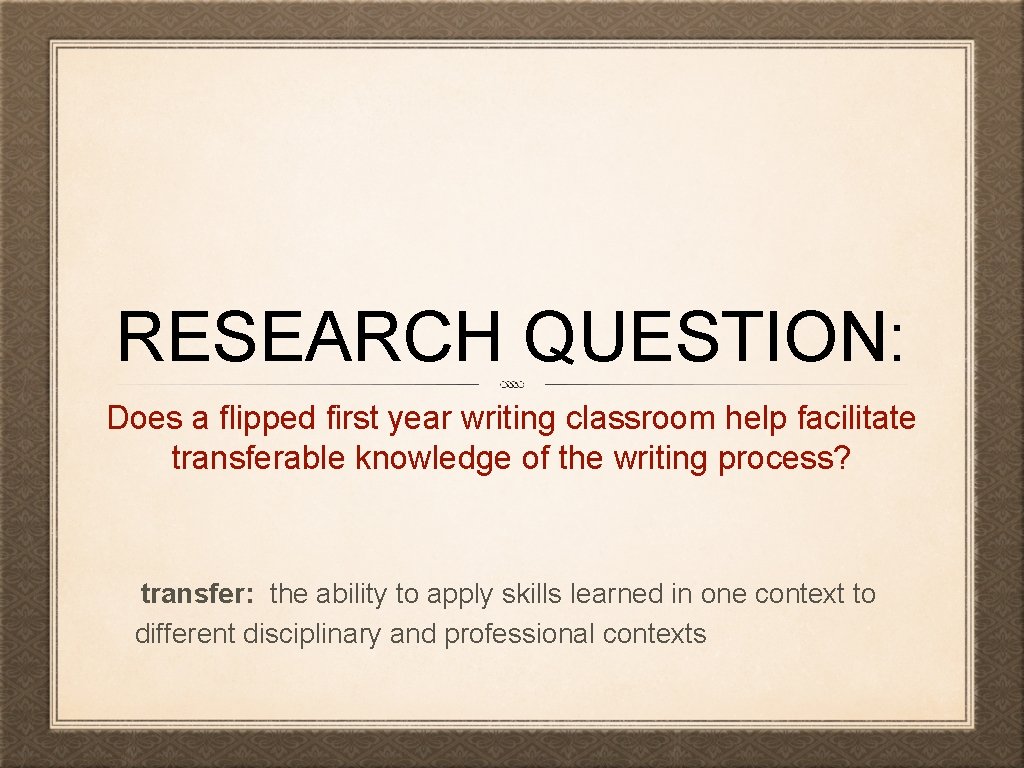
RESEARCH QUESTION: Does a flipped first year writing classroom help facilitate transferable knowledge of the writing process? transfer: the ability to apply skills learned in one context to different disciplinary and professional contexts
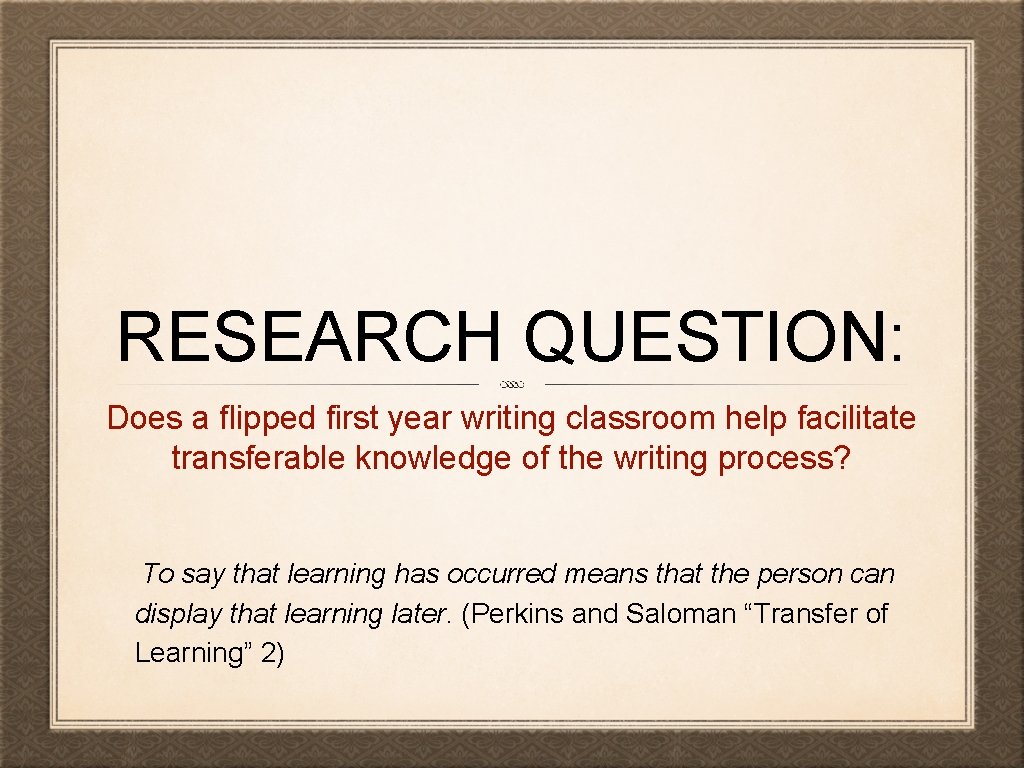
RESEARCH QUESTION: Does a flipped first year writing classroom help facilitate transferable knowledge of the writing process? To say that learning has occurred means that the person can display that learning later. (Perkins and Saloman “Transfer of Learning” 2)
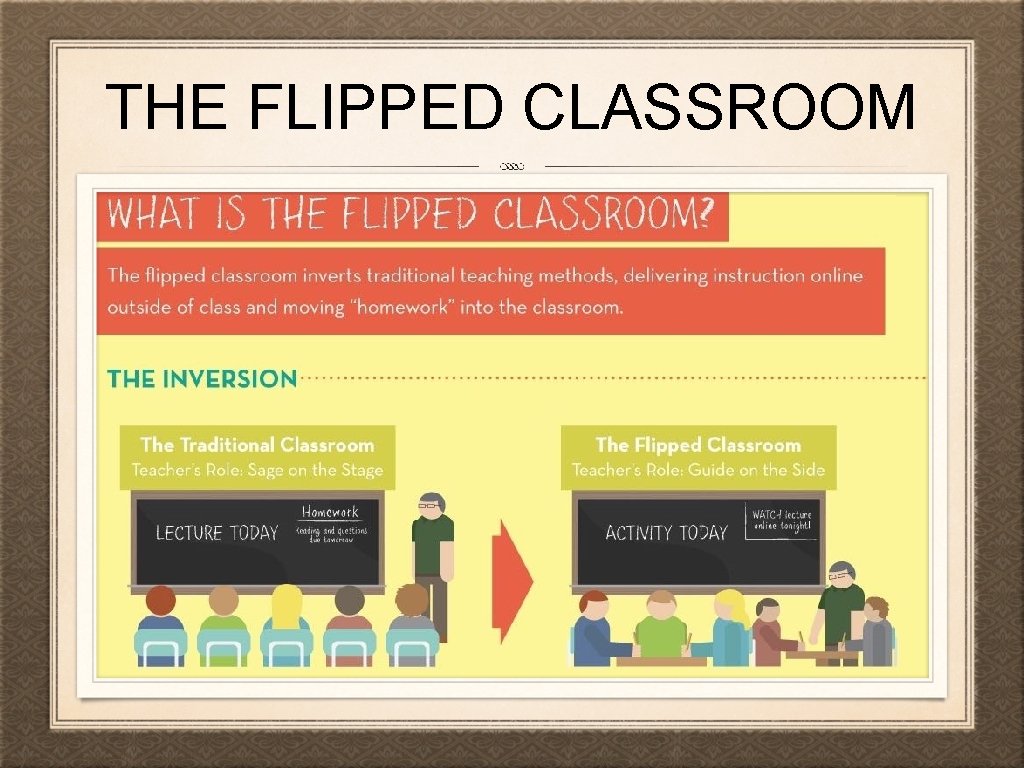
THE FLIPPED CLASSROOM
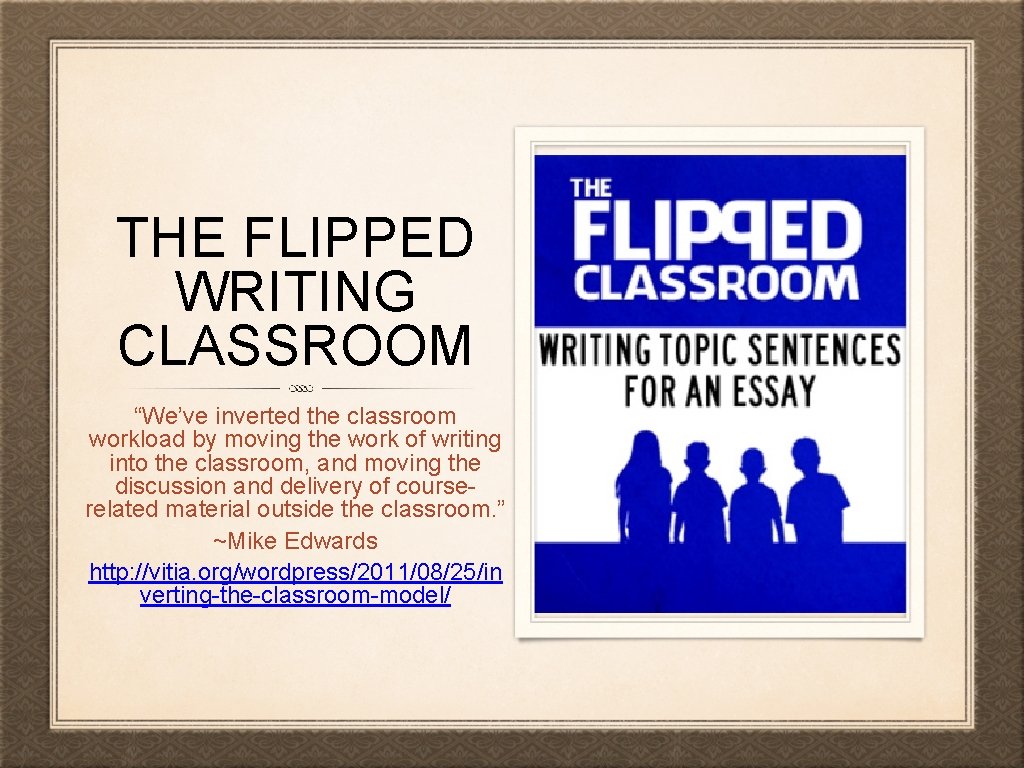
THE FLIPPED WRITING CLASSROOM “We’ve inverted the classroom workload by moving the work of writing into the classroom, and moving the discussion and delivery of courserelated material outside the classroom. ” ~Mike Edwards http: //vitia. org/wordpress/2011/08/25/in verting-the-classroom-model/
RESEARCH QUESTION: Does a flipped first year writing classroom help facilitate transferable knowledge of the writing process? To say that learning has occurred means that the person can display that learning later. (Perkins and Saloman “Transfer of Learning” 2)
FLIPPED CLASSROOM AND TRANSFER metacognition: “the active monitoring of learning one’s learning experiences” (as defined by Perkins and Salomon) metacognition plays a crucial role in transfer: “selfmonitoring” might help students “later to recognize when they might apply the strategy they had learned” (Perkins “Transfer of Learning 5) one of NCTE’s “Eight Habits of Mind” in their Framework for Success in Postsecondary Writing motivation to learn: time on task, amount of attention devoted to task, and ability to recognize opportunities for transfer (Nelms and Dively 218)
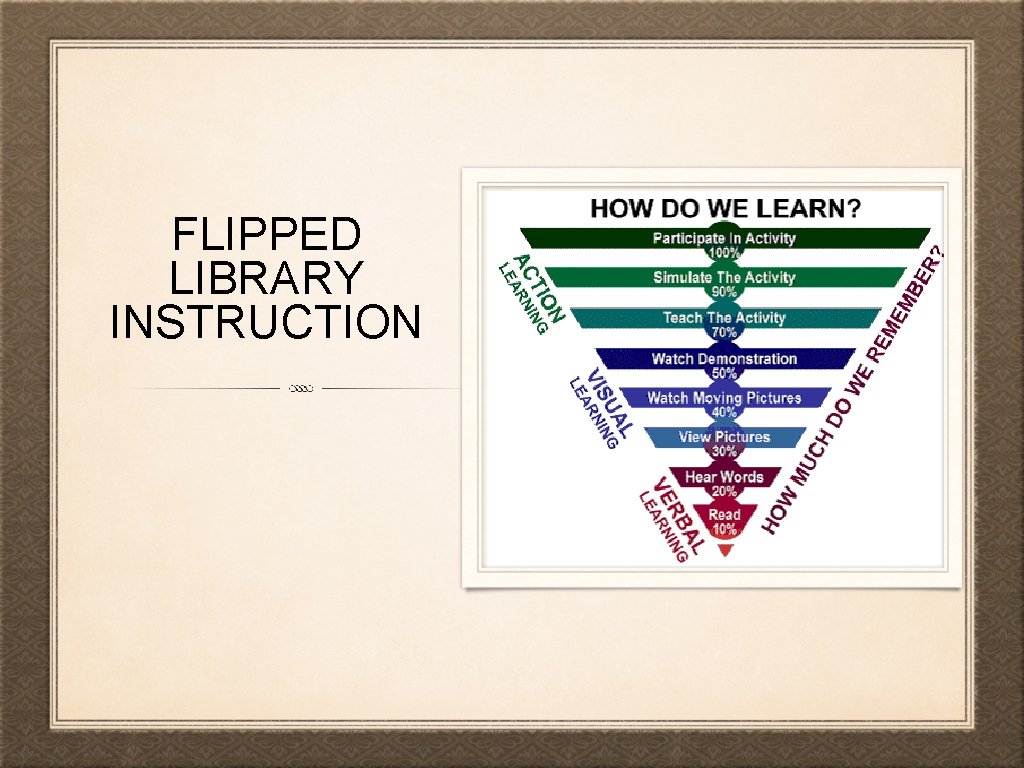
FLIPPED LIBRARY INSTRUCTION
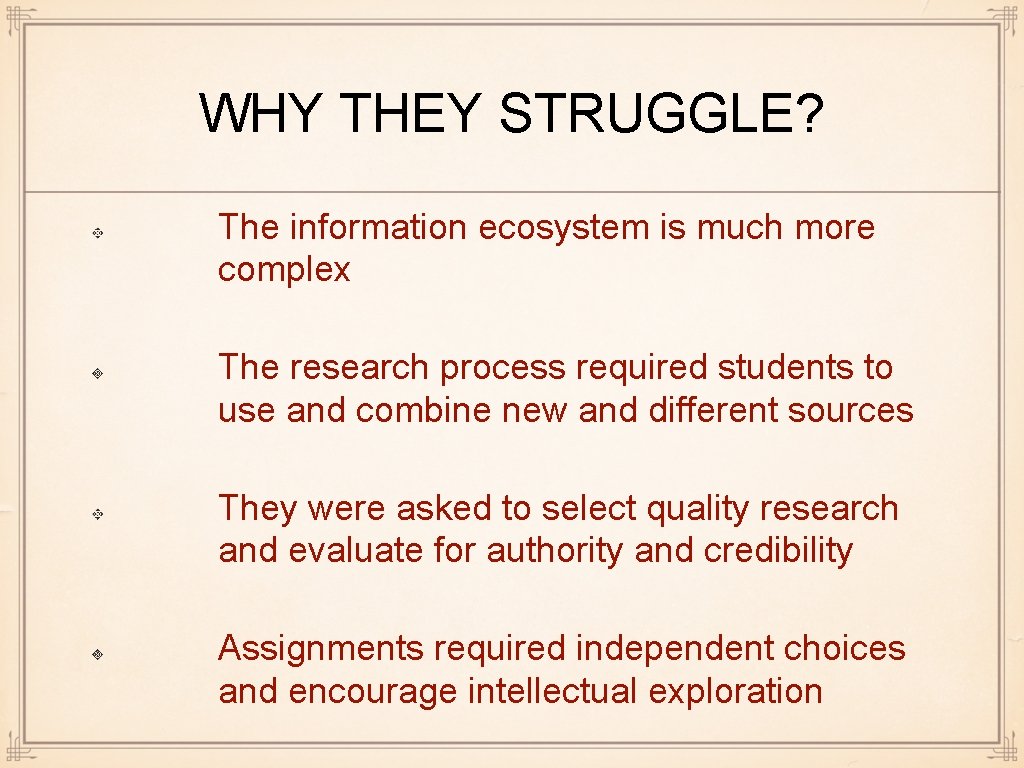
WHY THEY STRUGGLE? The information ecosystem is much more complex The research process required students to use and combine new and different sources They were asked to select quality research and evaluate for authority and credibility Assignments required independent choices and encourage intellectual exploration
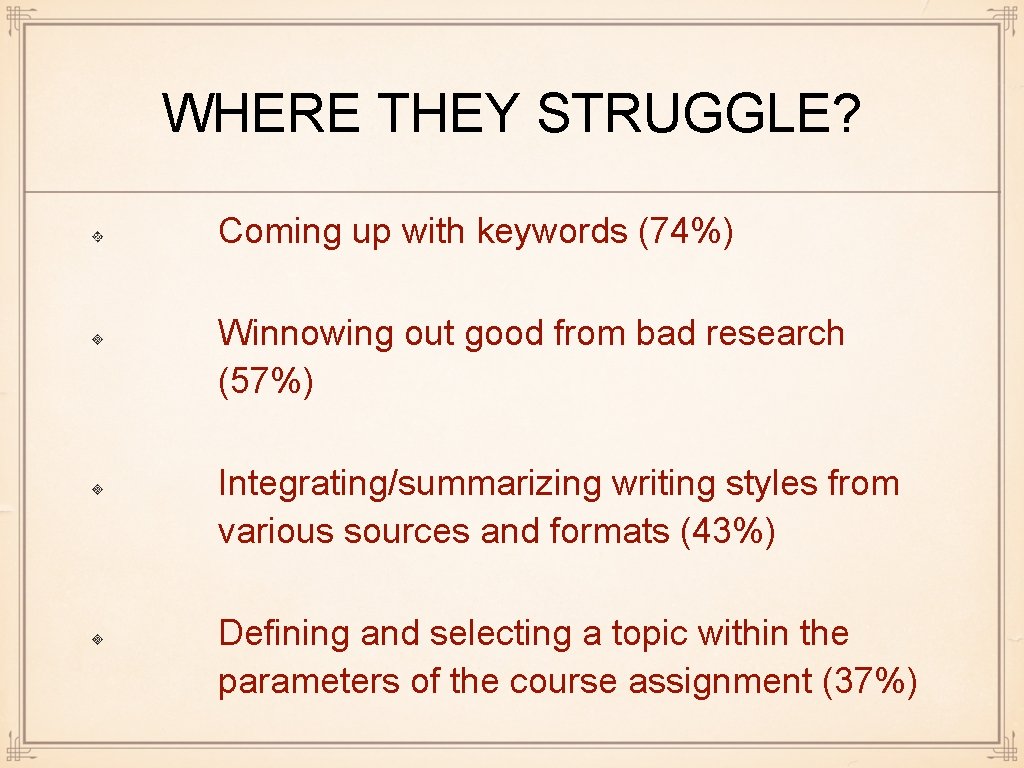
WHERE THEY STRUGGLE? Coming up with keywords (74%) Winnowing out good from bad research (57%) Integrating/summarizing writing styles from various sources and formats (43%) Defining and selecting a topic within the parameters of the course assignment (37%)
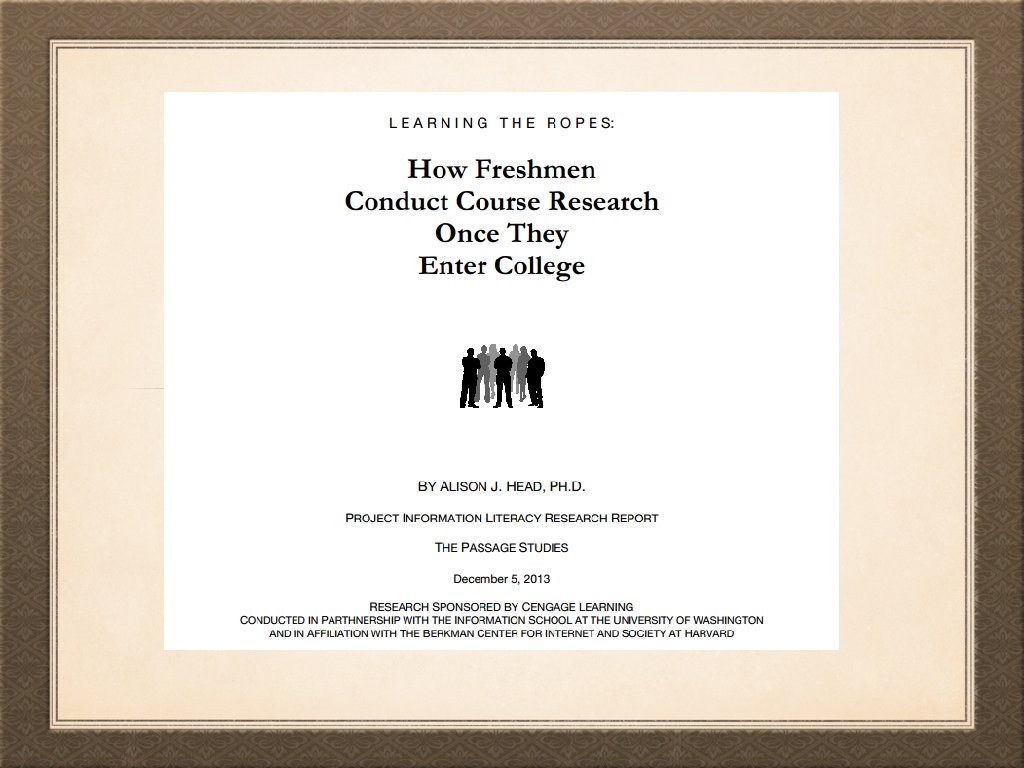
From Learning the Ropes “If instruction efforts are not stepped up early many freshmen run the very real risk of ‘flatlining’. ”
LIBRARY INSTRUCTION: INHERENT CHALLENGES No prior relationship with students (and sometimes none with classroom teacher) Short timeframe for instruction Inability to have students do reading or other work before meeting Assessment is problematic
ACTUAL STUDENT
LIBRARY INSTRUCTION: INHERENT CHALLENGES No prior relationship with students (and sometimes none with classroom teacher) Short timeframe for instruction Inability to have students do reading or other work before meeting Assessment is problematic
From Learning the Ropes “…it is essential librarians teach students transferable information concepts… instead of focusing on search skills in brief encounters with students. ”
BEYOND FIRST YEAR WRITING “Conventional educational practices often fail to establish the conditions either for reflexive or mindful transfer. However, education can be designed to honor these conditions and achieve transfer. ” ~Perkins and Salomon, “Transfer of Learning”
““[B]ecause few lower-level college courses require writing, many students have limited opportunities to gain experience with academic writing…. [T]ransfer of learning is most likely to be obtained when general principles and reasoning processes are taught in conjunction with their reallife applications in varied, specific contexts” (374). ~Julie Foertsch, “Where Cognitive Psychology Applies”
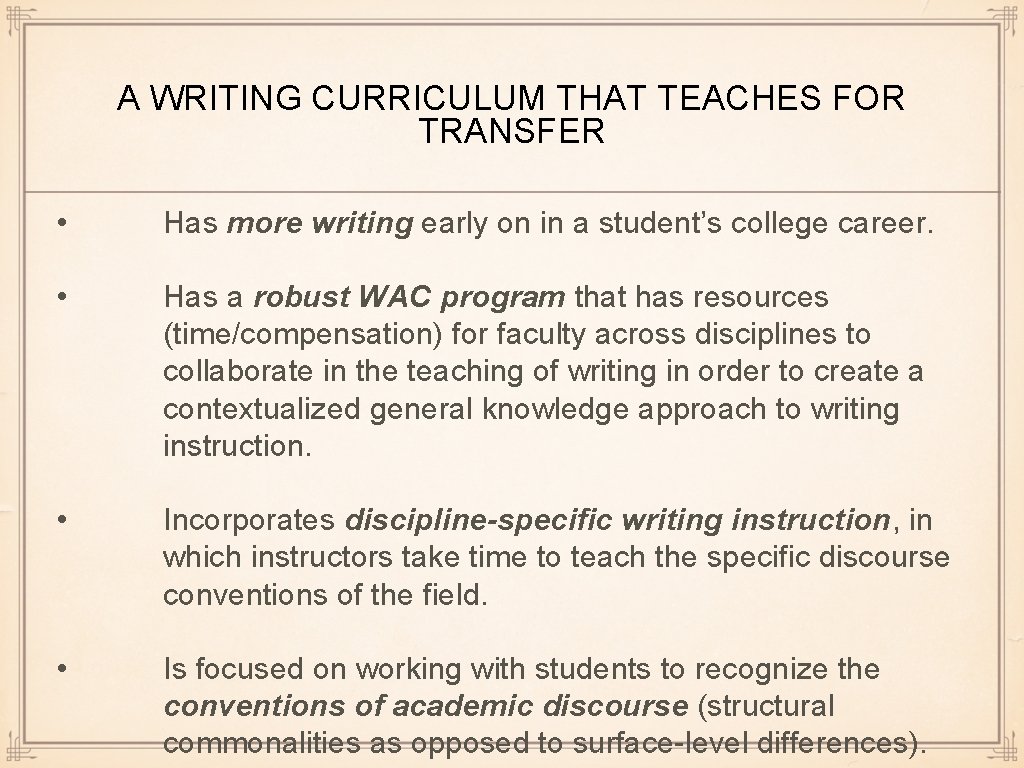
A WRITING CURRICULUM THAT TEACHES FOR TRANSFER • Has more writing early on in a student’s college career. • Has a robust WAC program that has resources (time/compensation) for faculty across disciplines to collaborate in the teaching of writing in order to create a contextualized general knowledge approach to writing instruction. • Incorporates discipline-specific writing instruction, in which instructors take time to teach the specific discourse conventions of the field. • Is focused on working with students to recognize the conventions of academic discourse (structural commonalities as opposed to surface-level differences).
TAKE-AWAYS difference between flipping instruction and flipping classroom 750 words and flipped library instruction most useful student feedback: 750 words cited frequently as a particularly effective procedure or technique importance of WAC
THANK YOU Questions or Comments?
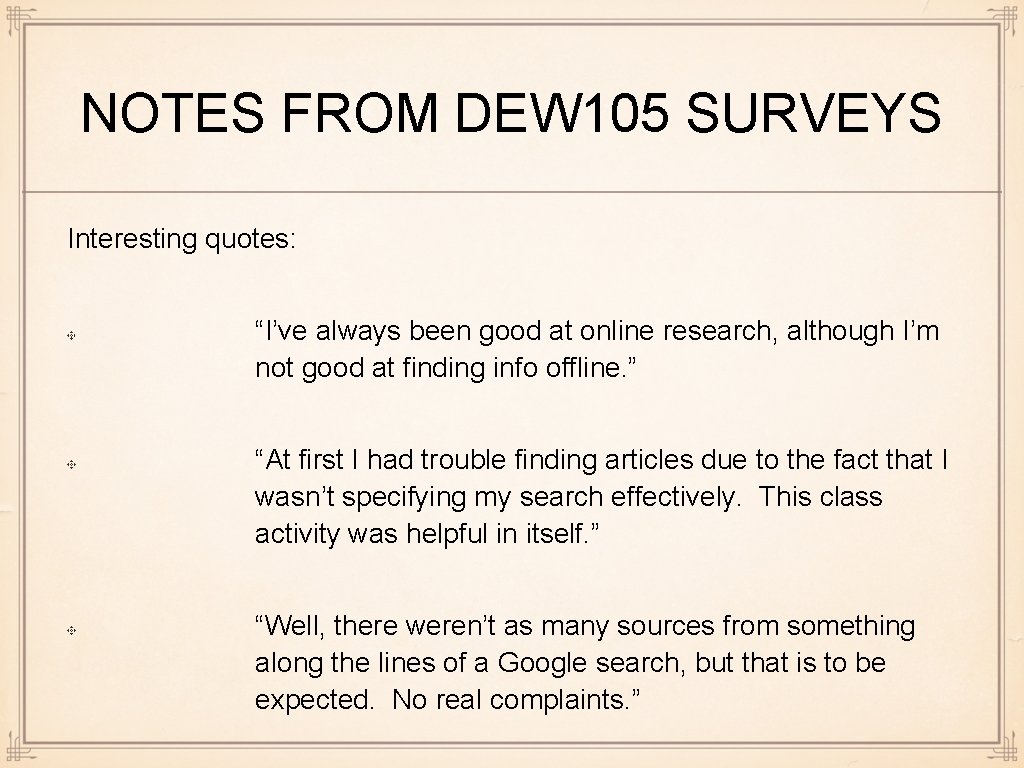
NOTES FROM DEW 105 SURVEYS Interesting quotes: “I’ve always been good at online research, although I’m not good at finding info offline. ” “At first I had trouble finding articles due to the fact that I wasn’t specifying my search effectively. This class activity was helpful in itself. ” “Well, there weren’t as many sources from something along the lines of a Google search, but that is to be expected. No real complaints. ”