
TEACHING ESP TEACHING CONTEXTS Private Language School University
- Slides: 14
TEACHING ESP
TEACHING CONTEXTS • • Private Language School University In-company 1 -to-1
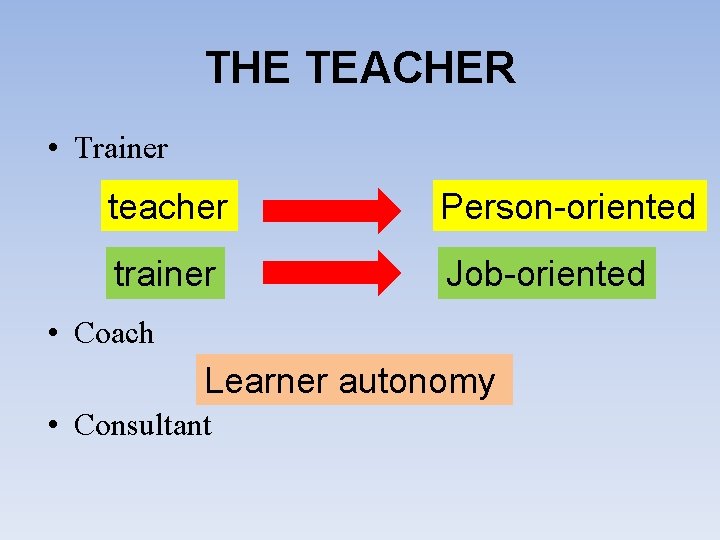
THE TEACHER • Trainer teacher Person-oriented trainer Job-oriented • Coach Learner autonomy • Consultant
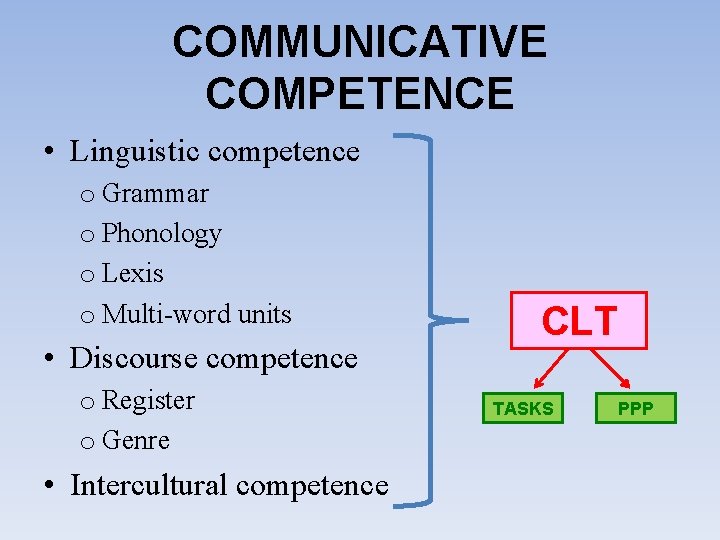
COMMUNICATIVE COMPETENCE • Linguistic competence o Grammar o Phonology o Lexis o Multi-word units • Discourse competence o Register o Genre • Intercultural competence CLT TASKS PPP
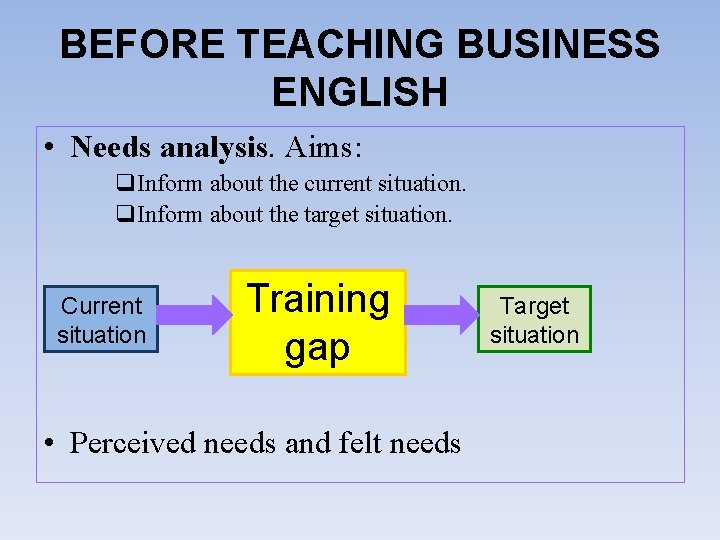
BEFORE TEACHING BUSINESS ENGLISH • Needs analysis. Aims: q. Inform about the current situation. q. Inform about the target situation. Current situation Training gap • Perceived needs and felt needs Target situation
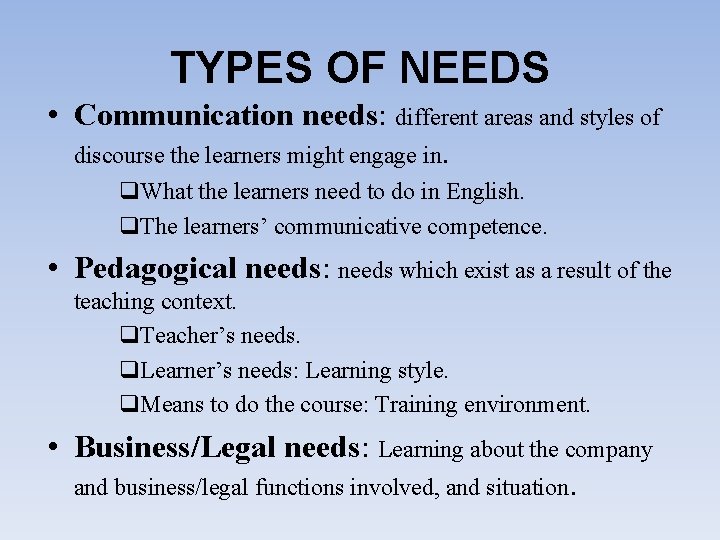
TYPES OF NEEDS • Communication needs: different areas and styles of discourse the learners might engage in. q. What the learners need to do in English. q. The learners’ communicative competence. • Pedagogical needs: needs which exist as a result of the teaching context. q. Teacher’s needs. q. Learner’s needs: Learning style. q. Means to do the course: Training environment. • Business/Legal needs: Learning about the company and business/legal functions involved, and situation.
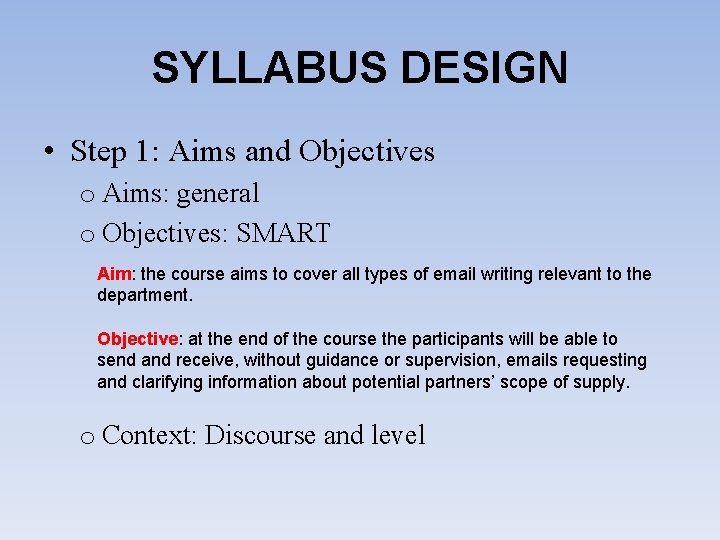
SYLLABUS DESIGN • Step 1: Aims and Objectives o Aims: general o Objectives: SMART Aim: the course aims to cover all types of email writing relevant to the department. Objective: at the end of the course the participants will be able to send and receive, without guidance or supervision, emails requesting and clarifying information about potential partners’ scope of supply. o Context: Discourse and level
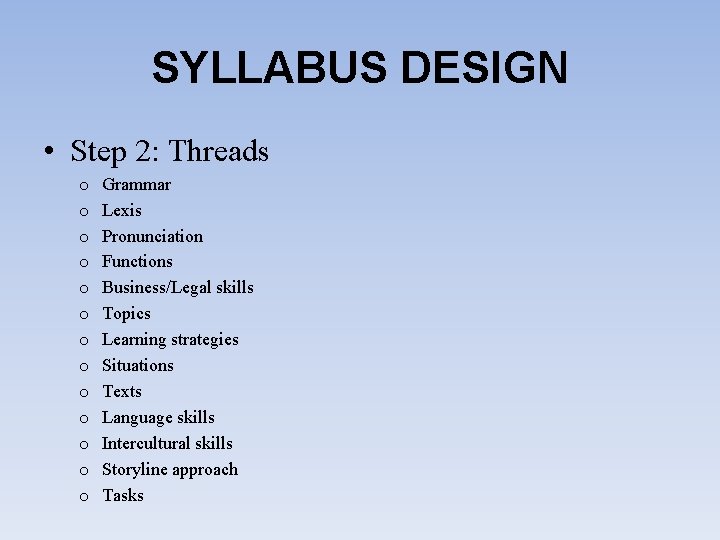
SYLLABUS DESIGN • Step 2: Threads o o o o Grammar Lexis Pronunciation Functions Business/Legal skills Topics Learning strategies Situations Texts Language skills Intercultural skills Storyline approach Tasks
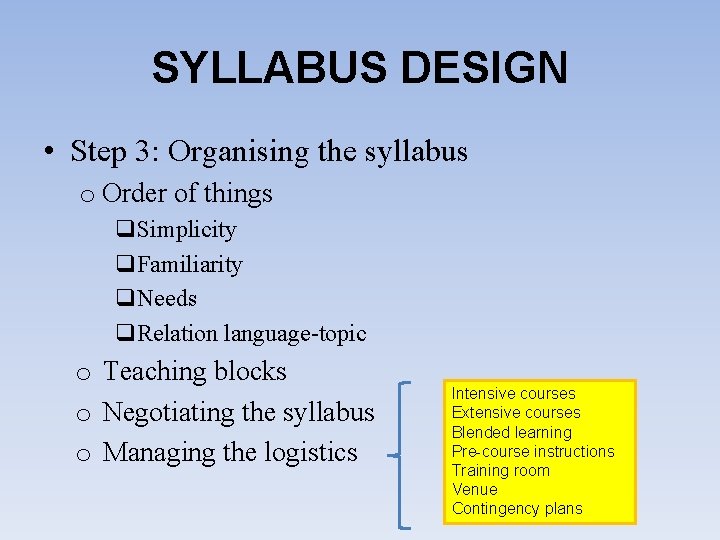
SYLLABUS DESIGN • Step 3: Organising the syllabus o Order of things q. Simplicity q. Familiarity q. Needs q. Relation language-topic o Teaching blocks o Negotiating the syllabus o Managing the logistics Intensive courses Extensive courses Blended learning Pre-course instructions Training room Venue Contingency plans
SYLLABUS DESIGN • Materials • Skills • Assessment
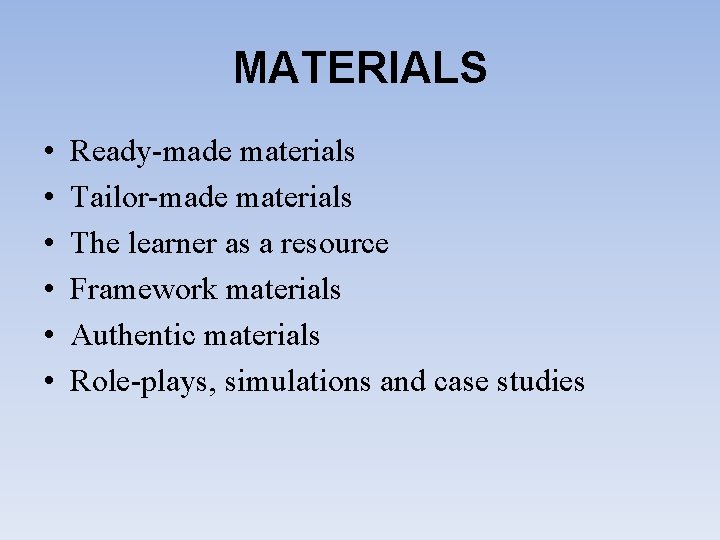
MATERIALS • • • Ready-made materials Tailor-made materials The learner as a resource Framework materials Authentic materials Role-plays, simulations and case studies
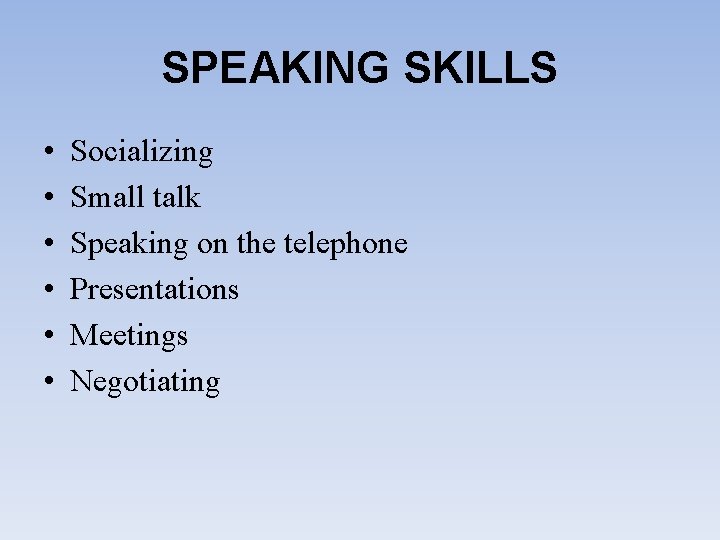
SPEAKING SKILLS • • • Socializing Small talk Speaking on the telephone Presentations Meetings Negotiating
WRITING SKILLS Business/Legal writing: • Correspondence • Contracts • Reports • CVs • Agendas and minutes • Writing for the internet
ASSESSMENT • Testing learners: o Progress/end-of-course/achievement tests o Continuous assessment