
Teaching Diacritical Marking Diacritically mark the words on
- Slides: 6
Teaching Diacritical Marking
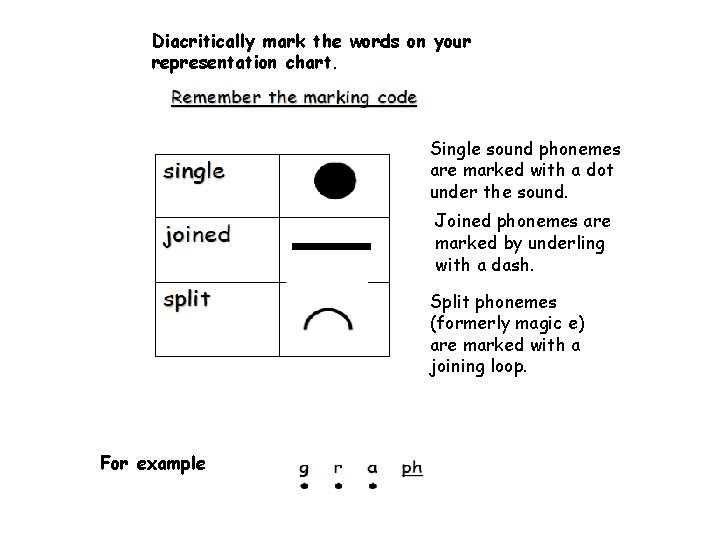
Diacritically mark the words on your representation chart. Single sound phonemes are marked with a dot under the sound. Joined phonemes are marked by underling with a dash. Split phonemes (formerly magic e) are marked with a joining loop. For example
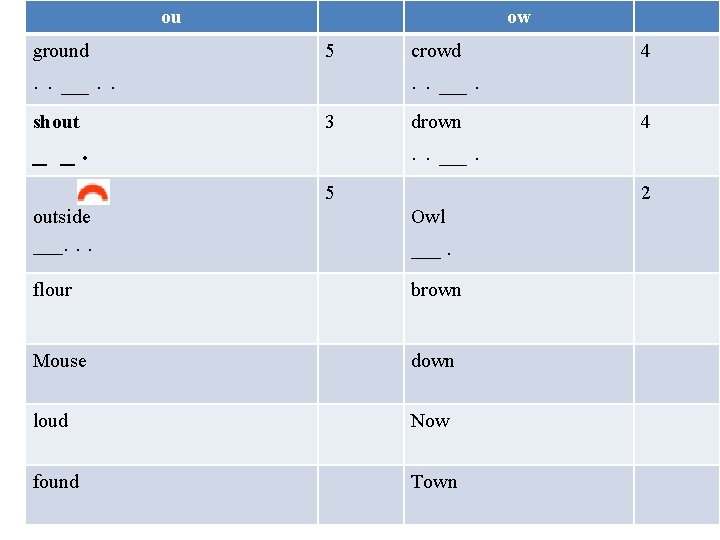
ou ground ow 5 . . __. . shout crowd 4 . . __. 3 _ _. drown 4 . . __. 5 2 outside ___. . . Owl flour brown Mouse down loud Now found Town ___.
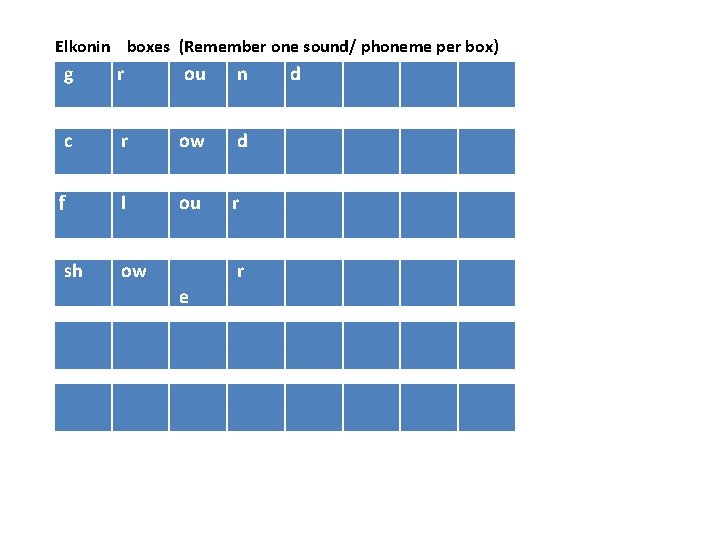
Elkonin boxes (Remember one sound/ phoneme per box) g r ou n c r ow d f l ou r sh ow r e d
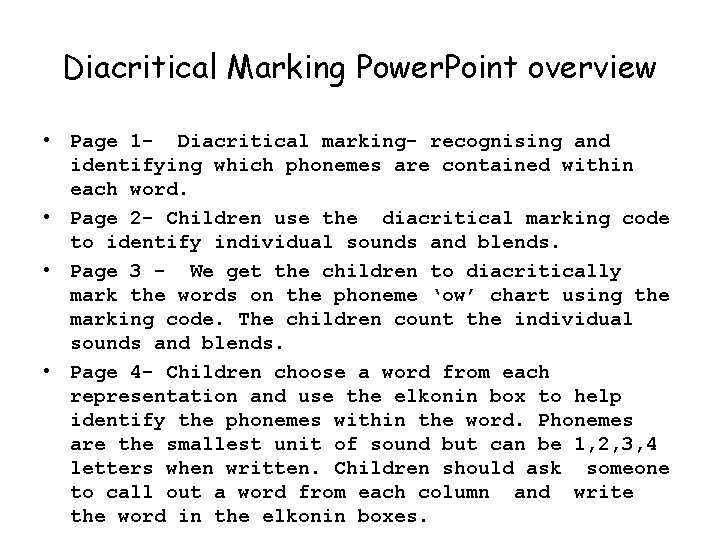
Diacritical Marking Power. Point overview • Page 1 - Diacritical marking- recognising and identifying which phonemes are contained within each word. • Page 2 - Children use the diacritical marking code to identify individual sounds and blends. • Page 3 - We get the children to diacritically mark the words on the phoneme ‘ow’ chart using the marking code. The children count the individual sounds and blends. • Page 4 - Children choose a word from each representation and use the elkonin box to help identify the phonemes within the word. Phonemes are the smallest unit of sound but can be 1, 2, 3, 4 letters when written. Children should ask someone to call out a word from each column and write the word in the elkonin boxes.