
Teaching and Learning Tools and Procedures Venn Diagrams
- Slides: 32
Teaching and Learning Tools and Procedures
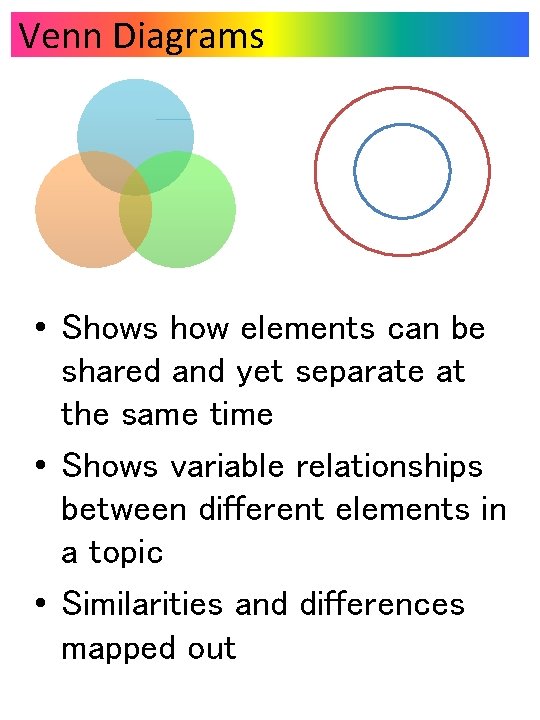
Venn Diagrams • Shows how elements can be shared and yet separate at the same time • Shows variable relationships between different elements in a topic • Similarities and differences mapped out
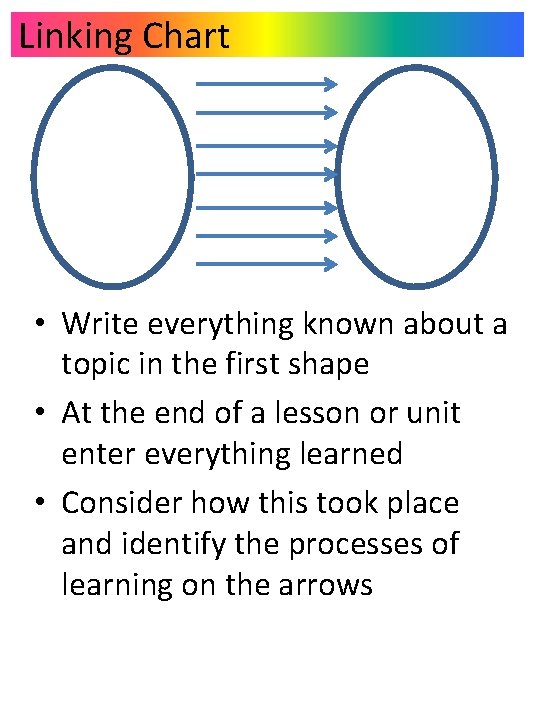
Linking Chart • Write everything known about a topic in the first shape • At the end of a lesson or unit enter everything learned • Consider how this took place and identify the processes of learning on the arrows
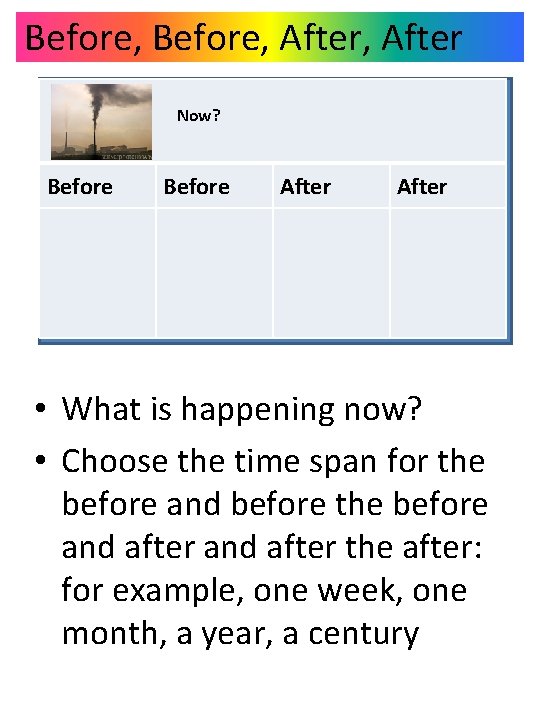
Before, After, After Now? Before After • What is happening now? • Choose the time span for the before and before the before and after the after: for example, one week, one month, a year, a century
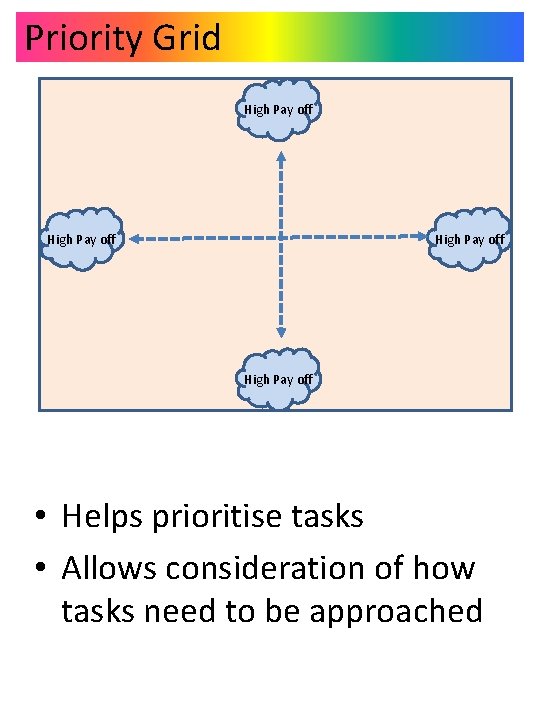
Priority Grid High Pay off • Helps prioritise tasks • Allows consideration of how tasks need to be approached
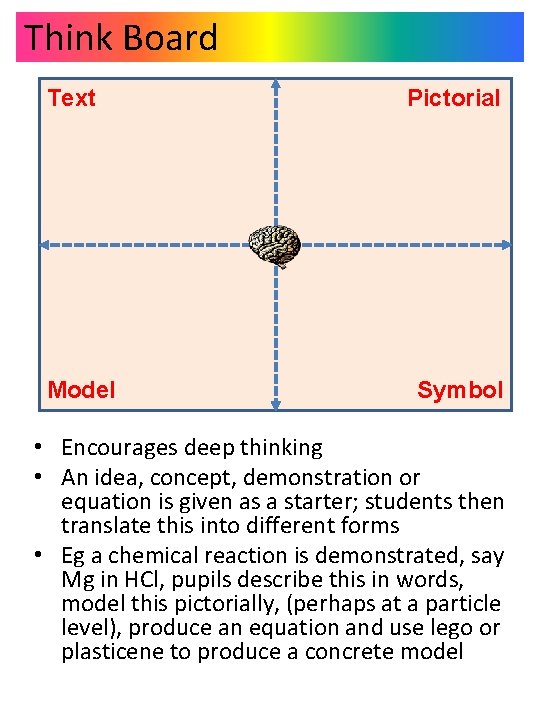
Think Board Text Model Pictorial Symbol • Encourages deep thinking • An idea, concept, demonstration or equation is given as a starter; students then translate this into different forms • Eg a chemical reaction is demonstrated, say Mg in HCl, pupils describe this in words, model this pictorially, (perhaps at a particle level), produce an equation and use lego or plasticene to produce a concrete model
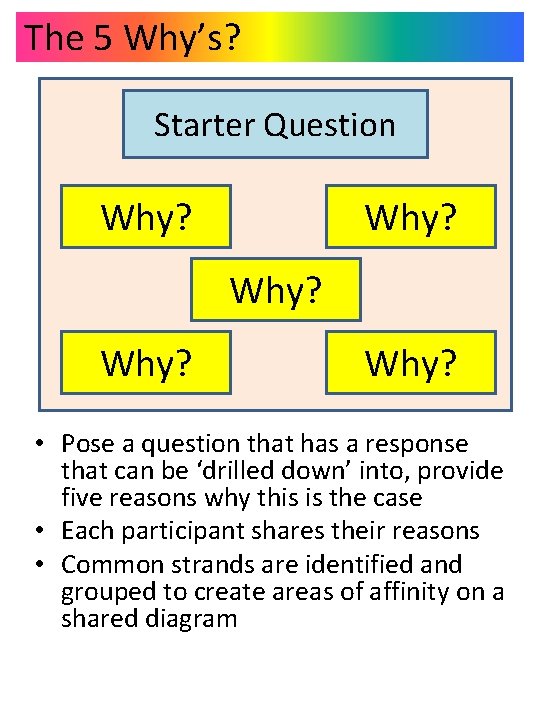
The 5 Why’s? Starter Question Why? Why? • Pose a question that has a response that can be ‘drilled down’ into, provide five reasons why this is the case • Each participant shares their reasons • Common strands are identified and grouped to create areas of affinity on a shared diagram
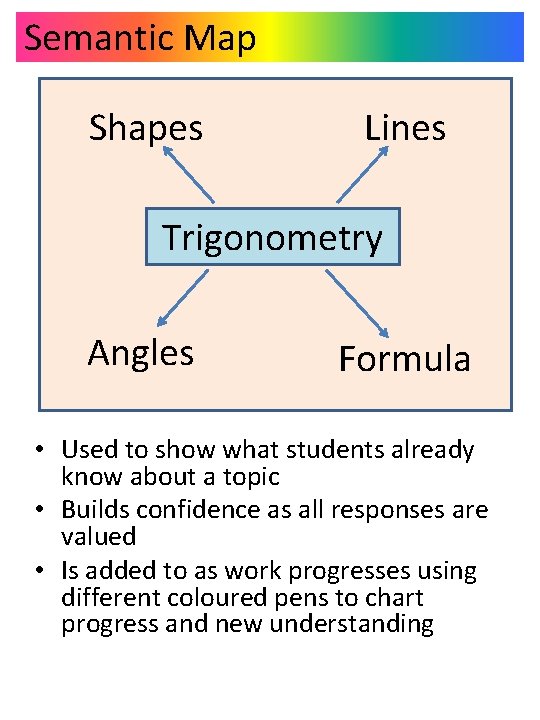
Semantic Map Shapes Lines Trigonometry Angles Formula • Used to show what students already know about a topic • Builds confidence as all responses are valued • Is added to as work progresses using different coloured pens to chart progress and new understanding
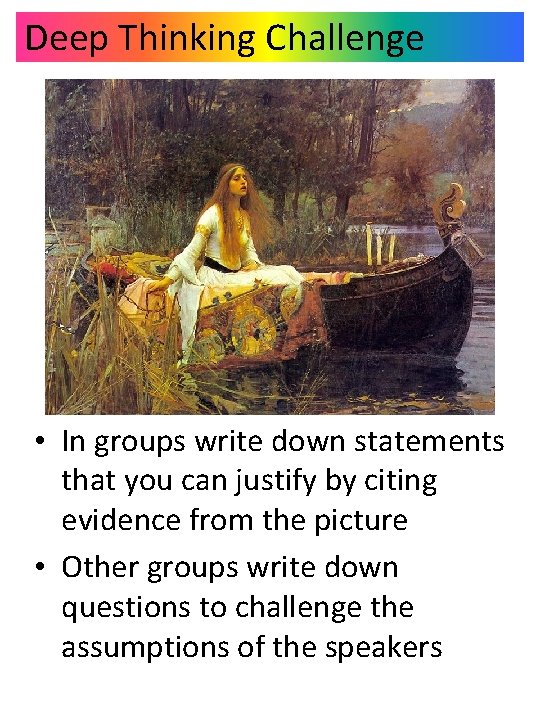
Deep Thinking Challenge • In groups write down statements that you can justify by citing evidence from the picture • Other groups write down questions to challenge the assumptions of the speakers
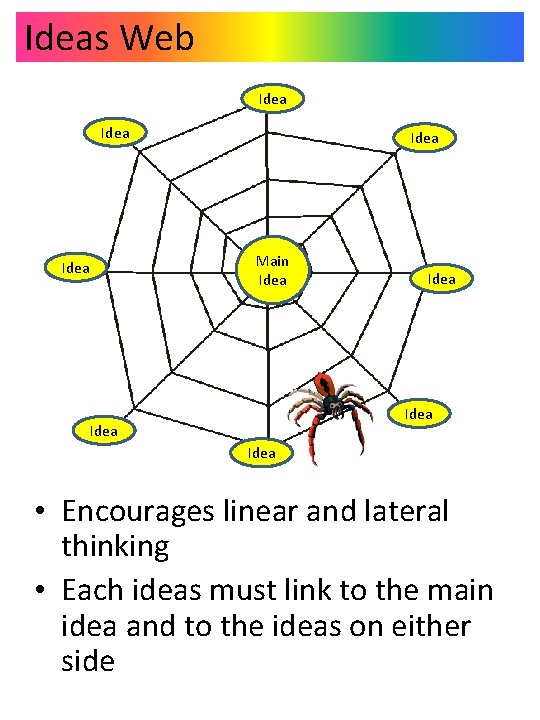
Ideas Web Idea Main Idea Idea • Encourages linear and lateral thinking • Each ideas must link to the main idea and to the ideas on either side
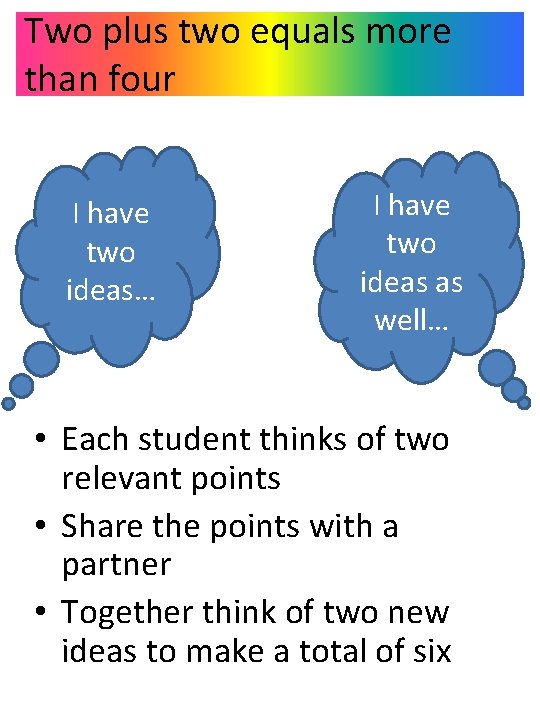
Two plus two equals more than four I have two ideas… I have two ideas as well… • Each student thinks of two relevant points • Share the points with a partner • Together think of two new ideas to make a total of six
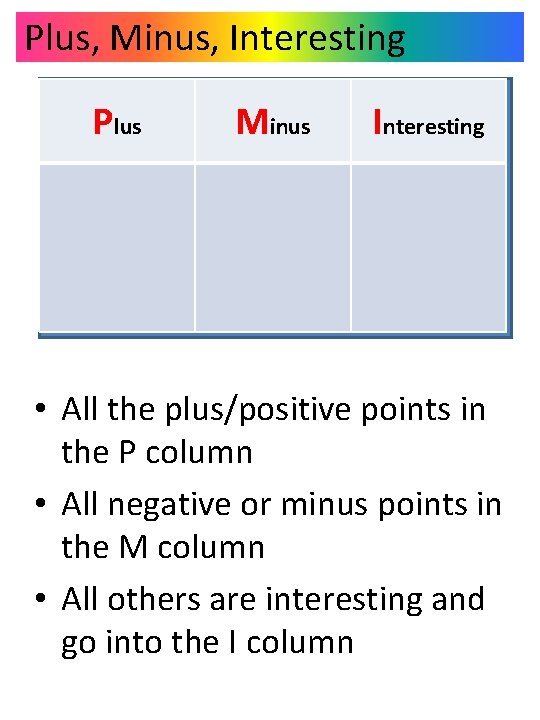
Plus, Minus, Interesting Plus Minus Interesting • All the plus/positive points in the P column • All negative or minus points in the M column • All others are interesting and go into the I column
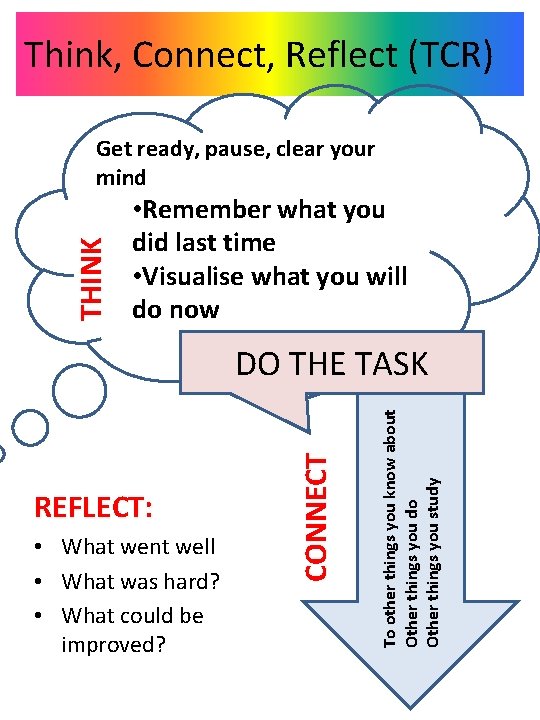
Think, Connect, Reflect (TCR) THINK Get ready, pause, clear your mind • Remember what you did last time • Visualise what you will do now • What went well • What was hard? • What could be improved? To other things you know about Other things you do Other things you study REFLECT: CONNECT DO THE TASK
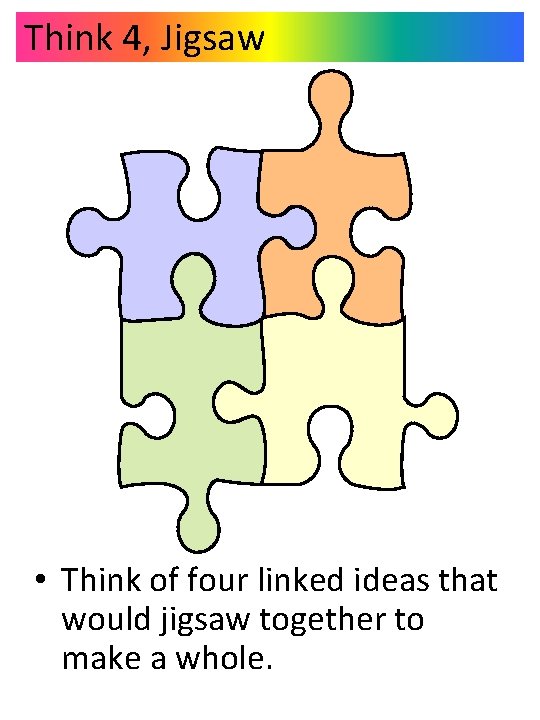
Think 4, Jigsaw • Think of four linked ideas that would jigsaw together to make a whole.
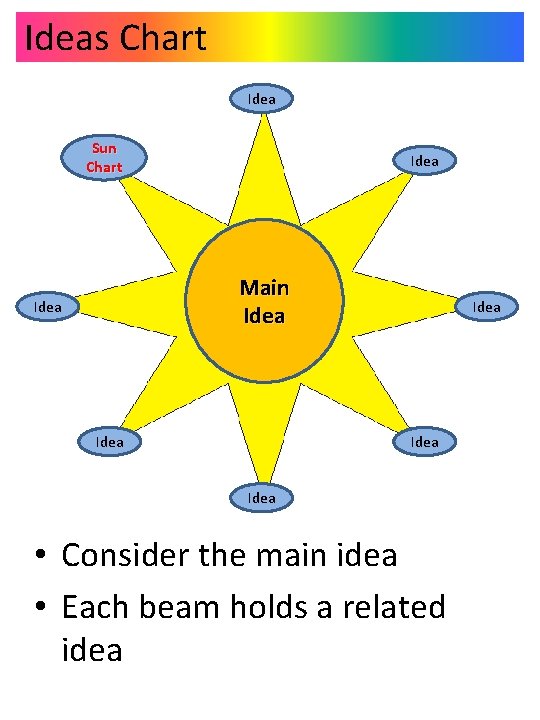
Ideas Chart Idea Sun Chart Idea Main Idea Idea • Consider the main idea • Each beam holds a related idea
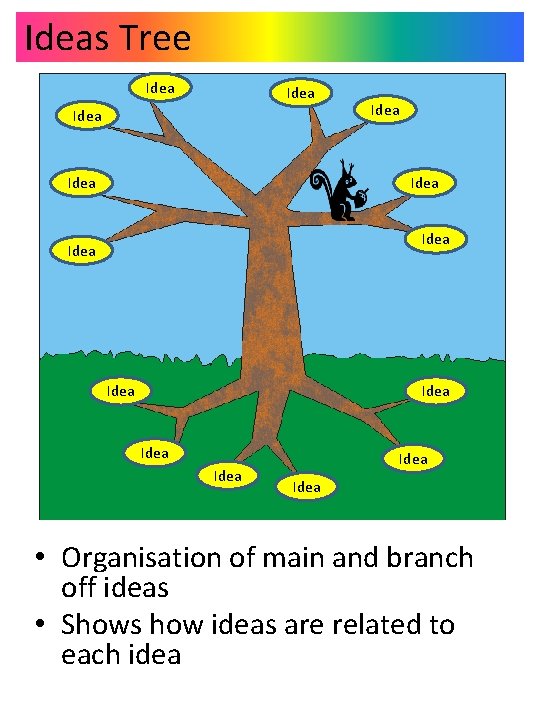
Ideas Tree Idea Idea Idea Idea • Organisation of main and branch off ideas • Shows how ideas are related to each idea
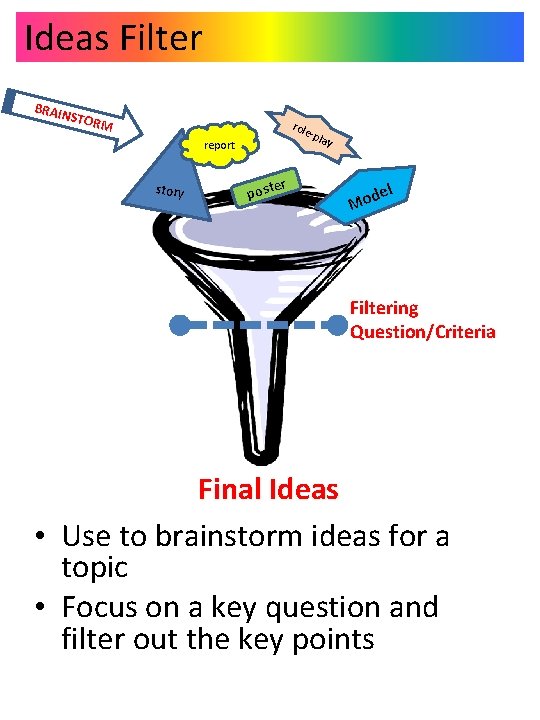
Ideas Filter BRAIN STOR M role -pla report story er post y l de Mo Filtering Question/Criteria Final Ideas • Use to brainstorm ideas for a topic • Focus on a key question and filter out the key points
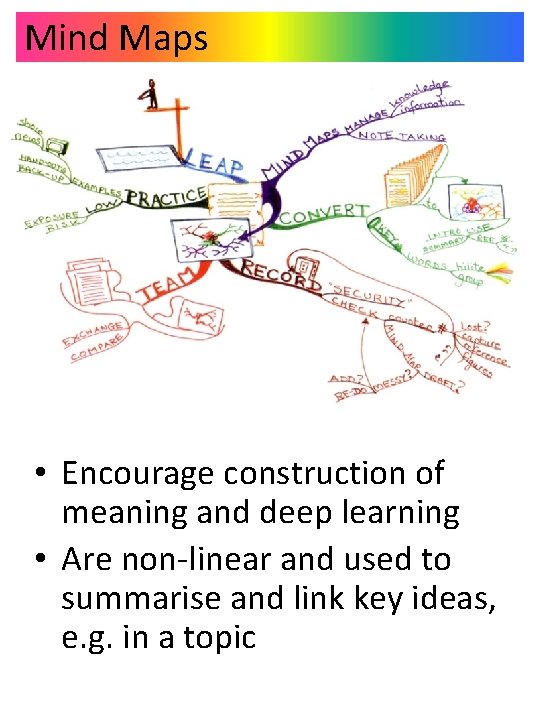
Mind Maps • Encourage construction of meaning and deep learning • Are non-linear and used to summarise and link key ideas, e. g. in a topic
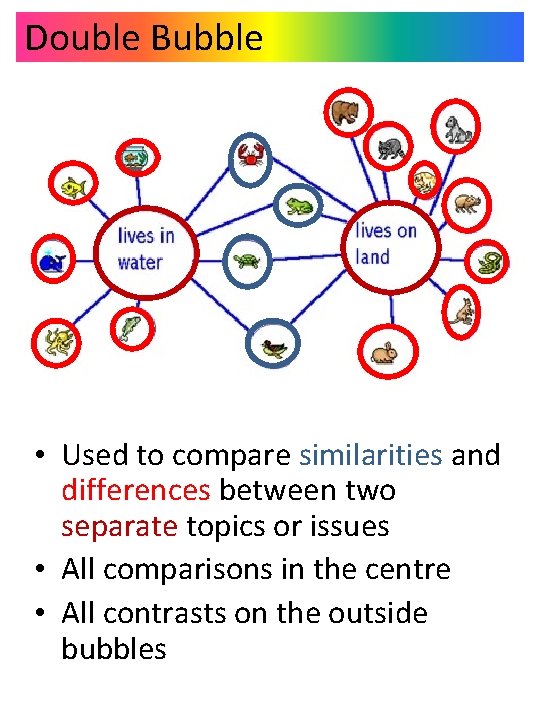
Double Bubble • Used to compare similarities and differences between two separate topics or issues • All comparisons in the centre • All contrasts on the outside bubbles
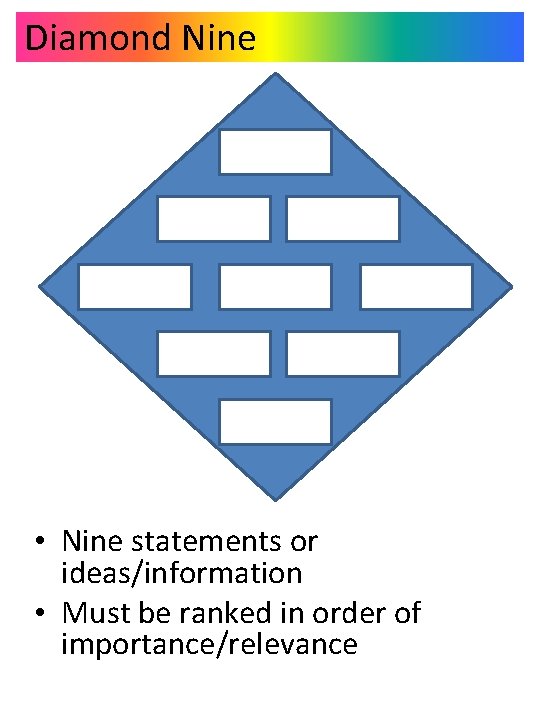
Diamond Nine • Nine statements or ideas/information • Must be ranked in order of importance/relevance
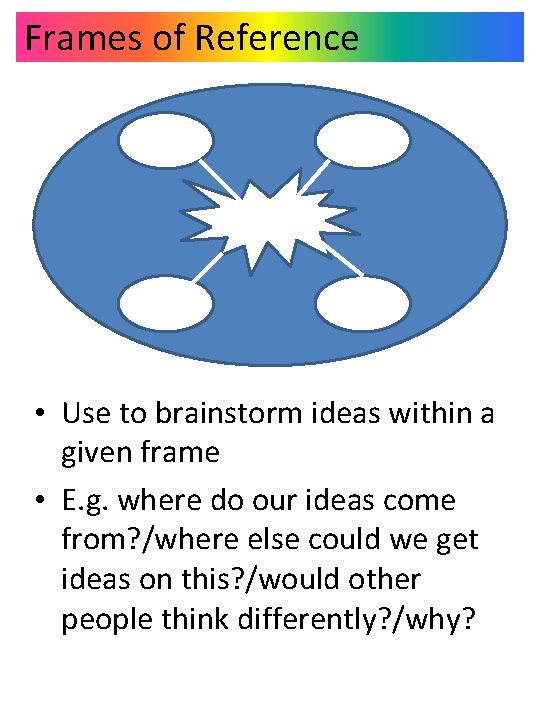
Frames of Reference • Use to brainstorm ideas within a given frame • E. g. where do our ideas come from? /where else could we get ideas on this? /would other people think differently? /why?
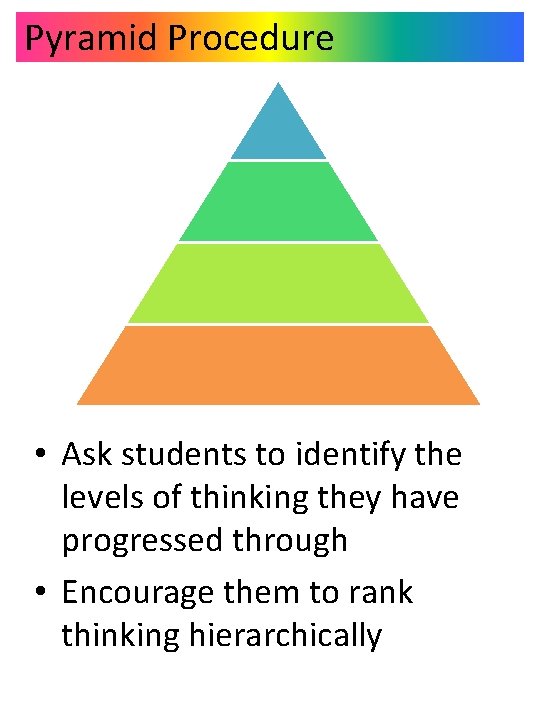
Pyramid Procedure • Ask students to identify the levels of thinking they have progressed through • Encourage them to rank thinking hierarchically
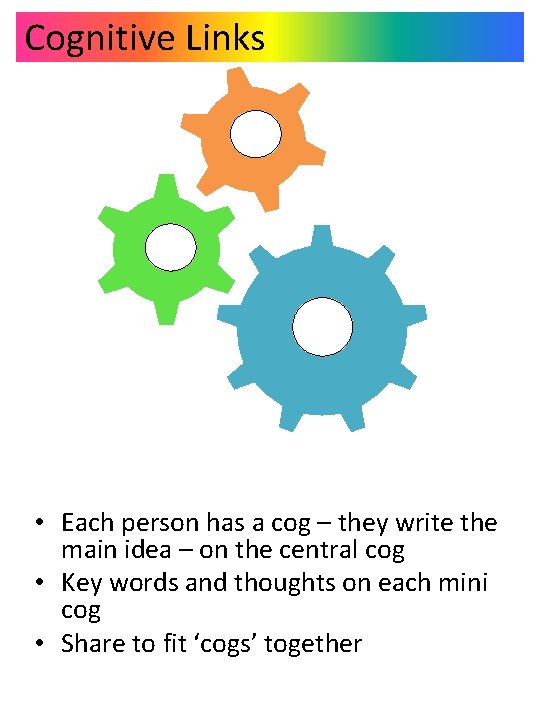
Cognitive Links • Each person has a cog – they write the main idea – on the central cog • Key words and thoughts on each mini cog • Share to fit ‘cogs’ together
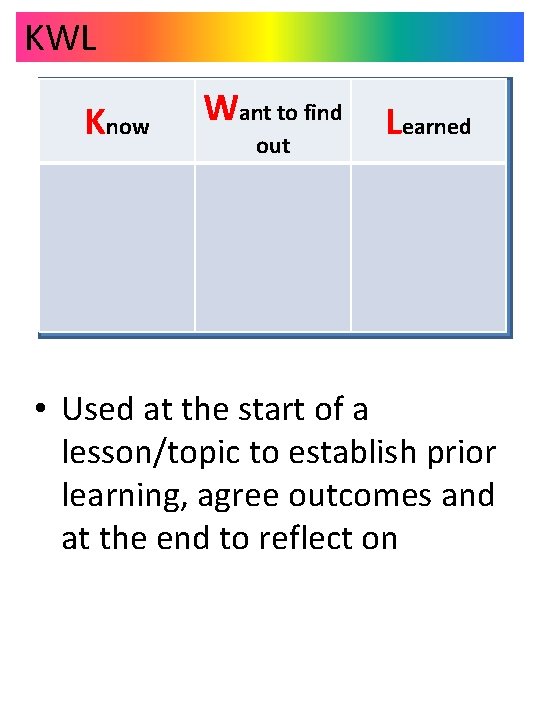
KWL Know Want to find out Learned • Used at the start of a lesson/topic to establish prior learning, agree outcomes and at the end to reflect on
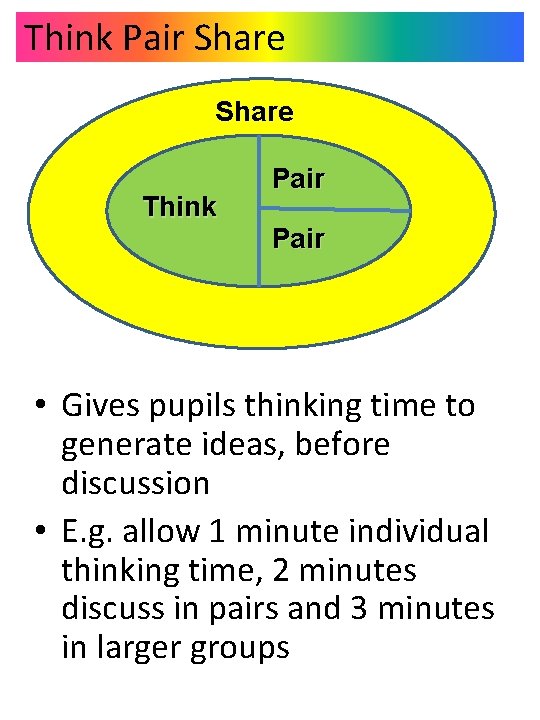
Think Pair Share Think Pair • Gives pupils thinking time to generate ideas, before discussion • E. g. allow 1 minute individual thinking time, 2 minutes discuss in pairs and 3 minutes in larger groups
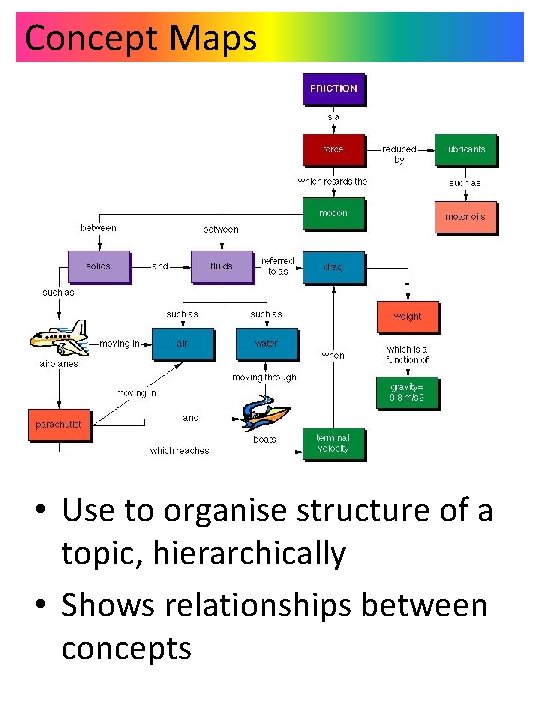
Concept Maps • Use to organise structure of a topic, hierarchically • Shows relationships between concepts
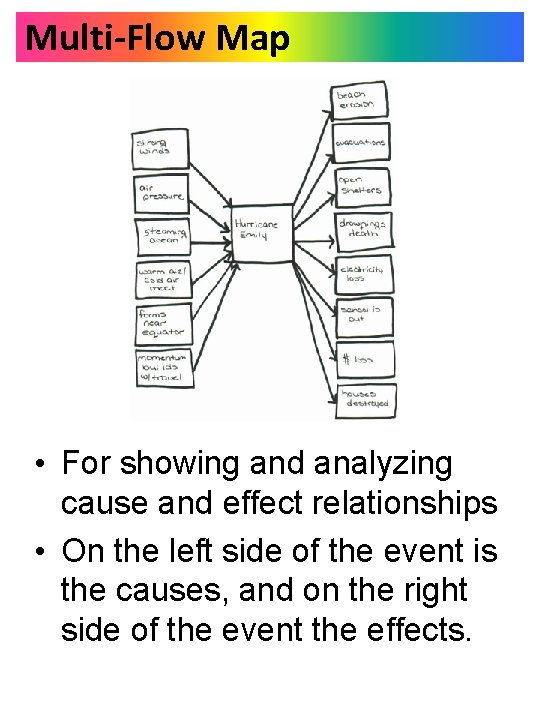
Multi-Flow Map • For showing and analyzing cause and effect relationships • On the left side of the event is the causes, and on the right side of the event the effects.
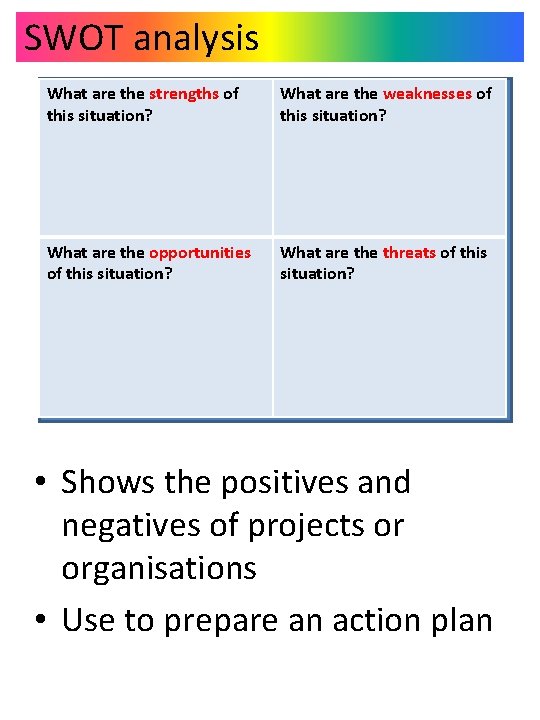
SWOT analysis What are the strengths of this situation? What are the weaknesses of this situation? What are the opportunities of this situation? What are threats of this situation? • Shows the positives and negatives of projects or organisations • Use to prepare an action plan
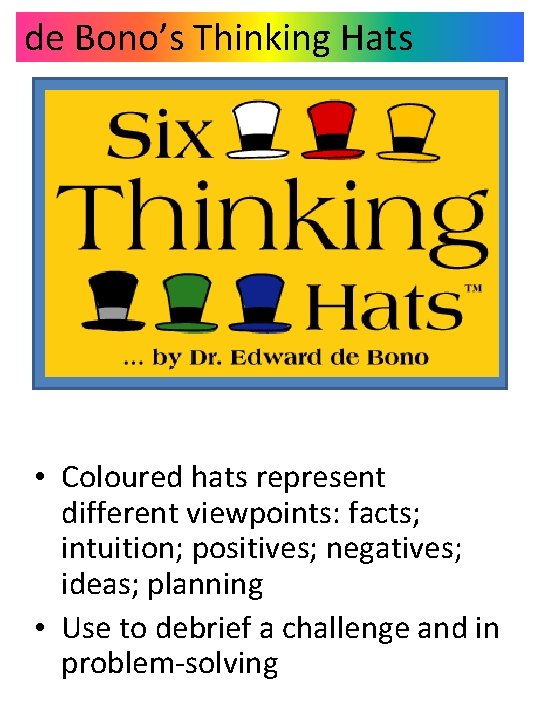
de Bono’s Thinking Hats • Coloured hats represent different viewpoints: facts; intuition; positives; negatives; ideas; planning • Use to debrief a challenge and in problem-solving
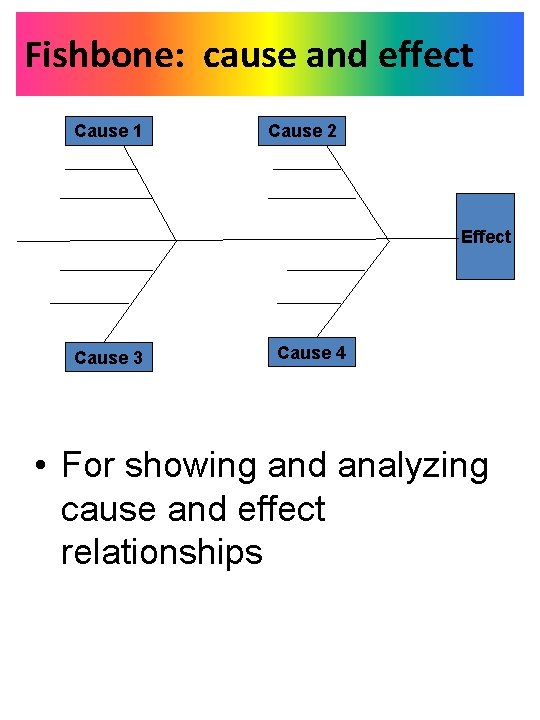
Fishbone: cause and effect Cause 1 Cause 2 Effect Cause 3 Cause 4 • For showing and analyzing cause and effect relationships
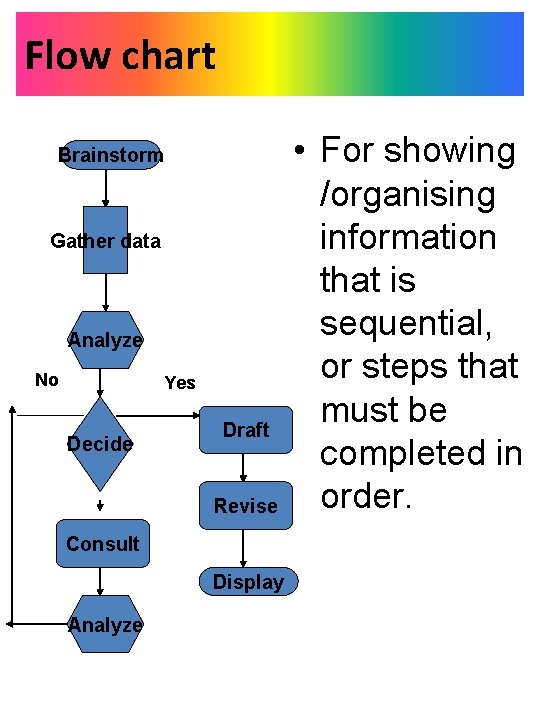
Flow chart Brainstorm Gather data Analyze No Yes Decide Draft Revise Consult Display Analyze • For showing /organising information that is sequential, or steps that must be completed in order.
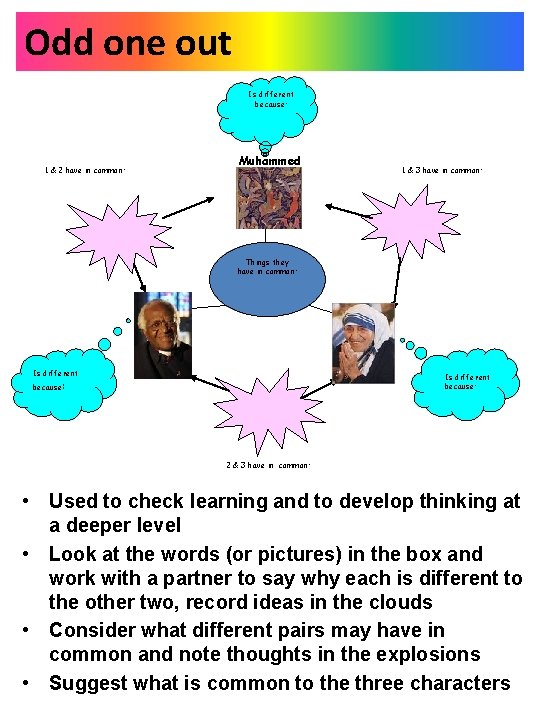
Odd one out Is different because: 1 & 2 have in common: Muhammed 1 & 3 have in common: Things they have in common: Is different because: 2 & 3 have in common: • Used to check learning and to develop thinking at a deeper level • Look at the words (or pictures) in the box and work with a partner to say why each is different to the other two, record ideas in the clouds • Consider what different pairs may have in common and note thoughts in the explosions • Suggest what is common to the three characters