
Teaching and Learning Methodologies for improving Speaking skills



- Slides: 21
Teaching and Learning Methodologies for improving Speaking skills of Korean Learners : Based on ESI Methods Prof. (Dr. ). Yoon, Hi-Won, SNU, Korea Dr. Neerja Samajdar, JNU, India
Globalization of Korean Language Education USA(27) Mexico(1) Brazil(1) Argentina(2) Canada(3) China(4) Denmark(1) Russia(5) Japan(122) Sweden(1) Finland(1) Philippines(1) Netherland(1) Malaysia(3) UK(3) Poland(1) Czech Rep(1) Germany(4) Thailand(3) France(4) Hungary(1) Indonesia(1) Portugal(1) Turkey(1) India(3) Italy(1) Africa(1) Australia(3) New Zealand(1) Source : 국제 한국어 교육 학회(1996), 한국말 교육 소식(20~22)
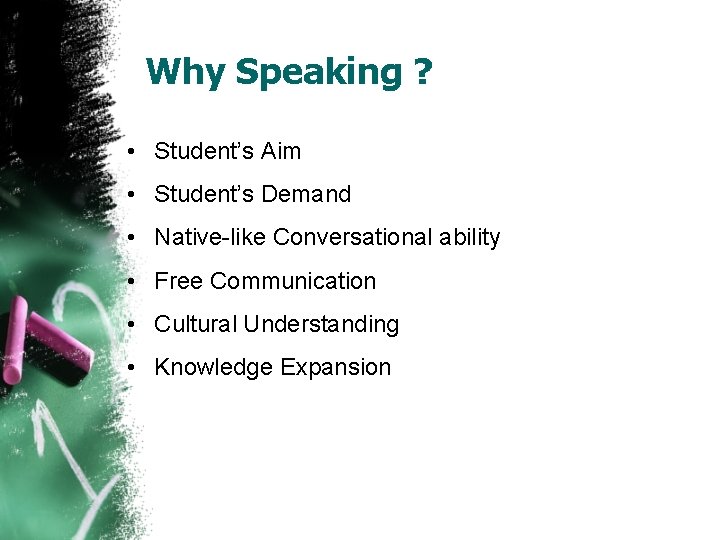
Why Speaking ? • Student’s Aim • Student’s Demand • Native-like Conversational ability • Free Communication • Cultural Understanding • Knowledge Expansion
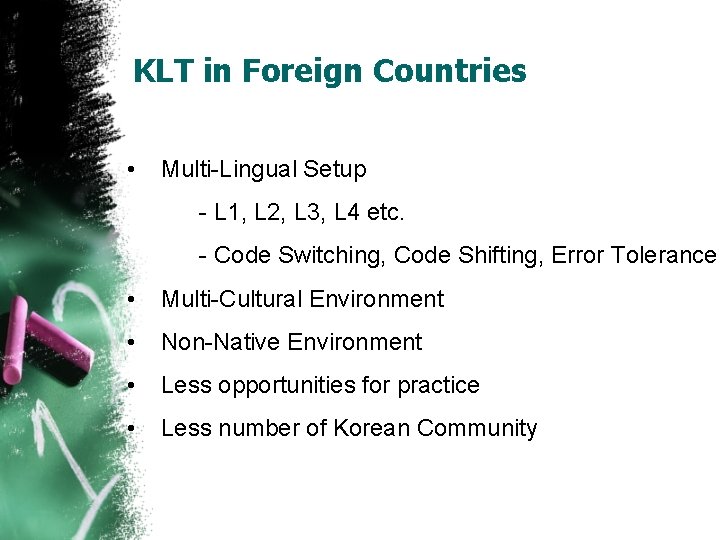
KLT in Foreign Countries • Multi-Lingual Setup - L 1, L 2, L 3, L 4 etc. - Code Switching, Code Shifting, Error Tolerance • Multi-Cultural Environment • Non-Native Environment • Less opportunities for practice • Less number of Korean Community
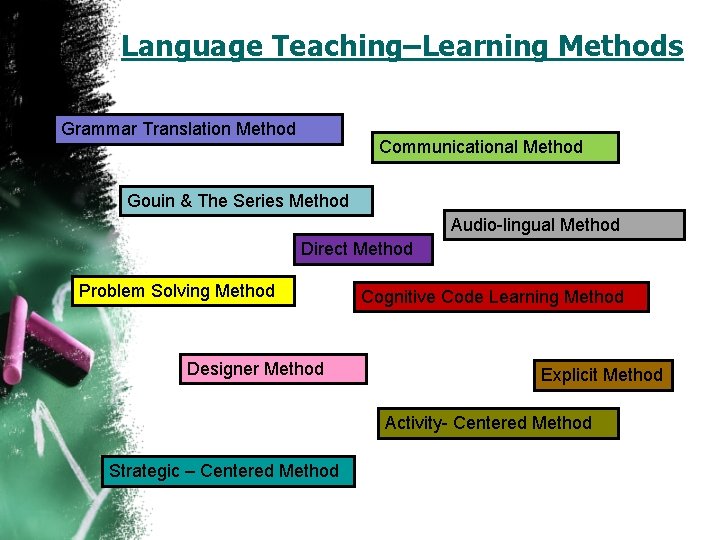
Language Teaching–Learning Methods Grammar Translation Method Communicational Method Gouin & The Series Method Audio-lingual Method Direct Method Problem Solving Method Designer Method Cognitive Code Learning Method Explicit Method Activity- Centered Method Strategic – Centered Method
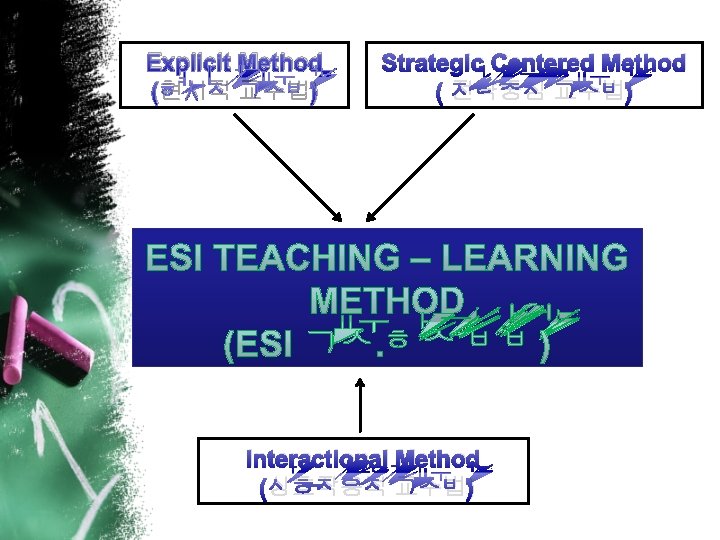
Explicit Method (현시적 교수법) Strategic Centered Method ( 전략중심 교수법) Interactional Method (상호작용적 교수법)
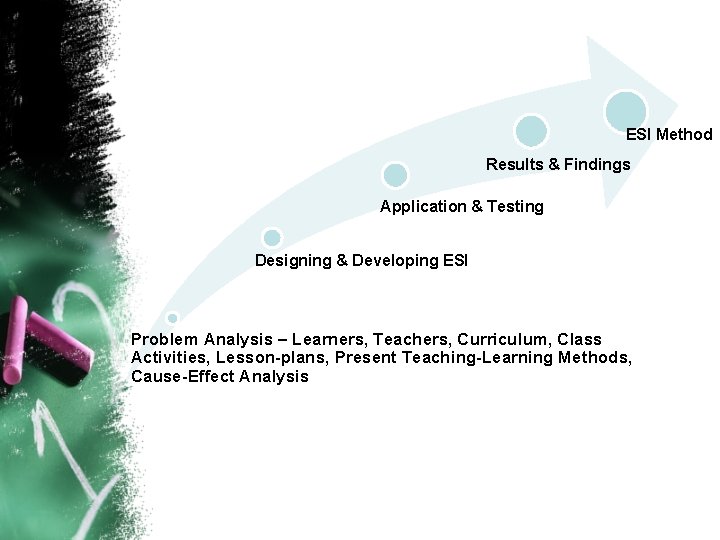
ESI Method Results & Findings Application & Testing Designing & Developing ESI Problem Analysis – Learners, Teachers, Curriculum, Class Activities, Lesson-plans, Present Teaching-Learning Methods, Cause-Effect Analysis
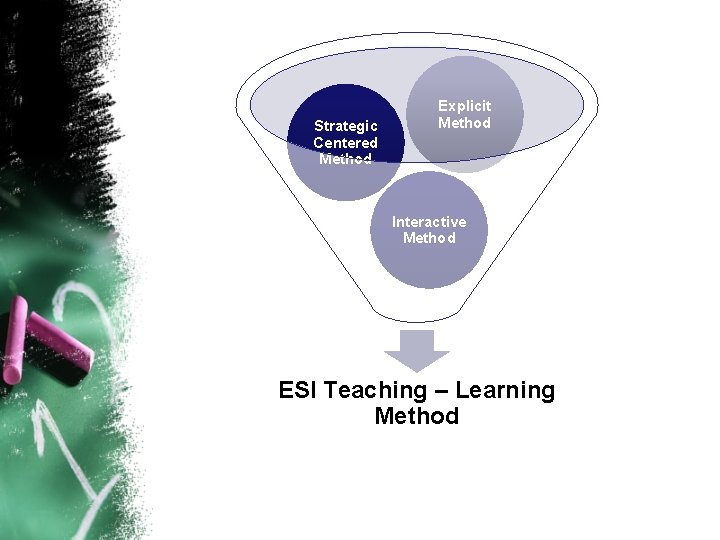
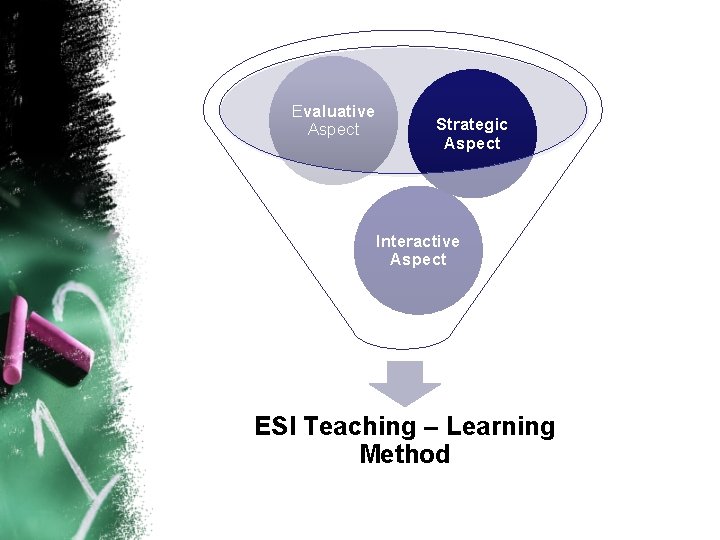
Strategic Centered Method Explicit Method Interactive Method ESI Teaching – Learning Method
ESI Teaching Learning Method Foreign Language(L 3) English(L 2) Multi-Cultural Background Mother Tongue(L 1) Social Background Feedback Introduction • Student’s Aim • Encourage ment & Motivation Teacher Guidance Stage • Content Explanation • Introduction of Learner’s Strategy Enrichment Teacher-Student Interaction • Strategy Explanation • Demonstration • Strategy Application • Interaction • Teacher Feedback Student-Student Interaction Closing • Direct Application of Strategies • Role Play • Evaluation – Teacher, Peer, Self • Overall Evaluation • Closing Feedback T-S Process S-T Process Religious Background S-S Process Non-Native Korean Set-up
Introduction Stage v Explanation of aims of learning v Background knowledge of text v Highlighting the learning benefits v Related contents v Encouraging & motivating to learn
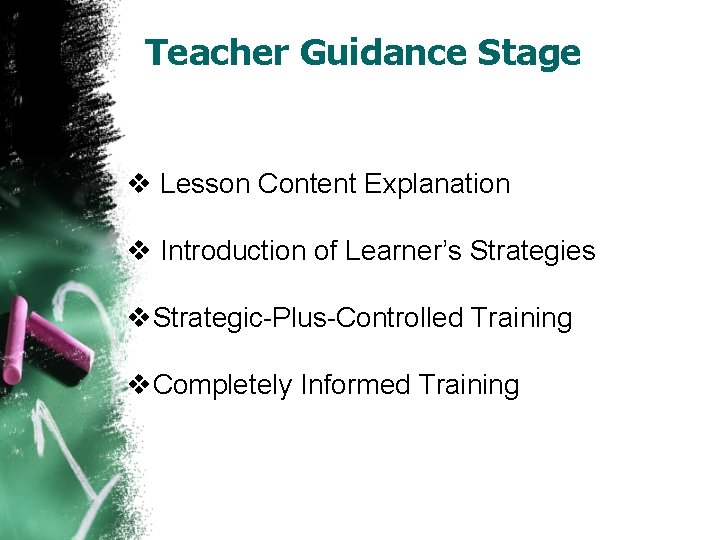
Teacher Guidance Stage v Lesson Content Explanation v Introduction of Learner’s Strategies v. Strategic-Plus-Controlled Training v. Completely Informed Training
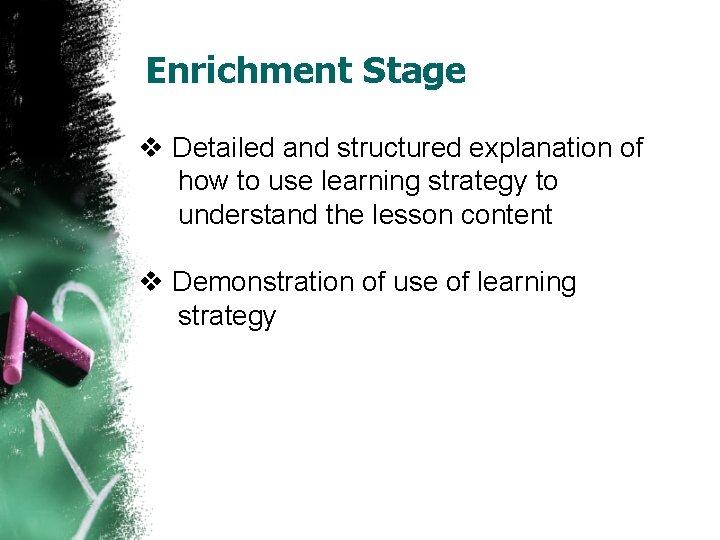
Enrichment Stage v Detailed and structured explanation of how to use learning strategy to understand the lesson content v Demonstration of use of learning strategy
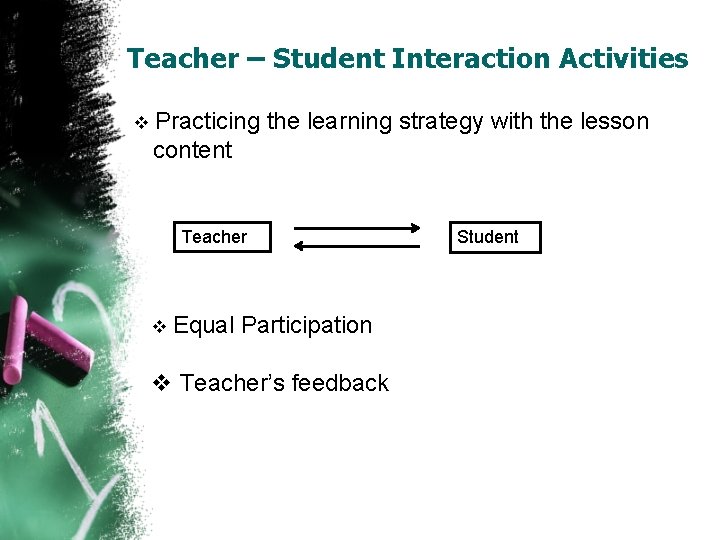
Teacher – Student Interaction Activities v Practicing the learning strategy with the lesson content Teacher v Equal Participation v Teacher’s feedback Student
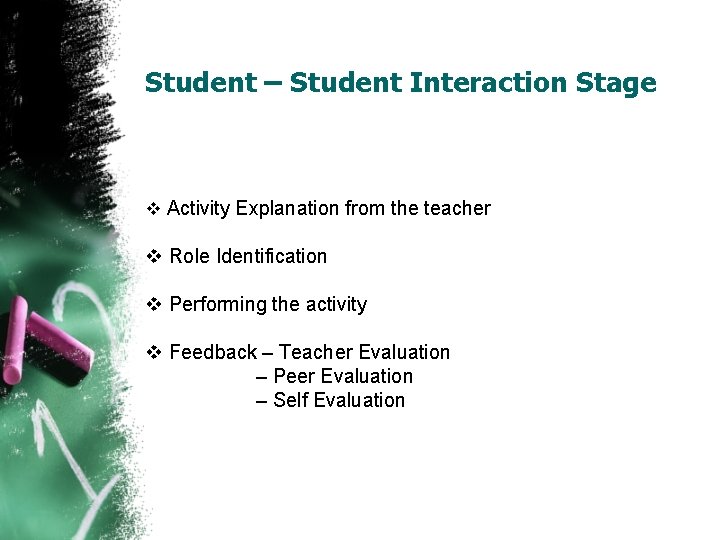
Student – Student Interaction Stage v Activity Explanation from the teacher v Role Identification v Performing the activity v Feedback – Teacher Evaluation – Peer Evaluation – Self Evaluation
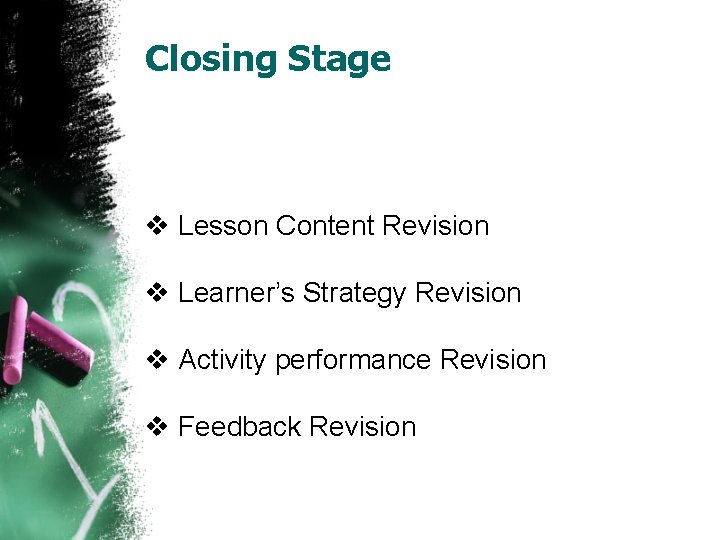
Closing Stage v Lesson Content Revision v Learner’s Strategy Revision v Activity performance Revision v Feedback Revision
Evaluative Aspect Strategic Aspect Interactive Aspect ESI Teaching – Learning Method
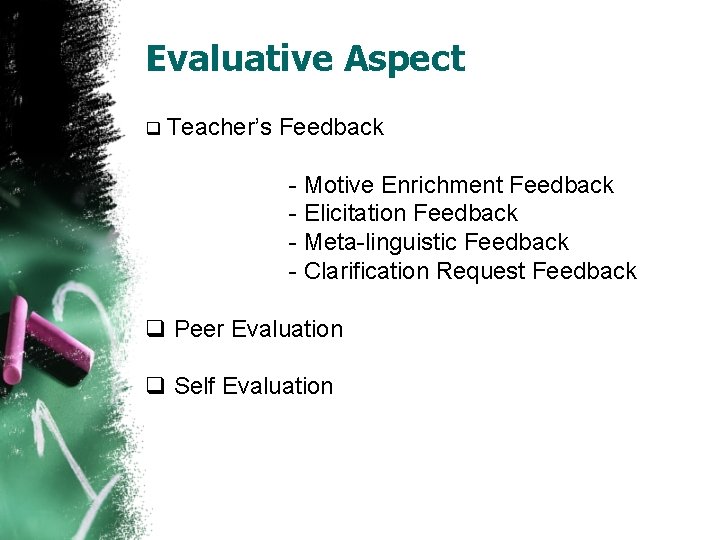
Evaluative Aspect q Teacher’s Feedback - Motive Enrichment Feedback - Elicitation Feedback - Meta-linguistic Feedback - Clarification Request Feedback q Peer Evaluation q Self Evaluation
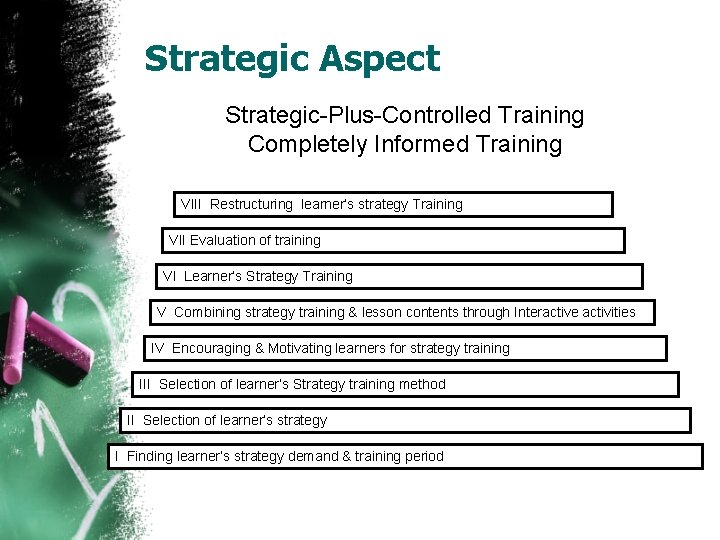
Strategic Aspect Strategic-Plus-Controlled Training Completely Informed Training VIII Restructuring learner’s strategy Training VII Evaluation of training VI Learner’s Strategy Training V Combining strategy training & lesson contents through Interactive activities IV Encouraging & Motivating learners for strategy training III Selection of learner’s Strategy training method II Selection of learner’s strategy I Finding learner’s strategy demand & training period
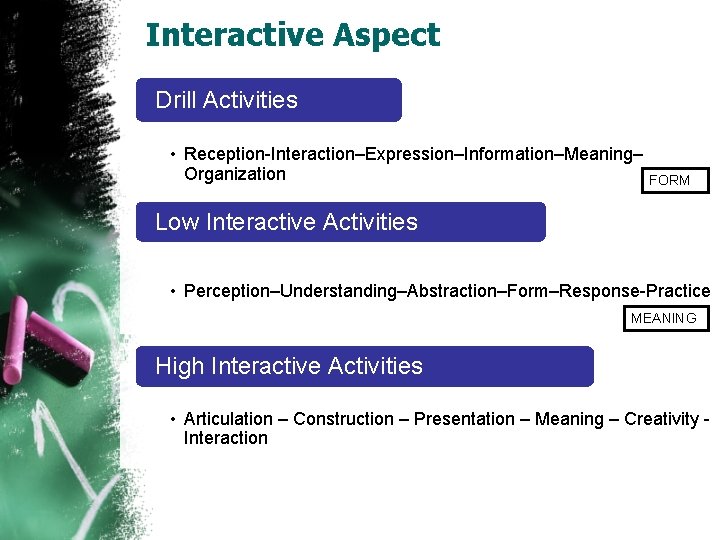
Interactive Aspect Drill Activities • Reception-Interaction–Expression–Information–Meaning– Organization FORM Low Interactive Activities • Perception–Understanding–Abstraction–Form–Response-Practice MEANING High Interactive Activities • Articulation – Construction – Presentation – Meaning – Creativity Interaction
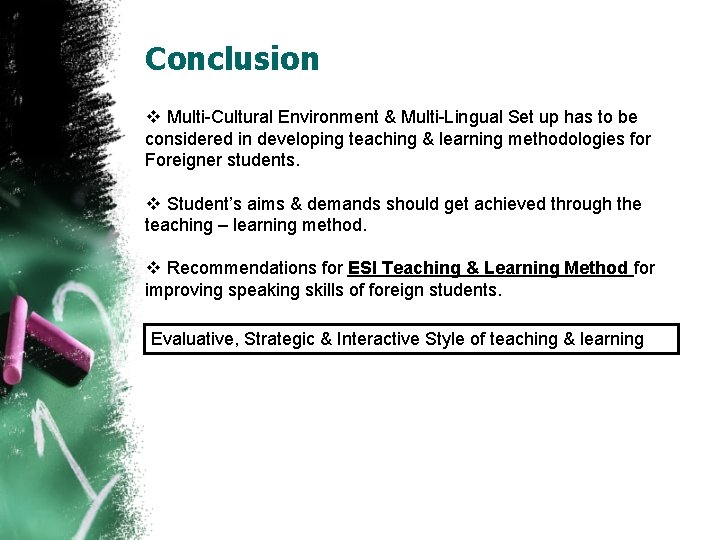
Conclusion v Multi-Cultural Environment & Multi-Lingual Set up has to be considered in developing teaching & learning methodologies for Foreigner students. v Student’s aims & demands should get achieved through the teaching – learning method. v Recommendations for ESI Teaching & Learning Method for improving speaking skills of foreign students. Evaluative, Strategic & Interactive Style of teaching & learning
Thank you 감사합니다 Prof. (Dr. ). Yoon, Hi-Won, SNU, Korea Dr. Neerja Samajdar, JNU, India