
Teaching and Assessing with the Learning Stages in


- Slides: 34
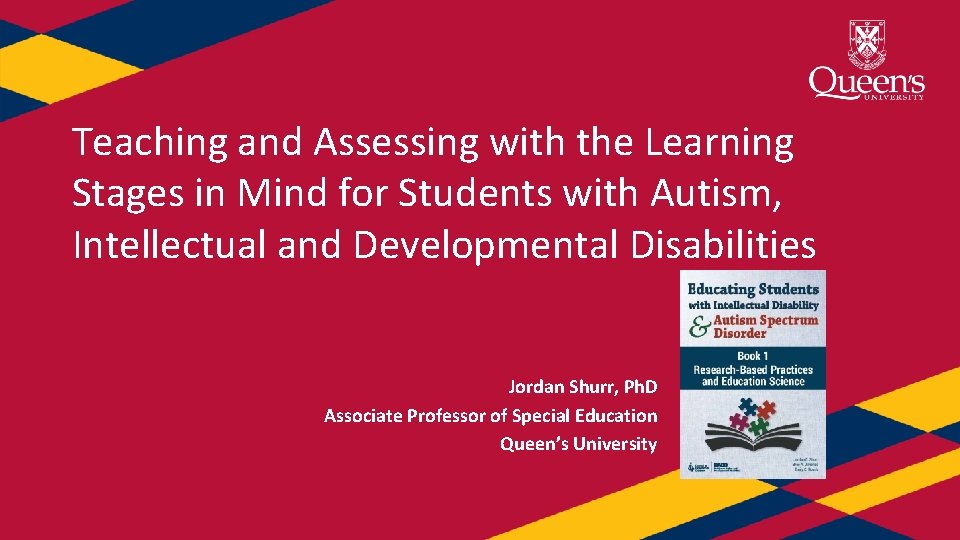
Teaching and Assessing with the Learning Stages in Mind for Students with Autism, Intellectual and Developmental Disabilities Jordan Shurr, Ph. D Associate Professor of Special Education Queen’s University
1. Something you have learned lately… 2. How would rate your skill level? 3. How will you continue to improve?
• What is the teacher’s role in student learning? • What is the ultimate goal? • Does “teaching” always result in learning?
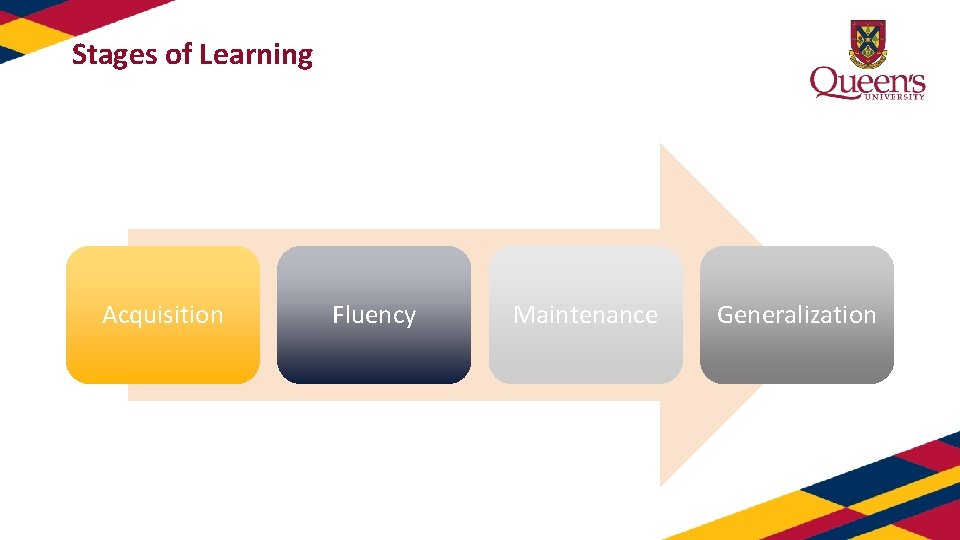
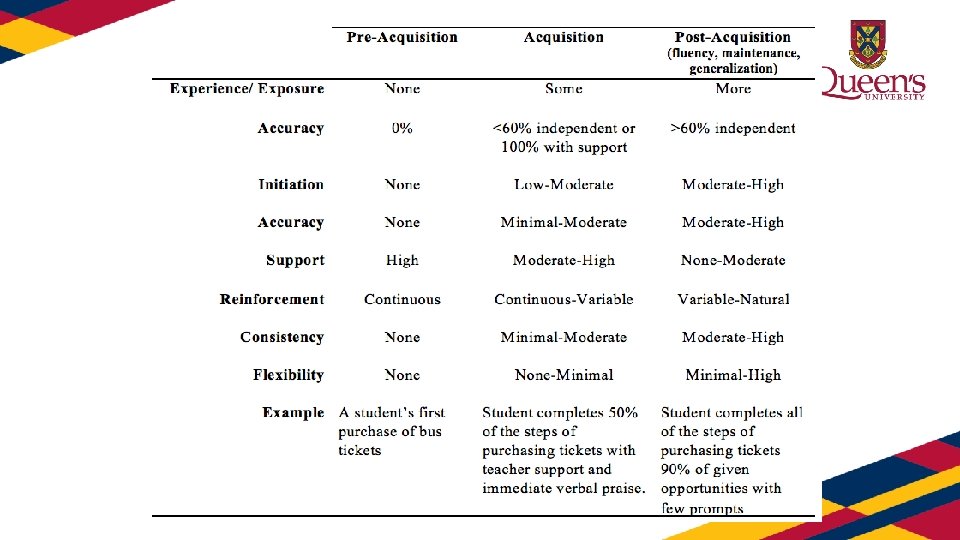
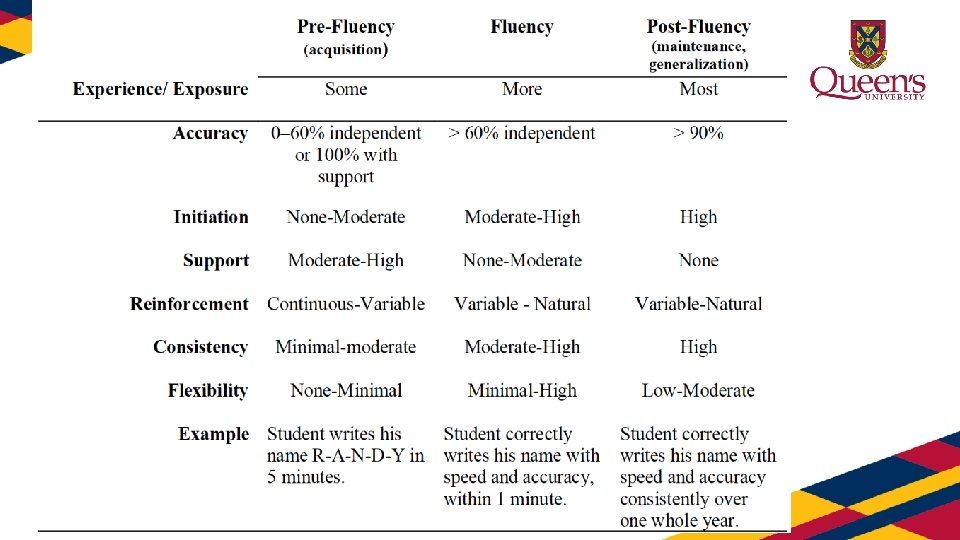
Stages of Learning Acquisition Fluency Maintenance Generalization
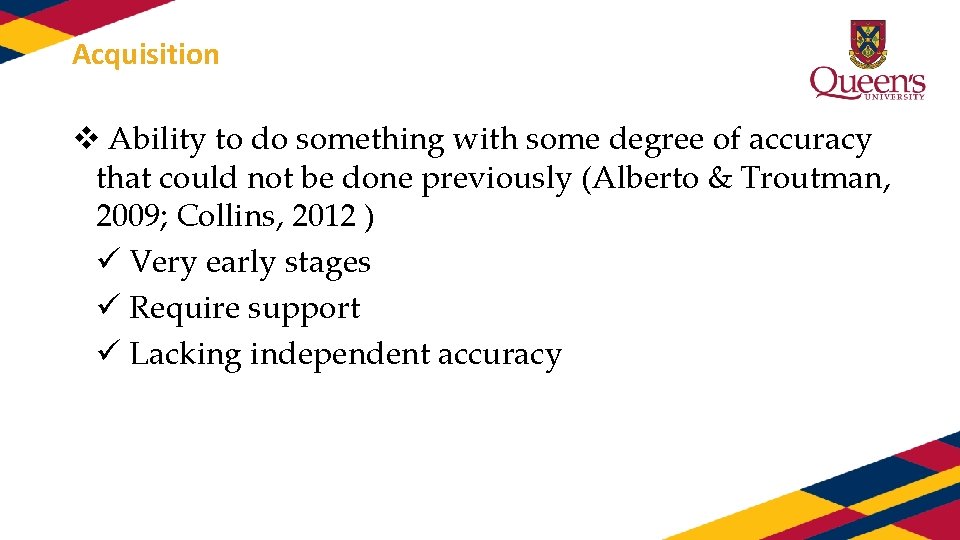
Acquisition v Ability to do something with some degree of accuracy that could not be done previously (Alberto & Troutman, 2009; Collins, 2012 ) ü Very early stages ü Require support ü Lacking independent accuracy
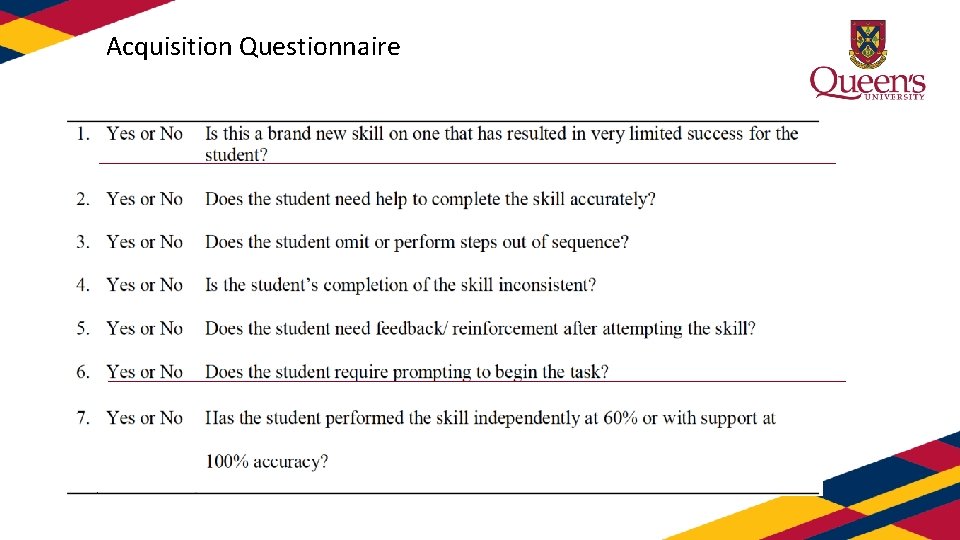
Acquisition Questionnaire
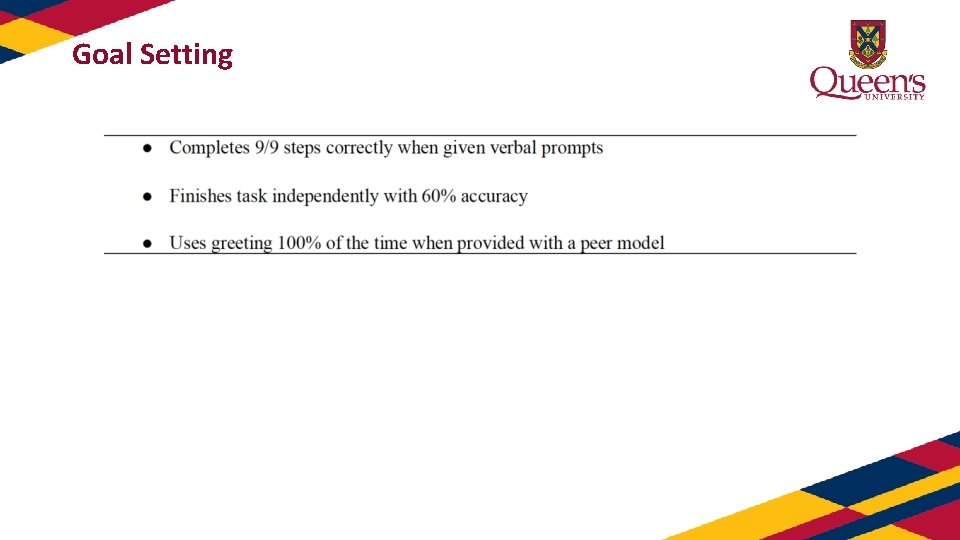
Goal Setting
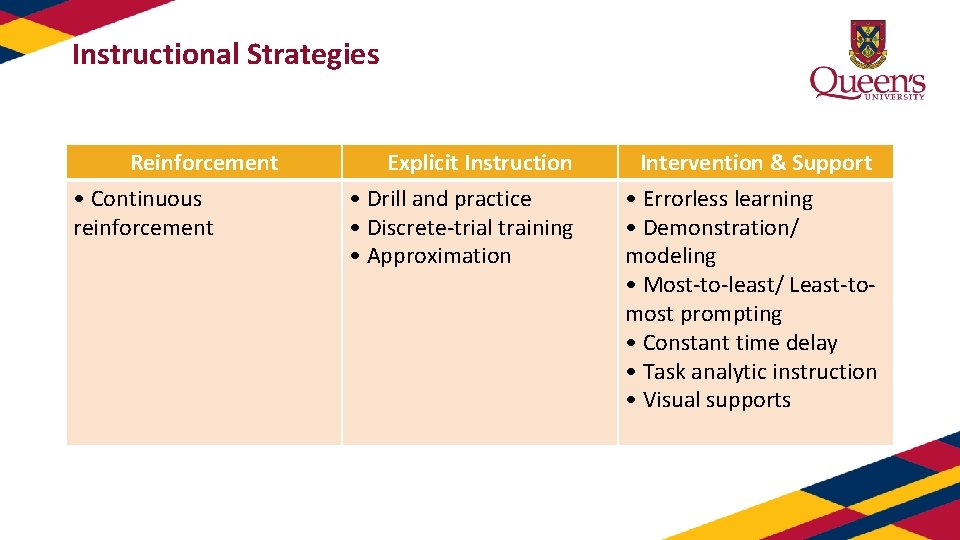
Instructional Strategies Reinforcement • Continuous reinforcement Explicit Instruction • Drill and practice • Discrete-trial training • Approximation Intervention & Support • Errorless learning • Demonstration/ modeling • Most-to-least/ Least-tomost prompting • Constant time delay • Task analytic instruction • Visual supports
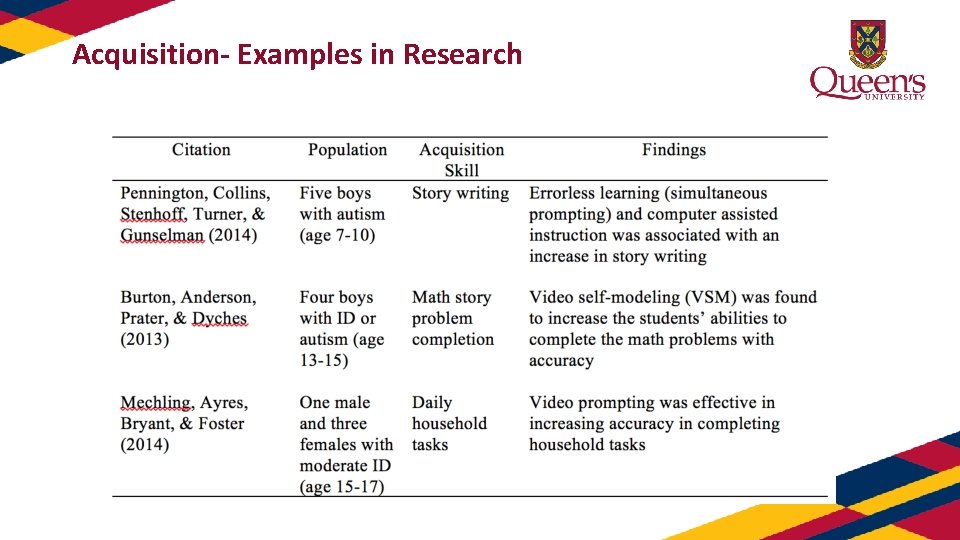
Acquisition- Examples in Research
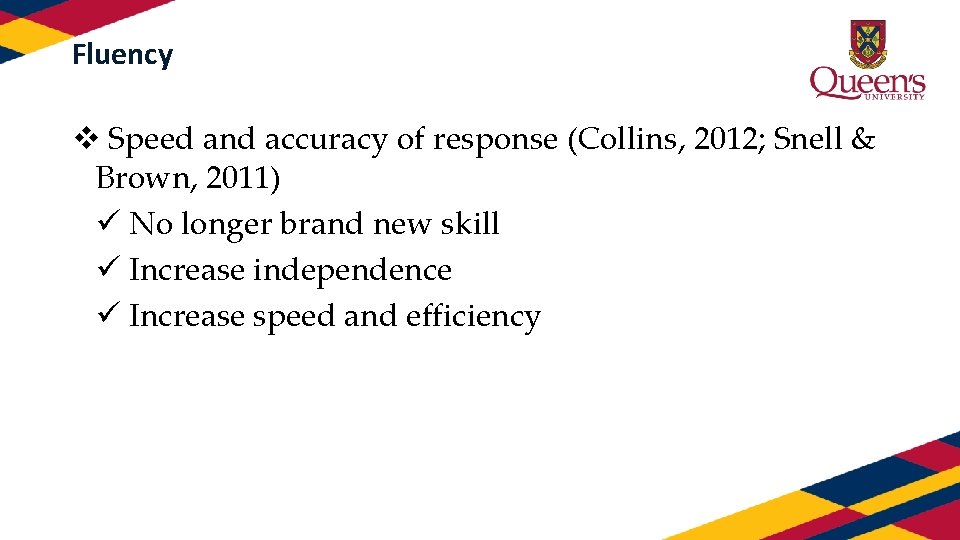
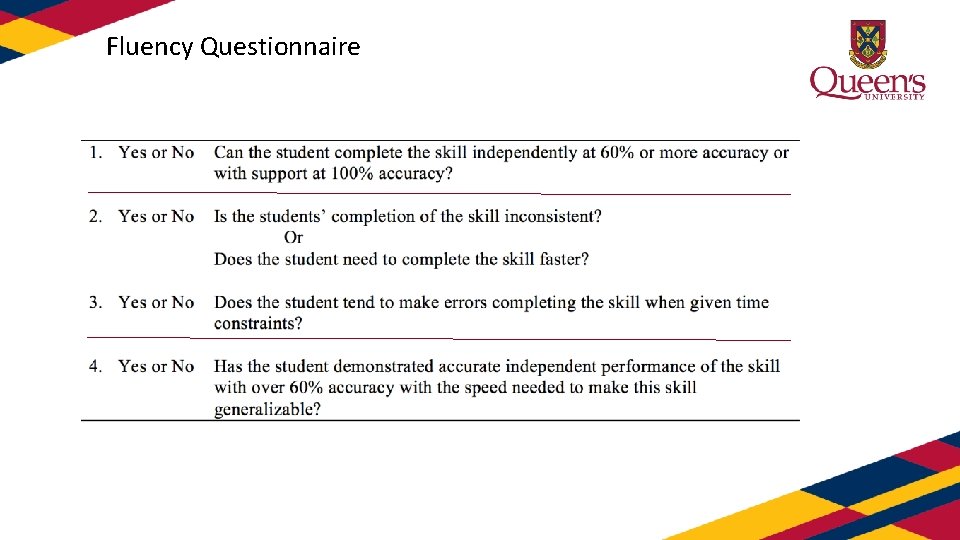
Fluency v Speed and accuracy of response (Collins, 2012; Snell & Brown, 2011) ü No longer brand new skill ü Increase independence ü Increase speed and efficiency
Fluency Questionnaire
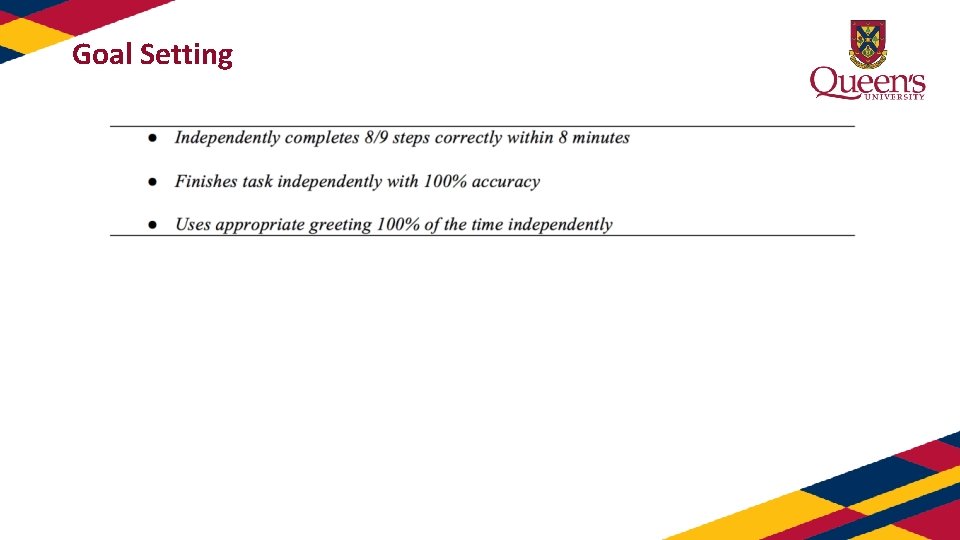
Goal Setting
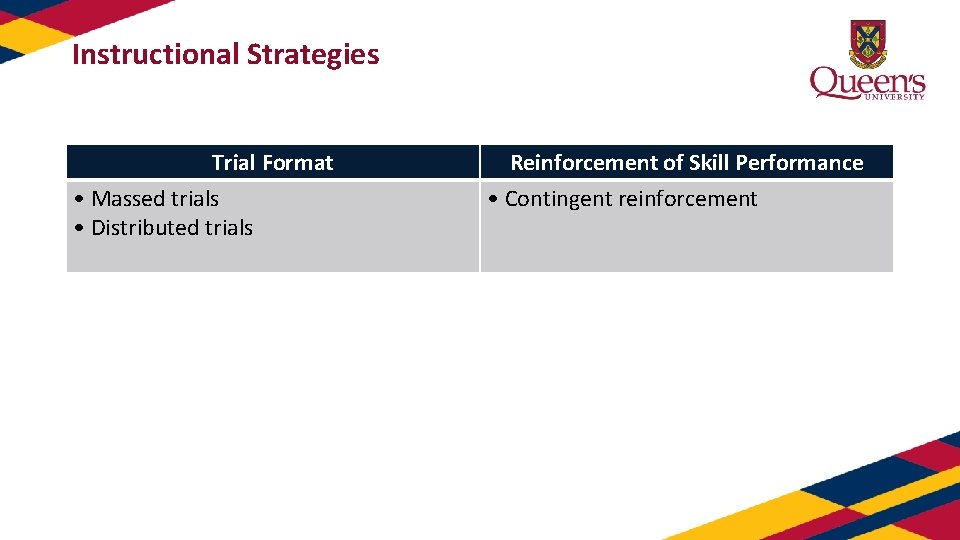
Instructional Strategies Trial Format • Massed trials • Distributed trials Reinforcement of Skill Performance • Contingent reinforcement
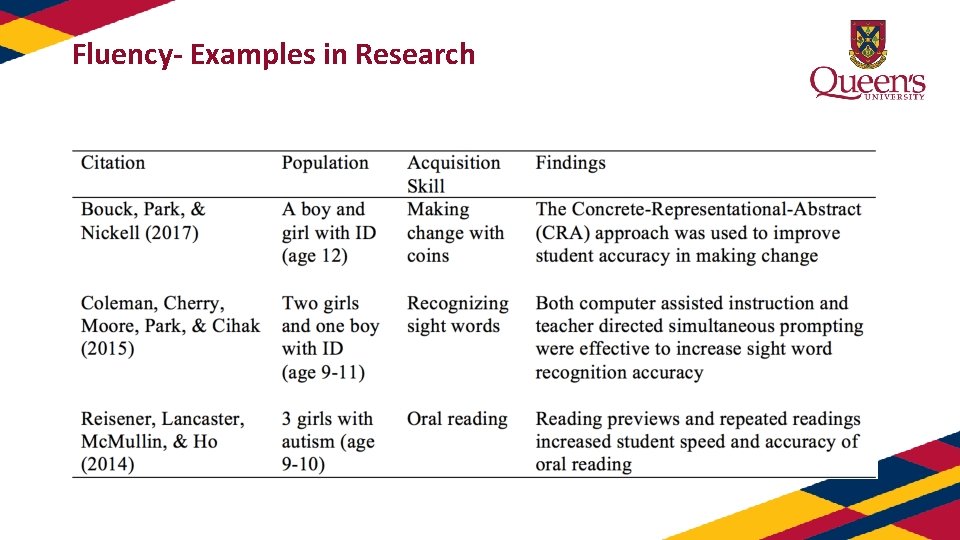
Fluency- Examples in Research
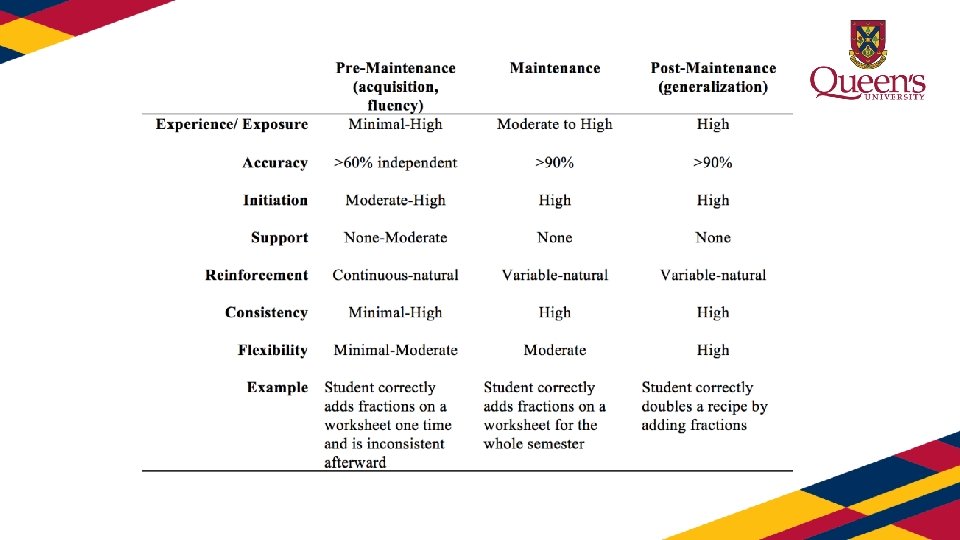
Maintenance v“The ability to perform a response over time without reteaching” (Alberto &Troutman, 2009, p. 43) ü Achieved at least one accurate and fast performance ü Focus on repeated consistent performance ü Independence over time
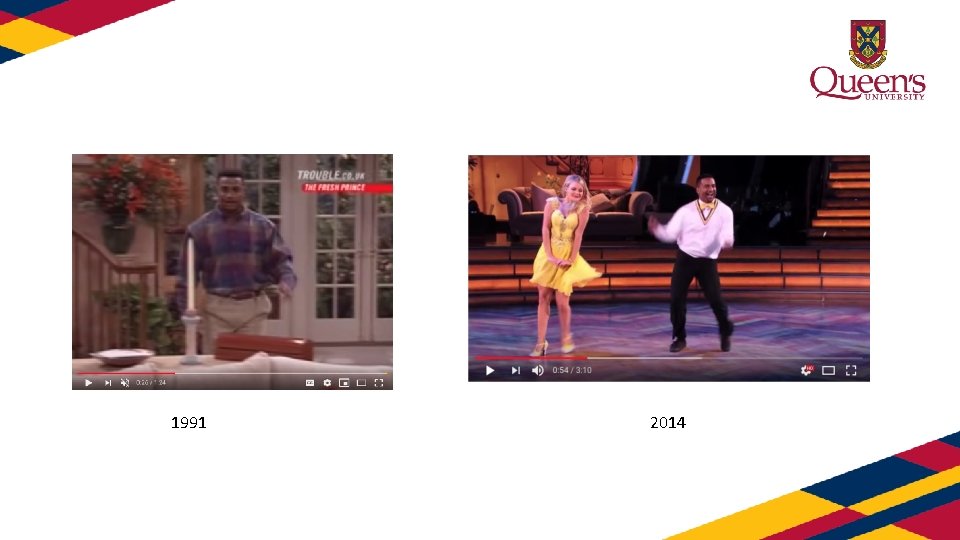
1991 2014
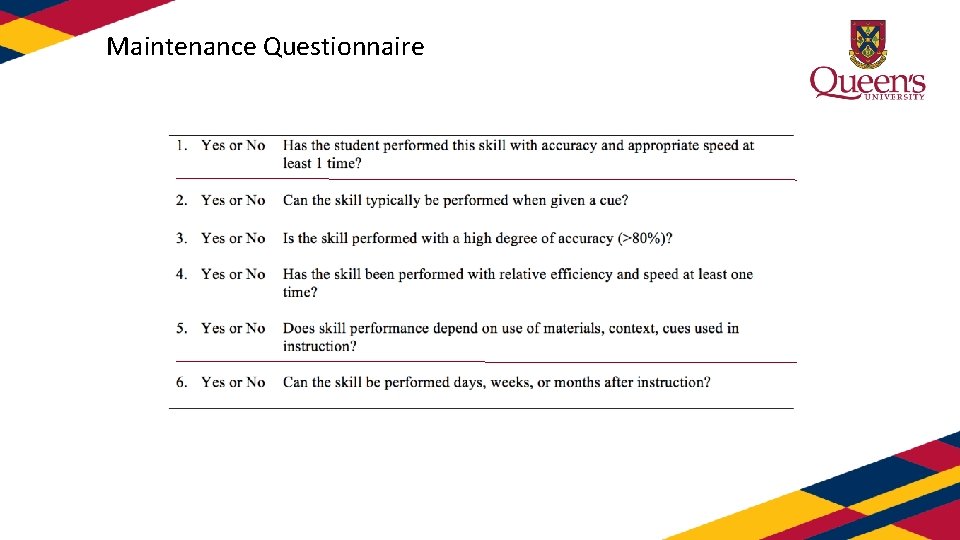
Maintenance Questionnaire
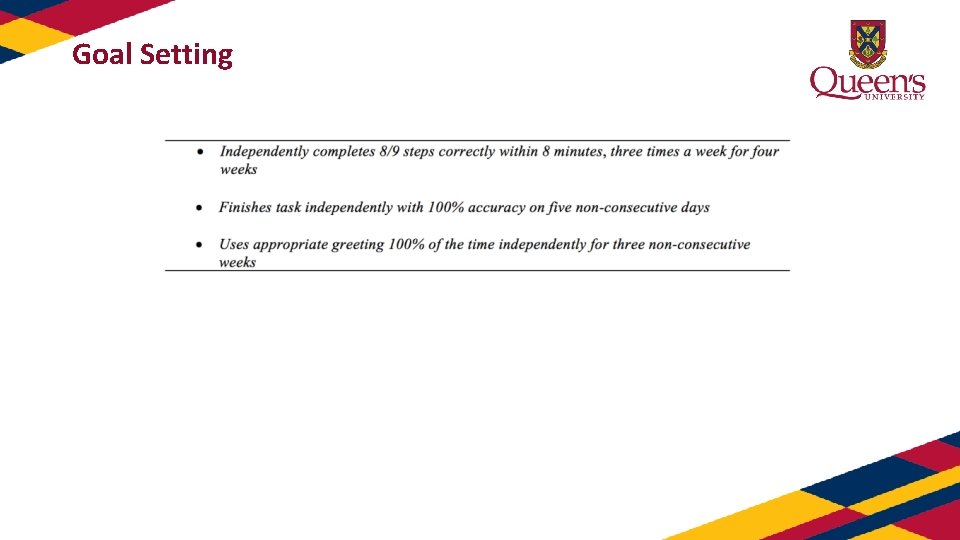
Goal Setting
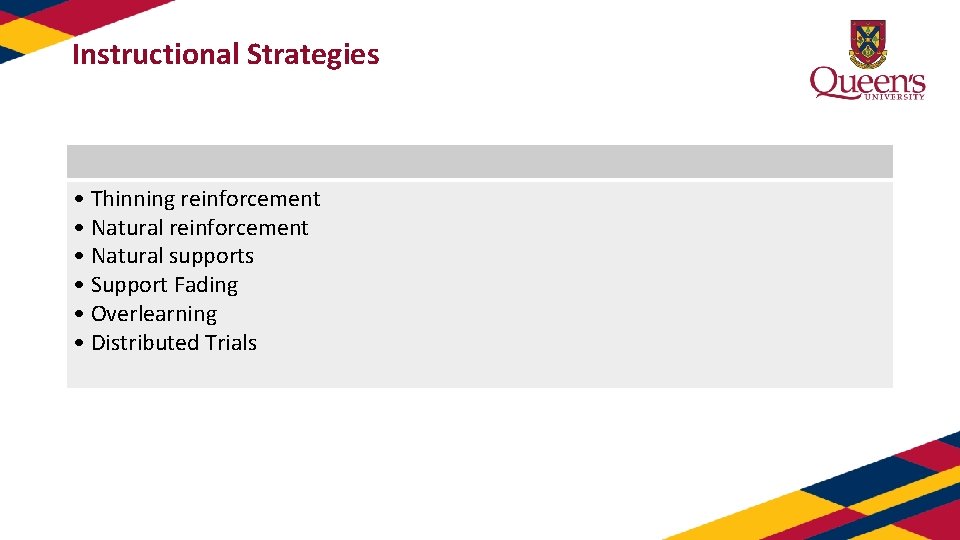
Instructional Strategies • Thinning reinforcement • Natural supports • Support Fading • Overlearning • Distributed Trials
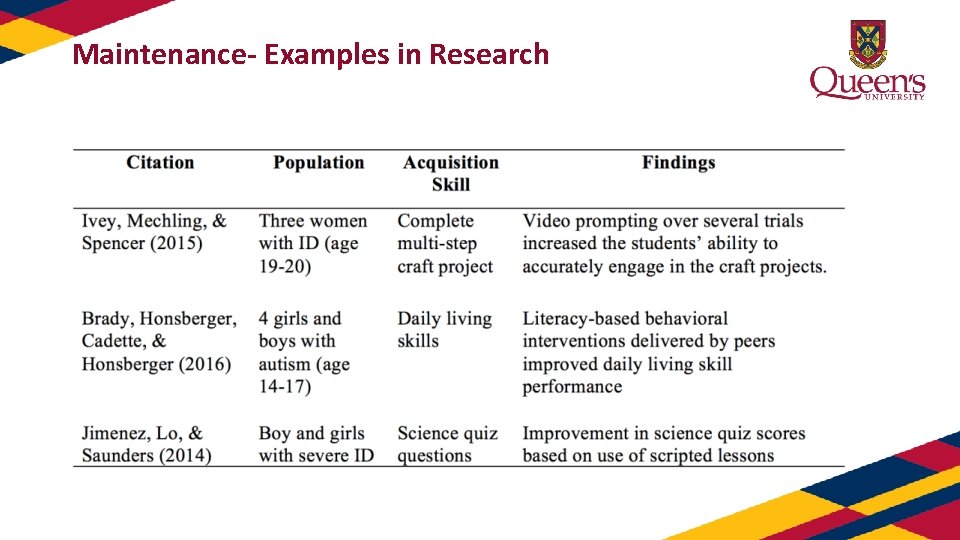
Maintenance- Examples in Research
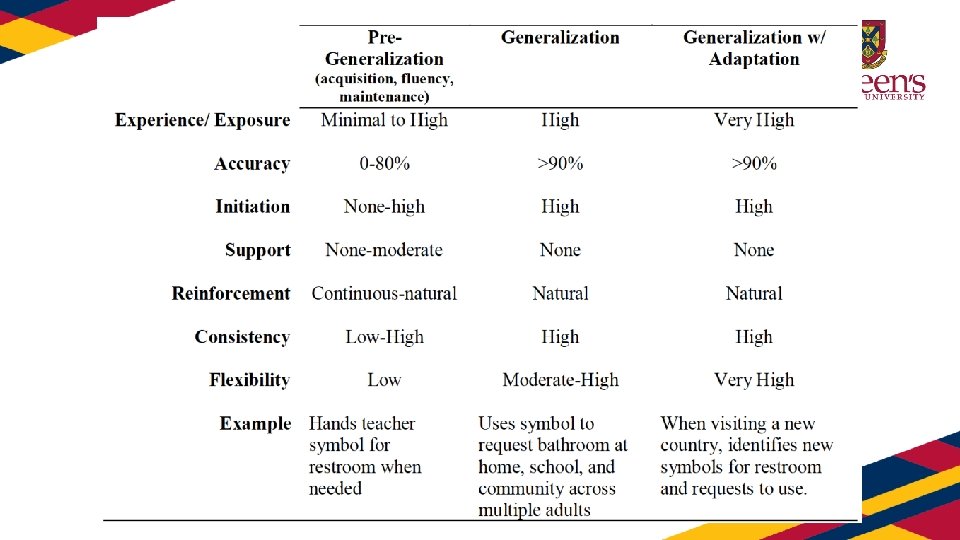
Generalization v Occurs when a student can apply a skill in a consistent and fluent manner in different ways or across multiple variables (i. e. , people, materials, settings, situations; Collins, 2012). üVarious contexts, people, materials üProblem solving üUnique applications
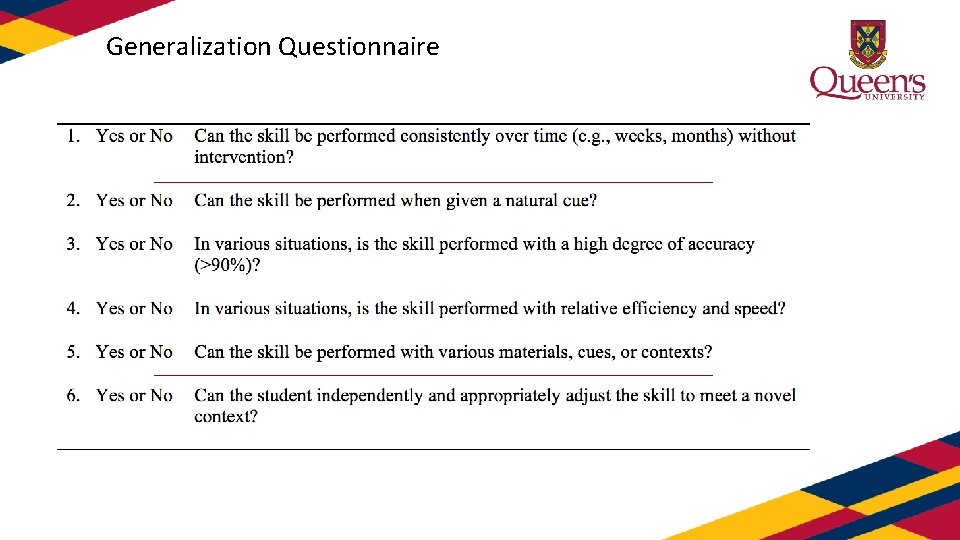
Generalization Questionnaire
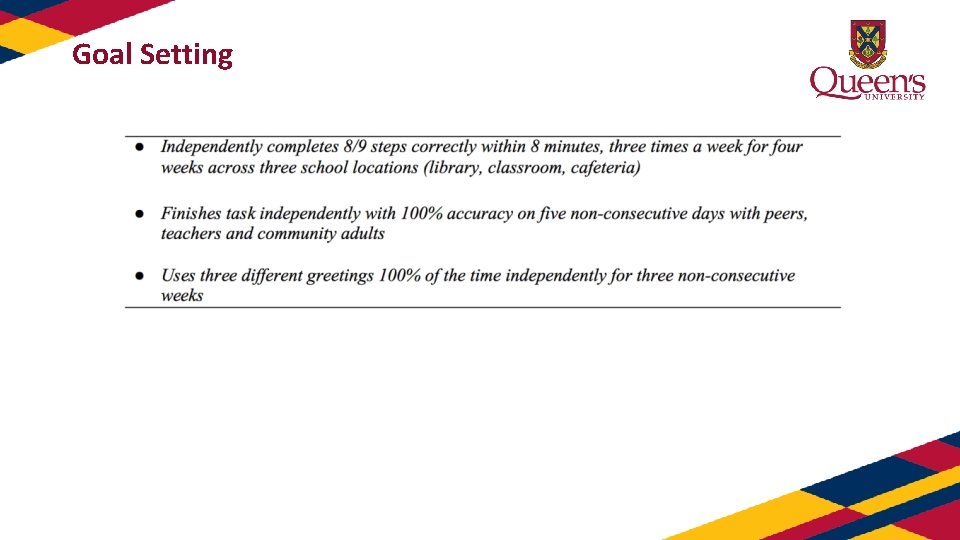
Goal Setting
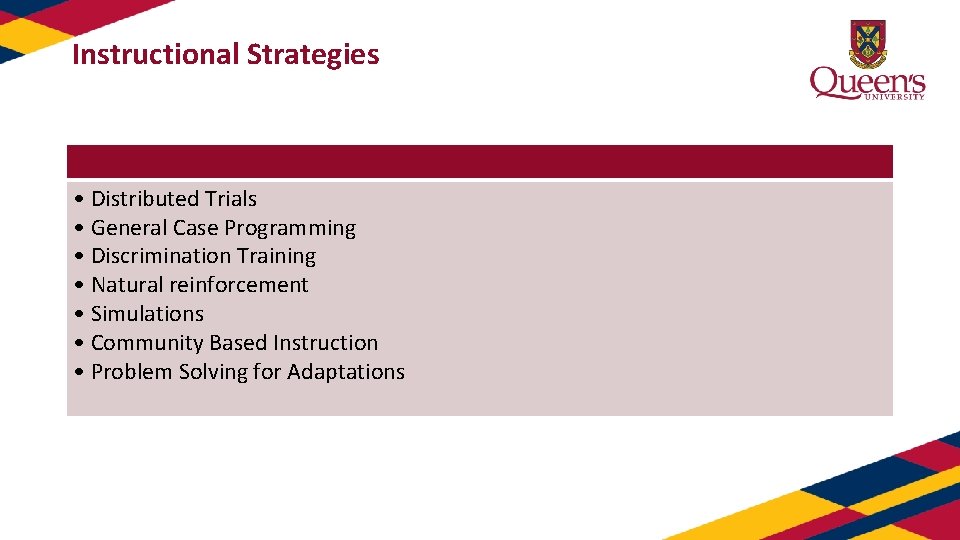
Instructional Strategies • Distributed Trials • General Case Programming • Discrimination Training • Natural reinforcement • Simulations • Community Based Instruction • Problem Solving for Adaptations
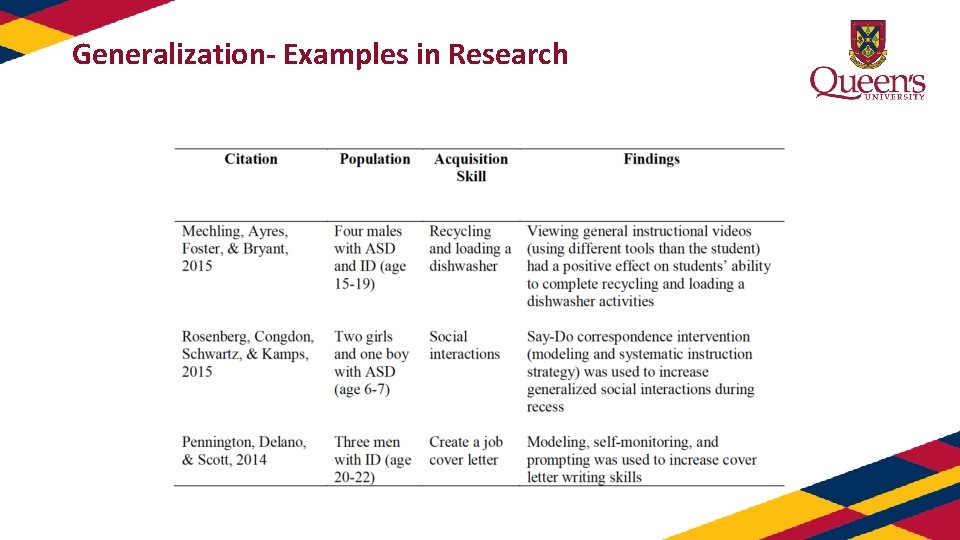
Generalization- Examples in Research
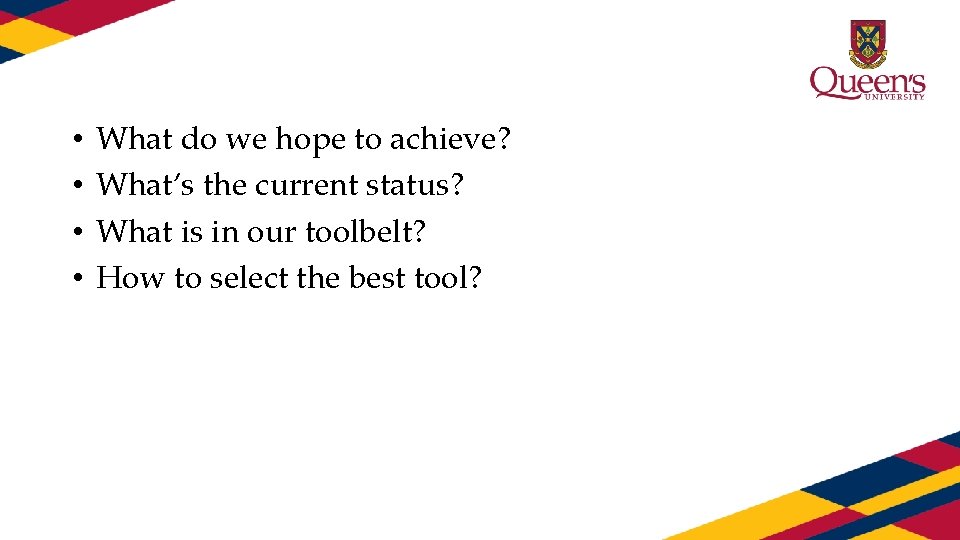
• • What do we hope to achieve? What’s the current status? What is in our toolbelt? How to select the best tool?
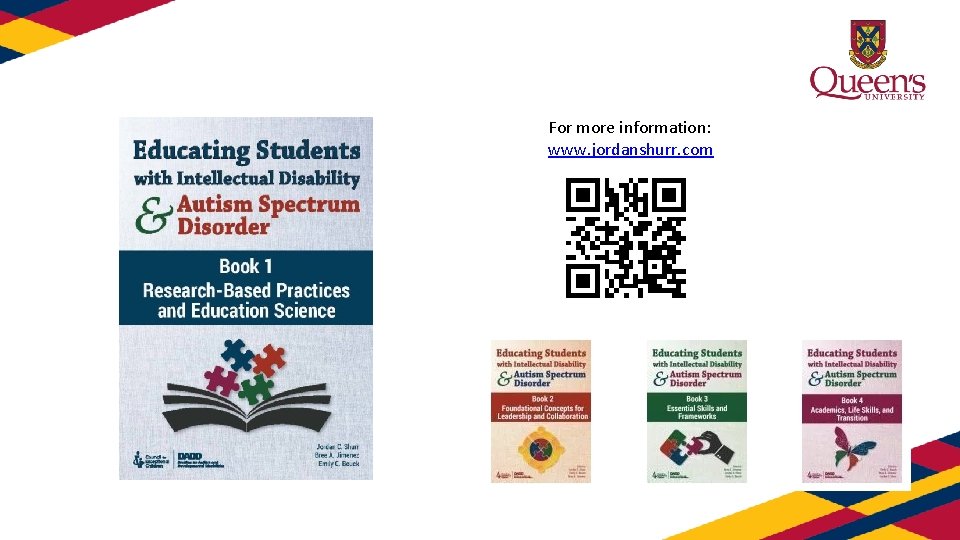
For more information: www. jordanshurr. com