
TEACHING A RECEPTIVE LESSON APPROACHING LISTENING READING THINKING
- Slides: 24
TEACHING A RECEPTIVE LESSON APPROACHING LISTENING & READING
THINKING ABOUT THE PURPOSE & FOCUS
PURPOSE OF LISTENING OR READING • Getting general information ( general comprehension) • Getting specific information ( accuracy) • For pleasure or interest (extensive) • (see Nation 2010)
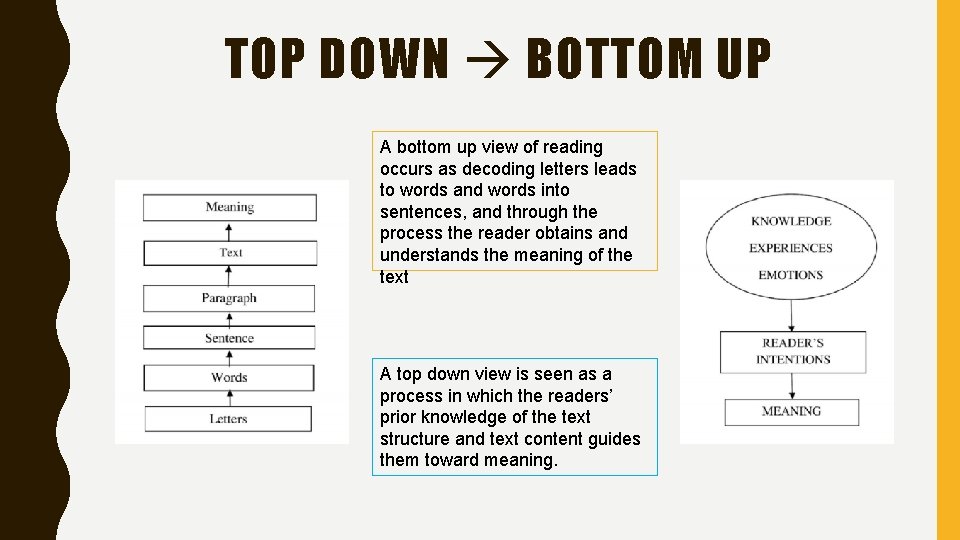
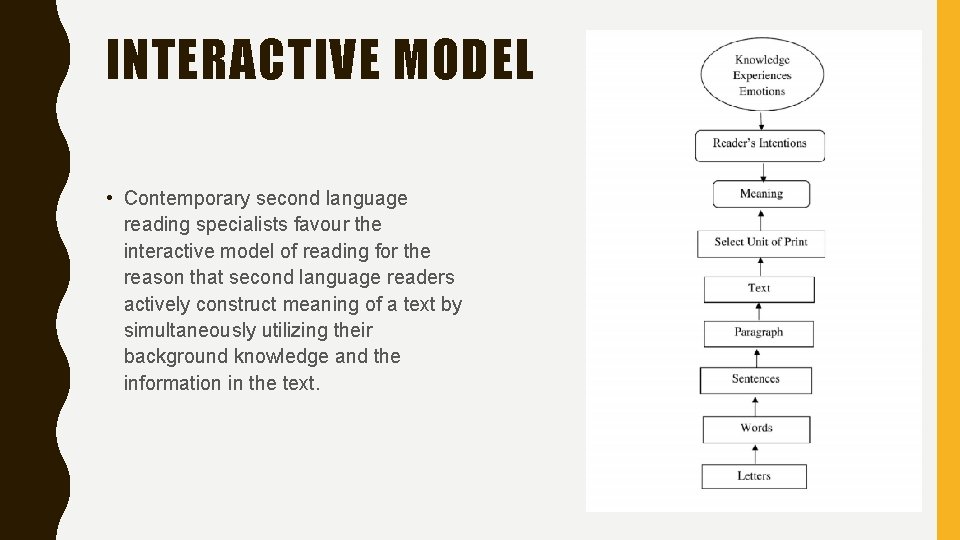
TOP DOWN BOTTOM UP A bottom up view of reading occurs as decoding letters leads to words and words into sentences, and through the process the reader obtains and understands the meaning of the text A top down view is seen as a process in which the readers’ prior knowledge of the text structure and text content guides them toward meaning.
INTERACTIVE MODEL • Contemporary second language reading specialists favour the interactive model of reading for the reason that second language readers actively construct meaning of a text by simultaneously utilizing their background knowledge and the information in the text.
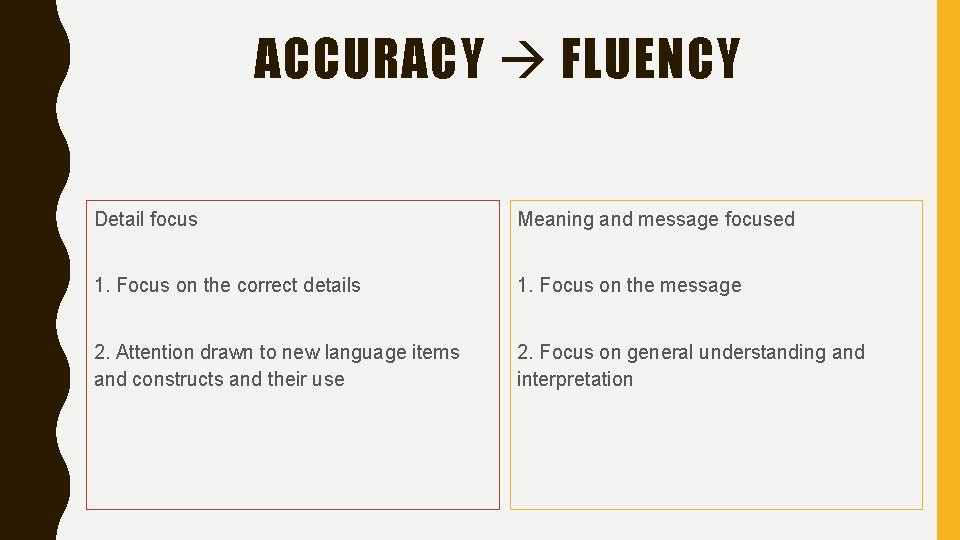
ACCURACY FLUENCY Detail focus Meaning and message focused 1. Focus on the correct details 1. Focus on the message 2. Attention drawn to new language items and constructs and their use 2. Focus on general understanding and interpretation
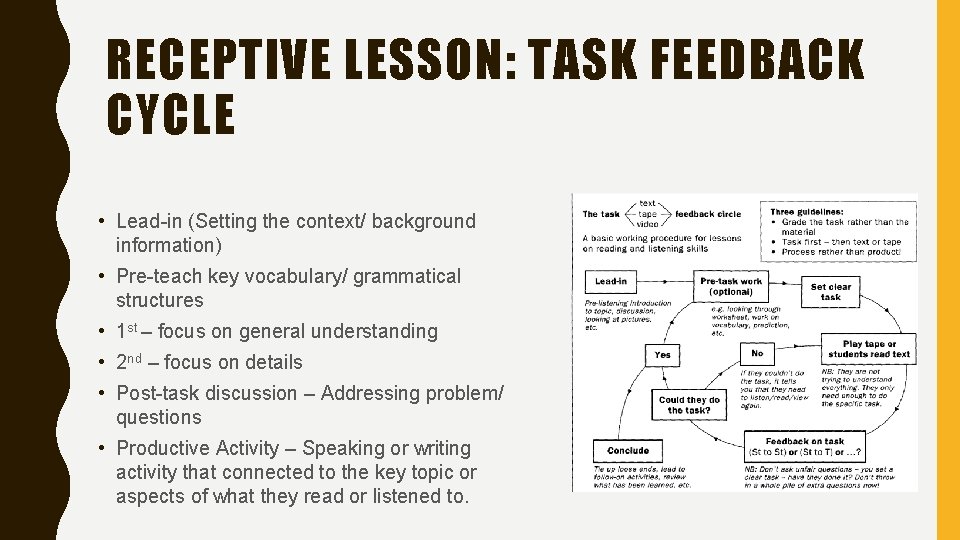
RECEPTIVE LESSON: TASK FEEDBACK CYCLE • Lead-in (Setting the context/ background information) • Pre-teach key vocabulary/ grammatical structures • 1 st – focus on general understanding • 2 nd – focus on details • Post-task discussion – Addressing problem/ questions • Productive Activity – Speaking or writing activity that connected to the key topic or aspects of what they read or listened to.
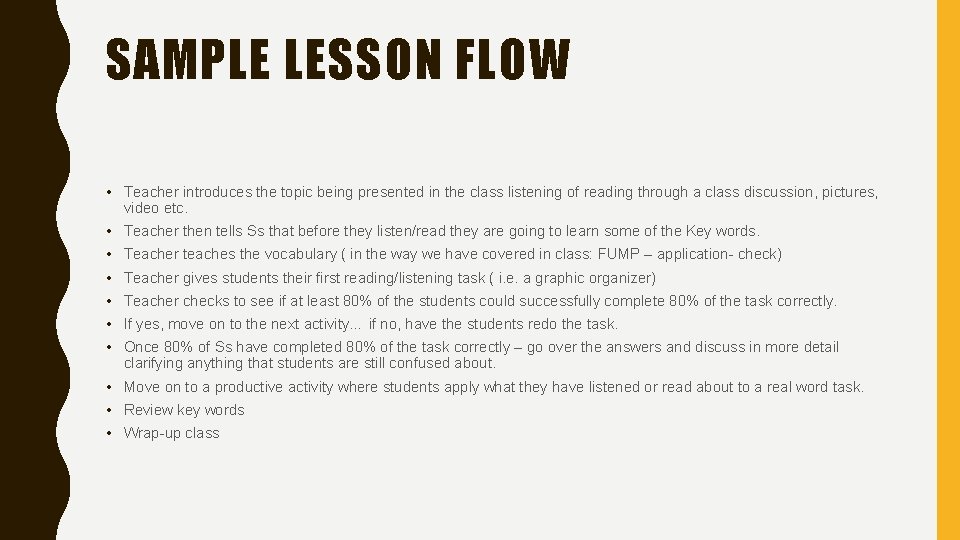
SAMPLE LESSON FLOW • Teacher introduces the topic being presented in the class listening of reading through a class discussion, pictures, video etc. • Teacher then tells Ss that before they listen/read they are going to learn some of the Key words. • Teacher teaches the vocabulary ( in the way we have covered in class: FUMP – application- check) • Teacher gives students their first reading/listening task ( i. e. a graphic organizer) • Teacher checks to see if at least 80% of the students could successfully complete 80% of the task correctly. • If yes, move on to the next activity… if no, have the students redo the task. • Once 80% of Ss have completed 80% of the task correctly – go over the answers and discuss in more detail clarifying anything that students are still confused about. • Move on to a productive activity where students apply what they have listened or read about to a real word task. • Review key words • Wrap-up class
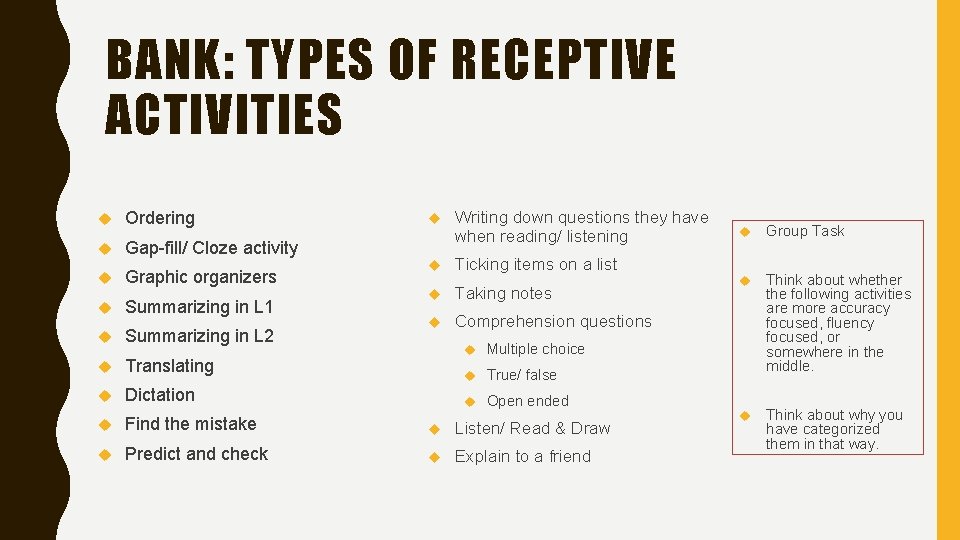
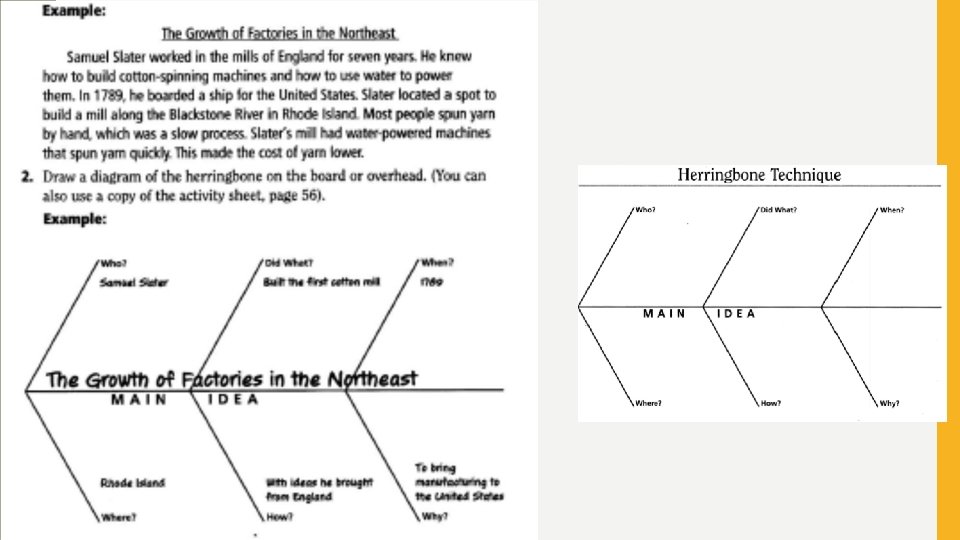
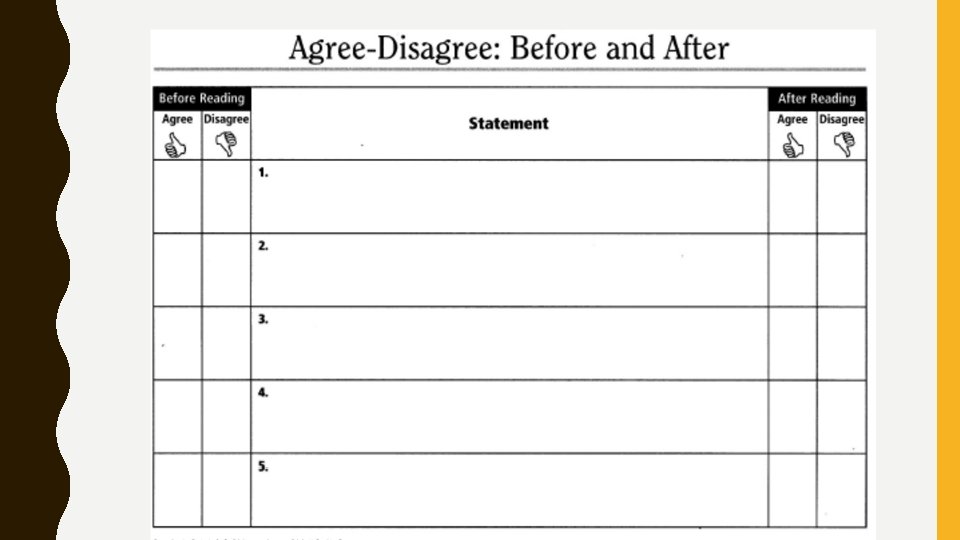
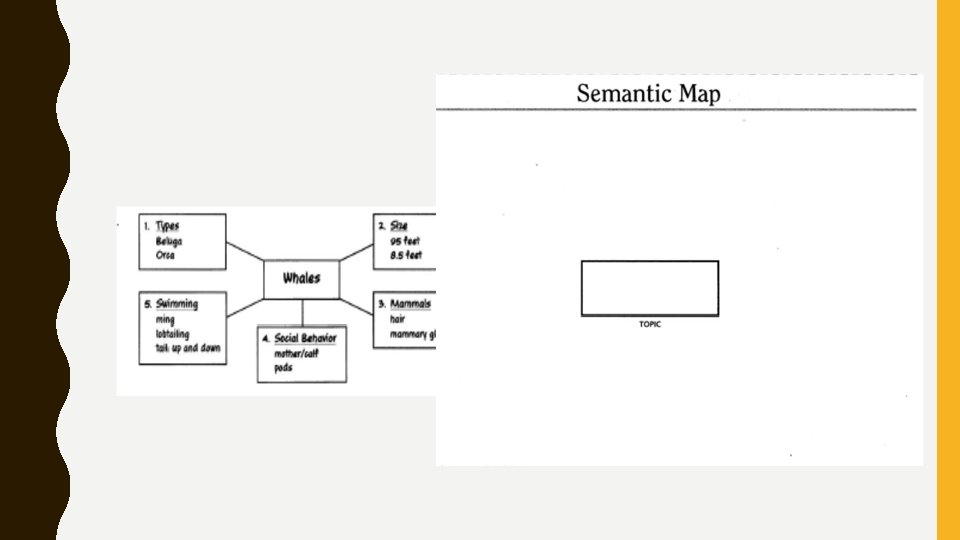
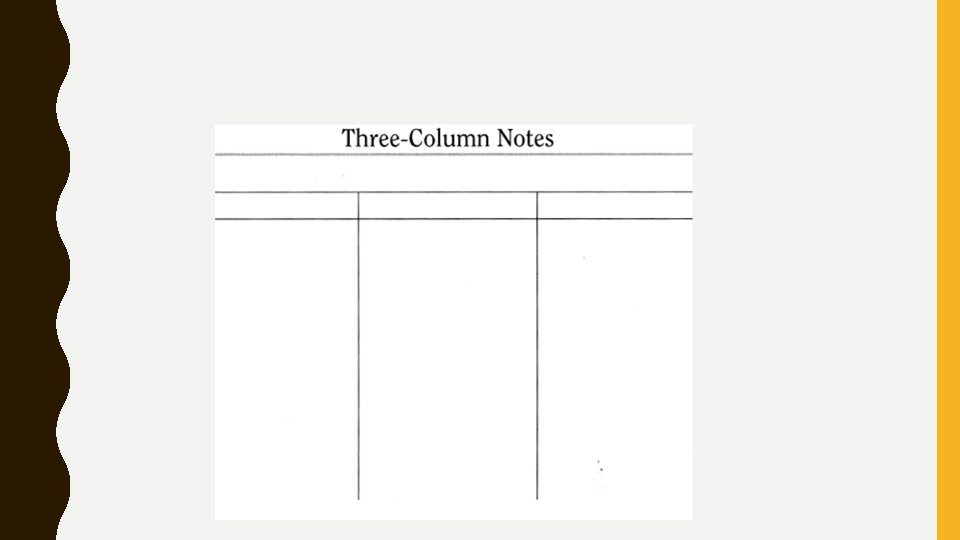
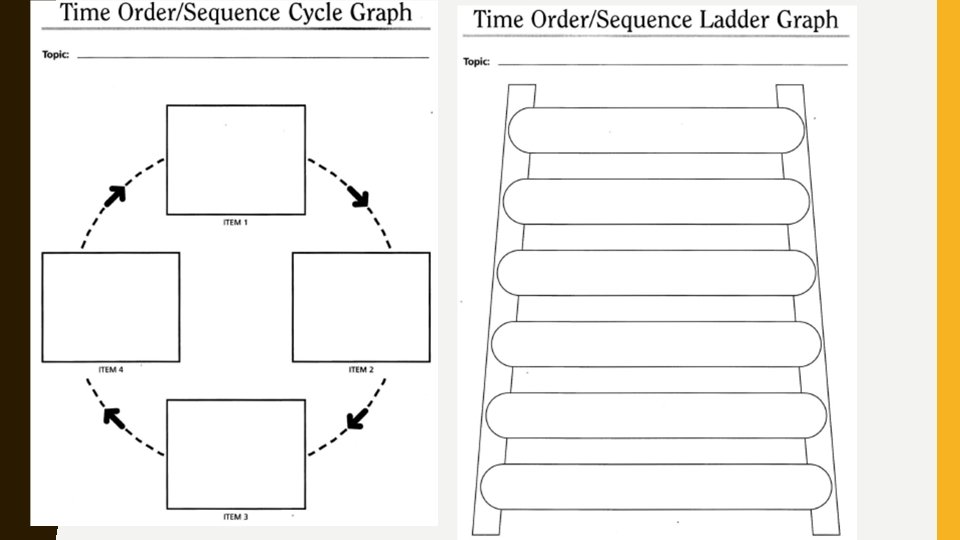
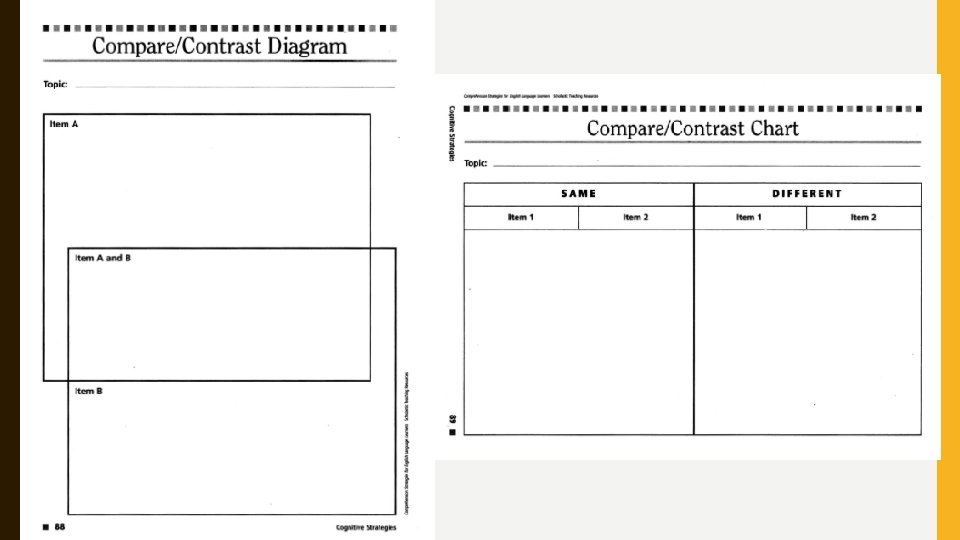
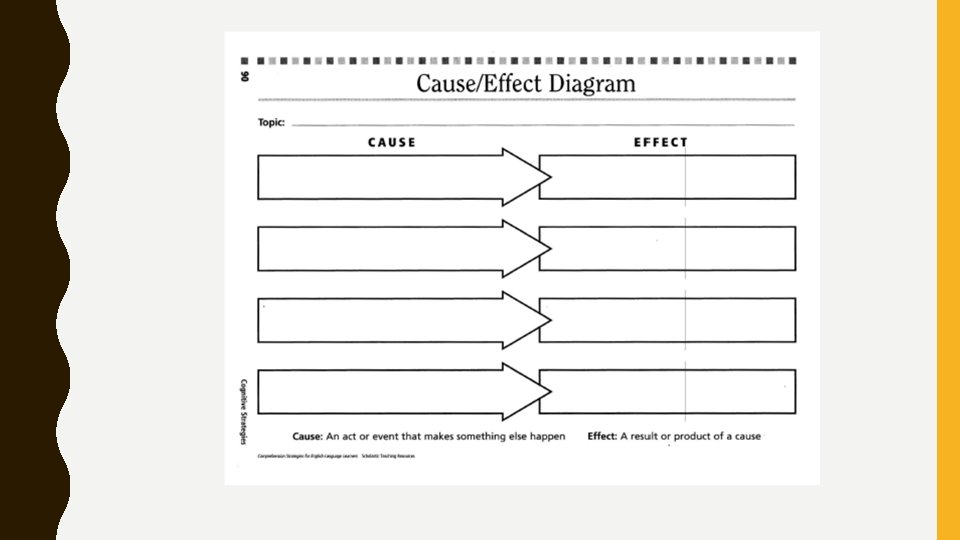
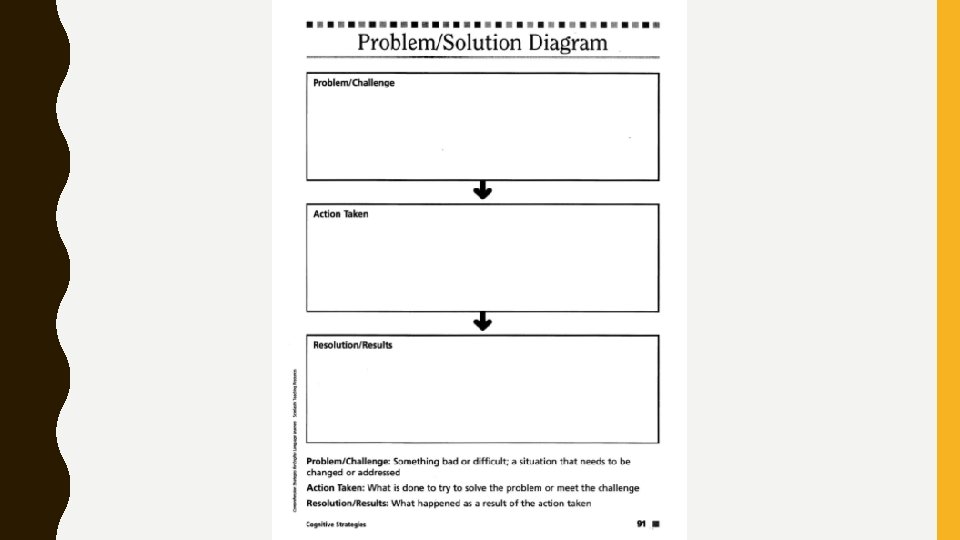
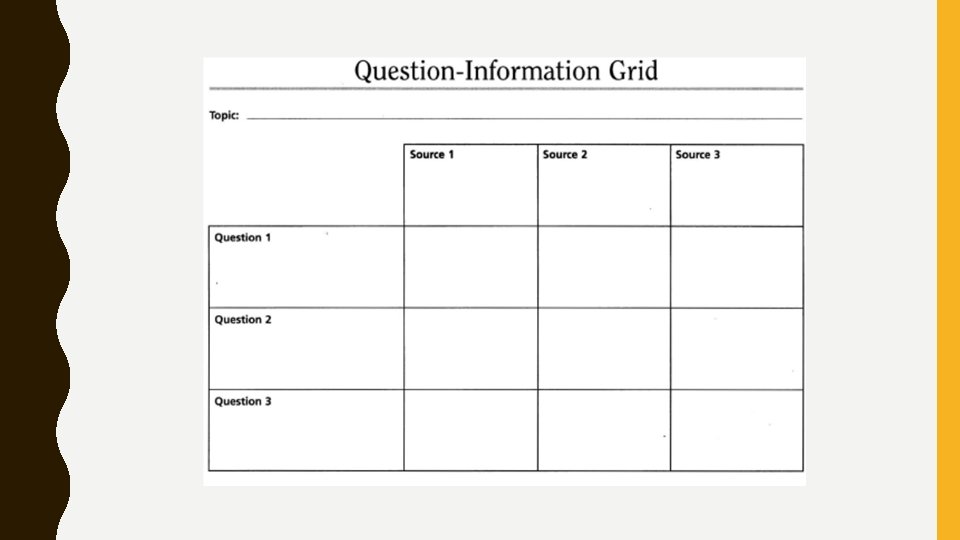
BANK: TYPES OF RECEPTIVE ACTIVITIES Ordering Gap-fill/ Cloze activity Graphic organizers Summarizing in L 1 Summarizing in L 2 Translating Dictation Find the mistake Listen/ Read & Draw Predict and check Explain to a friend Writing down questions they have when reading/ listening Ticking items on a list Taking notes Comprehension questions Multiple choice True/ false Open ended Group Task Think about whether the following activities are more accuracy focused, fluency focused, or somewhere in the middle. Think about why you have categorized them in that way.
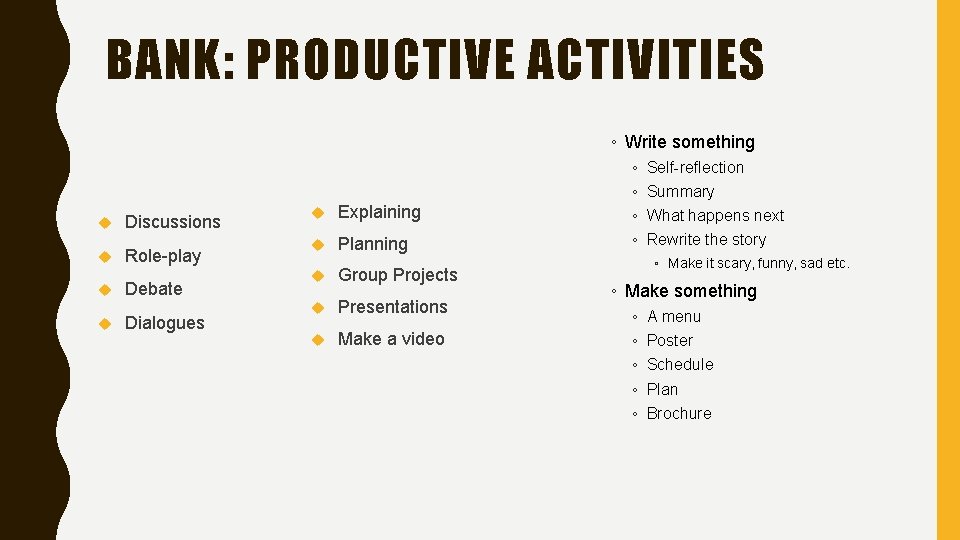
BANK: PRODUCTIVE ACTIVITIES ◦ Write something Discussions Role-play Debate Dialogues Explaining Planning Group Projects Presentations Make a video ◦ ◦ Self-reflection Summary What happens next Rewrite the story ◦ Make it scary, funny, sad etc. ◦ Make something ◦ ◦ ◦ A menu Poster Schedule Plan Brochure
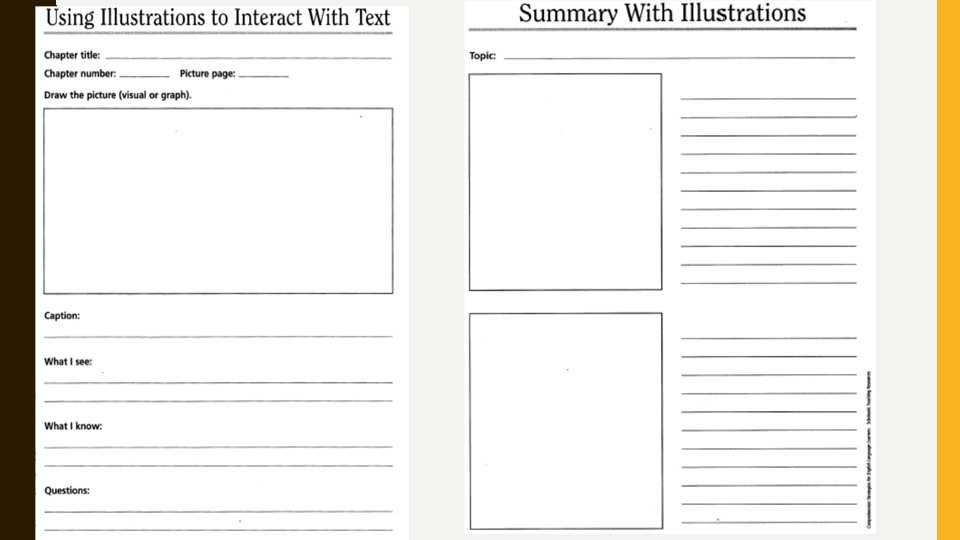
GRAPHIC ORGANIZERS
REFLECTIVE THINKING THINK AND APPLY
APPLYING THE TASK FEEDBACK CYCLE • Without looking at last class’s notes • Create a listening/ reading lesson following the general flow of the task feedback cycle • 50 minute class
• Ur, P. (1981). Discussions that work: Task-centred fluency practice. Cambridge University Press. • Ur, P. (1984). Teaching listening comprehension. Cambridge University Press.