
Teachers as Authors of Computer Based Tutoring Systems
Teachers as Authors of Computer Based Tutoring Systems Dr. Vasudeva Rao Aravind Dr. Marcella Mc. Connell
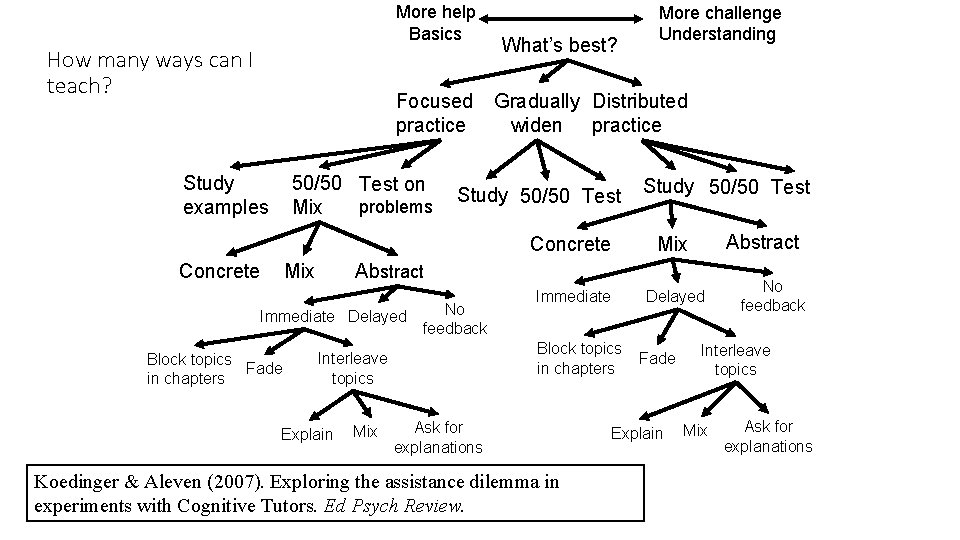
More help Basics How many ways can I teach? Focused practice Study examples 50/50 Test on problems Mix Concrete Mix Gradually Distributed widen practice Study 50/50 Test Abstract Concrete Mix Immediate Delayed Abstract Immediate Delayed Block topics Fade in chapters What’s best? More challenge Understanding No feedback Block topics in chapters Interleave topics Explain Mix Ask for explanations Koedinger & Aleven (2007). Exploring the assistance dilemma in experiments with Cognitive Tutors. Ed Psych Review. Fade Explain No feedback Interleave topics Mix Ask for explanations
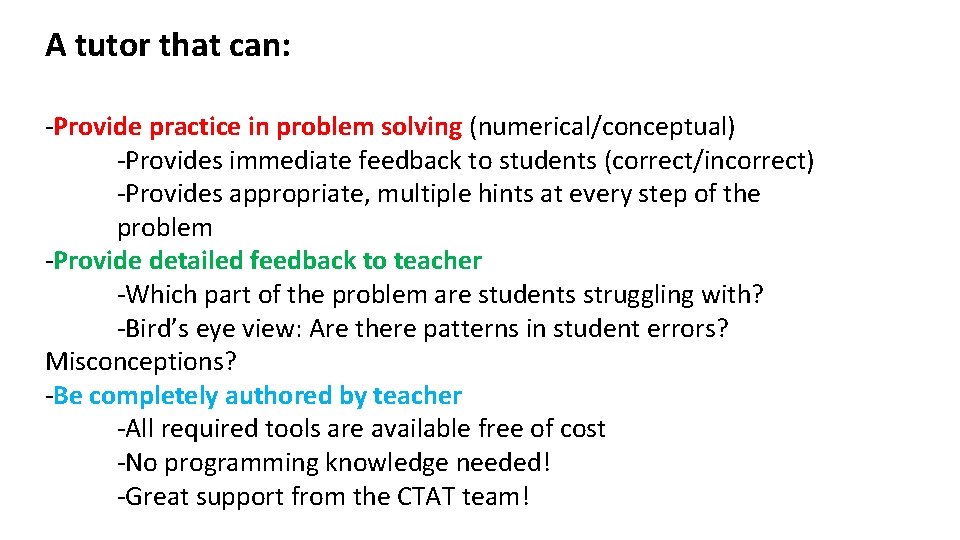
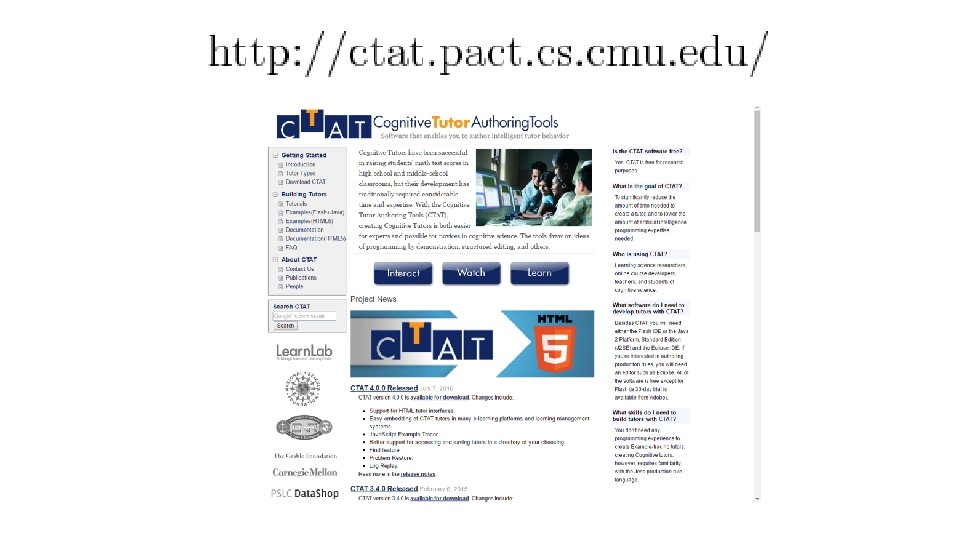
A tutor that can: -Provide practice in problem solving (numerical/conceptual) -Provides immediate feedback to students (correct/incorrect) -Provides appropriate, multiple hints at every step of the problem -Provide detailed feedback to teacher -Which part of the problem are students struggling with? -Bird’s eye view: Are there patterns in student errors? Misconceptions? -Be completely authored by teacher -All required tools are available free of cost -No programming knowledge needed! -Great support from the CTAT team!
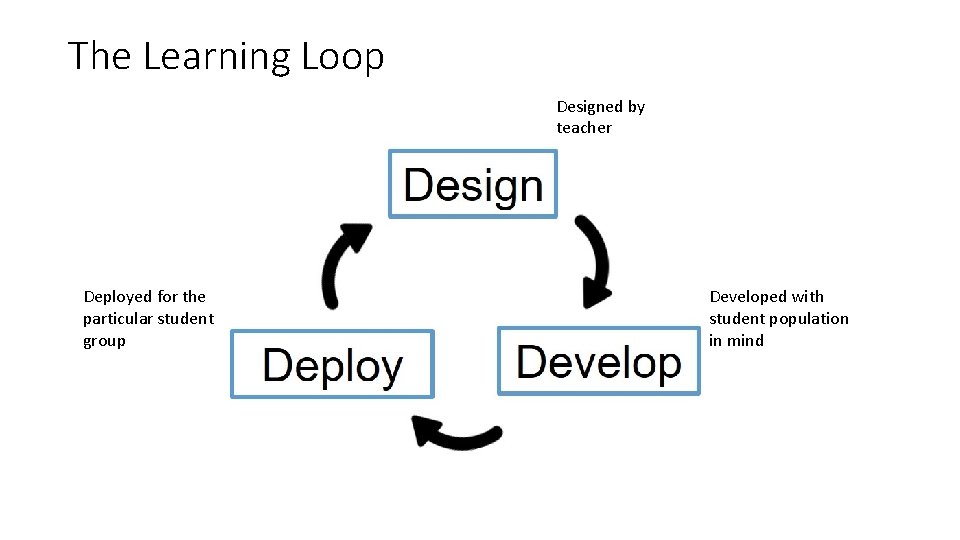
The Learning Loop Designed by teacher Deployed for the particular student group Developed with student population in mind
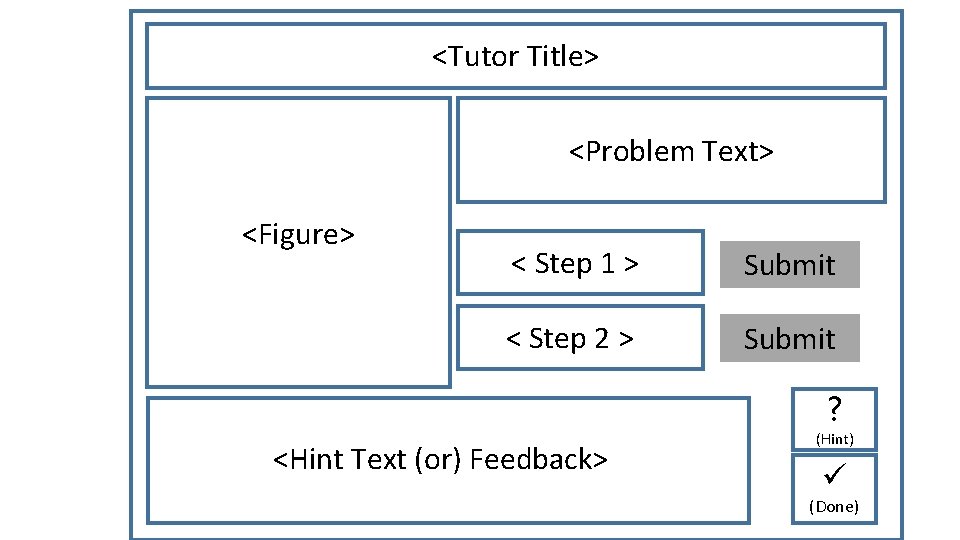
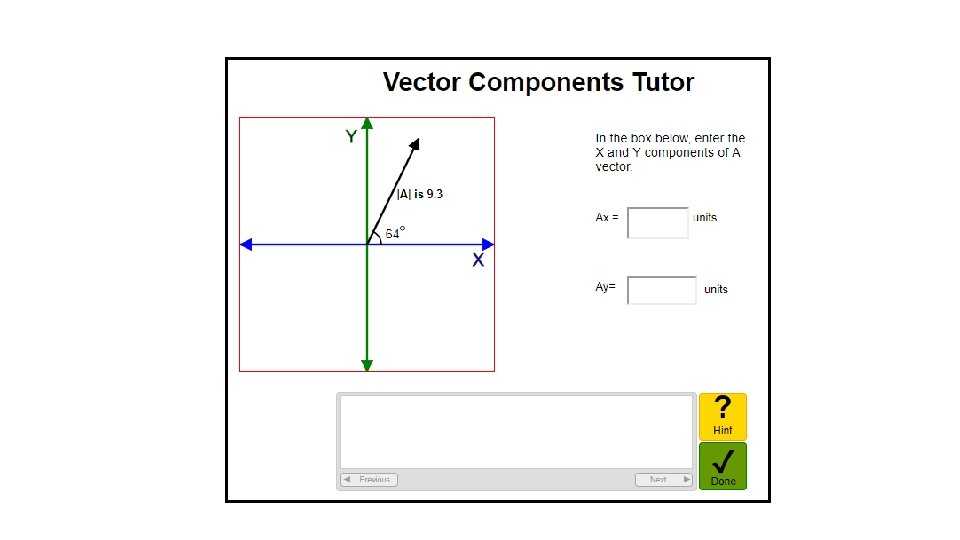
<Tutor Title> <Problem Text> <Figure> < Step 1 > Submit < Step 2 > Submit ? <Hint Text (or) Feedback> (Hint) (Done)
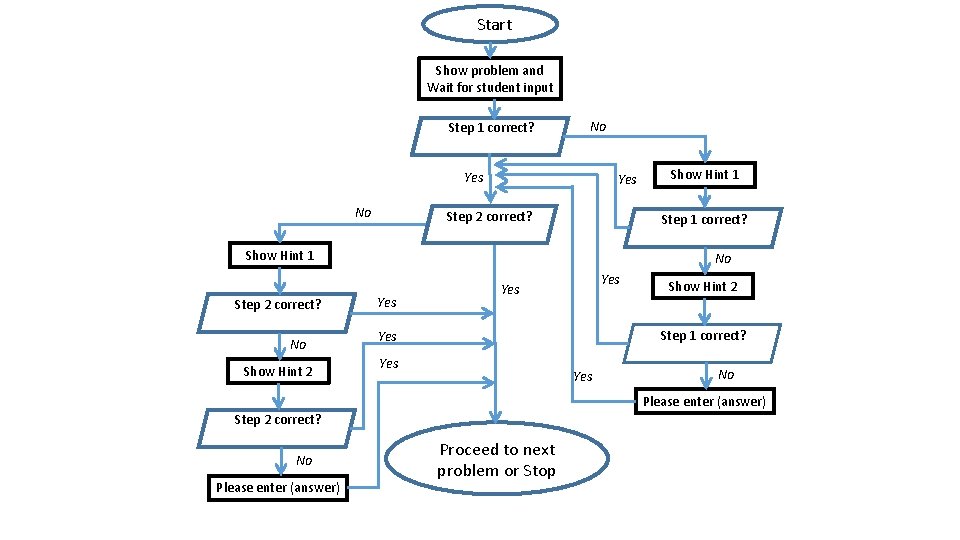
Start Show problem and Wait for student input Step 1 correct? No Yes Step 2 correct? Step 1 correct? Show Hint 1 Step 2 correct? No Show Hint 2 Show Hint 1 No Yes Yes Show Hint 2 Step 1 correct? Yes Yes No Please enter (answer) Step 2 correct? No Please enter (answer) Proceed to next problem or Stop
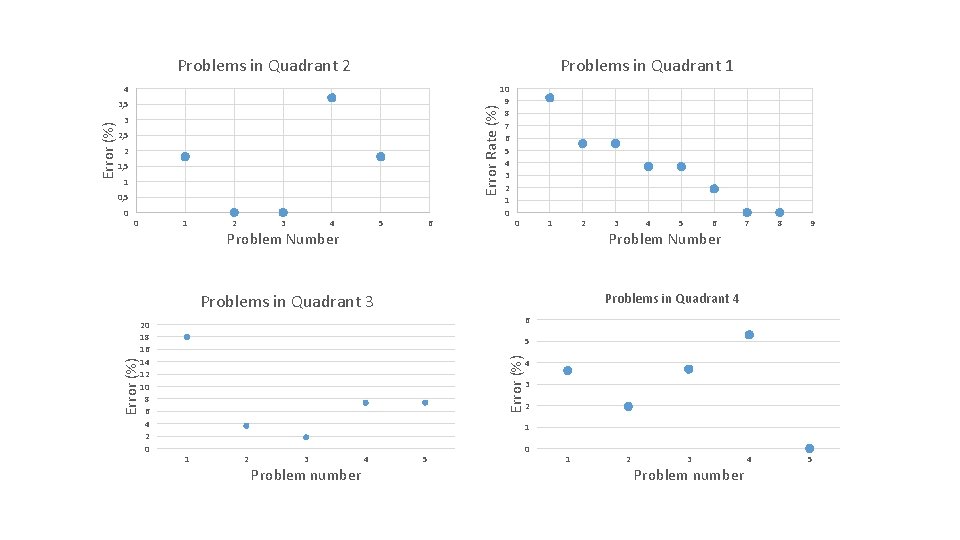
Problems in Quadrant 2 Problems in Quadrant 1 4 Error Rate (%) 3 2, 5 2 1, 5 1 0, 5 0 0 1 2 3 4 5 Problem Number 6 0 1 2 4 5 6 Problem Number 7 8 9 6 5 Error (%) 20 18 16 14 12 10 8 6 4 2 0 3 Problems in Quadrant 4 Problems in Quadrant 3 Error (%) 3, 5 10 9 8 7 6 5 4 3 2 1 0 4 3 2 1 1 2 3 Problem number 4 5 0 1 2 3 Problem number 4 5
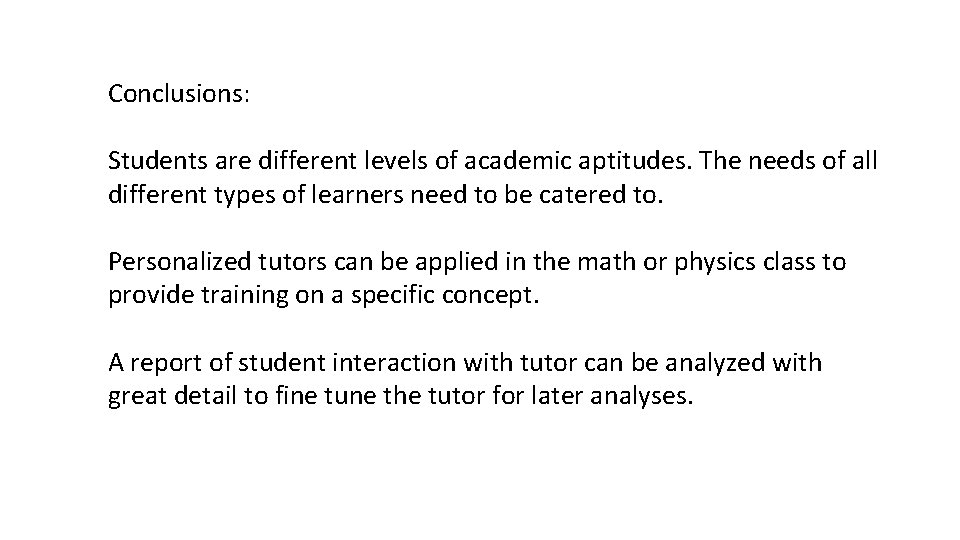
Conclusions: Students are different levels of academic aptitudes. The needs of all different types of learners need to be catered to. Personalized tutors can be applied in the math or physics class to provide training on a specific concept. A report of student interaction with tutor can be analyzed with great detail to fine tune the tutor for later analyses.
- Slides: 11