
TEACHER TALK TIME IN EFL CLASSROOMS WHY DO
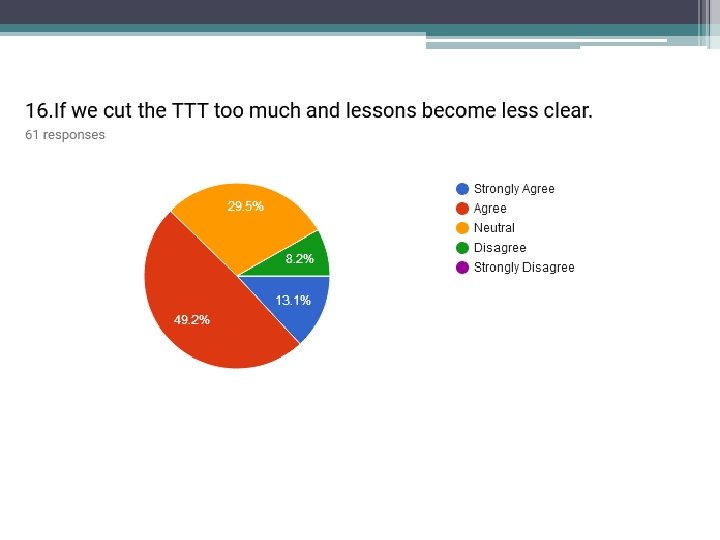
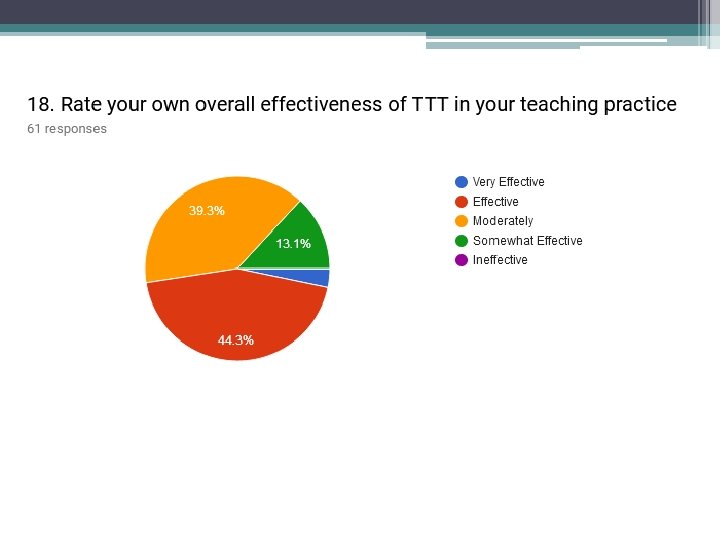
- Slides: 30
TEACHER TALK TIME IN EFL CLASSROOMS: “WHY DO YOU TALK TOO MUCH, TEACHER? ” Elvina Arapah Univesitas Lambung Mangkurat
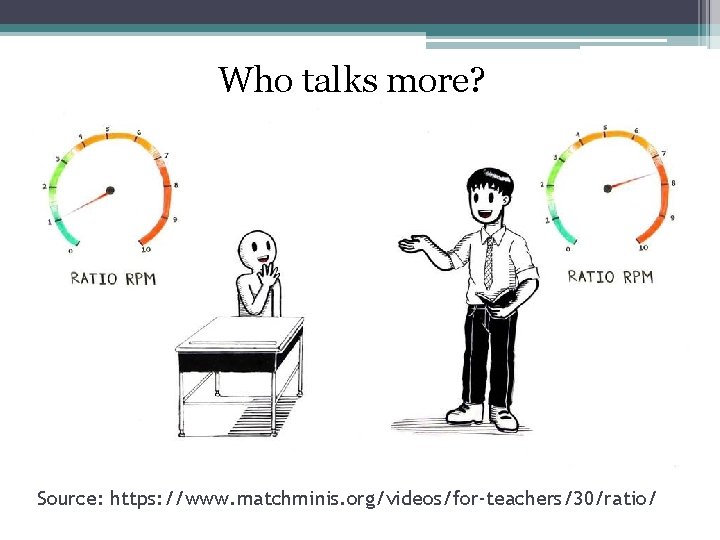
Who talks more? Source: https: //www. matchminis. org/videos/for-teachers/30/ratio/
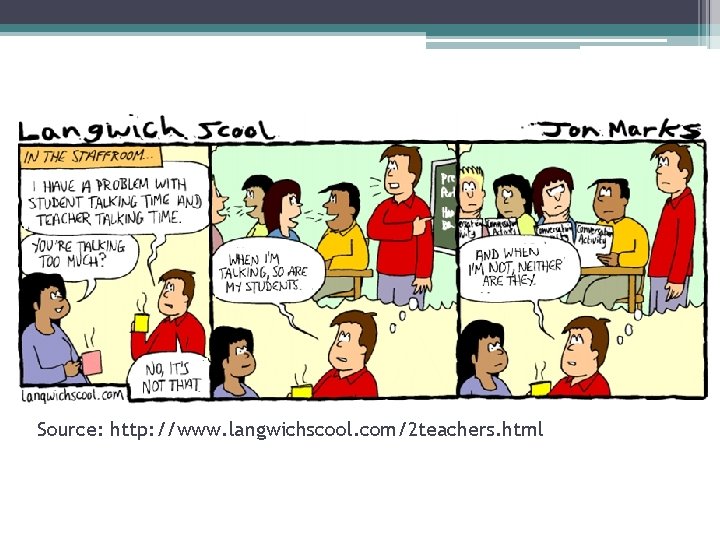
Source: http: //www. langwichscool. com/2 teachers. html
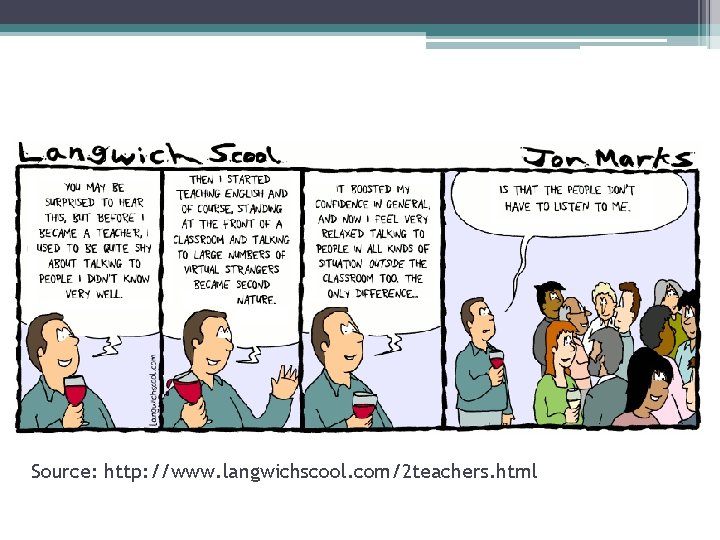
Source: http: //www. langwichscool. com/2 teachers. html
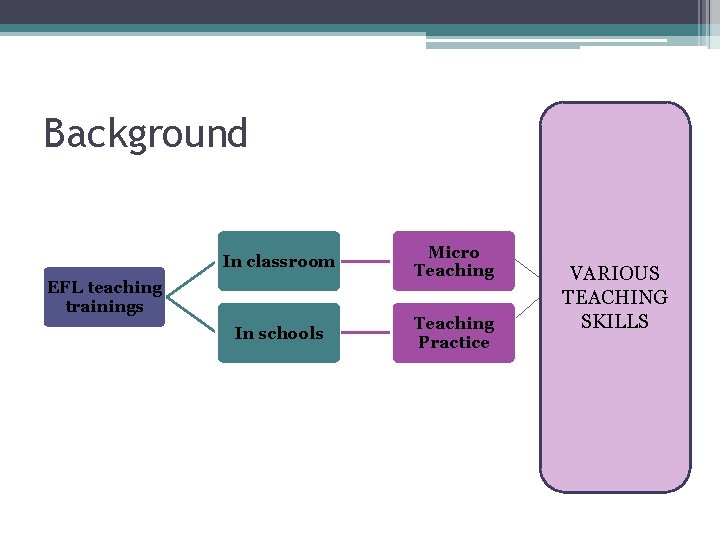
Background In classroom Micro Teaching In schools Teaching Practice EFL teaching trainings VARIOUS TEACHING SKILLS
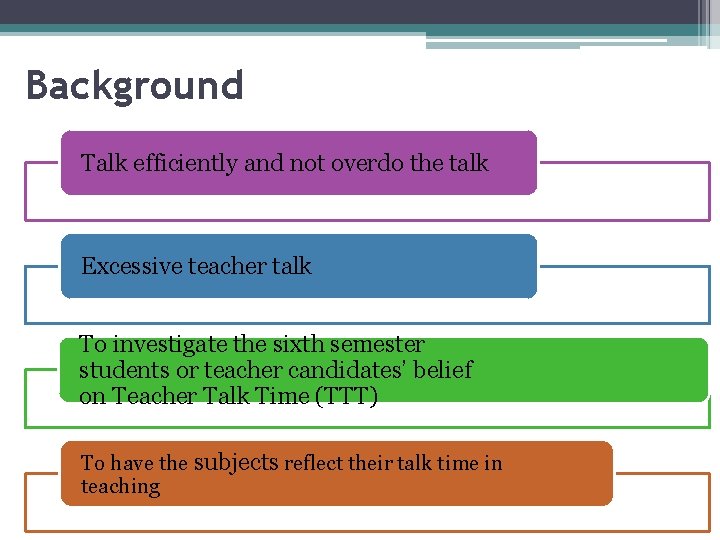
Background Talk efficiently and not overdo the talk Excessive teacher talk To investigate the sixth semester students or teacher candidates’ belief on Teacher Talk Time (TTT) To have the subjects reflect their talk time in teaching
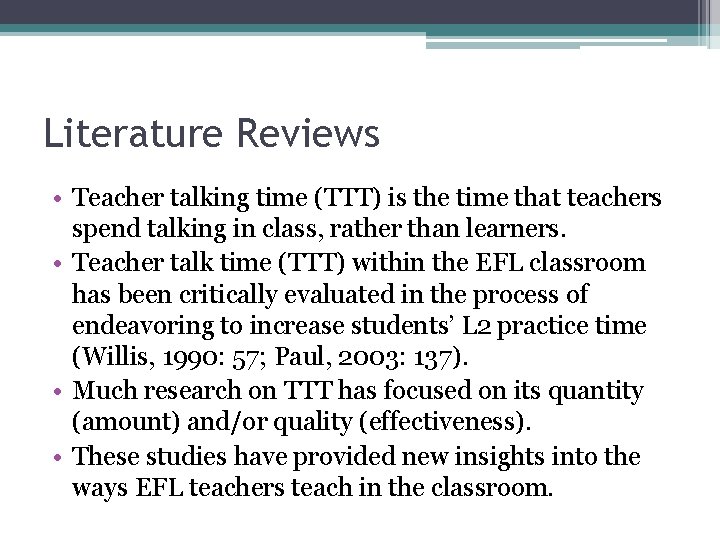
Literature Reviews • Teacher talking time (TTT) is the time that teachers spend talking in class, rather than learners. • Teacher talk time (TTT) within the EFL classroom has been critically evaluated in the process of endeavoring to increase students’ L 2 practice time (Willis, 1990: 57; Paul, 2003: 137). • Much research on TTT has focused on its quantity (amount) and/or quality (effectiveness). • These studies have provided new insights into the ways EFL teachers teach in the classroom.
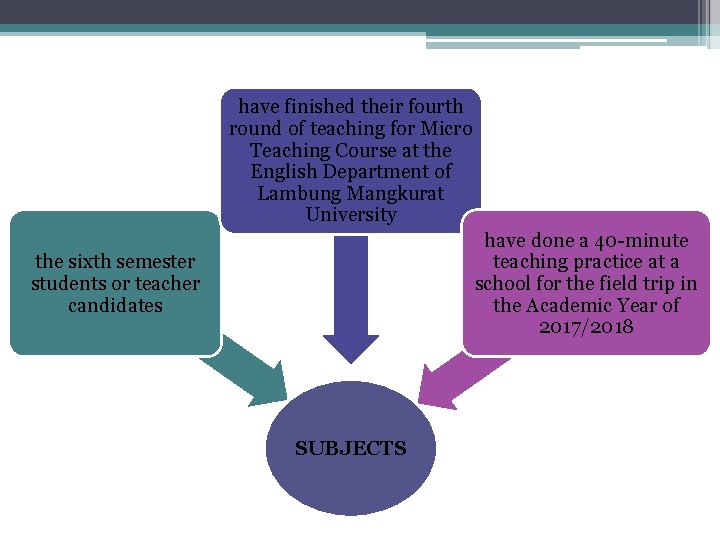
have finished their fourth round of teaching for Micro Teaching Course at the English Department of Lambung Mangkurat University have done a 40 -minute teaching practice at a school for the field trip in the Academic Year of 2017/2018 the sixth semester students or teacher candidates SUBJECTS
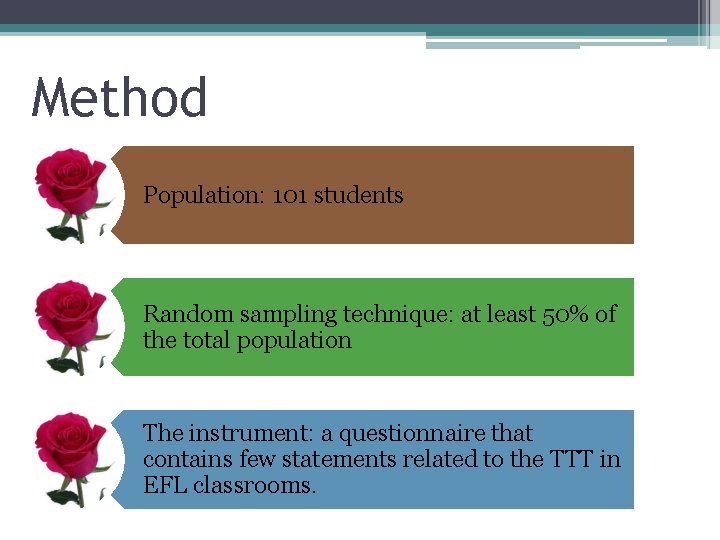
Method Population: 101 students Random sampling technique: at least 50% of the total population The instrument: a questionnaire that contains few statements related to the TTT in EFL classrooms.
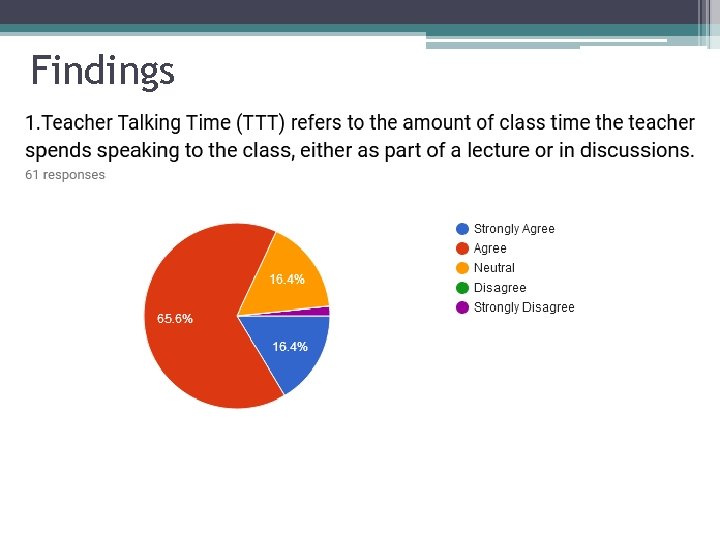
Findings
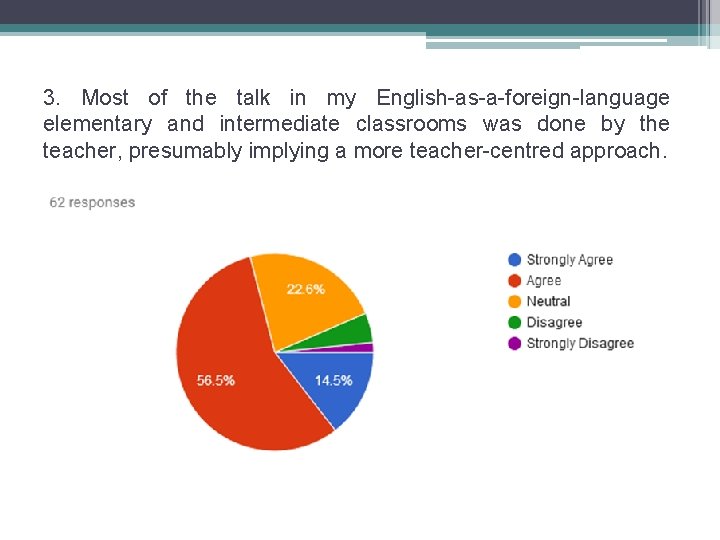
3. Most of the talk in my English-as-a-foreign-language elementary and intermediate classrooms was done by the teacher, presumably implying a more teacher-centred approach.
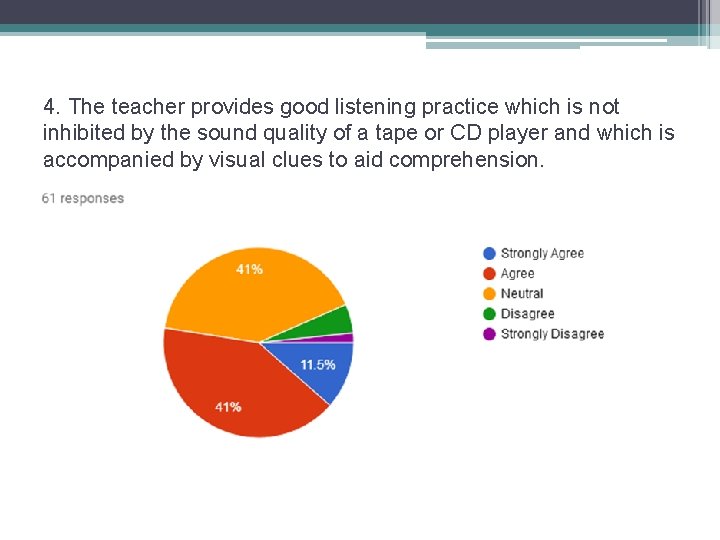
4. The teacher provides good listening practice which is not inhibited by the sound quality of a tape or CD player and which is accompanied by visual clues to aid comprehension.
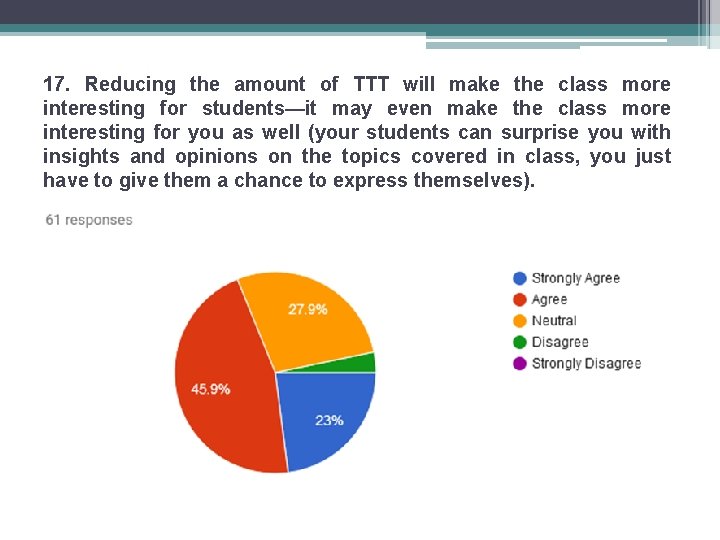
17. Reducing the amount of TTT will make the class more interesting for students—it may even make the class more interesting for you as well (your students can surprise you with insights and opinions on the topics covered in class, you just have to give them a chance to express themselves).
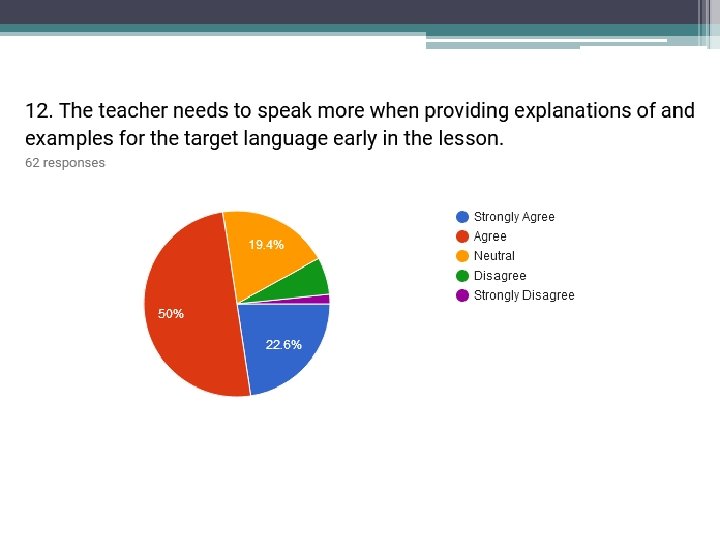
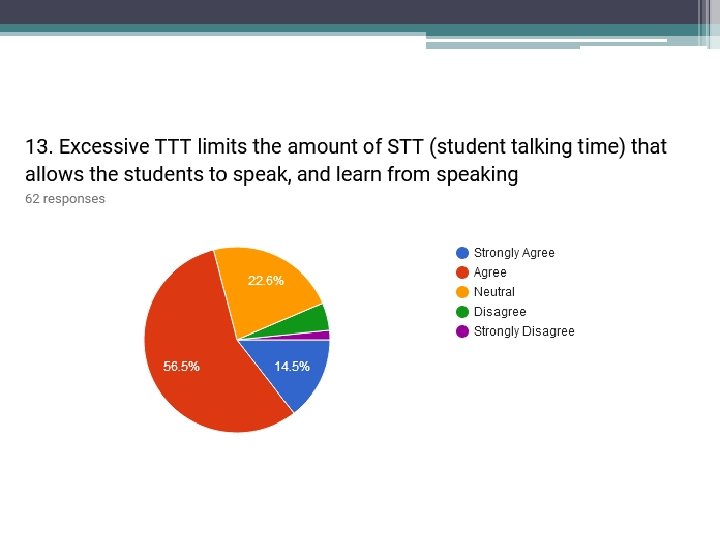
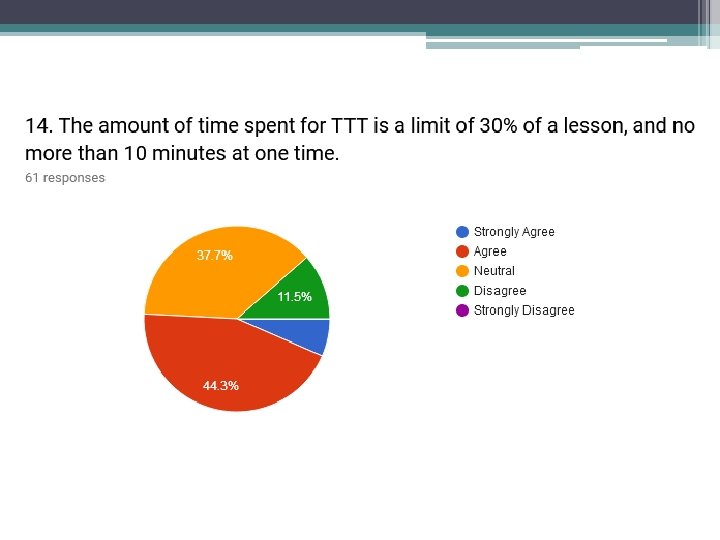
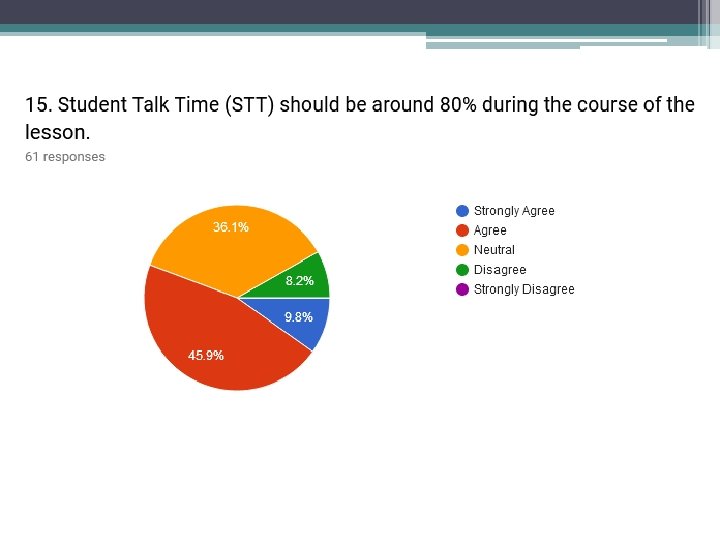
Conclusion The beliefs on TTT: • TTT promotes a ‘listening culture’ in the classrooms • Teacher should maximize STT and minimize TTT? • Teacher should encourage students to ask questions and initiate talk • Teacher should plan meaningful tasks to encourage productive talk
Direction for further research • Investigating the teaching and learning process.
Thank you for listening